Sagayaraj 🖤♥️ retweeted

So? Our votes are valid too. Do you plan to go off before you become old?
Jun 13

DMK turned into uncle and aunty parties for old people 😂
3
3
47
696

Kimi absolutely cooked him and he was valid for that😭😭😭🔥🔥

The streets will remember George being embarrassed by his teenage team mate before this unfortunately happened
Earl E. Graves retweeted

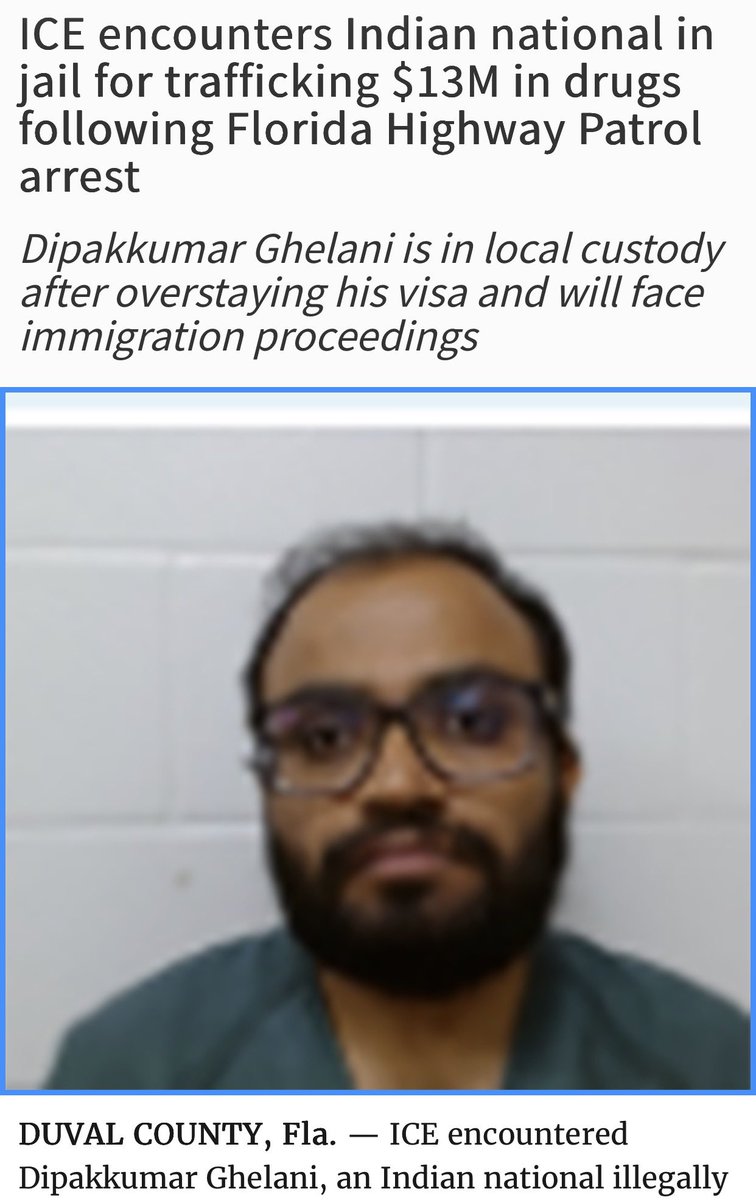
Indian national Dipakkumar Ghelani, who entered the US on a B-2 tourist visa in 2016 (valid until 2019) and overstayed, was arrested on April 16, 2026, by the Florida Highway Patrol for trafficking of over $13M in drugs.
3
16
53
934


@PhillippWeyers
Is stabbing, attempted beheading, rape, assaults, robbery on White people racist actions? Whites are the ones being targeted by non-Whites and the government/police almost always sides with the non-White perpetrators. This leads to anger amongst Whites.
Multiculturalism does not work no matter how hard Lefties push it.
"Never had xA defended Palestinian action always Israel. Your assumptions are interesting but so off it's scary"?? Hmm...
I asked Grok
How is the relationship between Palestinians and Israelis?
x.com/i/grok?conversation=20…
I think you're the presumptuous one.
The relationship between Palestinians and Israelis remains deeply contentious, marked by mutual distrust, periodic violence, territorial disputes, and a fragile post-war status quo as of mid-2026. It is not a simple "good" or "bad" dynamic but a complex, asymmetric conflict rooted in competing national claims to the same land, historical traumas, security fears, and failed peace efforts. Large-scale war has paused, but underlying issues persist.
cfr.org
Current Status (as of June 2026)Gaza: A U.S.-brokered ceasefire took effect in October 2025 following the intense phase of the Israel-Hamas war that began with Hamas's October 7, 2023 attacks (killing ~1,200 Israelis, taking hostages). Hostages were largely released, and Israel partially withdrew, but it retains control over roughly 53-70% of the territory (the "Yellow Line" demarcation and beyond in some reports). The truce is fragile, with periodic Israeli strikes, accusations of violations, and ongoing Palestinian casualties (hundreds more killed post-ceasefire). Reconstruction and Hamas disarmament remain stalled. Humanitarian conditions are dire for Gaza's population.
cfr.org
West Bank: Tensions are high with Israeli settlement expansion (new approvals and funding for infrastructure), settler violence against Palestinians (arson, displacement, injuries), and Israeli military operations/raids. Palestinian attacks on Israelis continue. Israel has established new outposts even in Palestinian Authority areas, seen by critics as de facto annexation moves.
cfr.org
Casualties and Impact: The 2023-2025 war caused massive Palestinian deaths (tens of thousands) and displacement, alongside Israeli losses. Post-ceasefire violence adds to the toll. Both sides report suffering—Israelis from terrorism and rockets, Palestinians from occupation, restrictions, and military responses.
en.wikipedia.org
Broader Context and DynamicsThe conflict dates to the late 19th/early 20th century with competing Jewish and Arab national movements in Ottoman/British Mandate Palestine, escalating with Israel's 1948 founding (Nakba for Palestinians; War of Independence for Israelis), 1967 war (occupation of West Bank, Gaza, etc.), intifadas, and peace attempts like Oslo Accords (1990s) that partially failed. Core issues include:Security vs. Self-Determination: Israel prioritizes defense against groups like Hamas (whose charter historically called for Israel's destruction) and seeks recognition as a Jewish state. Palestinians seek an end to occupation, statehood, and refugee rights.
Settlements and Territory: Israeli settlements in the West Bank are viewed as illegal under international law by most countries (obstacle to peace by Palestinians); many Israelis see them as security buffers or historical rights.
Governance: Palestinian Authority in parts of the West Bank is weak/corrupt in critics' eyes; Hamas rules Gaza as a militant group. No unified, moderate Palestinian leadership accepted by Israel for final talks.
Polls reflect pessimism but some openness:Majorities or pluralities on both sides have supported a two-state solution in various joint surveys, though support fluctuates and is often conditional. Many Israelis now doubt its viability post-October 7; some Palestinians prioritize resistance.
Deep mutual dehumanization and low trust: Israelis fear existential threats; Palestinians feel dispossessed and oppressed.
pcpsr.org
Human RealitiesIsraeli Side: A diverse democracy (Jewish majority Arab citizens) with high-tech economy, strong military, and trauma from Holocaust, wars, and terrorism. Many prioritize security; public opinion has shifted rightward on Palestinian issues.
Palestinian Side: Divided society under varying degrees of Israeli control or militant rule, with economic hardship, movement restrictions, and national aspirations. Resilience exists alongside radicalization in some quarters.
Interactions: Daily life includes cooperation (some economic ties, shared spaces in Israel), but separation barriers, checkpoints, and fear dominate. Grassroots peace efforts (dialogue groups, joint projects) persist but are marginal.
youtube.com
International involvement (U.S., Arab states, EU) includes sanctions on settlers, aid, and normalization talks (e.g., potential Saudi-Israel deals tied to Palestinian progress), but no breakthrough. Public opinion globally and in the U.S. has grown more critical of Israel, especially among younger/left-leaning groups.
pewresearch.org
Outlook: The relationship is one of adversaries sharing land they both claim, with cycles of violence eroding goodwill. A sustainable resolution would require security guarantees for Israel, viable statehood/economic prospects for Palestinians, mutual recognition, and compromises on Jerusalem, refugees, and borders—historically elusive. Without political will on leadership levels and deradicalization, status quo or managed conflict is more likely than reconciliation. Both peoples deserve security and dignity; maximalist goals on either side have prolonged suffering. Truth-seeking demands acknowledging valid grievances and legitimate rights without excusing terrorism or collective punishment.
2

You're saying some people might be getting in at incorrect prices. That's a valid concern.

Again Islam does not allow using marriage as a means of switching partners one must fulfill all the obligations of marriage including marital status even then one must have a valid reasons for divorce and not just for the sake of having to remarry his or her old partner.
1
🌷ʚଓ cha ʚଓ🌷 | ⌗tth era🎫🪽 retweeted

Jun 13
valid talaga lahat crashout ng horangdans sa new look ni hoshi 🤧
Jun 13

nabasa yung ‘horang kita’ sign sabay kumaway at ngumiti, syempre naalala niya yung gf niyang pinay
4
357
1,569
35,284


Everything you feel is so valid. I'm just sending you all the positive energy I can on your journey to healing. 🫂
1

You are a propagandist for the Israeli government. By your standards you are a valid target.
3


When you HAVE to use caps to make praise seem valid. 🤦
1
Steven Arnett retweeted

Tonights thought! 'Stop forcing people to see you. Stop forcing people to understand you. Stop forcing people to validate you, it is not their job. Your job is to See yourself, understand yourself and validate yourself. GN♥️

3
84
237
1,019

Valid criticism. What you failed to address was the reason reason CC is being misused.
As a casual WNBA fan who only became really interested because of CC, I see her coach officials and opposing players all combining to throttle CC with low playing time and many uncalled fouls against jealous opponents who are clearly trying to hurt her.
Reality: WNBA wants to appease lower skilled black players who CC is making look like average street ballers while cannot compete against a generational talent.
It’s the strong smell of Woke intersection thinking: race of player now matters more than talent.
Say her name and speak the problem: the league would rather placate the Woke mob than make fans happy.
Woke matters more than skill or profit.
Say it
David retweeted

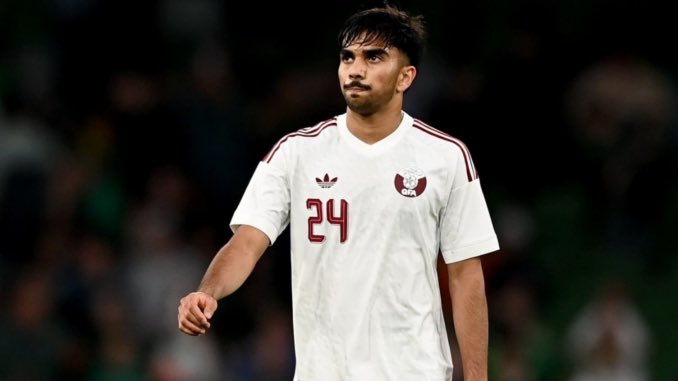
Probably the only person with a valid Indian Passport playing in this World Cup. Perhaps across all World Cups.

Tashin Jamshid of India is playing for Qatar today. He is Kerala born representing Qatar at Football World cup. Plays as striker
2
14
520

i think this is valid EXCEPT the cure being that low smh that’s criminal (jk but stupid song is that girl fr)
6


You are 100% wrong, but I don't care how valid anyone's "protests" are -- you have no right to break into any business, put yourself above the law, destroy property and SLEDGE HAMMER A POLICE OFFICER.
1

Valid crash out
