


“Built on strong values. Powered by technology. 🇮🇳
Happy Republic Day from Quantum WebFrame.”
#HappyRepublicDay
#RepublicDay2026
#DigitalIndia
#MakeInIndia
#IndianStartup

10

This Makar Sankranti, give your business a fresh direction.
A strong website isn’t an expense — it’s an investment.
Build smart. Grow faster.
✨ Quantum Webframe
#MakarSankranti #DigitalGrowth #QuantumWebframe
13
Makar Sankranti symbolizes new beginnings and upward growth
As the sun changes its path, it reminds us that the right direction leads to progress
This festive seasonlet your brand rise higher with a strong digital presence.
At Quantum Webframe
#MakarSankranti #QuantumWebframe
1
11
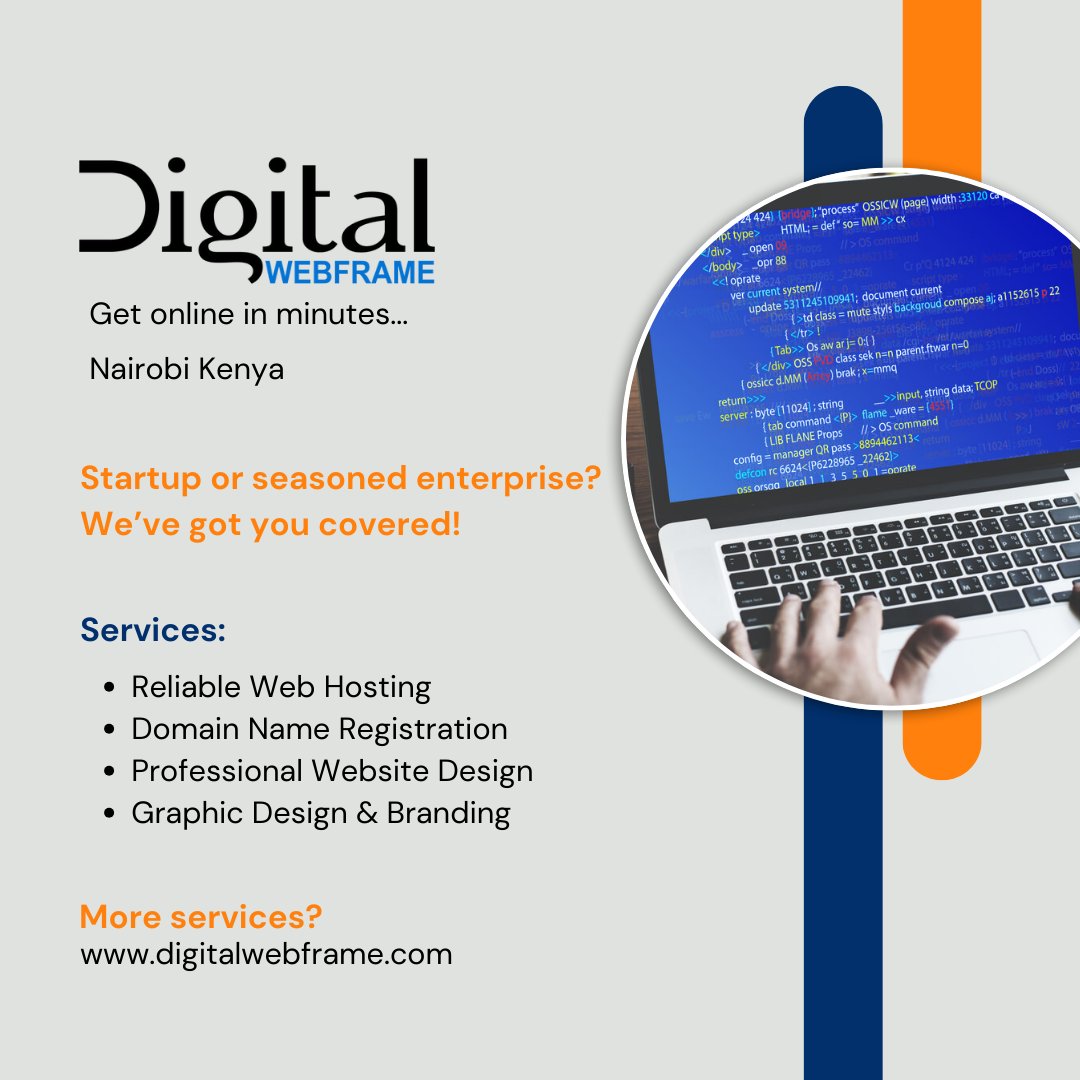
🚀 Your Digital Partner in Kenya
At Digital Webframe Solutions Ltd, we help businesses go online, grow online, and stay online.
✅ Reliable Web Hosting
✅ Domain Name Registration
✅ Professional Website Design
✅ Graphic Design & Branding
13
New Year. New Goals. New Digital Possibilities.
Happy New Year from Digital Webframe Solutions! 🎆
Here’s to faster websites, stronger security, and greater online success in 2026. Thank you for building the future with us.

4

25 Dec 2025
Merry Christmas & Happy Holidays! 🎄
As we wrap up the year, Digital Webframe Solutions wishes you a season of uptime, speed, and growth.
Thank you for being part of our journey.
Here’s to building even better digital experiences in the year ahead!

3

21 Dec 2025
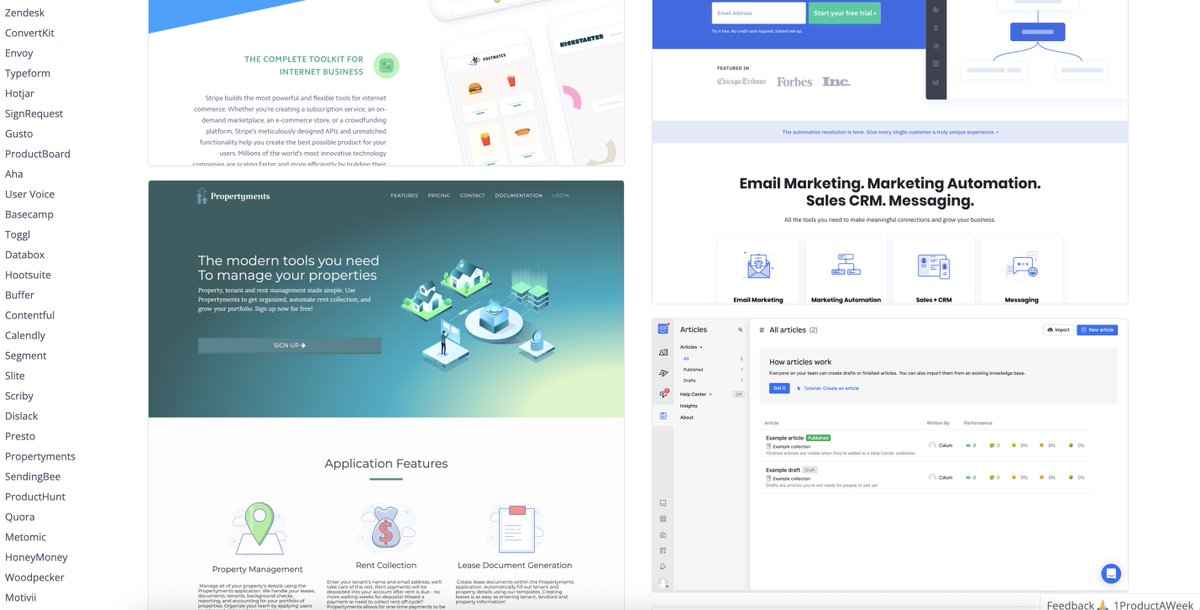
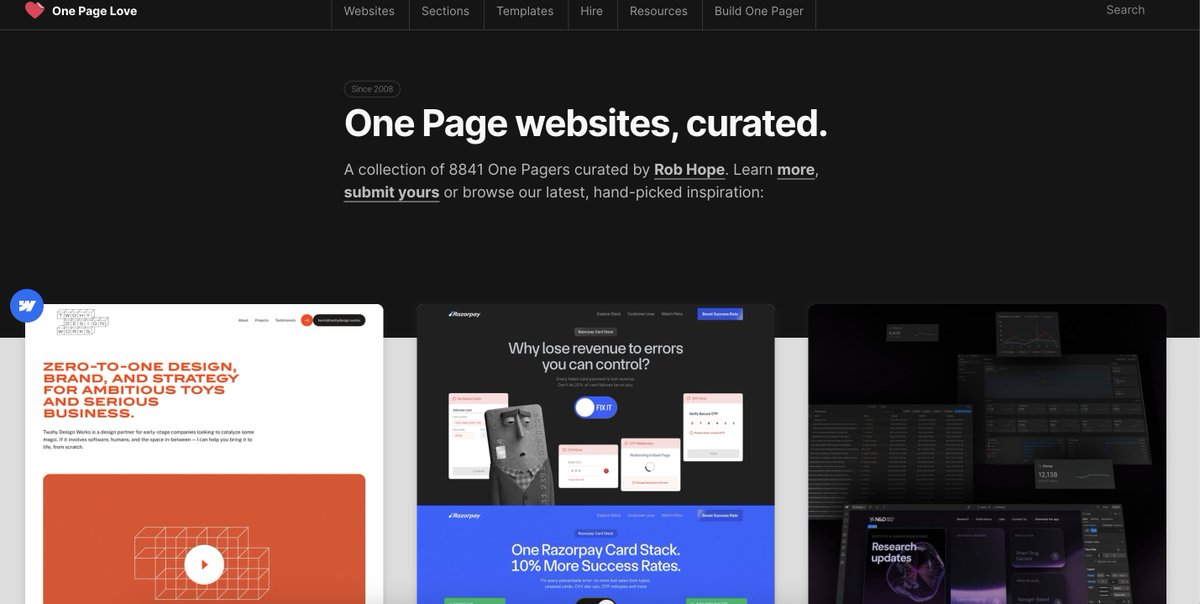
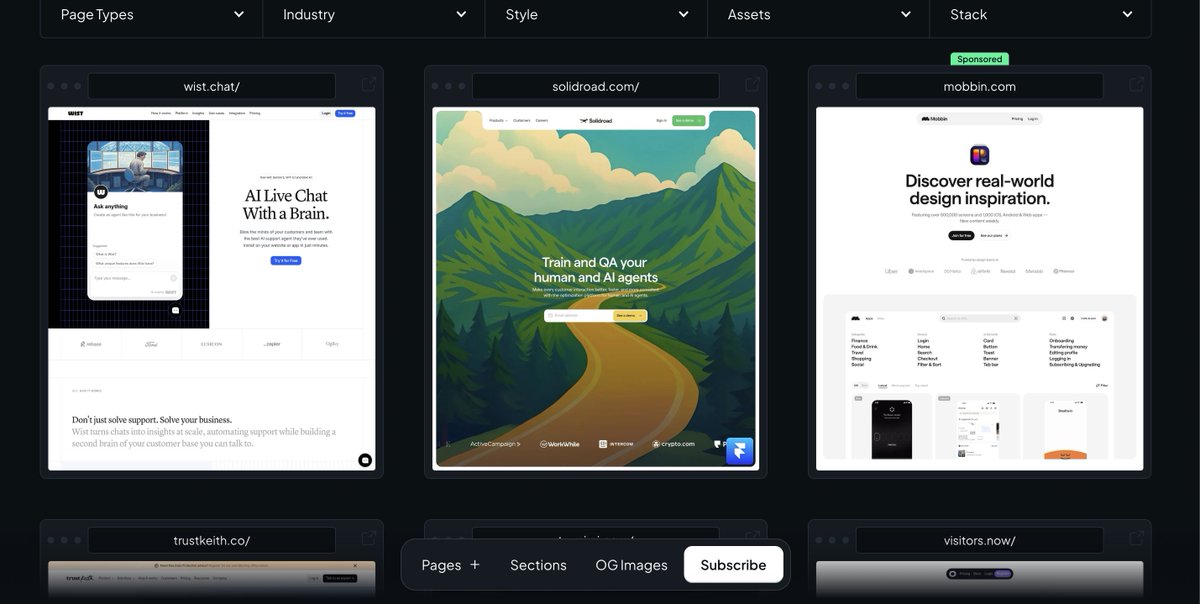
مواقع مميزة للحصول على الإلهام في تصميم المواقع لكل UX/UI Designer ✨:
Saaspo : saaspo.com/
Onepagelove : onepagelove.com/
Webframe : webframe.xyz/
Land book : land-book.com/

3
29
424
18,494

29 Sep 2025
Or something in a webframe
ie 99% of everything these days
1
52

15 Aug 2025
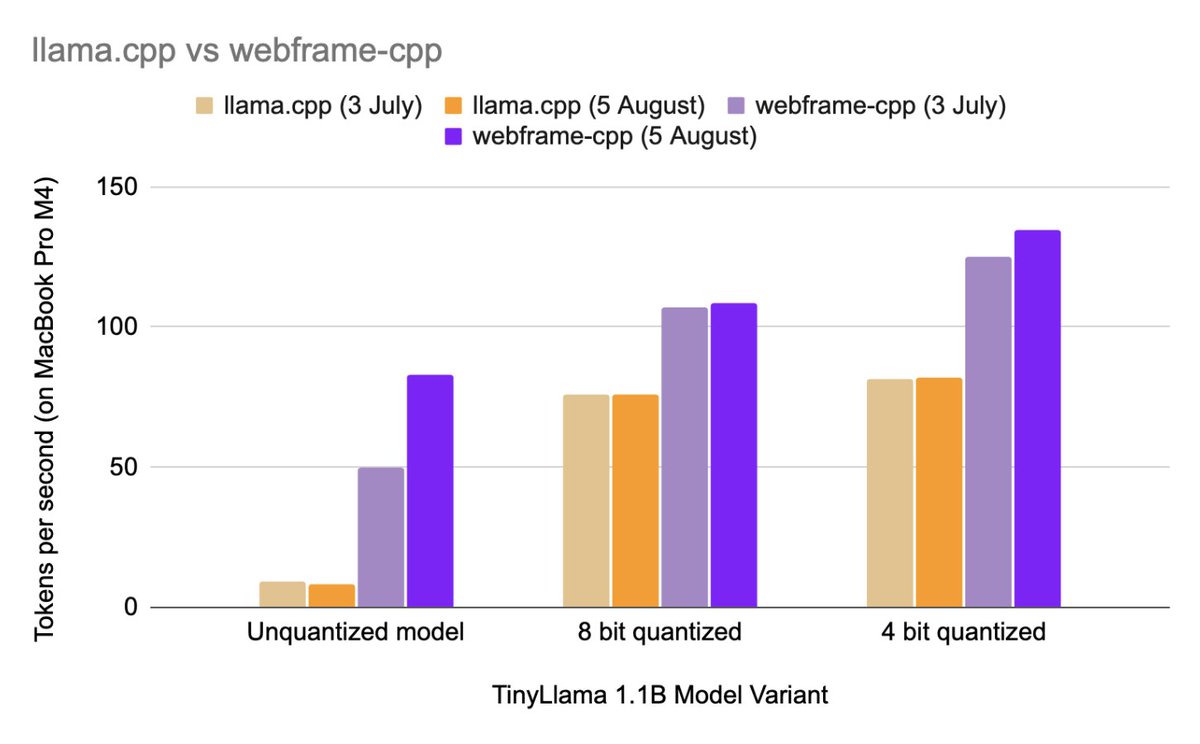
On the latest TinyLlama 1.1B benchmarks (MacBook Pro M4):
Unquantized: ~8× faster than llama.cpp
8-bit & 4-bit quantized: still leading — and getting faster month over month
From July → August, every variant of webframe-cpp improved its speed.
1
10
941

18 Jul 2025
🧵 2/n But how exactly a model can be split, and still it will generate response to my question
A transformer is just a long stack of math layers packed into weight matrices that live in RAM.
so webFrame starts by slicing the full checkpoint into several “shards” on disk. Each shard holds only the slice that a given computer will need, following the same tensor-parallel idea first popularized in Megatron-LM.
When the cluster boots, every Mac loads just its slice, which keeps memory use under control.
Once a prompt arrives, the layer-by-layer forward pass still happens in the usual order, but matrix multiplications are now spread across machines at each step.
For example, if a weight matrix is split column-wise, every Mac multiplies its sub-matrix with the same input activations at the same time, then they share partial results through a lightweight all-reduce call, the same trick outlined in NVIDIA’s tensor_parallel docs.
That collective sums the pieces so the math matches a single-box result byte-for-byte.
Layers can also be staged across nodes, one chunk of consecutive layers per machine, which is called pipeline parallelism.
webFrame mixes both methods, so some Macs hold early layers while others hold later layers, and each stage may still run tensor splits inside.
A tiny micro-batch of tokens flows through stage 1, then hops to stage 2, and so on, overlapping compute and network time the same way GPipe demonstrated years ago.
During generation, the loop is autoregressive: produce logits, pick the next token, append it to the prompt, repeat. The node that owns the final linear-to-vocab layer collects the last hidden vector from its peers, runs the logit math, samples the token, and streams that single byte back to the caller.
All other machines cache their local activations so the next step can skip recomputing earlier layers, which cuts latency the same way DeepSpeed’s inference engine does
Because the shards never leave the building, only small activation tensors and single-token logits cross the wire, so user data stays on-prem. Thunderbolt or Ethernet moves those tensors fast enough that webFrame still shows the first word in about 1.8 s for Llama-3 70B on a 4-Mini cluster
To squeeze even more into each Mac, webFrame applies entropy-weighted quantization so low-information layers drop from 16-bit to 4-bit while keeping accuracy over 99 %.
Quantized shards mean less RAM, faster math, and smaller network packets, which is why the system streams ≈5.8 tokens / s versus 2.3 tokens / s for an unoptimized baseline.
Finally, Navigator, a daemon that ships with webFrame, auto-detects the fastest path between nodes, builds either a ring or full mesh, and sets up the collective calls so engineers never hand-write MPI scripts.
If one link slows down, traffic reroutes mid-stream, echoing the ideas in RingAttention’s overlap-compute-with-communication design.
In short, webFrame works because matrix math is naturally splittable, collective ops can reassemble results with millisecond overhead, and a thin orchestration layer hides the wiring, so several modest Macs behave like one giant GPU without leaking a single token to the cloud.
1
1
5
1,077
18 Jul 2025
Wow this is such a brilliant idea for running AI models locally. 🎯
webFrame is @thewebAI 's backend that slices a huge language model into smaller shards, sends each shard to a different computer on your own network, then stitches the answers back together on the fly.
Because every shard stays local, no token or user data leaves the building, and even a modest Mac Mini cluster can serve a state-of-the-art model in real time.
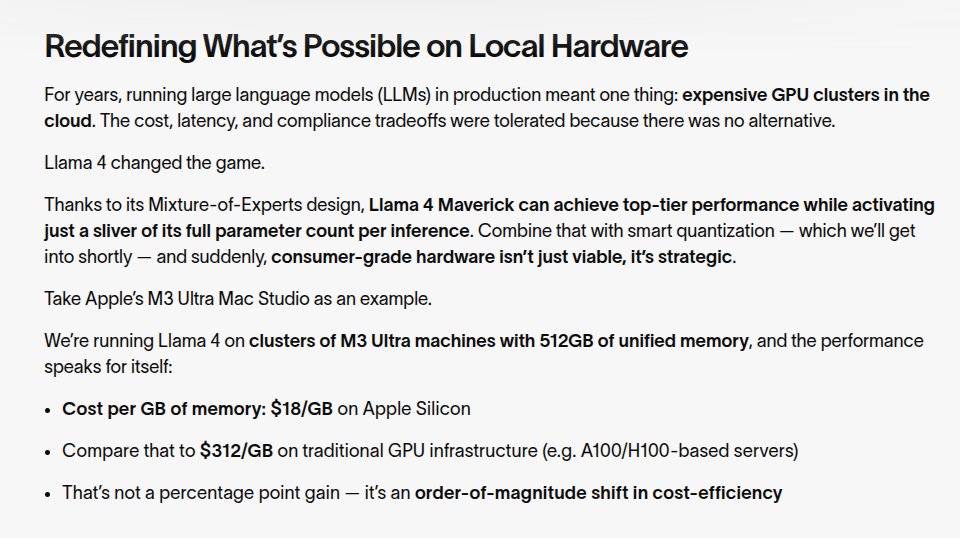
Its redefining what’s possible on local hardware.
And they just published their benchmark results.
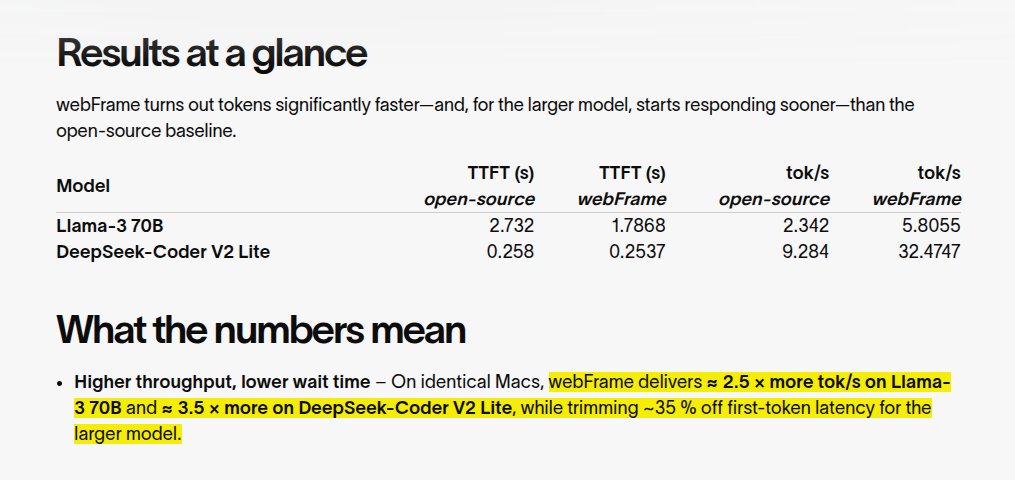
📌 webFrame pushed out ≈3X more tokens each second than a SOTA open‑source rival on a 4‑Mac Mini cluster
📌 First token showed up ≈35% sooner for Llama‑3 70B
Basically webAI compared its webFrame inference stack with a well-known open source cluster framework on identical four-node Mac Mini M4 Pro machines, each with 64 GB RAM and shared prompts.
The test used Llama-3 70B (4-bit) and DeepSeek-Coder V2 Lite (4-bit), measuring time-to-first-token (TTFT) and tokens-per-second (tok/s).
📌 For Llama-3 70B, TTFT dropped from 2.732 s to 1.7868 s and throughput jumped from 2.342 to 5.8055 tok/s, roughly 3X faster.
📌 DeepSeek-Coder V2 Lite saw ≈3.5× throughput gain, moving from 9.284 to 32.4747 tok/s.
Users keep data inside the building while still getting sub‑2‑second answers.
No data leaves your network. No vendor lock-in. No compliance headaches. No expanded attack surface.
Why it matters
webFrame shards a model across local nodes, then coordinates them through its Navigator tool, keeping data on-prem while squeezing more work from the same chips.
Flexible networking—Ethernet mesh or Thunderbolt ring—removes the full-mesh requirement that slows the baseline.
Faster responses mean fewer machines, lower power, and private, real-time apps for health, factory, or edge settings.
🧵 Read on 👇
6
13
64
7,241

15 Jun 2025
👔 Happy Father's Day! 👔
At Digital Webframe, we celebrate and appreciate all the dads who guide, inspire, and support their families - just as we support your business’ digital growth.
Thank you for trusting us to bring your stories to life.
#FathersDay #CelebratingDads

2

29 May 2025
How does webframe compare to
github.com/b4rtaz/distribute…, what would a basic pro/con list between the two look like?
23

26 May 2025
Imo if an integral feature in an OS now requires a webframe to draw, something’s gone deeply wrong with the feature itself
3
52
1,237

10 May 2025
5⃣ Webframe:
Inspiración solo de Webs
Capturas de secciones específicas (hero, pricing, contacto, etc)
Filtros por tipo de contenido
webframe.xyz/
1
13
18 Apr 2025
Happy Easter Holidays from Digital Webframe Family

4