
2h
I nearly had a heart attack 24 hours before my start date. I spoke to about 10 people who were in the same or similar roles because I was clueless and knew the expectations would be high in such a fast paced environment . They all said the same thing: be confident, ask the right questions, and be ready to read through every document made available to you.
Thank God I got through that phase. It made me far more resourceful and valuable. Within a month, I was trusted with additional projects and appointed as a workstream lead. Looking back, those early challenges were worth it.
51

@ShapeShift is voting to add @Discostuu92 to Engineering through September 30th for $23,200 in $FOX and zero USDC burn.
His business-development work lost its home after @govbyfbl did not renew Product Lite. The proposal folds that scope into @tecmns instead of creating another workstream.
The goal:
- keep @AskVenice, @useteller, @bobanetwork, @megaeth and @Starknet integrations moving
- resource the API revenue path and free @primatecronos for technical readiness
@Discostuu92 voluntarily lowered his ask after a prior vote outcome and moved to 100% $FOX.
"The biggest risk right now is having nobody to manage the cycle and losing those integrations."
Fireb0mb1 supports, arguing that declining revenue makes a low-cost, $FOX-only sales investment worth preserving. No substantive opposition has been voiced publicly.
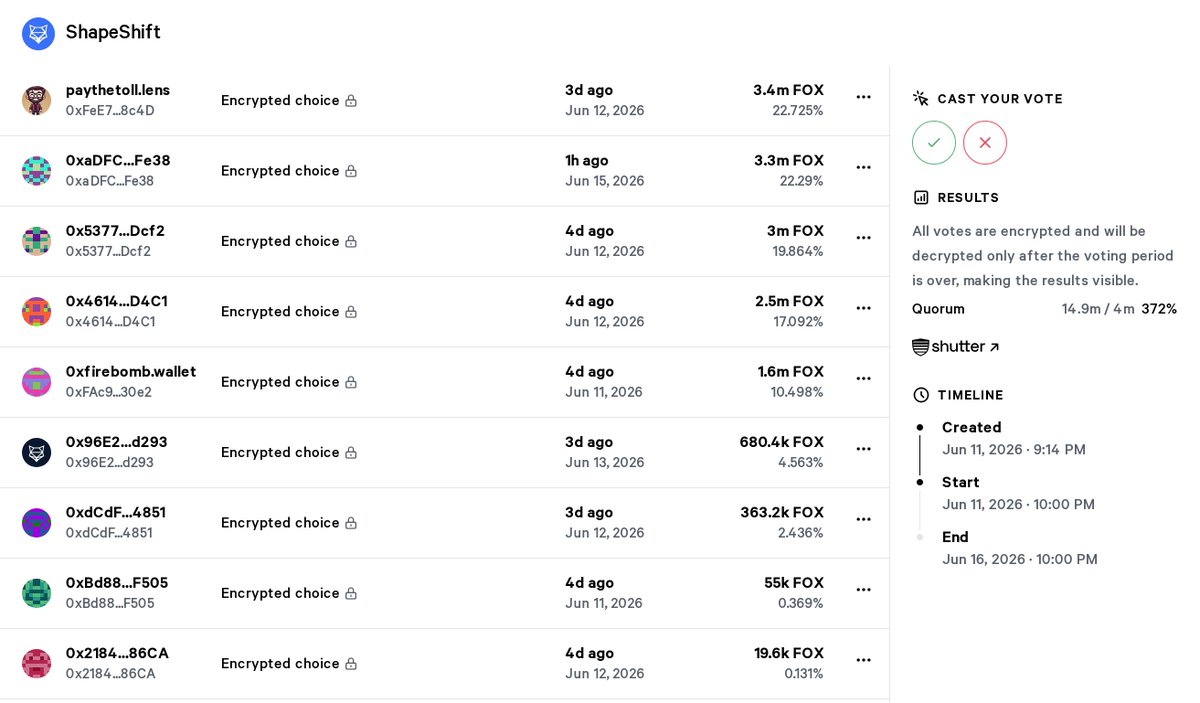
10 wallets have cast 11.59M $FOX, meeting quorum at 289.7%. Votes are encrypted with Shutter private voting, so no live split is visible.
Voting closes June 16th at 8pm UTC.
Proposal: snapshot.box/#/s:shapeshiftd…
1
3
291

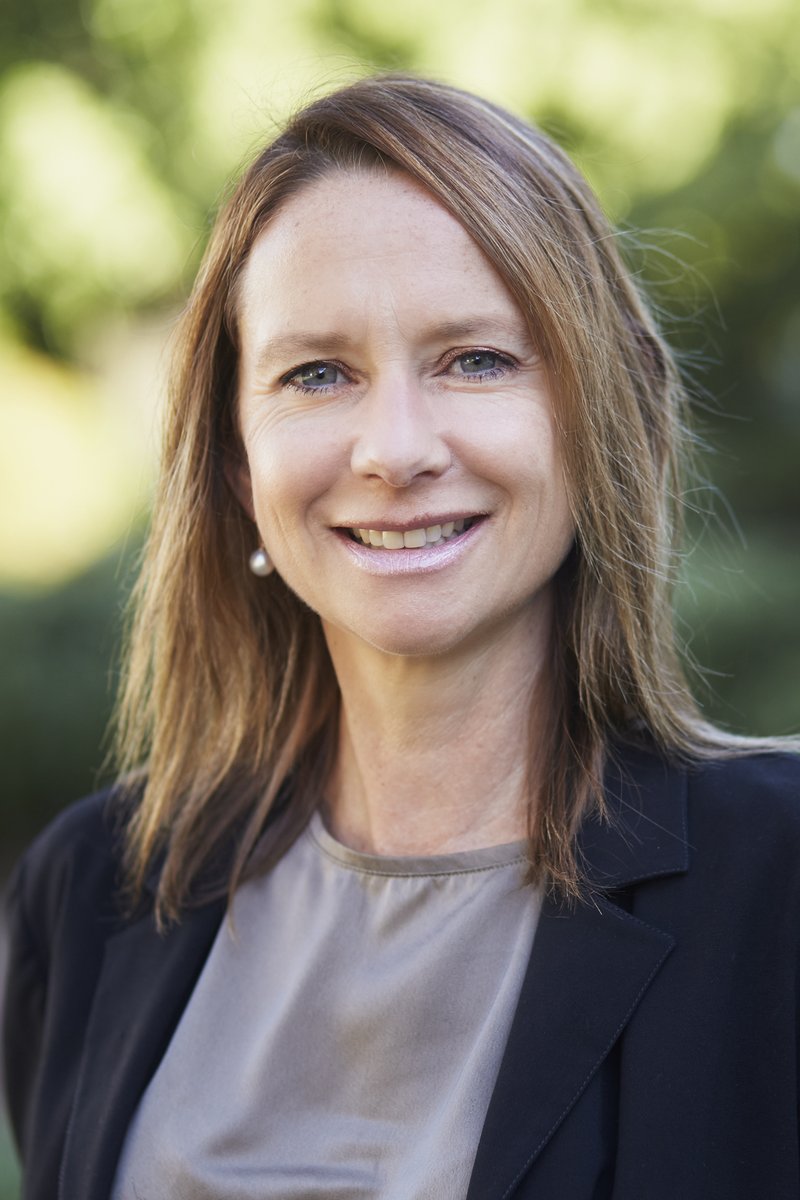
The Grower Group Alliance is pleased to announce the appointment of Tanya Kilminster as Acting Director of the South-West WA Drought Resilience Adoption and Innovation Hub, effective 15 June 2026.
Tanya brings extensive experience and a deep understanding of the #WADroughtHub, having served as a Knowledge Broker since 2021. A sheep and grain producer from Bruce Rock, Tanya is well known across the WA agricultural community and is one of GGA's longest serving team members.
Tanya assumes the role following the leadership of Dr Jo Wisdom, who served as Hub Director from January 2025 and led the Innovation workstream from July 2022. During her time with the Hub, Jo made a significant contribution to the growth and delivery of the program. GGA thanks Jo for her dedication and leadership.
We look forward to Tanya leading the next chapter of the Hub and continuing to work with partners and stakeholders to strengthen drought resilience across South West Western Australia.
111

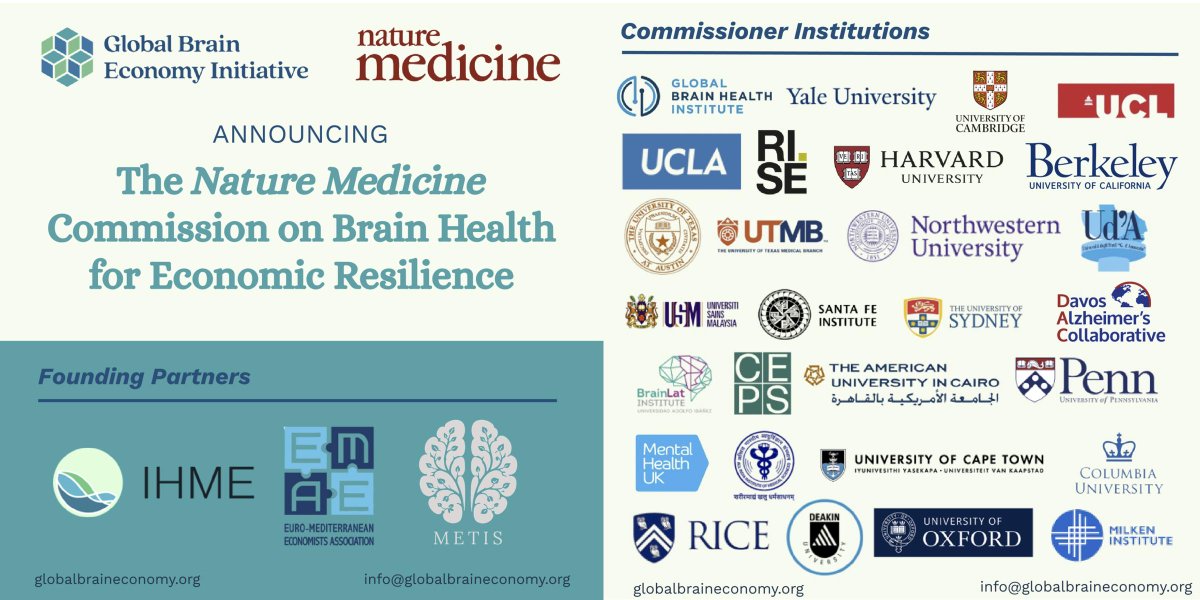
Prof. @rym_ayadi has been named Co-Chair of the @NatureMedicine Commission on Brain Health for Economic Resilience, leading its Measurement Workstream. EMEA joins as a Founding Partner 🧠
#BrainHealth #BrainCapital #BrainEconomy
🔗 euromed-economists.org/prof-…
15
Jared Silver retweeted

I have a friend who built out the AI enablement workstream / taught everyone cowork / managed skills / etc. at an old-school finance shop.
she's now looking to do this full time somewhere else that's more forward thinking. Anyone hiring or have leads, can introduce.
4
1
7
2,282

Ash Prabaker (Anthropic Engineer):
"give it the spec of what you're trying to achieve, and then let the loop iterate against those criteria."
the loop only works when it has:
a home, memory, artifacts, and a check to iterate against
1. a durable thread
give one workstream one home. pin it if it matters
keep it alive across PRs, bugs, notes, experiments, and releases
2. disk-backed memory
ask Codex to write decisions, TODOs, client context, setup notes, and open questions into real files
chat history is slippery. files are inspectable
3. inspectable artifacts
when Markdown is enough, use Markdown. when interaction matters, use a tiny `index.html`
when visuals matter, open the local app or rendered artifact in Browser and check the result
4. a verification gate
tests, lint, typecheck, build, screenshot, smoke test, rendered preview
pick the smallest check that proves the work moved
every serious Codex loop should leave behind one of these:
- a diff
- a note
- a verified artifact
- a screenshot
- a failing test with a named next step
- a passing check
start with one thread and one notes file
make the next Codex run produce something you can inspect

14
31
2,371


Jun 14
There's another six-point plan to save the Tories, and I'm unconvinced.
@KemiBadenoch’s policy platform is already sound - classic liberal with a solid injection of patriotism, essentially Thatcherism updated for this century. The policy direction of travel, if you look at what’s been announced at party conferences, the alternative King's Speech, the interim packages, - all of it is conservative, competent on paper, and precisely what the country needs.
The problem isn't policy. It's trust.
Voters who left for @reformparty_uk or the @LibDems aren't holding out for a better manifesto. They're holding out because they don't believe the party will actually deliver, or that it has the will to deliver, or that if it tries it'll end in another immigration-level blunder. The Lib Dem defectors in particular weren't soft left - they were right-wing Tories who'd had enough of competence failures. Two separate axes, both broken.
Kemi Badenoch's personal approval ratings are steadily improving, but the party’s voting intention is stale. The brands - the leader and the “Party” - have decoupled. Which means that making the whole renewal a bet on Kemi's character and track record isn't closing that gap.
Because this isn't a packaging problem. It's a root-causes problem. The party never codified its values, which left it open to Cameron's yellowing - the deliberate ideological dilution that let the wets flood in and sabotage delivery. And where ideology wasn't the issue, competence was: e.g. uncapping care visas while paying British labour to sit on welfare wasn't a values failure, it was a straightforward miscalculation.
More policy work won't fix this. The trust deficit needs its own workstream - independent, explicit, and aimed at persuading voters that this time the manifesto won't just be promises, but promises kept and kept competently. Without that, the cleverest policy platform in the world will be seen by voters as just more words.
Jun 14

Can the Conservatives recover from their historic defeat?
Bernard Jenkin says only a radical six-point plan on welfare, tax, immigration, defence and regulation can reverse Britain's decline 👇
telegraph.co.uk/news/2026/06…

9
5
32
2,510

Jun 14
i’m knee deep in 4 different AI research projects and this quote sums up my workstream process: “range matters as much as depth.”

59

EA, innovation, and operations run as separate tracks. They never converge, so you get elegant architecture nobody operates. Which workstream owns the failure? [2] #EnterpriseArchitecture #MaxeliaLtd
10
John Langtry retweeted

Jun 13
It’s a secret Pillar 2 workstream.
1
1
2
1,049

🎯 The Project
ElementUSA is in partnership with the Colorado School of Mines, awarded a $67 million DOE grant to design, construct, and operate a rare earth and critical mineral processing facility at St. John the Baptist Parish, Louisiana — targeting the legacy bauxite residue stockpiles at the Gramercy alumina refinery.
The $67M DOE award (with Colorado School of Mines) is specifically for the rare earth element processing facility — the design, construction, and operation of the integrated pyro-hydrometallurgical plant to extract the REE basket and mixed rare earth oxide (MREO) from the Gramercy bauxite residue. This is the primary ElementUSA/CSM project.
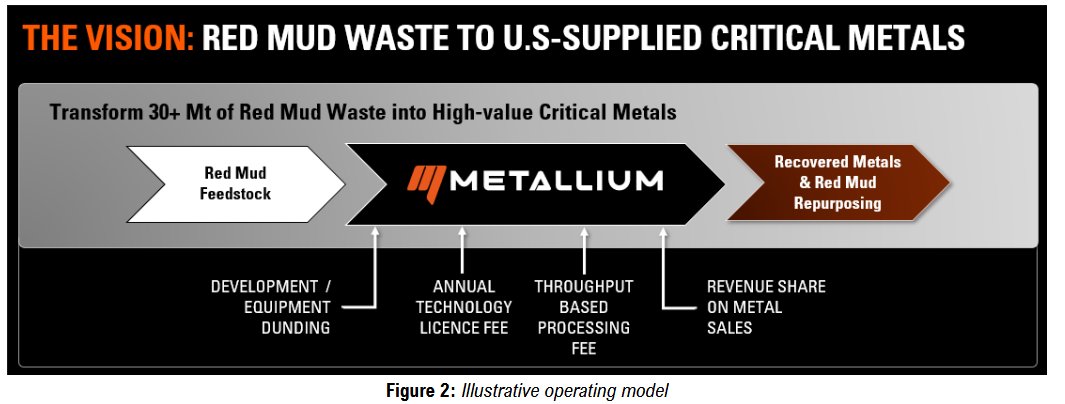
ElementUSA's DoD-backed gallium and scandium workstream is being executed in partnership with Metallium Limited (ASX: MTM) via a binding LOI — with up to $10.1M in non-dilutive funding flowing from ElementUSA to Metallium for deployment of its patented Flash Joule Heating technology. Metallium retains full ownership of its FJH IP throughout.
What the LOI actually means in plain terms:
The Metallium (ASX: MTM) FJH story and the ElementUSA DOE $67M rare earth project are two separate workstreams that happen to share the same physical site (Gramercy). They should not be conflated in the post.
The MTM LOI reality as of today:
✅ A binding LOI framework was signed December 2025 — but binding only on confidentiality, governing law, and the $50,000 Project Initiation Fee
✅ The commercial terms (fees, royalties, revenue share) are indicative only — to be finalised in Definitive Agreements not yet signed
⏰ The 180-day window to execute Definitive Agreements has elapsed (expired ~June 8–9, 2026) with no public announcement of execution
❌ No red mud extraction results have been publicly released by Metallium
❌ No FJH demonstration on red mud feedstock has been publicly reported — Phase A validation at Anahuac, Texas has not been announced as complete
⚠️ The 12-hour continuous FJH reactor campaign Metallium completed was on its standard feedstock — not red mud
📋 Progression to Phase A funding ($3.7M) and Phase B ($6.4M) are both subject to performance milestones that have not yet been publicly met.
What actually happened — the MTM DoW SBIR track:
This is a completely separate government track from the ElementUSA LOI — and it is where Metallium has actually been delivering results:
🗓️ September 2025 — Metallium awarded DoW SBIR Phase I contract (valued ~A$100,000) through the Defense Logistics Agency to recover gallium from LED scrap and e-waste using FJH — executed with Rice University's Tour Group
🗓️ April 2026 — Metallium successfully completed Phase I — achieving or exceeding all technical milestones in just 6 months vs. the typical 12-month Phase I timeframe
🗓️ May 2026 — Metallium awarded DoW SBIR Phase II — US$1 million — for gallium and germanium recovery from e-waste, advancing to pilot-scale deployment at its Chambers County / Gator Point Texas facility
⚡ A note on the gallium and scandium workstream: ElementUSA holds a binding LOI with Metallium Limited (ASX: MTM) to deploy its patented Flash Joule Heating technology for gallium and scandium recovery at Gramercy — with up to $10.1M in milestone-driven funding allocated to Metallium.
⚠️Validating FJH performance on gallium on
🖥️⌨️📻📷📡e-waste feedstocks not
🏮RED MUD
Separately, Metallium recently completed its DoW SBIR Phase I gallium recovery contract ahead of schedule and was awarded a $1M DoW Phase II contract in May 2026 — validating FJH performance on gallium-bearing e-waste feedstocks.
So Metallium has proven FJH works for gallium recovery from e-waste at Pilot/Demo Scale — that is now DoD-validated.
But red mud is a fundamentally different, more complex matrix and no public results exist yet for FJH on Gramercy red mud specifically
Deployment on red mud at Gramercy remains the next step, subject to Definitive Agreements and Phase A milestones. This is a story worth watching closely. 👀
Will have a Closer look at @Metallium_MTM once they FJH Rare Earths
#ElementUSA #ColoradoSchoolOfMines #DOE #DepartmentOfEnergy #DefenseProductionAct #DPA #CriticalMinerals #RareEarths #REE #BauxiteResidue #RedMud #Gramercy #Louisiana #Scandium #Gallium #MTM #FJH
1
1
6
320

Jun 13
While frustrating for any of us mid-workstream with Fable...this might be the best unintentional marketing campaign ever
Jun 13

The US government, citing national security authorities, has issued an export control directive to suspend all access to Fable 5 and Mythos 5 by any foreign national, whether inside or outside the United States, including foreign national Anthropic employees.
The net effect of this order is that we must abruptly disable Fable 5 and Mythos 5 for all our customers to ensure compliance.
Access to all other Claude models is not affected.
We apologize for this disruption to our customers. We believe this is a misunderstanding and are working to restore access as soon as possible.
Read our full statement: anthropic.com/news/fable-myt…
16

Jun 13
isn't it great when they remove Fable access in the middle of your workstream?
1
28



Jun 12
We’re extending Harvey's Legal Agent Benchmark (LAB) to in-house contracting.
Contracting is the highest-volume workstream for in-house legal teams, where a huge amount of business risk gets negotiated into binding agreements.
Benchmarking it is hard because:
1) Contracting includes many tasks like drafting, redlining, negotiation, issues lists, and escalation, and many contract types across areas like financing, IP, and M&A.
2) Contracting depends on evolving context in a multi-turn negotiation: business context and data, precedent, playbooks, prior turns and edits, and even subjective factors like negotiating leverage.
We've added 500 new contracting tasks and 90 contract types to LAB, with a lot more to come.
Full article below:

1
4
51
8,493

Jun 12
3/ Workstream 1: the public surface, all reading as one product with one voice.
Workstream 2: the AI system layer, embedded in real product behavior.
Workstream 3: agentic ops workflows the team could maintain after we left.
1
1
289