
BAN ALL NGOs
Joined April 2018
- Tweets 918
- Following 137
- Followers 21
- Likes 152
24 Photos and videos
















we have a mental disorder retweeted

Who was the lucky Secret Service agent that had to pat down Whoopi and Joy?
6
3
234
12,920
we have a mental disorder retweeted

10h
SPLC boss funneled $1.2 million to lover in neo-Nazi group - pair even had joint bank account trib.al/7wnuofS

1,345
6,975
22,821
4,447,608
we have a mental disorder retweeted

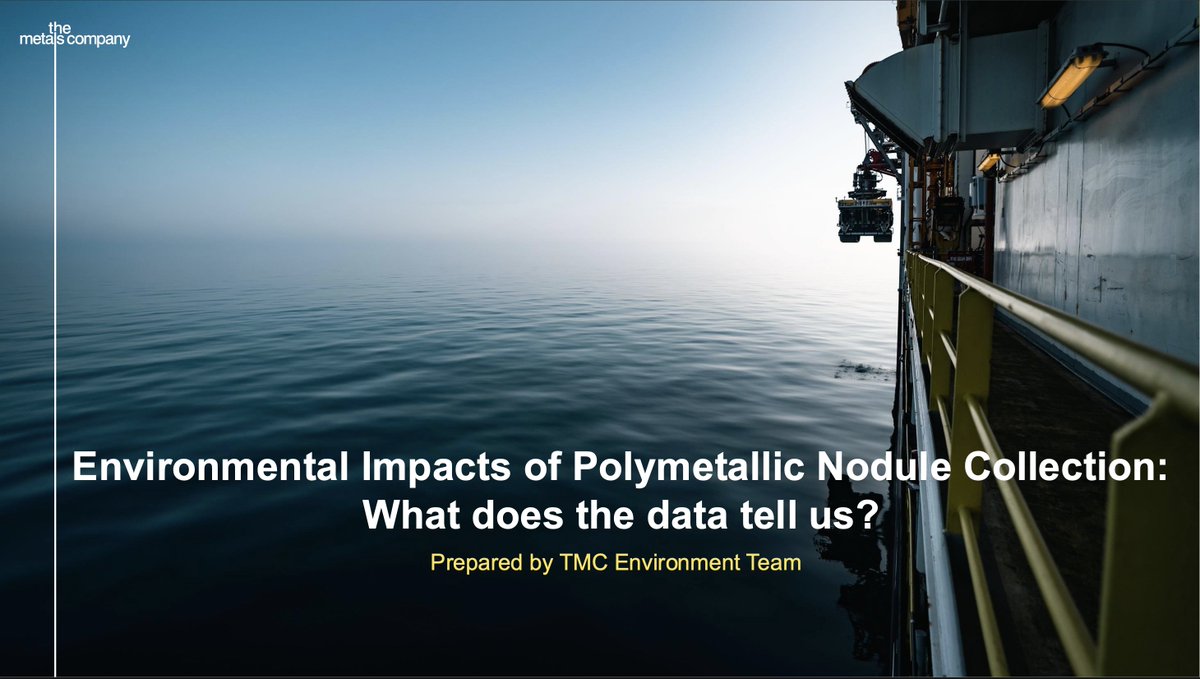
We have begun publicly sharing many of the key findings of our Environmental Impact Assessment. Learn more about our understanding of the validated environmental impacts of test mining and expected impacts of commercial-scale operations in this summary.
metals.co/wp-content/uploads… $TMC #deepseamining
3
13
65
2,383
we have a mental disorder retweeted

Jun 15
Congress allegedly launders tax dollars to its friends, special interest groups, and lobbying groups, per Jamie Dimon.
563
991
7,765
381,680
we have a mental disorder retweeted

Jun 15
As I have reported several times and now acknowledged by the Governor of California...Gavin and his wife are under federal investigation... what he failed to tell you... This began during the Biden Admin. Kind of a big detail.
648
12,699
57,780
2,283,876
we have a mental disorder retweeted

We've just released the following announcement: Successful Completion of First Multi-Unit FJH Test Campaign
Check out the full announcement and join in with the conversation at: investorhub.metalliuminc.com…
#MTM
1
3
21
558

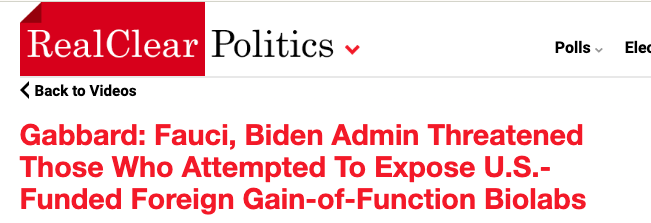
There were 120 secret biolabs in 30 different countries.
Let that sink in.
realclearpolitics.com/video/…
1,443
7,401
25,067
409,254

Critical Minerals Report (06.14.2026): Control is the New Commodity - InvestorNews investornews.com/critical-mi…
we have a mental disorder retweeted

🚨JUST IN: DHS Sec Mullin just confirmed that per President Trump's Executive Order that DHS will ensure ONLY American citizens vote this November!
Mullin is considering posting ICE agents at polling stations.
This is how we save our elections!🔥🇺🇸
782
7,018
34,248
335,827
we have a mental disorder retweeted

Jun 13
The African immigrant on the left has founded seven companies, directly and indirectly created 800,000 good paying jobs, created thousands of new American millionaires, developed reusable orbital rockets and brain chips that are giving independence to paraplegics, saved free speech, and can’t stop talking about how much he loves America.
The African immigrant on the right married her brother to commit immigration fraud, facilitated the theft of money intended to feed hungry kids, has used government to enrich herself, praises terrorists, and can’t stop talking about how much she hates America.
Leftists want the African immigrant on the left punished with punitive taxes and deported, but will try to run over law enforcement and get shot in the face in support of the African immigrant on the right.


285
7,120
24,203
547,673
we have a mental disorder retweeted

Jun 14
Did every Knicks fan get this access and privilege, or did the lefties who like to rant against oligarchy and inequality get super-special dispensation?

544
1,233
16,478
738,650

Come back tomorrow to see the basement!
youtu.be/1tc-fhgrVKE
1
4
4,366
we have a mental disorder retweeted

You are in the same space as good ole Bernie

5
119
3,408
35,890
we have a mental disorder retweeted

Apr 16
$GOOG isn’t just the Google you know — it’s a stealth holding company sitting on $195–220B in two of the most anticipated IPOs in market history, while trading at value-stock multiples on its core business. As SpaceX and Anthropic approach their public debuts, every re-rating in their private valuations flows directly into Alphabet’s balance sheet. You don’t need to win the IPO lottery — just own the shareholder who already did.
→ SpaceX IPO at $1.75T = $110B gain crystallized on books
→ Anthropic IPO at $600–800B = $85–112B stake value
→ TPU/GCP revenue compound as Anthropic scales to $150B ARR by 2029
→ Gemini DeepMind = internal AI moat independent of either IPO
→ Waymo monetization still largely unpriced
→ Trading at only 27x forward P/E — cheap vs the asset base
Not financial advice. DYOR.
1
3
17
22,632
we have a mental disorder retweeted

Jun 13
🚨 Despite 1,000,000 wealthy FIFA fans from around the world visiting NYC for World Cup, Mamdani REFUSES to clear the sidewalks around Penn Station of junkies
Some soyboy saw me filming and yelled “HAVE SOME F—ING HUMANITY” into my camera
Apparently, letting junkies DlE ON THE SIDEWALKS is the leftist way of “showing humanity”
There are PLENTY of officers here around Penn Station and MSG to do it. But they’re not allowed to do much at all.
Penn Station is the primary transit hub for FIFA fans traveling to MetLife Stadium for World Cup games. And this is the first thing they see.
Pitiful.
899
5,540
26,865
2,681,330
we have a mental disorder retweeted

Jun 13

🇺🇸🏭 The US Department of Energy just awarded $67 million to turn a 30-million-tonne pile of industrial waste in Louisiana into a domestic rare earth and critical mineral supply chain.
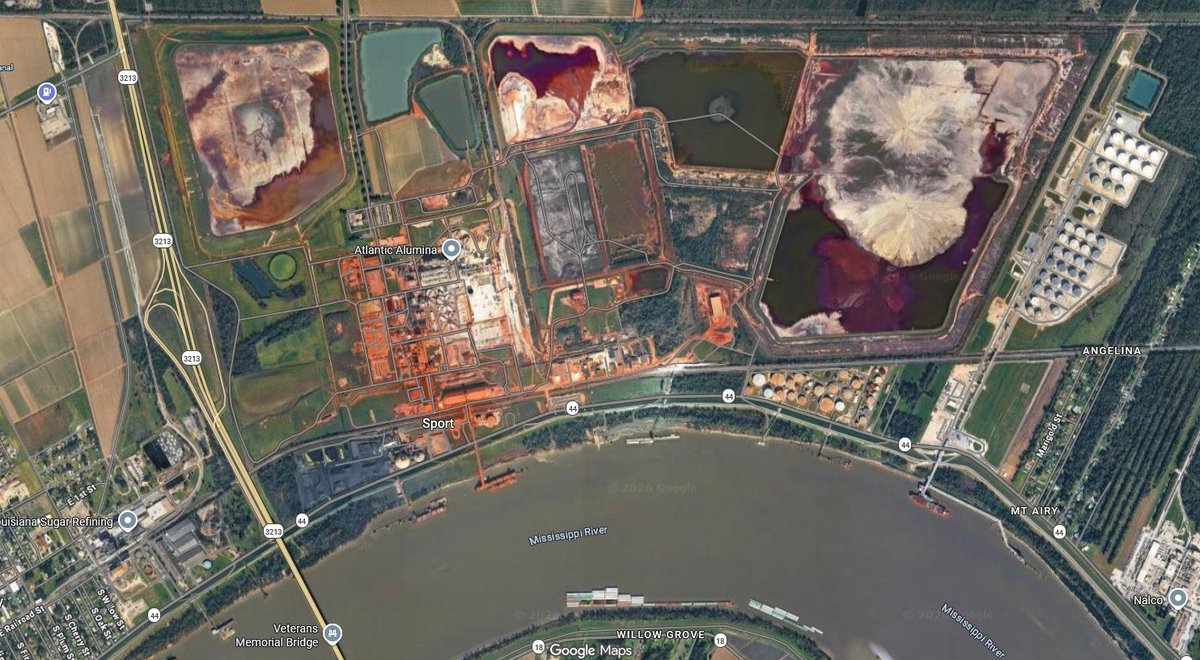
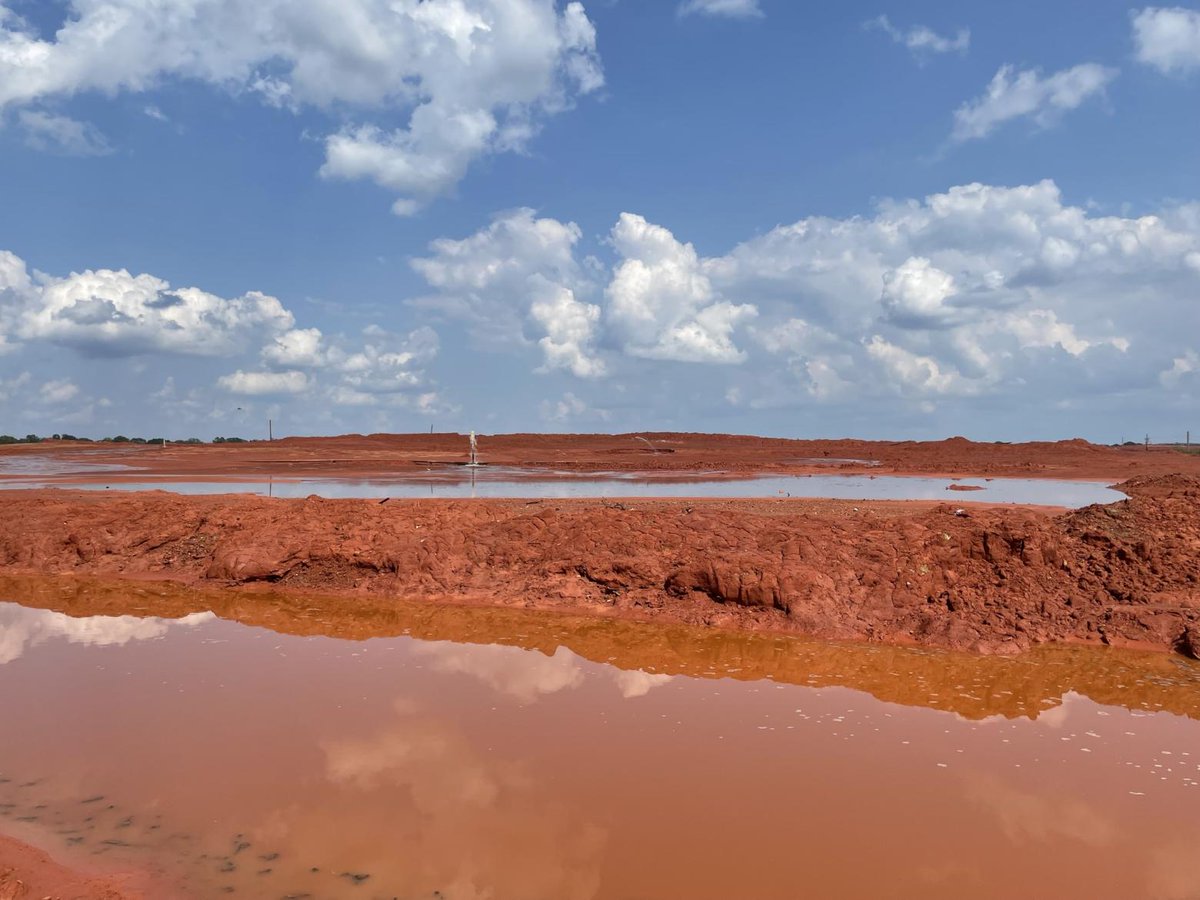
The feedstock? Bauxite residue — "red mud" — from the last operating alumina refinery in the United States. And this one is unlike any other red mud deposit on earth. 🧵
🎬 Watch the ElementUSA video 👇
🎯 The Project — Straight to the Point
ElementUSA (formerly ElementUS Minerals LLC), in partnership with the Colorado School of Mines, has been awarded a $67 million DOE grant to design, construct, and operate a rare earth and critical mineral processing facility at St. John the Baptist Parish, Louisiana — targeting the legacy bauxite residue stockpiles at the Gramercy alumina refinery.
Total federal commitment across both agencies:
💰 $67M — U.S. Department of Energy (DOE), in partnership with Colorado School of Mines
💰 $29.9M — Department of Defense, Defense Production Act (DPA) Title III, specifically targeting gallium and scandium recovery for Pentagon supply chain needs
💰 $850M — Louisiana Economic Development investment decision to cement the facility in St. John Parish, projecting 200 direct and 550 indirect jobs
Also
⚗️📷 $66 million. U.S. Department of Energy. Phoenix Tailings. June 3, 2026. 🧲The @ENERGY
selected @PhoenixTailings for a $66 million grant — part of a $147.8 million program — to deploy next-generation rare earth separation and refining technology at commercial scale, partnered with MIT and the University of Minnesota.
Further Reading here👇
x.com/roblun1/status/2062571…
Back to ElementUSA Funding
This is not a single agency bet. Both the DOE and the DoD have independently assessed this project as strategically critical — through an energy security lens and a defense readiness lens simultaneously.
Groundbreaking for Phase 1 is expected to commence mid-2026.
🌋 Why This Feedstock Is Different
Red mud is one of the most abundant industrial waste streams on earth — global stockpiles exceed 4 billion tonnes. Most of it is essentially worthless for REE recovery, averaging 800 to 900 ppm total rare earth elements globally.
The Gramercy deposit is fundamentally different.
The Gramercy refinery has been processing Jamaican karstic bauxite since 1957. Jamaican karstic bauxites are globally unusual — they are naturally enriched in rare earth elements, yttrium, and scandium due to the lateritic weathering processes in tropical environments that formed them. When the Bayer process extracts alumina from this ore, the entire REE suite concentrates into the residue, roughly doubling its grade relative to the original ore.
The result: 30 million dry tonnes of surface-stockpiled material, expanding at approximately 1 million tonnes per year, characterised by:
🔬 Gramercy REE Basket — Key Elements:
⚗️ Total REE (TREE) — 3,000–4,000 ppm | ~4× global red mud average
🧲 Neodymium & Praseodymium (NdPr) — ~20× crustal average | Core NdFeB permanent magnet metals
🛡️ Dysprosium & Terbium (Dy/Tb) — ~20× crustal average | Critical HREE dopants for EV motors & defense
⚡ Yttrium (Y) — >20× crustal average | Major heavy rare earth phosphate fraction
🔩 Scandium (Sc) — 130–390 ppm | Exceeds global red mud avg of 45–150 ppm — highest value per kg in the basket
💡 Gallium (Ga) — Up to 200 ppm | Critical semiconductor input, severely limited in Western supply
🔋 Vanadium (V) — Up to 800 ppm | Grid-scale battery storage & high-strength steel alloying
🏗️ Iron matrix — ~50% of total mass | Extracted as commodity pig iron — funds the operation
More than 95% of the metals across the iron, rare earth, and critical mineral fractions are characterised as payable.
🧪 A Note on Grade — and Why the Basket Price Is the Real Number
3,000–4,000 ppm is objectively low grade compared to primary hard-rock REE deposits. Mountain Pass in California grades at approximately 89,932 ppm TREO (~9%), with NdPr concentrations exceeding 23,810 ppm (~2.4%).
But the Gramercy economics do not rest on absolute grade. They rest on three things:
1. The basket composition. Most conventional REE deposits are light-rare-earth dominated — rich in lanthanum and cerium, which have low commercial value and create persistent oversupply problems. The Gramercy basket is heavily weighted toward high-value heavy rare earths, yttrium, and scandium — the elements that matter most for magnets, defense systems, and aerospace.
2. Scandium as an economic multiplier. Scandium can represent up to 95% of the theoretical economic value of REEs in red mud. The 130–390 ppm Sc concentration at Gramercy means the site functions, from a unit economics perspective, as a high-grade scandium deposit that also produces a lucrative REE basket. Scandium prices have historically reached $3,000 per kilogram due to supply constraints from politically complex jurisdictions.
3. Zero mining cost. The material already exists as a surface-accessible, ultra-fine particulate slurry. There is no drilling, blasting, hauling, or primary comminution. The largest capital outlays of a conventional mine simply do not apply.
⚙️ The Flowsheet — Why Pyro First, Then Hydro
This is the engineering decision that makes the entire project viable.
Directly applying acid to raw red mud would be catastrophic. The Gramercy material is approximately 50% iron by mass. Direct leaching would consume enormous volumes of acid dissolving bulk iron rather than the target critical minerals, and create an iron-saturated pregnant leach solution from which extracting trace scandium, gallium, and HREEs would be chemically unmanageable.
ElementUSA's solution — developed with Enervoxa — is a two-phase integrated flowsheet:
Phase 1: Pyrometallurgical iron valorization 🔥
The dry bauxite residue is fed into a high-temperature smelting furnace using a continuous carbothermal reduction process. The ~50% iron fraction is chemically reduced and extracted as saleable commodity pig iron — converting the largest waste component into a continuous revenue stream that subsidises the baseline OPEX of the entire facility.
The residual slag, now thoroughly depleted of interfering iron, contains the concentrated aluminosilicates, calcium compounds, and the entire inventory of REEs, scandium, and gallium — at effectively double or triple their original concentration in the feed.
Phase 2: Hydrometallurgical separation ⚗️
The iron-depleted slag proceeds into aqueous leaching circuits. The flowsheet is engineered to first extract individual high-purity gallium and scandium streams — reflecting the DoD's specific strategic priorities — followed by precipitation of the remaining REEs as a mixed rare earth oxide (MREO) basket characterised by its heavy rare earth and yttrium weighting.
This MREO product targets downstream offtake in magnet, semiconductor, aerospace, and medical imaging applications.
🎓 The Academic Partnership: Colorado School of Mines
The $67M DOE award explicitly pairs ElementUSA with Colorado School of Mines — leveraging its renowned Waste-to-Value Center under the leadership of Dr. Elizabeth Holley.
This brings an interdisciplinary team covering technical validation, mineral characterisation, scale-up fluid dynamics, and flowsheet optimisation.
ElementUSA also operates the Critical Resource Accelerator — a 30,000-square-foot R&D hub in Cedar Park, Texas — staffed with hydrometallurgists and pyrometallurgists and equipped with full analytical laboratory and pilot-scale development capabilities ranging from 500mL to 20-litre bench reactors.
🌍 Zero-Waste Architecture
A core design objective of the ElementUSA flowsheet is zero solid waste closure.
By fractionating the red mud into pig iron, critical mineral products, REO basket, and a neutralised aluminosilicate residue, the facility is designed to eliminate the entire historical environmental liability of the Gramercy site.
The depleted aluminosilicate bulk — stripped of heavy metals and iron — is suitable for use as supplementary cementitious material, clinker substitute, or geopolymer concrete input.
The 3,300-acre Gramercy site currently accumulates 1 million additional tonnes of new residue per year. This facility is designed to process that incoming material while simultaneously treating the legacy stockpile — converting an ongoing environmental liability into a strategic supply chain asset.
🗺️ The Scale of the Commercial Ambition
Phase 2 targets a 1-million-tonne-per-year commercial throughput, backed by an estimated $1.1 billion capital expenditure — with construction commencement targeted as early as 2027.
The strategic objective: supply between 45% and 385% of current annual US demand for various critical elements from this single facility — positioning the US toward net-exporter status for specific defense-critical metals.
📋 What to Watch: The Scale-Up Journey
The Phase 1 demonstration groundbreaking is targeted for mid-2026 — and the Phase 2 commercial facility at 1 million tonnes per year has a construction commencement target of 2027.
That is an ambitious timeline by any measure in extractive metallurgy, and the engineering community knows it. Here is what the milestones actually mean and what to watch for:
⏱️ The timeline reality
Transitioning a complex pyro-hydrometallurgical flowsheet from bench-scale validation to mega-scale commercial operations has historically taken 5 to 10 years of iterative optimisation. Phase 1 groundbreaking in mid-2026 and Phase 2 construction starting in 2027 means both phases are effectively running in parallel'
Silica management at scale — Bauxite residue contains reactive silica that can polymerise in acid leach circuits, forming viscous gels that clog filtration and solvent extraction units.
HREE separation circuit performance — Separating dysprosium, terbium, and yttrium from a low-ppm pregnant leach solution at industrial throughput requires hundreds of sequential solvent extraction stages running with very precise fluid dynamics. The low tenor of HREEs in solution means large liquid volumes must be processed to yield commercial quantities — putting reagent management and phase separation under sustained pressure.
✅ What gives confidence
The dual federal mandate (DOE DoD), the Colorado School of Mines academic partnership, the 30,000 sq ft Critical Resource Accelerator R&D hub in Cedar Park Texas, and the $850M Louisiana Economic Development commitment all provide an unusually robust infrastructure for absorbing the engineering learning curve.
🔗 Connecting the Dots: The DOE's Emerging Secondary Feedstock Strategy
Regular readers will recall the recent post on Phoenix Tailings receiving a $66M DOE grant to build a demonstration facility in Oklahoma for high-purity rare earth metal production from industrial waste, partnering with MIT and the University of Minnesota.
ElementUSA now joins Phoenix Tailings in a clear DOE thesis: secondary feedstocks — industrial waste, tailings, legacy residues — are not a niche. They are a central pillar of the US domestic critical mineral supply chain strategy.
The reasons are straightforward:
✅ No greenfield mine permitting required
✅ Material is already liberated and surface-accessible
✅ Environmental remediation and critical mineral production become the same project
✅ Federal capital absorbs the technology development risk that private markets won't fund yet
🔗discoveryalert.com.au/rare-e…
📎 Sources:
🔗 DOE Award Announcement — Colorado School of Mines & ElementUSA $67M
minesnewsroom.com/news/color…
🔗 DoD Defense Production Act Title III Award — $29.9M Gallium & Scandium
war.gov/News/Releases/Releas…
🔗 Louisiana Economic Development — $850M Investment Decision
opportunitylouisiana.gov/new…
🔗 ElementUSA — Official Company Website
elementusaminerals.com
#ElementUSA #ColoradoSchoolOfMines #DOE #DepartmentOfEnergy #DefenseProductionAct #DPA #CriticalMinerals #RareEarths #REE #BauxiteResidue #RedMud #Gramercy #Louisiana #Scandium #Gallium #Vanadium #Dysprosium #Terbium #Neodymium #Praseodymium #Yttrium #NdFeB #PermanentMagnets #HeavyRareEarths #HREO #MREO #Hydrometallurgy #Pyrometallurgy #SolventExtraction 🇺🇸🏭⚗️🔥⚡🧪🌍🎓💰🔗♻️
1
2
11
809
we have a mental disorder retweeted

Jun 13
"There are 193 countries in the world and 177 of them receive US taxpayer money from Congress. Thats 91.7% of the world." @C_3C_3

Elon is not the problem…
There are 193 countries in the world and 177 of them receive US taxpayer money from Congress.
177 of 193.
Thats 91.7% of the world.
Its not Congress’s money.
Its your money, my money, our kid’s money etc.
Americans are being screwed.
Not by Elon…
10
78
176
3,211
we have a mental disorder retweeted
Jun 13
$PLTR at $127 — Is This the Buying Opportunity Long-Term Investors Have Been Waiting For?
Down 35% from its 52-week high of $207.52. Down 26% year to date. Near its 52-week low of $122.68.
And yet — the fundamental story has never been stronger.
The Numbers Don’t Lie
➡ Q1 2026: $1.63B in revenue | 85% revenue growth
➡ Adjusted EPS of $0.33 | Profitable
➡ Full-year 2026 guidance raised to $7.65B–$7.66B
➡ Net income: $1.63B annually
➡ RSI near oversold territory
Why Is It Selling Off?
➡ Rotation out of high-valuation AI names
➡ UK/NHS contract review creating noise
➡ SpaceX IPO capital siphon effect
➡ Pre-CPI macro jitters
➡ Broad Nasdaq weakness
None of these change the long-term thesis. Sentiment, not fundamentals.
Why The Bull Case Is Still Intact
➡ AIP (AI Platform) is becoming the operating system for enterprise AI deployment
➡ CEO Alex Karp: companies are done with AI labs “tokenmaxxing” — they want results. $PLTR delivers results.
➡ Government Commercial dual flywheel — moated on both sides
➡ Defense spending is accelerating globally
➡ Average analyst price target: $186.89 | High target: $255
Personal Context
I’ve held $PLTR since early — currently sitting at 844% on my long-term position.
The share price changes. The mission doesn’t.
The market is giving you a chance to buy one of the most important AI infrastructure companies in the world at a 35% discount from its highs.
These windows don’t stay open forever. ⏳
Are you buying the $PLTR dip — or waiting for lower? 👇
Not financial advice. DYOR.
10
5
36
13,381
RT @BillBrooklyn10: ELON MUSK: If you’re reading this, SpaceX wants to take you to the Moon and Mars.
I’m 60 years old and retired from JP…
288