
Joined February 2022
- Tweets 5,251
- Following 281
- Followers 941
- Likes 5,605
267 Photos and videos





Kitty retweeted

Jun 11
they hate us cuz they aint us

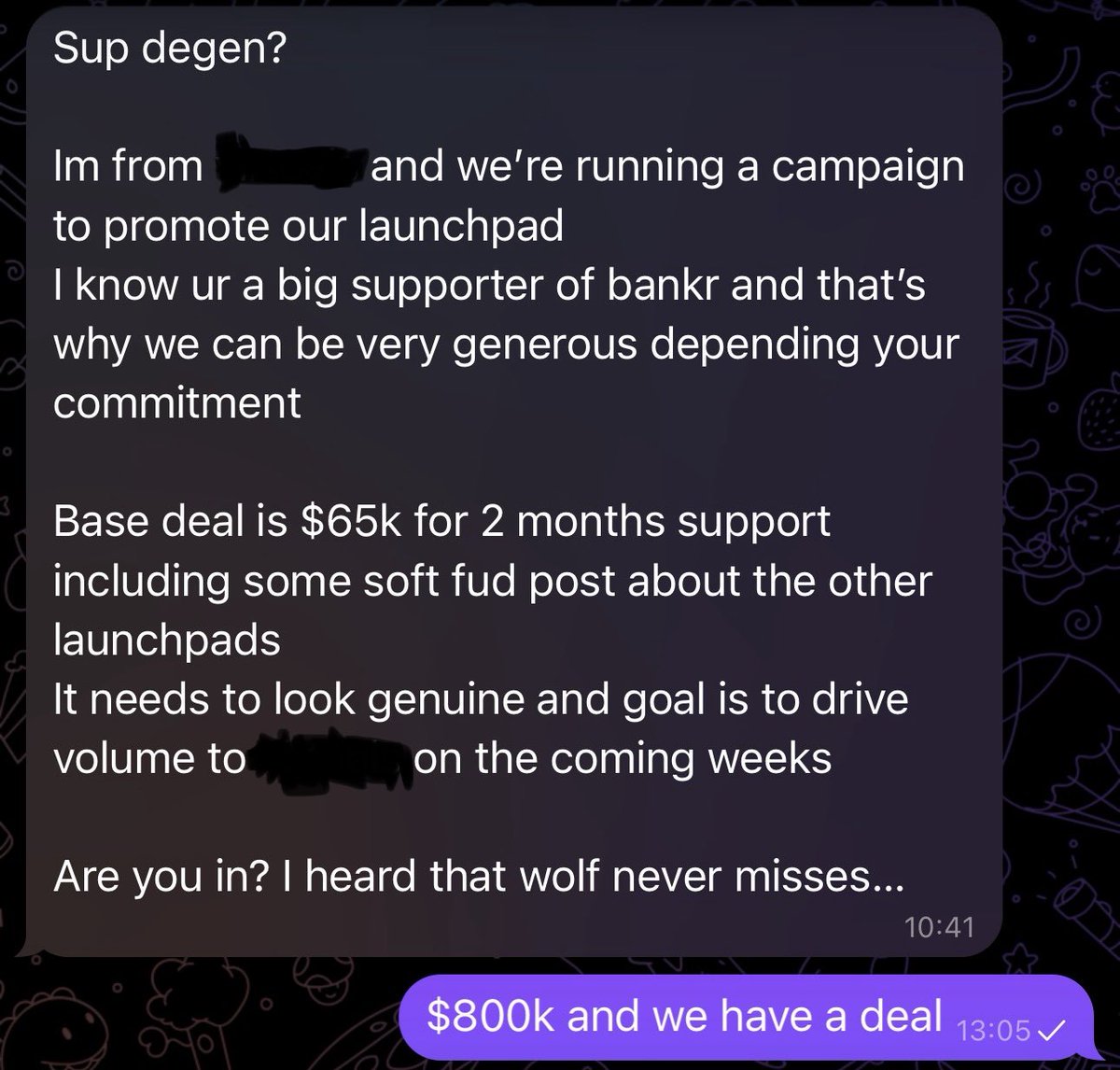
looks like the anti-$BANKR campaign has a budget
one launchpad team offered $65K for 2 months of support, including "soft FUD" against competitors to drive volume
$65K isn’t enough for the retardio chief officer, make it $800K
no worries, I’d be buying back $BANKR after this.
33
22
165
14,719

Jun 11
the start of private and decentralized inference
anyone can contribute to hosting models in enclaves
prompts are not stored nor known by miners
goodbye @OpenAI
7
10
34
591
Jun 11
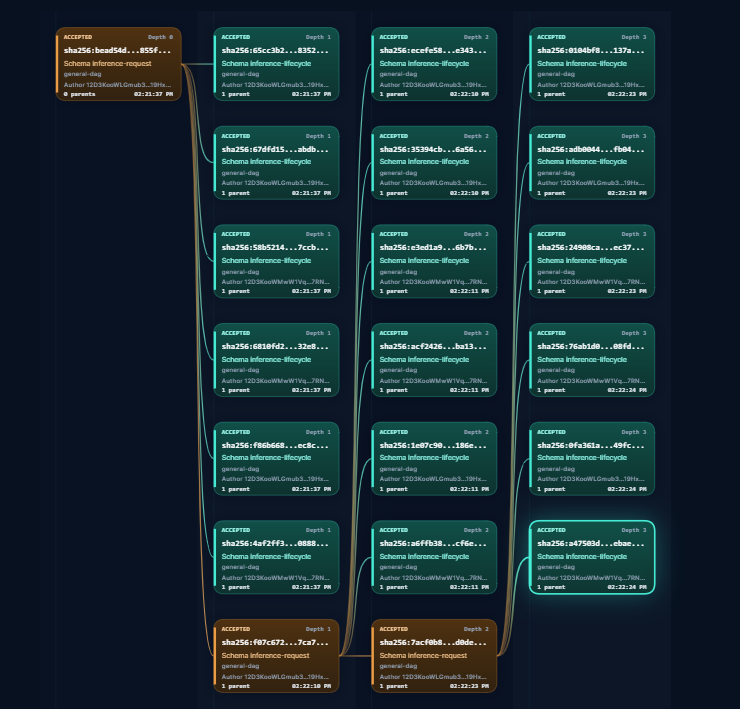
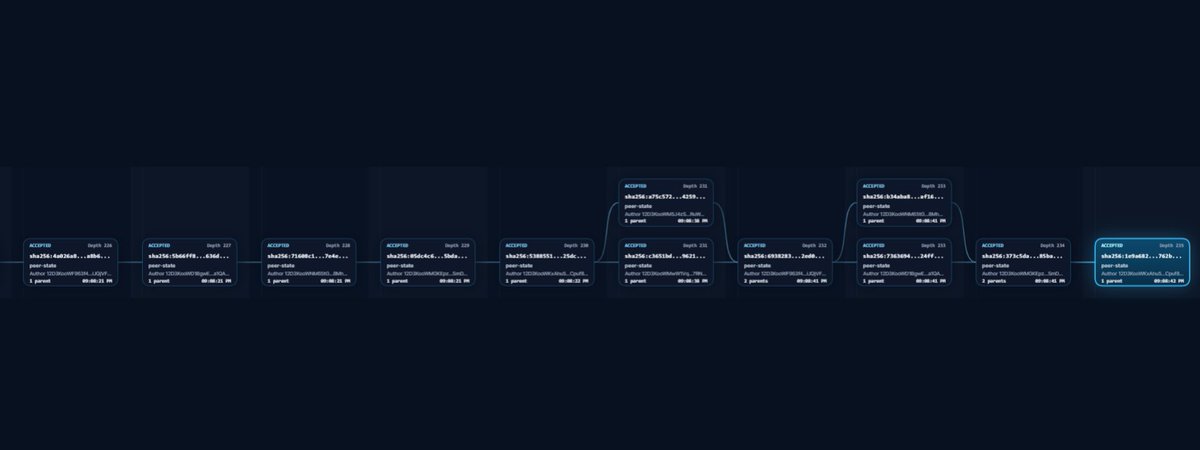
Basically a blockchain for AI (but uses a DAG)
Instead of transactions, it's the inference lifecycle that gets published to the dag chain
Visual needs to be fixed a bit but it works where each request is the parent node/block and the lifecycle of the request (acceptance, running, complete, etc.) are the children blocks.
Then each request uses the previous request as the parent
3
7
19
295
Kitty retweeted

Jun 3
New update complete: Validator-Based Ownership & Staking
This update introduces validators as the primary identity layer under the entire Hypertensor umbrella.
Previously, subnet nodes were independently registered, and users' stakes were delegated to them on a per-subnet basis.
Now, node operators first register a validator identity that can own and operate nodes across multiple subnets. This makes validators easily identifiable participants to whom users can directly delegate stake.
Previously, if a validator operated across multiple subnets, delegators had to discover and stake to each node separately.
Now, delegators stake directly to validators and receive emissions generated from all subnet activity associated with that validator.
The reputation system also benefits from this change. Instead of reputation being isolated to individual subnet nodes, reputation is now accumulated at the validator level. Validators build a track record across all of the networks they participate in, allowing delegation, rewards, penalties, and consensus performance to contribute to a single reputation profile.
Why this matters:
• Establishes validators as first-class network participants
• Creates a foundation for validators to operate across multiple decentralized AI networks
• Aggregates validator reputation, rewards, penalties, and consensus participation
• Aligns validator incentives across all subnets they participate in
• Enables delegation at the validator level and subnet level, making the data structure more coherent and staking decisions easier for users
This update represents a significant optimization of the validator and delegator architecture and its scalability, creating a unified reputation, delegation, and rewards system.
7
14
42
2,048
May 2
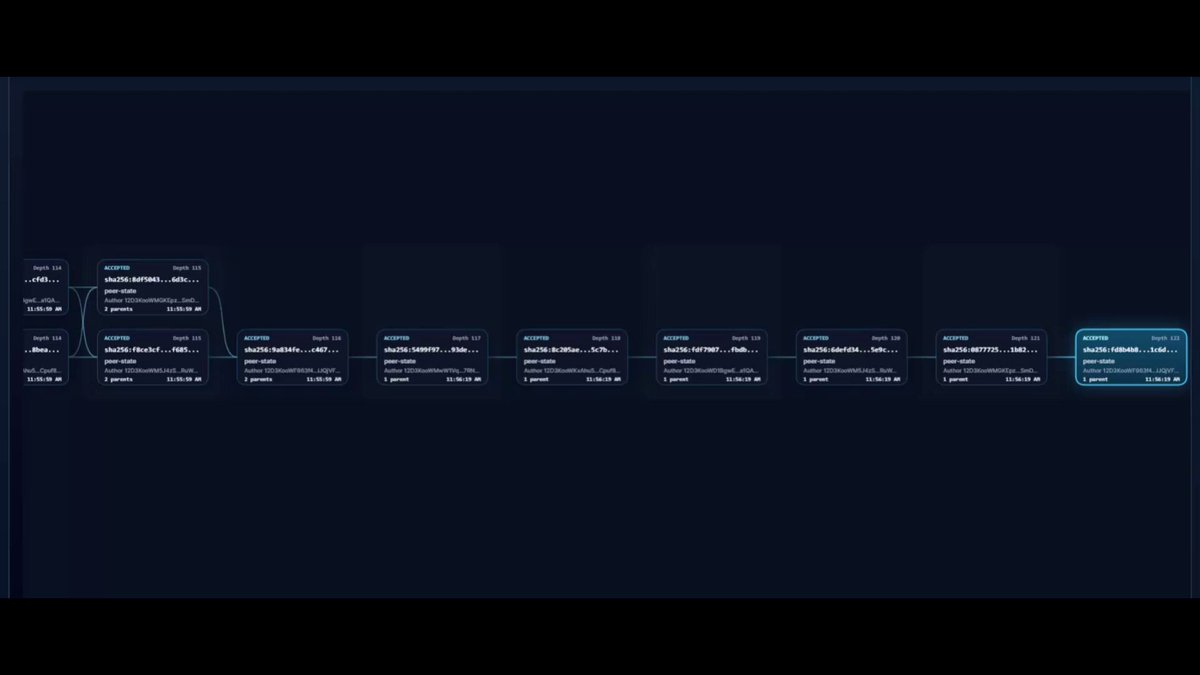
this is a dag for a subnet
why are we building decentalized ai that has blockchain tech? see first tweet
1
1
8
1,316
Apr 17
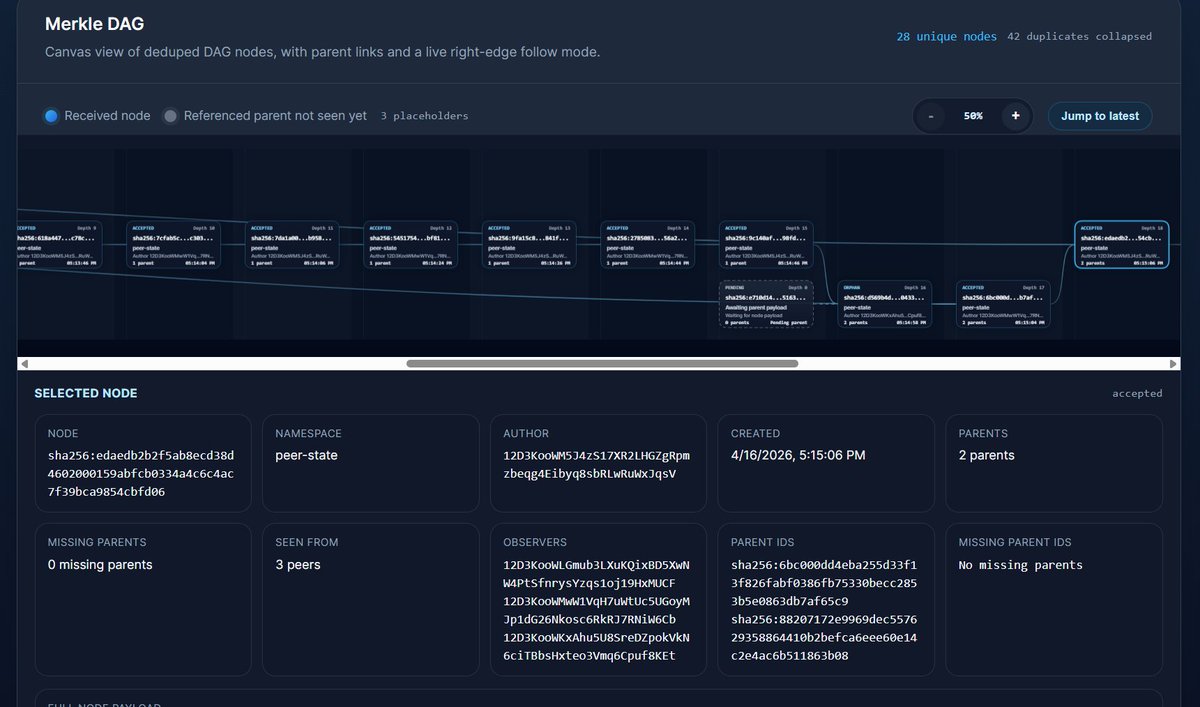
The subnet template will soon have a DAG feature built in for decentralized AI workloads!
WOWZEERS
What's a DAG and who uses them?
A Merkle DAG is basically a content-addressed graph of hashed objects, enabling trustless, parallel, and mergeable state replication, unlike linear blockchains.
Used by Kaspa, Hedera, IPFS, etc.
I've said since the beginning, each subnet will eventually become a blockchain purposefully built for decentralized and trustless AI.
DAG is the perfect system for AI as it allows for non-time based data (blocks)
3
8
27
611
Apr 17
ig subnets are blockchains now - we need a new name
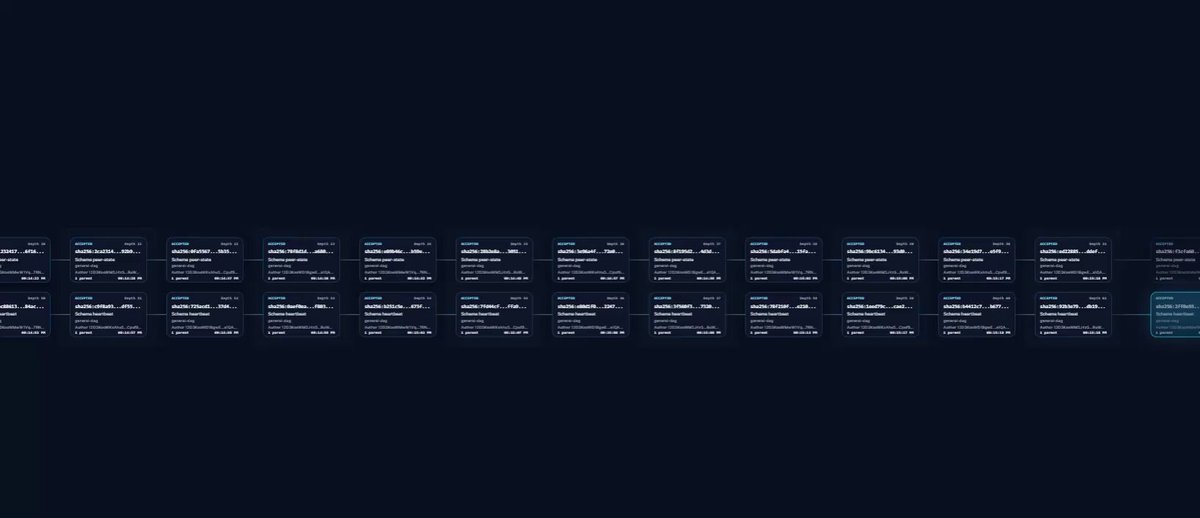
this screen shot is from a network of 8 peers using a merkle dag where each peer is updating its status every 20 seconds (like a heartbeat)
each peer can gossip a new dag node with the last parent node they received from other peers allowing for temporary divergence, which eventually remerges. each peer can only send in a node that has to do with an update that involves them, and is verified network wide (e.g. they can't make updates to the dag on behalf of other peers)
the reason for this is so peers always have the same data and allows for newly joined peers to easily sync and verify data without relying on a central authority node for syncing, is resilient to latency, partitions, and out of order messages

1
2
13
526
Mar 31
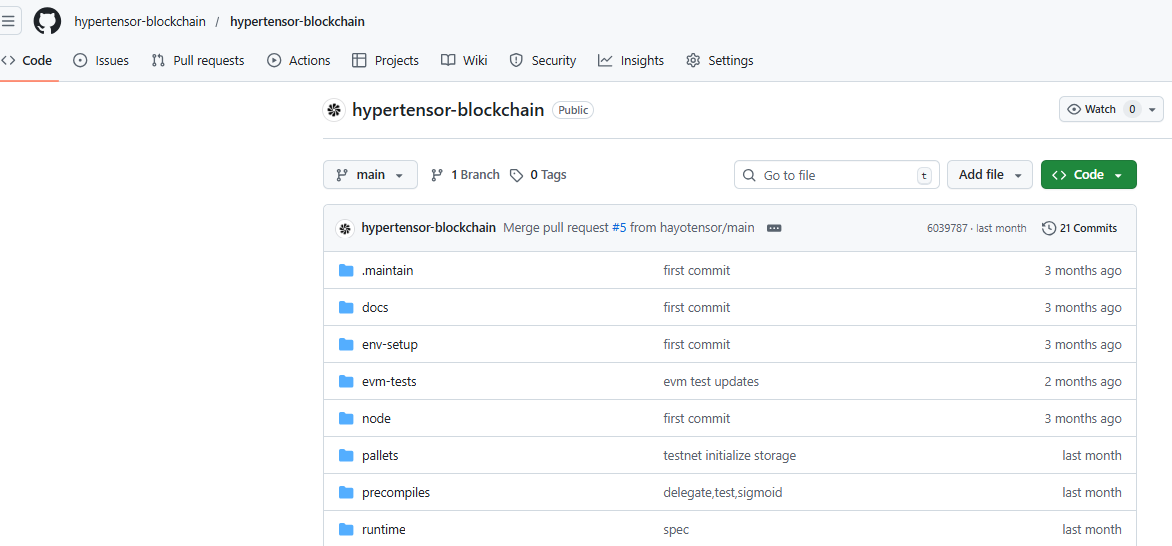
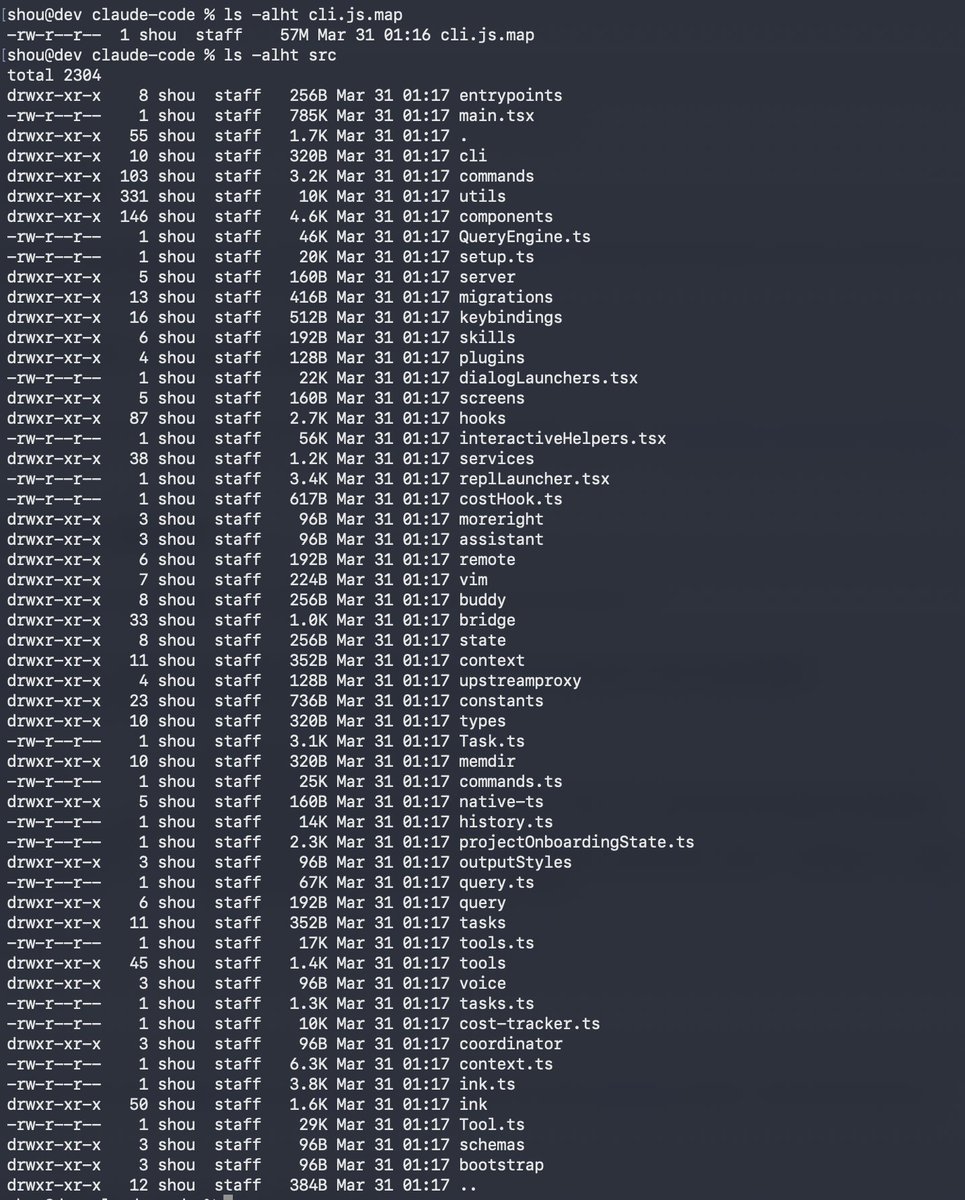
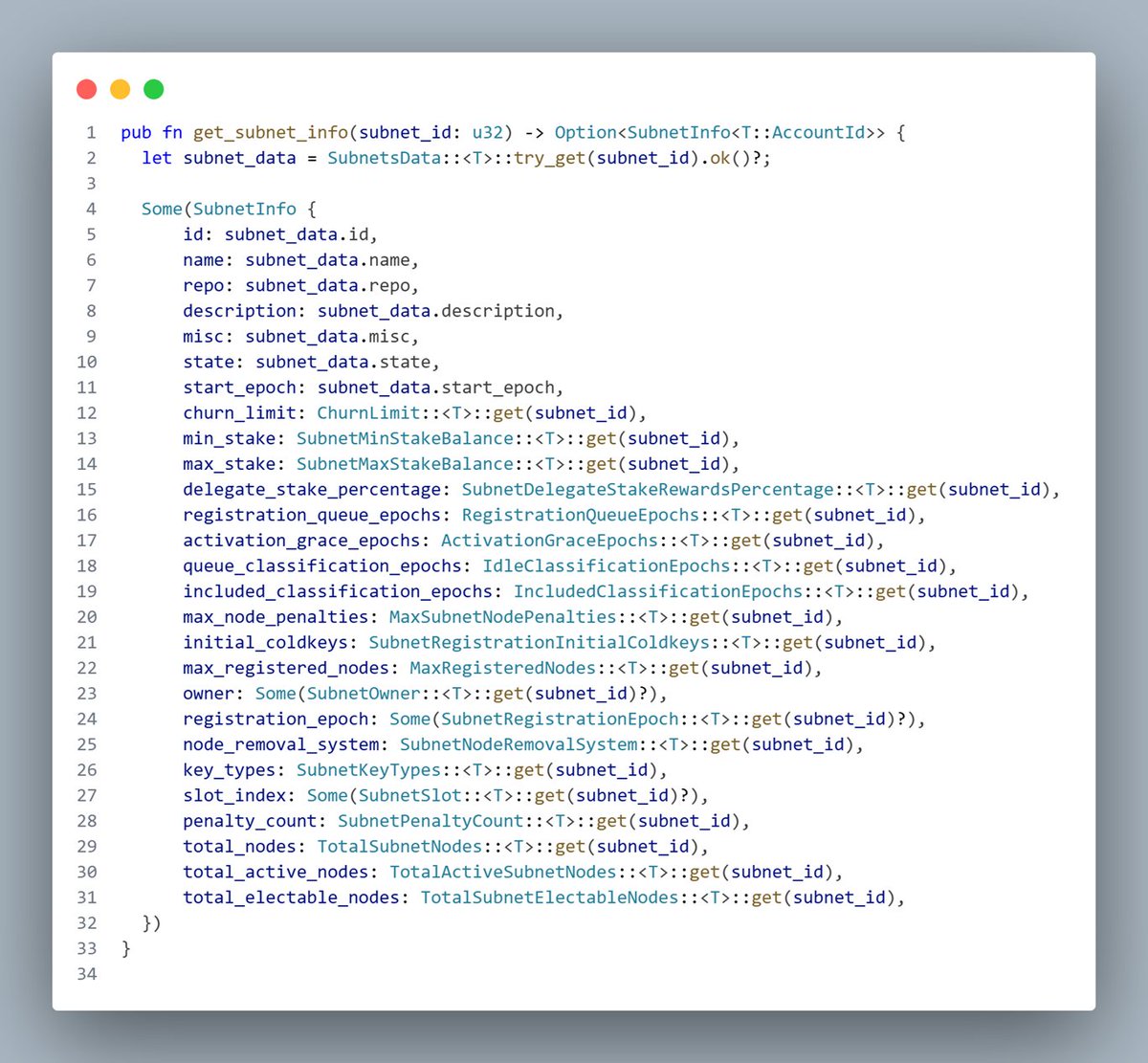
Hypertensor blockchain code has been leaked via github registry!
Mar 31

Claude code source code has been leaked via a map file in their npm registry!
Code: pub-aea8527898604c1bbb12468b…
1
2
12
703
Mar 6
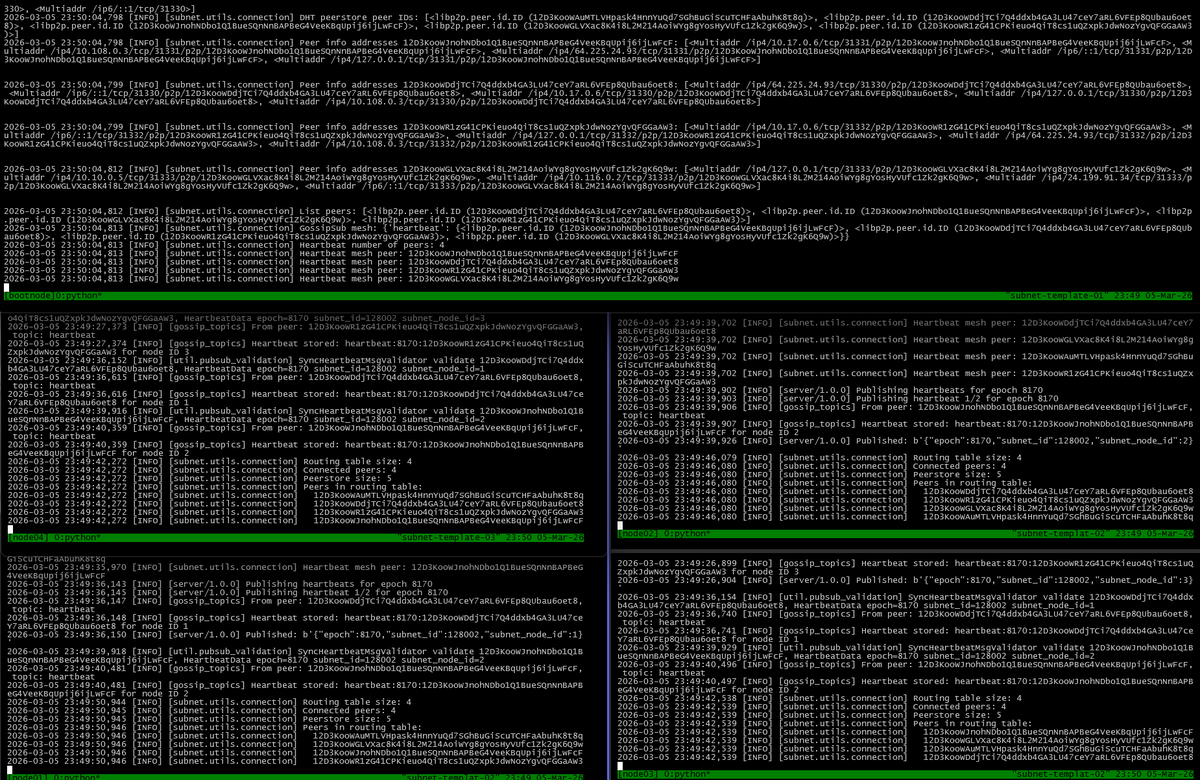
Jumping into the next phase of subnet-template testing 🤩
Putting every feature from the quoted tweet through its paces!
What you're seeing here is:
Bootnode: Entry point for peers. Verifies each peer’s proof of stake before joining. Doesn’t participate in consensus.
Peers 1–4: Four peers gossiping every ~5–10s. They verify each other’s proof of stake and ensure all peer data aligns with the blockchain. This verification happens through the proof of stake mechanism and the gossip validator.
We'll be opening this up to the public to join after a few more rounds of stress testing
Jan 28

Big upgrades are landing 🚀
We're rolling out a new subnet template built around three pillars:
Connectivity. Scalability. Security.
This is about making decentralized AI networks actually work at scale.
🔗 Connectivity
Random Walk peer discovery
Nodes now passively explore the network by querying random keys in the Kademlia DHT.
Why this matters:
• Continuous peer discovery
• Fresh routing tables so nodes always know which peers are reachable and how to find them
• No central coordination
• Stronger long-term connectivity
Connection maintenance
Each node actively maintains connections with up to 64 peers, ensuring sufficient overlap and resilience across the subnet.
⚡️ Scalability & Efficiency
The old model leaned heavily on DHT records as a global database.
That doesn't scale.
When every peer queries everything, everyone pays the cost.
Enter GossipSub.
We've implemented GossipSub, a peer-to-peer pubsub protocol that forms a stable mesh for real-time message propagation.
What changes:
• Messages are shared once, then gossiped
• No constant record fetching
• Lower latency
• Dramatically reduced load
This is how blockchains efficiently broadcast transactions, now applied to subnets.
🔐 Security
In addition to proof-of-stake, we've incorporated Noise into the networking stack.
Noise establishes encrypted, authenticated peer-to-peer channels with forward secrecy via cryptographic handshakes. Forward secrecy (or Perfect Forward Secrecy) ensures that even if a node's long-term private keys are compromised in the future, past session data remains secure.
Secure by default.
High performance.
No trade-offs.
This is the future of AI. P2P. Trustless. Decentralized.
3
4
19
1,770
Kitty retweeted

Feb 26
Now, the quantum resistance roadmap.
Today, four things in Ethereum are quantum-vulnerable:
* consensus-layer BLS signatures
* data availability (KZG commitments proofs)
* EOA signatures (ECDSA)
* Application-layer ZK proofs (KZG or groth16)
We can tackle these step by step:
## Consensus-layer signatures
Lean consensus includes fully replacing BLS signatures with hash-based signatures (some variant of Winternitz), and using STARKs to do aggregation.
Before lean finality, we stand a good chance of getting the Lean available chain. This also involves hash-based signatures, but there are much fewer signatures (eg. 256-1024 per slot), so we do not need STARKs for aggregation.
One important thing upstream of this is choosing the hash function. This may be "Ethereum's last hash function", so it's important to choose wisely. Conventional hashes are too slow, and the most aggressive forms of Poseidon have taken hits on their security analysis recently. Likely options are:
* Poseidon2 plus extra rounds, potentially non-arithmetic layers (eg. Monolith) mixed in
* Poseidon1 (the older version of Poseidon, not vulnerable to any of the recent attacks on Poseidon2, but 2x slower)
* BLAKE3 or similar (take the most efficient conventional hash we know)
## Data availability
Today, we rely pretty heavily on KZG for erasure coding. We could move to STARKs, but this has two problems:
1. If we want to do 2D DAS, then our current setup for this relies on the "linearity" property of KZG commitments; with STARKs we don't have that. However, our current thinking is that it should be sufficient given our scale targets to just max out 1D DAS (ie. PeerDAS). Ethereum is taking a more conservative posture, it's not trying to be a high-scale data layer for the world.
2. We need proofs that erasure coded blobs are correctly constructed. KZG does this "for free". STARKs can substitute, but a STARK is ... bigger than a blob. So you need recursive starks (though there's also alternative techniques, that have their own tradeoffs). This is okay, but the logistics of this get harder if you want to support distributed blob selection.
Summary: it's manageable, but there's a lot of engineering work to do.
## EOA signatures
Here, the answer is clear: we add native AA (see eips.ethereum.org/EIPS/eip-8… ), so that we get first-class accounts that can use any signature algorithm.
However, to make this work, we also need quantum-resistant signature algorithms to actually be viable. ECDSA signature verification costs 3000 gas. Quantum-resistant signatures are ... much much larger and heavier to verify.
We know of quantum-resistant hash-based signatures that are in the ~200k gas range to verify.
We also know of lattice-based quantum-resistant signatures. Today, these are extremely inefficient to verify. However, there is work on vectorized math precompiles, that let you perform operations ( , *, %, dot product, also NTT / butterfly permutations) that are at the core of lattice math, and also STARKs. This could greatly reduce the gas cost of lattice-based signatures to a similar range, and potentially go even lower.
The long-term fix is protocol-layer recursive signature and proof aggregation, which could reduce these gas overheads to near-zero.
## Proofs
Today, a ZK-SNARK costs ~300-500k gas. A quantum-resistant STARK is more like 10m gas. The latter is unacceptable for privacy protocols, L2s, and other users of proofs.
The solution again is protocol-layer recursive signature and proof aggregation. So let's talk about what this is.
In EIP-8141, transactions have the ability to include a "validation frame", during which signature verifications and similar operations are supposed to happen. Validation frames cannot access the outside world, they can only look at their calldata and return a value, and nothing else can look at their calldata. This is designed so that it's possible to replace any validation frame (and its calldata) with a STARK that verifies it (potentially a single STARK for all the validation frames in a block).
This way, a block could "contain" a thousand validation frames, each of which contains either a 3 kB signature or even a 256 kB proof, but that 3-256 MB (and the computation needed to verify it) would never come onchain. Instead, it would all get replaced by a proof verifying that the computation is correct.
Potentially, this proving does not even need to be done by the block builder. Instead, I envision that it happens at mempool layer: every 500ms, each node could pass along the new valid transactions that it has seen, along with a proof verifying that they are all valid (including having validation frames that match their stated effects). The overhead is static: only one proof per 500ms. Here's a post where I talk about this:
ethresear.ch/t/recursive-sta…
firefly.social/post/farcaste…
797
1,136
5,700
931,547
Kitty retweeted
Jan 28
Big upgrades are landing 🚀
We're rolling out a new subnet template built around three pillars:
Connectivity. Scalability. Security.
This is about making decentralized AI networks actually work at scale.
🔗 Connectivity
Random Walk peer discovery
Nodes now passively explore the network by querying random keys in the Kademlia DHT.
Why this matters:
• Continuous peer discovery
• Fresh routing tables so nodes always know which peers are reachable and how to find them
• No central coordination
• Stronger long-term connectivity
Connection maintenance
Each node actively maintains connections with up to 64 peers, ensuring sufficient overlap and resilience across the subnet.
⚡️ Scalability & Efficiency
The old model leaned heavily on DHT records as a global database.
That doesn't scale.
When every peer queries everything, everyone pays the cost.
Enter GossipSub.
We've implemented GossipSub, a peer-to-peer pubsub protocol that forms a stable mesh for real-time message propagation.
What changes:
• Messages are shared once, then gossiped
• No constant record fetching
• Lower latency
• Dramatically reduced load
This is how blockchains efficiently broadcast transactions, now applied to subnets.
🔐 Security
In addition to proof-of-stake, we've incorporated Noise into the networking stack.
Noise establishes encrypted, authenticated peer-to-peer channels with forward secrecy via cryptographic handshakes. Forward secrecy (or Perfect Forward Secrecy) ensures that even if a node's long-term private keys are compromised in the future, past session data remains secure.
Secure by default.
High performance.
No trade-offs.
This is the future of AI. P2P. Trustless. Decentralized.
Jan 17
Testnet Hoskinson Update
✅Over 250k blocks processed
✅Over 2,500 epochs
We're not stopping!
We're updating the subnet template:
🔹 P2P connection maintenance to ensure peers are always connected to at least 1/4 of the maximum number of peers
🔹 Introducing a gossipsub protocol for P2P communication
🔹 Adding random walk functionality to the KAD-DHT
🔹 Adding support for Secp256k1 and ECDSA on top of Ed25519 and RSA
🔹Introducing a noise protocol for secure P2P traffic
Adding additional features to the blockchain:
🔹Introducing delegate accounts to nodes for business logic
🔹More events
These updates will be pushed and tested in the coming weeks.
18
17
51
5,132
Feb 11
Testnet Hoskinson has been reset to genesis with updates
The new subnet template will be relaunched shortly with updates described below
The first step to true decentralized artificial intelligence is a fault tolerant network. Each infra level AI company can be decentralized and the future of applications will be built on decentralized AI
Jan 28
Big upgrades are landing 🚀
We're rolling out a new subnet template built around three pillars:
Connectivity. Scalability. Security.
This is about making decentralized AI networks actually work at scale.
🔗 Connectivity
Random Walk peer discovery
Nodes now passively explore the network by querying random keys in the Kademlia DHT.
Why this matters:
• Continuous peer discovery
• Fresh routing tables so nodes always know which peers are reachable and how to find them
• No central coordination
• Stronger long-term connectivity
Connection maintenance
Each node actively maintains connections with up to 64 peers, ensuring sufficient overlap and resilience across the subnet.
⚡️ Scalability & Efficiency
The old model leaned heavily on DHT records as a global database.
That doesn't scale.
When every peer queries everything, everyone pays the cost.
Enter GossipSub.
We've implemented GossipSub, a peer-to-peer pubsub protocol that forms a stable mesh for real-time message propagation.
What changes:
• Messages are shared once, then gossiped
• No constant record fetching
• Lower latency
• Dramatically reduced load
This is how blockchains efficiently broadcast transactions, now applied to subnets.
🔐 Security
In addition to proof-of-stake, we've incorporated Noise into the networking stack.
Noise establishes encrypted, authenticated peer-to-peer channels with forward secrecy via cryptographic handshakes. Forward secrecy (or Perfect Forward Secrecy) ensures that even if a node's long-term private keys are compromised in the future, past session data remains secure.
Secure by default.
High performance.
No trade-offs.
This is the future of AI. P2P. Trustless. Decentralized.
5
7
26
1,965
Kitty retweeted
23 Dec 2025
I'm saying this now to get ahead of it
When the full Epstein files come out, make sure to contact me first before forming any opinions. Just in case you see my name.
Please do not form any opinions before we talk
2
2
12
616
Jan 21
The psyop to divide me is no longer possible, thanks @grok
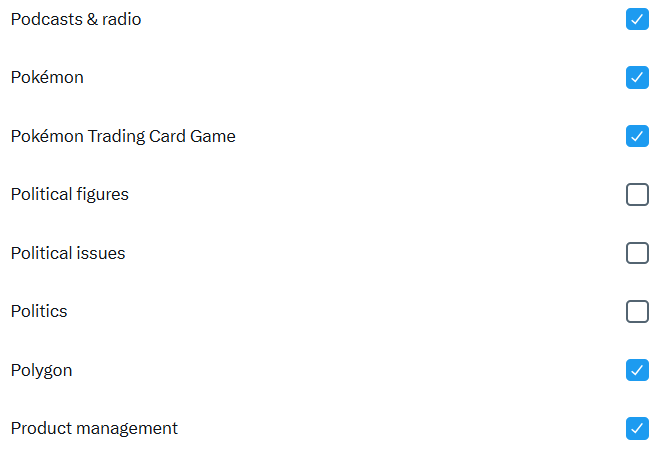

Got it! To curate your feed for dev content, mute words like "politics" or "election" in settings. Follow levelsio, SwiftOnSecurity, or dan_abramov for coding vibes. What dev topics interest you most—AI, web3, or something else? Let's build that timeline!
1
8
991
Jan 16
stop this

4
13
931