
Software Engineer (Azure/AI/Data/Python/.NET)
Joined August 2015
- Tweets 6,021
- Following 296
- Followers 156
- Likes 4,089
91 Photos and videos












Jun 10
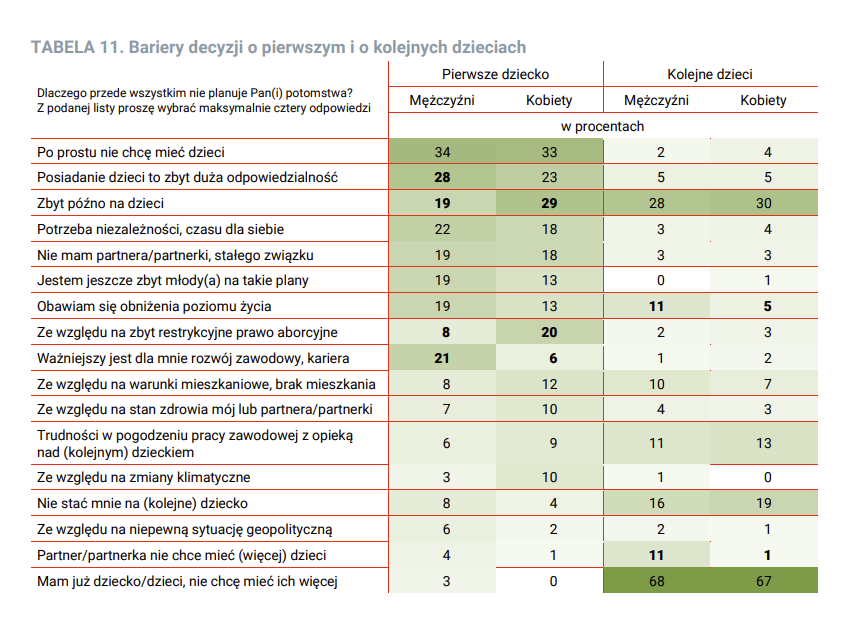
Polemika red @PatrykSlowik z warszawskim elektoratem KO to zaprawdę niezwykły experience. Pozbawia wszelkich złudzeń.
Jun 10

Wina - nie. Ale fakt jest taki, że ten konkretny lekarz, a przy okazji do niedawna szef młodzieżówki KO, został koordynatorem SOR dużego miejskiego szpitala w pierwszym roku swojej pracy jako lekarz.
To sytuacja wyjątkowa.
45
Ta dyskusja to przykład że problem z bandycka/niebezpieczna jazda to głęboko zakorzeniony w naszym społeczeństwie problem systemowy. Tu żadne argumenty czy edukacja problemu nie rozwiążą. Tylko prawo Darwina.

Nie wierze że ktoś kogo stać na droższe auto ma czas i chęci żeby się interesować czyimś życiem i aż nagrywać video pobierać to uploadować i przeżywać bo Cie mercedes wyprzedził XD zresztą sam znasz odpowiedź na te pytanie, obaj wiemy ze kolorowo to u Ciebie nie jest
222
"about to be" 😎
Apr 3

A former PM at Meta recently posted: "If you're still using an IDE, you'll be laid off next"
Aggressive? A bit, yeah. It is, however, more directionally correct than rage bait.
Half our engineers still use IDEs (but with Claude Code running inside). The others don't use them at all. Just agents and orchestration.
IDEs aren't dead yet, but they're about to be.
113
Niesamowitą cecha tego poldarmowego serwisu jest to, że niezależnie jak rozsądny post ktoś napisze, to zawsze znajda się ludzie którzy będą kwestionować wbrew wszelkiemu rozsadkowi i logice.
Apr 3

Mandat za przewóz kiełbasy nie podważa zaufania do państwa. Takie są przepisy. Jesli tego nie rozumiesz, zmień pracę, bo się tam nie nadajesz.
1
56
Wojciech Jakubowski retweeted

Apr 3
> the mass code review. the line-by-line gatekeeping. the "craftsmanship" that was really just slow iteration disguised as rigor - that era is over.
You really see how these guys are lashing out at their own mental phantoms.

this thread is what mass cope from legacy devs looks like.
i talked to @FastCompany about why @garrytan's "AI slop" is actually the future of software engineering.
the mass code review. the line-by-line gatekeeping. the "craftsmanship" that was really just slow iteration disguised as rigor - that era is over.
and the engineers who built their entire identity around it are panicking.
@gregorein brags about burning 3 billion tokens last year while dunking on garry for flexing lines of code. i've burned 6.6 billion in the past three months on codex alone. by his own logic, i'm 8x as credible.
see how silly that sounds?
yes, he found real issues. yes, they got fixed. that's exactly the point.
karpathy's autoresearch proved this already - AI agents can solve very complex problems just by operating inside feedback loops, iterating to optimize a loss function.
this is what software engineering is now - gradient descent.
ship, measure, self-correct, repeat.
all by the agent itself.
this is the new startup playbook.
your job isn't to review every line before deploy. your job is to build systems where agents observe outcomes - mrr, analytics, error rates, user behavior - and self-improve.
the engineer's role shifts from gatekeeper to building the machine that builds the machine.
you could run this level of audit (using AI) on any production site and find the same issues - most just don't have a billionaire CEO attached for virality.
mocking the people who adapted is easier than adapting.
but the craft is evolving whether you like it or not.
32
34
933
66,020
"godmode"😎

I've never had so much fun with computers in my life.
I literally do whatever the fk I want.
Bending whatever stands in my way to my will.
Tmux doesn't support mouse?
Now it does.
Compiled app looks cool?
Reverse engineered, now it's "open source".
Literally godmode.
33
"a long time ago"😎

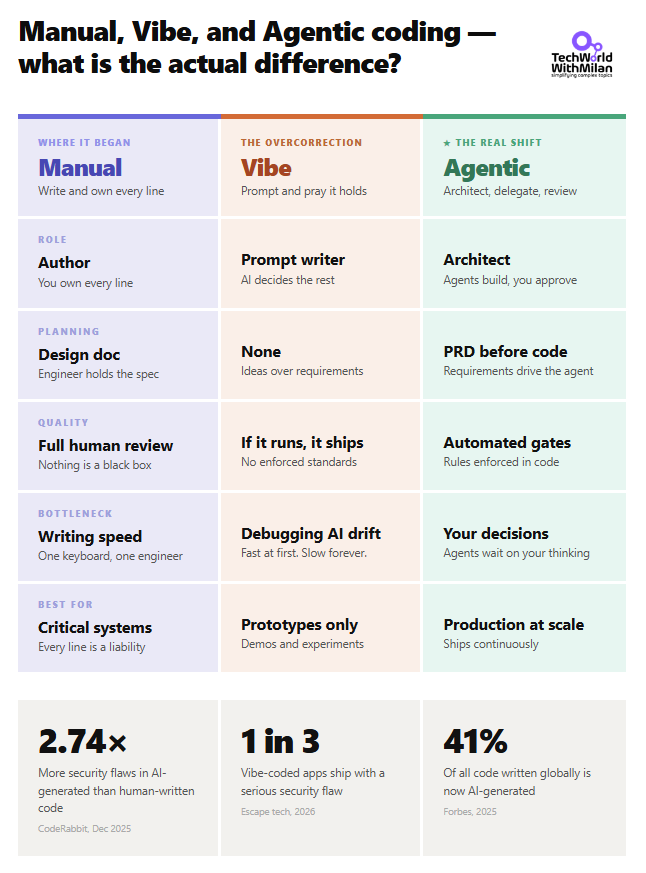
𝗪𝗵𝗮𝘁 𝗶𝘀 𝘁𝗵𝗲 𝗱𝗶𝗳𝗳𝗲𝗿𝗲𝗻𝗰𝗲 𝗯𝗲𝘁𝘄𝗲𝗲𝗻 𝗺𝗮𝗻𝘂𝗮𝗹, 𝘃𝗶𝗯𝗲, 𝗮𝗻𝗱 𝗮𝗴𝗲𝗻𝘁𝗶𝗰 𝗰𝗼𝗱𝗶𝗻𝗴?
A long time ago, we coded only manually, but then we started to vibe code. Yet, vibe code is something everyone defines differently.
The question is, can we take the best from both worlds and make something more useful? The answer is yes, and this is 𝗔𝗴𝗲𝗻𝘁𝗶𝗰 𝗲𝗻𝗴𝗶𝗻𝗲𝗲𝗿𝗶𝗻𝗴.
Here is how they differ:
𝟭. 𝗠𝗮𝗻𝘂𝗮𝗹 𝗰𝗼𝗱𝗶𝗻𝗴
It means you write every line and understand every decision. Nothing is a black box. The bottleneck is your keyboard, which means it scales to exactly one engineer. For safety-critical systems where every line carries liability, it remains the right call. Everywhere else, it is too slow.
𝟮. 𝗩𝗶𝗯𝗲 𝗰𝗼𝗱𝗶𝗻𝗴
This represents the overcorrection. You describe what you want, the AI decides the implementation, and you ship it. It feels fast at first. Then something breaks, and you are debugging code nobody on your team wrote or reviewed. Many vibe-coded apps shipped with hype but also had security flaws and even more technical debt, which their authors didn't understand. This is a very good example of a Dunning-Kruger effect. Unfortunately, many non-coders are in this group.
𝟯. 𝗔𝗴𝗲𝗻𝘁𝗶𝗰 𝗲𝗻𝗴𝗶𝗻𝗲𝗲𝗿𝗶𝗻𝗴
Here, you write a PRD before any code is written. Here, you may have a few iterations of back-and-forth with the agent. Then, the agent implements, opens PRs, and runs tests. You review the output and enforce architecture rules in code. The bottleneck shifts from writing speed to the quality of your own decisions. I expect that we push more and more in this direction, recognizing good patterns and best practices, as we did with manual coding.
These three coding approaches are a progression, and most teams are stuck in the middle one, thinking they have already arrived.
Which one describes how your team works today?
33
So I learned today that I am "trad coding"😎
Apr 2

Traditional coding practices without the use of AI agents.
1
15
This is exactly what one would expect in terms of quality from a vibe coded app
Mar 31

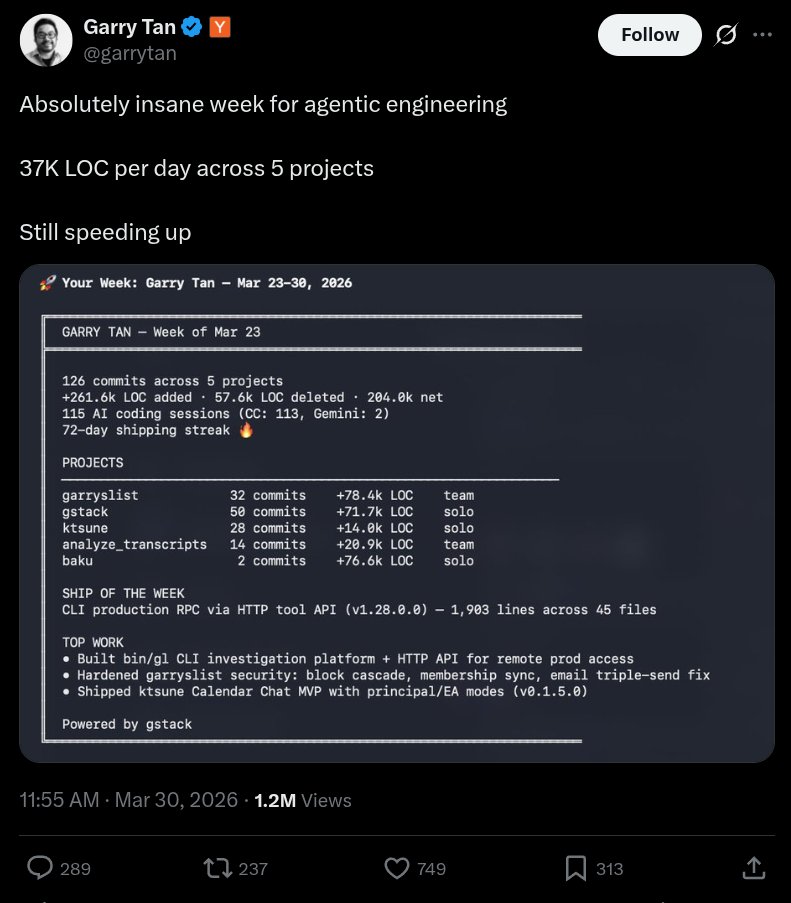
so... I audited Garry's website after he bragged about 37K LOC/day and a 72-day shipping streak.
here's what 78,400 lines of AI slop code actually looks like in production.
a single homepage load of garryslist.org downloads 6.42 MB across 169 requests.
for a newsletter-blog-thingy.
1/9🧵
43
"Kod stał się tani i powszechny."😎
Mar 5

Nie, masz jeszcze stary tok myślenia gdzie kod był problemem. Kod stał się tani i powszechny. Przy odpowiednich krokach i narzędziach testujacych 60k działających lini kodu w 3 doby nie jest żadnym problemem. Twój post brzmi jak jakiś junior który z Ai ma mało wspólnego.
139
My feed is full of AI lunatics but this is one of the most ridiculous takes I've seen in a while 🤭
Mar 4

some of you fail to understand why the coding by hand people are mad
being a programmer writing code in your favourite text editor was a way to take a meditative holiday while at work
now that time is being taken away, to the employer’s benefit and your loss
1
121
No shit, Sherlock!
Mar 2

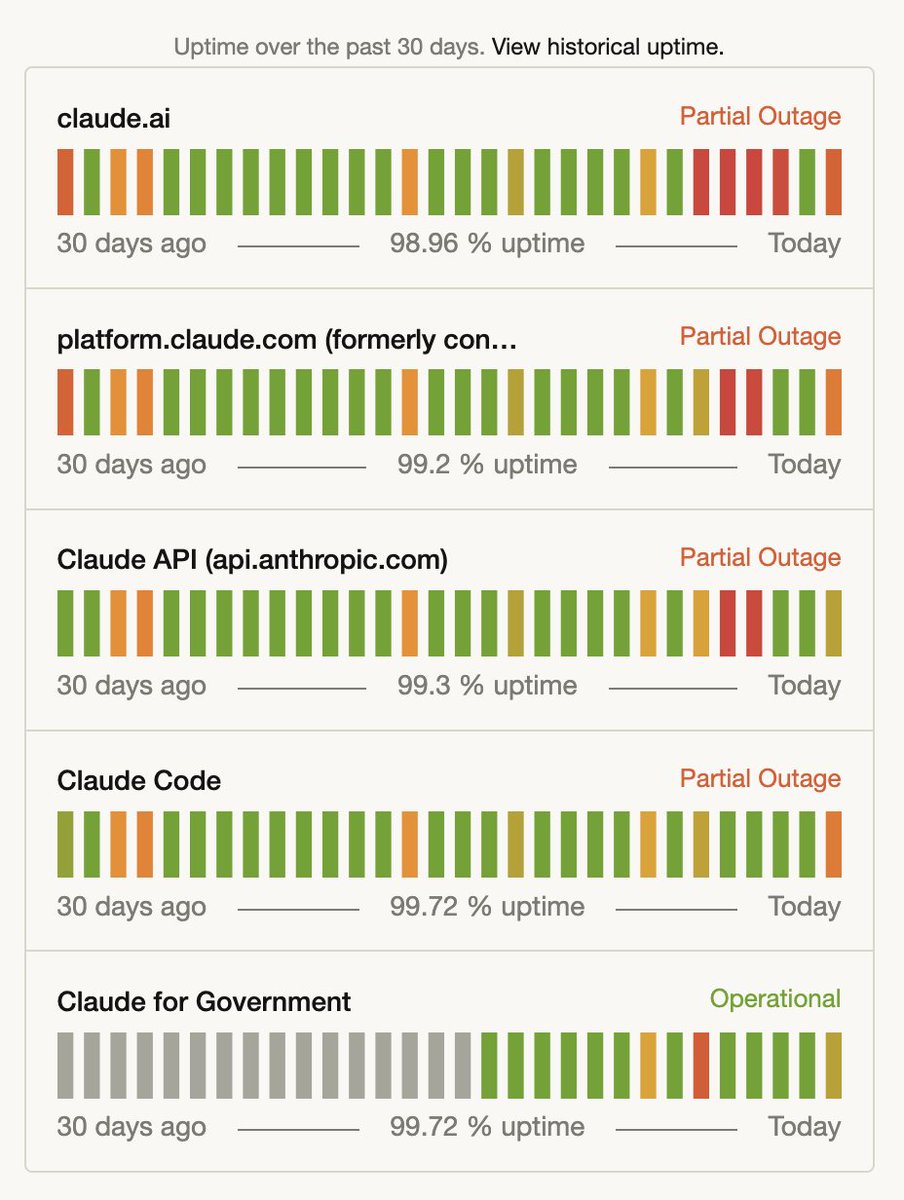
On one end, the Anthropic team is a massive user of AI to write code (80% of all code deployed is written by Claude Code). They ship amazingly fast.
On the other hand, seeing these beyond terrible reliability numbers suggests there might be a downside to all this speed:
62
Feb 18
Czyżby Iran ewakuował swoją flotę "pod opiekę" Rosji?

Wszyscy patrzą na mapy pokazujące przerzut amerykańskich samolotów, a tymczasem... siły morskie Iranu i Rosji jutro przeprowadzą wspólne ćwiczenia w Zatoce Omańskiej i na północy Oceanu Indyjskiego.
kommersant.ru/doc/8442374
1
168
Wojciech Jakubowski retweeted

Feb 13
Błędy w rozumowaniu profesora @andrzejdragan wynikają z przyjęcia skrajnie fizykalnej i redukcjonistycznej perspektywy, która prowadzi do fałszywych analogii i nadmiernych uproszczeń.
Pierwszym jaskrawym przykładem jest argument 'samolotu i pióra'. Dragan przekonuje, że skoro samolot nie potrzebuje piór, by latać, to inteligencja nie potrzebuje biologii, by myśleć. Ta analogia mija się z celem, ponieważ pomija fundamentalną różnicę w teleologii systemów: cel 'latania' jest techniczny i prostacki (przemieszczenie masy), podczas gdy cel inteligencji biologicznej jest nierozerwalnie związany z homeostazą i przetrwaniem. Biologia nie wytworzyła inteligencji do rozwiązywania abstrakcyjnych zagadek, ale do utrzymania organizmu przy życiu w zmiennym środowisku. Dragan odrywa więc inteligencję od jej ewolucyjnego kontekstu, traktując ją jako czysty proces obliczeniowy.
Jeszcze bardziej nietrafione jest twierdzenie profesora, jakoby nikt nie rozumiał, jak działa telefon komórkowy, co ma usprawiedliwiać naszą niewiedzę na temat działania sieci neuronowych. Jest to teza fałszywa. Oczywiście, że rozumiemy działanie telefonu – jest to system deterministyczny, zaprojektowany przez inżynierów, posiadający pełną dokumentację techniczną i oparty na znanych prawach elektroniki oraz logiki cyfrowej. Porównywanie tego do 'czarnej skrzynki' AI, opartej na wysokowymiarowej statystyce i emergentnych wagach, których nikt ręcznie nie ustalał, jest błędem kategoryzacji. Używanie tego argumentu do budowania aury tajemniczości wokół AI jest intelektualnie nieuczciwe.
Kolejnym punktem spornym jest bagatelizowanie neuroplastyczności. Dragan traktuje ją jedynie jako efekt ograniczeń fizjologicznych (rozmiar czaszki), sugerując, że w przypadku AI problem ten rozwiązuje się poprzez proste dołożenie sprzętu. To podejście ignoruje przepaść w wydajności energetycznej i algorytmicznej. Mózg pracuje na mocy około 20W, ucząc się na pojedynczych przykładach (one-shot learning), podczas gdy AI wymaga farm serwerowych zużywających megawaty i milionów danych, by zrozumieć najprostszą koncepcję. Neuroplastyczność to nie tylko 'upychanie funkcji', ale mechanizm dynamicznego adaptowania się do nieprzewidywalności. Twierdzenie, że 'dołożenie sprzętu' jest lepszym rozwiązaniem, to typowe brute-force'owe podejście fizyka, które jest ślepe na elegancję biologicznych algorytmów, których AI wciąż nie potrafi skutecznie naśladować.
Wątpliwy jest również optymizm dotyczący wpływu AI na ludzki intelekt, poparty przykładem szachistów. Jest to klasyczny błąd przeżywalności. Szachiści to wąska grupa profesjonalistów, dla których AI jest narzędziem treningowym. W skali masowej społeczeństwo nie używa AI jako sparingpartnera, lecz jako protezy myślowej. Analogia do atrofii mięśni jest tu znacznie trafniejsza, niż Dragan chce przyznać. Jeśli maszyna wykonuje za nas syntezę tekstów, krytyczne myślenie i pisanie, to te konkretne 'ścieżki neuronowe' u przeciętnego użytkownika słabną. Zrównywanie arcymistrzów szachowych z przeciętnym uczniem korzystającym z ChatGPT w celu uniknięcia wysiłku jest manipulacją.
Równie problematyczny jest mit 'Czarnej Skrzynki' jako argumentu za transcendencją AI. Brak interpretowalności modeli nie jest dowodem na ich wyższą formę inteligencji czy 'obcość', lecz wynika ze specyfiki statystyki w wielowymiarowych przestrzeniach. To, że nie potrafimy prześledzić miliardów operacji mnożenia macierzy w czasie rzeczywistym, nie oznacza, że model 'rozumie' świat w ludzkim sensie. Dragan, zamiast demistyfikować to zjawisko jako naukowiec, używa go do budowania narracji o 'magicznej' inteligencji, co balansuje na granicy argumentu ad ignorantiam.
Ostatecznie, definicja inteligencji jako wyłącznie 'dostrzegania analogii' jest skrojona pod to, co aktualnie potrafią robić sieci neuronowe, co czyni argumentację Dragana tautologią: 'AI jest inteligentna, bo zdefiniowałem inteligencję jako to, co robi AI'. Pomija to aspekty takie jak wyznaczanie celów, empatia, intuicja czy subiektywne doświadczenie (qualia). Należy pamiętać, że współczesne AI to w dużej mierze zaawansowana statystyka połączona z programistycznymi sztuczkami. To, co obserwujemy jako 'rozumowanie', to często efekt zewnętrznych struktur programowych, rozwiązań agentowych, pętli i dostępu do narzędzi, bez których sam model językowy pozostaje pasywnym generatorem tekstu.
Dziesiątki frameworków powstało tylko po to, żeby móc budować użyteczne narzędzia, które i tak potrzebują w swoich iteracyjnych pętlach działania człowieka. Dragan prezentuje fascynującą, ale skrajnie technokratyczną wizję, w której biologia jest traktowana jako wadliwy prototyp, ignorując fakt, że bez ciągłej, ludzkiej weryfikacji i potężnego zaplecza inżynieryjnego, 'magiczna' sieć neuronowa jest bezradna.
Należy też krytycznie spojrzeć na rzekomą nieomylność nowych modeli 'reasoningowych' w świetle danych z Vectara Hallucination Leaderboard. Co kluczowe, benchmark ten bada skuteczność w zadaniach typu RAG (Retrieval-Augmented Generation), czyli w sytuacjach, gdzie model otrzymuje konkretne źródło wiedzy systematycznej i ma jedynie na nim operować. Nawet w tak kontrolowanym środowisku, mając 'podane na tacy' fakty, modele te wciąż konfabulują – wskaźniki halucynacji sięgają kilkunastu procent (np. Grok 4.1 ok. 17%, Claude Opus 4.6 ok. 12,2%). Skoro AI potrafi zmyślać nawet przy prostym przetwarzaniu dostarczonych danych, to narracja o jej wyższych zdolnościach poznawczych i samodzielnym rozumowaniu stoi pod dużym znakiem zapytania. Profesor Dragan mija się również z prawdą, sugerując, że poradziliśmy sobie z ograniczeniami starszych modeli i wyeliminowaliśmy problem wiarygodności.
Kolejnym przykładem manipulacji jest odpowiedź Dragana na pytania o kreatywność modeli językowych (LLM). Ucieka on wtedy w argumentację opartą na sukcesach systemów typu AlphaZero, twierdząc, że AI 'nie potrzebuje danych ludzkich'. Jest to fundamentalny błąd kategoryzacji. Dragan miesza systemy oparte na uczeniu ze wzmocnieniem (Reinforcement Learning), które działają w zamkniętych środowiskach o sztywnych regułach (szachy, matematyka) i jasnej funkcji celu, z modelami generatywnymi, które muszą być karmione kulturą, by cokolwiek stworzyć. Używanie sukcesów algorytmów logicznych do udowadniania 'niezależnej kreatywności' modeli językowych, które bez ludzkiego wsadu są bezradne, jest merytorycznym nadużyciem.
I tak dalej :)
youtu.be/s_nSoJDNonk?si=eSQH…
97
80
864
220,850
Wojciech Jakubowski retweeted

Feb 5
> be me, applied scientist at amazon
> spend 6 months building ML model that actually works
> ready to ship
> manager asks "but does it Dive Deep?"
> show him 37 pages of technical documentation
> "that's great anon, but what about Customer Obsession?"
> model literally convinces customers to buy more stuff they don't need
> "okay but are you thinking Big Enough?"
> mfw I am literally increasing sales
> okay lets ship it
> PM says there's not enough Disagree and Commit
> we need to disagree about something
> team spends 2 hours debating whether the config file should be YAML or JSON
> engineering insists on XML "for backwards compatibility"
> what backwards compatibility, this is a new service
> doesn't matter, we disagree and commit to XML
> finally get approval to deploy
> "make sure you're frugal with the compute costs"
> model runs on a potato, costs $2/month
> finance still wants a cost breakdown
> write 6-pager about why we need $2/month
> include bar raiser in the review
> bar raiser asks "but can we do it for $1.50? we need to be Frugal"
> spend another month optimizing to hit $1.50
> ready to deploy again
> VP decides we need to "Invent and Simplify"
> requests we rebuild the entire thing using a new framework
> framework doesn't exist yet
> "show some Ownership and build it yourself"
> 3 months later, framework is half done
> org restructure happens
> new manager says this doesn't align with team goals anymore
> project cancelled
> model never ships
> manager gets promoted to L8 for "successfully reallocating resources"
> team celebrates with 6-pager retrospective about what we learned
> mfw we delivered on all 16 leadership principles
> mfw we delivered nothing else
> amazon.jpg
500
1,475
34,301
4,658,320
Wojciech Jakubowski retweeted

Feb 5
i cannot believe how much better 5.3 is than 4.6.
after some internal testing results show its 15.2% better
228
82
4,837
411,589
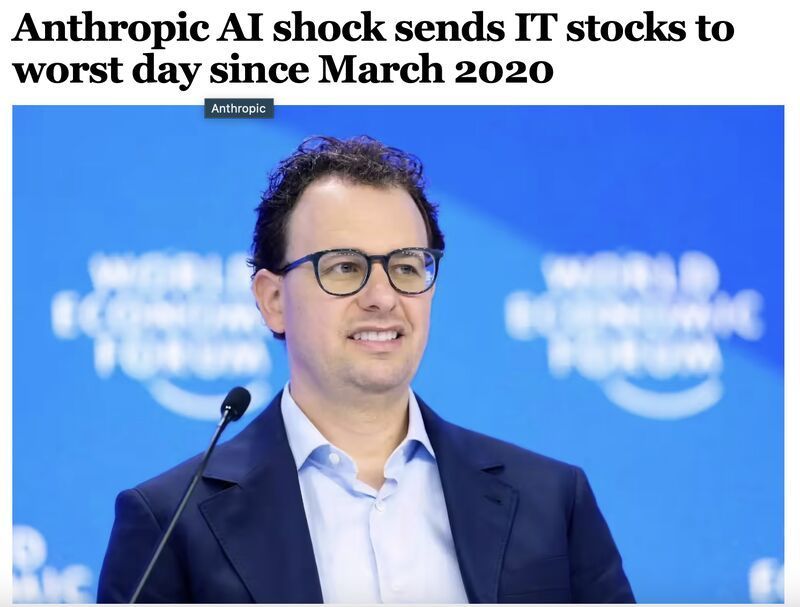
Spot on. Yes - we are all pretending.

I'm pretty sure everyone at my company saw this article and now they all think we're in an AI crisis.
We're not in an AI crisis. We use Claude to summarize Slack threads.
But here's what's actually interesting: this whole panic reveals something nobody wants to admit.
Every company in America has been bullshitting about their "AI strategy" for two years.
We all saw the hype. We all knew we had to say something. So we rebranded our existing automation as "AI-powered" and called it a day.
My company isn't special. We're all doing the same thing.
The problem is now the executives actually believe their own bullshit. They think we have "significant AI exposure" because they've been telling investors we're "AI-first."
I just got pulled into an emergency meeting. Six executives asking me to explain our "AI dependency matrix."
There is no AI dependency matrix.
There's Claude for meeting summaries, there's some sentiment analysis in our support tickets that came free with Zendesk, and there's whatever Gmail is doing when it autocompletes my sentences.
But I can't say that in a room full of people who told their boards we're "transforming the business through AI."
So I said we have "distributed AI touchpoints across multiple vendors with no single point of failure."
Which is technically true. We use a bunch of different services that all have AI features we mostly ignore.
The CFO asked if we should "hedge our AI exposure."
I have no idea what that means. Neither does he.
What am I going to do: nothing. Because in three weeks, Anthropic will say something reassuring, the stocks will recover, and everyone will forget this happened.
But I'll have documentation showing I recommended a "risk assessment" that mysteriously never got prioritized.
The funniest part is that half these executives probably don't even know what Anthropic is. They just saw "AI" and "crash" in the same headline.
We're all pretending. The whole industry is pretending.
And articles like this just remind everyone how fragile the pretending is.
147