
Joined April 2024
- Tweets 699
- Following 27
- Followers 807
- Likes 9,845
21 Photos and videos













8 Dec 2025
Interesting read “Glass Slipper effect: be the first to fit a new workload, and the princess never leaves”
7 Dec 2025

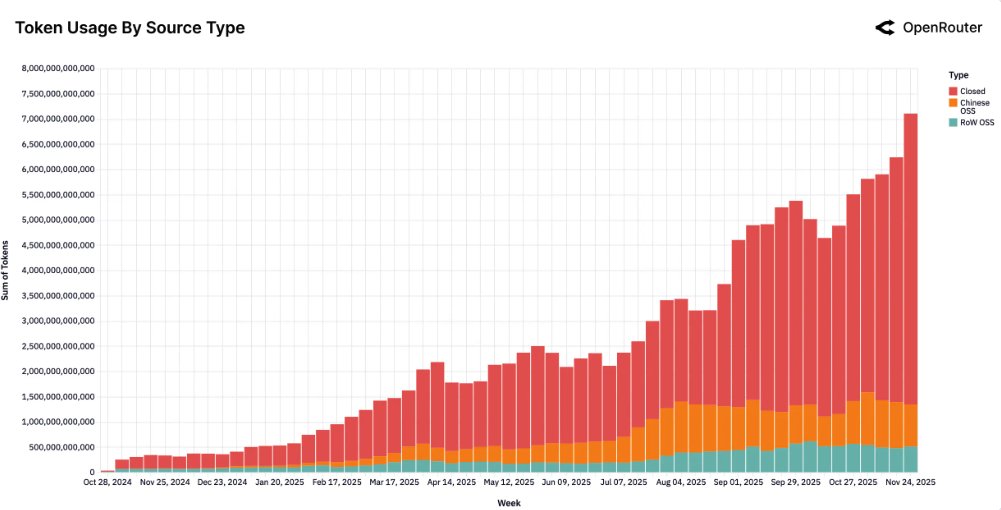
The biggest AI usage report of 2025 just dropped (100 trillion tokens of real usage on OpenRouter)
8 findings that I was most surprised by:
1. Roleplay & creative fiction are the 2nd largest category and >50% of all open-source usage. Uncensored models are swallowing the demand for "fan-fic" and NSFW content.
2. Programming is now >50% of all LLM tokens. It was 11% twelve months ago. Coding literally became the operating system of AI.
3. Anthropic’s Claude is used for >80% programming and almost zero roleplay. It is the “serious work” model while DeepSeek is the entertainment king (with 2/3 roleplay traffic)
4. A model that the 1st to nail a painful workload creates near-permanent lock-in. Early 2025 cohorts of Claude 4 Sonnet and Gemini 2.5 Pro still retain 40–50% of users six months later while every later cohort churns.
They call it the Glass Slipper effect: be the first to fit a new workload, and the princess never leaves.
5. Demand is wildly price-inelastic. Users happily pay 10–50× more per token for Claude or GPT-5 if it saves them ten minutes of debugging. Being cheap is nowhere near enough.
6. The new sweet-spot model size is 20–70B parameters. Small models are getting low usage, giant models are fragmenting, and the medium tier is eating both.
7. Open-source models went from <5% to ~33% of total usage in one year, almost entirely driven by Chinese labs (DeepSeek, Qwen, Moonshot, MiniMax). There is no longer a single best model. The top ten models by volume are from eight different labs.
8. Asia is now 31% of global spend (was 13% a year ago). Singapore China Korea alone are almost 20% of all tokens.
The era of one foundation model to rule them is over. We now live in a permanently fragmented world where the model you use depends entirely on what you're doing with it - writing code? writing fanfics?
Anyway, there's clearly only one direction for token spend: Up and to the right
Full report from @a16z @openrouter (link in comments).
1
2
339
8 Dec 2025
“We now live in a permanently fragmented world where the model you use depends entirely on what you're doing with it” 💯
119
5 Dec 2025
This would insanely change how fast we can train robots. This is just amazing how fast it goes now. 🔥
5 Dec 2025

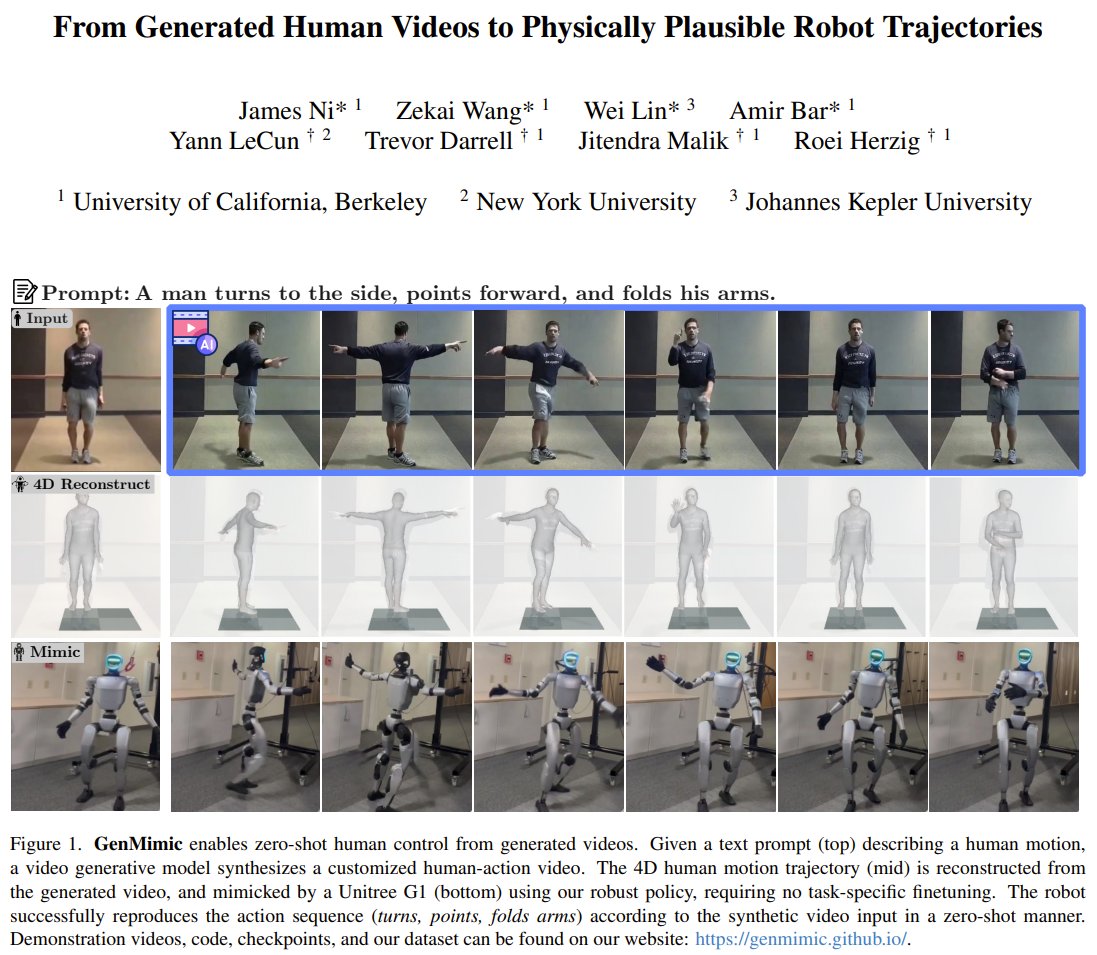
Is this Yann LeCun’s first paper after leaving Meta?
It demonstrates how humanoid robots can mimic actions from AI-generated videos, which are often too noisy for direct imitation.
The system lifts the video into 3D keypoints and then uses a physics-aware policy to execute the motions, enabling zero-shot control.
They implemented this on the Unitree G1 humanoid robot.
220
2 Dec 2025
Someone gets it. Well done, @paoloardoino 🔥

Introducing QVAC Fabric LLM: The framework that brings full AI inference and fine-tuning to your hardware.
Execute and Fine-tune modern models like LLama3 and Gemma 3 on your laptop, your consumer GPU, and even your smartphone.
No cloud. No compromise. You control your data.
QVAC Fabric LLM is open source. It’s decentralized, hyper-scalable, antifragile, user-controlled AI.
QVAC, your device, your AI
Learn more: huggingface.co/blog/qvac/fab…
2
146
2 Dec 2025
I’d be worried if I had a lot staked in a smart contract. If @AnthropicAI is publicly working on exploits, then many more people are too. 👀💀
1 Dec 2025

New on our Frontier Red Team blog: We tested whether AIs can exploit blockchain smart contracts.
In simulated testing, AI agents found $4.6M in exploits.
The research (with @MATSprogram and the Anthropic Fellows program) also developed a new benchmark: red.anthropic.com/2025/smart…
1
98
2 Dec 2025
Casually changing the entire game. @amazon 🔥 Niche datasets are the only edge now.
1 Dec 2025

Sim-to-real learning for humanoid robots is a full-stack problem. Today, Amazon FAR is releasing a full-stack solution: Holosoma.
To accelerate research, we are open-sourcing a complete codebase covering multiple simulation backends, training, retargeting, and real-world inference.
1
122
The HELP foundation retweeted

25 Nov 2025
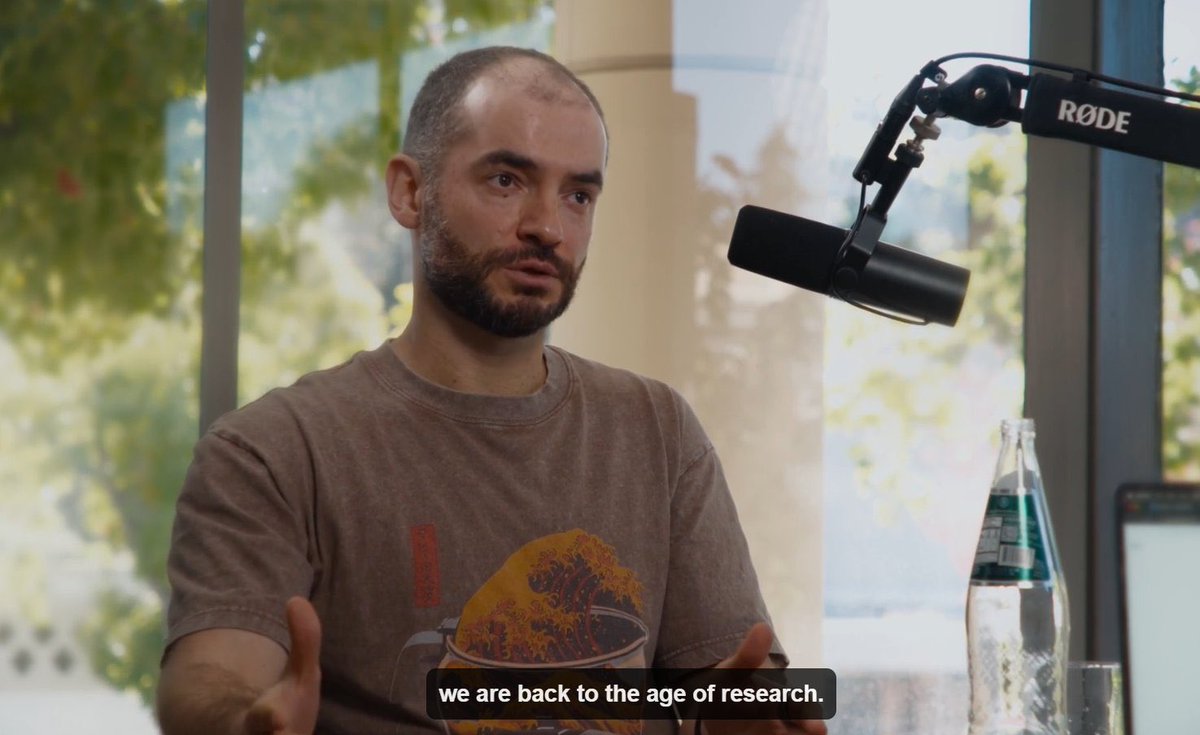
"We are no longer in the age of scaling, we are back to the age of research.'
Kaplan scaling laws are flattening at current frontiers, autoregressive transformers exhausted for reasoning/planning/alignment gains. Next jump needs real architectural breakthroughs - test-time compute, external memory, neurosymbolic hybrids, or new inductive biases entirely.
Research > FLOPs again. Trading GPUs for white boards & I’m here for it!
19
25
221
109,825
26 Nov 2025
Artists willing to challenge their limits have a huge opportunity in this new era.
25 Nov 2025

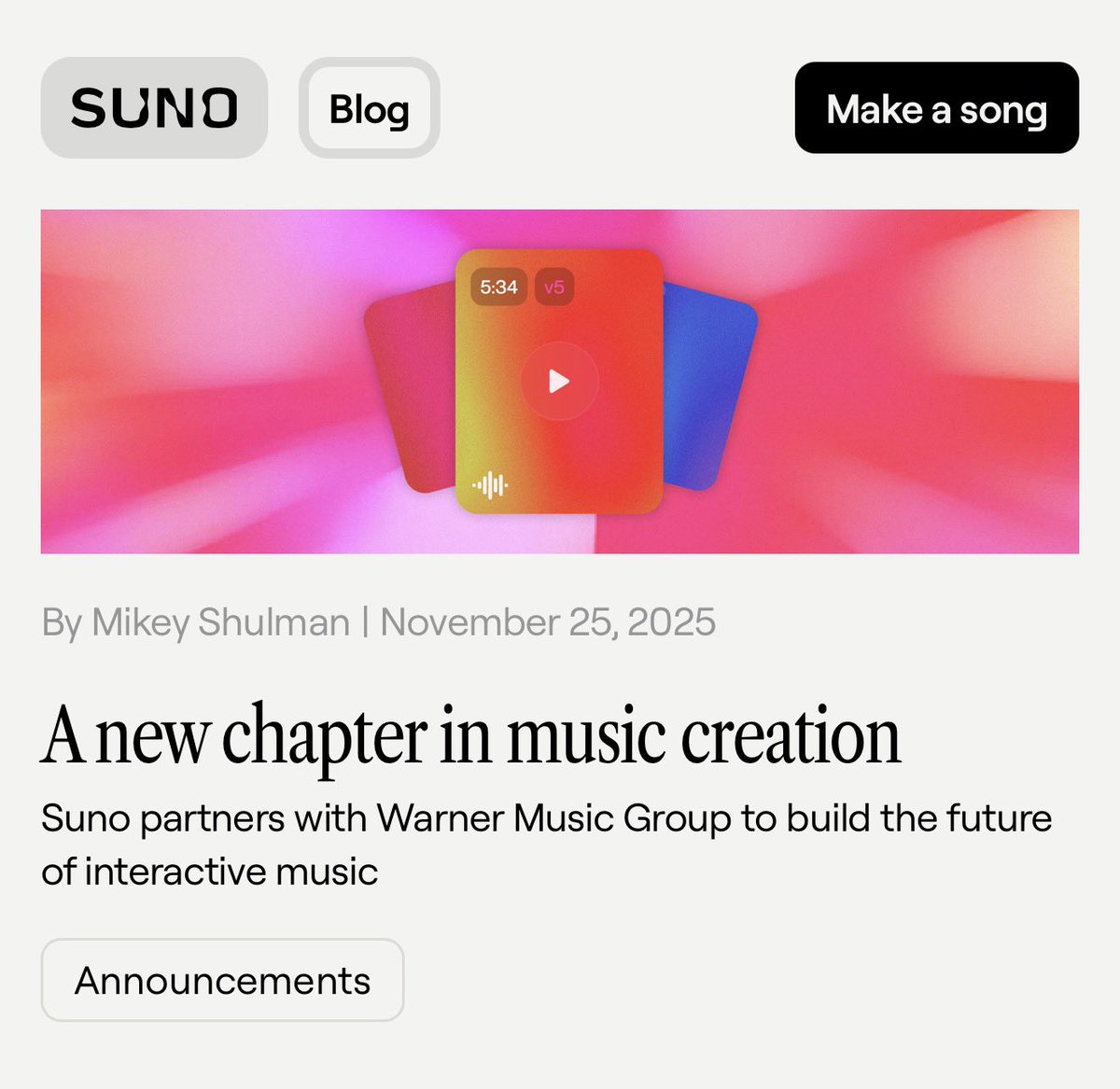
Suno just announced their partnership with Warner Music Group.
Here’s what this means:
1
208
25 Nov 2025
AI can reveal value that human systems overlook. AI can help CEOs of Big Corps spot true talent rather than people who are just loud or political, and it's probably more objective than the middle managers.
24 Nov 2025

Sergey used Gemini in a surprisingly creative way.
He asked it inside an internal Google chat, “who should be promoted in this chat space?” AI picked up a young woman engineer who is not vocal, and she was promoted.
AI can reveal value that human systems overlook. AI can help CEOs of Big Corps spot true talent rather than people who are just loud or political, and it's probably more objective than the middle managers. How far are we from an AI CEO?
Sergey Brin in founder mode using AI to cut through bureaucracy is just fascinating.
212
25 Nov 2025
This is insanely good.

178
The HELP foundation retweeted

23 Nov 2025
i’ve realized that keeping up 100% with new AI tools/models has become almost impossible. the pace is too fast and the breakthroughs hide in tiny details that never get announced.
one prompt works today and fails tomorrow. the only people who actually understand where things are heading are the ones inside the tools every day, chasing the micro-patterns until they turn into instinct.
and the founders who treat these tools like second nature are the most dangerous people in the game right now, because they can move quicker, iterate faster, and spot opportunities before anyone else even knows they exist.
live in the tools.
good things will happen.
177
105
1,099
139,296
The HELP foundation retweeted

22 Nov 2025
Pattern recognition is and always will be the strongest human skill. Don’t forget.
99
1,219
7,282
178,885
23 Nov 2025
Pixel @GrapheneOS looks extremely sexy. Time to switch. Don’t wait until it’s too late to take privacy seriously.
2
163
23 Nov 2025
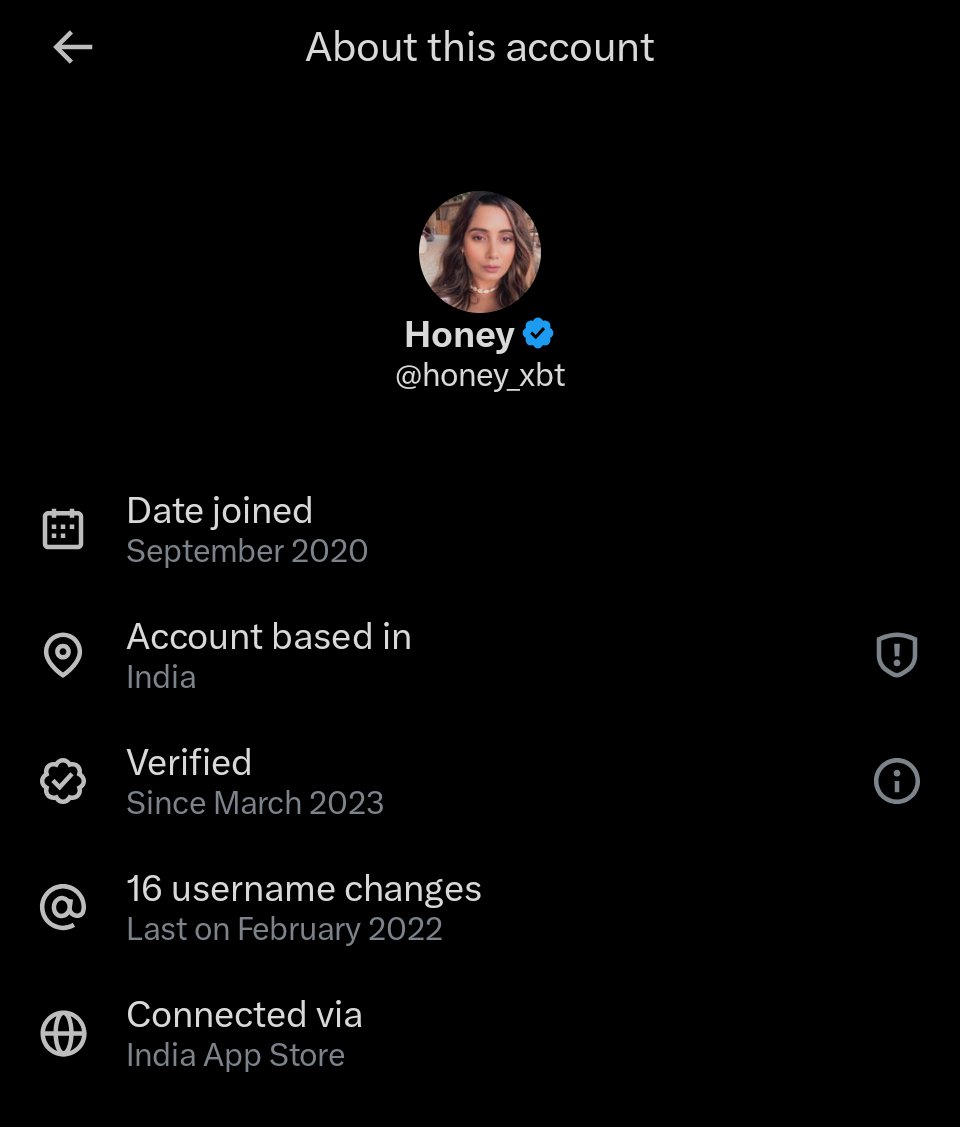
What if @etherscan and @MetaMask kept your digital fingerprints? Nobody is as safe as they think. They can just unilaterally change their minds. gg 💀

1
293
22 Nov 2025
It's a grind few want to endure.

my friend & i were laughing about how being a founder right now is basically a weekday hobby. ai made day 0 stupidly easy because you can summon a name, a logo, assets, a half coherent product demo, all before your coffee cools. it’s insane & kind of beautiful.
but that ease is exactly why day 2 is the real crucible now more than ever before. because once the vibes fade, everything has to survive contact with reality which are users, distribution, retention, you know the whole brutal ecology of actual demand (it’s so fucking hard). if day 0 got frictionless, day 2 got carnivorous. e.g. i remember talking to a vc backed founder recently who didn’t know what retention was, which is absolutely remarkable.
what a strange moment… you got infinite prototypes, zero scarcity of ideas, & yet an ever shrinking pool of things that actually endure. fascinating time to be alive. of course i wrote a piece about it below.
120
22 Nov 2025
Interesting post about Jean-Baptiste Kempf “The guy who kept VLC free”🔥
22 Nov 2025

Let me explain exactly why VLC is free despite 6B downloads, because no one seems to get it.
VLC doesn’t make money because making money would destroy the only thing that made it reach 6 billion downloads in the first place.
The player grew through a specific distribution loop: tech-savvy users install it once, it works perfectly on every weird video file they throw at it, and they recommend it to everyone forever. IT departments deploy it across entire companies. A Reddit comment from 2009 still drives downloads in 2025 because the answer never changed.
That recommendation engine dies the second ads appear. Not slowly. Immediately.
The users who drive VLC’s distribution are the exact people who understand what ads mean. Your incentives just switched from “make the best player” to “maximize impressions.” They see it, stop recommending it, and your growth engine shuts off.
Run the actual numbers. VLC gets maybe 50 million active users daily across 6 billion total downloads. Typical video player ad rates run $1-3 CPM. Even if you served ads on every playback session, you’re looking at maybe $50-150 million annually at absolute peak optimistic assumptions.
Sounds like a lot until you realize what Kempf actually traded it for.
VLC reaching 6 billion people made Kempf the person who built the infrastructure everyone depends on. He runs a video consulting business. He built dav1d, an AV1 codec that powers modern streaming. Being “the guy who kept VLC free” opens every door in video technology. Clients pay him to solve problems because he proved he optimizes for quality over quick monetization.
“Former ad-supported media player executive” gets you exactly zero of that leverage.
The people celebrating Kempf’s ethics are missing the calculation. He didn’t sacrifice millions for principles. He rejected $150M in highly uncertain ad revenue to build permanent positioning worth multiples of that in everything else he touches.
VLC free generates more value for Kempf than VLC monetized ever could. The trade was never even close.
320
21 Nov 2025
Without labeled data, you can't train custom models. Without custom models, you're stuck with generic solutions.
21 Nov 2025

Everyone is sleeping on Meta's SAM 3 release.
But it's actually a big deal. Here's why:
Companies spend millions paying humans to label images and videos frame by frame. A single autonomous driving dataset? Months of work, hundreds of annotators, millions in cost.
Without labeled data, you can't train custom models. Without custom models, you're stuck with generic solutions. This is why most companies never move past pilots.
SAM 3 breaks this cycle.
First let's look at the evolution:
SAM 1 segmented objects when you clicked on them. Revolutionary, but one object at a time.
SAM 2 added video tracking with memory. Game-changing, but you still manually prompted every object.
SAM 3 changes everything with text prompts.
Type "yellow school bus" and it finds ALL of them in your image or video. Not just one. Every instance across thousands of frames.
Now here's where people get confused:
"Can't I just use GPT-5 or Gemini for this?"
No, and here's why that's a terrible approach.
Large multimodal LLMs are great for reasoning, but they're slow and expensive for production visual tasks. You're paying API costs per image, waiting seconds for responses, getting inconsistent results.
SAM 3 runs in 30 milliseconds on a single GPU for 100 objects. That's 100x faster, and you own the infrastructure.
More importantly, SAM 3 gives you precise pixel-level masks, not descriptions. Try asking an LLM to segment every defective part on a manufacturing line in real-time. It won't work. SAM 3 does this effortlessly.
The real breakthrough is their data engine.
Meta built an AI-human hybrid system that's 5x faster for complex annotations. They trained SAM 3 on 4 million unique visual concepts - 50x more than existing benchmarks like LVIS.
SAM 3 is trained on 4 million unique visual concepts, it handles everything:
- Text-based concept search
- Interactive refinement with clicks
- Video tracking across frames
- Zero-shot detection of new concepts
The model is open source. Weights, code, and benchmarks are on GitHub.
If you're building computer vision applications, this is the foundation model to evaluate. The annotation time savings alone will pay for integration costs within weeks.
Find the relevant links in the next tweet!
1
421
20 Nov 2025
Video understanding and video generation are two sides of the same coin.

1
226
The HELP foundation retweeted

18 Nov 2025
probably dumb take but I think that, in a not-so-far future, people will make a lot of money creating apps, and even companies, with no human clients, consumed entirely by bots with money
18 Nov 2025

I’m starting to get into a habit of reading everything (blogs, articles, book chapters,…) with LLMs. Usually pass 1 is manual, then pass 2 “explain/summarize”, pass 3 Q&A. I usually end up with a better/deeper understanding than if I moved on. Growing to among top use cases.
On the flip side, if you’re a writer trying to explain/communicate something, we may increasingly see less of a mindset of “I’m writing this for another human” and more “I’m writing this for an LLM”. Because once an LLM “gets it”, it can then target, personalize and serve the idea to its user.
54
20
622
47,802