
A pair of projecting wings (two resistances) from a fortress (exchange). Flanking. Still extending.
Joined January 2015
- Tweets 597
- Following 164
- Followers 2,368
- Likes 37
360 Photos and videos










Pinned Tweet

28 Sep 2020
Creadores de la herramienta más poderosa de advanced analytics para big data, alta en eficiencia, velocidad y simplicidad.
#CreativityThroughEfficiency
1
3
6
TIMi Américas retweeted

7 Mar 2025
The U.S. now has the world’s largest Strategic Bitcoin Reserve.
2,986
6,422
56,653
3,199,473

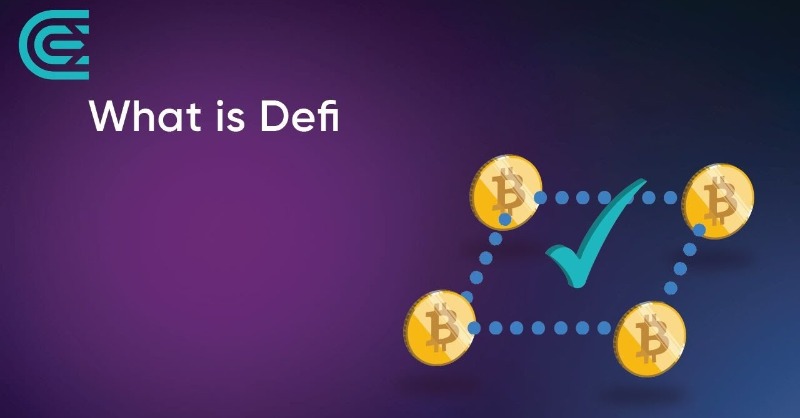
📐 Discover how Decentralized Finance (#DeFi) is reshaping the world of crypto!
From Bitcoin's roots to today's financial systems, learn what makes DeFi unique & how to access it securely with CEX•IO.
Watch now ⬇️
25,458
94,026
179,166
1,310,567
TIMi Américas retweeted

Feb 1
How I would do creator coins
We've seen about 10 years of people trying to do content incentivization in crypto, from early-stage platforms like Bihu and Steemit, to BitClout in 2021, to Zora, to tipping features inside of decentralized social, and more. So far, I think we have not been very successful, and I think this is because the problem is fundamentally hard.
First, my view of what the problem is. A major difference between doing "creator incentives" in the 00s vs doing them today, is that in the 00s, a primary problem was having not enough content at all. In the 20s, there's plenty of content, AI can generate an entire metaverse full of it for like $10. The problem is quality. And so your goal is not *incentivizing content*, it's *surfacing good content*.
Personally, I think that the most successful example of creator incentives we've seen is Substack. To see why, take a look at the top 10:
substack.com/leaderboard/tec…
substack.com/leaderboard/cul…
substack.com/leaderboard/wor…
Now, you may disagree with many of these authors. But I have no doubt that:
1. They are on the whole high quality, and contribute positively to the discussion
2. They are mostly people who would not have been elevated without Substack's presence
So Substack is genuinely surfacing high quality and pluralism.
Now, we can compare to creator coin projects. I don't want to pick on a single one, because I think there's a failure mode of the entire category.
For example:
Top Zora creator coins: coingecko.com/en/categories/…
BitClout: businessofbusiness.com/artic…
Basically, the top 10 are people who already have very high social status, and who are often impressive but primarily for reasons other than the content they create.
At the core, Substack is a simple subscription service: you pay $N per month, and you get to see the person's articles. But a big part of Substack's success is that they did not just set the mechanism and forget. Their launch process was very hands-on, deliberately seeding the platform with high-quality creators, based on a very particular vision of what kind of high-quality intellectual environment they wanted to foster, including giving selected people revenue guarantees.
So now, let's get to one idea that I think could work (of course, coming up with new ideas is inherently a more speculative project than criticizing existing ones, and more prone to error).
Create a DAO, that is *not* token-based. Instead, the inspiration should be Protocol Guild: there are N members, and they can (anonymously) vote new members in and out. If N gets above ~200, consider auto-splitting it.
Importantly, do _not_ try to make the DAO universal or even industry-wide. Instead, embrace the opinionatedness. Be okay with having a dominant type of content (long-form writing, music, short-form video, long-form video, fiction, educational...), and be okay with having a dominant style (eg. country or region of origin, political viewpoint, if within crypto which projects you're most friendly to...). Hand-pick the initial membership set, in order to maximize its alignment with the desired style.
The goal is to have a group that is larger than one creator and can accumulate a public brand and collectively bargain to seek revenue opportunities, but at the same time small enough that internal governance is tractable.
Now, here is where the tokens come in. In general, one of my hypotheses this decade is that a large portion of effective governance mechanisms will all have the form factor of "large number of people and bots participating in a prediction market, with the output oracle being a diverse set of people optimized for mission alignment and capture resistance". In this case, what we do is: anyone can become a creator and create a creator coin, and then, if they get admitted to a creator DAO, a portion of their proceeds from the DAO are used to burn their creator coins.
This way, the token speculators are NOT participating in a recursive-speculation attention game backed only by itself. Instead, they are specifically being predictors of what new creators the high-value creator DAOs will be willing to accept. At the same time, they also provide a valuable service to the creator DAOs: they are helping surface promising creators for the DAOs to choose from.
So the ultimate decider of who rises and falls is not speculators, but high-value content creators (we make the assumption that good creators are also good judges of quality, which seems often true). Individual speculators can stay in the game and thrive to the extent that they do a good job of predicting the creator DAOs' actions.
871
402
2,893
550,302
Ripple × Flutterwave ($3.2B valuation) brings RLUSD XRP Ledger to African cross-border payments. The infrastructure play here is massive — Africa's remittance market is a goldmine waiting to be unlocked. #XRP
Who's watching this space?
20
so much going on in crypto rn it's actually insane 😅 bitcoin, defi, web3 all moving at once… hard to keep up tbh. feels like we're in one of those weeks where everything matters #crypto
who else is glued to the charts today?
4
TIMi Américas retweeted
Jan 12
Ethereum itself must pass the walkaway test.
Ethereum is meant to be a home for trustless and trust-minimized applications, whether in finance, governance or elsewhere. It must support applications that are more like tools - the hammer that once you buy it's yours - than like services that lose all functionality once the vendor loses interest in maintaining them (or worse, gets hacked or becomes value-extractive). Even when applications do have functionality that depends on a vendor, Ethereum can help reduce those dependencies as much as possible, and protect the user as much as possible in those cases where the dependencies fail.
But building such applications is not possible on a base layer which itself depends on ongoing updates from a vendor in order to continue being usable - even if that "vendor" is the all core devs process. Ethereum the blockchain must have the traits that we strive for in Ethereum's applications. Hence, Ethereum itself must pass the walkaway test.
This means that Ethereum must get to a place where we _can ossify if we want to_. We do not have to stop making changes to the protocol, but we must get to a place where Ethereum's value proposition does not strictly depend on any features that are not in the protocol already.
This includes the following:
* Full quantum-resistance. We should resist the trap of saying "let's delay quantum-resistance until the last possible moment in the name of ekeing out more efficiencies for a while longer". Individual users have that right, but the protocol should not. Being able to say "Ethereum's protocol, as it stands today, is cryptographically safe for a hundred years" is something we should strive to get to as soon as possible, and insist on as a point of pride.
* An architecture that can expand to sufficient scalability. The protocol needs to have the properties that allow it to expand to many thousands of TPS over time, most notably ZK-EVM validation and data sampling through PeerDAS. Ideally, we get to a point where further scaling is done through "parameter only" changes - and ideally _those_ changes are not BPO-style forks, but rather are made with the same validator voting mechanism we use for the gas limit.
* A state architecture that can last decades. This means deciding, and implementing, whatever form of partial statelessness and state expiry will let us feel comfortable letting Ethereum run with thousands of TPS for decades, without breaking sync or hard disk or I/O requirements. It also means future-proofing the tree and storage types to work well with this long-term environment.
* An account model that is general-purpose (this is "full account abstraction": move away from enshrined ECDSA for signature validation)
* A gas schedule that we are confident is free of DoS vulnerabilities, both for execution and for ZK-proving
* A PoS economic model that, with all we have learned over the past half decade of proof of stake in Ethereum and full decade beyond, we are confident can last and remain decentralized for decades, and supports the usefulness of ETH as trustless collateral (eg. in governance-minimized ETH-backed stablecoins)
* A block building model that we are confident will resist centralization pressure and guarantee censorship resistance even in unknown future environments
Ideally, we do the hard work over the next few years, to get to a point where in the future almost all future innovation can happen through client optimization, and get reflected in the protocol through parameter changes. Every year, we should tick off at least one of these boxes, and ideally multiple. Do the right thing once, based on knowledge of what is truly the right thing (and not compromise halfway fixes), and maximize Ethereum's technological and social robustness for the long term.
Ethereum goes hard.
This is the gwei.
1,092
1,033
7,603
901,201
TIMi Américas retweeted
Feb 24
Defi is a central part of the value that Ethereum provides. Financial empowerment is a central part of what it means to have agency and freedom in our current world. Finance is far from the only thing that Ethereum is good for, but it is an important thing. This post discusses how the Ethereum Foundation is approaching defi.
Defi today makes the world's best savings, risk management and wealth-building opportunities permissionlessly available worldwide. We need to build on that.
Ethereum's early defi era was great because it dared to dream and innovate and come up with totally new paradigms (eg. AMMs). Defi tomorrow will bring back that spirit. Don't just "make a better stablecoin", dig a layer deeper, and think about the underlying problem (risk management, hedging one's future expenses), and come up with an even better solution.
But also, as the EF, we are not interested in supporting "onchain finance" or even "defi" indiscriminately. We have a specific vision of what we want to see out of defi: permissionless, open-source, private, security-first global finance that maximizes people's control over their own assets, minimizes centralized chokepoints and trusted third parties, and democratizes risk management and wealth building (the two key goals of finance according to modern portfolio theory) as well as payments. We want protocols that pass the walkaway test: that keep working even if the original team suddenly disappears without warning (or even: becomes hostile / compromised without warning).
Bringing this vision to reality will inevitably take a lot of work. Defi is a complex toolchain, including various onchain components, user-side offchain components (ie. wallet, local agent...), other offchain components, etc.
The things that we care about include areas like:
* Improving security of defi through "traditional" means, eg. audits, standards, wallet-side safeguards
* Improving security of defi through "new" means, eg. AI-assisted formal verification, user-side agents as safeguards
* Oracle security and decentralization (there's A LOT of skeletons in the closet here, we as an ecosystem really need to point a big eye of sauron at it for a while)
* Privacy. Both privacy-preserving payments, and privacy of more complex use cases (eg. what does it mean to have a maximally privacy-preserving CDP? there are clearly benefits in reducing liquidation-sniping risk, but it requires hard tech to get there)
* Open source, and improving the licensing / forkability situation in defi
Ethereum is a permissionless protocol, and nothing stops people from deploying insecure protocols, protocols that enshrine ultimately unneeded centralized trust in the name of convenience, or dopamine-maximizing gambleslop. However, we *are* interested in working with anyone aligned to make permissionless, open-source, intermediary-minimizing and security and user-agency-maximizing defi ecosystem as strong as possible, so that it can be not just individuals and institutions' first choice in Ethereum, but also a globally compelling way to manage funds for anyone who needs its properties.
Feb 23

1/ Today the EF is sharing a bit more about how it's approaching DeFi going forward:
374
513
1,717
394,516
TIMi Américas retweeted
Jan 8
Increasing bandwidth is safer than reducing latency
With PeerDAS and ZKPs, we know how to scale, and potentially we can scale thousands of times compared to the status quo. The numbers become far more favorable than before (eg. see analysis here, pre and post-sharding vitalik.eth.limo/general/202… ). There is no law of physics that prevents combining extreme scale with decentralization.
Reducing latency is not like this. We are fundamentally constrained by speed of light, and on top of that we are also constrained by:
* Need to support nodes (especially attesters) in rural environments, worldwide, and in home or commercial environments outside of data centers.
* Need to support censorship-resistance and anonymity for nodes (especially proposers and attesters).
* The fact that running a node in a non-super-concentrated location must be not only possible, but also economically viable. If staking outside NYC drops your revenues by 10%, over time more and more people will stake in NYC.
Ethereum itself must pass the walkaway test, and so we cannot build a blockchain that depends on constant social re-juggling to ensure decentralization. Economics cannot handle the entire load, but it must handle most.
Now, we can decrease latency quite a bit from the present-day situation without making tradeoffs. In particular:
* P2P improvements (esp erasure coding) can decrease message propagation times without requiring individual nodes to have lower bandwidth
* An available chain with a smaller node count per slot (eg. 512 instead of 30,000) can remove the need for an aggregation step, allowing the entire hot path to happen in one subnet
This plausibly buys us 3-6x. Hence, I think moderate latency decreases, to a 2-4s level, are very much in the realm of possibility.
But Ethereum is NOT the world video game server, it is the world heartbeat.
If you need to build applications that are faster than the heartbeat, they will need to have offchain components. This is a big part of why L2s will continue to have a role even in a greatly scaled Ethereum (there are other reasons too, around VM customization, and around applications that need _even more scale_).
Ultimately, AI will necessitate applications that go faster than the heartbeat no matter what we do. If an AI can think 1000x faster than humans, then to the AI, the "subjective speed of light" is only 300 km/s. Hence, it can talk near-instantly within the scope of a city, but not further. As a result, there will inevitably be AI-focused applications that will need "city chains", potentially even chains localized to a single building. These will have to be L2s.
And on the flipside, it would be too much of a cost to make it viable to run a staking node on Mars. Even Bitcoin does not strive for this. Ultimately, Ethereum belongs to Terra, and its L2s will serve both hyper-localized needs in its cities, and hyper-scaled needs planet-wide, and users on other worlds.
Milady.
508
385
2,498
593,169
Jun 16
Clarity Act is moving but there's a sneaky provision that could hurt devs. If the US actually wants to win the crypto race, protecting builders isn't optional. Get this wrong and talent walks. #crypto
Who's paying attention to this?
25
TIMi Américas retweeted

Jun 15
trump really put ufc on the white house lawn and gave out prizes in crypto, & the fighters were shilling memecoins on the octagon after winning
233
215
1,706
139,361
TIMi Américas retweeted

Jun 10
Someone said to me yesterday that the era of easy money in crypto is over.
If that's true (I don't know if it is), then there's a good chance that most of you are wasting your time here.
The reason is that almost everyone you see today who has achieved some level of success started their journey during one of these easy-money cycles.
Whether it was buying BTC in 2012, getting into DeFi early, trading NFTs in 2021, memecoins in 2024, or InfoFi in 2025, the pattern is the same.
You can't go from zero to one without an easy-money cycle.
So if you're at zero now, there is a chance that you will stay there
706
274
1,309
137,062
TIMi Américas retweeted
Feb 3
The Rules of Bitcoin
1. Buy Bitcoin
2. Don't Sell the Bitcoin
4,608
3,749
35,582
2,212,421
TIMi Américas retweeted

Jun 14
JUST IN: $150,000,000 worth of shorts liquidated from the crypto market following US-Iran peace agreement.
336
755
6,539
461,048
TIMi Américas retweeted

Jun 9
Benzinga asked me about quantum computing and Bitcoin.
The answer… Bitcoin is more secure than the dollars sitting in your bank account.
Quantum will crack the banks long before it touches the blockchain.
Everyone's panicking about quantum breaking Bitcoin's encryption while banks are running on legacy infrastructure that makes Bitcoin look like Fort Knox.
Even if something happened to the blockchain, the full node operators can roll back to the last secure block. The network survives.
The dollar and banks don't have that option.
At some point, Bitcoin eclipses the dollar entirely as retailers begin to accept bitcoin, and then they decide they only want to accept bitcoin.
Read the full Benzinga interview to see what else we covered.
benzinga.com/crypto/cryptocu…
82
381
743
105,710
TIMi Américas retweeted

Jun 8
204
386
1,194
62,308
Jun 15
just started this game theory book and my brain won't turn off 😭 keep reading about Nash equilibria and immediately thinking about how crypto markets move lol someone help me finish this thing
4
TIMi Américas retweeted
Mar 2
Finally, the block building pipeline.
In Glamsterdam, Ethereum is getting ePBS, which lets proposers outsource to a free permissionless market of block builders.
This ensures that block builder centralization does not creep into staking centralization, but it leaves the question: what do we do about block builder centralization? And what are the _other_ problems in the block building pipeline that need to be addressed, and how? This has both in-protocol and extra-protocol components.
## FOCIL
FOCIL is the first step into in-protocol multi-participant block building. FOCIL lets 16 randomly-selected attesters each choose a few transactions, which *must* be included somewhere in the block (the block gets rejected otherwise). This means that even if 100% of block building is taken over by one hostile actor, they cannot prevent transactions from being included, because the FOCILers will push them in.
## "Big FOCIL"
This is more speculative, but has been discussed as a possible next step. The idea is to make the FOCILs bigger, so they can include all of the transactions in the block.
We avoid duplication by having the i'th FOCIL'er by default only include (i) txs whose sender address's first hex char is i, and (ii) txs that were around but not included in the previous slot. So at the cost of one slot delay, only censored txs risk duplication.
Taking this to its logical conclusion, the builder's role could become reduced to ONLY including "MEV-relevant" transactions (eg. DEX arbitrage), and computing the state transition.
## Encrypted mempools
Encrypted mempools are one solution being explored to solve "toxic MEV": attacks such as sandwiching and frontrunning, which are exploitative against users. If a transaction is encrypted until it's included, no one gets the opportunity to "wrap" it in a hostile way.
The technical challenge is: how to guarantee validity in a mempool-friendly and inclusion-friendly way that is efficient, and what technique to use to guarantee that the transaction will actually get decrypted once the block is made (and not before).
## The transaction ingress layer
One thing often ignored in discussions of MEV, privacy, and other issues is the network layer: what happens in between a user sending out a transaction, and that transaction making it into a block? There are many risks if a hostile actor sees a tx "in the clear" inflight:
* If it's a defi trade or otherwise MEV-relevant, they can sandwich it
* In many applications, they can prepend some other action which invalidates it, not stealing money, but "griefing" you, causing you to waste time and gas fees
* If you are sending a sensitive tx through a privacy protocol, even if it's all private onchain, if you send it through an RPC, the RPC can see what you did, if you send it through the public mempool, any analytics agency that runs many nodes will see what you did
There has recently been increasing work on network-layer anonymization for transactions: exploring using Tor for routing transactions, ideas around building a custom ethereum-focused mixnet, non-mixnet designs that are more latency-minimized (but bandwidth-heavier, which is ok for transactions as they are tiny) like Flashnet, etc. This is an open design space, I expect the kohaku initiative @ncsgy will be interested in integrating pluggable support for such protocols, like it is for onchain privacy protocols.
There is also room for doing (benign, pro-user) things to transactions before including them onchain; this is very relevant for defi. Basically, we want ideal order-matching, as a passive feature of the network layer without dependence on servers. Of course enabling good uses of this without enabling sandwiching involves cryptography or other security, some important challenges there.
## Long-term distributed block building
There is a dream, that we can make Ethereum truly like BitTorrent: able to process far more transactions than any single server needs to ever coalesce locally. The challenge with this vision is that Ethereum has (and indeed a core value proposition is) synchronous shared state, so any tx could in principle depend on any other tx. This centralizes block building.
"Big FOCIL" handles this partially, and it could be done extra-protocol too, but you still need one central actor to put everything in order and execute it.
We could come up with designs that address this. One idea is to do the same thing that we want to do for state: acknowledge that >95% of Ethereum's activity doesn't really _need_ full globalness, though the 5% that does is often high-value, and create new categories of txs that are less global, and so friendly to fully distributed building, and make them much cheaper, while leaving the current tx types in place but (relatively) more expensive.
This is also an open and exciting long-term future design space.
firefly.social/post/lens/814…
286
490
1,425
274,749
TIMi Américas retweeted

21 Nov 2023
Today, I stepped down as CEO of Binance. Admittedly, it was not easy to let go emotionally. But I know it is the right thing to do. I made mistakes, and I must take responsibility. This is best for our community, for Binance, and for myself.
Binance is no longer a baby. It is time for me to let it walk and run. I know Binance will continue to grow and excel with the deep bench it has.
I’m pleased to announce that @_RichardTeng, our now former Global Head of Regional Markets, has been named the new CEO of Binance today.
Richard is a highly qualified leader and, with over three decades of financial services and regulatory experience, he will navigate the company through its next period of growth. He will ensure Binance delivers on our next phase of security, transparency, compliance, and growth.
Prior to joining Binance, Richard was CEO of the Financial Services Regulatory Authority at Abu Dhabi Global Market (ADGM); Chief Regulatory Officer of the Singapore Exchange (SGX); and Director of Corporate Finance in the Monetary Authority of Singapore.
With Richard and the entire team, I’m confident that the best days for @Binance and the crypto industry lay ahead.
As a shareholder and former CEO with historical knowledge of our company, I will remain available to the team to consult as needed, consistent with the framework set out in our U.S. agency resolutions.
What’s next for me?
I will take a break first. I have not had a single day of real (phone off) break for the last 6 and half years.
After that, my current thinking is I will probably do some passive investing, being a minority token/shareholder in startups in areas of blockchain/Web3/DeFi, AI and biotech. I am happy that I will finally have more time to spend looking at DeFi.
I can’t see myself being a CEO driving a startup again. I am content being an one-shot (lucky) entrepreneur. Should there be listeners, I may be open to being a coach/mentor to a small number of upcoming entrepreneurs, privately. If for nothing else, I can at least tell them what not to do.
On that note, I am proud to point out that in our resolutions with the U.S. agencies they:
- do not allege that Binance misappropriated any user funds, and
- do not allege that Binance engaged in any market manipulation.
Funds are SAFU!
With that, I look forward to seeing the new leadership take the reins. Please join me in congratulating Richard on his well-deserved promotion.
Onwards!
CZ
36,162
31,023
145,308
29,919,151
Jun 14
Crypto never sleeps and neither does my portfolio tracker 😅 Every day there's something wild happening in this space. The momentum feels real right now. Who else is glued to the charts today? #crypto
2
18