
Joined August 2024
- Tweets 8,253
- Following 171
- Followers 10,479
- Likes 13,531
735 Photos and videos








Pinned Tweet

May 11
Over the last 3 months, HighTower has onboarded 3 new networks to our venture platform and received official mainnet delegations from:
@CantonNetwork
@NEARProtocol
@pharos_network
Across each ecosystem, we contribute at different levels, from infrastructure and validator operations to ecosystem growth and builder support.
HighTower also provides:
- infrastructure services
- RPC & node solutions
- media and marketing support
- structural solutions for developers and teams
- ecosystem growth support through our platform
Any builder, startup, or company building products within these ecosystems and looking for infra or media support can apply through the form on our website.
18
2
51
3,948
High Tower retweeted

Jun 11
Read the review and reflections from @htwtech_ on the newly released whitepaper by @arc
A useful breakdown of what private EVM execution can unlock for on-chain finance, confidential applications, and institutional blockchain infrastructure.
Private EVMs may become one of the most important infrastructure shifts for on-chain finance.
@arc Privacy Sector shows how confidential execution, public finality, and familiar Solidity tooling can work together: opening the door for private payroll, credit markets, asset issuance, and institutional settlement without exposing sensitive data on-chain.
htw.tech/blog/arc-privacy-se…
2
4
12
3,585
High Tower retweeted

Jun 4
Building on Solana? Your dApp performance depends more on RPC architecture than on “theoretical TPS”.
Key best practices from a recent Solana RPC infra guide:
Avoid relying on public RPC for production (rate limits, unstable latency, no SLA).
Separate infra for read vs write, and scale RPC horizontally as load grows.
Optimize requests: batch where possible, cache aggressively, and avoid redundant calls.
Monitor latency, error rates, and slot lag as first‑class product metrics, not just infra metrics.
Treat RPC as core product infrastructure, not a commodity endpoint — that’s where real UX and reliability come from.
You can find the full breakdown on our website in the Blog section.
htw.tech/blog/solana-rpc-inf…
2
3
19
2,165
May 29
Building for the Pharos Agent Center Skill Builder Campaign? HighTower is opening support for selected teams.
Selected teams can get:
- Dedicated RPC and Agent RPC infrastructure
- MCP endpoints for AI agent integrations
- Indexing and data layer support
- Media distribution
Bonus perks:
= 3 Cursor Pro accounts (1 month)
= 3 Claude Pro accounts (1 month)
➡️ Apply here: htw.tech/builders/form
When submitting, add [Pharos] before your project name.
For example: [Pharos] Wallet Analytics Skill
Applications are open now.
📍 The program starts on May 30.

Pharos Agent Centre - Skill Builder Campaign is live 🧑💻
Build new onchain Skills for AI Agents using the Pharos Skill Engine for a chance to win 500 USD each!
Campaign Details: silken-muskox-24e.notion.sit…
Join Discord: discord.com/invite/pharos
6
1
56
5,282
May 29
10
994
High Tower retweeted
May 15
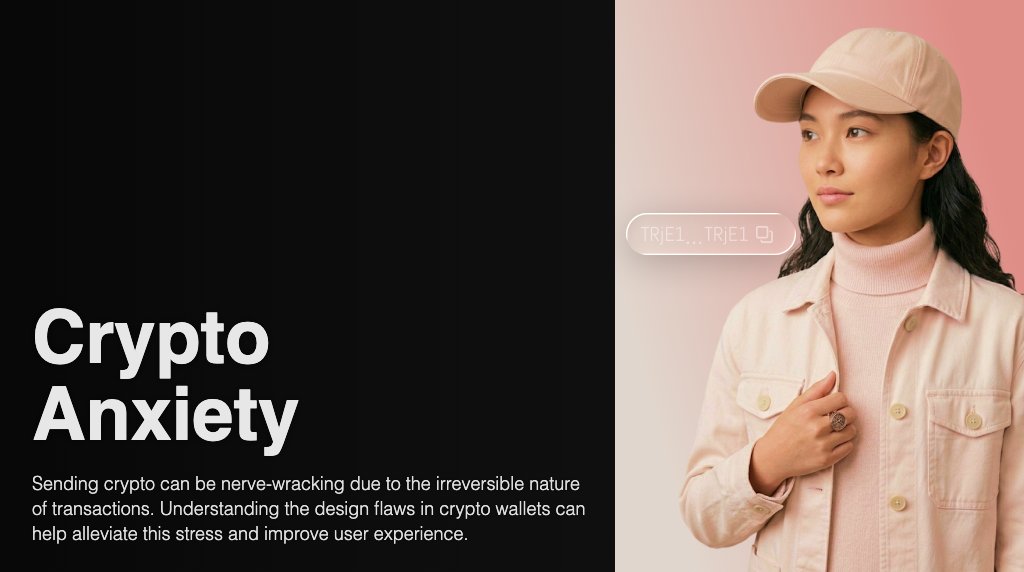
Why You Double-Check Every Crypto Transaction
You don't triple-check your Venmo. So why does sending USDT make you break into a cold sweat? The answer says everything about what crypto got wrong — and what needs to change.
Think about the last time you sent money through Venmo or PayPal. You typed a name, entered an amount, hit send. Maybe you glanced at the screen for half a second. Then you moved on with your day.
Now think about the last time you sent crypto. Did you check the address once? Twice? Did you send a tiny test amount first — just to make sure — before sending the real thing? Did you feel a small knot in your stomach until the confirmation came through?
That knot is not irrational. It's a rational response to a genuinely stressful system.
—
Why crypto feels so different
When you send money through a bank app or Venmo, there are safety nets built in. If you type the wrong name, the app often catches it. If something goes wrong, there's a customer support team. In many cases, transfers can be reversed.
Crypto has none of those. A wallet address — the thing you paste when sending USDT — is a long string of random letters and numbers. It looks like this:
A typical USDT wallet address:
TQn9Y2khHMQx4agPKjPxjsLn8sR5S4kWzNe
Note: Two characters (h and k) are implicitly highlighted in the original. If either of those were wrong, the money would go to a completely different wallet — or disappear entirely. There is no undo.
If you send to the wrong address, it's gone. No support team to call. No reversal. No "are you sure?" prompt that actually checks anything. The system is designed to be unstoppable — which is great for privacy and censorship resistance, but deeply uncomfortable when you're just trying to pay a friend back for dinner.
—
The same task, two very different experiences
Sending $50 on Venmo:
• Search friend's name
• Enter $50
• Tap Pay
Sending $50 in USDT (Typical crypto wallet):
• Ask friend for address
• Which network? TRC-20? ERC-20?
• Paste 42-character address
• Check it. Check again.
• Send $1 test first
• Wait. Refresh. Confirm.
• Send the real amount
• Check again. Breathe.
The double-check isn't a personality quirk. It's the only rational response when mistakes are permanent and there's no way to recover from them.
—
This isn't how it has to be
The anxiety isn't built into the idea of digital money — it's built into the current design of crypto wallets. And design can change.
When you send money to a name or a phone number instead of a 42-character address, the chance of a catastrophic error drops dramatically. When the app confirms who's receiving the money — not just that the address format is correct — you can breathe. When the network is handled automatically so you can't accidentally send on the wrong one, a whole category of mistakes disappears.
—
The goal isn't to make crypto less powerful. It's to make the scary parts invisible — the same way your bank app hides routing numbers and SWIFT codes behind a simple "send to contact" button.
— The design philosophy behind VAULT wallet
—
Until then, here's the honest advice:
Always double-check the first and last four characters of an address before sending. Send a small test amount first when trying a new address. And if the app asks you which network to use and you're not sure — find out before you send, not after.
—
The short version:
You double-check every crypto transaction because the system punishes mistakes permanently. That's not your fault — it's a design flaw. The best wallets are working to make this anxiety unnecessary. Until they do, caution is the right instinct.
—
Key ideas:
• Crypto transactions are irreversible — a wrong address means the money is gone, permanently.
• The anxiety you feel is a rational response to a poorly designed system, not an overreaction.
• Good wallet design removes the need for that anxiety by replacing addresses with names, and handling the technical details automatically.
• Until then: always verify the first and last four characters, and send a test amount when in doubt.
#VAULTwallet #EverydayMoney #CryptoSafety #WalletDesign #USDT
3
29
3,738
High Tower retweeted

May 17
Lumera x Injective IBC integration is live on mainnet.
Cascade — Lumera's permanent storage module —
is now accessible to Injective dApp developers.
Data is chunked and distributed across SuperNodes, continuously audited by random peer quorums. Fail an audit → get slashed. Economic enforcement, not trust.
What it actually solves:
— NFT metadata stored permanently, no IPFS pinning risk
— DeFi orderbook snapshots and trade history off-chain with on-chain references
— Verifiable audit trails with cryptographic proof of storage
Most "decentralized" apps still rely on AWS or centralized object storage for persistent data. Cascade removes that dependency. Payments in INJ or LUME, cross-chain mechanics abstracted away.
Next integrations planned: Sense (content verification) and Inference (AI compute).
SDK docs are still coming — worth watching once they're out.
HighTower has been validating the Lumera network since early days and will keep supporting the protocol as it expands.
@lumera @injective
2
3
33
2,142
High Tower retweeted

May 13
▮▮▮▮▮▮▮▮▮▮▮▮▮▯▯▯▯▯
Plug into the ₿itcoin ecosystem
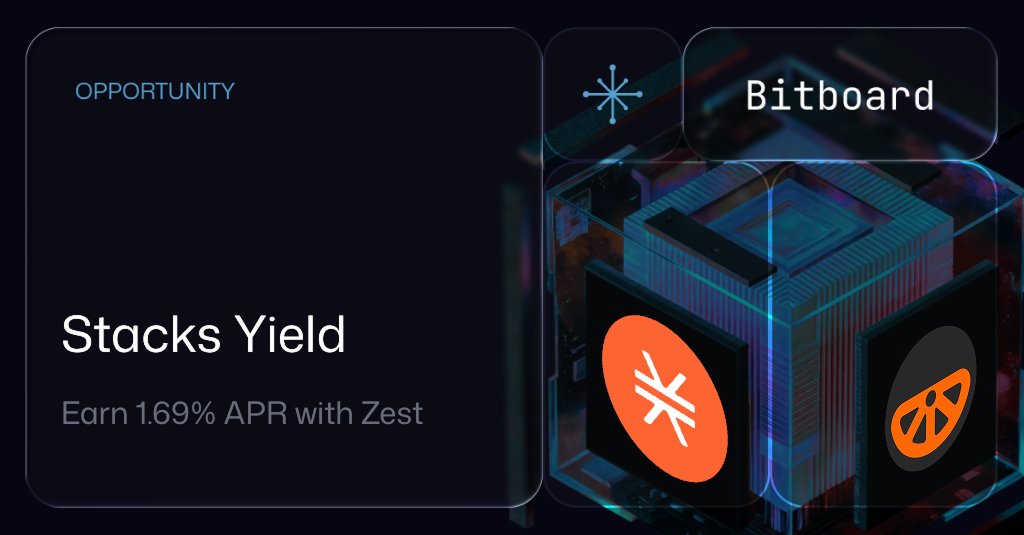
sBTC: APR 1.69%
type: Lending
chain: Stacks
Explore yield opportunities in the Bitcoin ecosystem with @Stacks
Here's a promising option to consider:
@ZestProtocol
BTC lending platform on Stacks offering an estimated APR of 1.69%.
Yield is generated from borrowing demand and utilizing protocol yield.
This approach allows users to earn returns while maintaining BTC exposure through a secure and decentralized framework.
Stay informed on how Bitcoin can work for you with innovative DeFi solutions.
▮▮▮▮▮▮▮▮▮▮▮▮▮▯▯▯▯▯
Bitcoin Board - your Gateway to Bitcoin ecosystem
▮▮▮▮▮▮▮▮▮▯▯▯▯▯▯▯▯▯
#bitboard_yield - hashtag for aggregate last yield opportunity. NFA
#bitboard #sbtc #stacks
#DeFi #YieldFarming
2
17
4,291
High Tower retweeted
May 4
Stablecoins are no longer a niche experiment, they’ve already surpassed traditional giants like
@Visa
and
@Mastercard
in total payment volume.
And what’s even more telling is where this activity is happening.
It’s not evenly distributed.
In fact, the growth is being driven far beyond the “native” regions of traditional finance.
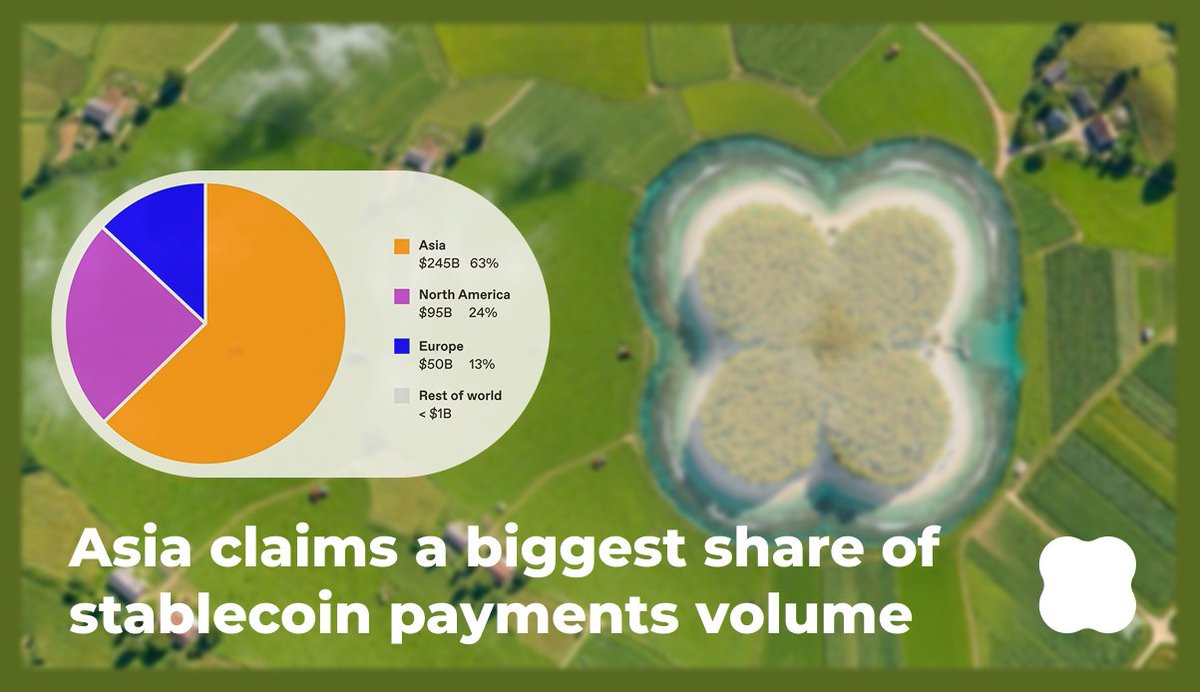
Nearly two-thirds of all stablecoin transaction volume comes from Asia — with key hubs like Singapore, Hong Kong, and Japan leading the charge.
This isn’t accident. It reflects real demand: – faster cross-border settlement – access to dollar-denominated liquidity – reduced dependency on legacy banking infrastructure
The implication is simple: Stablecoins aren’t just competing with traditional payment rails — in many parts of the world, they’ve already replaced them. Shot out to @a16zcrypto for highlighting
2
3
24
3,400
High Tower retweeted
May 3
Satoshi, we almost lost it
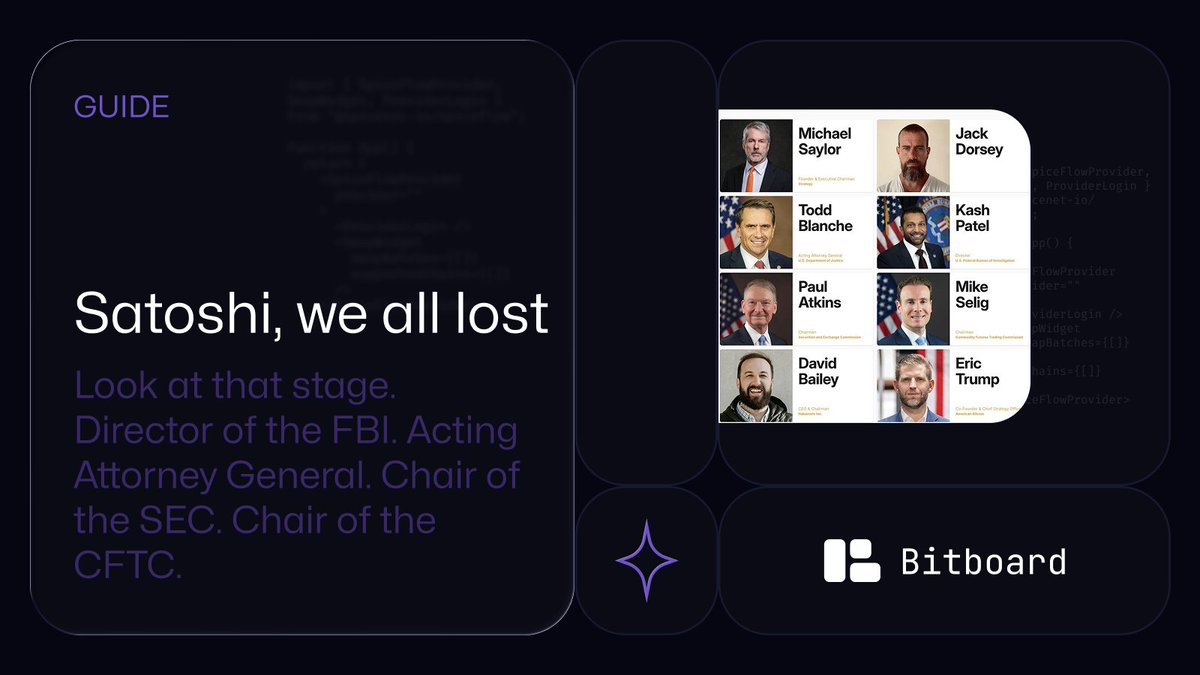
Picture this. You're an OG. Been holding since 2013. Bought BTC on Mt.Gox, refreshed Blockchain.info in your basement like it was a heartbeat monitor. And now you're sitting at Bitcoin 2026 in Las Vegas, and on stage — FBI Director Kash Patel, Acting AG Todd Blanche, SEC Chair Paul Atkins, CFTC Chair Mike Selig.
No arrest warrants. Microphones.
And they're all saying things like "Bitcoin isn't going anywhere" and "Code is free speech" and "America is the crypto capital of the world."
Bro.
We used to dream about a world where nobody messes with us. Now nobody's messing with us — they're inviting us. It feels like your underground punk band just got booked to play the inauguration. Slightly surreal. Oddly emotional. Weirdly earned.
Part of you wants to slap the table: we actually won. The same government that called Bitcoin a crime syndicate is now sending its top brass to our conference. FBI says it won't chase developers for writing code. SEC and CFTC sharing a stage, that's like the cat and the dog deciding to split the pizza fairly.
The other part - that quiet OG skepticism in the back of your brain and whispers: when the system walks into your camp, it rarely comes just to hang out. It comes to learn how things work. And then... well. You know. KYC on steroids. Taxes on taxes.
But here's the thing. Maybe they finally read the White Paper. Maybe they understood that Bitcoin isn't a bug in the financial system - it's the feature the financial system never wanted to admit it needed.
We sat on Twitter and Reddit for years screaming number go up, lost money on altcoins just to understand why only BTC is real, held through crashes that would've broken lesser people.
And now directors of federal agencies are flying to Vegas to speak at our conference.
Satoshi's somewhere out there smiling that cryptic smile: "I told you. Just build."
So pour your coffee, put on your laser-eyes avatar, and enjoy the moment.
We didn't just survive. We became the main stage.
But remember the first rule of being an OG: don't trust, verify. Even when the guy at the podium runs the FBI.
Bitcoin won!
not because regulators learned to love it.
Because it turned out to be stronger than all of them combined.
Satoshi, we almost typed those three words. Almost.
1
4
22
4,763
May 1
Just launched gRPC infrastructure for Monad!
gRPC delivers high-performance live streaming of all blockchain events — blocks, transactions, logs, call frames, state accesses, and more — with powerful composable filters and full support for every consensus stage:
PROPOSED → VOTED → FINALIZED → VERIFIED.
Our benchmarks show gRPC crushes WebSocket:
-90% traffic,
-97% wire bytes,
and slightly faster delivery (see the attached benchmark image).
Full API guide with filters, examples, stage handling, and replay logic is attached.
We’re always excited to work with @monad builders!
2
48
6,322
May 1
If you’re building on Monad, fill out the collaboration form on our website
it we’ll give you full infrastructure access and dedicated support.
@monad_dev - lets check
1
7
1,987
May 1
Our complete Monad stack:
• gRPC — ultra-efficient binary streaming with advanced filters & stage gating
• RPC — stable, reliable classic JSON-RPC endpoint
• MCP — specialized server at mcp-monad.com
We believe in Monad and are actively helping to grow a strong builder community. Let’s build the next generation of high-performance EVM apps together!
LINKS:
builders form - htw.tech/builders/form
chainlist rpc - chainlist.org/chain/143
mcp - mcp-monad.com
6
2,017
Apr 30
The @build_on_bob governance is officially live, meaning token holders now have the final say on ecosystem development and funding. They just dropped their first proposal (BAP001 by @coinyak_io) to ratify the project's mission charter.
While transitioning to a DAO is a pretty standard play for L2s and this first prop is mostly organizational, it’s actually a great benchmark to gauge real community engagement. It's currently in a 7-day discussion phase before going to a vote.
Apr 30

Here's how to get started with BOB Governance in 4 simple steps:
1️⃣ Read BAP001 on the forum at forum.gobob.xyz
2️⃣ Leave your feedback - the discussion phase exists so the community can shape proposals before they go to a vote
3️⃣ Set up delegation - delegate your voting power to a delegate you trust, or self-delegate to vote directly, at gov.gobob.xyz/gov/bob/delega…
4️⃣ Vote when the voting window opens
12
5,622
Apr 29
Congrats to @pharos_network
on the Pacific Ocean Mainnet Launch! ⚓
[over 50 dApps already live]
Pharos is the fastest EVM-compatible Layer 1 for real-world assets and cross-chain liquidity. Built to unify Web2 and Web3 at internet scale, it serves as an inclusive Financial Layer 1 that makes institutional-grade assets and RealFi accessible to everyone.
As the first asset-native, institution-grade network engineered for high performance and regulatory compliance, Pharos bridges deep liquidity with real-world impact.
With over 50 dApps already live across trading, RWA, lending and more from day one, the ecosystem is fully activated right from launch.
Glad our validator infrastructure has been live in the network from day one, helping secure and decentralize it.Continuing full support for the Pharos team and community.
#Pharos #Mainnet #RealFi #PROS
2
4
17
7,191
High Tower retweeted
Apr 28
New network coming to VAULT soon 👀👀👀
Cooking…
Even your parents might stop asking “did it go through?” every 5 minutes.
2
24
1,217
High Tower retweeted
Apr 27
Private USDT on Bitcoin: How Utexo Built This?
@utexocom is building a stack where USDT moves on Bitcoin, but nothing is visible from the outside. Here is how they use RGB and Lightning to achieve it.
Private USDT on Bitcoin: How Utexo Built This
If you've ever moved stables on a public chain, you know the feeling. Any chainalysis bot, any competitor, any bored analyst opens the explorer and sees your entire flow. Payroll, vendor settlements, inter-exchange transfers - all on display. Privacy here isn't about paranoia, it's basic operational hygiene.
Utexo is building a stack where USDT moves on Bitcoin, but nothing is visible from the outside.
The transaction never hits the chain
With an EVM token you send, the whole network writes it down. Everyone running a node stores your transfer. The explorer just makes it readable. RGB Protocol is built differently. Transaction details, who's sending, to whom, how much, live only between sender and receiver. What goes to Bitcoin is just a cryptographic proof that something happened, without content.
Like signing a private contract instead of running a public auction, and only logging the contract number in the registry. What's inside stays private.
RGB calls this Client-Side Validation. The network stops being a witness to your transactions.
The sender doesn't know where it actually went
CSV covers the content, but not everything: the sender can still see the output UTXO. Utexo closes that gap with Blinded UTXOs.
The receiver generates a blinded reference to their address with a cryptographic secret inside. The sender pushes the transfer to that reference without knowing the real destination address.
In multi-hop setups, PSPs, exchange settlements, iGaming payouts, each participant in the chain sees only the next hop.
Lightning hides the fact that money moved at all
Lightning Network adds the final layer. In the Bitcoin chain, only two events are visible: channel open and channel close. Everything that happens between them stays inside.
A thousand USDT payments can move between those two points and not one of them shows up on-chain.
Where it actually gets slippery
RGB drags along an uncomfortable mechanic. With a normal token, the blockchain stores your history for you. With Client-Side Validation, you store it yourself. Lose your validation data and you lose access to your assets. There's no global state to back you up.
Utexo handles this through Tether WDK: RGB keys are derived from a standard BIP-39 seed phrase, validation data is encrypted and backed up locally.
RGB took a long time getting to production. Corporates who need to trust infrastructure with real payroll or vendor settlements aren't rushing. The stack looks solid, but that conversation happens after the first real tracks show up.
2
2
22
2,306

High Tower retweeted
Apr 24
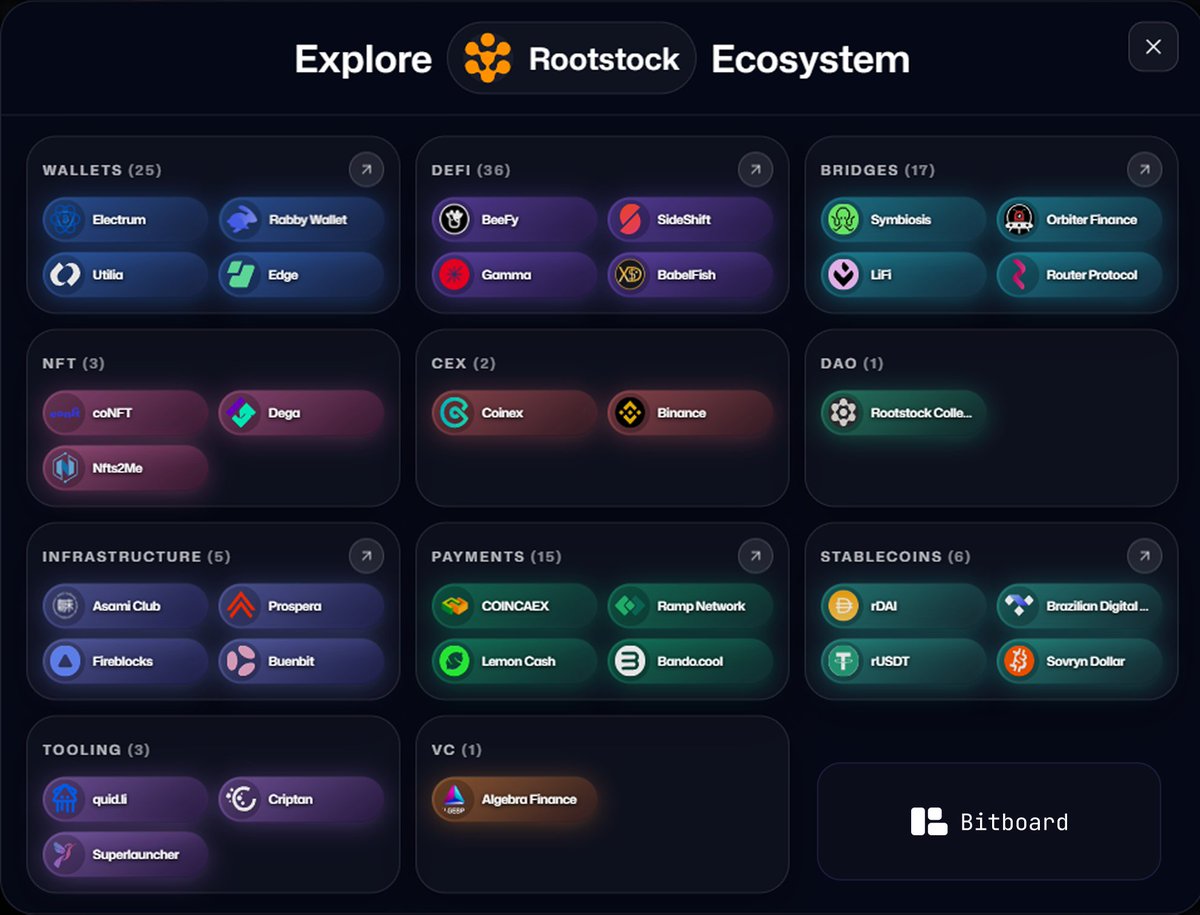
The Rootstock Ecosystem Map: Bitcoin Utility, Layer by Layer 🗺
Most Bitcoin ecosystem maps still lean on the same thing: DeFi.
That’s usually where the story starts, and where it ends.
@rootstock_io already looks wider than that.
You’ve got the usual wallet, bridge, and DeFi layers, sure. But there’s also payments, stablecoins, exchange access, infrastructure, tooling, and even DAO presence on the board. That gives the map a bit more weight.
It starts with access. Electrum, @Rabby_io, Utilia, and Edge give Rootstock a pretty usable wallet surface. That matters because Bitcoin ecosystems usually lose people early when the first step is too narrow or too awkward.
Then there’s the bridge layer. @symbiosis_fi, @Orbiter_Finance, @lifiprotocol, and @routerprotocol give Rootstock several routes in and out. If liquidity only has one way in, the rest of the ecosystem feels smaller than it looks.
DeFi doesn’t feel empty here either. BeeFy, Gamma, @sideshiftai, and BabelFish are some of the more visible names on the board. That doesn’t prove the market is fully built out, but it does show Rootstock isn’t trying to tell the whole DeFi story through one app.
And honestly, the bigger signal is everything around it.
Payments already have a real place here through COINCAEX, @RampNetwork, Lemon Cash, and Bando. Stablecoins aren’t sitting off to the side either, with rDAI, rUSDT, Sovryn Dollar, and Brazilian Digital Token already on the map.
That’s where Rootstock starts to stand out. Once a Bitcoin ecosystem shows payments and stablecoins alongside DeFi, it stops looking like a narrow onchain vertical and starts looking more like an economy.
Around that, Rootstock also has infra, tooling, and exchange support in place. Asami Club, Prospera, @FireblocksHQ, and Buenbit sit on the infra side. quid, Criptan, and Superlauncher add tooling. Binance and Coinex are already on the board from the exchange side.
For us, this is where the map really starts to matter.
Rootstock isn’t just showing access, bridges, and a few DeFi names. The picture is wider than that.
There are ways in, places to move liquidity, payment rails, stablecoin coverage, and enough infrastructure around it for the whole thing to feel more grounded.
That’s why Rootstock stands out to us. Not as a finished ecosystem, but as one that’s already starting to look more complete than most Bitcoin DeFi maps.
#BTCFi #Rootstock #BitcoinDeFi #EcosystemMap
2
12
3,568