
Joined March 2016
- Tweets 656
- Following 128
- Followers 618
- Likes 990
76 Photos and videos



14 Apr 2023
fredrikj.net/blog/2023/04/fl…
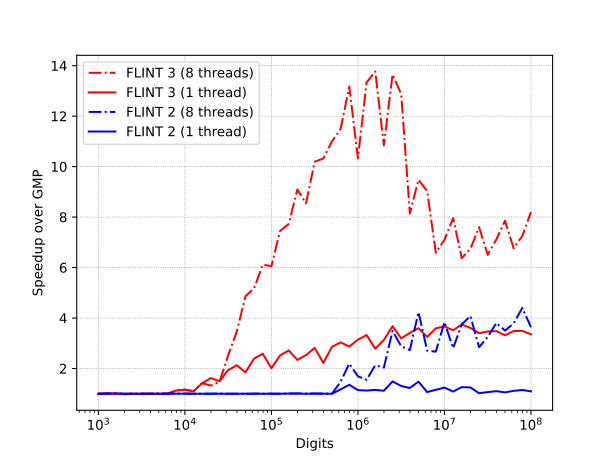
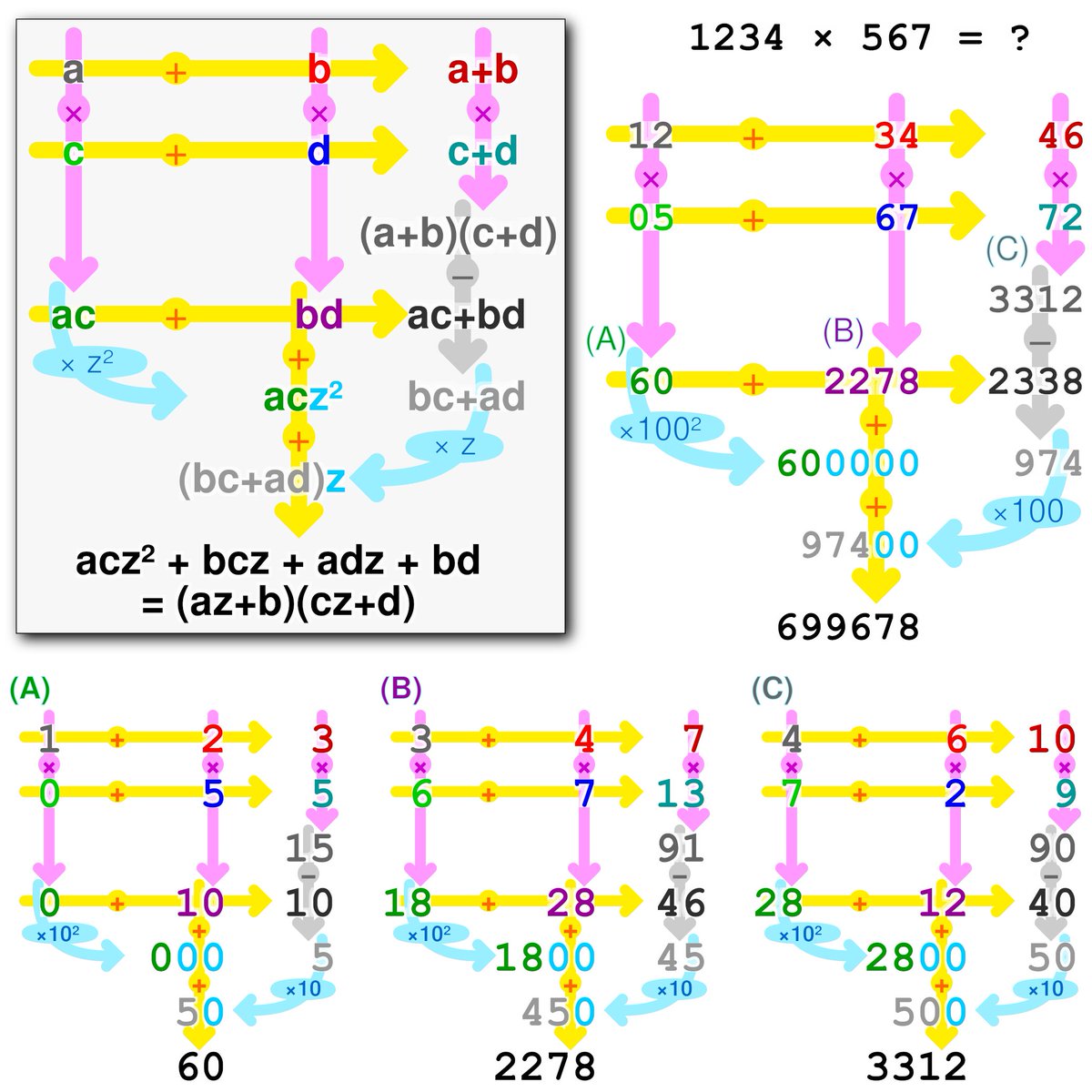
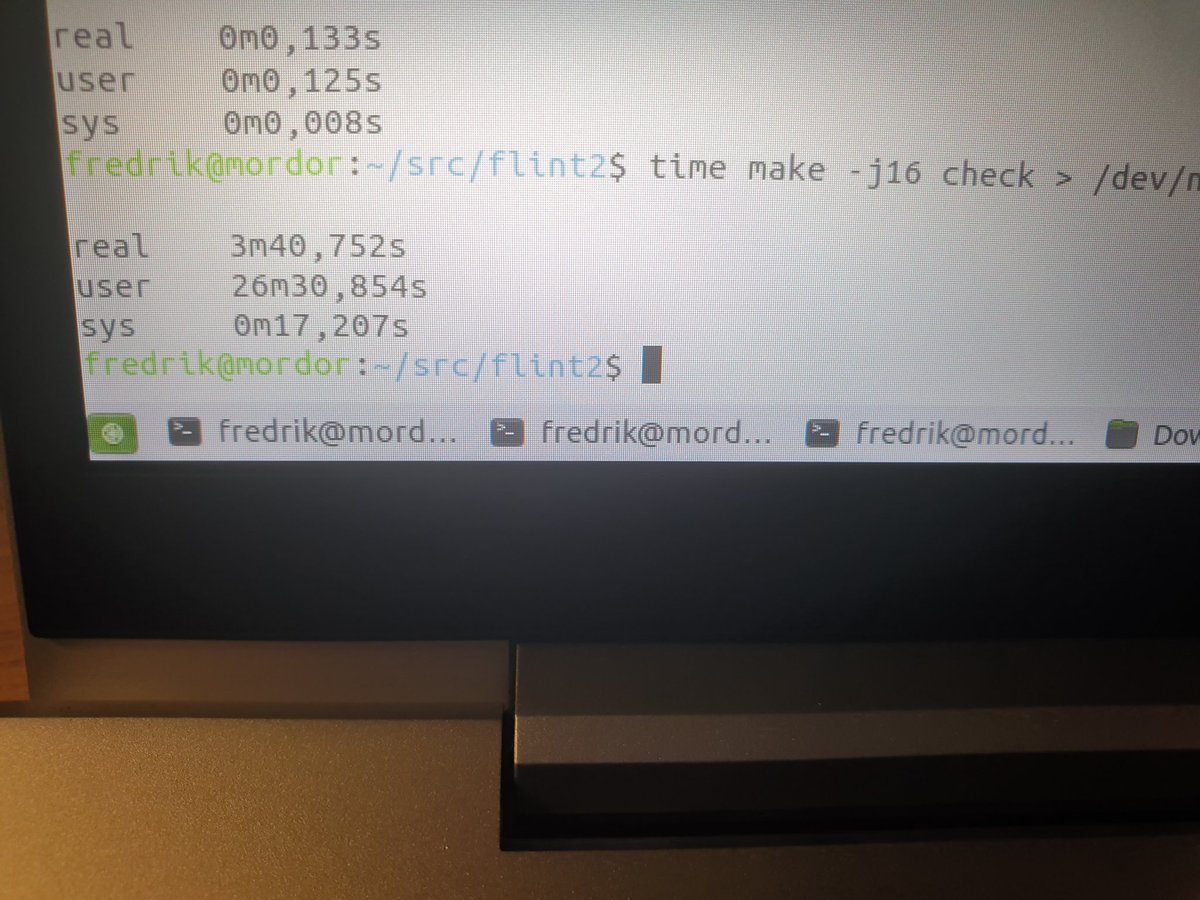
FLINT furnished with faster FFT: we recently merged Dan Schultz's amazing new small-prime FFT code into FLINT, enabling much faster bignum arithmetic (in some cases 10x faster than GMP).
2
1
7
893
5 Mar 2023
In case you missed it: FLINT, Antic, Arb, Calcium and Generic-Rings have merged into a single project: what will be FLINT 3.x going forward. The 3.0 release will happen later this year; I'm currently working on debloating this 1 MLOC codebase. github.com/flintlib/flint2
1
25
1,598
1 Feb 2023
My article "Arbitrary-precision computation of the gamma function" has been published in Maple Transactions!
mapletransactions.org/index.…
1
1
19
1,102
18 Dec 2022
I have removed the links to Twitter on my website. See you all on that other social network instead!
12
1,367
Fredrik Johansson retweeted

17 Dec 2022
LaTeXML 0.8.7 was just released!
We're ready for #MathML Core.
With gratitude to the wider community, who helped drive another productive year of extending our TeX interpretation fidelity and our LaTeX ecosystem coverage.
Full release notes at:
github.com/brucemiller/LaTeX…
1
4
12
1,632
6 Dec 2022
There's currently a 7 month delay just to get the *appointment* for a national ID card or passport here. So much for free movement within Schengen 😡
2
3
18 Nov 2022
Anyone interested in a full-time job doing FLINT development should get in touch.
I don't have funding at the moment, but given a qualified candidate (skilled with computer algebra *and* C programming), there's a decent chance that funding can be found.
2
7
16
8 Nov 2022
What strikes me about Yitang Zhang's preprint is that there doesn't seem to be any fancy math (I could be wrong about this), just 100 pages of tedious analytic calculations. An interesting candidate for computer verification?
1
3
14
8 Nov 2022
Many proofs in analytic number theory look like this, and I can never quite shake the fear that the author might have dropped a decimal or a sign or a residue somewhere.
1
5
8 Nov 2022
Sadly proof assistants are still quite limited when it comes to (complex) analysis, and computer algebra systems suck at handling inequalities. I wish we had proper "computer analysis systems" making computer-verified classical analysis truly routine.
1
1
8
Fredrik Johansson retweeted

28 Oct 2022
I finally launched CoWasm.org. It's kind of like @emscripten, but built using @ziglang, with first class support for both servers and browsers. The main package is @python 3.11, but there are lots of other fun #webassembly ports hidden inside...
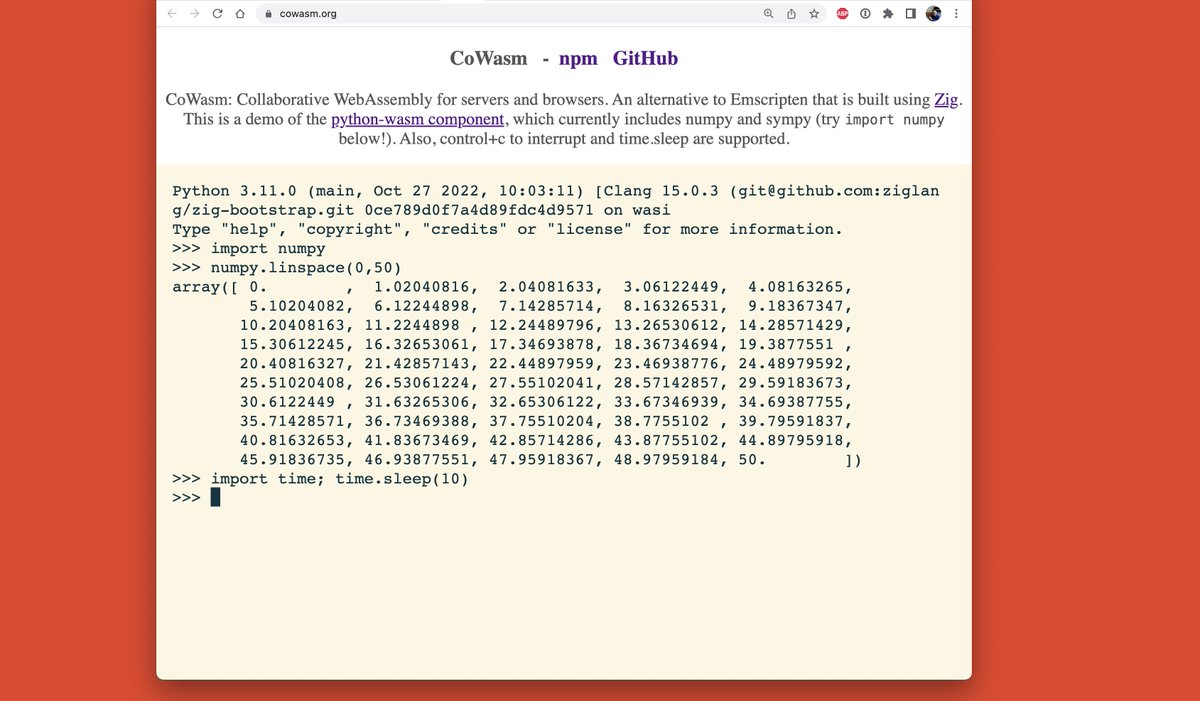
3
26
93
22 Oct 2022
Today is Bruno Buchberger's 80th birthday!
There will be a conference at RISC next week, with a Zoom live stream: risc.jku.at/c/symbolic-compu…
1
6
Fredrik Johansson retweeted

20 Oct 2022
Accepting and rejecting papers is an archaic practice that is terrible for science. It strips peer review of its value & institutionalizes the practice of judging scientists based on where, rather than what, they publish. It's time for this system to go.
elifesciences.org/articles/8…
54
265
935
15 Oct 2022
dlmf.nist.gov/4.13
Finally, DLMF's section about the Lambert W-function has been updated. They now cover the complex branches, with the usual notation, plus the Wright ω and Tree T functions. @corless_rob
1
6
14 Oct 2022
This post on HN news.ycombinator.com/item?id… brings up a great point: backward compatibility is a way underrated PL feature.
12 Oct 2022
Any matrix multiplication experts here who have seen this new preprint researchgate.net/publication… by Alexey Smirnov?
1
2
12 Oct 2022
What if the key to lowering the complexity of matrix multiplication even further is to work in a sufficiently complicated ring extension?
1
3
12 Oct 2022
Is there a reason why we haven't seen many such formulas before?
(Practically speaking, people mostly care about matrix multiplication over C which is algebraically closed anyway.)
1
2