
Biopharma Operator & Strategic Advisor | Founder, Katogen | Board Member | PubCo CEO | M&A, Capital Strategy | Read My Newsletter: bit.ly/4uXf4Ro
Joined May 2011
- Tweets 3,462
- Following 550
- Followers 2,493
- Likes 6,922
260 Photos and videos











Jun 12
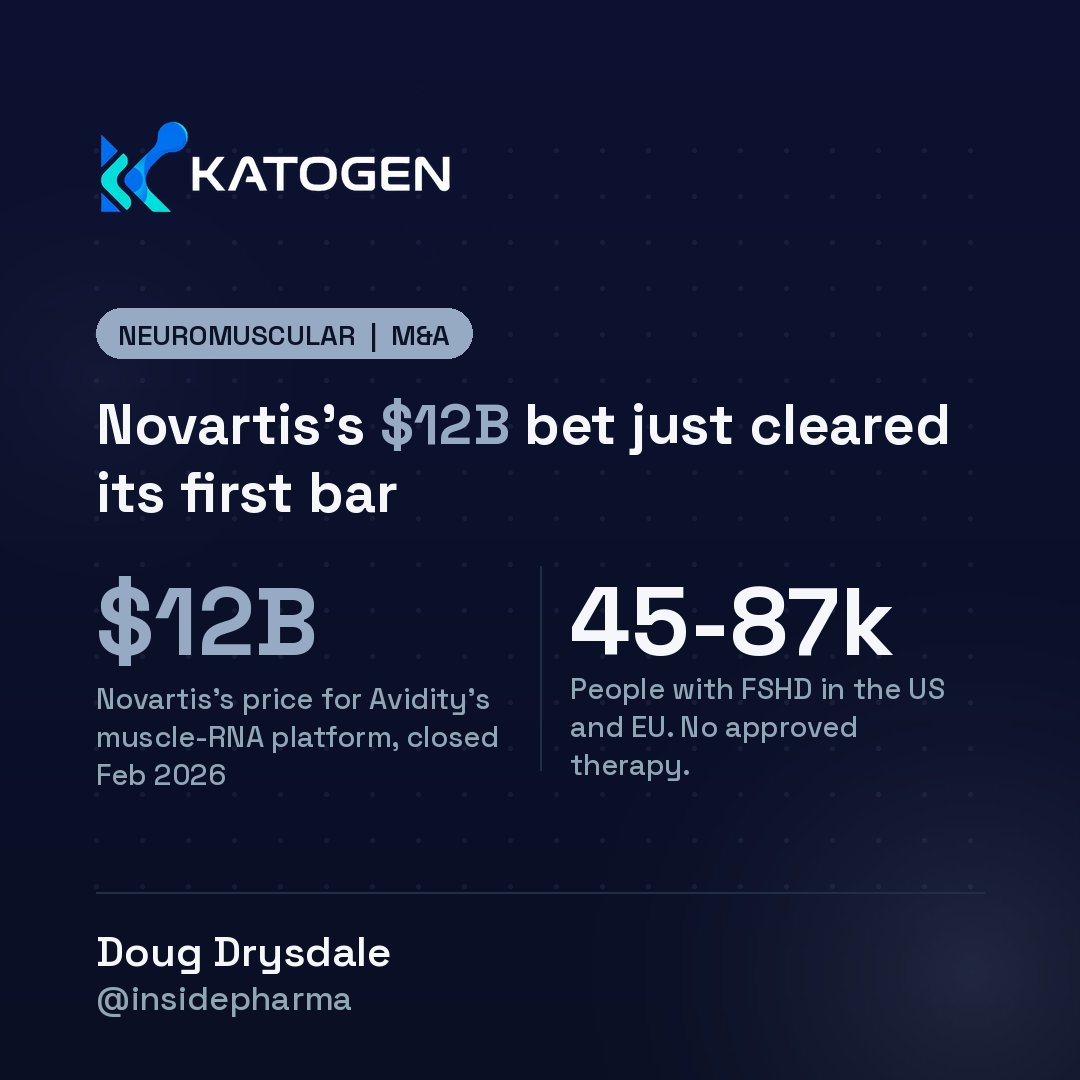
Novartis just got its first data point on a $12 billion bet. Worth reading closely, because the number that matters is not the one in the headline.
On June 11 Novartis said the biomarker cohort of the FORTITUDE Phase 1/2 study of del-brax hit its primary and key secondary endpoints in facioscapulohumeral muscular dystrophy, or FSHD. In 51 patients dosed at 2 mg/kg every six weeks for a year, the drug lowered KHDC1L, a circulating marker driven by the disease-causing DUX4 gene, and creatine kinase, a sign of less muscle damage. Del-brax is an antibody oligonucleotide conjugate: an antibody that ferries silencing RNA into muscle to switch off the gene behind the disease. FSHD has no approved treatment and affects 45,000 to 87,000 people across the US and EU. One in five end up in a wheelchair.
Here is what I'd actually focus on. Novartis paid $72 a share, a 46% premium, about $12B, to buy Avidity in February. What they bought was not del-brax. It was the platform, the ability to deliver RNA into muscle, a tissue the oligonucleotide world has struggled to reach for two decades. FSHD is the lead proof point. Behind it sit del-desiran in myotonic dystrophy and del-zota in Duchenne, plus whatever muscle target comes next. So this readout matters less as an FSHD result and more as a platform de-risking event. That is the asset on the books.
Now the discipline. This was a biomarker cohort. Target engagement moved and a muscle-damage marker fell. That is not the same as a patient walking farther or staying out of a wheelchair. That answer comes from the Phase 3, FORTITUDE-3, on quantitative muscle testing and a timed walk, and it is years away. Biomarker wins reprice the deal. They do not close the clinical risk.
If you're underwriting a platform acquisition, which readout truly de-risks the thesis: the lead drug, or the delivery mechanism everything else rides on?
#RNATherapeutics #Neuromuscular #BiopharmaDealmaking #FSHD #DrugDevelopment
108
Jun 11
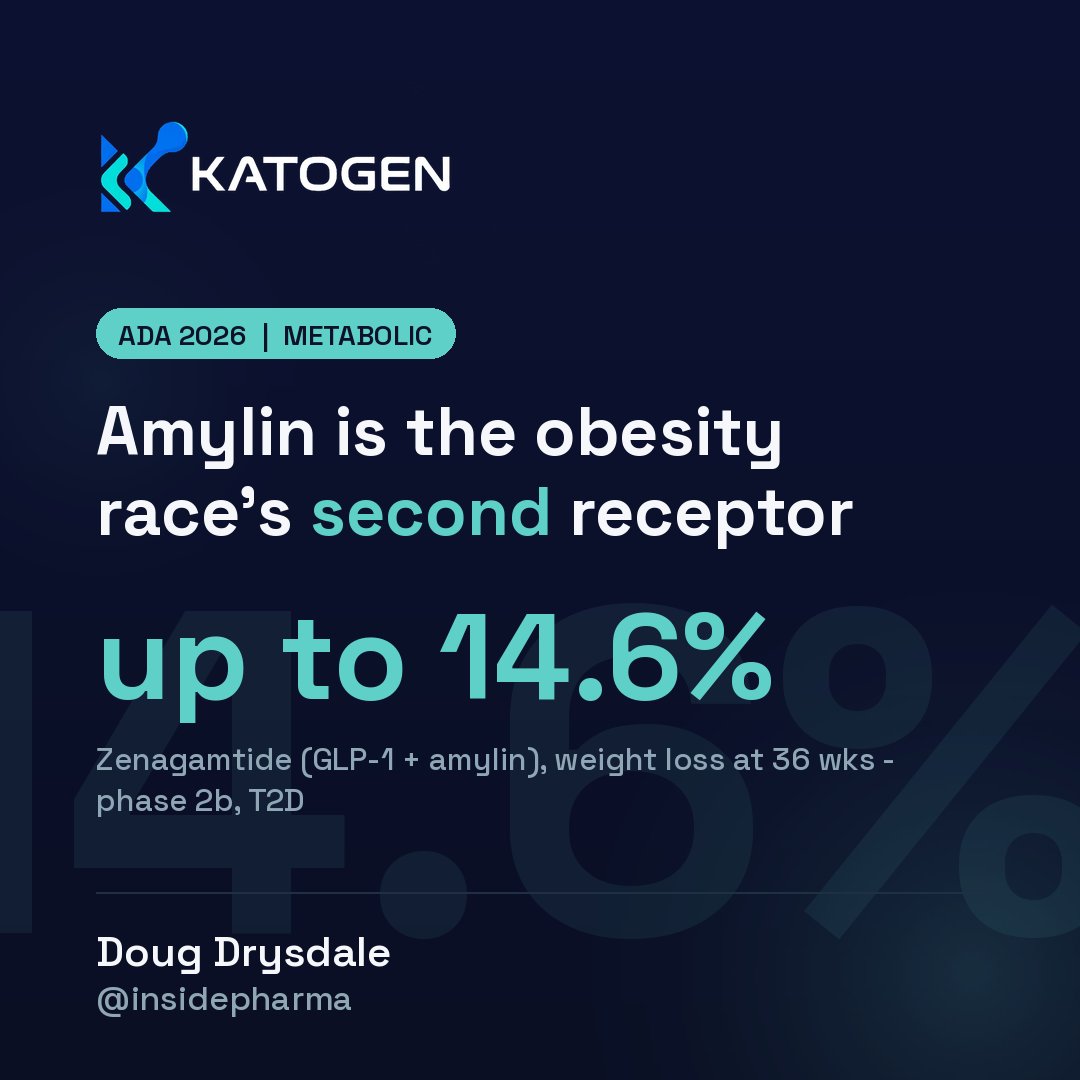
For two years the obesity race had one scoreboard: whose molecule strips off the most weight. This week Novo changed the question.
At ADA in New Orleans, Novo Nordisk presented phase 2b data on zenagamtide (also called amycretin), the first single molecule to hit both the GLP-1 and amylin receptors. In 262 adults with type 2 diabetes on metformin, the top 40 mg dose cut A1C by up to 1.71 points from a 7.8% baseline and delivered up to 14.6% weight loss at 36 weeks, versus 2.1% on placebo. Phase 3 starts in the second half of the year. It does not beat Lilly's triple agonist retatrutide on raw weight loss. That is not the point.
The point is amylin. After Lilly took the efficacy crown, the whole field is now building around amylin as the second receptor, and the reason is economic, not scientific. The next wave of value here is not another percentage point of weight loss. It is tolerability, the quality of that weight loss (sparing muscle, not just shedding scale weight), and a credible oral path. Amylin is the lever on all three. Selective amylin, like Lilly's eloralintide that hit roughly 20% with a cleaner tolerability story, is the comfort play. Amylin plus GLP-1, whether one molecule like zenagamtide or a combo like CagriSema, is the efficacy play. Novo, beaten on the headline number, is reframing the contest onto a lane it can actually win.
Here is the part the market keeps mispricing. In a chronic, self-injected category, the drug patients stay on beats the drug with the prettiest 72-week curve. Real-world persistence on GLP-1s has been stubbornly poor, and every patient who quits is lost lifetime revenue and a worse outcome. Tolerability is not a soft endpoint. It is the P&L.
Caveat: this is phase 2b in diabetes, not obesity, the top doses ran at maintenance only briefly, and zenagamtide's own GI profile looked like other incretins, not better. Cross-trial comparisons are not head-to-head.
If you are still underwriting an obesity asset on its weight-loss number alone, you are pricing last year's contest. What would change your model?
#Obesity #GLP1 #Metabolic #Biopharma #DrugDevelopment
1
1
249
Jun 10
The most important line in the WEF's new Technology Pioneers list isn't a company. It's a category.
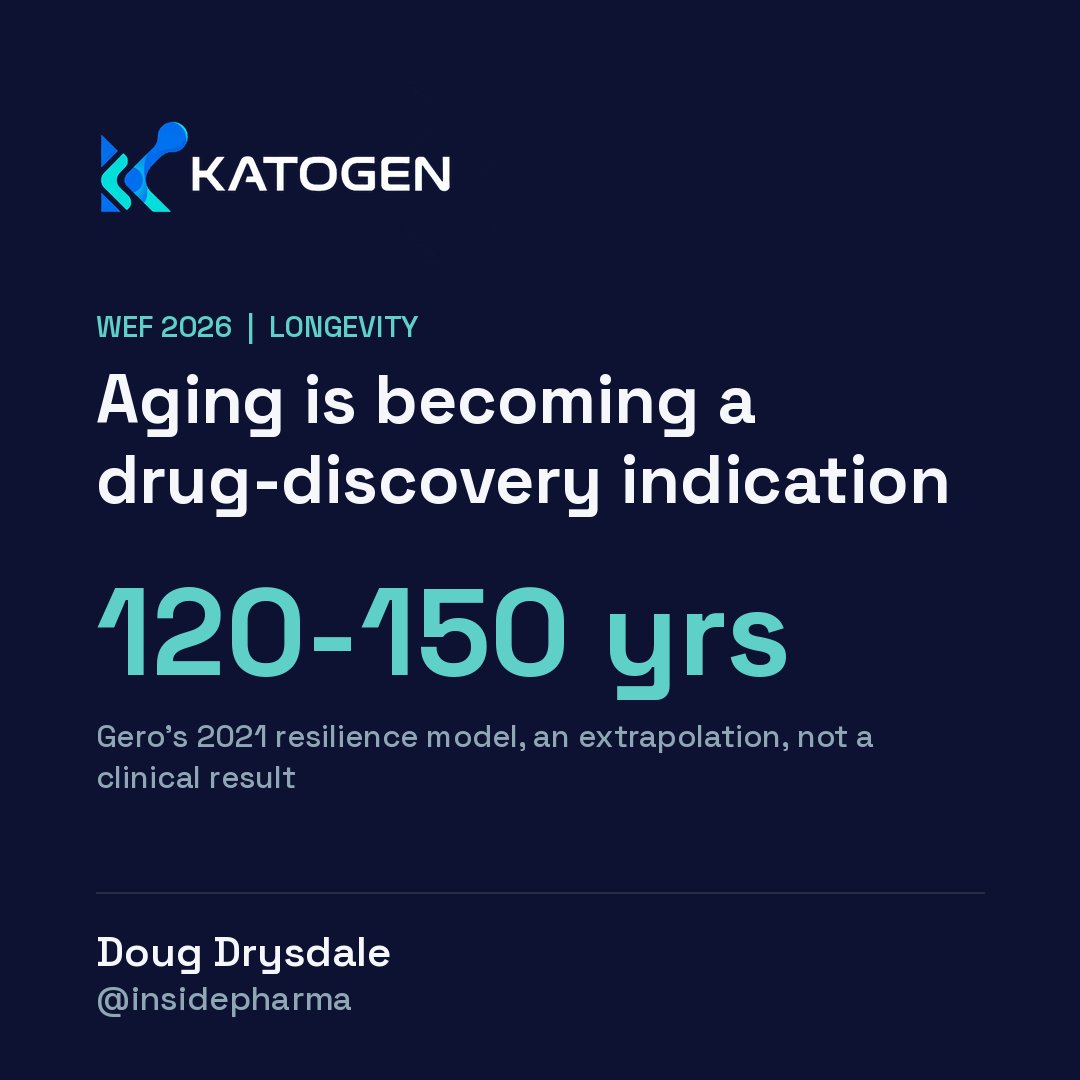
The Forum published its 2026 cohort on Tuesday: 100 startups, 23 countries. Sitting in the health section is a phrase that would have been laughed out of an investment committee ten years ago: "drug discovery for age-related diseases." One of the names is Gero, a firm that uses physics and AI to model aging itself as the upstream driver of chronic disease.
Here is why that phrase matters. Gero's signature work (Nature Communications, 2021) tracked how fast people recover from physiological stress and found that this resilience decays with age on roughly the same exponential curve as mortality. Extrapolate it and recovery capacity runs to zero somewhere between 120 and 150 years. Whether or not that exact number holds, it does the important thing: it turns "aging" into a measurable, mechanism-linked quantity. That is the precondition for a drug, not a supplement.
The bottleneck for longevity was never the science thesis. I have sat through enough investment committees to know exactly where these decks die. The FDA has no indication called "aging." No indication means no endpoint, no label, no reimbursement code. You cannot underwrite a fifteen-year asset against a market regulators do not formally recognize, so the capital went to obesity and oncology instead, where the path was already paved.
What is shifting now is the framing. The credible players are not selling lifespan. They are picking a concrete disease, think fibrosis, frailty, metabolic dysfunction, as the regulatory wedge, and treating aging biology as the lever underneath it. The winners will be decided by endpoint design and payer logic, not by the boldness of the longevity claim. It is the same lesson gene therapy is still learning: a durable, one-time benefit is worth nothing until someone agrees to pay for it.
The caveat: a WEF badge is recognition, not data, and that 120 to 150 figure is an extrapolation from blood-marker dynamics, not a clinical readout. No anti-aging drug carries an aging label today.
If you were underwriting a longevity asset this morning, what endpoint would you actually put on the filing?
#Longevity #AIDrugDiscovery #Biopharma #Aging #DrugDevelopment
1
110
Jun 9
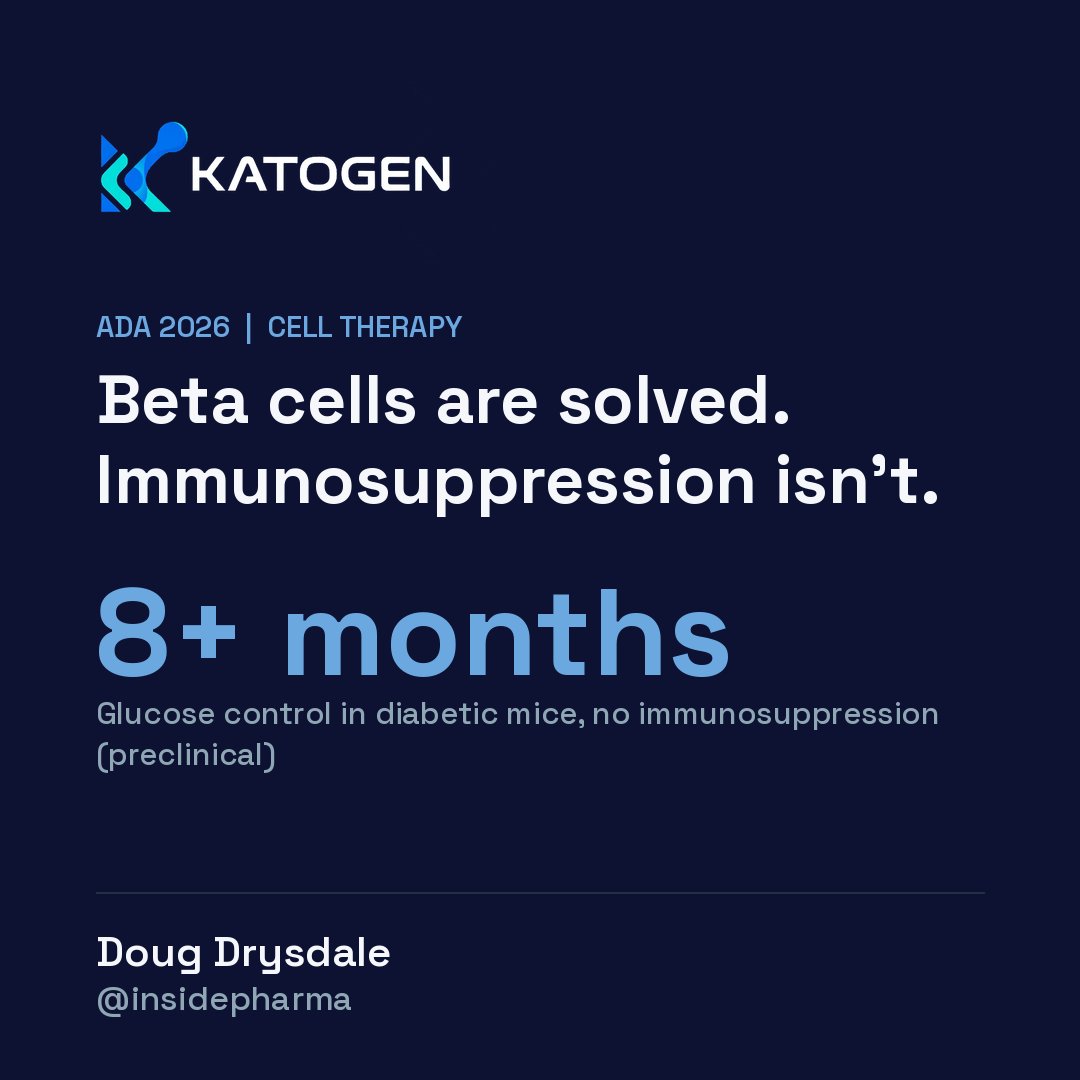
We can grow insulin-making cells now. That part of the type 1 diabetes problem is essentially solved. What decides who actually benefits is still wide open, and that is where the money and the real fight sit.
At ADA this week, Century Therapeutics (Nasdaq: IPSC) presented preclinical data on CNTY-813, an off-the-shelf islet replacement therapy grown from induced pluripotent stem cells and engineered with its Allo-Evasion 5.0 immune-evasion edits. In diabetic mice the cells held glucose control for more than eight months. In a humanized mouse model carrying active human immune cells, the edited cells kept secreting C-peptide through 42 days while unedited grafts were rejected, with no immunosuppression. Century also showed a 29-day bioreactor process making the cells consistently across batches. IND is targeted for Q4 2026, first human data not before the second half of 2027.
Here is why a mouse readout is worth an executive's attention. Vertex has already shown in the clinic that stem-cell islets can take people off insulin. The biology works. What caps it is that today's approaches need lifelong immunosuppression, so they only make sense for the relatively few patients sick enough to justify that trade. Cadaveric islet transplant gets roughly 70% of recipients insulin-free at a year, and almost nobody receives it, for exactly that reason.
So the competition has quietly moved off "can you make a beta cell" and onto two unglamorous questions: can it survive without immunosuppression, and can you manufacture it the same way ten thousand times. Crack both and the addressable population jumps from a few transplant candidates toward the nine million people living with this disease. It also reprices the chronic-care economy around T1D, the insulin, pumps and CGMs all priced on the assumption this is managed forever, not cured once.
The caveat is large. This is mouse data, 42 days of immune evasion is short, and hypoimmune engineering has a graveyard of programs that looked clean preclinically and got cleared by the human immune system anyway.
If you were underwriting this, where would your dollars go: the cells, the immune-evasion edits, or the plant that has to make them identically at scale? I know where I'd look first.
#CellTherapy #Type1Diabetes #Biotech #RegenerativeMedicine #Manufacturing
132
Jun 7
Breaking in biopharma: Autobahn Therapeutics’ elunetirom just delivered standout Ph2 results in bipolar depression (June 4 announcement)!
Rapid 16.8-pt HAMD-17 drop (p<0.001), 75% response, 50% remission in 6 weeks as adjunctive therapy. Novel brain-penetrant thyroid receptor agonist with strong safety.
Potentially a big leap forward for mental health. Who’s watching CNS innovation? #Bipolar #Neuroscience #Biotech
3
191
Jun 6
Fresh breakthrough in Alzheimer’s:
Nasal Protollin Phase 1 results (pub. June 5). Safe, well-tolerated in early AD patients.
Reversed monocyte defects, boosted phagocytosis genes (amyloid-clearing power!), cut inflammation & T-cell cytotoxicity. Mouse data backs brain benefits. Phase 2 weekly dosing ahead.
Simple nasal spray targeting immunity - potential for neurodegeneration. Brain health just got more hopeful.
What’s your take on immune modulation for AD/longevity?
#Alzheimers #Neuroscience #Biotech #Longevity
1
120
Jun 6
Totally agree - this is a fantastic perspective.
Competition with China isn’t a threat to fear; it’s the perfect challenge to sharpen ourselves instead of defaulting to protectionism.
From a biotech lens, it’s exactly how we advance: rather than walling off talent or IP, we embrace the race in CRISPR, synthetic biology, and longevity research.
That pressure is what turns incremental progress into cures and breakthroughs that actually improve human lives.
Competition breeds excellence.

Competition with China might be the best thing to happen to America since the cold war.
We’ve been leading the world for so long, but we got a bit complacent. Competition breeds excellence.
1
195
Jun 5
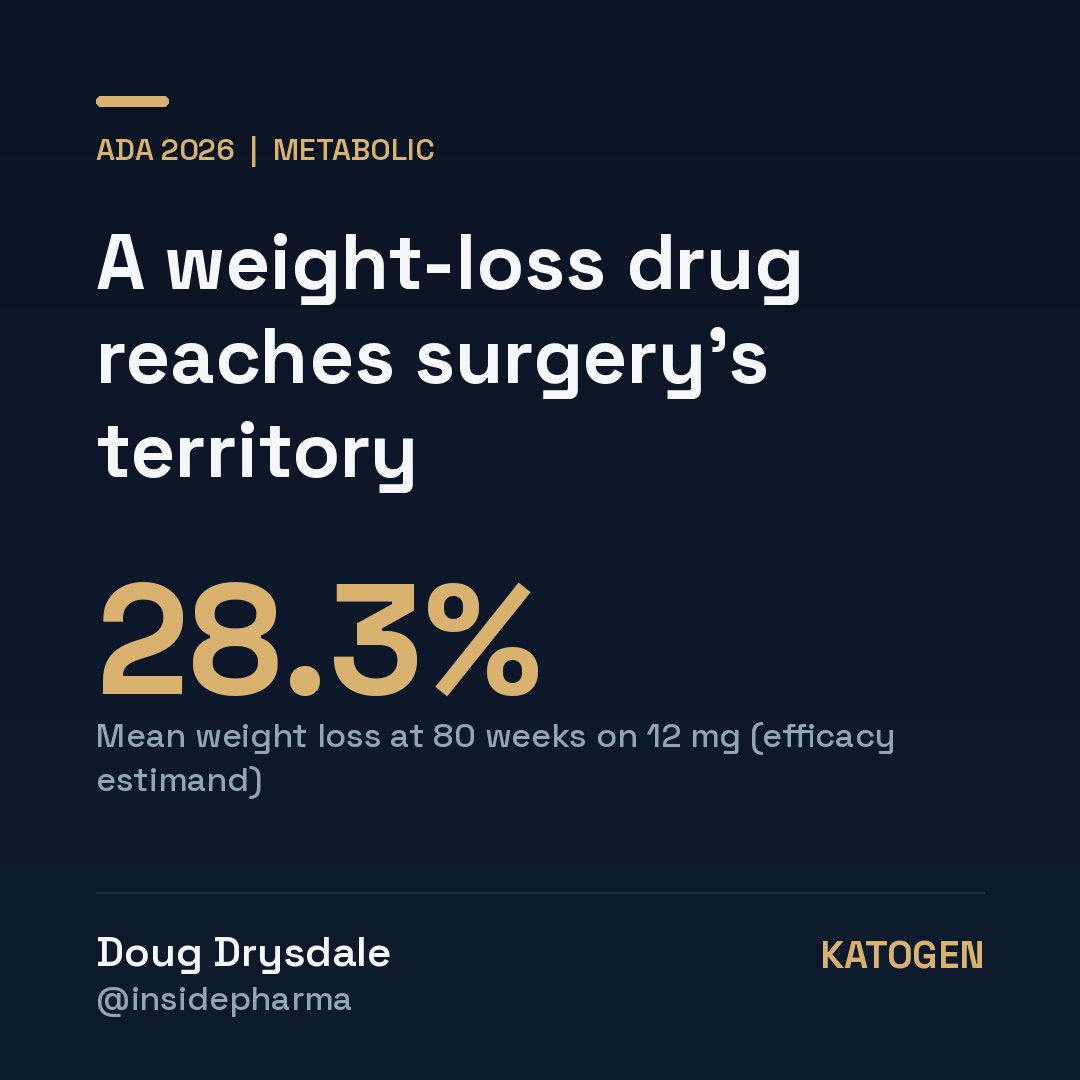
Lilly's retatrutide just posted the largest weight loss yet reported from an obesity drug in a pivotal Phase 3. The number that matters isn't the headline figure. It's who it threatens.
In TRIUMPH-1 (2,339 adults with obesity and no diabetes), the 12 mg dose produced a mean 28.3% weight loss at 80 weeks on the efficacy estimand, with 45.3% of patients losing at least 30%. In a pre-specified extension of people who started at a BMI of 35 or higher, those who stayed on 12 mg reached up to 30.3% at 104 weeks. These are topline results. Full data lands at ADA this week.
Lilly framed that as "a level long associated with bariatric surgery." That framing is the whole story.
For three years the obesity race has been pharma versus pharma - Novo and Lilly trading another point of weight loss. This data moves the disruption somewhere else: the bariatric surgery economy. Surgical centers, device and endoscopic players, and the payer logic that treats surgery as the expensive last resort. When a weekly injection approaches surgical outcomes without the OR, the high-margin procedure is what gets repriced.
One caveat keeps me honest. 28.3% is the efficacy estimand, which assumes idealized adherence. The real-world treatment-regimen number was 25.0%, discontinuations on 12 mg ran 11.3%, and tolerability (42% nausea, 12.5% dysesthesia) plus chronic cost still separate a weekly shot from a one-time procedure. Surgery isn't obsolete. The math underneath it just changed.
Who feels this first - surgeons, device makers, or payers?
#Obesity #MetabolicHealth #Biopharma #ADA2026
261
Jun 4
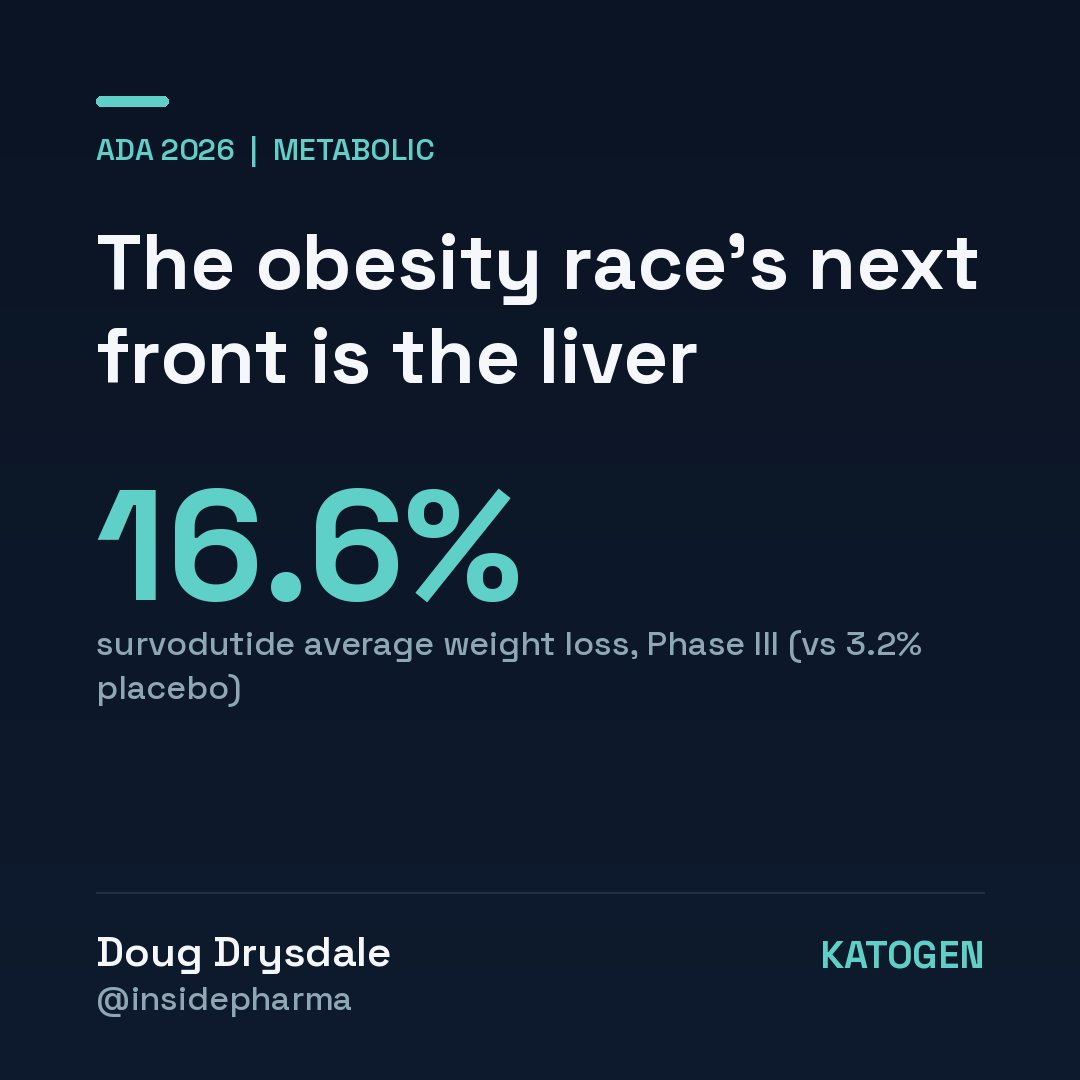
Three companies will walk on stage at ADA this week and claim the obesity market. Only one of them is really talking about the liver.
The American Diabetes Association Scientific Sessions open this week, and the obesity readouts are crowded. Boehringer Ingelheim and Zealand Pharma are presenting full Phase III SYNCHRONIZE-1 data on survodutide, their glucagon/GLP-1 dual agonist: 16.6% average weight loss at 76 weeks versus 3.2% on placebo. Pfizer is presenting VESPER-3 on its long-acting GLP-1. The weight-loss numbers are now table stakes.
What separates survodutide is the glucagon arm, and Boehringer is reading out SYNCHRONIZE-MASLD alongside the obesity data. That is the tell. The glucagon component drives liver-fat reduction, and the real prize here is MASH, where the LIVERAGE program is still running. In a field with Lilly and Novo as the Goliaths, a third entrant does not win on another percentage point of weight loss. It wins by owning an adjacent metabolic indication the incumbents have not closed out. Watch where the data leans, not just how much weight came off.
The honest caveat: the topline weight numbers were reported back in April. The new element at ADA is the full dataset and the MASLD readout. MASH is a harder endpoint than weight, and the cirrhosis trial has not read out yet.
If you are building or investing in metabolic, where is the second wave of value, in better weight loss or in the liver?
#Obesity #GLP1 #MASH #Biopharma #DrugDevelopment
1
388
Jun 3
In a major boost for the longevity field, @newlimit has secured $435 million in Series C funding, led by @foundersfund with participation from @ThriveCapital , @Greenoaks , @QuietCapital, and returning backers including Eli Lilly Ventures.
Co-founded by @Coinbase CEO Brian Armstrong, the biotech is pioneering epigenetic reprogramming to partially reset aged cells, helping them recover function without the risks of full cellular reset.
With a promising compound already in hand, the company plans to launch a Phase 1 trial next year targeting alcohol-related and metabolic liver disease - a common issue in aging populations linked to obesity, diabetes, and broader decline.
This funding accelerates what could become a new paradigm in treating age-related conditions at their root.
Exciting times ahead for biopharma innovation that bridges metabolic health and healthy aging. What are your thoughts on reprogramming as the next frontier?
163
Doug Drysdale retweeted

May 31
People who don't follow cancer research often ask me why we haven't cured cancer. That perception masks a wonderful reality: We make amazing, stepwise progress every year, and the result is that many people live much longer today than they would have previously.
Right now we're in the thick of the annual meeting of the American Society of Clinical Oncology, the biggest research meeting on new cancer medicines, and this morning a bunch of really important studies dropped. I'm going to review them here.
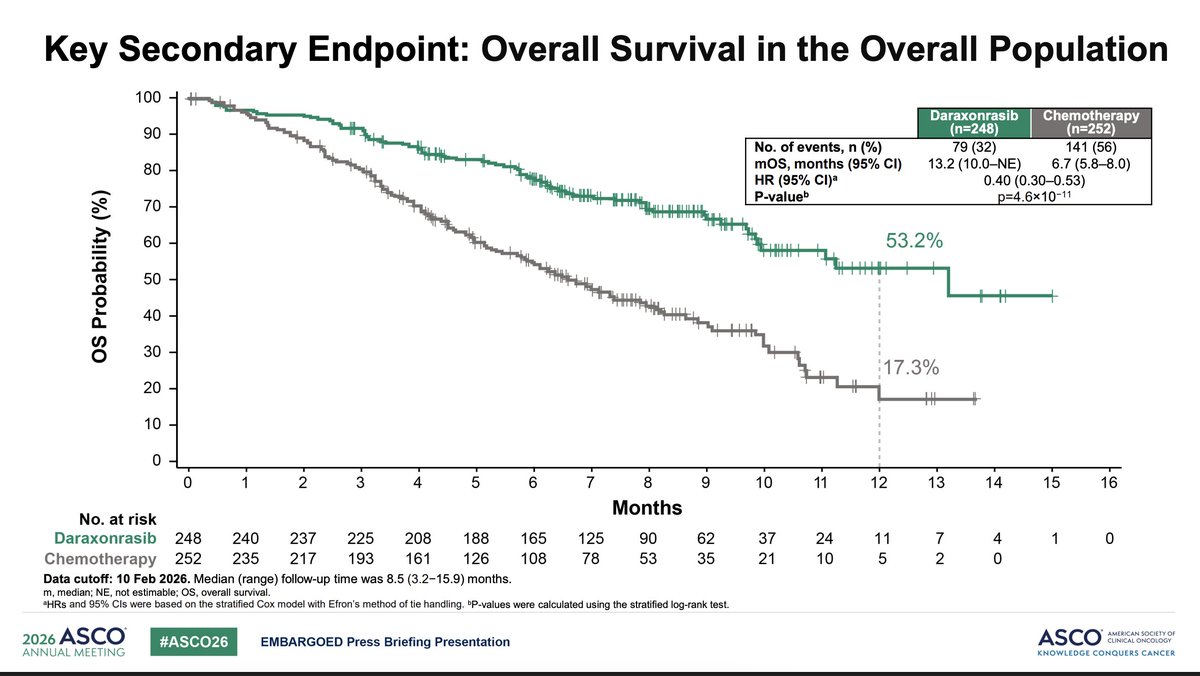
This first image is the result for daraxonrasib, a treatment for pancreatic cancer that is generating consdirable excitement. The green line is the probability of living for patients who got the new drug; the gray one is the chemo control group.
If you follow cancer drugs, a chart like this will make your breath hitch a little. I'm going to review these and some other data here.
45
428
2,331
292,030
Jun 1
The race to conquer aging just entered a new geopolitical dimension.
In a development sending ripples through biopharma and longevity circles, Russia has poured $26 billion into its “New Health Preservation Technologies” initiative, a sweeping national program targeting the fundamental biology of aging.
Centered on gene therapies designed to slow cellular senescence, alongside advances in 3D bioprinting of organs and xenotransplantation research, the effort aims to extend healthy lifespan and address age-related decline head-on.
What makes this particularly noteworthy for those in neuroscience and neurodegeneration? Cellular aging processes are core drivers of Alzheimer’s, Parkinson’s, and other conditions.
By investing at this scale in reprogramming biology, the program underscores a growing global recognition that intervening in aging itself could yield breakthroughs far beyond single-disease treatments.
While questions remain about execution and validation, the ambition signals a maturing field where longevity science moves from niche biotech to strategic priority.
For professionals in drug development, this is a reminder: the convergence of gene therapy, regenerative medicine, and metabolic insights is accelerating.
Who will translate these insights into safe, scalable therapies first? The next decade in biopharma could redefine how we approach brain health and lifespan.
What are your thoughts on state-driven longevity research - opportunity or overreach?
#Longevity #Neuroscience #Biopharma #AgingResearch #GeneTherapy
1
95
May 31
Australia approved psychedelic-assisted therapy nearly three years ago. This month its regulator published what it has learned since - and it reads like a preview of everything the US is about to face.
In July 2023, Australia’s TGA rescheduled MDMA for PTSD and psilocybin for treatment-resistant depression, letting specially authorised psychiatrists prescribe them. Approval turned out to be the easy part. After a targeted consultation, the TGA’s new recommendations tackle the messy operational questions that only surface once real patients are in the room:
Who’s qualified to prescribe? Either clinical-trial experience or supervised training - because almost no psychiatrist has the former.
Who’s on the therapy team? At least one nationally registered practitioner, with the prescriber personally responsible for vetting everyone else.
How much oversight is enough? The psychiatrist must be physically present when the medicine is administered, and must conduct screening and consent in real time.
Where can treatment happen? Not just hospitals - but within 15 minutes of an emergency department, with rescue medications on hand.
Every one of these is a live, unanswered question in the US right now.
Compass Pathways just posted its second positive Phase 3 for psilocybin and is targeting an NDA this year — potentially the first classic psychedelic ever approved in America. And it’s worth remembering why the FDA declined MDMA in 2024: not the molecule, but the therapy wrapped around it. Drug-plus-psychotherapy breaks the standard regulatory model.
Australia is showing that the real work - workforce, credentialing, oversight, site standards - begins the day after approval.
The US would be wise to watch closely.
2
5
293
May 26
The Science Has Outpaced the Stigma — A Mental Health Awareness Month Thread
1
1
151
May 26
From a biopharma lens, this isn't just a public health conversation. It's one of the most important areas of scientific opportunity right now. The problems are large. The momentum is real.
1
1
56
May 26
I'm optimistic — not because the challenges are small, but because the science is pointing somewhere meaningful and the industry is beginning to respond. That combination is rare. Don't overlook it.
49