
Joined June 2012
- Tweets 17,080
- Following 3,558
- Followers 529
- Likes 27,516
485 Photos and videos


May 26
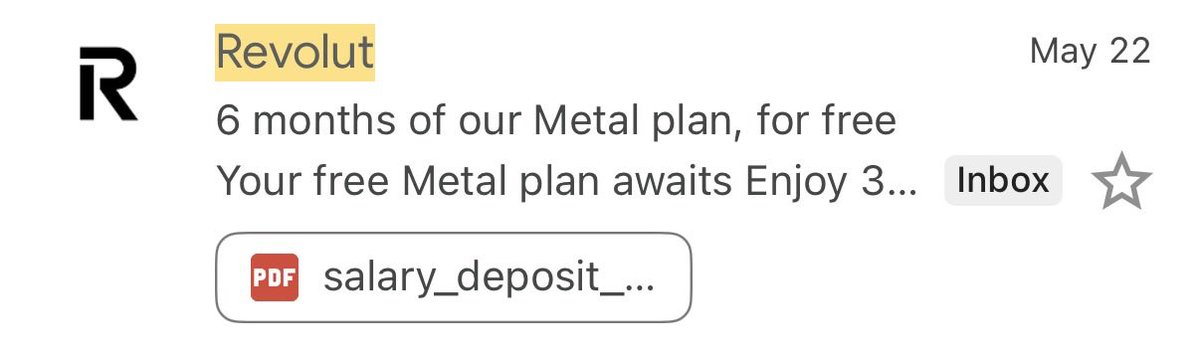
Q: why don’t the masses trust neobanks with their salary account/primary bank
A:

95
May 1
Shit take. QR is cringe, my ass
100x the tam of cash app uses QR. Inclusive fintech over bling

You know what’s even more cringe? Using a QR code in 2026.
Bluetooth is the way.
Multiplayer money is here.
1
1
1,391
Apr 20
1
4
175
Apr 20
Tell me you don’t work in Fintech without telling me you don’t work in Fintech
Apr 20

What do you think. it would happen to Revolut, Robinhood, etc... if Claude launches Claude FinTech?
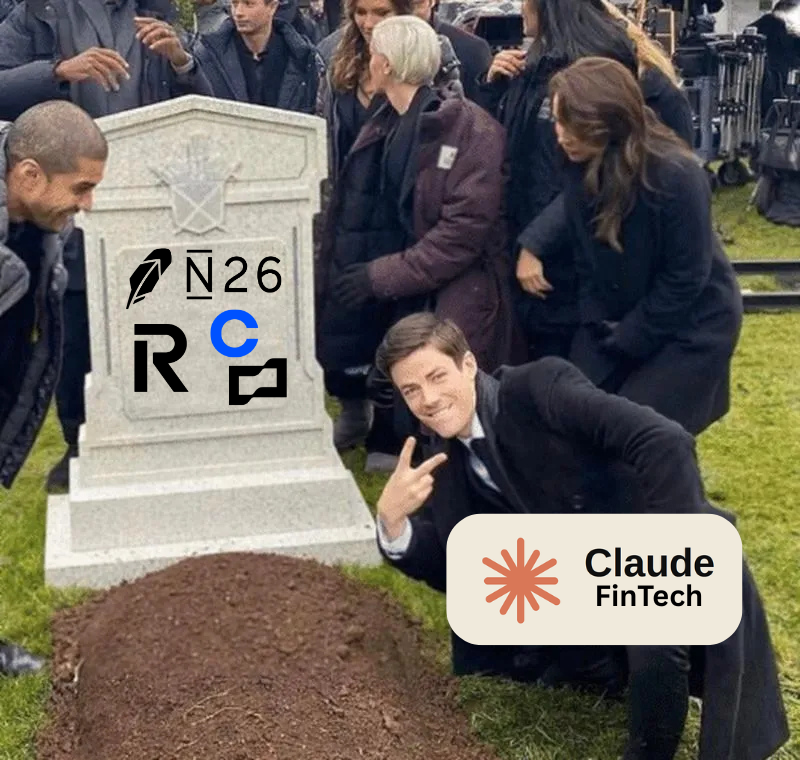
4
210
Apr 18
Using a kick ass product like @aquavoice primed me on how a wonderful voice input is
Oddly running out of aqua credits after a few days made me switch on dictation on Mac, which is also pretty good
pricing on Aqua Voice for the dictation alone at $10 is quite high
1
1
109
Apr 9
I struggle to stay a coding session on the phone and pick up on mobile as it needs me to open a cloud session. Am I doing it wrong?
1
1
178
Apr 9
* struggle to start a coding session on the phone as it needs me to open a cloud session which then feels harder to merge with the active desktop project. Am I doing something wrong?
93

Mar 19
Have you tried it yourself? Slopfluencers
Just one big cottage industry to RT everything
Mar 19

You need to steal this autoresearch application to skills right NOW
95
Feb 3
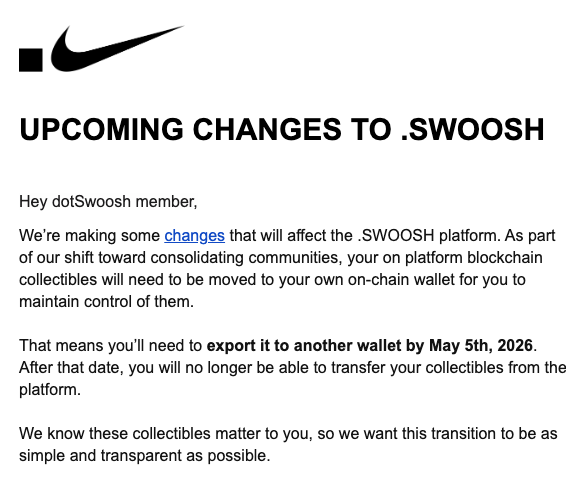
Oh the amount of strategists that made a killing back then making fancy decks for brands and CMOs that this was the new future of culture. nonsense

Nike is sunsetting .Swoosh
That whole web3 x brands era now just feels like a fever dream.
3
205
Jan 30
I guess you haven’t seen star chrome “just” dropped in Gemini
Chrome’s new Gemini update just made your tweet seem redundant
Jan 30
You start a free trial. Forget to cancel.
Three years later, you're still paying for a service you never use. Everyone has forgotten subscriptions draining their bank account.
The problem?
You can't remember which ones.
Our Guest found a solution using AI agents. Companies are required to send receipts to your Gmail.
Your inbox has every subscription you've ever signed up for. Just connect Atlas to Gmail and ask:
"Look through all of my emails and tell me all of the recurring expenses that I have."
The AI scans thousands of emails. Finds Google One, YouTube Premium, forgotten services. Even links customer care contacts for easy cancellation.
"Whether you remember or not, your Gmail remembers because those companies are forced to send your receipts for your subscription to your Gmail."
Lesson: AI agents excel at exhaustive searches through unstructured data that would take humans days to manually review. Let them handle the tedious work.
1
143
Jan 19
I’m working with a product leader who has zero quantitative KPIs. Zero.
I’ll gladly let PM lead if that function is willing to own a real commercial KPI
Jan 19

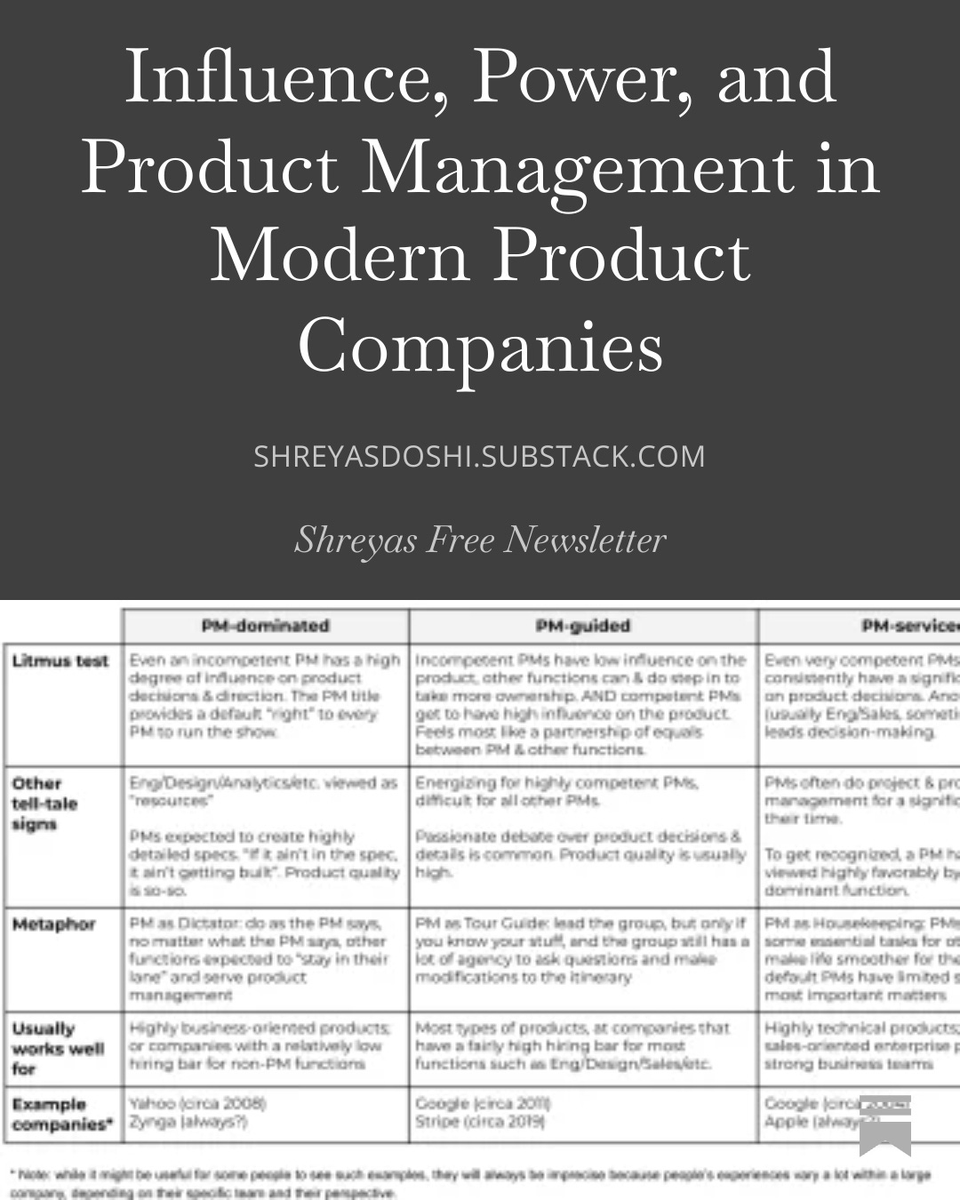
Should Product Management have more influence & power within modern tier 1 product companies?
Many PMs’ insistence that they need their company to grant more influence to them has been a perennial issue in product management.
My latest essay on this:
shreyasdoshi.substack.com/p/…
2
122
Jan 18
These quote-tweeters articulation of posts is probably one of the dopamine detractors no one talks about out
This person just attempted to make you feel you need to read their stupid tweet
Jan 18
This person just gave you the neuroplasticity recovery protocol most people pay therapists $200/hour to discover.
The core mechanism here is dopamine baseline depletion. When you scroll, each interesting post spikes dopamine 100-200% above baseline. The problem is what happens next. Your dopamine drops 40-60% BELOW baseline for 2-4 hours. This means the homework, the book, the focused thinking you try to do afterward feels neurologically impossible. You’re not lazy. Your prefrontal cortex is literally running on empty.
Here’s the thing about that “I used to be sharp” feeling. Working memory capacity correlates directly with dopamine available in the prefrontal cortex. Lower dopamine, shorter working memory span. D’Esposito and colleagues at Berkeley showed this with neuroimaging. The people who can hold longer strings of information have more dopamine available for release. So when you’ve been chronically depleting your dopamine reservoir through high-stimulation activities, your working memory atrophies. You feel dumber because, neurochemically, your prefrontal cortex is operating at reduced capacity.
The “three days” recommendation in this article maps onto clinical literature. Anna Lembke’s research at Stanford’s Addiction Medicine clinic shows dopamine system resets require approximately 30 days for severe cases, but meaningful restoration begins within 72 hours of removing the stimulus. That’s why day three of any detox feels qualitatively different. Your neurons are beginning to upregulate dopamine receptors.
The boredom piece is where most people fail. Your brain interprets boredom as a signal to seek stimulation. That discomfort you feel when you’re unstimulated? That’s withdrawal. The reaching for your phone is your brain trying to bring dopamine back above baseline. Sitting with it trains the system to tolerate lower stimulation and still function. This is called raising your distress tolerance threshold.
What the article calls “rehabilitate,” the neuroscience literature calls neuroplasticity. Your brain is continuously rewiring based on what you repeatedly do. Chronic scrolling strengthens attentional circuits optimized for novelty-seeking and rapid task-switching. Sustained reading strengthens circuits for linear focus and deep processing. You’re not permanently damaged. You’ve just trained your brain for the wrong environment.
Two protocols actually accelerate the restoration. First: non-sleep deep rest. NSDR scripts (free online, 10-20 minutes) increase dopamine in the basal ganglia by up to 60%. Second: brief cold exposure. One to three minutes in cold water spikes dopamine 250% above baseline and sustains it for 2-4 hours afterward. Both of these replenish the reservoir without creating the crash cycle.
The real work is what she described: tolerating the discomfort of being understimulated long enough for your system to recalibrate to normal dopamine dynamics. The girl who used to read voraciously is still in there. The neural circuits are dormant, not dead. Plasticity works in both directions. Start with 10 minutes of focused reading a day. Your prefrontal cortex will adapt. Give it six weeks and measure the difference.
1
87
Jan 17
Does this work for Asian markets?
14 Oct 2025

nice will check this out
I built an equity research analyst powered by Claude Code in the terminal
github.com/quant-sentiment-a…
98
Jan 17
Someone should make this but for markets beyond the US
14 Oct 2025

Introducing Dexter.
An open source financial agent in ~200 lines of code.
Think: Claude Code, but for finance.
What Dexter does today:
• plans tasks
• runs on its own
• validates its work
• researches stocks
It’s built with OSS tools like @langchain for managing LLMs, prompts, outputs, etc.
No coding experience needed to run.
Goal: build the best financial agent and share every line of code along the way.
Next: evals, starting with @valsai
1
70
Jan 9
No they haven’t. It’s not even rolled out yet. This AI pimping as content strategy is so dead… cuz JUST did this
Jan 9
Google just embedded Gemini 3 into 1.8 billion inboxes.
The feature list sounds like every other AI assistant: summarize threads, draft emails, answer questions about your inbox. Standard.
But the distribution math is what matters. Gmail has 30% of the global email client market. Every user who enables AI features gives Google access to their entire communication history, relationship graph, and behavioral patterns. That’s training data at a scale OpenAI can pay for.
Microsoft has 75% of Fortune 500 companies on Office 365. But Outlook has only 4% email client share. Copilot sits inside the enterprise. Gmail AI sits inside consumer AND enterprise with 90% of US startups already running on Google Workspace.
The timing reveals the strategy. Google announced this the same week Alphabet surpassed Apple in market cap for the first time since 2019. Investors are pricing in an AI distribution advantage that compounds with every model generation.
The “AI Inbox” isn’t about making email better. It’s about training Gemini on the largest repository of human intent signals on the internet. Every email you write, respond to, or ignore becomes a reinforcement learning signal.
Microsoft has Teams. OpenAI has ChatGPT. Google has the inbox.
136
23 Dec 2025
One of the easiest wins for perplexity should be to bring back @read_cv and bundle perplexity for the dozens of power MAUs who used the service
@AravSrinivas @ramanrmalik @_andychung
133
15 Dec 2025
Truth - Probably why most modern day ads suck
14 Dec 2025

People get a lot more worked up about an ad appearing somewhere it shouldn't , than an ad that is catastrophically bad
What even is this?

125
15 Dec 2025
lol comet and atlas fell off a cliff after the hype
13 Dec 2025

A lot of the compute on Comet Assistant will slowly but surely move to fast lite-weight models. Potentially something that can run locally.
153