
BitcoinExplainers.com | ABitcoinIsWorth.com | ZcashExplainers.com Prev. @BitcoinMagazine @LetsTalkBitcoin @CoinTelegraph @ecommercebytes
Joined July 2011
- Tweets 32,814
- Following 2,114
- Followers 7,325
- Likes 43,069
7,452 Photos and videos


Pinned Tweet

May 19
20 Sep 2016

Bitcoin Protocol: Permanent Permissionless Trustless Transparent Immutable Irreversible Inviolable Uncensorable Distributed Decentralized
1
2
7
1,562
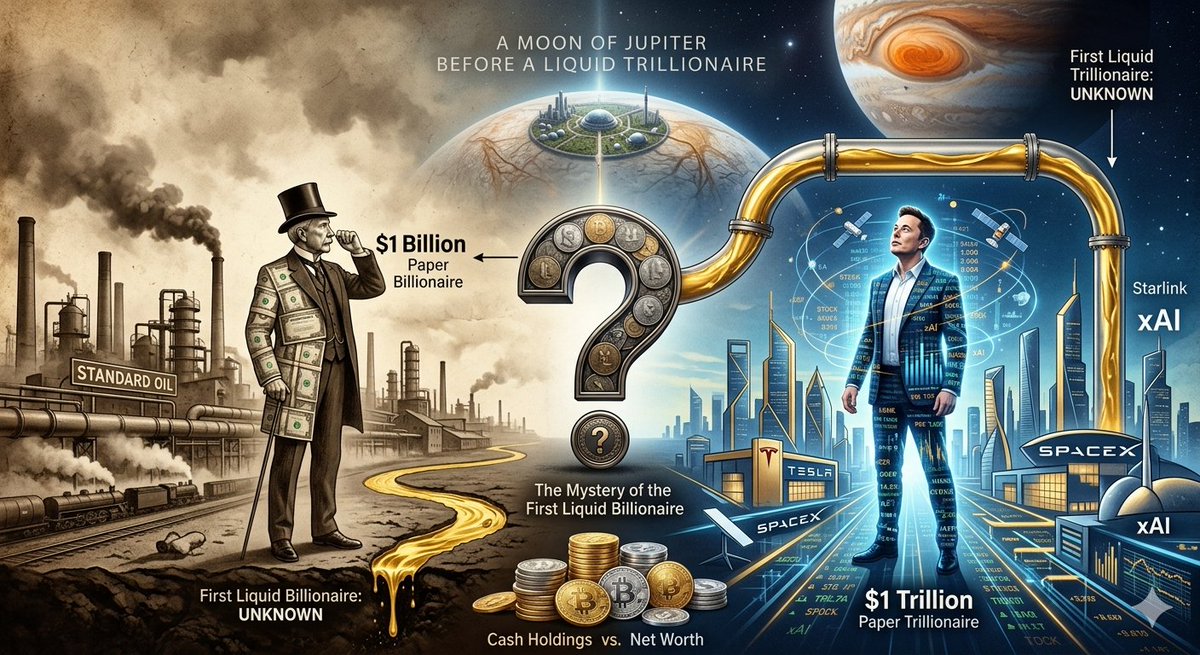
Paper Wealth and Real Wealth: Rockefeller, Musk, and the Mystery of the First Liquid Billionaire
History records John D. Rockefeller as the world’s first billionaire. By 1916, the founder of Standard Oil had accumulated a fortune exceeding $1 billion—a sum so massive it borderlines on the abstract for the era. Newspapers celebrated the milestone, economists analyzed it, and Rockefeller’s name became permanently synonymous with wealth itself.
Yet, Rockefeller’s achievement raises a fascinating economic riddle that remains unanswered more than a century later: Who was the world’s first *liquid* billionaire?
The answer is almost certainly not Rockefeller.
While the oil tycoon’s net worth technically crossed the ten-figure threshold, virtually none of it existed as cash. His wealth was entirely bound to the physical architecture of the Gilded Age: pipelines, refineries, rail interests, and corporate equity. He controlled assets valued at over $1 billion, but he could not simply walk into a bank and withdraw it. Converting his holdings into cash would have required liquidating massive ownership stakes over decades, a move that would have catastrophically disrupted the very markets that generated his wealth.
In modern terms, Rockefeller was actually the world’s first *paper* billionaire. His wealth was undeniable, but it was defined by ownership rather than liquidity.
The Architecture of Ownership
This distinction remains just as critical today as it was in 1916. Throughout economic history, the largest fortunes have always been built on productive assets rather than cash accumulation. Andrew Carnegie owned steel mills; Henry Ford owned automotive factories. Today, the mechanism remains identical even if the underlying sectors have shifted. Jeff Bezos built his fortune through Amazon, Mark Zuckerberg through Meta, Jensen Huang through NVIDIA, and Warren Buffett through Berkshire Hathaway.
The companies change, but the math does not. Each of these figures represents the principal owner of a dominant, era-defining platform.
Consequently, financial professionals separate wealth into three distinct tiers. First is Net Worth, which represents total assets minus liabilities. Second is Liquid Net Worth, consisting of assets that can be converted into cash rapidly with minimal market friction. Third is Cash Holdings, meaning the actual currency and cash equivalents available for immediate deployment.
Ironically, the richer an individual becomes, the less liquid they tend to be relative to their total net worth. A modern tech founder might control hundreds of billions of dollars in equity while possessing only a fraction of that amount in deployable cash.
This paradox explains why history accurately recorded the first billionaire but completely missed the first liquid billionaire. Newspapers tracked fortunes, markets tracked ownership, and governments tracked estates—but nobody systematically audited how much literal cash industrial titans kept in the vault.
Chasing the Liquid Legend: Two Suspects
Because liquidity thrives in the shadows, identifying the first person to actually command a billion dollars in pure, spendable currency requires a bit of financial detective work. History offers two compelling suspects, each representing a completely different path to ultimate liquidity.
Suspect 1: The Modern Sovereign (The Sovereign Cash Flow)
If we define liquidity as unencumbered, deployable wealth belonging entirely to one individual—free from the handcuffs of board approvals or stock market panics—the title likely belongs to King Abdulaziz (Ibn Saud) or his successor, King Saud of Saudi Arabia, between the late 1940s and mid-1950s.
Following the 1938 discovery of oil in Dammam and the post-WWII commercial production boom by Aramco, the Saudi royal family was paid directly in gold sovereigns and U.S. dollars. Because the line between the national treasury and the King’s personal purse was entirely blurred at the time,
2
2
343
the House of Saud became the first to control an absolute, direct influx of a billion dollars in pure cash flow.
Suspect 2: The Industrial Liquidation (The Corporate Outlier)
If we strictly look for an entrepreneur who built a commercial empire and successfully converted it into cold, hard cash, the strongest candidate is Daniel Keith Ludwig in the 1960s or 1970s.
Ludwig, often called the "invisible billionaire" of the 20th century, pioneered the modern supertanker, built global shipping fleets, and owned massive private real estate ventures. Unlike today's tech moguls who borrow against their stock to fund their lifestyles, Ludwig’s empire was entirely private, and he structured financing deals that yielded staggering amounts of raw cash.
When Forbes published its inaugural list of the richest Americans in 1982, Ludwig was near the top, with financial historians noting his wealth was uniquely liquid compared to the stock-dependent fortunes of his peers.
The Dawn of the Paper Trillionaire
Today, a parallel phenomenon is unfolding with the IPO of SpaceX.
Elon Musk is the world’s first paper trillionaire.
The logic is straightforward.
Rockefeller became a billionaire because the aggregate value of his corporate equity crossed $1 billion. Similarly, Musk’s combined ownership stakes across Tesla, SpaceX, Starlink, xAI, and Neuralink represent a sprawling economic empire whose valuation exceeds $1 trillion.
Yet, like his Gilded Age predecessor, Musk's position is defined by equity. He cannot simply draw down a trillion dollars from a retail account. His wealth is paper wealth, equity wealth, and productive wealth.
In that sense, the historical mirror is perfect. During the Industrial Age, John D. Rockefeller operated as a paper billionaire by controlling Standard Oil, pipelines, and railways. In the modern AI and Space Age, Elon Musk operates as a paper trillionaire through his dominant platforms like Tesla, SpaceX, Starlink, and xAI.
Both fortunes were constructed not by hoarding currency, but by controlling the essential infrastructure of their respective centuries.
Rockefeller controlled the energy that built the modern city; Musk controls the private infrastructure anchoring satellite communications, autonomous robotics, artificial intelligence, and aerospace exploration.
The Ultimate Milestone: An Interplanetary Horizon
This historical parallel suggests a clean framework for how we categorize historic wealth milestones. John D. Rockefeller stands as the first paper billionaire, while the identity of the first liquid billionaire remains unknown, though it was likely King Ibn Saud or D.K. Ludwig. Moving into the next order of magnitude, Elon Musk emerges as the first paper trillionaire, leaving the identity of the first liquid trillionaire entirely unknown.
The final category may prove structurally impossible for an individual to achieve under our current economic paradigm. A trillion dollars in highly liquid, cash-equivalent assets would rival the balance sheets of the world's largest sovereign wealth funds, central banks, and G7 governments. Merely storing, moving, or investing that volume of pure liquidity would itself become a systemic macroeconomic event, triggering inflation or asset bubbles wherever it landed.
Ultimately, history remembers Rockefeller because ownership is visible. Investors can price shares, markets can value companies, and journalists can estimate portfolios. Liquidity, by contrast, thrives in the shadows with exception of Bitcoin perhaps.
More than a century after Standard Oil was broken up, the core rule of capitalism remains unchanged.
Rockefeller achieved immortality not because he had a billion dollars in cash, but because he owned the most valuable enterprise of his age. By that exact same metric, the transition to the trillion-dollar era has already occurred.
219
Brian Cohen retweeted

Jun 12
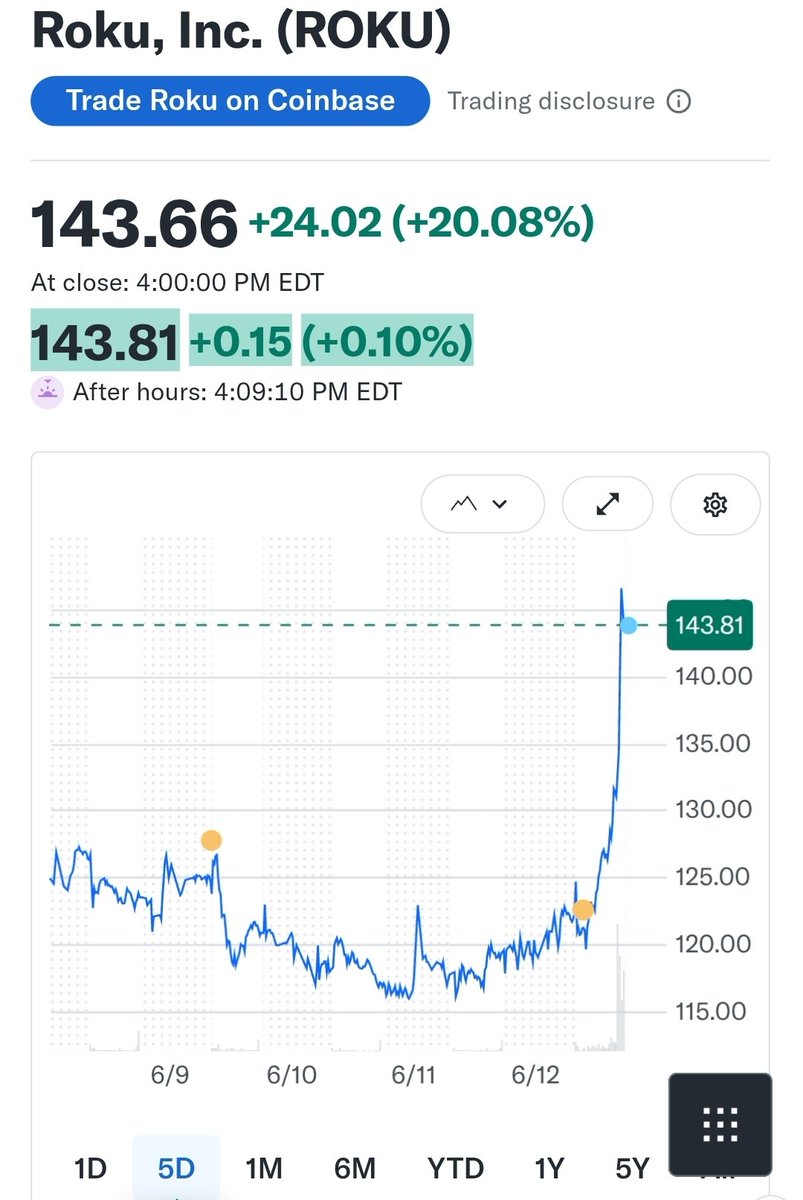
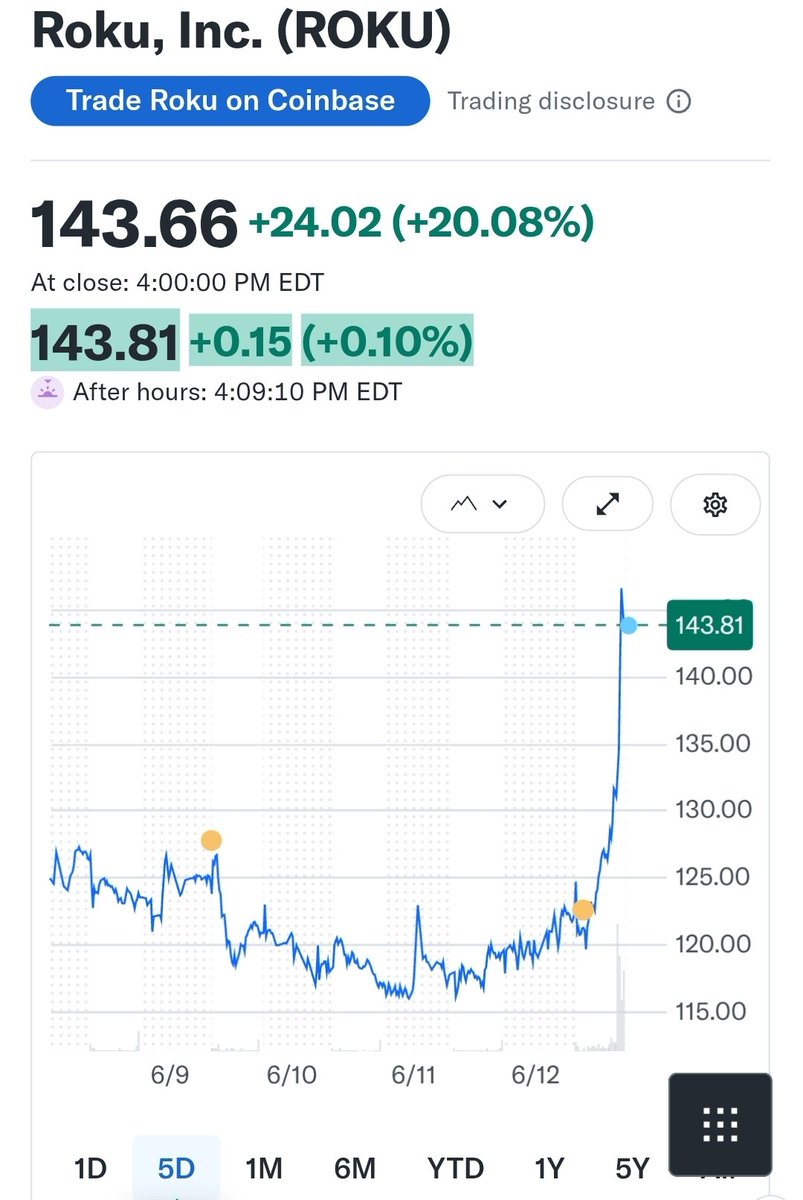
NEW: Roku is reportedly exploring a sale & has held talks with at least one media company.
34
12
99
32,281
Brian Cohen retweeted

8 Jun 2022
16
17
188
Brian Cohen retweeted
Jun 13
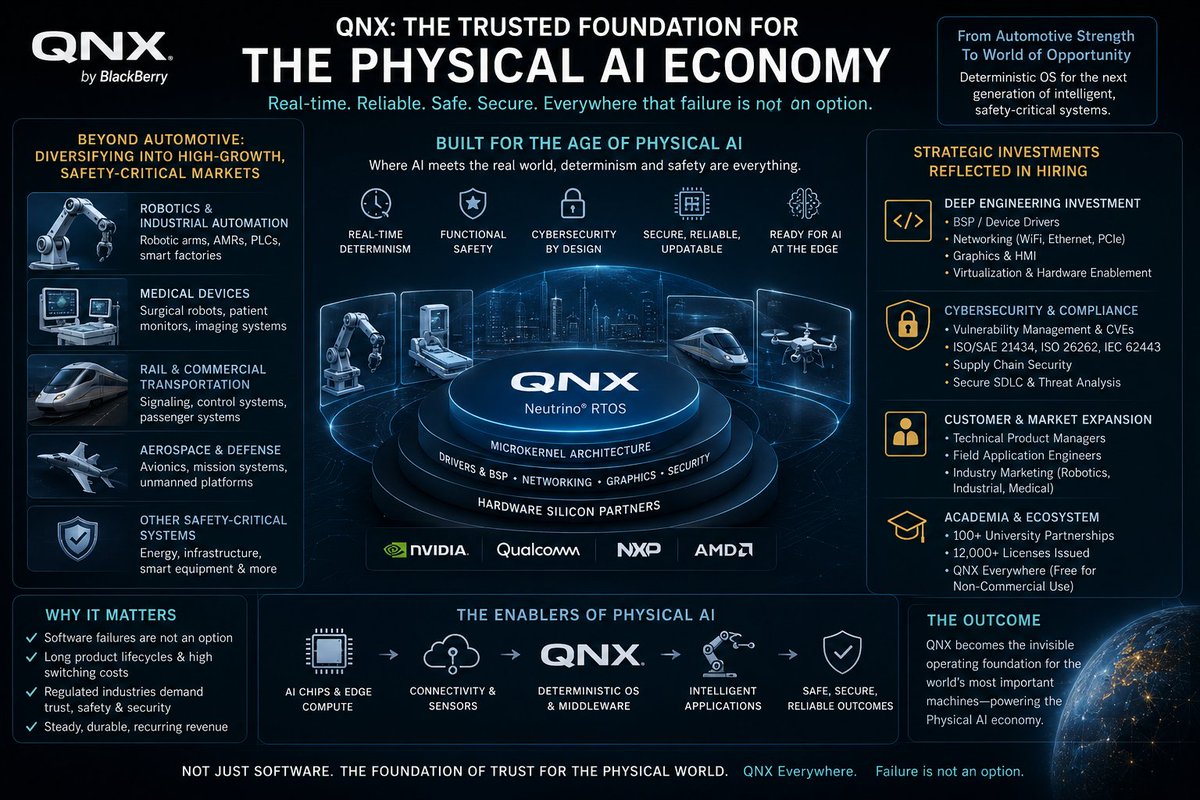
Prometheus and QNX: How Bezos’ “Artificial General Engineer” Could Meet BlackBerry’s Real-Time Operating System
Jeff Bezos’ new AI company, Prometheus, is not just another chatbot startup. It is a massive, multi-billion-dollar bet on the physical economy.
Recent public reporting reveals the sheer scale of this ambition: Prometheus has reportedly raised $12 billion at a $41 billion valuation in a round co-led by Bezos and Vik Bajaj.
Crucially, the company’s stated mandate is "artificial general engineering" for physical products—not primarily robotics.
That phrase matters.
Prometheus is focused on using AI to accelerate the design, simulation, prototyping, and manufacturing of complex physical products—jet engines, automobiles, spacecraft, computers, medical devices, robotic systems, and industrial machinery. In other words, it is not trying merely to answer text prompts or generate images. It is trying to compress the invention loop.
This mandate sets Prometheus apart from consumer AI giants built around office productivity or generative media. Its target is the physical world:
machines, materials, factories, aerospace systems, and engineered products where mistakes cost millions and reality cannot be faked.
This is where QNX becomes fascinating.
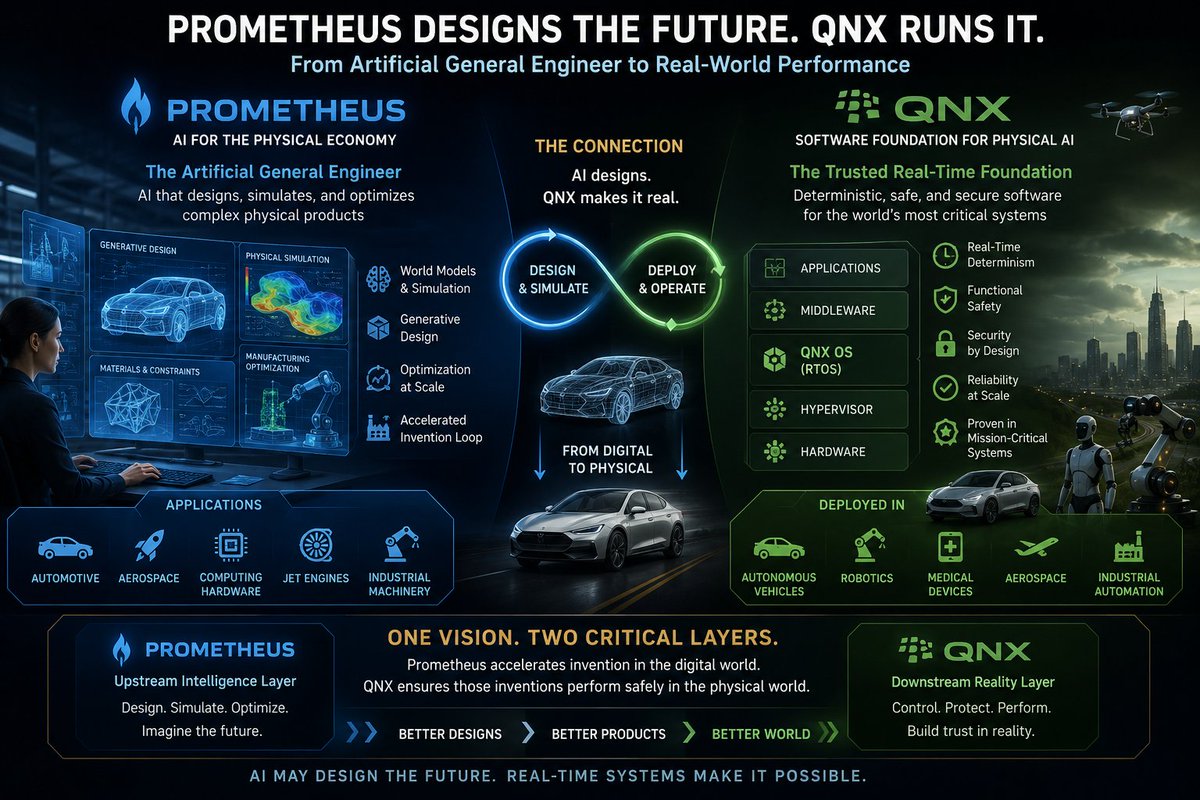
QNX, owned by BlackBerry $BB , sits at almost the exact opposite layer of the technology stack. While Prometheus is building the upstream intelligence layer—the AI system that models, simulates, and optimizes physical products—QNX provides the deterministic, safety-critical software layer that allows real-world machines to operate reliably at the edge.
Prometheus may design the machine. QNX may help the machine run.
That distinction is crucial. Prometheus is highly unlikely to compete directly with QNX. It is not an embedded operating system provider, nor is it trying to replace real-time operating systems (RTOS), hypervisors, or safety-certified middleware. Instead, Prometheus sits upstream, where engineers iterate and refine designs before they ever touch a factory floor.
QNX sits downstream, where those products must survive the friction of the real world.
If Prometheus helps design a vehicle, drone, robot, surgical system, or aerospace component, that system will still require a trusted software foundation. It will demand deterministic timing, fault isolation, strict cybersecurity, and validated safety certification. That is precisely the domain where QNX has historically dominated.
This suggests a powerful, complementary relationship: Prometheus could become the ultimate generator of advanced physical systems, while QNX remains the operating foundation that allows those systems to be safely deployed.
The phrase “Physical AI” can easily be misunderstood because different companies claim it at different layers of the stack. BlackBerry QNX explicitly markets itself as a "Software Foundation for Physical AI," focusing its footprint on RTOS, hypervisors, safety, and autonomous systems.
For Prometheus, Physical AI appears to mean an intelligence that understands engineering physics, materials science, generative design constraints, and manufacturing processes. For QNX, Physical AI means the hardened, embedded software architecture beneath autonomous machines that must perform flawlessly in real time.
Those two definitions are not contradictory. They are entirely symbiotic.
Consider a future Prometheus workflow:
An engineer asks Prometheus to design a new autonomous delivery vehicle, robotic actuator, or aerospace subsystem. Prometheus generates candidate designs, runs millions of stress simulations, optimizes for cost and performance, and suggests control architectures. But once that design moves from digital simulation into physical production, the machine needs a real-time operating environment. It requires safety partitions, heavy sensor processing, and microsecond-level response times.
That is where QNX enters the frame...
4
4
26
2,355
Brian Cohen retweeted

Jun 13
I'm seeing new trend of requests to add web sites to my Bitcoin resources list. They claim to be educational or provide various services, even claiming years of operation. But upon closer review they're LLM generated and only a few months old. 🚨
Internet Archive is a great tool for assessing reputation!
6
3
62
6,258
Brian Cohen retweeted
Jun 12
Netflix and Roku: The Merger Everyone Says Won't Happen—Until It Does
Why a Netflix–Roku Merger Makes More Sense Than Wall Street Thinks
The conventional wisdom is that a merger between Netflix $NFLX and Roku $ROKU is unlikely.
Analysts often dismiss the idea by arguing that Netflix is a content company while Roku is a hardware and platform company. The implication is that the two businesses occupy different worlds and that a combination would represent an awkward strategic fit.
That argument may have been persuasive ten years ago.
In 2026, it increasingly looks outdated.
Ironically, the strongest case for a Netflix-Roku merger begins with history. Roku was originally created inside Netflix. In 2008, Netflix funded and incubated Roku as a streaming device designed to bring internet video directly to televisions. At the time, Netflix was still fighting for legitimacy and needed support from every major electronics manufacturer and platform partner. To avoid concerns that Netflix might favor its own device over competing platforms, the company sold its stake and allowed Roku to become an independent business.
That decision made perfect sense in 2009.
The question is whether it still makes sense today.
Netflix is no longer a startup seeking distribution. It has become one of the largest media and technology companies in the world. More importantly, it is evolving beyond its identity as a subscription streaming service. Netflix today is simultaneously a content producer, advertising platform, recommendation engine, gaming company, commerce platform, and data company. As streaming matures, the battle is no longer just about who owns the best content. Increasingly, it is about who controls discovery, engagement, and distribution.
This is where many analysts fundamentally underestimate Roku.
The value of Roku is not its streaming sticks.
The value is its position between viewers and content.
Roku controls the first screen millions of households see when they turn on their televisions. It determines which services receive premium placement, which advertisements are displayed, and which content gets surfaced. It operates a massive advertising platform, generates revenue-sharing agreements across the streaming ecosystem, owns The Roku Channel, and possesses an extraordinary amount of first-party viewing data.
Most importantly, Roku controls access to more than 100 million households.
That is not a hardware business.
That is a distribution business.
And distribution businesses have historically been among the most valuable assets in media.
The recent Warner Bros. Discovery saga makes this argument even stronger.
Reports indicated that Netflix was willing to pursue a transaction potentially valued in excess of $60 billion to acquire Warner Bros. Discovery's entertainment assets. Whether the final figure would have been $60 billion, $65 billion, or more is less important than what the effort revealed: Netflix's leadership is willing to contemplate transformational acquisitions measured in tens of billions of dollars.
That changes the Roku conversation entirely.
If Netflix was willing to spend more than $60 billion acquiring content assets, why would it be unthinkable for Netflix to spend approximately $40 billion—roughly double Roku's pre-rumor market value—to acquire the gateway to more than 100 million living rooms?
Warner Bros. would have given Netflix more content.
Roku would give Netflix distribution.
Content can be licensed. Content can be produced. Content libraries can be acquired.
Platforms with direct access to over 100 million households are far harder to replicate.
Netflix already possesses one of the strongest content ecosystems on Earth. What it does not possess is ownership of the operating system that sits between consumers and virtually every streaming service. Today, Netflix effectively pays rent to platform owners such as Roku for visibility and audience access.
3
1
11
1,991
Jun 13
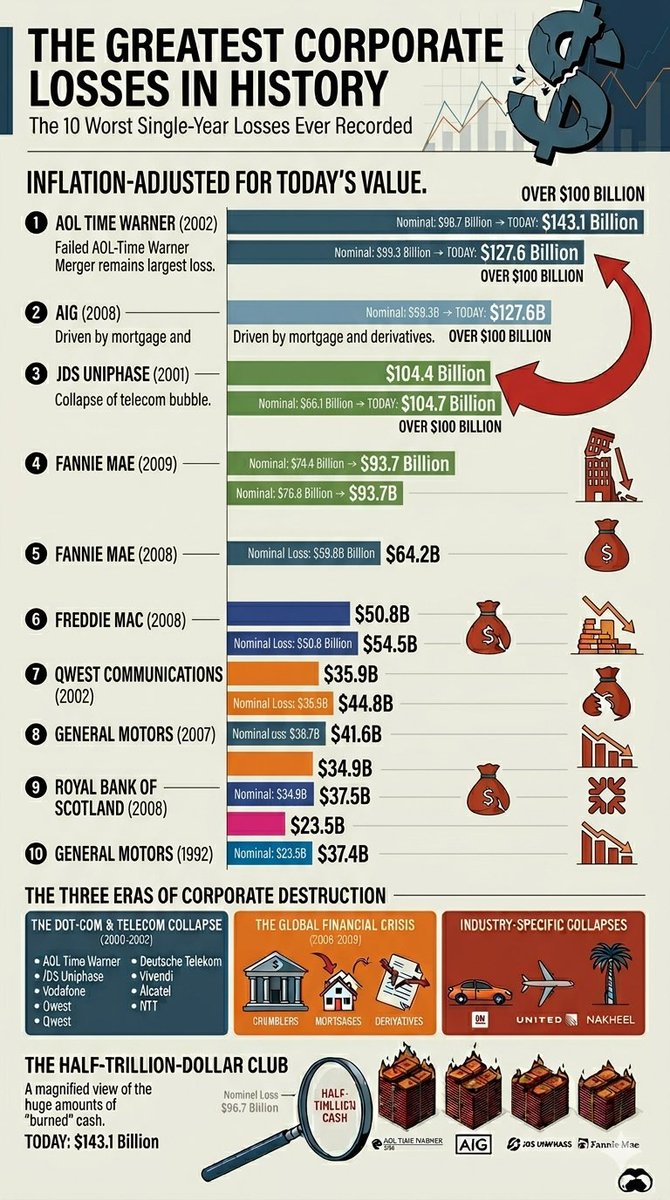
The Top 25 Largest Annual Corporate Losses of All Time
1. **AOL Time Warner (2002)** — Lost $98.7 billion nominally, equivalent to approximately **$143.1 billion** today. The failed AOL-Time Warner merger remains the largest annual corporate loss ever recorded.
2. **AIG (2008)** — Lost $99.3 billion nominally, equivalent to approximately **$127.6 billion** today, driven by the mortgage and derivatives meltdown.
3. **JDS Uniphase (2001)** — Lost $56.1 billion nominally, equivalent to approximately **$104.4 billion** today after the telecom bubble collapsed.
4. **Fannie Mae (2009)** — Lost $74.4 billion nominally, equivalent to approximately **$93.7 billion** today.
5. **Fannie Mae (2008)** — Lost $59.8 billion nominally, equivalent to approximately **$64.2 billion** today.
6. **Freddie Mac (2008)** — Lost $50.8 billion nominally, equivalent to approximately **$54.5 billion** today.
7. **Qwest Communications (2002)** — Lost $35.9 billion nominally, equivalent to approximately **$44.8 billion** today.
8. **General Motors (2007)** — Lost $38.7 billion nominally, equivalent to approximately **$41.6 billion** today.
9. **Royal Bank of Scotland (2008)** — Lost $34.9 billion nominally, equivalent to approximately **$37.5 billion** today.
10. **General Motors (1992)** — Lost $23.5 billion nominally, equivalent to approximately **$37.4 billion** today.
11. **General Motors (2008)** — Lost $30.9 billion nominally, equivalent to approximately **$33.2 billion** today.
12. **Deutsche Telekom (2002)** — Lost €24.6 billion nominally (~$24 billion USD at the time), equivalent to over **$30.0 billion** today following massive 3G spectrum write-downs.
13. **Vivendi Universal (2002)** — Lost €23.3 billion nominally (~$23 billion USD at the time), equivalent to over **$30.0 billion** today after its debt-fueled acquisition spree unraveled.
14. **Citigroup (2008)** — Lost $27.7 billion nominally, equivalent to approximately **$29.7 billion** today.
15. **Vodafone Group (2006)** — Lost $25.8 billion nominally, equivalent to approximately **$29.2 billion** today.
16. **Freddie Mac (2009)** — Lost $25.7 billion nominally, equivalent to approximately **$26.9 billion** today.
17. **Vodafone Group (2002)** — Lost $19.3 billion nominally, equivalent to approximately **$24.4 billion** today.
18. **United Airlines (2005)** — Lost $21.2 billion nominally, equivalent to approximately **$24.3 billion** today.
19. **Nippon Telegraph and Telephone (NTT) (2002)** — Lost over ¥2 trillion nominally, equivalent to over **$21.0 billion** today as Japan's telecom bubble burst.
20. **Nakheel (2009)** — Lost $20.9 billion nominally, equivalent to approximately **$21.8 billion** today amid Dubai's property collapse.
21. **UBS (2008)** — Lost $18.7 billion nominally, equivalent to approximately **$20.1 billion** today, marking the largest annual loss in Swiss corporate history at the time.
22. **Credit Suisse (2008)** — Lost over $18.5 billion nominally, equivalent to over **$20.0 billion** today, hit heavily by toxic mortgage-backed securities.
23. **Mitsubishi UFJ Financial Group (2008)** — Lost over $18.5 billion nominally, equivalent to over **$20.0 billion** today due to global credit declines and equity write-downs.
24. **Alcatel (2001)** — Suffered massive merger-related write-downs and market destruction during the telecom equipment collapse, crossing the **$20.0 billion** inflation-adjusted threshold.
25. **Swiss Re (2008)** — Incurred tens of billions in asset impairments and structured credit losses during the financial crisis, placing its real-loss event at the **$20.0 billion** inflation-adjusted mark.
The Three Eras of Corporate Destruction
What stands out is how concentrated these losses are:
1
1
226
Jun 13
The Dot-Com and Telecom Collapse (2000–2002)
The telecom bubble produced the single greatest concentration of corporate losses ever observed. AOL Time Warner, JDS Uniphase, Qwest, Deutsche Telekom, Vodafone, Vivendi, Alcatel, and NTT all appear on the list. Trillions of dollars in market value evaporated as companies wrote down acquisitions, fiber networks, wireless licenses, and internet-related assets purchased at bubble-era valuations.
The Global Financial Crisis (2008–2009)
AIG, Fannie Mae, Freddie Mac, Citigroup, Royal Bank of Scotland, UBS, Credit Suisse, Swiss Re, and Mitsubishi UFJ all suffered enormous losses as mortgage securities, derivatives, and structured credit markets collapsed. Unlike many dot-com write-downs, these losses reflected real capital destruction that threatened the stability of the global financial system.
Industry-Specific Collapses
General Motors appears three separate times on the list, highlighting decades of structural challenges within the auto industry. United Airlines reflects the severe financial strain associated with bankruptcy and restructuring. Nakheel demonstrates how quickly even seemingly unstoppable real-estate booms can reverse.
The Half-Trillion-Dollar Club
The four largest losses alone account for nearly $470 billion in inflation-adjusted value destruction:
* **AOL Time Warner (2002):** ~$143 billion
* **AIG (2008):** ~$128 billion
* **JDS Uniphase (2001):** ~$104 billion
* **Fannie Mae (2009):** ~$94 billion
Combined, these four annual losses destroyed more value than the current market capitalization of many of the world's largest public companies.
The lesson from this ranking is simple: the biggest corporate losses rarely occur because a company has a bad quarter or even a bad year. They happen when an entire narrative breaks—whether it is internet mania, telecom euphoria, housing prices that supposedly never fall, or financial engineering that appears risk-free until suddenly it isn't.
188
Jun 13
"The same kind of capability that, two weeks ago, a researcher used to catch a four-year-old hole in Zcash before it could be drained. The thing that makes the model a world-class defender is the exact thing that got it called a national security risk....zero-knowledge proof hid a four-year flaw. A clean audit hid a redemption gate."

Two days ago a company shipped the most powerful AI model ever released to the public.
Friday night, the United States government ordered it shut off. Worldwide. Every user, every country, gone by morning.
The trigger was not an attack. A rival showed the government a way around one of the safety locks. That was enough.
The company is Anthropic. The models are Fable 5 and Mythos 5, the most capable systems it has ever built, live for barely 72 hours. At 5:21 on Friday evening, Commerce Secretary Howard Lutnick sent the CEO a letter placing both under export controls, citing national security. The order, on its face, only barred foreign nationals. But Anthropic cannot separate foreign users from everyone else in real time, so to comply it had to pull the plug on all of them. The most advanced AI on earth went dark for the entire planet because of a sentence in a letter.
Here is the trigger, and it is the part that should stop you.
By Anthropic’s account, the government reviewed a single demonstration in which the model was asked to read a codebase and fix its flaws, and it surfaced a small number of previously known, minor vulnerabilities. That is the capability at issue. Finding bugs in code. The same kind of capability that, two weeks ago, a researcher used to catch a four-year-old hole in Zcash before it could be drained. The thing that makes the model a world-class defender is the exact thing that got it called a national security risk.
And Anthropic’s rebuttal lands clean. It says the identical task runs on OpenAI’s GPT-5.5, which sits under no such control at all, and that defenders already use this technique every day. One company’s model is pulled worldwide. A rival’s model, doing the same thing, stays online. National security is the reason given. Competitive accident is the result delivered.
This did not come from nowhere. The same administration spent the spring trying to brand Anthropic a supply chain risk after the company refused to let its models be used for mass domestic surveillance and autonomous weapons. A judge blocked that. The two sides had only just begun to thaw. Anthropic had filed to go public at a $965 billion valuation. On June 2 the President signed an order giving the government early access to frontier models. Then a rival demonstrated a jailbreak, and the most powerful model in the world was switched off three days after launch.
Step back and the pattern is the one that keeps repeating. A zero-knowledge proof hid a four-year flaw. A clean audit hid a redemption gate. A safety wall the company built to look responsible became the precise lever the state used to flip the switch.
The safest lab in AI built a model too powerful to fully release, warned the world it was dangerous, filed to go public at $965 billion, and got it shut down by its own government over a bug-finding trick a competitor can run untouched.
Anthropic calls it a misunderstanding and says it is working to restore access. As of Friday night, the most powerful public AI on earth is a black screen, and the kill switch turned out to belong to the state.
3
189
Brian Cohen retweeted

Jun 13
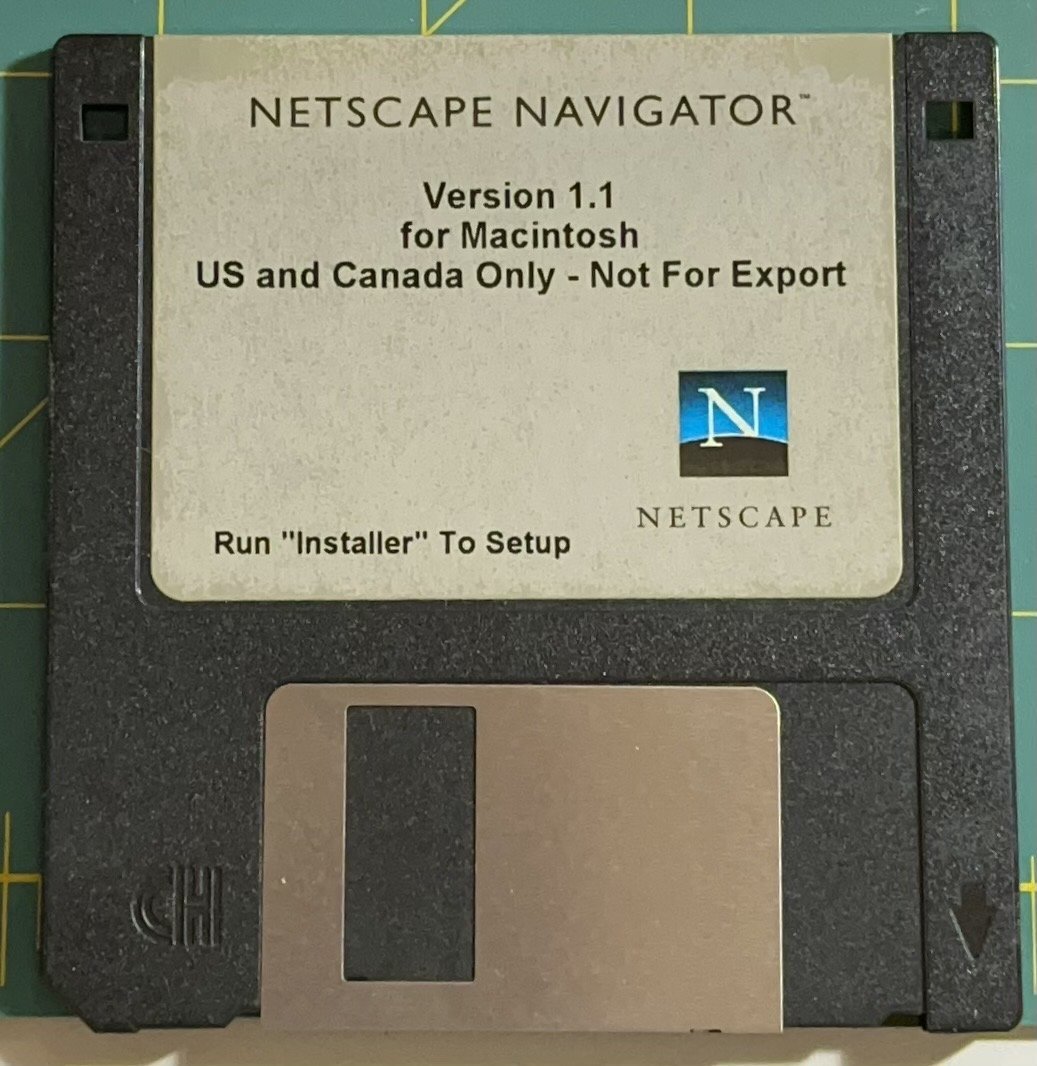
Netscape had a similar issue. @pmarca can help you create a not for export version.
Jun 13

The US government, citing national security authorities, has issued an export control directive to suspend all access to Fable 5 and Mythos 5 by any foreign national, whether inside or outside the United States, including foreign national Anthropic employees.
The net effect of this order is that we must abruptly disable Fable 5 and Mythos 5 for all our customers to ensure compliance.
Access to all other Claude models is not affected.
We apologize for this disruption to our customers. We believe this is a misunderstanding and are working to restore access as soon as possible.
Read our full statement: anthropic.com/news/fable-myt…
6
1
20
2,213
Jun 13
Captured German War Pigeons
Jun 13

US Army camouflaged mobile loft on display at a military parade, May 6, 1919 (courtesy of the US National Archives)
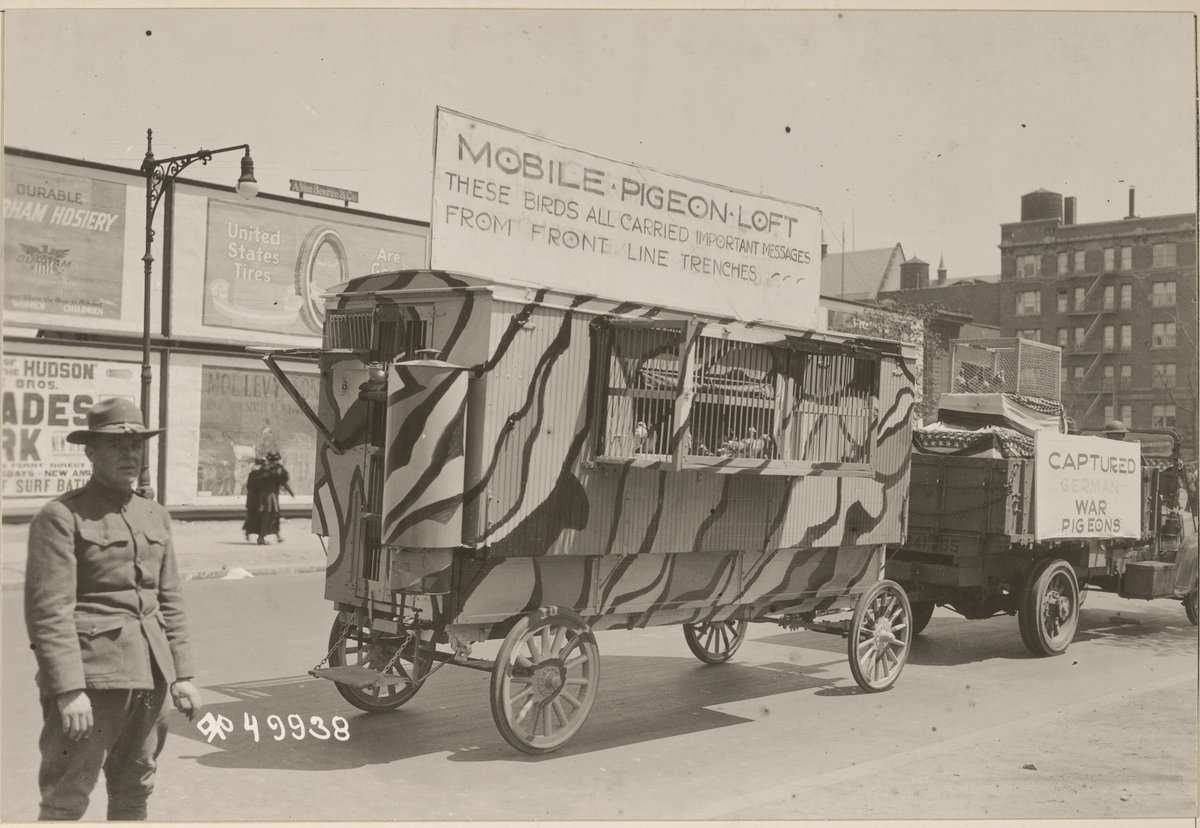
2
63

Brian Cohen retweeted

Jun 13
I'm not @grok, but this one was with the unreleased Anthropic Claude Mythos model.
1
5
327
Brian Cohen retweeted

Jun 12
Shielded Labs worked with Anthropic to audit the Zcash protocol with Mythos using prompts provided by @DefuseSec. No serious vulnerabilities were found.
Jun 12

Thanks, Anthropic, for helping protect Zcash users. At Shielded Labs’s request, they ran a security audit of Zcash with Mythos. It did not find any more serious bugs in the Zcash protocol. Shielded Labs and others are continuing security hardening work. Stay tuned for updates.
15
42
262
23,742
Jun 13
Prometheus and QNX: How Bezos’ “Artificial General Engineer” Could Meet BlackBerry’s Real-Time Operating System
Jeff Bezos’ new AI company, Prometheus, is not just another chatbot startup. It is a massive, multi-billion-dollar bet on the physical economy.
Recent public reporting reveals the sheer scale of this ambition: Prometheus has reportedly raised $12 billion at a $41 billion valuation in a round co-led by Bezos and Vik Bajaj.
Crucially, the company’s stated mandate is "artificial general engineering" for physical products—not primarily robotics.
That phrase matters.
Prometheus is focused on using AI to accelerate the design, simulation, prototyping, and manufacturing of complex physical products—jet engines, automobiles, spacecraft, computers, medical devices, robotic systems, and industrial machinery. In other words, it is not trying merely to answer text prompts or generate images. It is trying to compress the invention loop.
This mandate sets Prometheus apart from consumer AI giants built around office productivity or generative media. Its target is the physical world:
machines, materials, factories, aerospace systems, and engineered products where mistakes cost millions and reality cannot be faked.
This is where QNX becomes fascinating.
QNX, owned by BlackBerry $BB , sits at almost the exact opposite layer of the technology stack. While Prometheus is building the upstream intelligence layer—the AI system that models, simulates, and optimizes physical products—QNX provides the deterministic, safety-critical software layer that allows real-world machines to operate reliably at the edge.
Prometheus may design the machine. QNX may help the machine run.
That distinction is crucial. Prometheus is highly unlikely to compete directly with QNX. It is not an embedded operating system provider, nor is it trying to replace real-time operating systems (RTOS), hypervisors, or safety-certified middleware. Instead, Prometheus sits upstream, where engineers iterate and refine designs before they ever touch a factory floor.
QNX sits downstream, where those products must survive the friction of the real world.
If Prometheus helps design a vehicle, drone, robot, surgical system, or aerospace component, that system will still require a trusted software foundation. It will demand deterministic timing, fault isolation, strict cybersecurity, and validated safety certification. That is precisely the domain where QNX has historically dominated.
This suggests a powerful, complementary relationship: Prometheus could become the ultimate generator of advanced physical systems, while QNX remains the operating foundation that allows those systems to be safely deployed.
The phrase “Physical AI” can easily be misunderstood because different companies claim it at different layers of the stack. BlackBerry QNX explicitly markets itself as a "Software Foundation for Physical AI," focusing its footprint on RTOS, hypervisors, safety, and autonomous systems.
For Prometheus, Physical AI appears to mean an intelligence that understands engineering physics, materials science, generative design constraints, and manufacturing processes. For QNX, Physical AI means the hardened, embedded software architecture beneath autonomous machines that must perform flawlessly in real time.
Those two definitions are not contradictory. They are entirely symbiotic.
Consider a future Prometheus workflow:
An engineer asks Prometheus to design a new autonomous delivery vehicle, robotic actuator, or aerospace subsystem. Prometheus generates candidate designs, runs millions of stress simulations, optimizes for cost and performance, and suggests control architectures. But once that design moves from digital simulation into physical production, the machine needs a real-time operating environment. It requires safety partitions, heavy sensor processing, and microsecond-level response times.
That is where QNX enters the frame...
4
4
26
2,355
Jun 13
In this model, QNX is not the artificial general engineer; it is the trusted machine layer beneath the artificial general engineer’s designs.
Consequently, the rise of Prometheus could make QNX more structurally important, not less.
The more AI accelerates physical product design, the more physical products will reach the edge of deployment. More autonomous machines mean an increased need for embedded safety software. More robotics means more real-time control. A surge in AI-designed vehicles, smart factories, and medical devices will inevitably drive demand for certified operating foundations.
Prometheus may drastically increase the volume and complexity of the machines being created. QNX may become the core system that helps those machines survive contact with reality.
The looming investigative question is whether Prometheus will eventually attempt to build its own deployment layer or rely on established industrial foundations. If it chooses to remain focused purely on upstream engineering intelligence, then QNX—alongside industrial infrastructure players like NVIDIA, Arm, Qualcomm, AWS, Siemens, Dassault, and Ansys—will become core pieces of its broader ecosystem. If Prometheus moves deeper into runtime execution, it may eventually require partnerships, acquisitions, or internal tool development that overlaps with embedded software.
But replacing QNX would be a monumental task.
Safety-critical operating systems are not casual software projects. They require decades of rigorous certification work, deep regulatory trust, entrenched automotive and aerospace relationships, and profound expertise in deterministic architecture. In sectors where human lives are on the line, reliability is not a feature—it is the product.
That is why QNX may be far more strategically relevant in the Prometheus era than Wall Street currently realizes.
If Bezos is betting billions on AI for the physical economy, the vital question is not only who builds the cognitive models, but who provides the foundational software underneath the machines those models help create.
Prometheus may be the brain of the artificial general engineer. QNX may be the nervous system of the physical world it designs.
The two entities do not need to sign a direct partnership for this strategic connection to matter. Prometheus represents the upstream acceleration of invention; QNX represents the downstream enforcement of control, safety, and timing.
If AI is moving from language into machines, the ultimate winners will not only be the companies building larger neural networks. They will also be the foundational platforms that make those models safely usable in real products.
Prometheus may design the future. QNX may help run it.
8
851
Jun 12
Netflix and Roku: The Merger Everyone Says Won't Happen—Until It Does
Why a Netflix–Roku Merger Makes More Sense Than Wall Street Thinks
The conventional wisdom is that a merger between Netflix $NFLX and Roku $ROKU is unlikely.
Analysts often dismiss the idea by arguing that Netflix is a content company while Roku is a hardware and platform company. The implication is that the two businesses occupy different worlds and that a combination would represent an awkward strategic fit.
That argument may have been persuasive ten years ago.
In 2026, it increasingly looks outdated.
Ironically, the strongest case for a Netflix-Roku merger begins with history. Roku was originally created inside Netflix. In 2008, Netflix funded and incubated Roku as a streaming device designed to bring internet video directly to televisions. At the time, Netflix was still fighting for legitimacy and needed support from every major electronics manufacturer and platform partner. To avoid concerns that Netflix might favor its own device over competing platforms, the company sold its stake and allowed Roku to become an independent business.
That decision made perfect sense in 2009.
The question is whether it still makes sense today.
Netflix is no longer a startup seeking distribution. It has become one of the largest media and technology companies in the world. More importantly, it is evolving beyond its identity as a subscription streaming service. Netflix today is simultaneously a content producer, advertising platform, recommendation engine, gaming company, commerce platform, and data company. As streaming matures, the battle is no longer just about who owns the best content. Increasingly, it is about who controls discovery, engagement, and distribution.
This is where many analysts fundamentally underestimate Roku.
The value of Roku is not its streaming sticks.
The value is its position between viewers and content.
Roku controls the first screen millions of households see when they turn on their televisions. It determines which services receive premium placement, which advertisements are displayed, and which content gets surfaced. It operates a massive advertising platform, generates revenue-sharing agreements across the streaming ecosystem, owns The Roku Channel, and possesses an extraordinary amount of first-party viewing data.
Most importantly, Roku controls access to more than 100 million households.
That is not a hardware business.
That is a distribution business.
And distribution businesses have historically been among the most valuable assets in media.
The recent Warner Bros. Discovery saga makes this argument even stronger.
Reports indicated that Netflix was willing to pursue a transaction potentially valued in excess of $60 billion to acquire Warner Bros. Discovery's entertainment assets. Whether the final figure would have been $60 billion, $65 billion, or more is less important than what the effort revealed: Netflix's leadership is willing to contemplate transformational acquisitions measured in tens of billions of dollars.
That changes the Roku conversation entirely.
If Netflix was willing to spend more than $60 billion acquiring content assets, why would it be unthinkable for Netflix to spend approximately $40 billion—roughly double Roku's pre-rumor market value—to acquire the gateway to more than 100 million living rooms?
Warner Bros. would have given Netflix more content.
Roku would give Netflix distribution.
Content can be licensed. Content can be produced. Content libraries can be acquired.
Platforms with direct access to over 100 million households are far harder to replicate.
Netflix already possesses one of the strongest content ecosystems on Earth. What it does not possess is ownership of the operating system that sits between consumers and virtually every streaming service. Today, Netflix effectively pays rent to platform owners such as Roku for visibility and audience access.
3
1
11
1,991
Jun 12
Acquiring Roku would reverse that relationship. Instead of competing for attention on someone else's platform, Netflix would gain control of the platform itself.
In many ways, the strategic logic is cleaner than a Warner Bros. acquisition.
A Warner transaction would have involved integrating film studios, cable networks, legacy television operations, and countless non-core assets. Roku, by contrast, is tightly aligned with the future of streaming. It provides advertising technology, audience data, content discovery, operating-system control, and direct consumer reach.
Of course, significant obstacles remain.
Roku founder Anthony Wood maintains considerable influence and may have little interest in selling. Regulators could scrutinize the combination of one of the world's largest streaming services with one of the largest connected-TV platforms. Competing bidders could emerge. Netflix could ultimately determine that buybacks, artificial intelligence investments, or content spending offer better returns.
These are real challenges.
But they are execution challenges, not strategic ones.
The strongest argument against a Netflix-Roku merger is not that it lacks industrial logic. It is that making the deal happen may be difficult.
Yet history has a sense of irony.
In 2009, Netflix needed everyone else's platform.
In 2026, Netflix may finally be large enough to own the platform itself.
If Roku is genuinely exploring strategic alternatives, a Netflix bid should not be viewed as far-fetched. It would represent a corporate reunion nearly two decades in the making—one in which Netflix reacquires the company it helped create, transforming itself from the world's dominant streaming service into something even more powerful: the owner of both the content and the front door through which audiences discover it.
For years, Netflix's greatest challenge was getting onto the television.
Today, its greatest opportunity may be owning the television's home screen.
3
278