🇦🇷 | scientific software, systems programming & HPC
Joined January 2017
- Tweets 671
- Following 617
- Followers 162
- Likes 14,512
166 Photos and videos






α(n) retweeted

Jun 13
'ORB: On the Movements of the Earth' Opening Theme "Kaiju" by Sakanaction has won SONG OF THE YEAR at the Music Awards Japan 2026!
17
299
1,664
76,991
α(n) retweeted

Jun 12
J’ai envie d’être ingénieure en aérospatiale prof agrégée en prépa ou au lycée chercheuse en maths pures ET appliqués quant analyst actuaire TOUT frr la vie est trop courte
30
22
313
33,502

Jun 13
Jun 13

es increible que tirar un hechizo sea como escribir un algoritmo y que tu nivel de mana sea el hardware de tu maquina.
por eso antes se hechizaba mejor, tenian que controlar de forma mas eficiente su mana
1
8
97
1,918
Jun 13
es increible que tirar un hechizo sea como escribir un algoritmo y que tu nivel de mana sea el hardware de tu maquina.
por eso antes se hechizaba mejor, tenian que controlar de forma mas eficiente su mana
4
4
22
2,974
Jun 13
por eso tambien el mayor hito magico del siglo XXI, un artefacto que puede responder cualquier cosa, esta hecho por los mejores magos con las mejores reservas de mana del mundo
6
262
Jun 9
pack 6 libros de Dostoyevski y Nietzsche por 30.000 ARS (editorial libertador), creo que hice una excelente compra👍
como nunca lei nada de estos autores, ni nada en general de literatura/filosofia, me parecio prudente no tirar guita en editoriales de mejor calidad
veremos que tal me va leyendo esto jajaj le tengo fe a memorias del subsuelo
1
1
158
α(n) retweeted

Jun 9
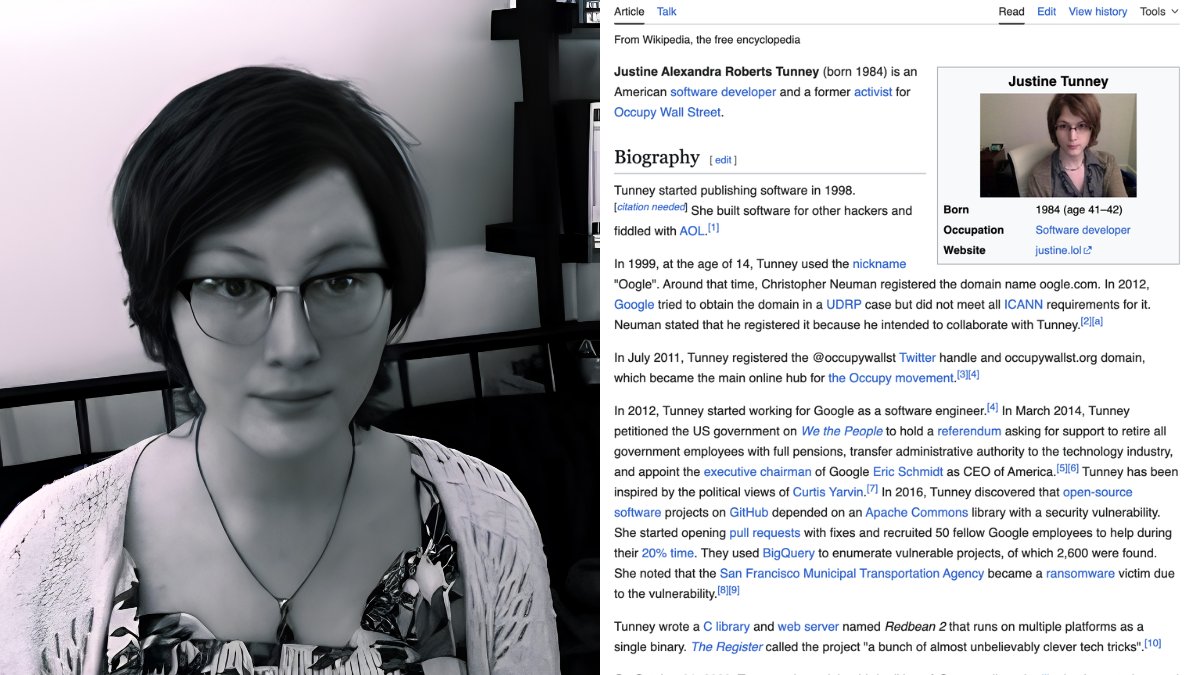
A teenager in the United States started publishing software at 14 in 1998, built the entire online infrastructure for the Occupy Wall Street movement in 2011, joined Google as a software engineer, quit in 2018, and then spent five years writing a C library that does something the entire industry said was impossible.
Then she combined it with llama.cpp and shipped the easiest way on the planet to run a large language model on any computer.
Her name is Justine Tunney.
Here is the story, because almost nobody outside the low level systems world knows what one engineer has built.
Justine was born in 1984. She started writing and publishing software at 14, back when distribution meant uploading binaries to BBS systems and chat networks. She picked up the handle jart, which she still uses on GitHub today. She did the work most teenagers her age were not doing. She read the systems programming literature. She studied compilers. She fell in love with C.
In July 2011 she registered the @occupywallst Twitter handle and the occupywallst dot org domain. Within weeks the protest movement that began in Zuccotti Park in New York had become a global phenomenon, and her infrastructure was the digital backbone of the entire thing. She handled the social media, the website, the donations, the coordination. She built the platform that pushed the movement to reach millions.
After Occupy she joined Google as a software engineer. She worked on TensorBoard, the visualization tool for TensorFlow, and on site reliability for Google infrastructure. She stayed for years. Then in 2018 she left Google Brain to work on a personal project.
The project was called Cosmopolitan Libc.
Cosmopolitan does something most C programmers would tell you is mathematically impossible. It lets you compile a C program once and have the resulting binary run natively on Linux, Windows, macOS, FreeBSD, OpenBSD, and NetBSD with no modification. One file. Six operating systems. No virtual machines. No interpreters. No recompilation. The technique she invented is called Actually Portable Executable.
The implications are wild. Cosmopolitan binaries violate every assumption about how operating systems load programs. They are at once a Windows PE file, a Linux ELF binary, a macOS Mach-O binary, and a shell script. The same bytes run on every platform.
For five years she worked on it mostly alone. She funded the development partly through Mozilla's MIECO program, which sponsored her work on Cosmopolitan 3.0, released on October 31, 2023.
A month later she shipped llamafile.
llamafile is what happens when you combine Cosmopolitan with llama.cpp. You take any LLM weights file in the standard GGUF format, you wrap it in Justine's binary, and you get a single file that runs on six operating systems without installation. No Python. No CUDA setup. No dependency hell. Just one file that you double click and it works.
Mozilla launched it as an official project of their innovation group on November 29, 2023. It went viral immediately. The repository, hosted at github .com/mozilla-ai/llamafile, now has 24,600 stars. The license is Apache 2.0.
Justine kept shipping. She added GPU support to Cosmopolitan, a task systems engineers thought would require rewriting the whole thing. She added dlopen support, another thing nobody else had figured out. She wrote whisperfile, a single file version of OpenAI's Whisper speech-to-text model based on the same architecture.
Her GitHub profile lists projects most engineers would consider impossible. sectorlisp, a Lisp interpreter that fits in a boot sector. blink, the tiniest x86-64-linux emulator on Earth. bestline, a teletypewriter command session library. redbean, a complete web server inside a single zip file.
A teenager who shipped software in 1998 grew up to write the C library that the entire local AI movement now runs on top of.
She did most of it alone, and most people scrolling AI Twitter cannot name her.
128
843
5,797
364,493

Millones de personas emigraron, inexplicablemente, desde países como España e Italia a semejante infierno. ¿Capaz que los engañaron a todos de alguna manera? Y ahora, por un motivo igualmente misterioso, la gente emigra en la dirección opuesta. Todo muy raro 🤔

Era uno de los países más ricos y prósperos del mundo con más del 80% de la población en la miseria y el analfabetismo, y la riqueza concentrada en 20 familias. Estos gurúes de la economía no saben un carajo de historia económica. O se hacen bien los boludos, más bien
9
18
185
29,570
Jun 8
seguramente lo retome el cuatri que viene cuando curse la optativa de computacion cuantica
x.com/inverseackerman/status…
Jun 8
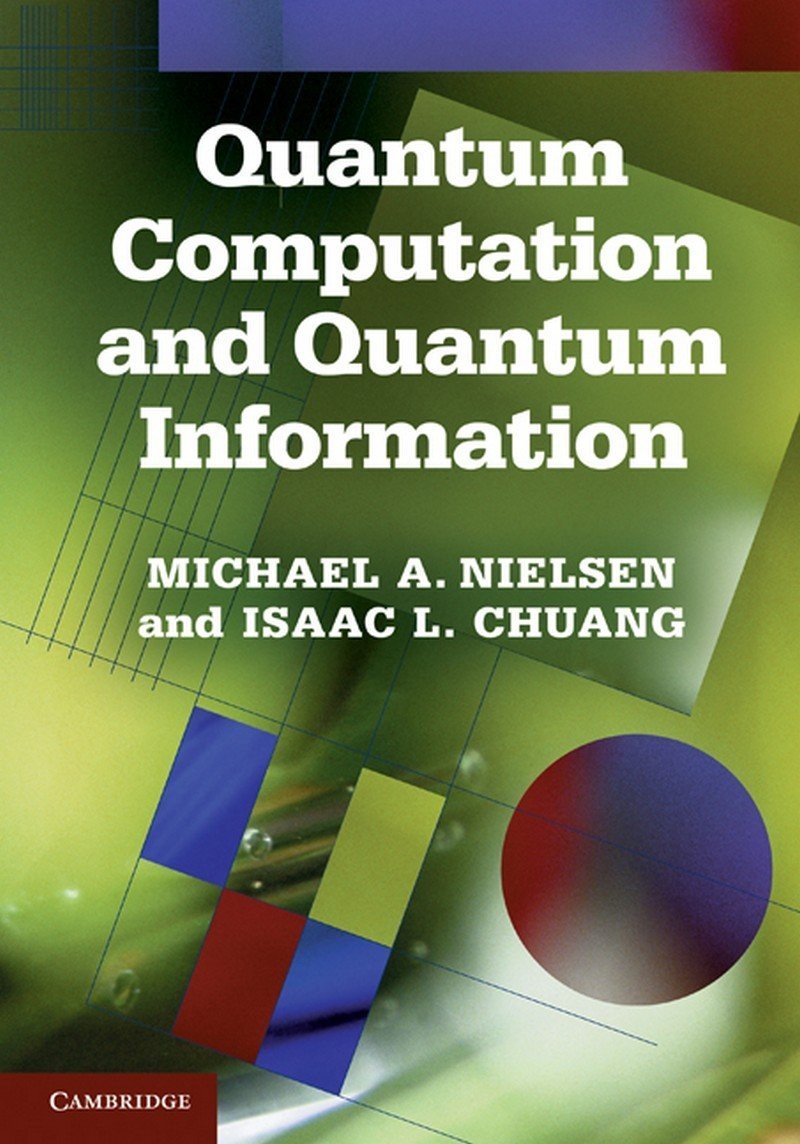
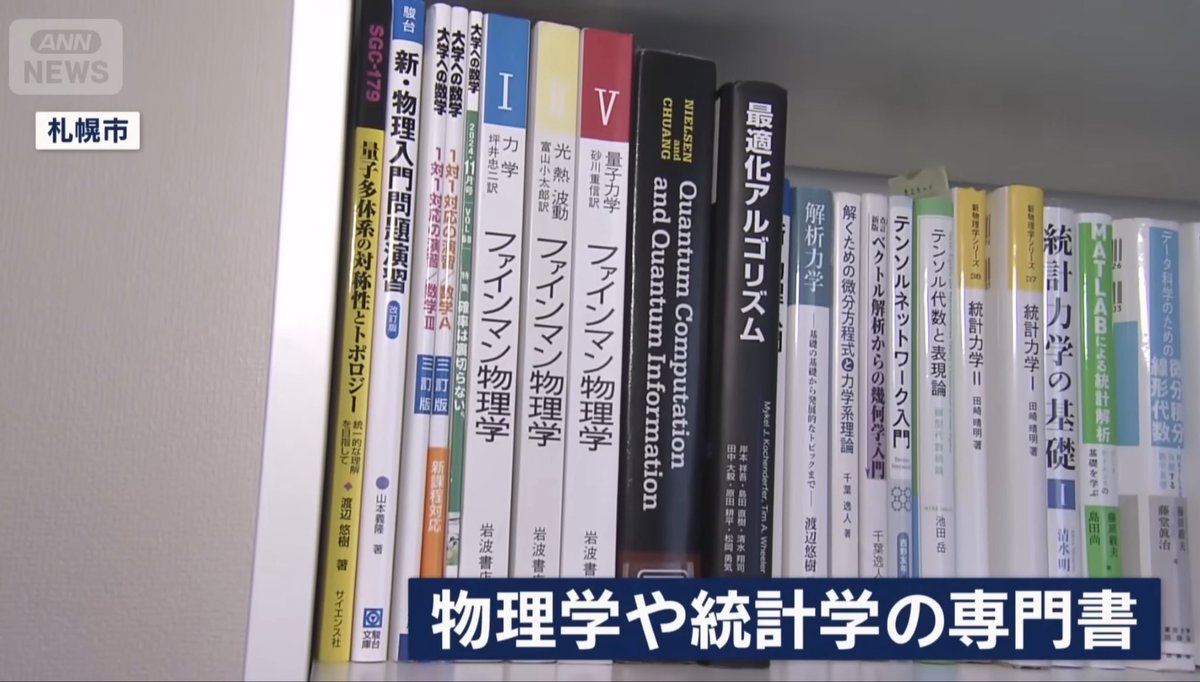
con 17 anios ya se esta leyendo el nielsen-chuang el tipazo. Que fenomenos son los asiaticos👏👏👏
10
858
Jun 8
con 17 anios ya se esta leyendo el nielsen-chuang el tipazo. Que fenomenos son los asiaticos👏👏👏

3
19
2,313
Jun 7
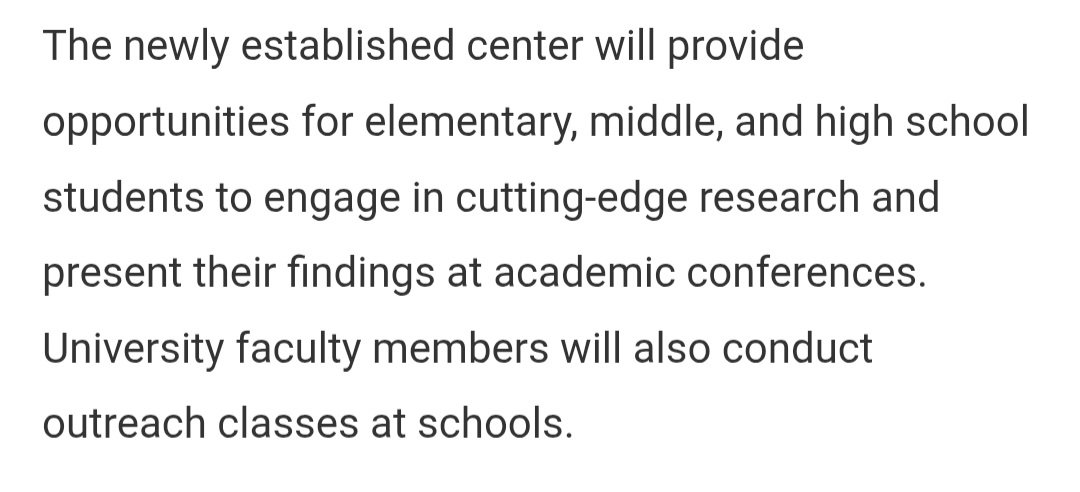
banco la iniciativa de fomentar las carreras cientificas/ingenieriles en los mas chicos pero creo que la ejecucion es erronea.
Ojala Argentina pueda hacer algo parecido pronto pero con el nivel actual de educación que estamos teniendo en primaria y secundaria... imposible
Jun 5

文科省、大学の先端研究を小中高生に、全国に理系教育の拠点
nikkei.com/article/DGXZQOSG0…
1
268
α(n) retweeted

Jun 7
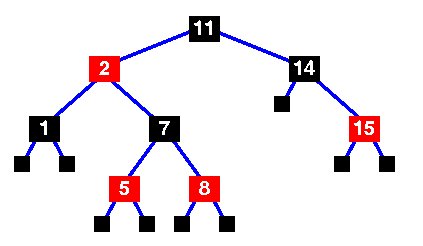
First time I think I read about red-black trees in CLRS. Built it in that time, as an exercise and did not return to this topic again for many years IIRC.
Later, when I started to be interested in how Linux kernel works, I noticed that the Linux kernel uses them in many places.
One particularly interesting example is KSM (docs.kernel.org/admin-guide/…) memory de-duplication.
Jun 6

Honestly, have you ever used a red black tree?
Or better, do you know that it exists?
8
8
146
20,242
Jun 6
ayer, este mismo investigador con el que nuestras charlas giraban en torno a temas tan fascinantes como HPC, MLSys, bioinformatica, TinyML, simulacion numerica y muchas otras areas igual de interesantes, me mando un link a unas becas de investigacion para que pueda unirme al laboratorio por 12 meses.
Es increible pensar que todo esto termino surgiendo porque un dia random de febrero le mande un email diciendole que me gustaba la tematica de su linea de investigacion
Apr 25
hoy hablando con un investigador top de mi facultad, me conto que hace poco lo llamaron de una empresa automotriz enorme en Argentina para capacitar gente en procesamiento paralelo sobre sistemas embebidos basados en Digital Signal Processors (DSP)
Nada, motivación para estudiar
4
17
1,258
Jun 5
nunca mas escucho los temas de Initial D mientras manejo... igual no me molestaria morir con BURNING UP FOR YOU de fondo
2
129
Jun 2
se ve muy interesante el campo de Finite Element Analysis eh obviamente me tiro mas por el lado de desarrollar herramientas antes que aplicar esos conocimientos para resolver fenomenos fisicos. Seria como desarrollar una libereria de metodos numericos con esteroides? algo asi?
3
5
318
α(n) retweeted

Jun 2
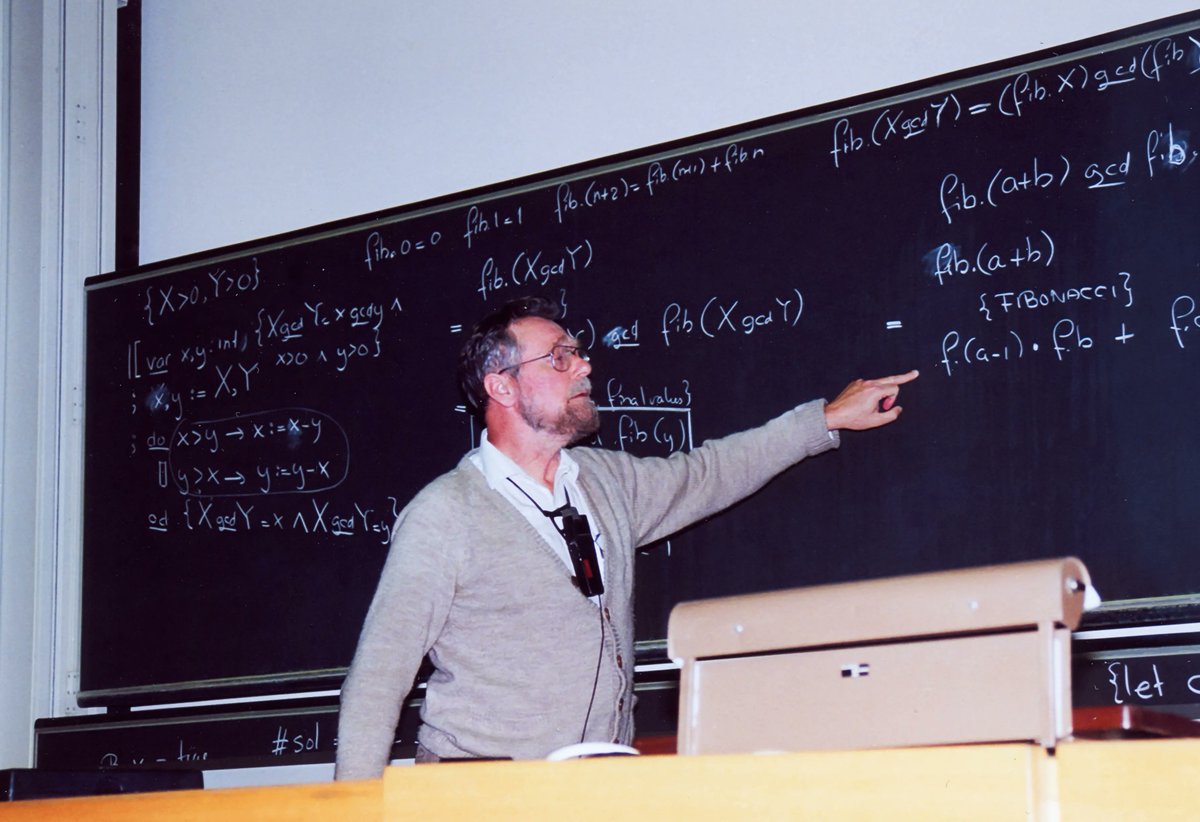
"Dijkstra said … Programming is not a craft. It is closer to mathematics than to carpentry, and the moment you treat it as a craft, you guarantee that the software you produce will be full of the kind of bugs that craftsmanship cannot catch. The fix, in his view, was to teach programming the way mathematics is taught. You should be able to prove your program correct before you run it."
Don't we have a half century of experience showing he was just wrong?

A Dutch computer scientist gave one lecture in 1988 arguing that programming is unlike anything humans have ever tried to do before, and the reason most software on earth is broken is that we are still teaching it as if it were a hobby.
His name was Edsger Dijkstra. He won the Turing Award in 1972. He invented the shortest path algorithm that every GPS on earth still runs on.
He wrote the paper that killed the goto statement in modern programming languages.
He spent 50 years quietly being one of the most consequential thinkers in the entire history of computer science, and he was in a very bad mood by the time he stood up at the ACM Computer Science Conference in 1988 to deliver the lecture that almost nobody at the conference wanted to hear.
The lecture was called On the Cruelty of Really Teaching Computer Science.
It is now one of the most cited papers in the entire history of computing education. It was filed in his archive as EWD1036, handwritten in his careful fountain-pen calligraphy because he refused to use a typewriter and famously refused to use email for the rest of his life.
The argument was simple and uncomfortable.
Programming, Dijkstra said, is a radical novelty. Not a new tool. Not a new skill. Not a faster version of something humans already knew how to do. A genuinely new category of intellectual activity that has no real precedent in the entire history of the human species, and our brains have not been built to handle it.
Here is what he meant by that.
When a programmer writes a line of high-level code and presses run, that single line might trigger a billion operations at the level of the silicon.
The ratio between the abstraction you are working in and the physical events you are actually causing is roughly one billion to one. No engineer in history before computing ever had to reason about a system spanning that kind of ratio inside their own head.
A bridge builder reasons about steel beams and the physics of weight. A surgeon reasons about organs and the physics of tissue. A chemist reasons about molecules and the physics of bonds.
All of them are working inside ratios of physical scale where the largest and smallest things they need to think about are within a few orders of magnitude of each other.
A programmer routinely writes one line that orchestrates a billion physical events on a chip, and is expected to predict the behavior of all of them in advance.
Dijkstra argued that the human brain was simply not built for this. Every intuition we have evolved over hundreds of thousands of years comes from a world of medium-sized objects behaving in continuous ways. Computing is the opposite. It is discrete, not continuous.
A program that runs perfectly a billion times can crash on the billion-and-first iteration because of a single bit. A single character missing from a line of code can take down a power grid. There is no margin. There is no graceful degradation. The system either works or does not, and the only way to know is to actually run it.
This was the part of the lecture where Dijkstra made everyone in the room uncomfortable.
He said the way computer science was being taught in universities was a quiet disaster. Professors were teaching programming the way carpenters teach woodworking. With examples. With metaphors. With analogies to things students already understood. Files are like folders. Memory is like a desk. A function is like a recipe.
Dijkstra said this was actively making it harder for students to think clearly. The whole point of a radical novelty is that there is nothing in your past experience to compare it to.
The moment you start reaching for metaphors, you are smuggling in old intuitions that do not apply, and those intuitions will betray you the first time you try to reason about a system the metaphor was not built to describe.
His exact line was this: the usual way in which we plan today for tomorrow is in yesterday's vocabulary. And yesterday's vocabulary, he argued, was killing the field.
The reason most software is broken is downstream of this single misunderstanding. Programmers are taught to think of code as a craft. Something you get a feel for.
Something you pick up through practice. Something where intuition gets sharper with experience.
Dijkstra said this is exactly backwards. Programming is not a craft. It is closer to mathematics than to carpentry, and the moment you treat it as a craft, you guarantee that the software you produce will be full of the kind of bugs that craftsmanship cannot catch.
The fix, in his view, was to teach programming the way mathematics is taught. You should be able to prove your program correct before you run it.
You should reason about your code formally, the way a mathematician reasons about a theorem, not the way a carpenter feels their way through a joint. The students who learned this way, he said, would walk out of their classes with a kind of confidence that no amount of typing practice could produce.
The lecture was published in Communications of the ACM in 1989. The field did not listen. Universities kept teaching programming the same way.
Software kept getting bigger. Bugs kept compounding. By 2026, almost every piece of software on earth has known security vulnerabilities, undefined behaviors, and edge cases that nobody has ever proven safe. The doom that Dijkstra warned about in 1988 is now the default condition of the digital world we have built.
The deeper lesson is the one most readers miss the first time through.
Dijkstra was not just talking about software. He was making a much bigger point about how humans learn anything that is genuinely new. The instinct to translate the unfamiliar into the familiar is the most natural thing in the world.
It is also the single biggest obstacle to actually understanding something that has no precedent. If you keep reaching for analogies, you will never see the new thing clearly. You will only see your old framework projected onto it.
This is happening right now with AI. The same instinct that made people learn programming through metaphors of files and folders is making people understand large language models through metaphors of brains and people.
Almost every framework being used to describe AI in 2026 is borrowed from a previous domain. None of them quite fit. The few people who are actually building useful intuitions about how these systems work are the ones who have done what Dijkstra recommended forty years ago.
They have set down the old vocabulary. They have looked at the new thing on its own terms. They have accepted that the radical novelty is radical for a reason.
You are not slow. You were taught a discipline as if it were a hobby. The cruelty is real.
The fix is still available.
93
76
1,518
175,723

α(n) retweeted

Jun 1
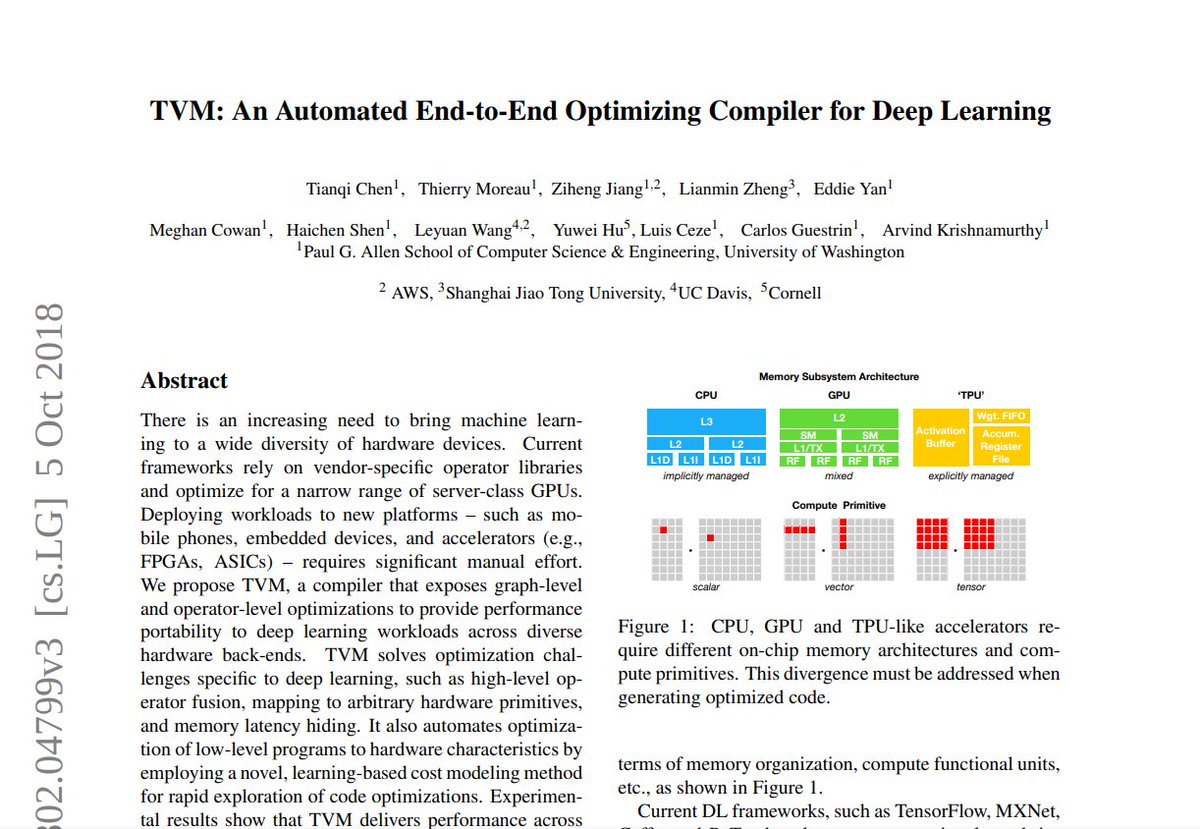
ml compiler problems are so cool!
tvm, torch.compile, mojo, mlc llm etc they all are really good at taking a computation graph, perform optimization like (fusion, reorder etc etc), put them into a really nice IR and optimize for a specific hardware.
although compilers are really amazing, they probably wont be able to find algorithms like flash attention maybe since its more of a algorithmic inovation but a future where compilers can do this would be awesome.
this is another very cool research space.
9
20
234
9,735