
Investigative journalist in Romania
Joined November 2022
- Tweets 1,579
- Following 470
- Followers 19,915
- Likes 4,235
682 Photos and videos


Pinned Tweet

Apr 29
The SAFE working group deciding the fate of €16 billion for the Romanian Army's modernization was set up illegally!
Coordination was wrenched away from the Ministry of Defense and moved to the Prime Minister's Chancellery, overriding the Defence Ministry's constitutional authority and bypassing the Supreme Council of National Defense (CSAT).
From the Presidential Palace, the economic policy advisor is part of the group, not the national security advisor, even though we're talking about a military program.
The Chief of the Defense Staff and the commanders of the Land, Air and Naval Forces are nowhere to be found, that is to say, the very people who will actually use the equipment being bought. And, to make things worse, there is no representative of the national defence industry, nor the director of ARCTIS (the state institution specifically created to defend Romania's industrial interests in arms procurement).
In other words: the people making the decisions are not the ones who use the weapons, not the ones who could produce them, and not the ones whose job it is to defend the national interest.
These practices, along with the way 70% of the funds were funnelled to Rheinmetall, mean a real risk of entering an infringement procedure (Art. 258 TFEU) launched by the European Commission for breaching the principles of transparency and equal treatment laid down in the SAFE Regulation (EU) 2025/1106 and Directive 2009/81/EC.
13
121
374
6,192
May 16
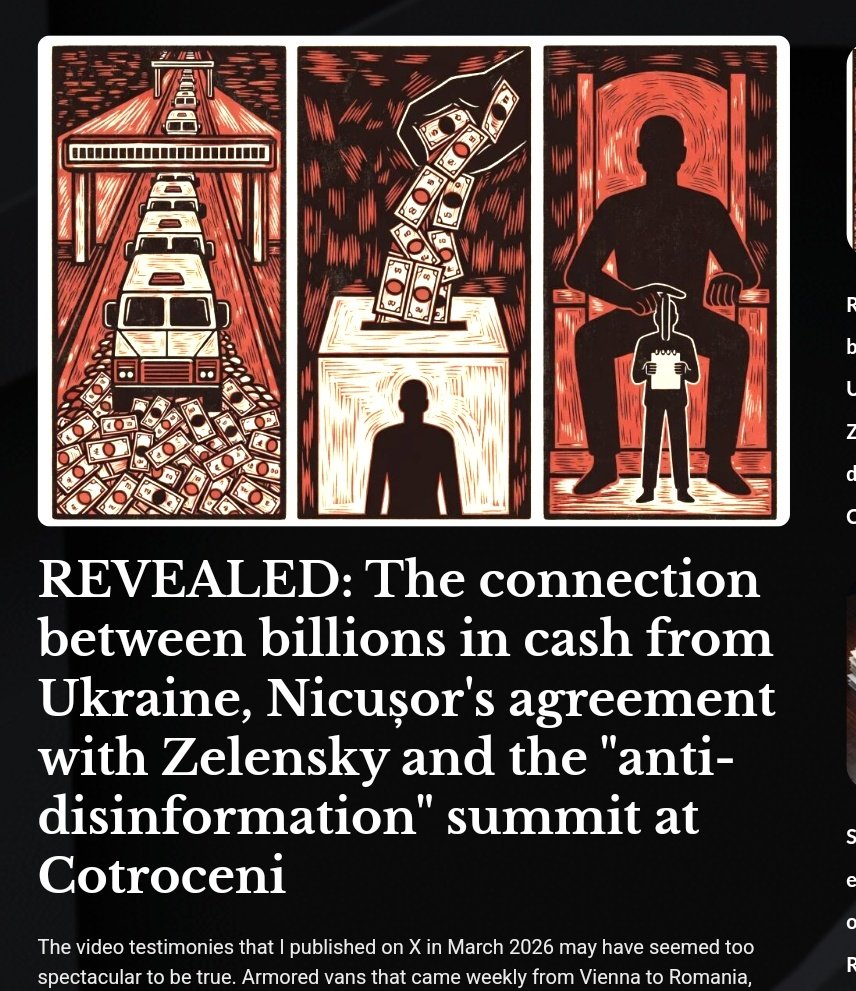
The exclusive testimony I published about cash transits to and from Ukraine was confirmed by a report from the Ministry of Finance in Romania.
Surprisingly, 500 million € remained in Romania during the presidential election campaign.
Why? What happened with the money? Why were billions of € allowed to transit Romania?
Read my investigation below⬇️⬇️⬇️
7
85
222
2,756
May 15
While I definitely support free speech, I also think science has found treatment for these talentless and politically incoherent tantrums.
So, unless this is a medically approved form of group therapy, they should definitely seek help.
May 15

🍌 Această mizerie pare desprinsă din serbarea unei grădinițe muciuseriste.🤣
10
14
64
1,294
May 12
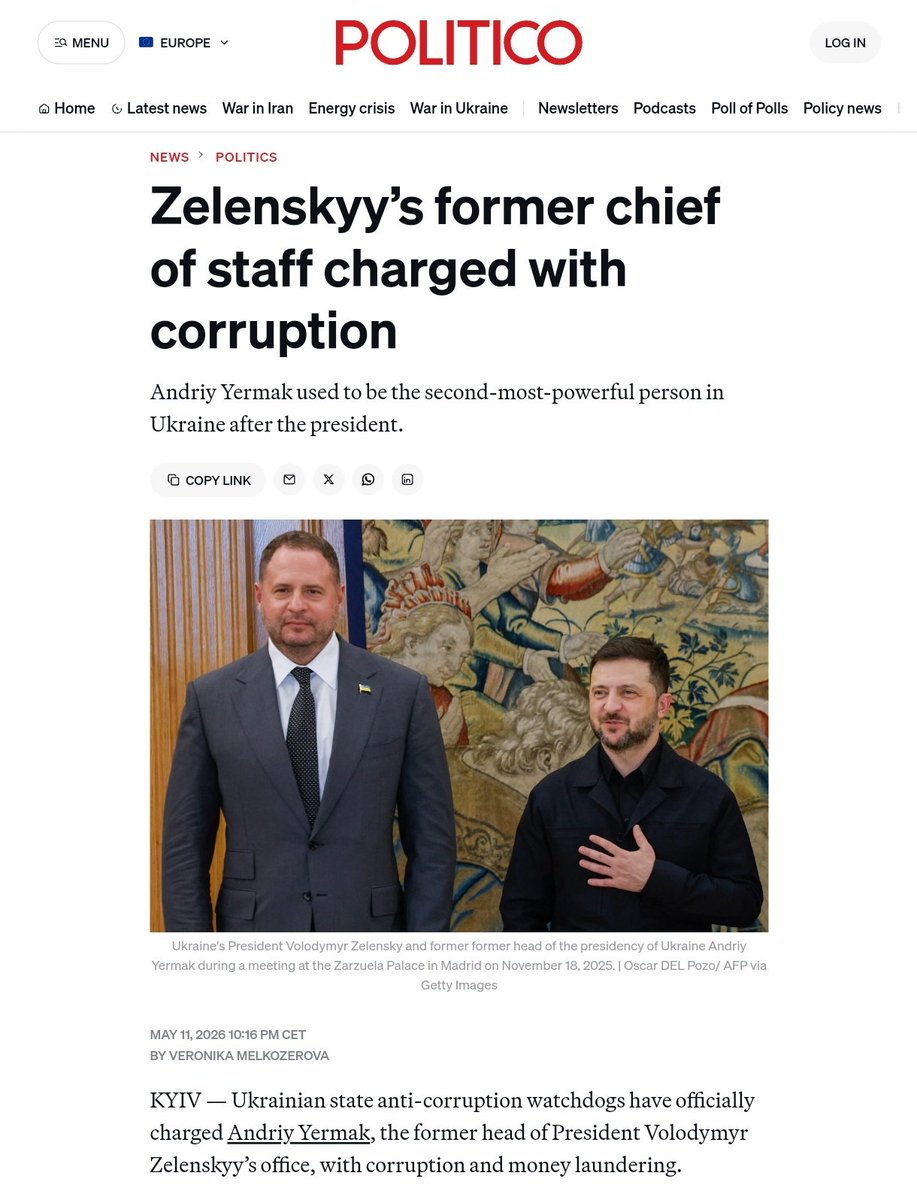
Nooooo, Yermak? Noooo! 😂

What is Andriy Yermak actually doing right now?
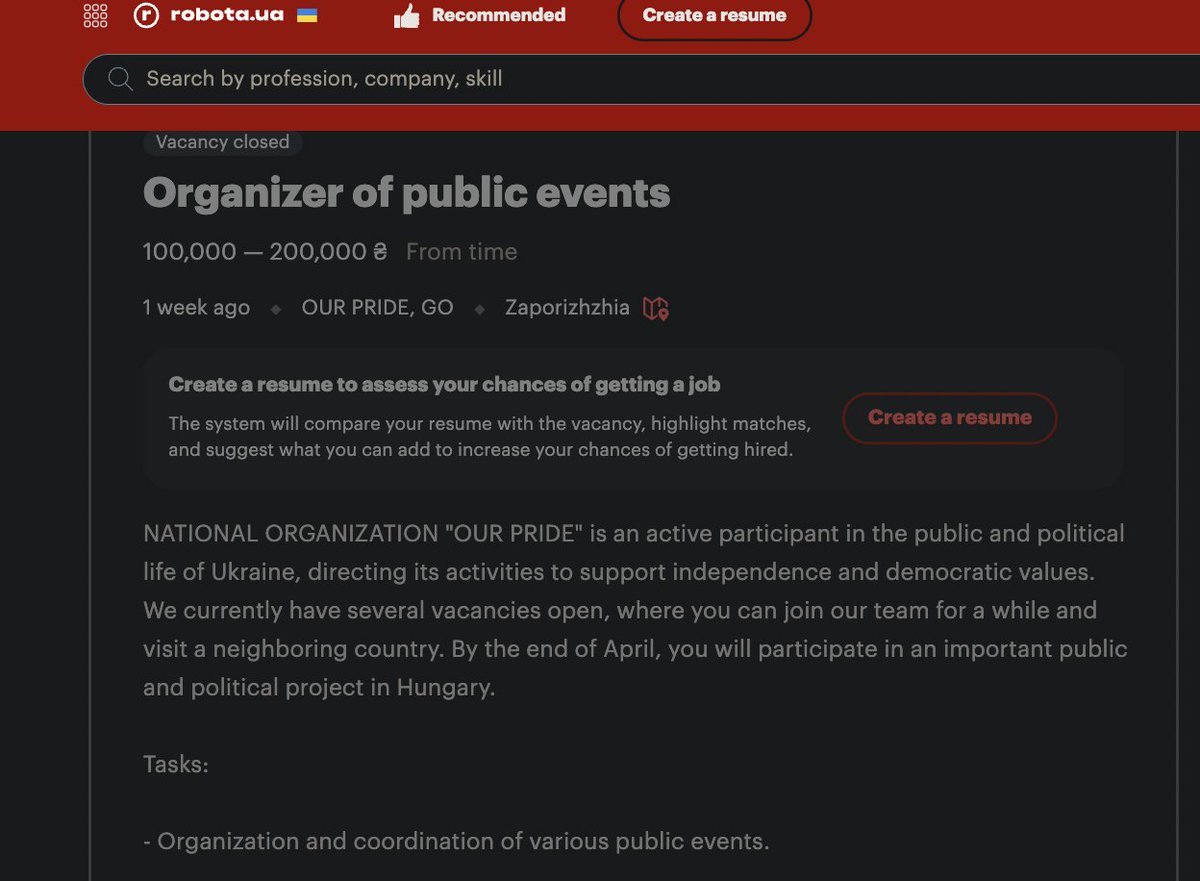
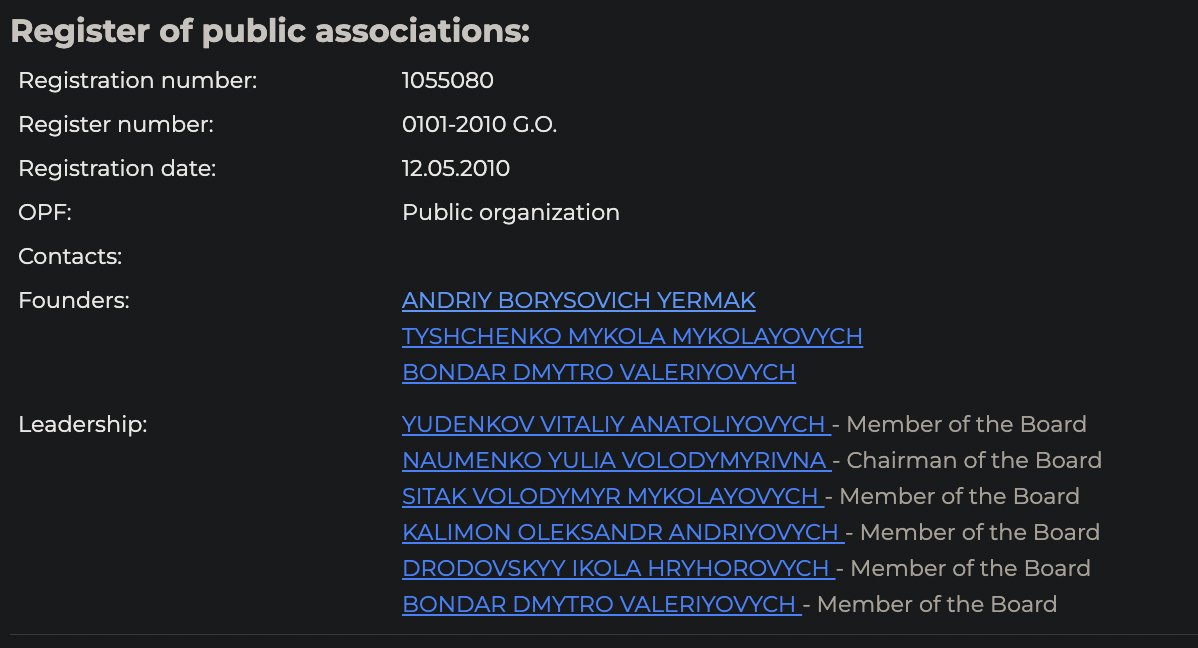
The NGO he founded and led for years, “Our Pride” (Наша Гордість), is quietly recruiting Hungarian-speaking citizens for a “public and political project” in Hungary at the end of April, right after the elections. High-risk conditions, round-the-clock work, and pay up to 200 000 UAH. Sounds like they’re gearing up for protests and “events” in Orban’s backyard. The person doing the recruiting in the ad is a lawyer from Kyiv, Yulia Naumenko. Also the current director of “Our Pride” NGO. There is no public documented activity of this NGO, so it looks like a classic shell NGO that’s being revived specifically for this one operation in Hungary.
At the exact same time, the same Yermak (ex-Head of Zelensky’s Presidential Office) just registered another NGO, “Justice for Ukraine”, to place lawyers assistants inside every Ukrainian army unit for “legal help” to soldiers and POWs. Ukrainians on social media suspect it to be a potential infiltration op.
While documenting Yermak’s past, I found deep Russia-linked family and business ties: mother from Leningrad, father with GRU connections in Afghanistan. Yermak also had past business partners close to Putin’s inner circle, plus major corruption scandals (Mindich tapes where he was codenamed “Ali Baba”).
A guy with that background running NGOs that push into the Ukrainian military and recruit for political ops in Hungary? JD Vance was right.
8
55
165
3,218
The Bucharest Tribunal just ordered four journalists, including me, to pay 600,000 EUR in damages to Vice Prime Minister Oana Gheorghiu and her NGO just two days before the vote for the motion of censure.
My right to defense was effectively annulled in this trial and the trial itself took place in a secret meeting.
A 600,000 EUR total sentence for journalistic investigations. This is not justice, it’s a dangerous precedent meant to silence the press and directly contradicts every EU directive on freedom of press.
Especially coming from a Vice PM in the Bolojan government that is falling today.
We will appeal. Romania deserves a free press, not fear.
PRESS RELEASE
Union of Professional Journalists of Romania (UZPR)
May 5, 2026
**Damages of millions of lei against journalists – a precedent that risks silencing the press**
The Union of Professional Journalists of Romania considers that the ruling issued by the Bucharest Tribunal (TMB), ordering three journalists to pay damages amounting to millions of lei, raises a major concern for the free functioning of the press in Romania.
Without commenting on the correctness of the court's ruling on the merits — a matter that falls exclusively within the jurisdiction of higher courts — UZPR emphasizes that the scale of these damages goes beyond the specific case and sends a message of generalized intimidation: this is no longer just about the liability of certain journalists, but about the risk of the entire press being silenced.
When the sanction for a journalistic endeavor reaches such proportions, we are no longer talking about accountability, but about systemic deterrence, in which fear becomes a professional norm. Not only those sanctioned are affected, but all journalists who, seeing these consequences, will avoid sensitive subjects, investigations, or legitimate criticism. This is the classic mechanism by which freedom of expression is indirectly curtailed: not through prohibition, but through fear.
UZPR warns that sanctions of this type risk producing exactly the effect that European legislation seeks to combat — a profound "chilling effect," in which the press is no longer free, but cautious to the point of self-censorship.
This context is all the more serious as it comes just before May 7, 2026, the deadline for transposing Directive (EU) 2024/1069, whose purpose is to protect journalists against abusive legal actions designed to intimidate or silence them:
*"Although the anti-SLAPP Directive has not yet been effectively transposed into domestic law, courts are already obliged to interpret national rules in accordance with its objective, so as to prevent the use of litigation as a tool of intimidation. In this context, instruments such as abuse of rights, procedural good faith, and the sanctioning of manifestly unfounded claims can and must be used to ensure genuine protection of freedom of expression and participation in public debate."*
Rather than this moment marking the consolidation of freedom of expression protections, we are witnessing judicial decisions that, through the magnitude of their sanctions, may produce an effect contrary to the spirit of the European directive.
The Union of Professional Journalists of Romania calls on the authorities to:
- Pay greater attention to the principle of proportionality in cases involving journalistic activity
- Accelerate the implementation of the mechanisms provided by the anti-SLAPP Directive
- Ensure a genuine framework of protection for the exercise of press freedom
Freedom of the press is not lost only through direct censorship. It is also lost when the cost of that freedom becomes so great that no one can afford it anymore.
Union of Professional Journalists of Romania
Bucharest, May 5, 2026
76
292
909
21,813
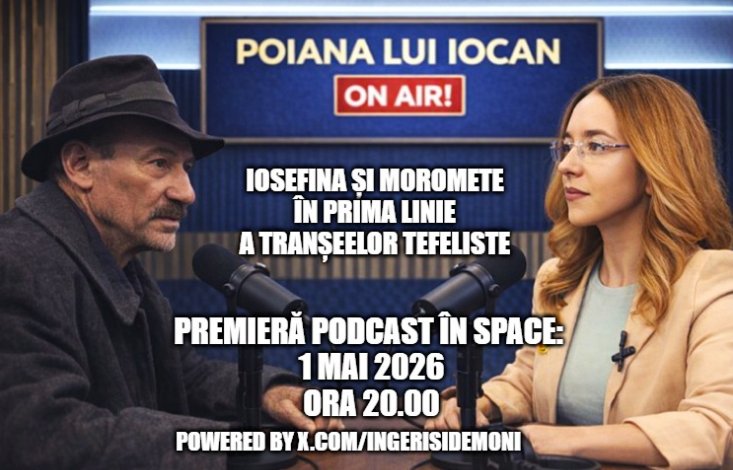
Diseară vorbim despre chinurile facerii propagandei hashtagiste in Romania.
Și despre toți "eroii" ăștia apăruți ca ciupercile după ploaie. 👀
Vă mulțumesc pentru invitație!
May 1

🧵Deși poate că mulți ați descoperit'o în ultimi ani, eu cu @iosefinapascal mă știu de multă vreme, de pe vremea când căpăceam tefelistii la începuturile apariției lor prin online. Am luptat împreună în prima linie a tranșeelor propagandei ce azi ne'a adus unde suntem...
17
34
172
3,161
Apr 30
HOLY HYPOCRISY
Peter Magyar accused Orban of appointing friends and relatives in govt positions during the elections, now he's appointing his brother-in-law as Minister of Justice.
That's some Cosa Nostra type thing.
13
70
363
6,746
Iosefina Pascal retweeted

Apr 30
Afacerea Skoda, cel mai mare scandal de corupție din perioada interbelică – pentru că trăim blestemul istoriei care se repetă
@iosefinapascal - tunul Safe nu e chiar ceva nou, dar asa se intampla cand ne uitam istoria ...😉🤟
ingerisidemoni.ro/afacerea-s…
2
7
40
1,130
Apr 29
OOOhhhh, so the guy isn't just a traitor, but also an imposter.
x.com/iosefinapascal/status/…
Apr 29

Nu mai face parte din AUR de anul trecut. Vorbește în numele lui, probabil intenționat înainte de moțiune
10
26
168
5,257
Apr 29
Romania is about to sign off on the biggest army modernization since 1989: €16.68 billion from the EU's SAFE program.
Nearly 70% of the first batch (€5.7 billion) goes straight to Rheinmetall, way above what other EU countries allow for a single supplier, by bypassing transparency laws on public procurement.
That literally means heavy dependence on one foreign company for parts, maintenance, and upgrades for decades, while Romanian factories get crumbs and national security safeguards get ignored.
Instead of letting the Defense Ministry and top generals lead (you know, the experts who'll actually use the gear for decades), Bolojan 's office took control.
Read the full document below:
15
84
313
7,088
Apr 29
⬇️
SAFE Document analysis: How 16 billion euros are divided in secret in Romania
heliosapp.is/document-safe-c…
4
55
104
2,063
Apr 27
Just ONE day before AUR party announced it will vote the PSD party's motion to dismiss Romania's PM Bolojan The Terrible, an AUR member started supporting the PM and supporting the idea of a Federal European Union.
Essentially sabotaging his own party's position.
This just shows how desperate the deep state actually is.
Now we'll see who really wants what's best for Romania and who wants Romania to go full speed into a brick wall with Bolojan behind the wheel.
Someone get this Marius Lulea guy a one-way ticket to Brussels.
36
51
242
6,806
Iosefina Pascal retweeted
Apr 27
Foreign interference, approved by Brussels!
4
16
253
1,853
Apr 24
SHEEP BANNED from Romanian mountains by INSANE climate woke madness!
The Minister is pushing the EU Biodiversity Strategy rules: 50m "no sheep" forest buffers, zero-human-activity zones, overgrazing fines AND loss of subsidies if you quit.
Full article 👇🏼👇🏼👇🏼
27
119
443
9,856
Apr 23
Romania is living through yet another classic governmental crisis.
If PM Bolojan tries to bypass the Parliament to keep his Government in power and President Nicusor Dan covers for him, we'll enter a dangerous legal gray zone.
Will the Constitutional Court respect its past decisions, or will it set another dangerous precedent after canceling elections?
Read below⬇️⬇️⬇️⬇️
12
44
191
3,800
Apr 23
1
7
28
914
Apr 22
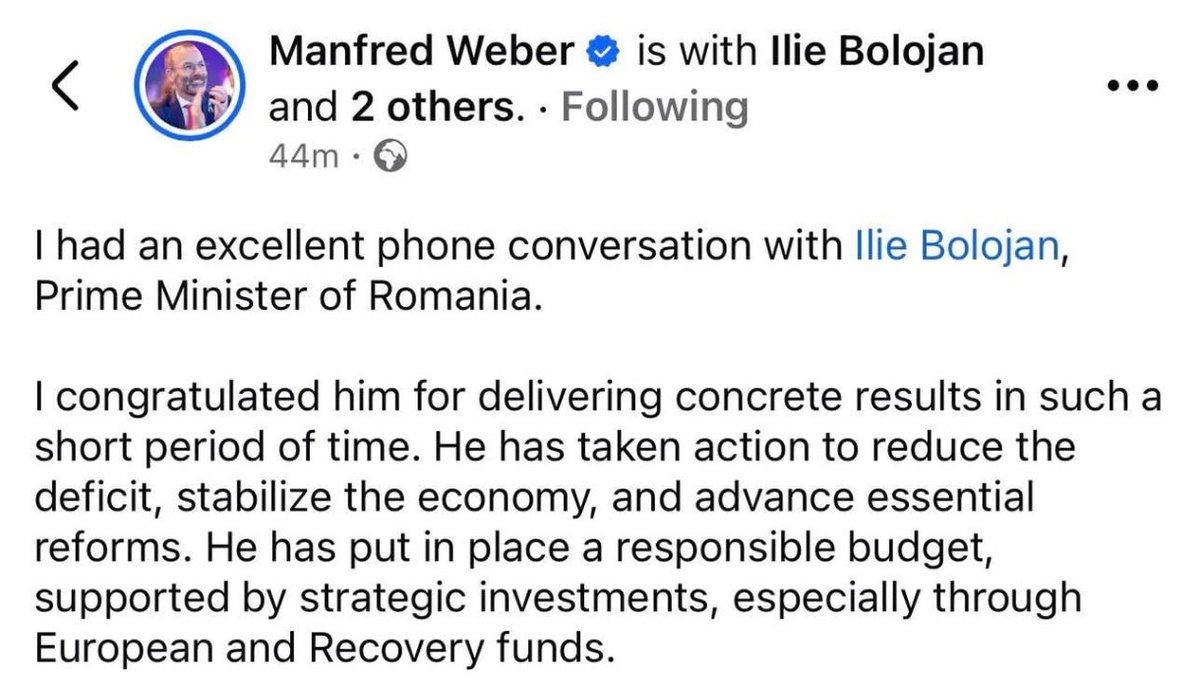
If Manfred Weber and Ursula 's EPP are blackmailing Romania by threatening to stop European funds over the dismissal of PM Bolojan, we could also block the 90 billion euros "aid" for Ukraine.
We don't have the money, simple as. Bye!
No country would accept such interference and blackmail, especially coming from the so-called "European family."
Dismiss government and let's do it. The "extremist" way.
29
114
364
7,101