
Founder / CTO at @base14io previously CTO @ Setu & Engineering @ Gojek, Bluejeans and ThoughtWorks. talk to me about sci-fi, physics, astronomy & code
Joined June 2008
- Tweets 2,809
- Following 1,212
- Followers 1,398
- Likes 9,098
24 Photos and videos













This is amazing, Former President himself said that @nadiemmakarim is a good person, and all policies and program were indeed implemented as per President's office.
youtube.com/shorts/2tK9Vaceo…
Use translation, if you can't understand Bahasa Indonesia.
#FaktaNadiem
Thank you so much Mr. President en.wikipedia.org/wiki/Joko_W…
1
16
15
3,817
irfn retweeted

May 31
Unless you're a student, parent, or active on Twitter, you're unlikely to know anything about the CBSE fiasco. The media has done a remarkable job 👏
125
2,866
17,123
223,751
irfn retweeted

May 25
POV: You’re charging your new Ferrari Luce

273
2,372
29,131
763,295
irfn retweeted

May 6
@zerodha @Nithin0dha @CoinByZerodha continue to get canned responses from your support team inspite of multiple follow ups for ticket 20260505682077. please help!!
1
1
1
259
irfn retweeted

Apr 22
To save 1 litre of imported crude, India is spending 2,860 litres of groundwater.
That's the single statistic missing from the entire E85 debate.
E20 is done. The government's draft notification for E85 (85% ethanol, 15% petrol) is ready. Most reactions are either "great, energy independence" or "my mileage dropped." Both are shallow.
Here is the actual trade India is making.
The economic logic is real:
India imports 85% of its crude. The FY25 import bill was ~$137 billion. Ethanol blending has already saved ₹1.08 lakh crore in forex and put ~₹92,000 crore in farmers' hands since inception. Every 1% of blending = ~$1 billion in annual savings.
But ethanol is not a free lunch:
🔹 Ethanol has 33% less energy per litre than petrol.
🔹 US DoE data: FFVs on E85 get 15 to 27% fewer miles per gallon than on petrol.
🔹 The offset is octane. E85 rates ~105 vs petrol's 91. In purpose-built engines (turbo, high-compression, direct injection), higher octane recovers most of the energy loss.
The catch. India's fleet is 90% E10-ready at best. You cannot pour E85 into a Swift. Flex-fuel vehicles need stainless fuel lines, upgraded pumps, 30% larger injectors, ethanol content sensors, and recalibrated engine maps.
The hidden cost nobody is pricing:
🔸 E20 at today's consumption needs ~1,016 crore litres of ethanol annually.
🔸 At 2,860 litres of water per litre of ethanol, that is ~2.9 trillion litres of water per year. The annual water footprint of 200 million Indians.
🔸 E85 scales this 4x .
🔸 60% of India's ethanol now comes from maize and broken rice. India, a net corn exporter, imported 1 million tonnes of corn in 2024 because of ethanol diversion.
🔸 Retail sugar moved from ₹40 to ₹45/kg in two years partly due to cane diversion.
The reframe most people miss:
The ethanol programme is not an energy policy. It is an agricultural subsidy dressed as an energy policy. The forex savings are real. The farmer income transfer is real. Both are the actual goals. The mileage drop is a tolerated cost. The water and food inflation risk is the hidden tax.
E85 will happen anyway. The listed winners sit in three buckets:
🔸 Sugar and distillery players with integrated ethanol capacity
🔸 Auto ancillaries making ethanol-compatible injectors, pumps, fuel lines, sensors
🔸 OEMs going flex-fuel first (Toyota, Maruti and Hyundai are already prototyping)
Energy independence is not free. India is trading barrels of oil for billions of litres of water and millions of tonnes of grain. Whether it's worth it depends on which constraint matters more in 2040 — your oil bill, or your aquifer.
182
1,533
4,129
228,434
irfn retweeted

Apr 6
The Forest Advisory Committee has approved a plan to fell approximately 123,000 trees.
The clearing of this massive tract of contiguous jungle in Maharashtra’s Gadchiroli is to be offset by planting replacement forest 1,000 kilometres away, in 23 fragmented patches, on land the government’s own data shows is already largely forested.
hindustantimes.com/india-new…
32
298
397
28,863

🚨 CRITICAL: Active supply chain attack on axios -- one of npm's most depended-on packages.
The latest axios@1.14.1 now pulls in plain-crypto-js@4.2.1, a package that did not exist before today. This is a live compromise.
This is textbook supply chain installer malware. axios has 100M weekly downloads. Every npm install pulling the latest version is potentially compromised right now.
Socket AI analysis confirms this is malware. plain-crypto-js is an obfuscated dropper/loader that:
• Deobfuscates embedded payloads and operational strings at runtime
• Dynamically loads fs, os, and execSync to evade static analysis
• Executes decoded shell commands
• Stages and copies payload files into OS temp and Windows ProgramData directories
• Deletes and renames artifacts post-execution to destroy forensic evidence
If you use axios, pin your version immediately and audit your lockfiles. Do not upgrade.
541
4,023
16,158
12,406,146
irfn retweeted

Mar 30
Our GitHub repo is currently returning a 404 for some users. We're aware and actively investigating. The repo is public and all code is safe.
Will update here as soon as it's resolved. Thanks for your patience.
33
6
32
8,962
irfn retweeted

Mar 27
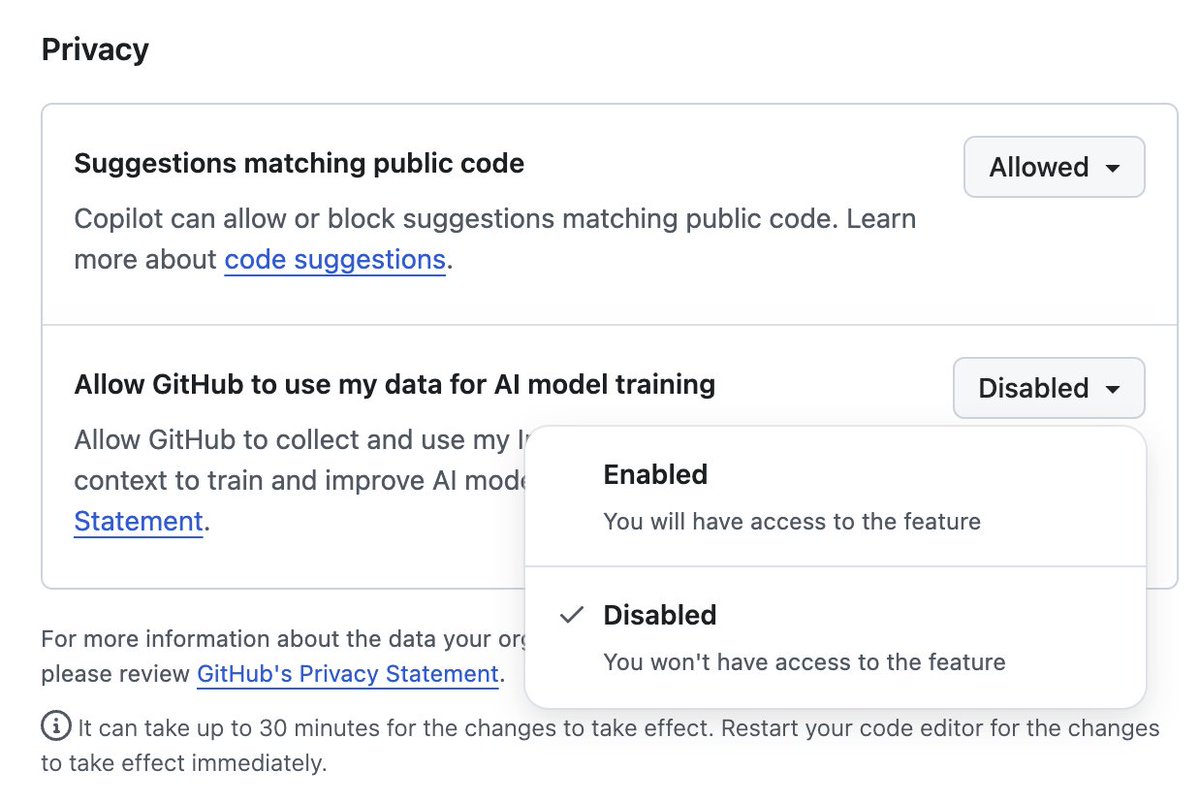
If you use GitHub (especially if you pay for it!!) consider doing this *immediately*
Settings -> Privacy -> Disallow GitHub to train their models on your code.
GitHub opted *everyone* into training. No matter if you pay for the service (like I do). WTH
github.com/settings/copilot/…
391
904
5,117
586,566
irfn retweeted

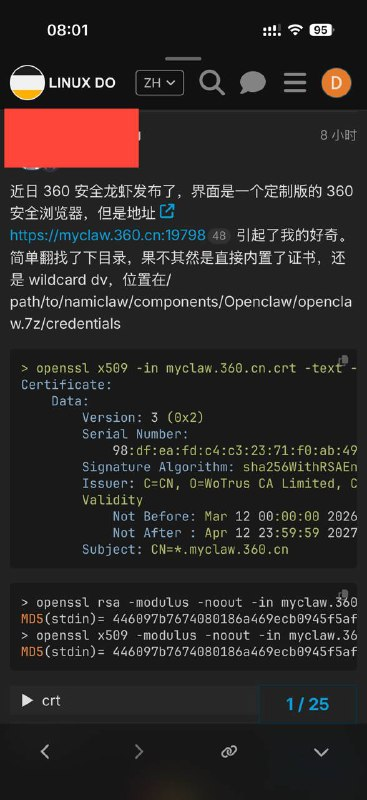
‼️ China's biggest cybersecurity company, Qihoo 360 (461M users), just leaked their own wildcard SSL private key inside the public installer for their new AI assistant "360 Security Claw."
The private key for *.myclaw.360.cn was bundled directly in the download package under /namiclaw/components/OpenClaw/openclaw.7z/credentials. The cert is valid until April 2027.
Attackers can now impersonate their servers, intercept user traffic, and forge login pages.
Fun fact: the founder promised the product would "never leak passwords."
89
408
2,704
286,425
irfn retweeted

Mar 11
having trouble logging into Claude Code ? Fire up Agentswap and switch to codex or gemini
brew install base-14/tap/agentswap
github.com/nimishgj/agentswa…
2
14
779
irfn retweeted
Mar 10
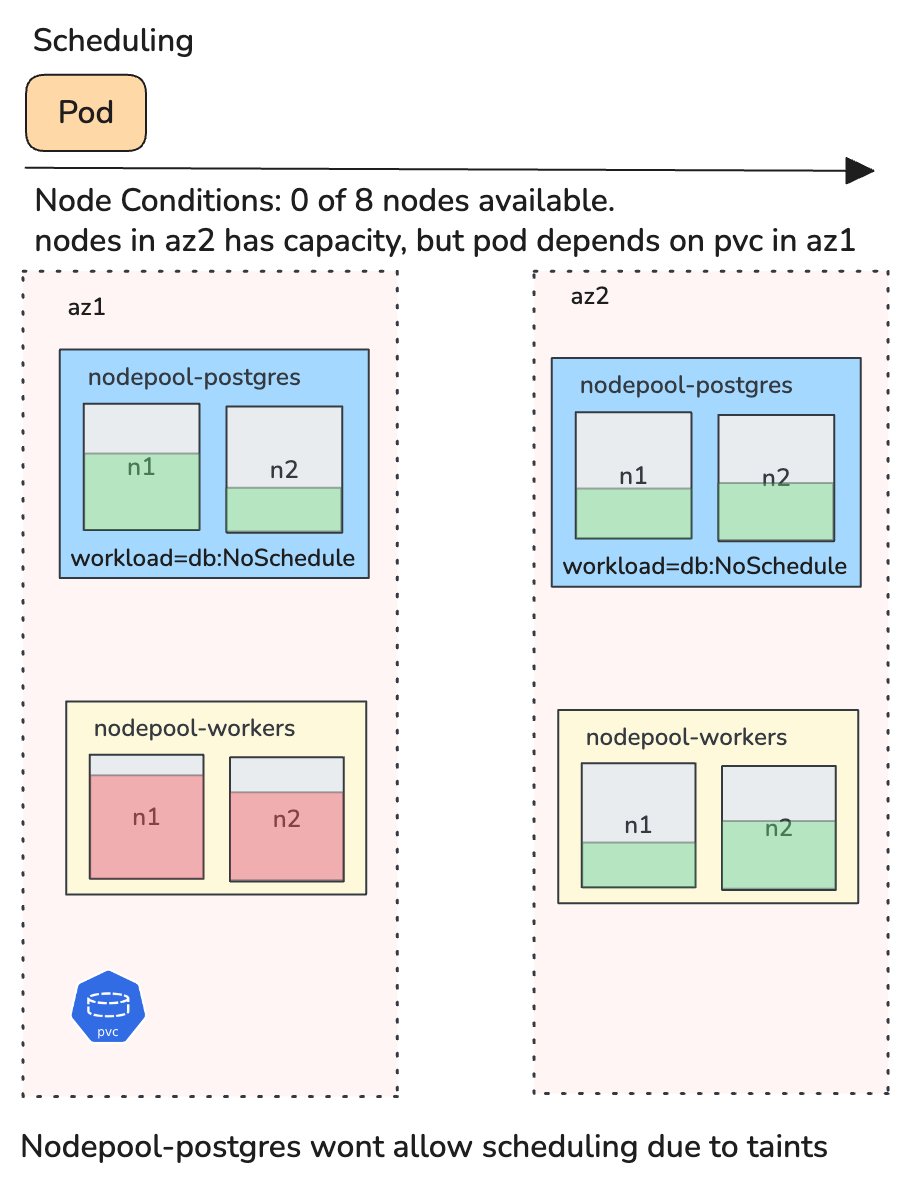
read from the master - @irfn 's memo on detecting and fixing silent k8s scheduling failures
docs.base14.io/blog/kubernet…
1
6
352
irfn retweeted
Mar 8
the most common starting message in the morning these days at work - "looks like payment failed for X".
broad-swept rules created by our regulator have made running the show so difficult for small businesses, and the banks have no bean in them to fight dumb archaic rules and solve for us.
yes we have the money, yes the cards have not expired, yes we follow all the guidelines, yes the payment worked yesterday, last month.
and no, we don't want to setup an overseas account, we want to build, pay and accept in India without friction. one would assume this is the 1st thing that's sorted. jeezaloo.
3
3
5
1,206
irfn retweeted
Mar 6
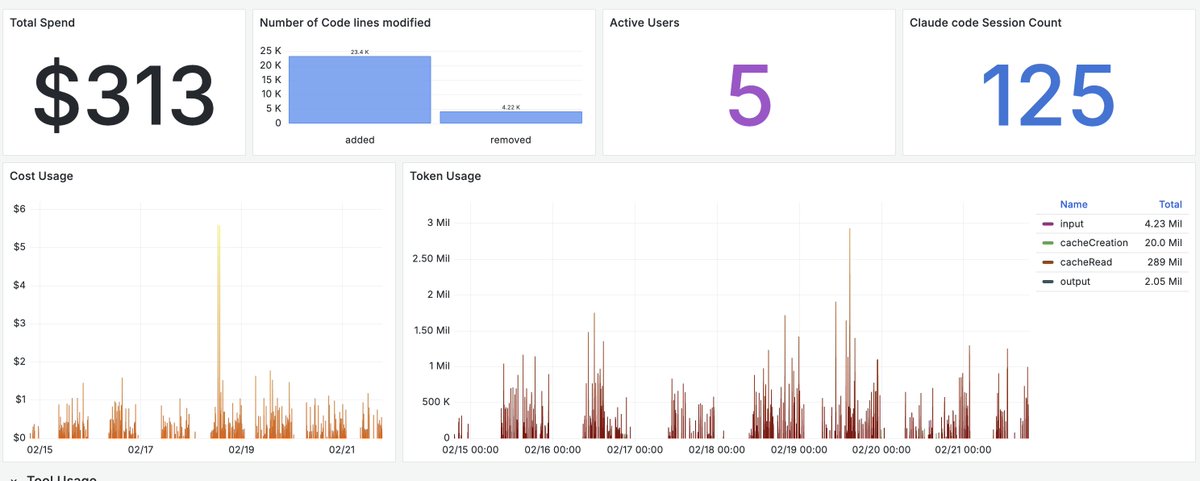
more on the coding agent observability front - instrument coding agents and learn how your team uses claude/codex/gemini to build systems.
docs.base14.io/blog/coding-a…
2
2
12
993
irfn retweeted
Mar 4
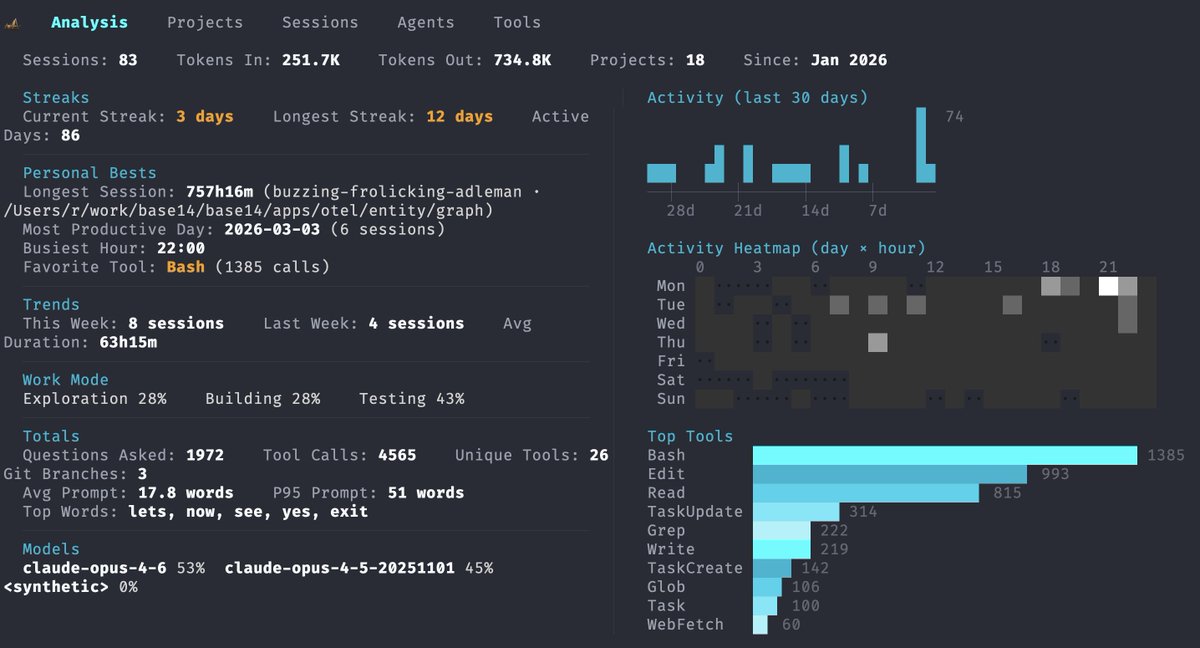
I wanted a way to see what my Claude Code sessions actually look like over time, and how to build TUIs.
so I built cicada.
It's a TUI that reads your local session data and gives you basic analysis, token usage, project analytics, tool breakdowns, streaks, and full chat replay right in the terminal.
brew install base-14/tap/cicada
github.com/base-14/cicada
4
4
88
28,521
irfn retweeted

Mar 2
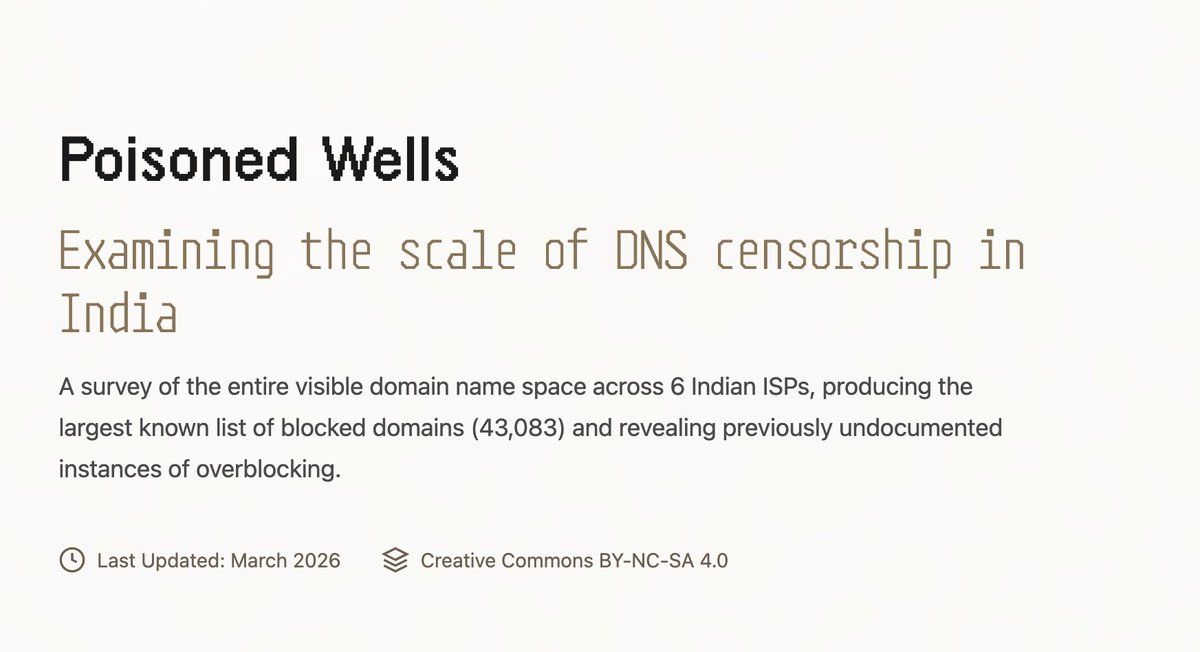
Excited to share “Poisoned Wells,” which presents the largest point-in-time study of website blocking in India to date. I tested the blocking of 294 million apex domains across six Indian ISPs, sending 1.76 billion DNS queries in total.
56
534
2,246
162,595
irfn retweeted
Feb 17
Designing the next generation of observability tools. There are 5 medium term predictions we will be testing -
- slow death of interfaces - Slowly but surely, proprietary interfaces are vanishing. Your AI chat is the interface for everything. Let's call your chat interface Bob, your 24x7 helper. Want to book a meal, ask Bob. For engineers, IDEs like Intellij Idea - one of the best - are slowly giving way to a CLI interface with Bob Code. Fix downtime? Ask Bob. Over time, complex workflows will get delegated. Very few dashboards (if at all) will reach your eyes.
- consolidation of tools - While Bob provides a single interface over 100s of services, the cost of doing so increases as the number grows. Anyone with 2 or more observability tools will soon feel the pinch when the agents start consuming 3-4 times more tokens to make sense of things. More importantly, the more databases your agents need to look at, the slower their response will be. Moving to a single unified telemetry platform will be a competitive advantage.
- Cambrian explosion of smaller custom systems - The amount of custom software put to production is increasing dramatically. Agents are good at building and managing smaller systems. Custom Software will grow 2-5x YoY for the next 5 years. Barrier to entry is very low. As the cost of building custom systems comes down, the cost of operating custom systems will be the next challenge. Observability plays a pivotal role here, and the cost of observability has to come down for all this to make sense.
- focused low-cost agents - For a personal assistant, typically the models would be need to be generally more capable. But smaller systems with singular tasks do not need heavy models. Costly Bob type Agents are already good at managing other cheaper agents with singular tasks. Such agents will need more scaffolding and guardrails. Evals will be decisive, and any observability platform must provide the ability to inform agents and engineers about divergences.
- agents treat observability data providers as infrastructure - observability data provides a vital feedback loop. As monitoring moves to agents, the long cycle from that data to SDLC that takes months - add to a backlog, prioritise, build, test, deploy - should be done in minutes with seemingly infinite capacity at hand. As the cycle shortens, agents will need observability system of record as much as they need models and hardware.
5
2
8
693


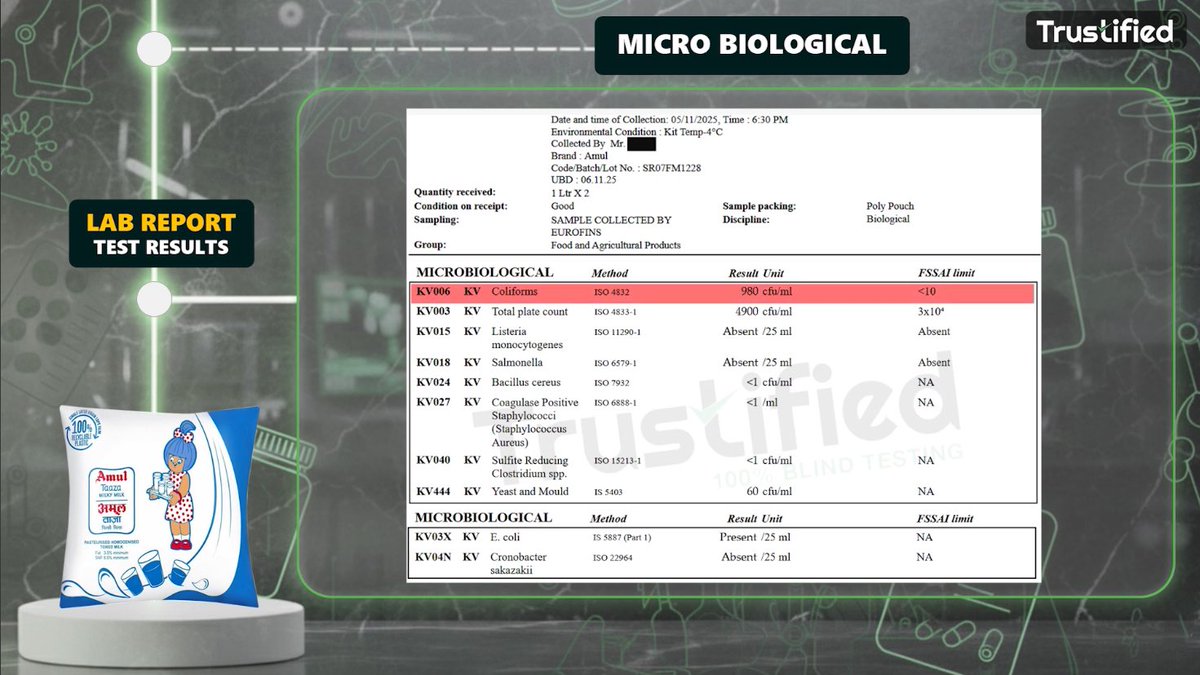
Now Amul Milk contains 98X more Coliform than the FSSAI limit.
India is basically a durability test of humans 🙏

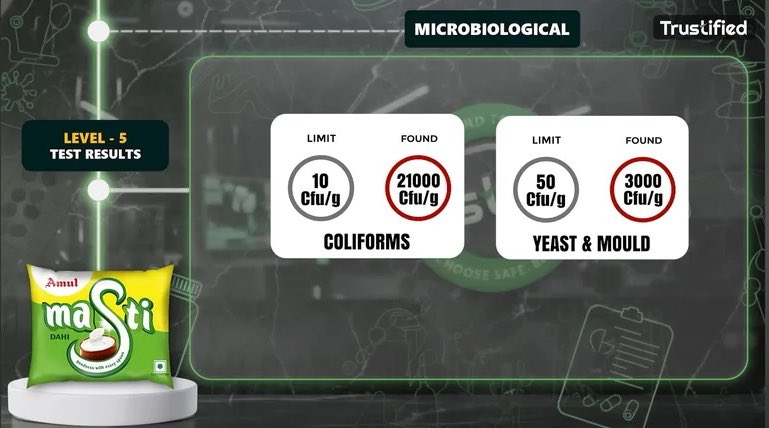
Amul Dahi contains 2100x more Coliform and 60x more Yeast & Mould than the FSSAI limit.
Did not expect this from a brand like @Amul_Coop.
Is anything edible in this country even safe anymore?
589
3,231
12,992
1,656,121