
I help non-technical people make more money with AI. AI connoisseur, robotics maxi, eu/acc supporter, dad, techno-optimist
Joined November 2022
- Tweets 26,153
- Following 2,823
- Followers 152,617
- Likes 68,958
2,766 Photos and videos










the bottleneck with my agents right now is me.
they run all day and do way more than i can realistically keep up with.
so when one goes off the rails or starts messing shit up, it usually slips right past me. there's just too much happening to catch it in time.
you probably know the struggle.
adaline does that watching for me.
it goes through everything the agent did, spots where it's drifting or breaking, and works out how to fix it. then hands me the change to approve before anything goes live.
basically a self-improving review layer
and it's the first time in a while i'm not anxious about what my agent broke under the hood haha

Introducing Adaline 2.0 - The Agent Self-Improvement Layer
Adaline turns Traces into Behaviors,
Behaviors surface Issues,
Issues become auto-generated Evals Data,
Adaline then generates new agent candidates and tests them.
You review the winners and ship!
6
1
16
5,025
Ole Lehmann retweeted

Jun 12
AI can now oneshot multiplayer games? are you kidding me lol
we went from text to images to video to now playable multiplayer games in like 3.5 years.
i've always been bullish on AI but i think even most AI optimists did not predict this speed of progress we're seeing
genuinely stoked to see (and play) the games people build with this.
Jun 11

Meet Higgsfield Games.
For the first time, build and deploy multiplayer games from one prompt, in any genre, 2D or 3D, with best-in-class characters, props, and settings generated by Higgsfield MCP.
Powered by Claude Fable 5.
Try on Claude via MCP and on our Supercomputer.
5
7
25
12,116
US government locking you out of Anthropic’s models is your wake up call to become a local model giga chad
Greg has a great post how to get started:

The takeaway from Fable 5 being BANNED by the government: GET GOOD AT LOCAL MODELS SO YOU HAVE 100% CONTROL.
My entire weekend was going to be building my craziest ideas with Fable 5. That's now cancelled.
So instead of building with Fable this weekend, I've decided I'll go deep on local models:
1. Start with the runtime. Download Ollama or LM Studio first. This is the thing that actually runs models on your machine.
2. Match the model to your hardware. A model's size is measured in billions of parameters (7B, 32B, 70B). Bigger is smarter but needs more memory. Rule of thumb: a 7B model runs on almost any laptop, a 32B needs a good Mac with 32GB RAM, a 70B needs serious hardware like a DGX Spark or a maxed-out Mac Studio.
3. Know which model for which job. Qwen 3 is the best all-around choice for most tasks. DeepSeek for reasoning and coding. Gemma 4 when you need something tiny that runs on a phone. Llama when you want the biggest community and the most fine-tunes.
4. Quantization. You can shrink a model to run on weaker hardware with barely any quality loss. Look for versions labeled Q4 or Q5. This is how a model that "needs" a server runs on your laptop. Learning this one concept changes everything.
5. Connect it to your agent. Point Hermes or your agent stack at a local model.
6. Context window is your real constraint locally. Cloud models give you huge context for free. Local models make you pay for it in memory. A bigger context window eats RAM fast. Keep your sessions tight and your prompts lean or your machine chokes.
7. Learn to give local models tools. A smaller local model with web search, file access, and code execution beats a giant model with none. The capability gap closes fast when you wire up the right tools. The model is the engine but the tools are the wheels.
8. Fine-tuning is more accessible than you think. You don't need this on day one, but know it exists. You can take an open model and train it on your own data so it gets good at your specific domain.
I'll probably do a breakdown at some point on this @startupideaspod if people are into it.
The lesson from this ban is basically don't build your entire workflow on something that can disappear with a single letter. Own part of your stack. Local models are insurance.
It reminds me when people realized they don't own social media accounts. And then you saw people build email lists etc.
I remember running a startup and my biggest traffic source was organic FB. All of a sudden, algo changed, and I lost 99% of my traffic.
Same sorta moment (but bigger) for AI.
This is a wake up call.
10
3
34
7,586
this is the ultimate wakeup call for europe
if it isn't, well....
Jun 13

The US government, citing national security authorities, has issued an export control directive to suspend all access to Fable 5 and Mythos 5 by any foreign national, whether inside or outside the United States, including foreign national Anthropic employees.
The net effect of this order is that we must abruptly disable Fable 5 and Mythos 5 for all our customers to ensure compliance.
Access to all other Claude models is not affected.
We apologize for this disruption to our customers. We believe this is a misunderstanding and are working to restore access as soon as possible.
Read our full statement: anthropic.com/news/fable-myt…
22
5
80
6,182
Jun 12
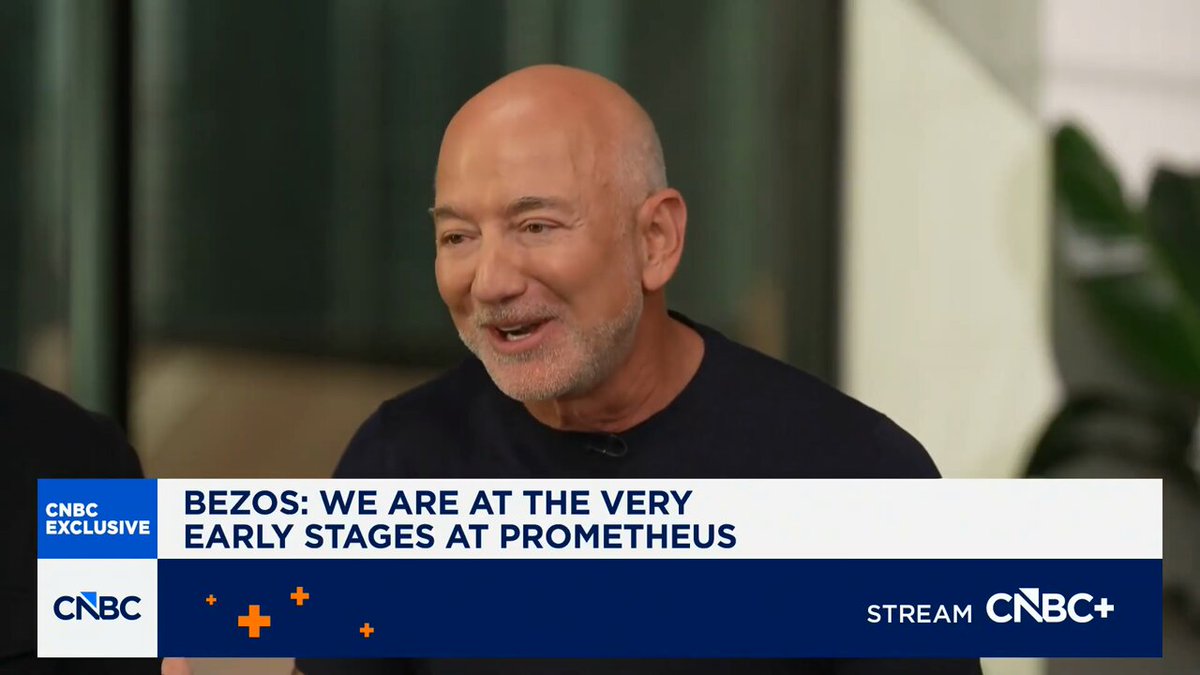
Jeff Bezos just bet $12 billion that you'll be able to support your whole family on a single paycheck again.
his reasoning: AI will let companies make more stuff with fewer people and less money.
and when something gets cheaper and easier to produce, and lots of companies can do it, they compete and the price drops.
it's why a flatscreen TV that cost $2,000 a decade ago is $300 today.
bezos thinks AI will do that to almost everything you buy.
in his words, it raises "the basket of goods people can afford."
your paycheck buys more without anyone handing you a raise.
the problem: look at which prices have actually dropped.
so far, AI has only made *digital* things cheap, like code and content.
but the stuff that really eats your paycheck is *physical*.
rent, cars, medicine. cheaper code doesn't lower your rent.
that's exactly what bezos just spent $12B on.
Prometheus, his new company, is building AI tools that help engineers design and manufacture physical products faster
things like cars, machines, and medicine.
the goal is to make building physical things as fast and cheap as writing software.
if it works, 1 income starts covering what used to take 2.
which is when his prediction kicks in:
"perhaps one of those earners will choose not to be in the job market, so they'll become a one-earner household." or "some people who are working overtime will stop working overtime, because they don't want to."
one paycheck covering a whole family again, like the 1950s.
981
259
2,266
1,258,204
Jun 12
If you want highly practical AI workflows that help you get more customers and more views...
I send them to 38k readers every single week.
Join here for free: aisolo.beehiiv.com/subscribe
1
5
12,363
Jun 12
good news: AI design-slop is now easy to avoid (if you know what you're doing).
you just need to do these 3 things:
1. always give your AI a positive reference
AI reaches for the "slop look" when you leave taste up to it. so you need to point it somewhere instead.
find a site whose design you love, then get it into your agent one of three ways:
> Lafys is a free library of proven website prompts tagged by style and tech stack. grab one that's close to what you want and start from that instead of a blank box
> Google Stitch points at any URL and pulls the design system out into a design md. colors, type scale, spacing, layout rules, all written as plain markdown. drop that file in your project and the model builds to that spec instead of guessing one
> Figma's Chrome extension copies any live site into fully editable Figma layers. every bit of text, color, spacing, and component comes in as a real layer you can edit. clean it up, then connect the Figma MCP to your agent so it reads the actual design and builds straight from it
2. give it a negative reference too
screenshot the quoted tweet and tell your agent to avoid every single thing in it.
the gradient, blown-out letter spacing, glassmorphism, "live" badge, etc
you're handing it the slop as an anti-target
3. always run design work on extra-high or max thinking in Codex/Claude
design is one of those tasks where the extra reasoning shows up directly in what comes back.
leave it on default and you get the slop version every time





8
14
239
57,576
Jun 12
If you want highly practical AI workflows that help you get more customers and more views...
I send them to 38k readers every single week. Join here for free: aisolo.beehiiv.com/subscribe
4
2,404
Jun 12
If you want highly practical AI workflows that help you get more customers and more views...
I send them to 38k readers every single week. Join here for free: aisolo.beehiiv.com/subscribe
3
2,076
Jun 11
what is the best way to collaborate on building/designing a landing page together with someone using claude code?
so that both people can work on the page from their claude code
14
18
7,094
Jun 11
hilarious how every crypto bro did, in fact, pivot to AI
crypto twitter is basically just AI twitter now.
which is honestly the most bullish thing i can think of for crypto
because every great project i can think of got started in a bear market when nobody cared.
> Uniswap shipped in late 2018 when the whole space was a graveyard
> Hyperliquid got going right in the middle of the FTX collapse
> Ethereum itself got built through the long winter after the 2013 top
and you see the exact same thing way outside crypto.
Airbnb started in the 2008 crash. Uber right after it.
the reason why this happens is pretty simple.
you're building right after the price already flushed out everyone who was only there to flip, so most of the downside already happened and basically all the upside is still ahead of you.
that's as asymmetric as it gets.
the tourists are gone and the dumb money left, but the people who actually care are still here heads down building.
and if you're in europe, this is why something like the Solana Summit is worth showing up to right now.
Saturday June 13th in Berlin
it's a room full of the people who didn't leave.
the ones who stick around through the bear winters are usually the ones building the thing everyone's obsessed with two years later.
11
8
80
5,703
Jun 11
If you want highly practical AI workflows that help you get more customers and more views...
I send them to 38k readers every single week. Join here for free: aisolo.beehiiv.com/subscribe
4
1,259
Jun 11
this could be the breakthrough to making robots 10x more affordable
MIT just made an artificial muscle that moves exactly like the real ones in your arm.
a soft fiber sits in a charged liquid, a tiny pump runs a charge through it, the charged particles shift, and the fiber squeezes and relaxes.
it's the same motion as you flexing your arm, except there's no motor, no gears, and no noise.
now, the reason this could be huge for robotic economics:
today every joint on a robot moves with its own electric motor and gearbox.
a humanoid can have 30 or 40 of them, and they're expensive, heavy, and loud.
those motors are one of the biggest reasons a robot costs what it does.
and they scale horribly.
if you want a joint to push harder, you have to swap in a bigger, more expensive motor, so the price jumps every time you want more strength.
the artificial muscle works the opposite way:
to make it stronger you just bundle a few more cheap fiber strands together the way real muscle does, so strength goes up while the cost barely moves.
interestingly, a similar economic flip happened with computers.
early computers filled whole rooms because they ran on thousands of vacuum tubes, which were big, hot, expensive, and always burning out.
then the transistor did the same job in something tiny and cheap, and once you could add more of them for almost nothing, computers went from machines only governments could afford to the phone in your pocket.
motors could be the vacuum tube of robotics, and this muscle the transistor.
if it holds up outside the lab, the most expensive part of a robot gets a lot cheaper
which could move robots toward something every small business or household can afford.
still lab-stage, but a situation worth monitoring!
9
41
232
20,274
Jun 11
If you want highly practical AI workflows that help you get more customers and more views...
I send them to 38k readers every single week. Join here for free: aisolo.beehiiv.com/subscribe
1
2
5,760
Jun 10
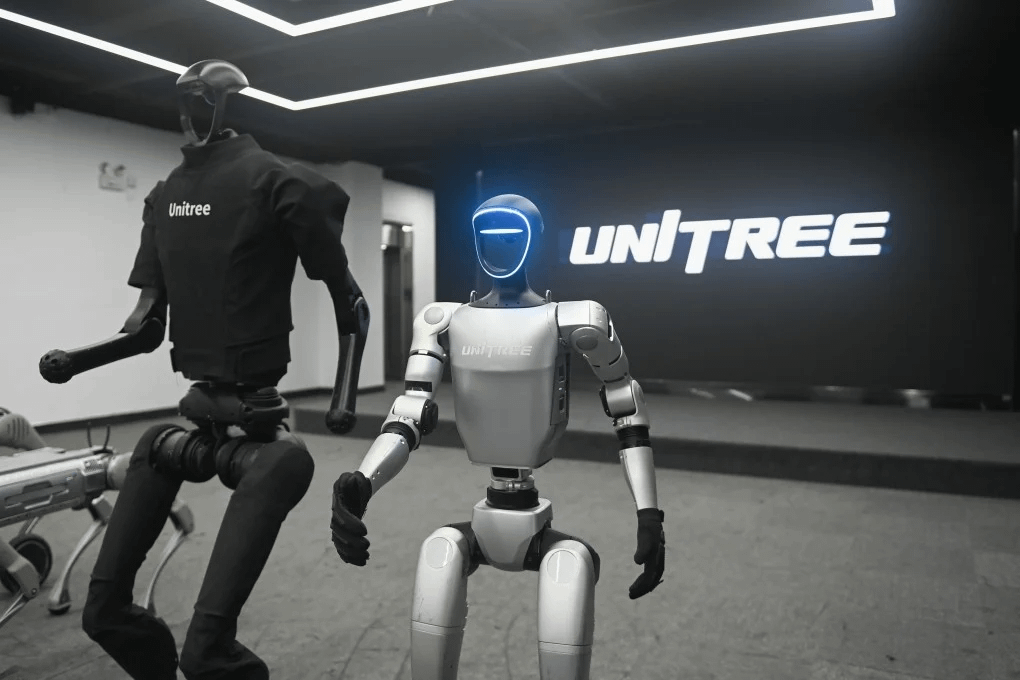
if i could long one private company right now, i'd long Unitree.
most people don't realize this Chinese company is going to absolutely dominate the robotics industry over the next decade.
here's why (inspired by semianalysis's breakdown):
first, the robot we're talking about.
their flagship humanoid, the g1, is the cheapest humanoid robot in the world by a wide margin.
this one fact drives everything else.
a year and a half ago the g1 launched at $30-50k. today it starts at $13.5k, a full-size humanoid robot for the price of a used car.
and unitree only spends around $9k to build one, so they still make money even at that price.
they pull this off for three reasons that stack on each other:
1. they build the most expensive part of the robot themselves. the actuator (the motor inside each joint) is 50-70% of what a humanoid costs. everyone else buys it from a supplier and pays a markup. unitree makes its own, so it pays cost instead.
2. they're in china, sitting on top of the supply chain that already built the world's drones and electric cars. parts are hours away by train, samples arrive the next day, and components run 20-40% cheaper than the west pays.
3. they improve faster than anyone. when they want to upgrade a part, they can have a new version in weeks. a western competitor takes 3 months for the same step, because every handoff is a different supplier in a different country.
and cheap is the whole ballgame.
a robot only has to clear one bar to be worth buying: it has to cost less than the worker it replaces.
it can be mediocre at everything else. the g1 is mediocre right now (it overheats, the arms are weak, it holds 5kg for about 15 minutes), but moving a bin from one spot to another only takes a cheap robot that mostly works.
and the g1 just crossed that bar. there are already ~250 of them doing real warehouse jobs, running at under $30 an hour, which undercuts paying a human for the same task.
unitree's 10,000th humanoid ships in a few weeks, while tesla still isn't selling optimus to anyone.
once a robot costs less than a human worker, a flywheel kicks in:
cheap robots sell → the money funds a better next version → the better version handles bigger jobs → that sells even more → which funds the next version.
every loop they get cheaper and more capable, and rivals who started more expensive never catch up.
we know this flywheel works, because it already built two chinese global heavyweights.
BYD owned the battery, the priciest part of an electric car, undercut everyone, and became the biggest EV maker on earth.
DJI owned the flight controller, sold cheap, and took 70% of the global drone market.
Unitree is running the identical play with robots, and it's only at step one.
BYD and DJI both looked this unremarkable right before they took over their industries.
Unitree is standing in that same spot today, except the prize this time is bigger than cars or drones.
it's human physical labor, the biggest market on earth.
Jun 8

We just published a deep dive on why Unitree is going to dominate global robotics. Timing could not be better. (2/2)
newsletter.semianalysis.com/…
10
11
63
13,359
Jun 11
If you want highly practical AI workflows that help you get more customers and more views...
I send them to 38k readers every single week. Join here for free: aisolo.beehiiv.com/subscribe
1
3,314