I’ve gotten a lot of questions about these issues lately.
@ChrisHarveyEsq lays out the issue and potential paths forward
How to Fix a Broken Cap Table: A Practical Guide ✨
Last week I wrote:
> "With Down Rounds at 20% of all venture deals closed in 2023, a second order effect is coming into play: Broken cap tables."
But what's a broken cap table, again?
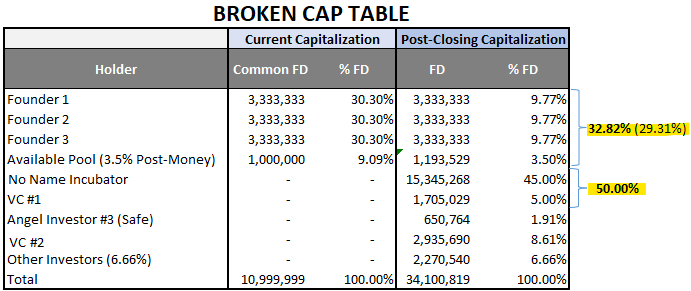
⬛ Definition: "Too much dilution, too early"
—Example: Venture studio owns ~45% of the common, while the co-founders own ~29% collectively (and single digits, individually).
• It's not inaccurate data, missing paperwork or poor cap table maintenance that's the real problem, it's misaligned shareholder interests.
Useful benchmarks for bad cap tables:
• If founding team ESOP owns less than 50% post-seed
• If individual founder/CEO owns <10% post-seed
Common ways to avoid a broken cap tables:
• Selling less than 30% of equity through Seed
• Preventing advisors, incubators & accelerators from taking excessive equity
• Removing dead equity from former founders, advisors & bad vesting policies
So what do you do once you see a broken cap table?
1. Do nothing, don't invest: This is the vast majority of outcomes—investors see a broken cap table and just move on.
2. Ask and receive: Investors may be receptive to term adjustments, sometimes such as heavy discounts from Post-Money Safes, elimination of super pro rata rights, or removing full ratchet anti-dilution mechanisms. All you have to do is ask!
—Example: A never-diluting 10% penny strike warrant is a self-destructive mechanism. 10% of zero is worthless.
3. Negotiate with a Carrot: Search for win-win solutions. Remember, incentives matter more than you think! Offer attractive terms for shareholders with "dead equity," like secondary market access or buyback premiums, to encourage cap table alignment.
—What's a reasonable resale discount? Look at FMV of 409A and remember Carta's 70-80% median discount on common vs. preferred price at the seed stage.
—Of course, other factors apply: securities laws (eg, Rule 144) must still be followed. And there may be adverse tax consequences (eg, QSBS redemption exceptions, 409A pricing adjustments)
4. Hardball Negotiations: If incentives fail, consider tougher tactics like pay-to-play requirements, board restructuring, or dilution through new funding rounds.
—I don't want to endorse all these tactics or give away the secrets, but here are some things that I have seen work:
• Aggressively expand option pool: create a 40% option pool and allocate 30% to the founders.
• Insert pay-to-play provisions (existing investors pay to maintain their ownership percentage during future funding rounds or else lose [preferred stock] rights)
• Name and shame (internally or through PR, but that can backfire)
• Pack the board
• Dilute the unwilling investors or holders by raising a new round
• Threaten to wind down the company or M&A via acquihire
• In conclusion, seek alignment, not just investment! Incentivize the founders and team.