
Tweeting in a personal capacity only. My views do not reflect those of my employers.
Joined February 2009
- Tweets 4,280
- Following 2,675
- Followers 745
- Likes 20,645
94 Photos and videos












Jennifer Thoms retweeted

Jun 14
Côte d'Ivoire v Ecuador is the World Cup’s only group-stage match where both countries are named after geographic features you can point to on a map.
Ecuador is named after the Equator. Côte d'Ivoire is named after the ivory-trading coast of West Africa.
Stay tuned for more cutting-edge, geography-based World Cup analysis.


20
293
4,517
169,569
Jennifer Thoms retweeted

Fitba.
The difference between English and Scottish international fans -
England believes it can win it again and is always left dejected.
Scotland brings out the mathematicians that could correct a super computer on how to get through to a 2nd round by other teams winning.
1
11
101
8,526
Jennifer Thoms retweeted

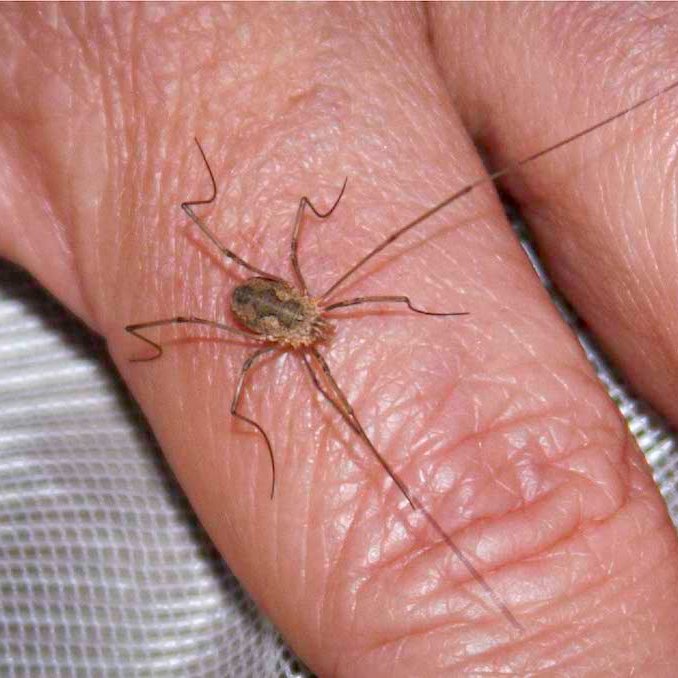
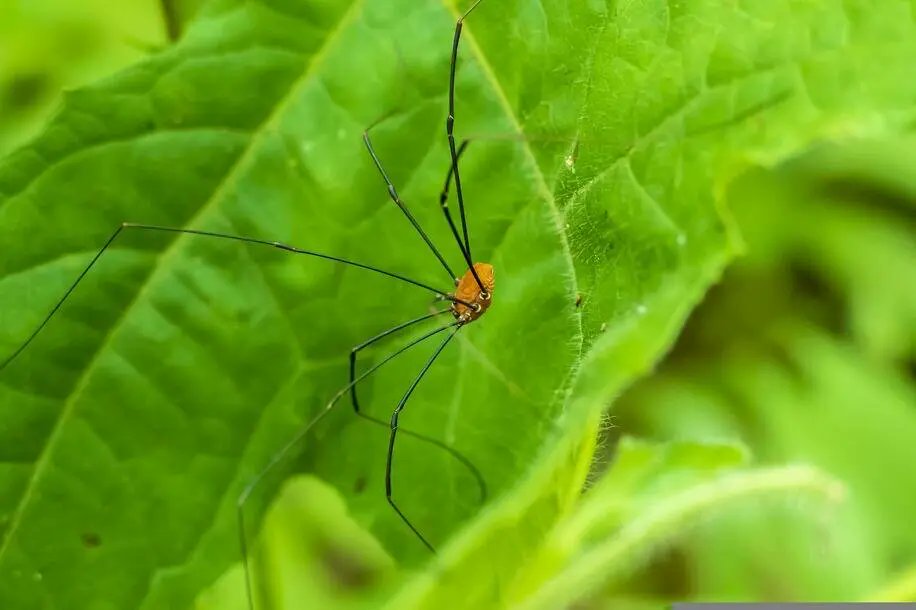
You've probably heard that daddy longlegs are the most venomous spider alive, saved only by fangs too small to break your skin. Every part of that is wrong.
The common daddy long leg isn't a spider. It's a harvestman, a different arachnid with one round body instead of two, and it can't spin silk. It has no fangs or venom glands.
But you should love it anyway. It spends its days eating dead bugs and rot off the ground, which makes it part of your yard's cleanup crew.
If you see one of these guys in your yard, don't squish it! Count yourself lucky.
131
675
6,149
316,618
Jennifer Thoms retweeted

I'm a cardiologist. A 42-year-old mother of two came to my office complaining of jaw pain and crushing fatigue. She ran half-marathons. Her EKG was normal. Another doctor had sent her home with anxiety medication.
When I got her into the cath lab, I found severe microvascular disease — plaque choking the tiniest vessels of her heart, the ones standard angiograms routinely miss.
Her heart had been starving in silence while everyone told her she was stressed.
She is alive today. Too many women like her are not.
Heart disease kills more women than every cancer combined. And medicine is still diagnosing it through a male lens.
84% of cardiologists report having patients in the past year whose heart disease was misdiagnosed by another physician. Women with a STEMI heart attack have a 59% greater chance of being misdiagnosed compared to men. Women with an NSTEMI — 41% greater chance.
The reason is structural. For decades, we screened, tested, and treated women using a template built for men.
Men's heart attacks announce themselves — the crushing chest pain, the clutched fist, the Hollywood collapse. Women's hearts whisper. Crushing fatigue that feels like wearing a lead vest. Jaw pain written off as TMJ. Nausea blamed on a stomach bug. An ache between the shoulder blades blamed on a long week. Shortness of breath blamed on being out of shape.
For years, medicine called these "atypical" symptoms. They are not atypical. They are female-typical. Half of humanity is not a variant.
And the biology runs deeper than symptoms.
Women have smaller hearts and narrower coronary arteries. Plaque doesn't only clog the big highway vessels — it hides in the microvasculature, the tiny branches feeding the heart muscle itself. A woman can have a heart attack with a completely "clean" standard angiogram.
SCAD — spontaneous coronary artery dissection — occurs 90% of the time in women. Often young, fit women with zero traditional risk factors. It's the leading cause of heart attack in women under 50, accounting for roughly one quarter of all cases in that age group. Most doctors have never diagnosed one.
And some of the most dangerous cardiac risk factors are hidden in women's medical histories where no one thinks to look:
Preeclampsia or gestational hypertension doubles to quadruples lifetime heart disease and stroke risk. Pregnancy is the body's first cardiac stress test — and these complications are early warning sirens, not closed chapters.
Autoimmune disease — lupus, rheumatoid arthritis, psoriasis — far more common in women, turbocharges inflammation and plaque formation at any age.
Cardiovascular disease in women aged 20-44 is projected to surge nearly 50% by 2050.
The youngest patients in my practice keep getting younger.
What every woman should ask her doctor — and what every doctor should be asking:
"Given my pregnancy history, autoimmune status, and family history — what is my full cardiovascular risk?" If they don't ask about preeclampsia or gestational diabetes, volunteer it.
"Should I have an Lp(a) test and a coronary calcium score?" Standard cholesterol panels miss too much. Lp(a) is genetic, one-time, and most women have never been tested.
"My tests came back normal but my symptoms haven't stopped — what's next?" Normal stress tests and angiograms can miss microvascular disease, spasm, and SCAD. Persistent symptoms warrant coronary CT angiography or cardiac MRI.
And if something feels wrong — say these exact words to your doctor: "I am concerned this could be my heart."
That single sentence changes the workup. Do not soften it. Do not apologize for it.
80% of heart disease is preventable. But the playbook has to be built for female biology.
Two decades ago, I wrote one of the first books warning that heart disease was the number one killer of women and that medicine was diagnosing it through a male lens. It was recognized by First Lady Laura Bush at the White House during the early years of the national conversation about women's heart health.
I'm haunted by how much of that book I could republish today unchanged.
The science has advanced. The awareness has grown. But the gap between what we know and what happens in the exam room is still costing women their lives.
Share this with every woman you love — and every doctor who treats them. READ MORE: open.substack.com/pub/afshin…
180
2,659
6,621
770,129


May 12
Still some online tickets for Archaeological Research in Progress - the annual conference organised by @ArchScot and @socantscot. On 23rd of May, lots of exciting speakers, and also me (!), launching our journal Discovery and Excavation in Scotland.
archaeologyscotland.org.uk/g…
1
22
Jennifer Thoms retweeted

Apr 11
Don't Let Your Lives "Narrow"!!
I've been an orthopedic surgeon for 30 years.
The thing I watch happen to people, more than any injury or surgery, is refer to as the narrowing.
Most of my patients have no idea it's happening to them. They think it's just aging. It's not. 🧵
169
391
2,737
726,157
Jennifer Thoms retweeted

Apr 3
Pysanka, the Ukrainian tradition and art of decorating eggs with wax and dye.
284
3,292
20,014
697,672
Jennifer Thoms retweeted

Jan 24
Honestly, it’s difficult for many Ukrainians, yet people choose craziness, no one is ready to give up
58
651
4,503
53,015
Jennifer Thoms retweeted

9 Sep 2025
At least share their posts so they get some views… come on now. 🙄
9 Sep 2025

The most INSANE Bohemian Rhapsody flashmob you will ever see!!
With 30 musicians and singers in the streets of Paris 😍
Lead singer: @mickeycallisto
Lead guitar: Olly Pearson
Pop choir: DDKN sisters, @sone_sings and @colinesicre
Counter-tenor solo: @michaelkonesaki
1
26
95
5,802
Jennifer Thoms retweeted

3 Sep 2025
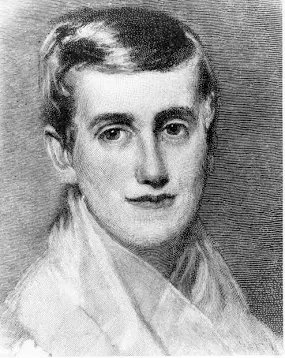
Woman of the Day teacher Prudence Crandall, born OTD in 1803 in Rhode Island, opened a private school for girls in Connecticut acknowledged to be one of the best in the state, till she admitted a new pupil and all hell broke loose. She was harangued, arrested, dragged repeatedly through the courts, threatened with violence and hounded till she left town.
Yet it all started off so well. Prudence, raised as a Quaker by a family of abolitionists, enjoyed a good education and regarded teaching as a vocation. Soon after she completed her teacher training, she became a Baptist which meant that the Bible became her ultimate religious authority.
In 1831, she and her sister bought a large house and established the Canterbury Female Boarding School with the approval of affluent townspeople. It flourished, providing about forty girls with a good, well-rounded education, and all was set fair till September 1832 when Sarah Harris, daughter of a free African American man, applied to be admitted. Prudence was hesitant but turned to her Bible for guidance. It fell open at Ecclesiastes 4:1: “So I returned, and considered all the oppressions that are done under the sun: and behold the tears of such as were oppressed, and they had no comforter; and on the side of their oppressors there was power; but they had no comforter.”
“I contemplated for a while the manner in which I might best serve the people of color. As wealth was not mine, I saw no other means of benefiting them, than by imparting to those of my own sex that were anxious to learn, all the instruction I might be able to give, however small the amount.”
She accepted Sarah as a pupil. The other girls were relaxed about it but their parents were not. They withdrew their daughters from the school and it closed temporarily. When it reopened on the first Monday in April 1833 “for the reception of young Ladies and little Misses of color…Terms, $25 per quarter, one half paid in advance”, it had twenty new African American pupils from all over New England and was generating interest from others.
That’s when the trouble really started: town meetings, hostility, protests, pressure on Prudence to desist from jeopardising the safety of white people by encouraging “social equality and intermarriage of whites and blacks” (her riposte: "Moses had a black wife”), threats, intimidation and violence.
She remained steadfast - her brother described her as “a very obstinate girl” - but as the disorder escalated, the State of Connecticut finally acted. It passed a Black Law making the teaching of “any colored people...not inhabitants of Connecticut” unlawful unless permitted by the town. Prudence was arrested and spent a night in jail. She refused to be bailed but was released the next day.
Townspeople ostracised her, shopkeepers refused to serve her, the town doctor refused to treat her or her pupils, animal excrement was thrown into the school’s drinking water well and she had to fetch water from her father’s farm because the town council refused to allow her use of its water, and her students were threatened.
Prudence’s first trial on 22 August 1833 resulted in a hung jury. The second trial followed in October and she was convicted. This was overturned on a technicality by a higher court on appeal and finally, in July 1834, the case was dismissed. If the process was meant to be the punishment, it paled into insignificance in comparison with public reaction when she re-opened her school.
Wave after wave of mob violence was unleashed against the school. They threw rocks at the windows, smashing them all, and on one occasion, set fire to the building. She managed to keep the school open for a year in the face of unremitting hostility but in the end, fear of serious injury to her pupils left her with no choice.
Prudence closed the school in September 1834. In August the following year, she married a man who supported her views but she’d had enough of Canterbury and mass prejudice. They moved west and ended up in Kansas where she held classes in their home, and supported abolition and women’s suffrage.
And the aftermath? Several of her students went on to become teachers, Connecticut officially repealed the Black Law in 1838, Mark Twain offered to buy the school building and give it to her to live in but she declined because she wasn’t keen to return. Fifty-two years later, the Connecticut General Assembly formally apologised to Prudence and granted her a small pension in recognition of her work.
Prudence died in 1890 at the age of 86 but for a brief time, hers was the first integrated school in the USA.
“My whole life has been one of opposition.”
But not in vain, Prudence, not in vain.
One hundred and twenty years later, the arguments from your trials were used successfully in Brown v Board of Education, the landmark ruling of the US Supreme Court which ruled unanimously that racial segregation in public schools was a violation of the Fourteenth Amendment. Shame on those who took so long to do the right thing.
45
206
574
12,953
Jennifer Thoms retweeted

14 Aug 2025
Dr. Simon Mills is the top herbal medicine expert in the world.
He just revealed 5 common kitchen ingredients that work better than prescription drugs.
These cost (almost) nothing and are incredibly effective:
1) Dark chocolate


161
3,531
11,617
1,597,997
Jennifer Thoms retweeted

30 Jul 2025
The Amish Have Just a 4% Obesity Rate—9× Lower Than Most Americans.
They break every "diet rule," yet they're leaner, stronger, and healthier than 96% of America.
In a world drowning in health advice, why does rejecting it work so well?
Here Are 10 Amish Lifestyle Secrets 🧵

1,810
8,927
48,256
14,473,045
Jennifer Thoms retweeted

27 Jul 2025
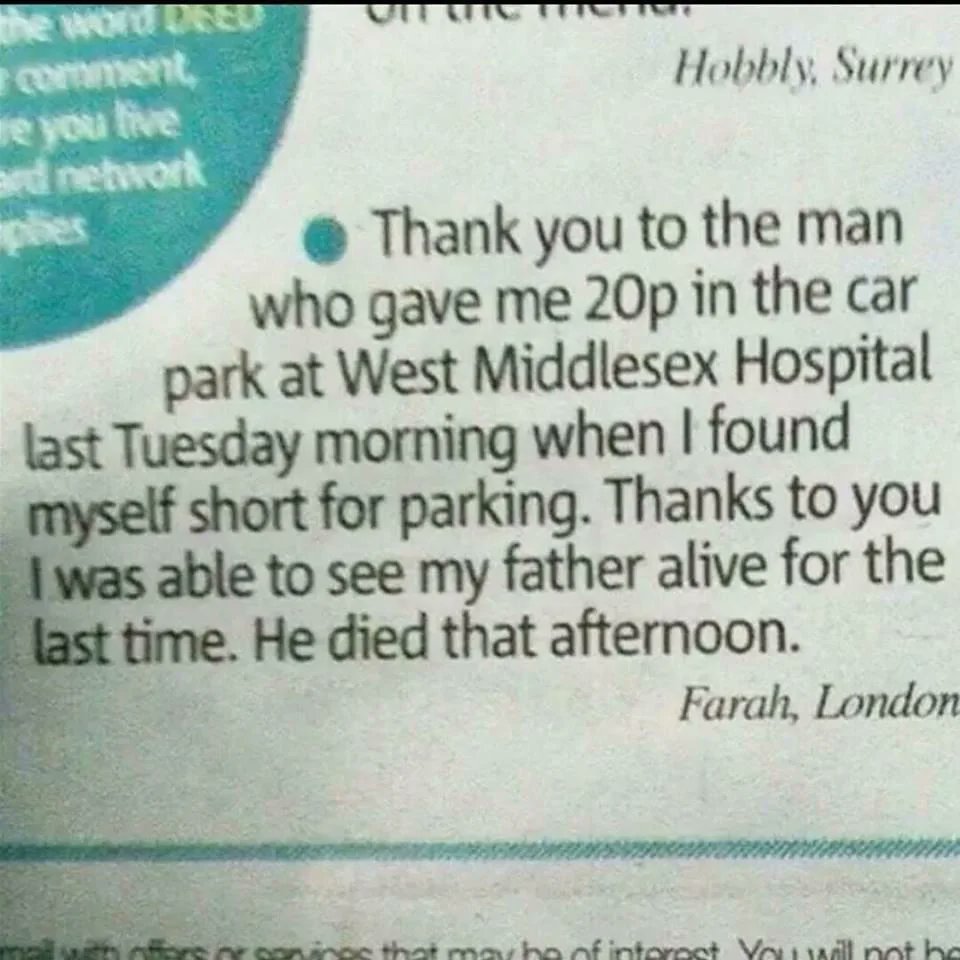
Never underestimate the power of small good deeds... because its always matters
Thread 🧵
1)
50
1,074
16,378
851,333
Jennifer Thoms retweeted

6 Aug 2024
1/ One of most important things I've learned:
Severe personality problems find *camouflage.* No one thinks “I’m a sadist” or “I'm a malignant narcissist.”
They find a belief system/social group that validates their most hateful, destructive impulses & construes them as virtues.
109
1,016
3,936
1,029,372
Jennifer Thoms retweeted

4 Jul 2025
Hello, X. My name is Sahar. I live in Kabul, Afghanistan.
I want to show you a moment in my life the world doesn’t hear about. It happened yesterday. It’s a story about two little girls, and a choice I made that I can’t stop thinking about.🧵
121
1,004
3,080
355,143
Jennifer Thoms retweeted

26 Jun 2025
Thanks for reading till the end! If you enjoyed this thread, please share the first post (linked below) and follow me for more content 👇🏻
26 Jun 2025

The most surreal villages in Italy 🧵
1. Imagine waking up to this view of Portofino
17
63
478
114,101
Jennifer Thoms retweeted

26 Feb 2025
Gígja Einarsdóttir, photographer who was born and raised around Icelandic horses #WomensArt

3
125
551
13,996
Jennifer Thoms retweeted

23 Dec 2024
If you’re dreading Christmas because you know what’s coming from the man in your home… store this number SAFELY somewhere. Use it when you can. Get out safely. Next year CAN be different. The kids will thank you for getting them out - if you have any. Your friends and family will come back eventually - the good ones anyway. It’s hard once you leave, for a while, but nothing is as bad as staying. You deserve a chance to be happy and he isn’t going to give you that. Not at Christmas and not ever. He won’t change, it won’t improve, you might die there. Save this number. Call it soon.

12
492
736
23,834