
AI Engineer, Researcher, Developer, Creative…or a random amalgamation of scholarly and creative parts
Joined October 2015
- Tweets 88
- Following 194
- Followers 63
- Likes 850
10 Photos and videos








Jun 11
Every time an AI agent tries again, it may resend all its instructions and past work. That means costs can grow much faster than the number of steps suggests.
Without clear evaluation rules, spending limits, and quality checks, an “independent” AI agent may just repeat costly mistakes.
Here’s why better loops, not bigger AI models, could be the next big challenge:

151
Jun 9
🚨 THREAD: OpenAI’s confidential S-1 is bigger than one IPO filing.
Anthropic filed one last week.
SpaceX is expected to price what could become the largest IPO ever this week.
Three filings.
One question nobody is asking:
Who’s actually making money?
🧵👇

We recently submitted a confidential S-1. We expect it to leak so we’re just announcing it. We have not decided on timing yet; it may be a while because there are things we want to do that are likely easier as a private company. But it’s a complicated set of tradeoffs and this gives us the option to go public sooner if that ends up being best.
This announcement is being made pursuant to Rule 135 under the Securities Act of 1933, as amended, and does not constitute an offer to sell or the solicitation of an offer to buy any securities. Any offers, solicitations of offers to buy, or any sales of securities will be made in accordance with the registration requirements of the Securities Act.
1
125
Jun 9
My read:
OpenAI and Anthropic may both be extraordinary companies.
But their S-1s will force investors to separate product-market fit from business-model proof.
AI demand is obvious.
AI profitability is not.
11/
1
41
Jun 9
The IPO story will be sold as:
“AI is the next platform shift.”
That may be true.
But the real question is whether frontier AI labs can capture enough value before compute costs absorb the economics.
That is the number Wall Street is about to price.
12/12
23
Feb 18
This is going to be needed for efficient practical alerts from future smart glasses. Currently most smart glasses already run on a flavor of android:
Feb 17

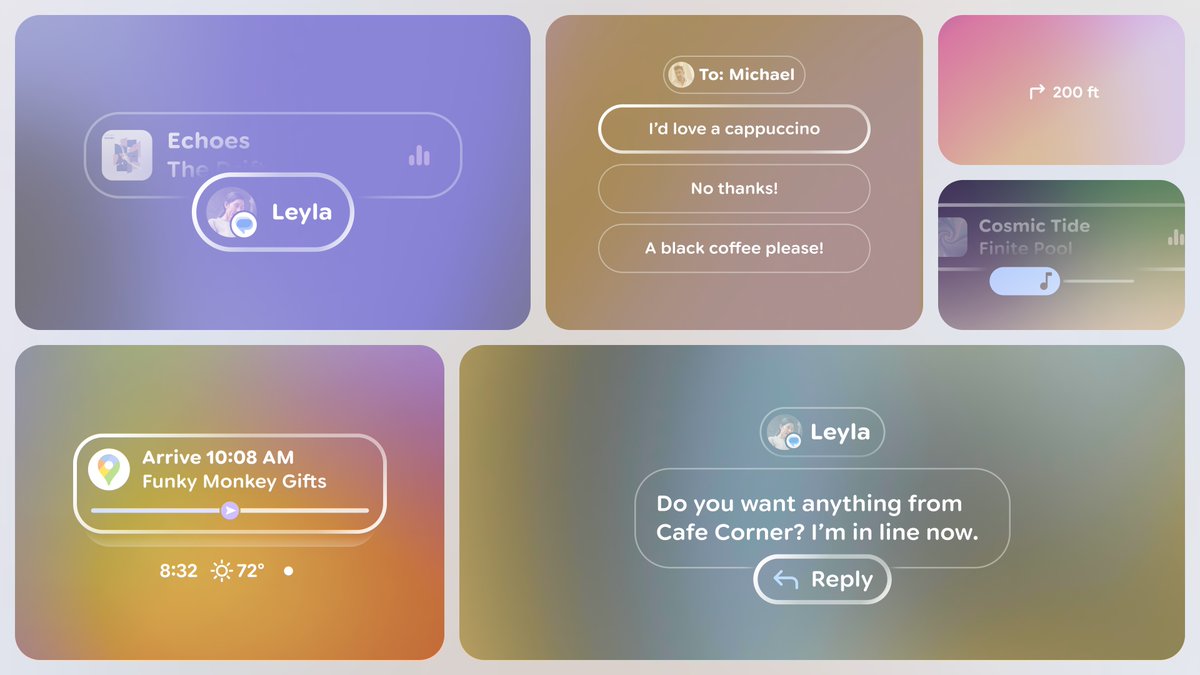
Introducing Glimmer ✨ @Google’s new design language for UX on glasses! Glimmer prioritizes voice, gesture, and eye-tracking — focusing on glanceable, transient elements that appear only when needed.
Discover thoughtful design for a new dimension: goo.gle/4qFBG5S
1
115
Jon Hulsinger retweeted

Feb 17
Introducing Glimmer ✨ @Google’s new design language for UX on glasses! Glimmer prioritizes voice, gesture, and eye-tracking — focusing on glanceable, transient elements that appear only when needed.
Discover thoughtful design for a new dimension: goo.gle/4qFBG5S
86
446
4,852
619,629
28 Aug 2025
Just discovered @morphllm not a plug, just a heads-up: pair it with any base model (e.g., GPT-5 Medium) and you can achieve better than Claude Code–level research depth or blistering code-app performance (~4,500 tok/s) at roughly 80% lower cost than Claude Sonnet alone.
2
1
7
651
28 Aug 2025
With the releases today from Codex I am closer to this, but not quite.
18 May 2025
I’d love the ChatGPT app—powered by ChatGPT Codex with a Deep Research–style interface—that can directly interact with and modify my local codebase. Give me remote console development powered by ChatGPT.
113
20 Aug 2025
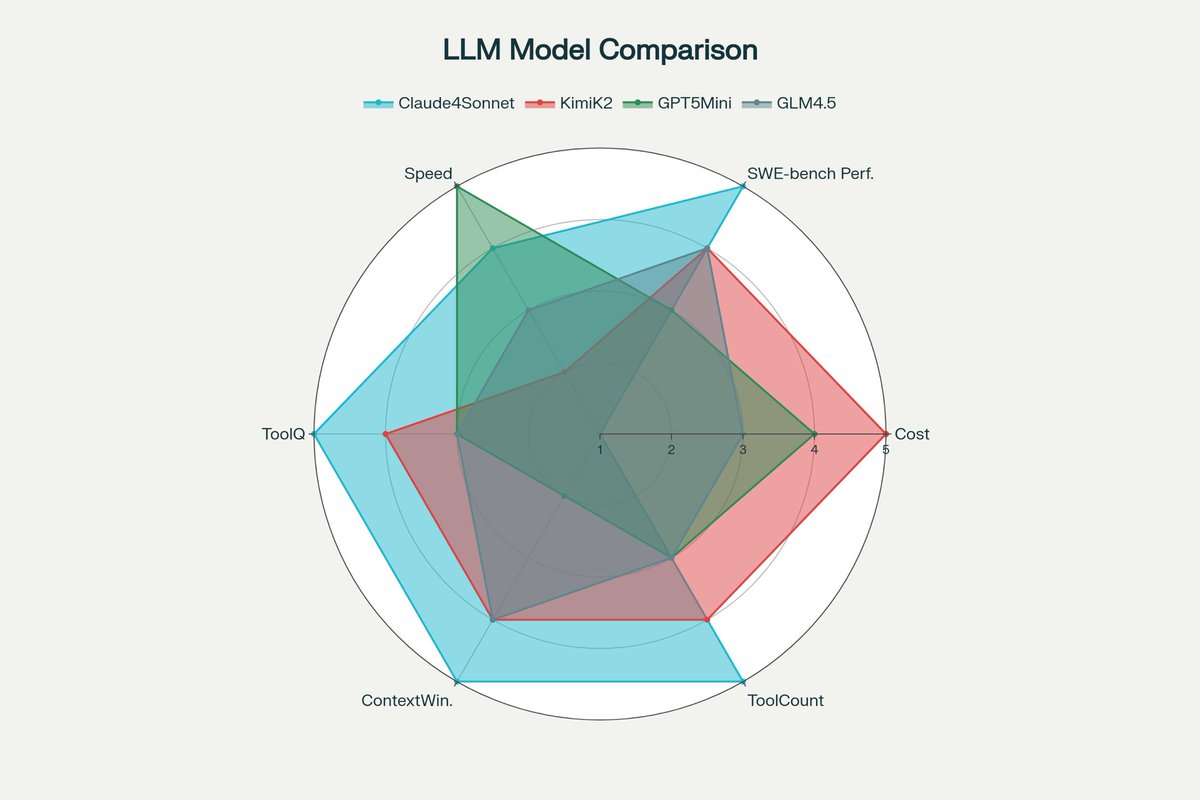
𝗖𝗼𝗱𝗶𝗻𝗴 𝗠𝗼𝗱𝗲𝗹 — quick take 👇
𝗖𝗹𝗮𝘂𝗱𝗲 𝟰 𝗦𝗼𝗻𝗻𝗲𝘁 — 🏆 Capability king · 200k ctx · 𝟯.𝟵
𝗞𝗶𝗺𝗶 𝗞𝟮 — 💸 Value champ (~93% of Claude at ~5% cost) · 𝟯.𝟴
𝗚𝗣𝗧-𝟱 𝗠𝗶𝗻𝗶 — ⚡ Fastest (102 tok/s) · 𝟯.𝟰
𝗚𝗟𝗠 𝟰.𝟱 — 🧾 Budget pick · 𝟯.𝟯
1
49