
building
Joined January 2018
- Tweets 825
- Following 299
- Followers 64
- Likes 221
116 Photos and videos







Pinned Tweet

3 Dec 2025
I've also acquired @bunjavascript alongside @AnthropicAI
git clone git@github.com:oven-sh/bun.git
1
7
1,067
Jun 13
This is the AI oversight they've been asking for
Jun 13

The US government, citing national security authorities, has issued an export control directive to suspend all access to Fable 5 and Mythos 5 by any foreign national, whether inside or outside the United States, including foreign national Anthropic employees.
The net effect of this order is that we must abruptly disable Fable 5 and Mythos 5 for all our customers to ensure compliance.
Access to all other Claude models is not affected.
We apologize for this disruption to our customers. We believe this is a misunderstanding and are working to restore access as soon as possible.
Read our full statement: anthropic.com/news/fable-myt…
8
JJ Linares retweeted
Jun 9
This the most interesting and underrated field in computer science rn.
Very cool
1
1
1
126
Jun 3
workflows are just skills with extra steps but a very powerful ideas
inmediate template:
Classify-and-act
|
Fan-out-and-synthesize
|
Adversarial verification
|
Classify results

1
39
JJ Linares retweeted
Jun 3
Biggest AI improvement of last 6 months has been top tier domain experts writing elite specialized skills
1
3
42
May 31
Now that pi supports setting session ids, I'm running it like this:
tpi projectX-main
what tpi is:
# pi in tmux
tpi() {
if [ -z "$1" ]; then
echo "usage: tpi <session-id>" >&2
return 2
fi
local name="$1"
tmux new -A -s "$name" "pi --session-id $(printf '%q' "$name")"
}
1
54
May 31
What tpi does:
Attaches/creates tmux session named projectX-main
Runs pi and attaches/creates session with id projectX-main
65
May 28
The most needed skills for ai engineering:
/auto-review: launch review agents in a loop until done or max rep
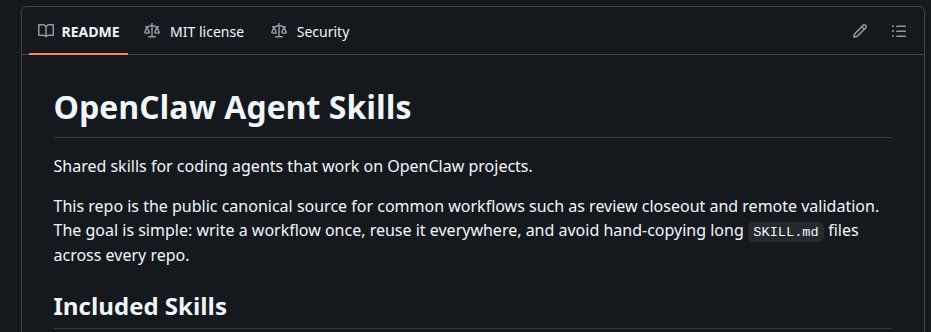
/improve-codebase-architechture: @mattpocockuk skill
/type-hunter: ai loves loose types, tighten them
10
12
255
31,967
May 28
my current pi startup command:
`tpi <session-name>`
it runs:
`tmux new -A -s <session-name> 'pi --session-id <session-name>'`
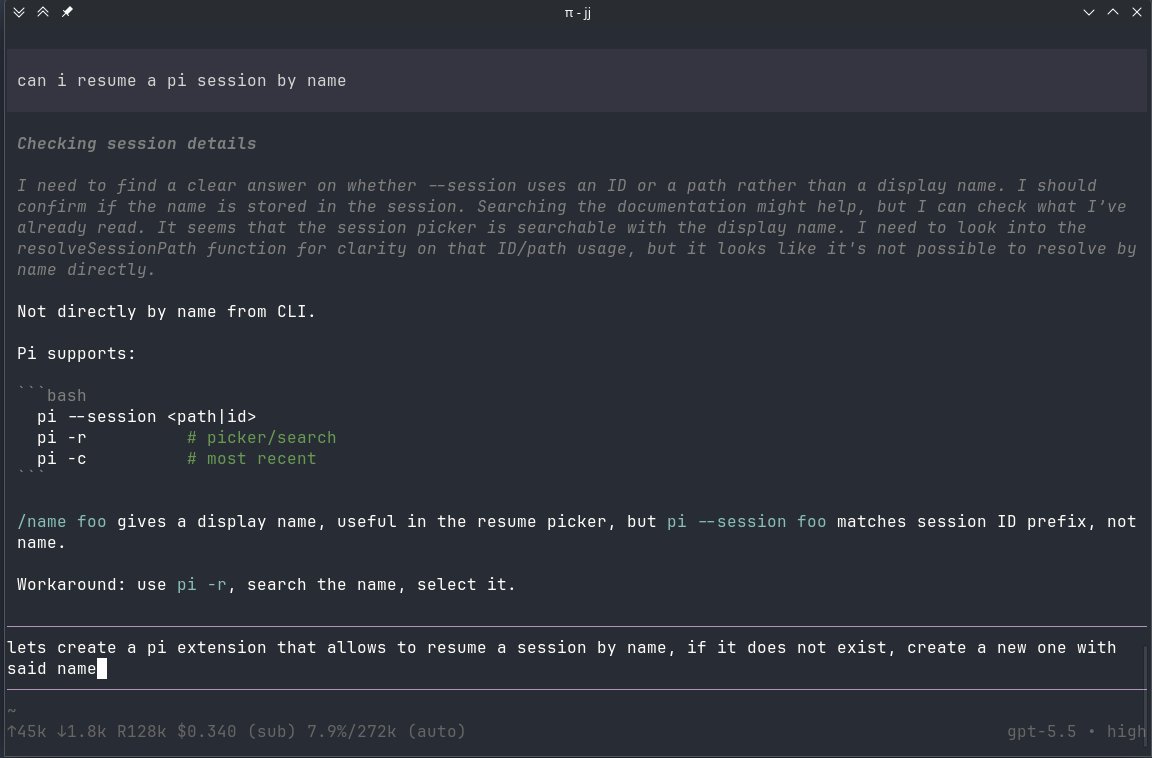
which opens an existing tmux session or creates one, then starts pi with a deterministic session id. If that pi session exists, it resumes. if not, it creates it.
i also added a pi extension that names the pi session from the session id.
82
May 21
Threads, either ACP or Terminal, are pretty cool
May 20

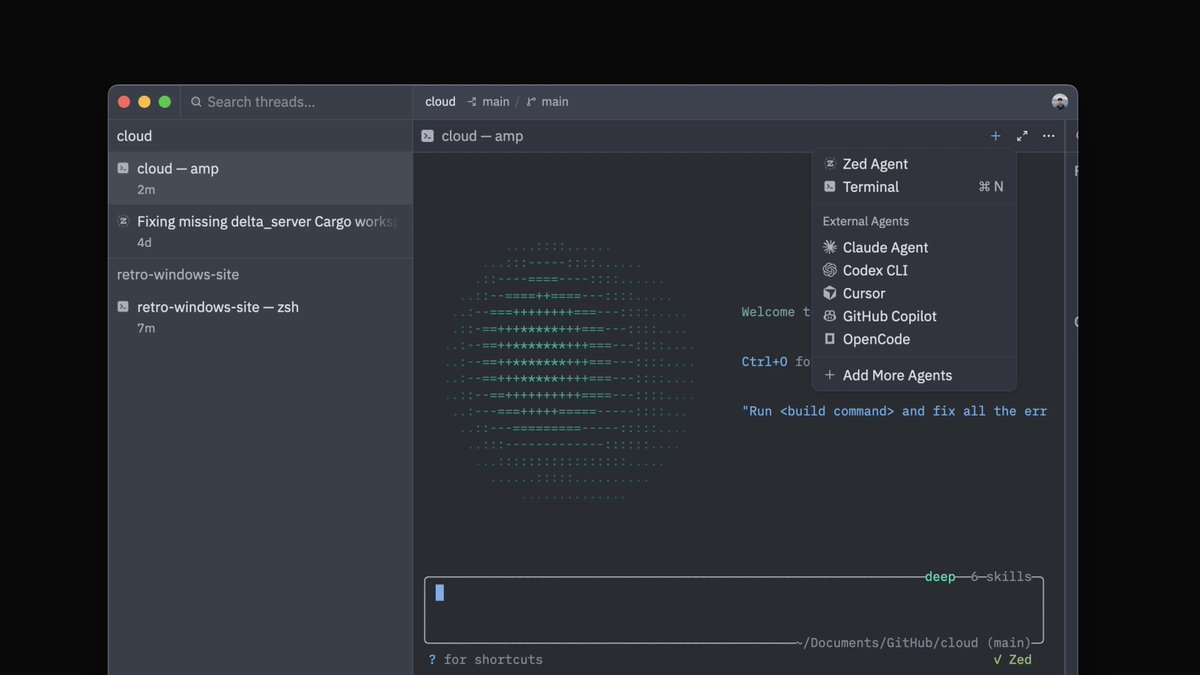
Terminal Threads are live in Zed v1.3.5!
You can now run claude, amp, pi, or any terminal-based workflow as a managed thread in the Threads Sidebar, right next to your other agent threads.
41
May 14
if @AnthropicAI 's CFO did all the public speaking, rather than dario, sentiment on AI would improve faster than their enterprise revenue
youtu.be/wEEZPpx8qow?si=dLjy…
42


May 5
If this is true and an architectural advancement, it can be replicated by other labs, right?
May 5

SubQ is available for early access today, alongside our coding agent, SubQ Code
Get access today ↓
subq.ai/
49
May 4
AI is shutting down every backdoor intel agencies have had for decades

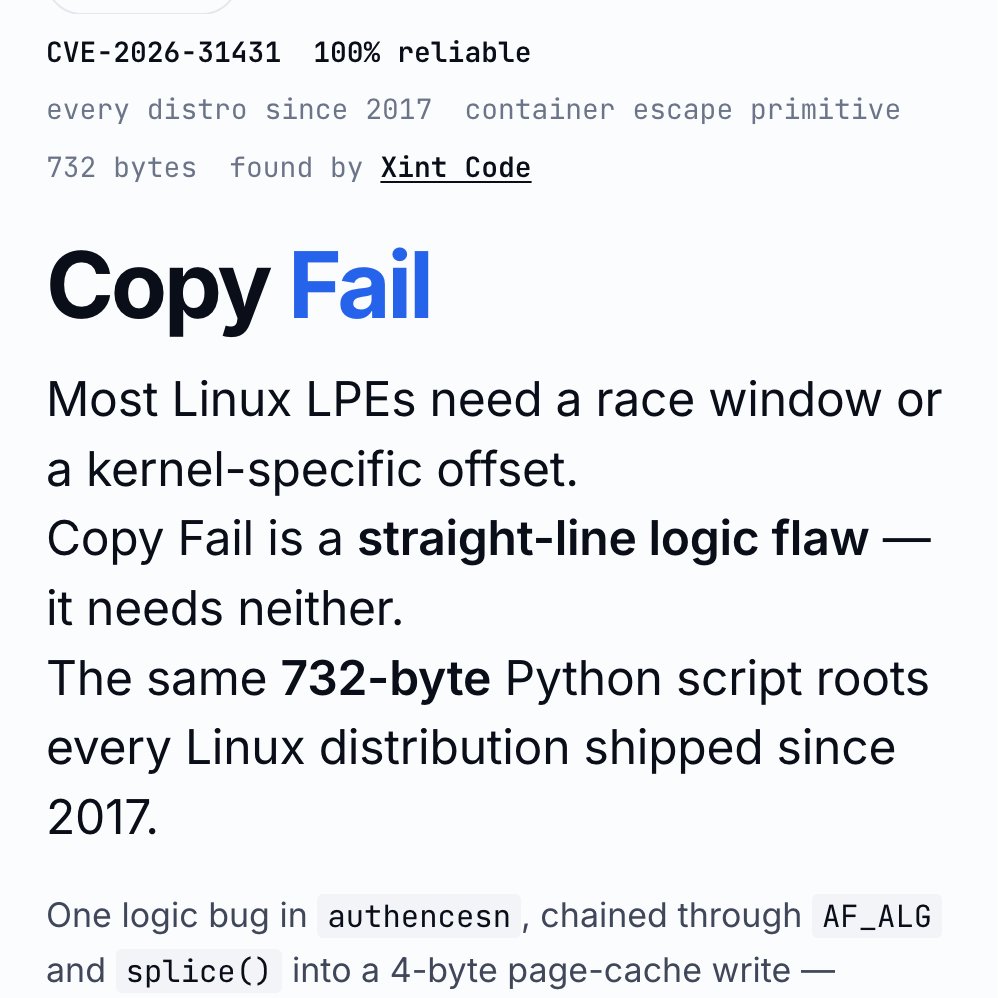
‼️🚨 BREAKING: An AI found a Linux kernel zero-day that roots every distribution since 2017. The exploit fits in 732 bytes of Python. Patch your kernel ASAP.
The vulnerability is CVE-2026-31431, nicknamed "Copy Fail," disclosed today by Theori. It has been sitting quietly in the Linux kernel for nine years.
Most Linux privilege-escalation bugs are picky. They need a precise timing window (a "race"), or specific kernel addresses leaked from somewhere, or careful tuning per distribution. Copy Fail needs none of that. It is a straight-line logic mistake that works on the first try, every time, on every mainstream Linux box.
The attacker just needs a normal user account on the machine. From there, the script asks the kernel to do some encryption work, abuses how that work is wired up, and ends up writing 4 bytes into a memory area called the "page cache" (Linux's high-speed copy of files in RAM). Those 4 bytes can be aimed at any program the system trusts, like /usr/bin/su, the shortcut to becoming root.
Result: the next time anyone runs that program, it lets the attacker in as root.
What should worry most: the corruption never touches the file on disk. It only exists in Linux's in-memory copy of that file. If you imaged the hard drive afterwards, the on-disk file would match the official package hash exactly. Reboot the machine, or just put it under memory pressure (any normal system load that needs the RAM), and the cached copy reloads fresh from disk.
Containers do not help either. The page cache is shared across the whole host, so a process inside a container can use this bug to compromise the underlying server and reach into other tenants.
The original sin was a 2017 "in-place optimization" in a kernel crypto module called algif_aead. It was meant to make encryption slightly faster. The change broke a critical safety assumption, and nobody noticed for nine years. That bug then rode every kernel update from 2017 to today.
This vulnerability affects the following:
🔴 Shared servers (dev boxes, jump hosts, build servers): any user becomes root
🔴 Kubernetes and container clusters: one compromised pod escapes to the host
🔴 CI runners (GitHub Actions, GitLab, Jenkins): a malicious pull request becomes root on the runner
🔴 Cloud platforms running user code (notebooks, agent sandboxes, serverless functions): a tenant becomes host root
Timeline:
🔴 March 23, 2026: reported to the Linux kernel security team
🔴 April 1: patch committed to mainline (commit a664bf3d603d)
🔴 April 22: CVE assigned
🔴 April 29: public disclosure
Mitigation: update your kernel to a build that includes mainline commit a664bf3d603d. If you cannot patch immediately, turn off the vulnerable module:
echo "install algif_aead /bin/false" > /etc/modprobe.d/disable-algif.conf
rmmod algif_aead 2>/dev/null || true
For environments that run untrusted code (containers, sandboxes, CI runners), block access to the kernel's AF_ALG crypto interface entirely, even after patching. Almost nothing legitimate needs it, and blocking it shuts the door on this whole class of bug...

21