
Alchemist, Artist, Musician and Dad.
Joined January 2014
- Tweets 7,095
- Following 2,816
- Followers 4,739
- Likes 61,019
2,325 Photos and videos













Pinned Tweet

3 Oct 2024
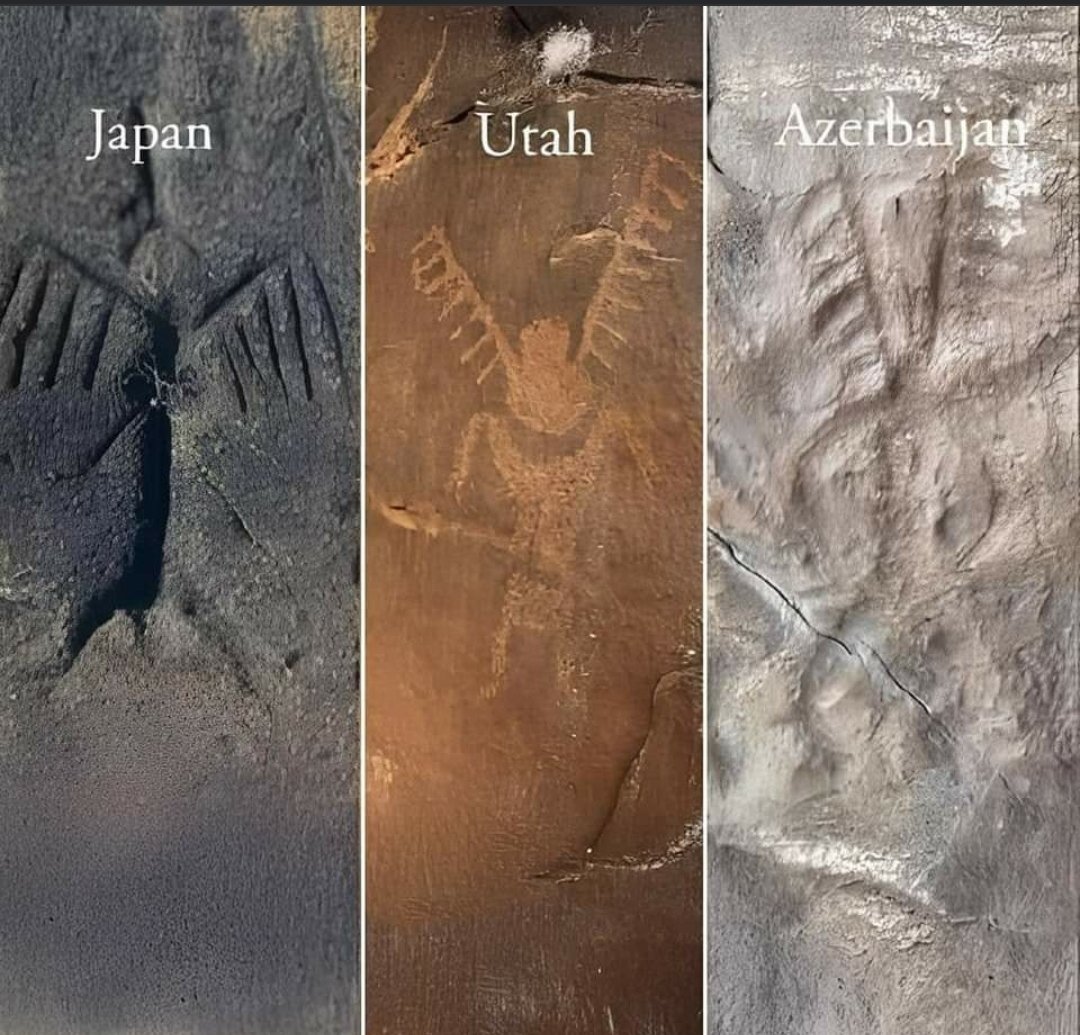
The striking similarities among nearly identical petroglyphs discovered in Japan, Utah, and Azerbaijan prompt intriguing inquiries into the connections between ancient cultures. These massive carvings are located in Fugoppe Cave in Japan, 9 Mile Canyon in Utah, and Gobustan...
96
442
2,521
139,215
John the Alchemist retweeted

El arte de la carpintería tradicional japonesa es mundialmente célebre por su capacidad para unir piezas de madera sin utilizar un solo clavo, tornillo ni adhesivo metálico.
16
277
1,877
98,583
John the Alchemist retweeted

This extraordinary block offers valuable insight into the construction techniques used on this exceptionally hard stone box, and the evidence suggests it was worked in rapid, successive stages.
The fact the work then stops where it does strongly suggests a fast, continuous cutting process rather than slow, controlled refinement.
Jun 16

So could this be actual proof of a lost ancient technology?
I had the privilege of seeing this box up close at the Egyptian Museum last May.
2
3
39
1,261
John the Alchemist retweeted

Jun 17
GODZILLA-FR Thermal Red Dot Hybrid Sight.
91
362
5,218
584,979


John the Alchemist retweeted

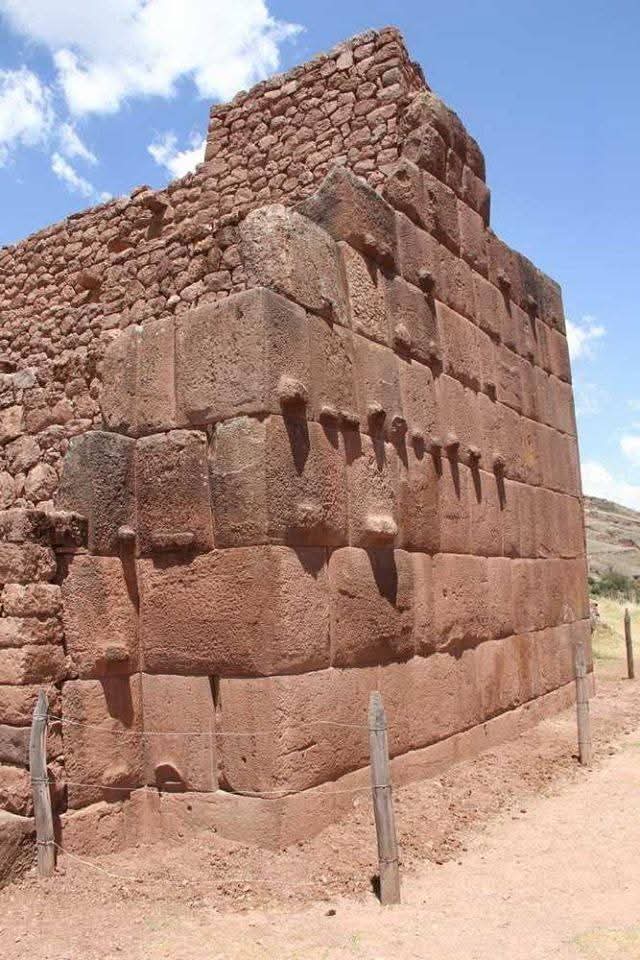
🚨 This Ancient Gate Was Built Without Cement… So Why Is It Still Standing?
Standing in front of the ancient gateway of Rumicolca, something feels… off. Not broken, not ruined—just too perfect. The massive reddish stones rise silently against the sky, each one carved and placed with a precision that modern engineers would still respect. And yet, this structure was built by the mighty Inca Empire centuries ago—without modern tools, machines, or even iron.
Look closer, and the mystery deepens.
You’ll notice strange knobs—small stone bumps left sticking out from the blocks. Were they used to lift these enormous stones? Or were they something more… symbolic? No one knows for sure. The Incas didn’t leave behind written explanations, only questions carved in stone.
But the real wonder lies in what you don’t see.
There is no cement. No mortar. Nothing holding these stones together—yet they fit so tightly you can’t even slide a blade between them. Earthquakes have shaken this land for centuries, but Rumicolca still stands, unmoved, almost as if it was designed to resist time itself.
Imagine this place hundreds of years ago.
Messengers running through this gateway. Traders passing with goods from distant lands. Whispers of an empire at its peak echoing through these very stones. This wasn’t just a gate—it was a checkpoint, a symbol of power, and perhaps something even deeper… something we still don’t fully understand.
Because Rumicolca doesn’t just tell history.
It hides it.
4
17
62
1,027
John the Alchemist retweeted

Jun 16
Mind bogglingly precise cuts into ancient stone, the signatures of lost techniques, the same scoop marks that we see in Ancient Egypt are also found across Ancient Peru.
Filmed/Edited/Narrated by me
Support original work with a Like/Comment/Repost
20
107
1,008
22,954

Kimber 1911 DS Warrior! Full Features, Budget Price!
The Kimber 1911 DS Warrior is a solid quality options for a Double Stacked 1911, yet for less than half the price of the Kimber 2K11s. We compare it to the 2k11 to see that differences. Thanks to @Kimberamerica for their help in making thi9s video possible #Kimberpartner #sponsored
1
12
159
8,273
They were the Ant People...

“The members of these Brazilian tribes had never heard of aliens before and didn’t even understand the concept.”
“However, when shown a photo of a gray alien, they immediately recognized it and said,”
“That’s a Mankmawab. They live underground.”
18
John the Alchemist retweeted

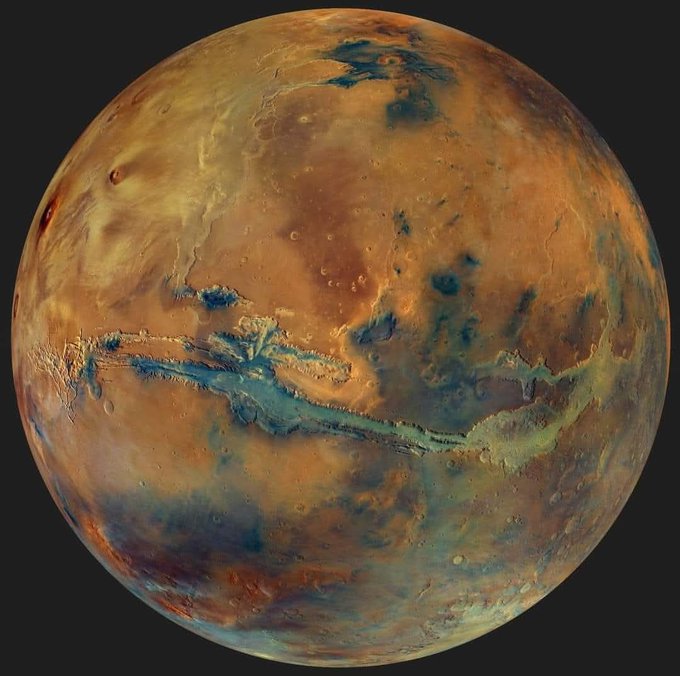
Mars as You’ve Never Seen It Before
This breathtaking portrait of the Red Planet is not a single photograph — it’s a masterpiece mosaic stitched together from 90 individual images captured over two decades by ESA’s Mars Express orbiter. Released to celebrate the mission’s 20th anniversary, it reveals Mars in vivid color and astonishing compositional detail that no traditional telescope could ever capture from Earth.The images were taken by the spacecraft’s High Resolution Stereo Camera (HRSC) — a multispectral instrument that sees in nine narrow wavelength bands — from altitudes between 4,000 and 10,000 km. Each frame covers vast swaths of the surface, allowing scientists to combine them into this global view that highlights subtle variations in mineral composition, ancient lava flows, dust deposits, and the dramatic scars of Mars’ complex geological history.From this unique perspective, you can trace the colossal Valles Marineris canyon system, the towering volcanoes of Tharsis, and the stark contrast between the heavily cratered southern highlands and the smoother northern plains — all rendered in enhanced true-to-life colors that bring the planet’s rusty, ochre, and subtle blue-green tones to life.This is Mars in a way human eyes have never witnessed directly: a rich, detailed world seen through the patient, scientific gaze of a spacecraft that has been orbiting it since 2003.
Image Credit: ESA/DLR/FU Berlin/G. Michael
4
10
71
3,263
John the Alchemist retweeted

My father is 75 years old.
He is my father, my master, and the person who has shaped my path since I became his apprentice at the age of 8.
I continue to learn from what he has spent a lifetime building, and I hope to carry those teachings forward by sharing TATE with people around the world.
13
48
369
3,749
John the Alchemist retweeted

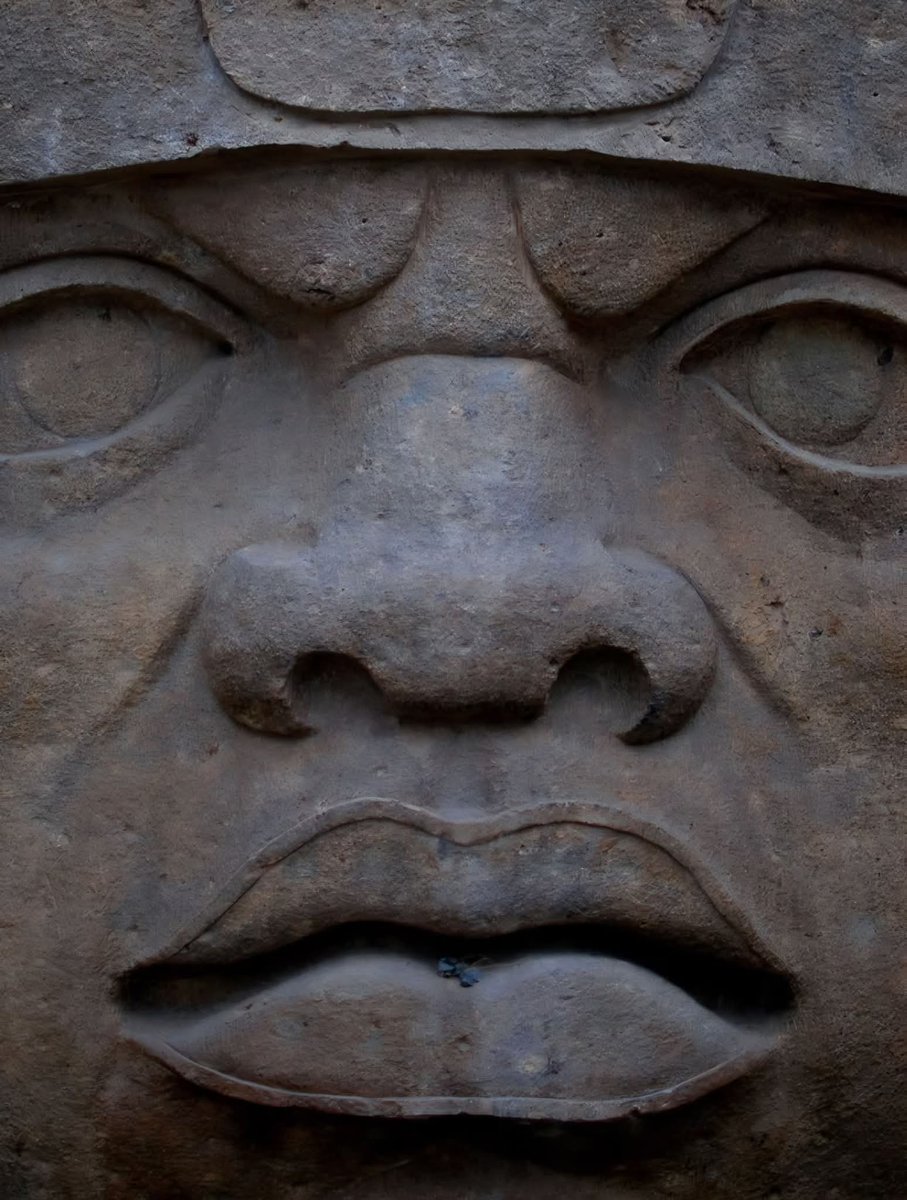
Here's a close up of one of the Olmec colossal heads.
The level of detail is remarkable. The size is extraordinary.
Yet we still don't know exactly how these massive monuments were carved, transported, and raised centuries before many of the civilizations that followed.
23
48
333
7,243
John the Alchemist retweeted

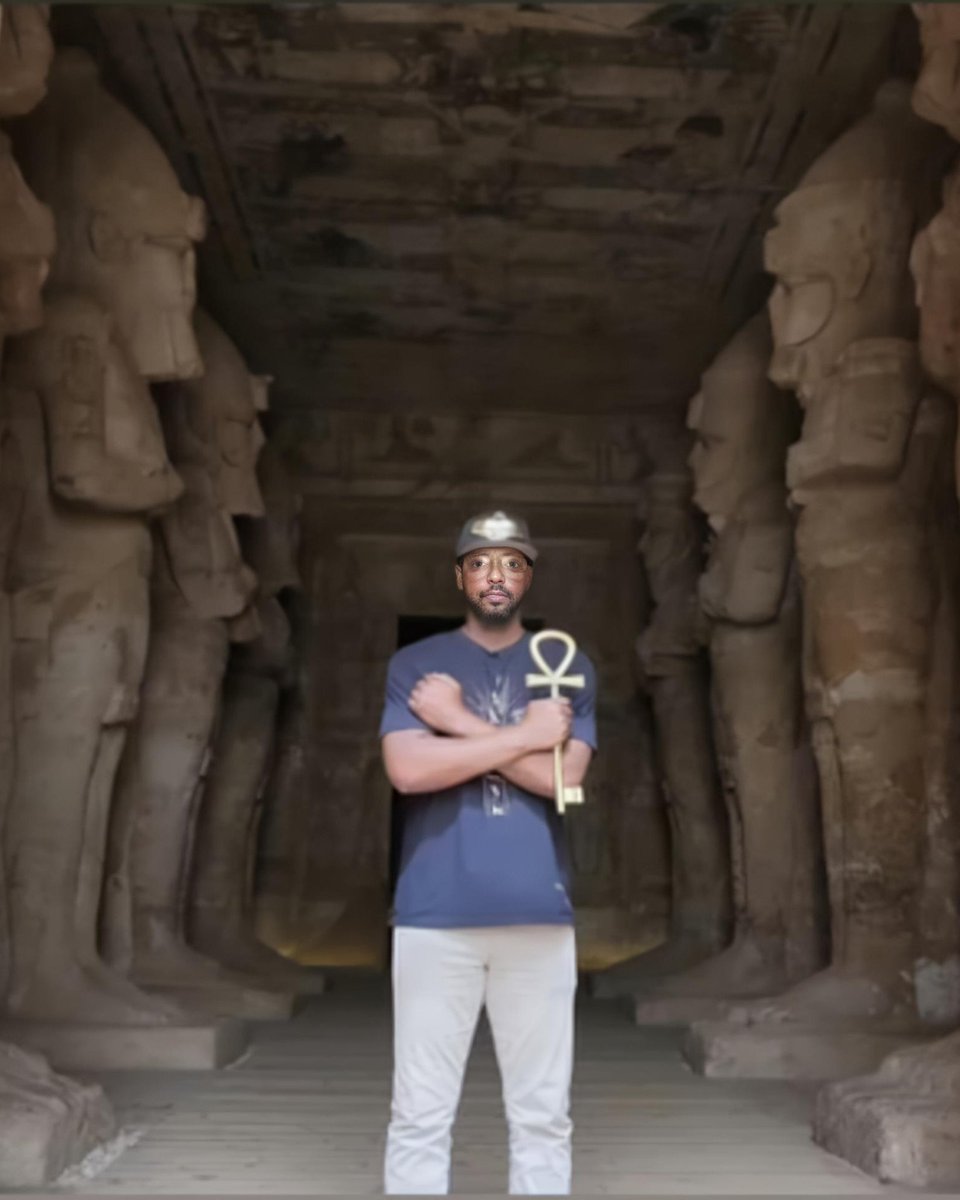
Abu Simbel is not just a temple… it is a message carved into the mountain. Built during the reign of Ramses II, this ancient Egyptian masterpiece was engineered with a level of precision that still challenges the modern mind. The colossal statues stare across the Nubian desert like guardians of forgotten knowledge, while the inner sanctuary was aligned so that sunlight would penetrate deep into the temple on specific days of the year.
Ask yourself: was this only a monument to a pharaoh… or was it a coded reminder that the ancients understood astronomy, vibration, sacred geometry, and the power of aligning architecture with the cosmos?
Abu Simbel is proof that ancient Egypt was not primitive. It was precise. It was intentional. It was cosmic. The deeper we look, the more we realize: the stones are still speaking. Vist Egypt with Billy Carson. Use the link in the comments to get a private invitation.
#4biddenknowledge #billycarson #billycarsonofficial #egypt
4
5
61
1,654
John the Alchemist retweeted

Jun 16
Any cool ideas for this Scorpion?
11
95
1,409
28,501

John the Alchemist retweeted

Ales Stenar: the part everyone pretends not to see
Ales Stenar is late Iron Age (around 1,400 years old) raised by a Scandinavian culture on a cliff above the Baltic. Sixty‑seven stones set in a long‑ship outline almost 70 meters from bow to stern.
And yet every signboard repeats the same line:
“No one knows who built it or why.”
That line only means no written record survived. It doesn’t mean the builders are a mystery.
It doesn’t mean the purpose is unknowable. We’re looking at a stone ship built by a culture whose entire symbolic world revolved around ships.
If we can plainly see the ship‑shape, doesn’t that already tell us something about its function?
If we recognize the form instantly, doesn’t that confirm it was meaningful to the people who made it?
But here’s the rub. If Ales Stenar is “obviously a ship”, because we recognize the material correlation, what does that say about other ancient stone configurations where we don’t recognize the correlation?
Maybe the problem isn’t that their purpose is lost. Maybe the problem is we’re not recognizing the obvious.
Maybe the shapes are still speaking;
we just don’t know the language anymore.
6
7
113
10,561
John the Alchemist retweeted
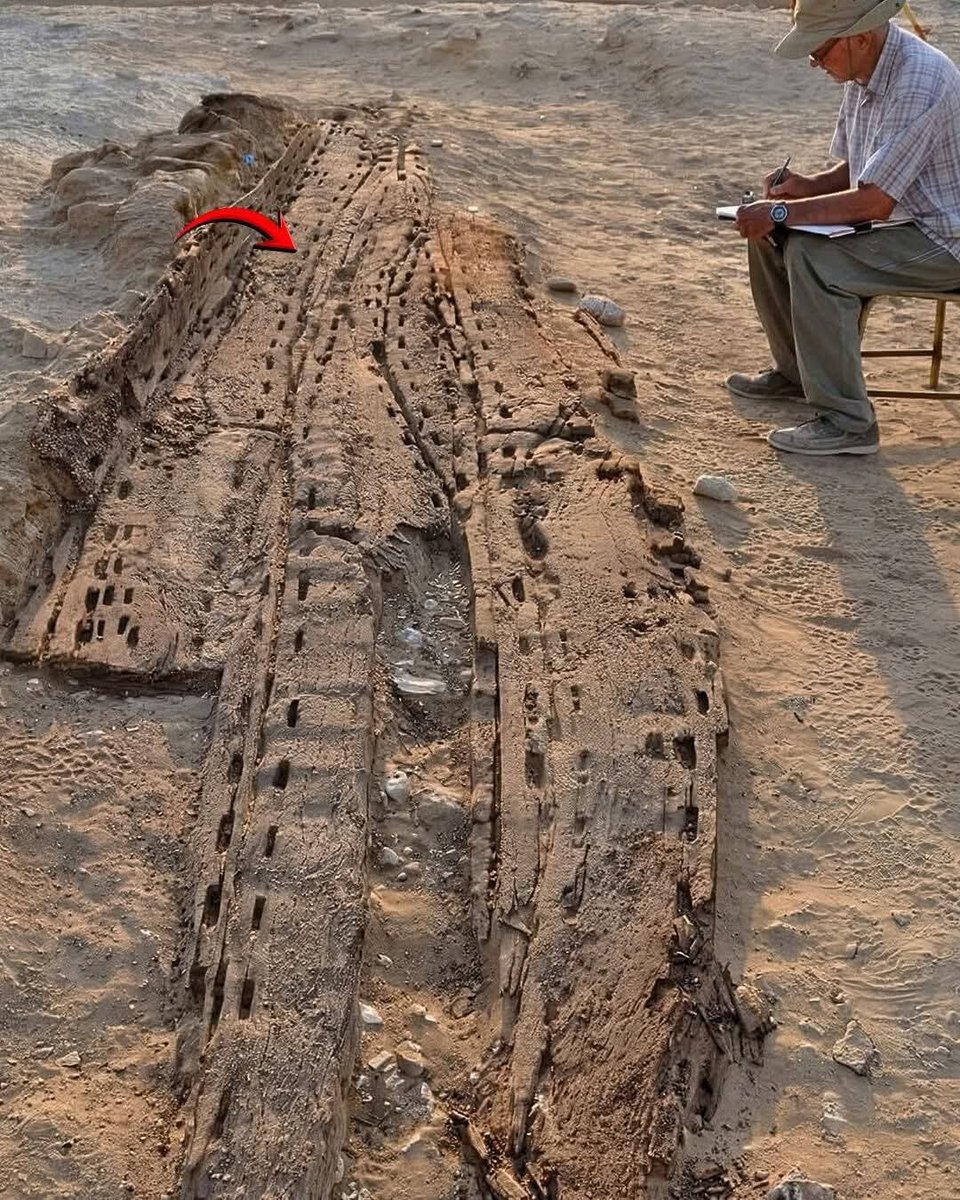
🚨 Buried Beside a Pharaoh's Tomb: The 5,000-Year-Old Boat Built for the Afterlife
Imagine standing beside a royal tomb 5,000 years ago and seeing something unexpected buried in the desert... a massive wooden boat.
But this boat had a secret.
It was never meant to sail across the Nile.
At Abydos in southern Egypt, archaeologists uncovered the wooden ribs of an ancient boat dating back to around 3,000 BC. Buried beside the tombs of Egypt’s earliest kings, it wasn't built for a journey in this world—it was prepared for a journey beyond it.
Ancient Egyptians believed death was not the end. They believed their rulers would continue living in another realm, and just like in life, a king would need transportation. So full-sized boats were carefully placed beside royal tombs, waiting for a voyage no living person could see.
Thousands of years later, only the boat's wooden skeleton remains. Yet those weathered ribs reveal something extraordinary. Long before modern tools or machinery existed, Egyptian builders had already mastered advanced boatbuilding techniques, creating some of the earliest plank-built boats ever known.
The discovery raises an intriguing question: Were these boats simply symbols, or did the Egyptians truly believe their kings would climb aboard and sail into eternity?
Hidden beneath the sands for five millennia, this silent vessel still carries one of ancient Egypt's greatest mysteries—a boat built not for a river, but for the afterlife itself.
3
26
143
2,446
John the Alchemist retweeted

BREAKING: It's wheelgun Wednesday.
I need to see them.
8
5
41
849
John the Alchemist retweeted

Jun 16
Yuraq Rumi, also know as Ñusta Hispana is a site that few people visit because of its remoteness. It is about a 6-hour drive west of Cusco.
It’s been on my list for years and I finally had a chance to go there last week.
This imposing monolith of white granite (covered with black fungus), whose name means "White Rock" in Quechua, is as mysterious as it is mind-blowing, given the apparent randomness and precision of all these cuts in such hard rock.
I was lucky enough to visit while archaeological excavations were underway. Two new excavation pits are set to open this week, including one at the base of the monolith, as indicated by the white strings visible on the ground.
Archaeologists have already found metal artifacts buried in the ground.
I'll do my best to keep you updated on any new discoveries coming out of this exciting project.
Check out the comments for additional photos.
111
418
4,022
284,617
John the Alchemist retweeted

Jun 16
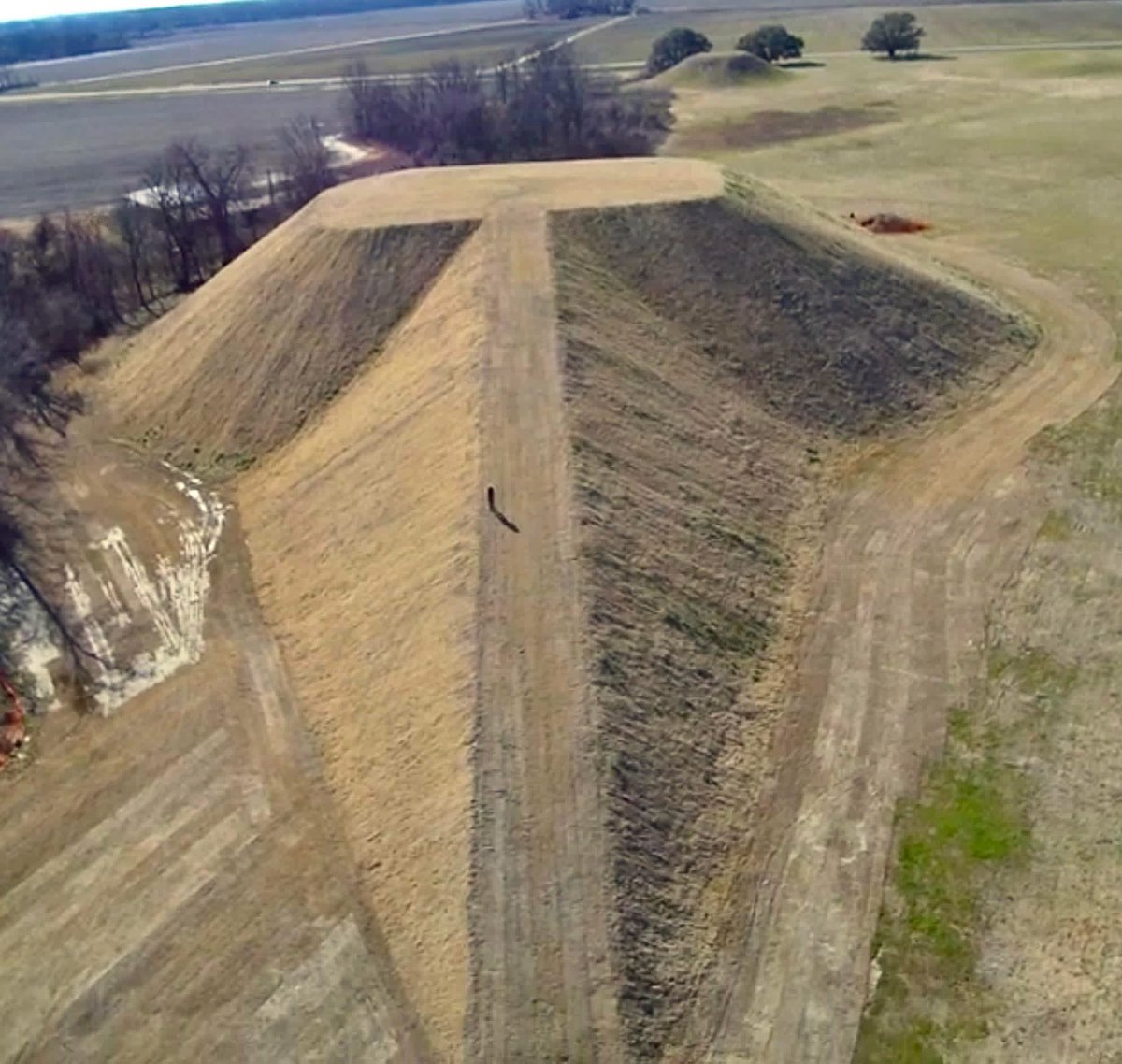
“One of the finest aerial photos I've ever seen of a Native American mound showing how massive the mound really is. That is me walking down the ramp. When in use a thousand years ago, there was a large temple structure on the top. This is the largest mound at the [once] 23-mound Winterville, Mississippi complex. Research on "botanicals" found at the site revealed this mound was the focal point of ceremonial rituals involving the use of some hallucinogenics.”
- @DrGregLittle2
📷 by Stan Prachniak
37
80
757
20,007
John the Alchemist retweeted
Jun 17
Don't worry about it.
42
51
675
30,823