
John 3:16. Husband to amazing wife. Pastor of a great church: Olive Street PCA, link below. WTS Philly Grad (MDiv, DMin). U.S. Air Force (Ret). Italian food.
Joined July 2022
- Tweets 4,027
- Following 440
- Followers 468
- Likes 6,522
78 Photos and videos









Jun 10
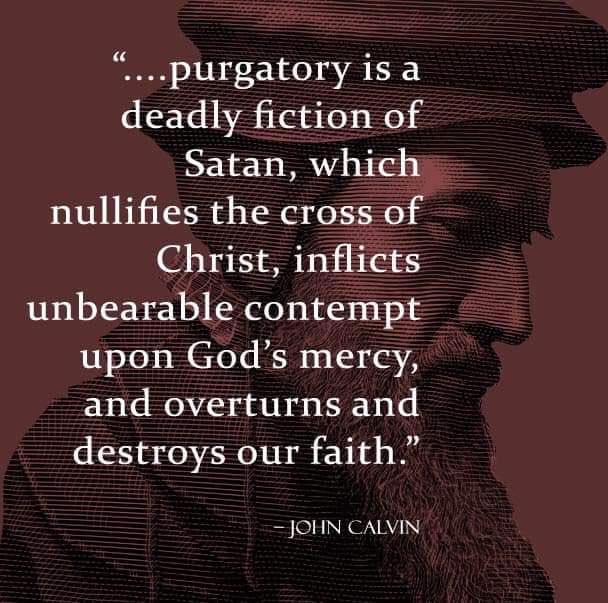
Since the West has rejected its Christian foundations, it also has rejected the only true objective standard by which to judge what is truly good and evil. Having removed that foundation, the West has both feet planted firmly in mid air, and can't even determine what is male and female let alone good and evil. We're now chasing the wind, and reaping the whirlwind.

74
May 20
Excellent:
May 20

Seeing some response to my statement on @MikhailaFuller's podcast about speaking in tongues. Some potentially helpful clarification:
First, I am not a cessationist (though I see myself being accused of it). I state in the interview that I believe that the spiritual sign gifts (tongues, prophesy, healing) still take place today, just not normatively like they were in the Apostolic era.
Nonetheless, I hold to the standard exegetical position that biblical tongues refer to known languages. In Acts 2, the foundational instance, foreign speakers understood the disciples in their own native languages, establishing the clearest precedent for interpreting the phenomenon throughout Scripture.
Secondly, while bliblical specialists and theologians debate whether tongues encompass human languages alone or include angelic speech, the consensus recognizes that a tongue functions as a language -- either immediately intelligible to hearers or requiring interpretation. The requirement that Paul places on interpretation in 1 Corinthians 14 indicates that tongues contain objective, propositional meaning subject to translation, and his statement that “every valid instance of tongues contains intrinsic, propositional meaning" reinforces this understanding.
A prominent scholarly argument identifies glossolalia as “the miraculous ability to speak unlearned human and (possibly) divine or angelic languages,” with the most common usage of “tongues” referring to ordinary human languages. The term γλῶσσα throughout the NT carries two primary meanings: the human organ or a human language, and careful word studies demonstrate that it never denotes non-cognitive utterance.
However, scholarly consensus isn’t absolute the core agreement across interpretations centers on cognitive content: tongues communicate meaningful, intelligible information rather than incoherent utterance.
Third, the early church evidence after the Apostolic era is virtually unanimous: the Early Church Fathers consistently interpreted the gift of tongues as the capacity to speak the many languages used across the earth. Their writings indicate the gift served an evangelistic purpose enabling communication with non-Christian populations.
The Patristics universally understood “tongues” in Acts and 1 Corinthians to refer to human languages, and ancient Christians understood the biblical gift of tongues as a miracle involving intelligible human languages. When the fathers described the phenomenon, they used concrete language: John Chrysostom wrote that believers “would suddenly speak in Persian, another in Latin, another in the language of the Indians or of some other people” (Homilies on First Corinthians, Homily 35), and Augustine stated that disciples “spoke in the languages of all the nations” (Sermon 269, Sermo CCLXIX.
The most significant, and almost exclusive, early figure associated with ecstatic speech for tongues was Montanus, a 2nd-century prophet whose followers emphasized speaking in tongues; he was actually excommunicated (not necessarily for his position on tongues) around AD 177. By the late 2nd century, ecstatic interpretations of tongues were present but only in context of ecclesiastical concern.
One interesting nuance appears with Philastrius in the 4th century, who understood angels as capable of conversing in all languages and believed the apostles received this same ability at Pentecost. However, this doesn’t represent a departure from the “knowable language” framework rather, the Early Church Fathers understood the gift of tongues as the ability to speak all languages spoken by people. The Church Fathers agreed the gift was the ability to speak all languages known to humankind, an ability they ascribed to angels, suggesting the “languages of angels” would not refer to a distinct heavenly language but rather to the capacity to communicate with anyone encountered.
The historical record shows no discussion among the fathers of ecstatic utterances, unknown languages, or supernatural unintelligible speech. The gift remained firmly anchored to practical, learnable human languages throughout Patristic interpretation.
So if you've stuck around this long, I think my position is both exegetically and historically sound.
137

Apr 17
This is such an important thing that Wes Huff touches on when answering questions/apologetics that we often forget: to paraphrase, there's a person behind the question:

Great balance of showing compassion while sharing truth as Wes Huff responds to the question of why a good God would allow evil:
"Well, that is arguably the hardest and most pressing apologetic question there is, because ultimately, the very tidy philosophical and theological answer isn't the right answer sometimes. You know, sometimes the right answer to the wrong question is the wrong answer, because I've encountered situations where someone has brought up a variation of the problem of evil to me, and I've just felt uneasy about maybe the tenor that they're coming at with the question...and asking them, 'You know, that's a great question. Why are you asking that question in particular?' and finding out once again (like the previous question related to it), they're personally hurting.
And so, in that sense, I could give a tidy answer about if you're positing that something is good, you're positing that there's an objective good and evil, and if there's an objective good and evil, then you're positing an objective law, and objective law needs an objective lawgiver. So where do we find the groundwork for an objective lawgiver to begin with? Otherwise, you may not like certain things, but to say they ought not to happen is actually an ethical leap to an objective reality that you may or may not have groundwork for.
But if that person is struggling because a family member of theirs has cancer, then that particular, maybe tidy, tied-up-in-a-nice-bow answer is not going to speak to them whatsoever. And so that's why that's the hardest question because there are actually very good answers to it, but often it doesn't speak to the person in front of you, because questions have questioners that sit behind them.
And one of the pitfalls of my chosen field of ministry apologetics is that sometimes we give answers where we talk at people rather than with people. And there's a danger to that because the Christian faith isn't just an intellectual assent, right? It's a personal relationship. And that should also be played out in the answers that we give..."
1
79
Apr 16
"God told me to do this"..."Tell me how that happened?"
Apr 15

How does God speak to Christians? Dr. Sinclair Ferguson explains how God does and does not speak to Christians. ligm.in/4slfm2X
1
47
Apr 15
I appreciate the sentiment. However, I would suggest that the issue is not between confessional faithfulness and missional breadth/seriousness. The issue is between confessional and biblical faithfulness and confessional and biblical unfaithfulness.
Apr 14

We believe the PCA can be confessionally faithful and big-tent confident...We believe we can honor our Constitution without weaponizing it. We believe we can take doctrine seriously and take mission seriously."
3
107
Apr 1
For those who may be curious, this captures what sermon prep is like throughout the week....every week! 😀

75
Feb 18
Such a wonderful articulation of the glorious good news:
Feb 18

Ben Sasse is facing death and reveling in the glory of grace.
This is what life is about.
2
125
Feb 11
"I praise you, for I am fearfully and wonderfully made. Wonderful are your works; my soul knows it very well." Psalm 139:14
Feb 11

An atheist Chinese surgeon didn't believe in Jesus until this happened
Video: CBN
90
Feb 3
Wonderful:

💥Can't believe he got the voice ...still...nothing had changed. For all those years, he really got that voice...wonderful Johnny Mathis ...Brilliant voice .
75
Jan 15
So well done on how to minister gospel in the face of a strong opposition and difficult questions. The gospel includes the consummation and the creation of a new heavens and earth, and we often forget that. It's amazing is to see how the Spirit begins to melt this man's heart.
Jan 15

If Proverbs 15:1 were a video. WOW!
God bless this brother in Christ !
57
Jan 4
Your post is misleading: That's not conversion, and he clearly does not understand the gospel.
Jan 4

Scott Adams says his final days will be guided by Christian faith as he announces his conversion.
Pray for Scott 🙏🏻✝️
156
30 Dec 2025
PSA: Aslan is ALWAYS on the move, not just when we hear a story of a surprising conversion of a public figure (or anyone else for that matter).
2
93
29 Dec 2025
The greatest performance of the National Anthem ever:

FREEDOM RINGS: 104-year-old World War II veteran Dominick Critelli, who fought at Normandy and in the Battle of the Bulge, wowed the crowd by performing the National Anthem on his saxophone at a New York Islanders game.
Critelli, a staff sergeant who immigrated to the U.S. from Italy when he was a child, spent 151 days in combat during World War II, earning three Bronze Stars.
111
26 Dec 2025
I think every pastor can relate to something like this. :) One time I greeted a young woman who had visited the church, and I asked how long she had been pregnant. Her answer? I'm not pregnant.
Needless to say, I had nothing else to SAY! 😯
Life Lesson: Let's just say, I'll never do that again... 😅
26 Dec 2025

One time, a family visited our church. They had a new baby. I was cutting up with the dad during the fellowship time, saying how cute the baby was. Then, I asked him, “Are you sure he’s yours?” I meant, the kid is so cute and you’re not. It was too late. I already said it. I kept talking. He didn’t even notice though cause he worked in a body shop with a bunch of men. He probably heard that joke often, and worse. Men cut up with each other. Yet, I thought what a stupid thing to say. They came back, nevertheless, often.
79
24 Dec 2025
Timely not just for kids, but for all of us...
"Look carefully then how you walk, not as unwise but as wise, making the best use of the time, because the days are evil." (Eph 5:15-16)

1
85
9 Dec 2025
Amazing:
1 Long ago, at many times and in many ways, God spoke to our fathers by the prophets, 2 but in these last days he has spoken to us by his Son, whom he appointed the heir of all things, through whom also he created the world. 3 He is the radiance of the glory of God and the exact imprint of his nature, and he upholds the universe by the word of his power. After making purification for sins, he sat down at the right hand of the Majesty on high, 4 having become as much superior to angels as the name he has inherited is more excellent than theirs. (Hebrews 1:1-4)
9 Dec 2025
What Christmas is all about.
Sinclair Ferguson on the staggering wonder of the incarnation.
79
9 Dec 2025
🔥🎯
9 Dec 2025

The ideological rift runs deep. I’m not interested in asking white people to repent & pay attention to my black skin. Also, not interested in wading through Beelzebub-ian race realism sewage from the other side. Pray for the PCA. pcaprayerandlament.com/?fbcl…
69
3 Dec 2025
Excellent resource:
3 Dec 2025

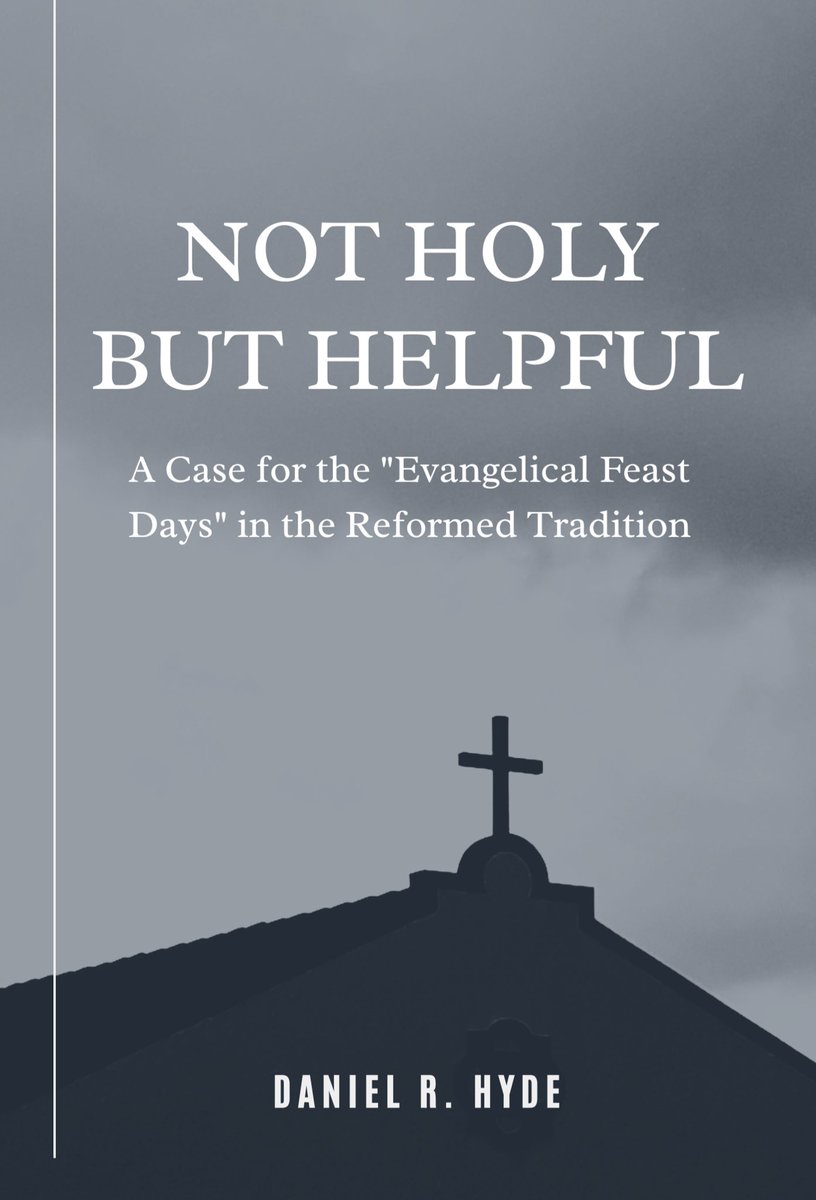
The historic Reformed Catholic churches rejected medieval holy days, but retained freedom to celebrate “evangelical feast days”—Xmas, Good Friday, Easter, Ascension, & Pentecost. These days weren’t holy but helpful ways to commemorate Christ.
#Advent
🔗 danielrhyde.com/articles/not…
2
115
26 Nov 2025
Just like I remember it: 😂

59