
Climate Scientist @metoffice 🌍 🌊 | Exploring AMOC and global ocean circulation | Views are my own
Joined May 2020
- Tweets 1,133
- Following 493
- Followers 575
- Likes 3,233
56 Photos and videos


Pinned Tweet

26 Feb 2025
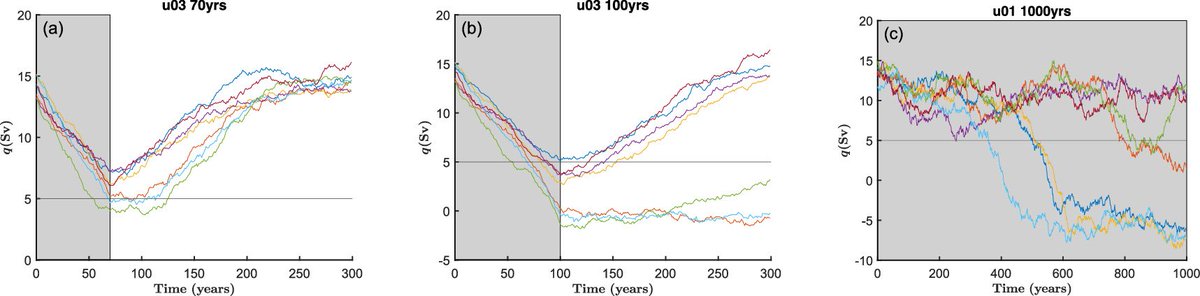
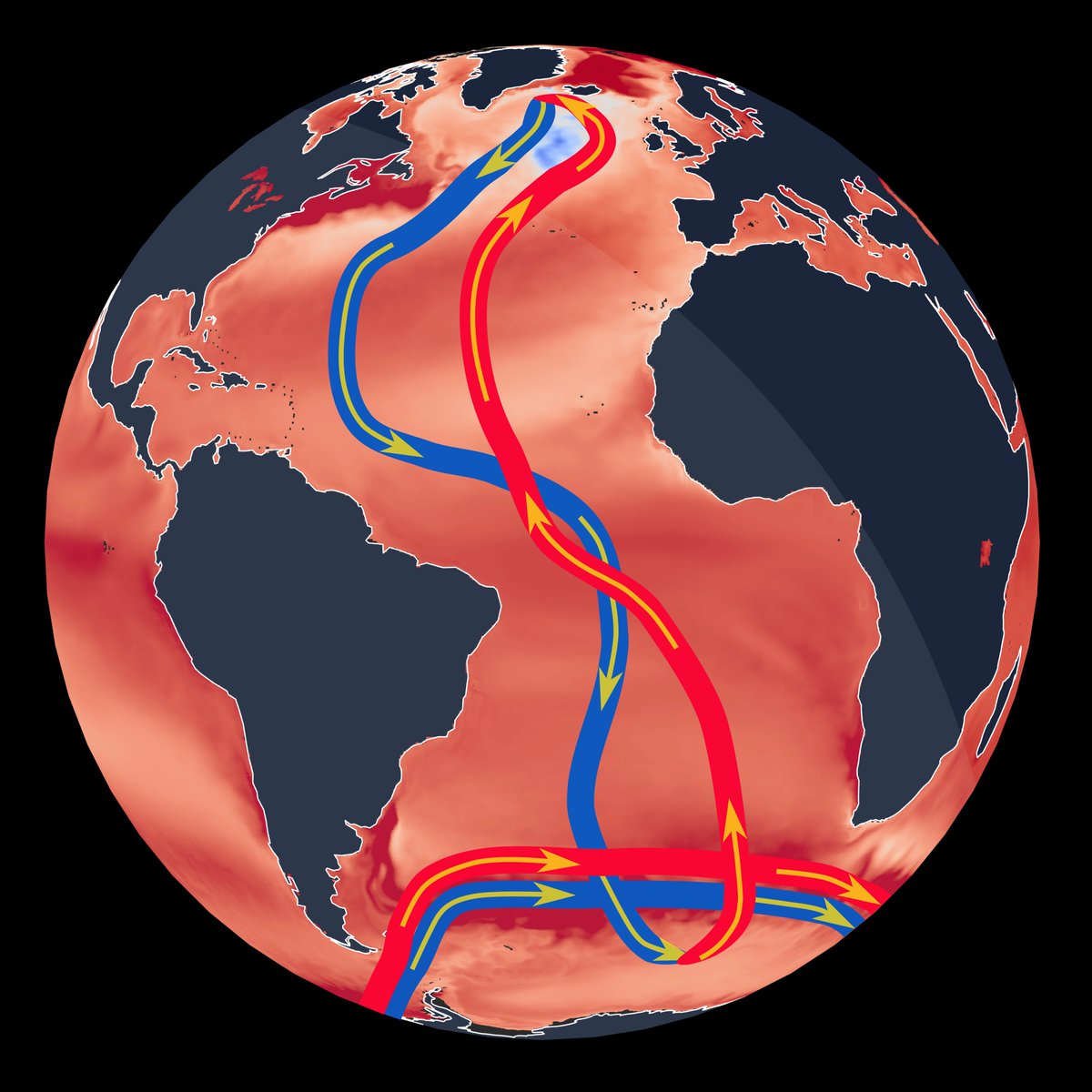
🌊 Today in @Nature: Is the AMOC on the brink of collapse?
Unlikely before 2100—but the risks are real 🚨
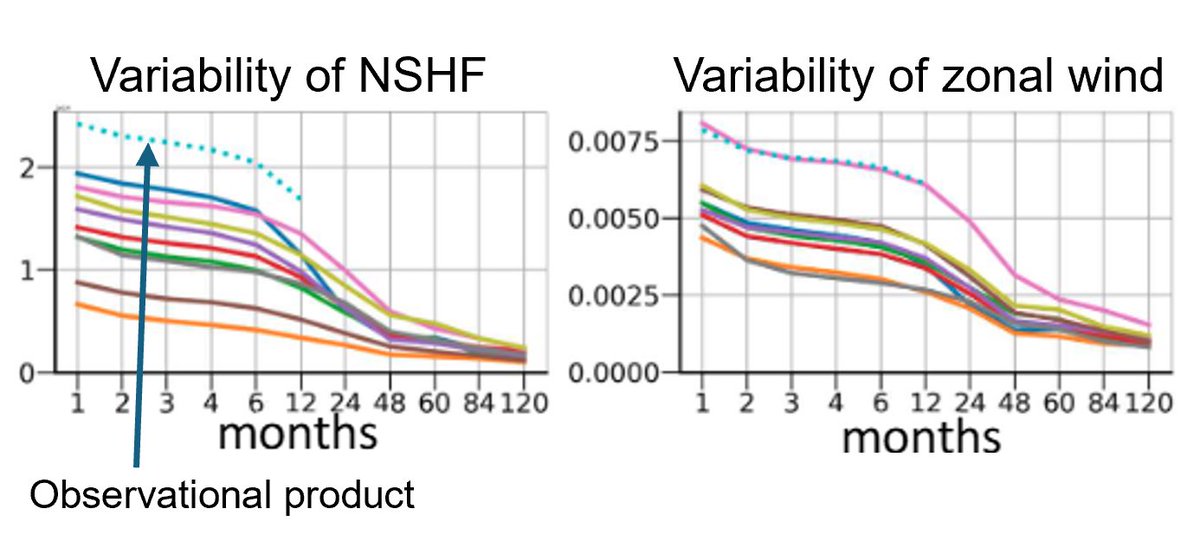
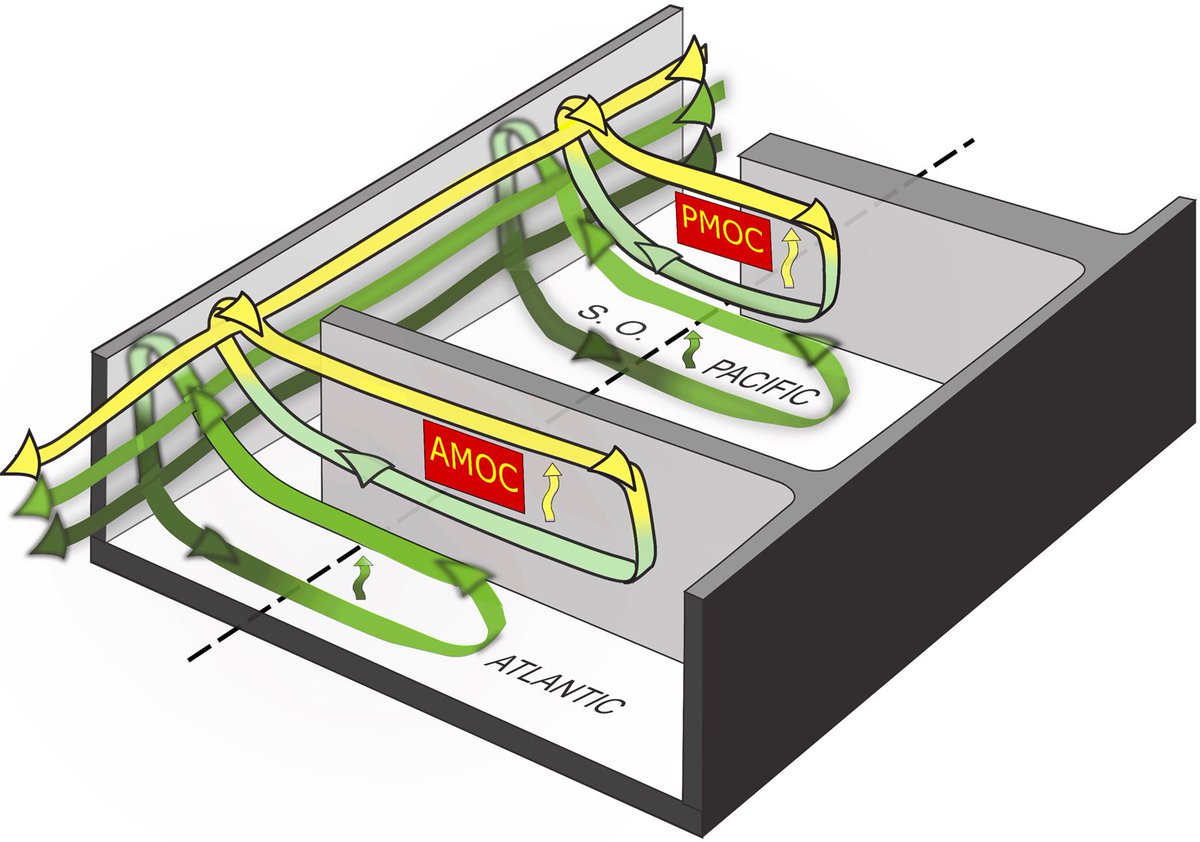
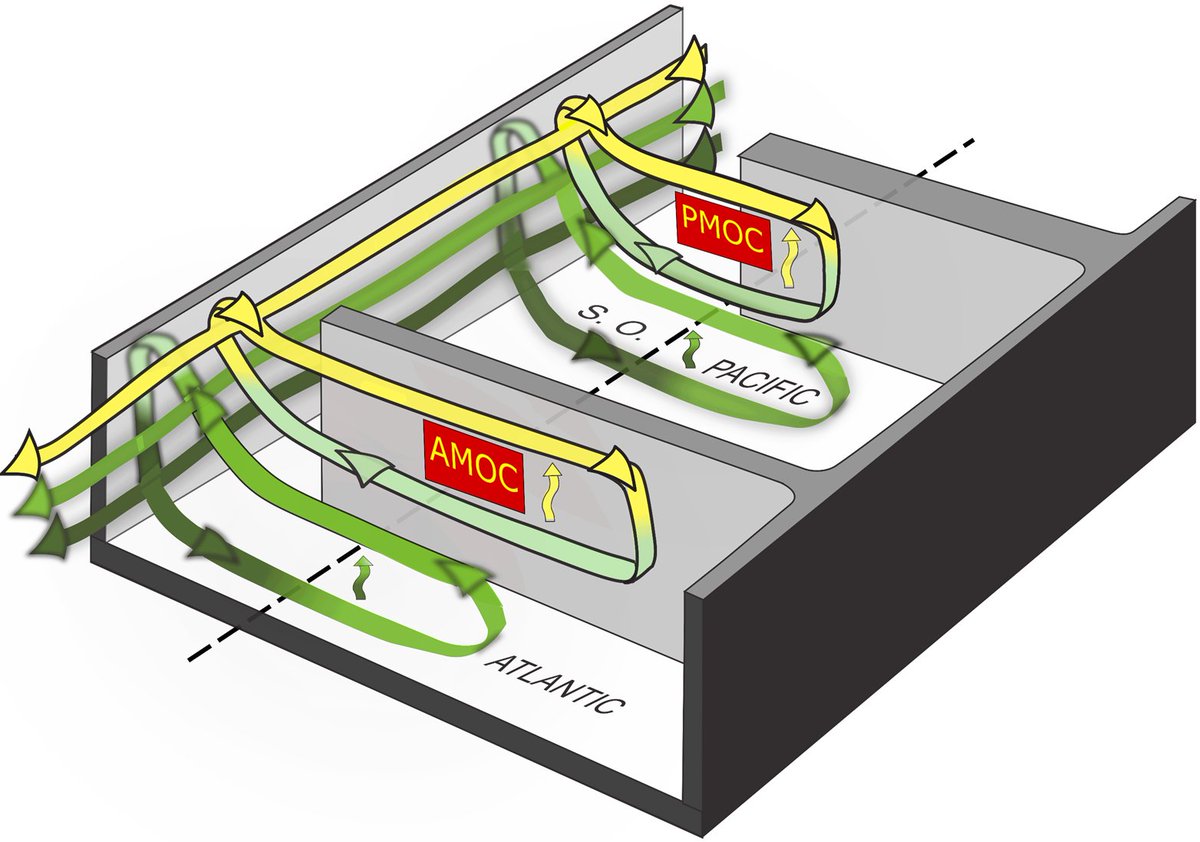
We find Southern Ocean winds keep this vital ocean “heat engine” running, even under extreme #climatechange. But the Pacific holds a surprise…
Let’s explore 🧵👇
33
315
898
178,914
May 11
A balanced overview of some of the latest AMOC science and debates.
There is still substantial uncertainty, and while collapse cannot be ruled out, claims of very high collapse probabilities (>50%) currently go beyond the combined evidence from observations and models.

Scientists are increasingly worried that a key Atlantic current, which delivers warmth to northern Europe and shapes weather globally, is at risk of collapse.
Multiple lines of evidence suggest it may be nearing a tipping point.
e360.yale.edu/features/amoc-…
1
2
9
484
May 11
For those interested, ClimateAdam has put together an engaging video on some of the latest AMOC science and debates, including a range of perspectives and uncertainties surrounding future risks: youtu.be/8eJ-TFIlLK0?si=CfCj…
2
2
180
Apr 27
New study on blocking the Bering Strait to prevent an AMOC collapse.
Shows how complex the system is. Interventions like this are unlikely to offer a simple solution.
Cutting greenhouse gas emissions remains the most reliable way to reduce AMOC risk.
livescience.com/planet-earth…
1
1
1
88
Jon Baker retweeted

Apr 23
If the Atlantic Meridional Overturning Circulation shut down, the knock-on effects could release hundreds of billions of tonnes of CO2, raising global temperatures even further newscientist.com/article/252…
1
15
46
5,432
Jon Baker retweeted

Apr 17
南大西洋の海面塩分バイアスを補正したらAMOC弱化が明瞭になったという結果。
南極海の役割は依然として不明瞭、不確実性の原因で
・南極海のお陰で「停止」まではしないというプラス面
・南極海が炭素放出に転じうるマイナス面
の両方が指摘されてます。
AMOCに限らず、気候は崩壊を続けてます。
Apr 16

theguardian.com/environment/…
…あー…これ、もう決定打やな。
専門家の人、志あるメディアの人、逃げずにちゃんと書いてくれ。
1
39
168
18,364
Jon Baker retweeted
Apr 17
If the Atlantic Meridional Overturning Circulation shut down, the knock-on effects could release hundreds of billions of tonnes of CO2, raising global temperatures even further newscientist.com/article/252…
13
69
133
10,886
Jon Baker retweeted

Apr 16
Collapse of critical Atlantic current more likely than thought channel4.com/news/collapse-o… via @c4ciaran
14
68
161
95,987
Jon Baker retweeted

Apr 16
A nice coverage by @CNN of our article published in Science Advances last week: cnn.com/2026/04/16/climate/a…
2
5
23
748
Apr 14
Quoted in this @newscientist article on study linking AMOC collapse to large CO₂ release from Southern Ocean.
“To see this play out in a warmer climate, and with such a large increase in CO₂, is quite striking.”
Key uncertainties remain in SO response
newscientist.com/article/252…
2
2
3
223
Feb 25
Speaking at #OSM2026 tomorrow (Thu 11:50, Hall 1) in the ocean overturning dynamics session.
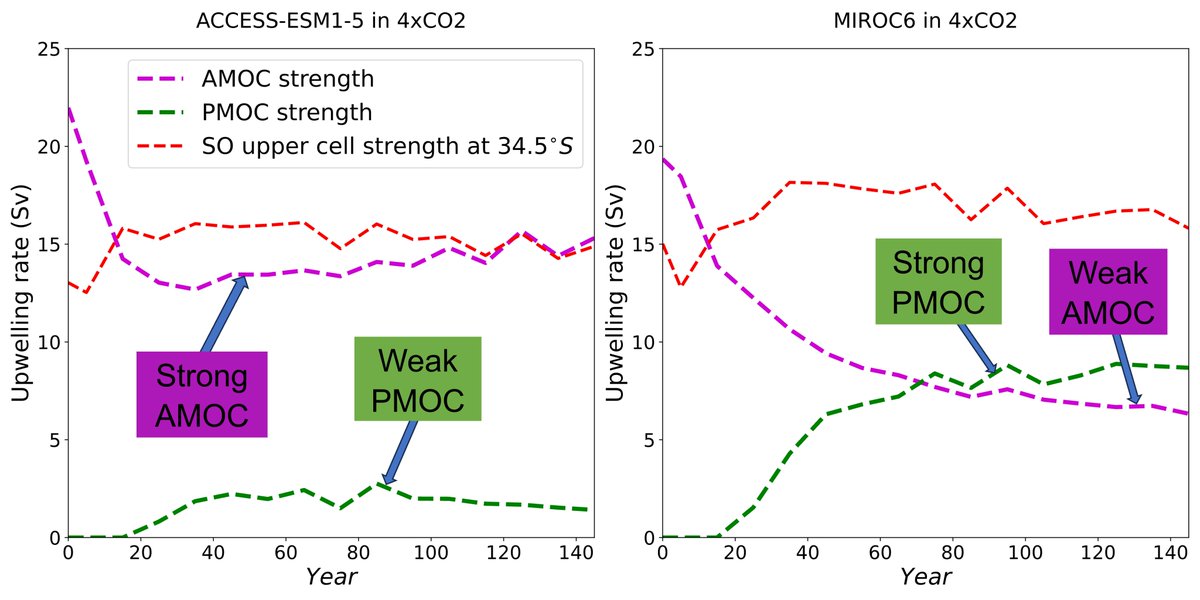
Presenting results from our Nature paper on why the AMOC weakens but is unlikely to collapse this century: Southern Ocean winds sustain the circulation in climate models.
1
7
229

We have a new study out! In this work, we examine how the Gulf Stream & Kuroshio co-vary, & this is tied to atmospheric variability & potentially sea-ice anomalies. However, this linkage may be changing in a warming world. @ScienceAdvances
➡️ #OpenAccess: science.org/doi/10.1126/scia…
3
18
66
6,816
4 Dec 2025
📢 PhD opportunity!
“To collapse or not: the stability of the AMOC in a warming climate”
Deadline: 8 Jan 2026
Work with Bristol, Liverpool & the Met Office on AMOC stability using observations, models & AI.
Details: nercgw4plus.ac.uk/projects-2…
1
1
220
24 Oct 2025
Exciting to see our overturning pathway method applied in new research!
Song et al. use it on CMIP6 PMIP glacial models and find these pathways shape the AMOC response - confirming our earlier idealised results for glacial climates 🌊
nature.com/articles/s41467-0…
1
2
241
12 Oct 2025
Always interesting to see this come up again 😄
Our Nature paper didn’t “redefine” collapse — no single threshold, though ~6 Sv is common.
0 Sv only in extreme 4×CO₂ runs (full shutdown).
Real-world forcing: models stay above 6 Sv this century — no collapse.
Clarified 🌊👇
12 Oct 2025

High resolution images from satellite and from eddy-resolving ocean circulation models point to an ongoing decline of the Atlantic overturning circulation, a key ocean current for our climate. Read more about it in my new blog article. 🌊
realclimate.org/index.php/ar…
1
1
4
281
8 Oct 2025
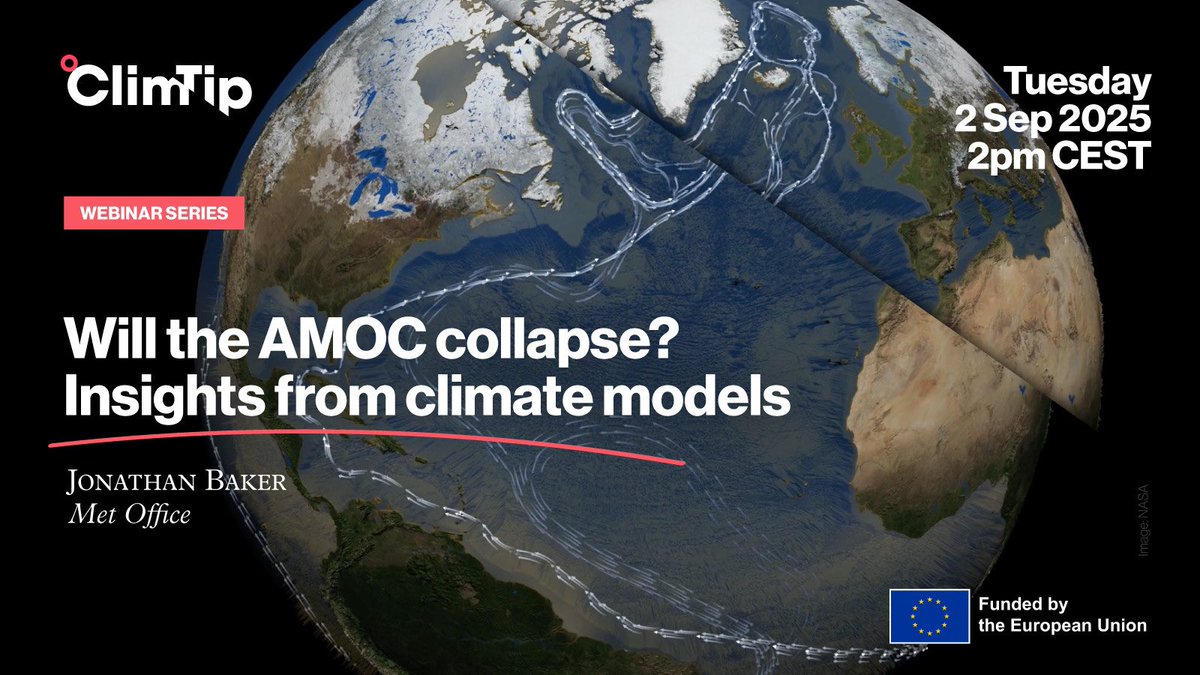
🎥 My recent ClimTip talk on our Nature paper is now online!
An AMOC collapse is unlikely this century as Southern Ocean winds pull deep waters up to the surface, stabilising it in a weakened state. Still, global ocean circulation will change greatly 🌊
youtube.com/watch?v=ScQGBifH…

1
1
364