Author of Natural Lection (bit.ly/4ucFCxc), Virality Vitality (bit.ly/4t6JYVE Discount: SNPF25), postdoc, libraryofbabel.info, he/him
- Tweets 20,908
- Following 6,162
- Followers 9,243
- Likes 87,699





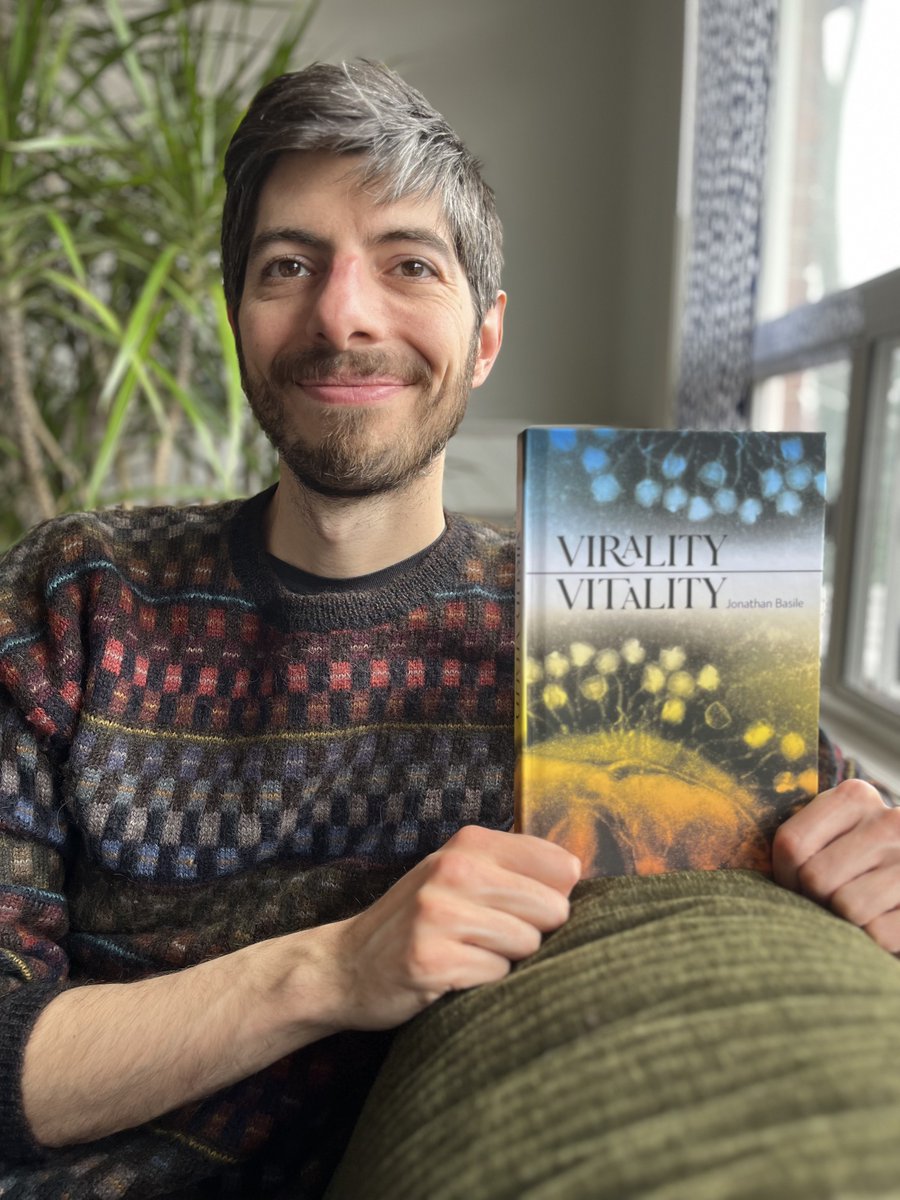
ALT A smiling man (me) wearing a lovely sweater, holding a book he is evidently very proud of. The book is titled Virality Vitality, and has a blue and orange cover, with an image of a cell being invaded by ghostly bacteriophages









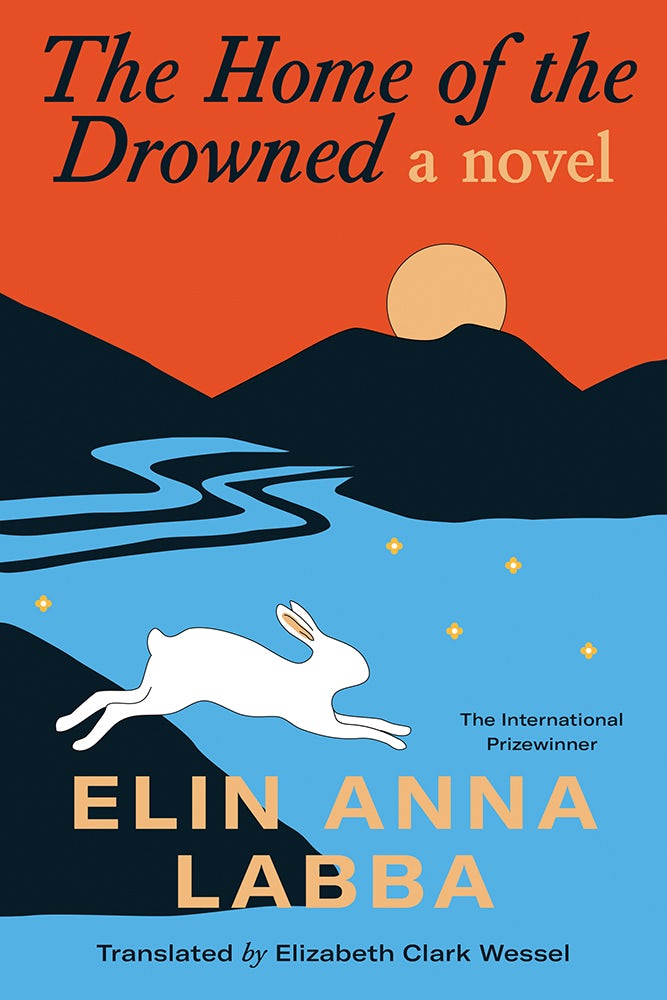
ALT Book cover for The Home of the Drowned: A Novel by Elin Anna Labba, translated by Elizabeth Clark Wessel. An illustration of a blue lake surrounded by mountains under a red sky and yellow sun. A white hare jumps in the foreground. Text in black and gold.
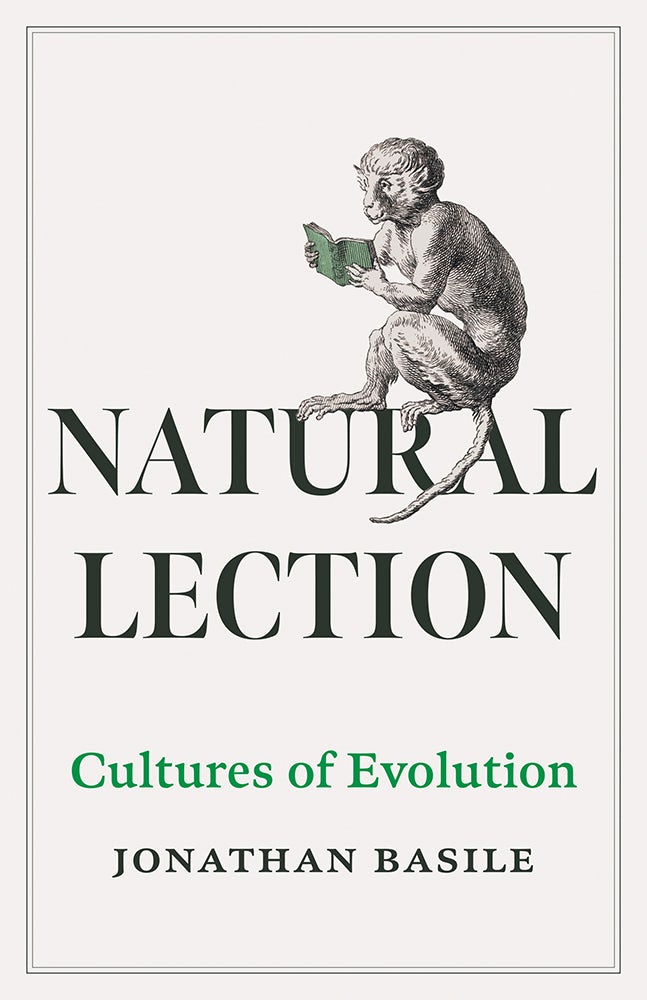
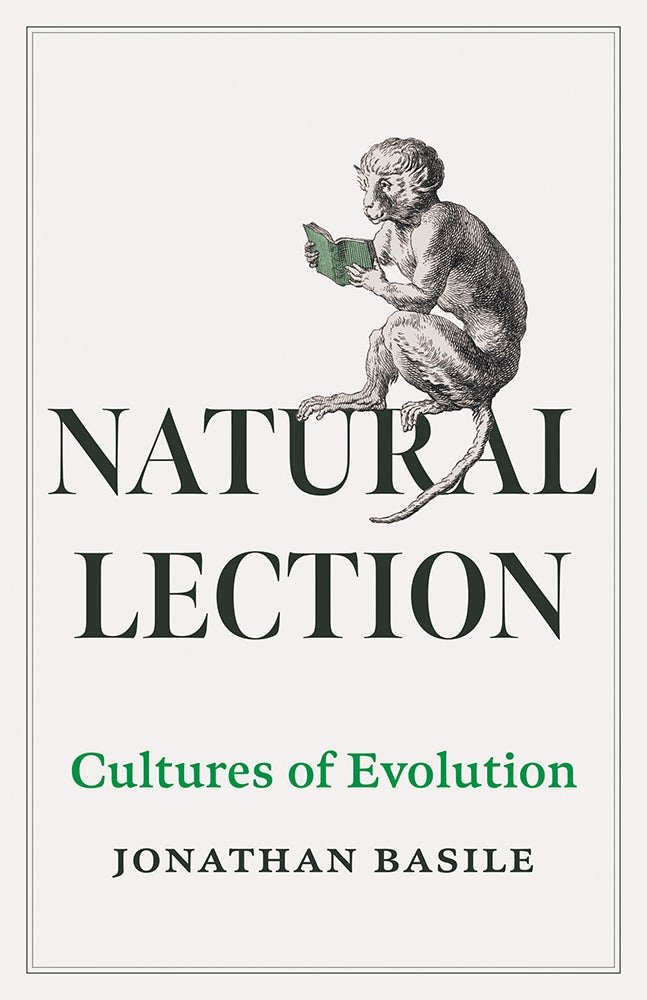
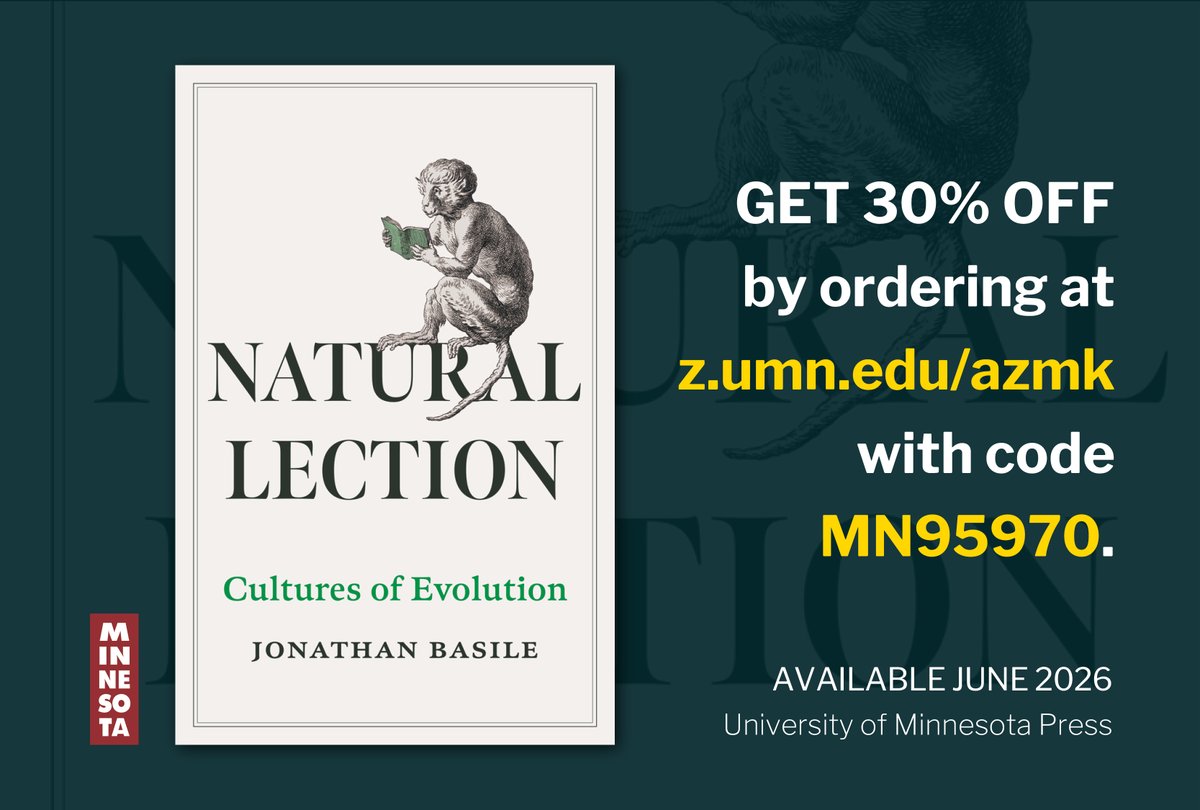
ALT Book cover for Natural Lection: Cultures of Evolution by Jonathan Basile. White background with a drawing of a macaque reading a book in its hands while sitting on top of the large black title letters.

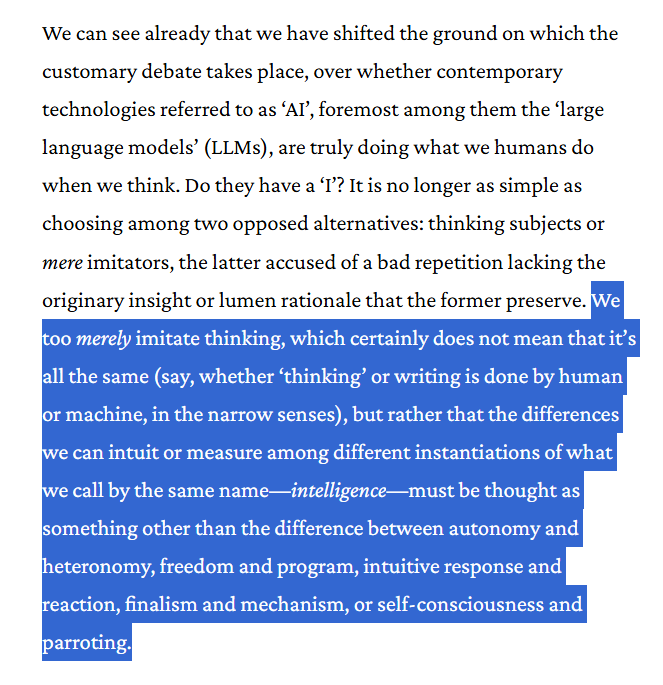
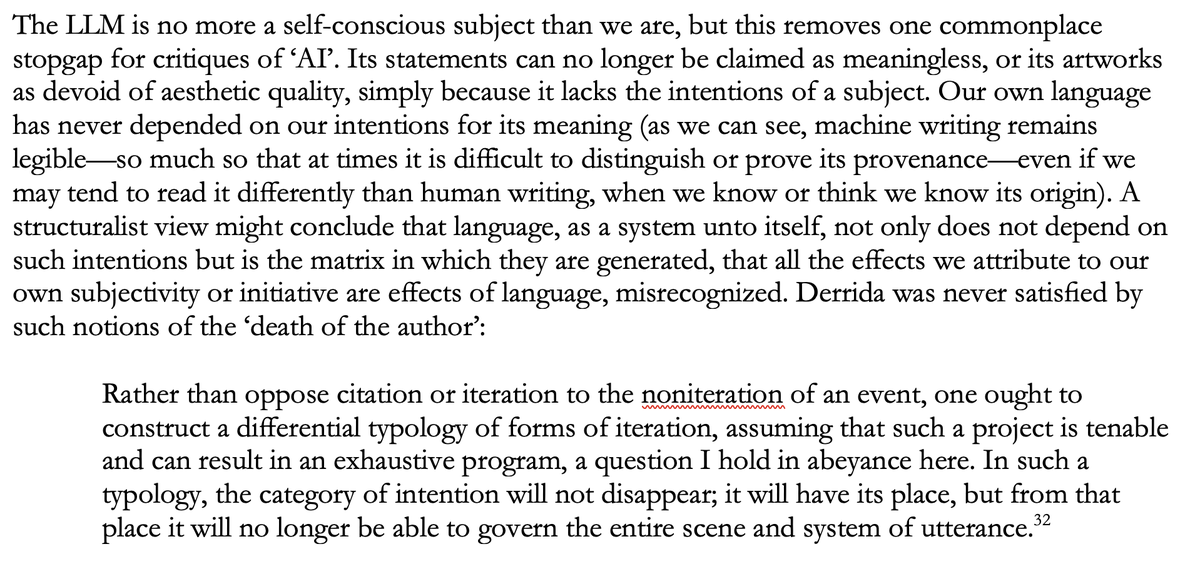
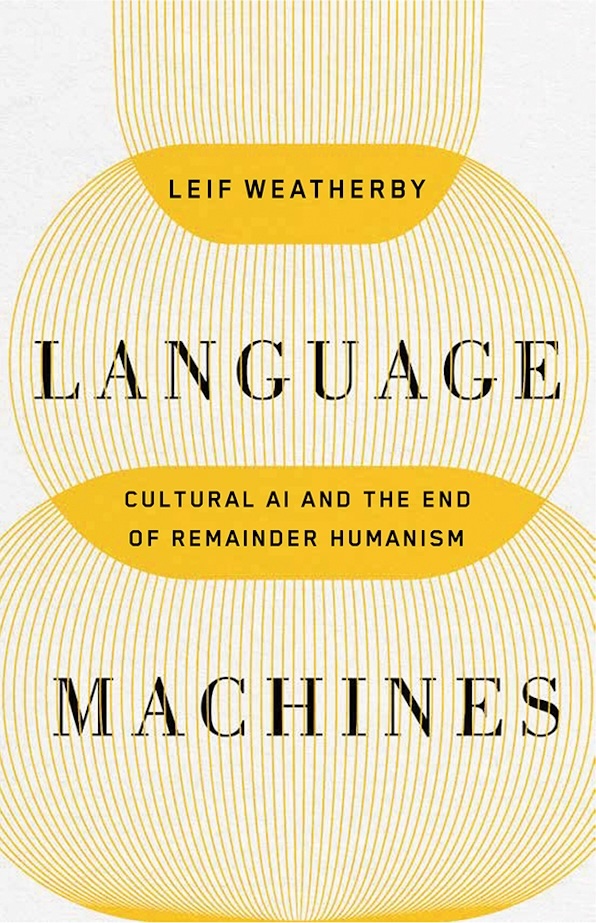
ALT The LLM is no more a self-conscious subject than we are, but this removes one commonplace stopgap for critiques of ‘AI’. Its statements can no longer be claimed as meaningless, or its artworks as devoid of aesthetic quality, simply because it lacks the intentions of a subject. Our own language has never depended on our intentions for its meaning (as we can see, machine writing remains legible—so much so that at times it is difficult to distinguish or prove its provenance—even if we may tend to read it differently than human writing, when we know or think we know its origin). A structuralist view might conclude that language, as a system unto itself, not only does not depend on such intentions but is the matrix in which they are generated, that all the effects we attribute to our own subjectivity or initiative are effects of language, misrecognized. Derrida was never satisfied by such notions of the ‘death of the author’: Rather than oppose citation or iteration to the noniteration of
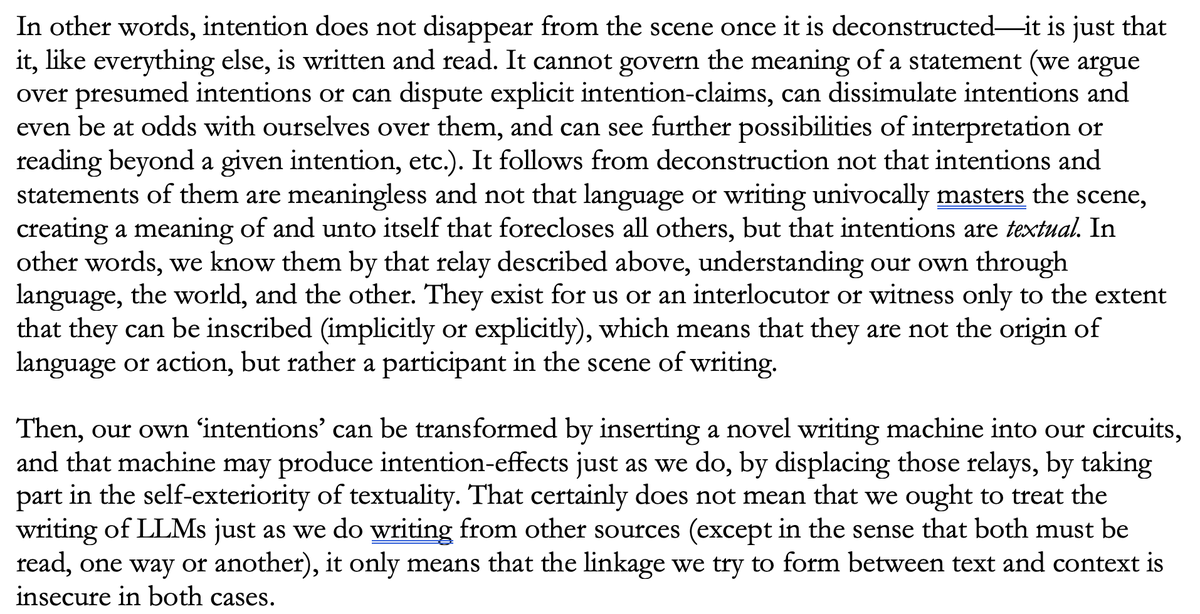
ALT In other words, intention does not disappear from the scene once it is deconstructed—it is just that it, like everything else, is written and read. It cannot govern the meaning of a statement (we argue over presumed intentions or can dispute explicit intention-claims, can dissimulate intentions and even be at odds with ourselves over them, and can see further possibilities of interpretation or reading beyond a given intention, etc.). It follows from deconstruction not that intentions and statements of them are meaningless and not that language or writing univocally masters the scene, creating a meaning of and unto itself that forecloses all others, but that intentions are textual. In other words, we know them by that relay described above, understanding our own through language, the world, and the other. They exist for us or an interlocutor or witness only to the extent that they can be inscribed (implicitly or explicitly), which means that they are not the origin of language or action
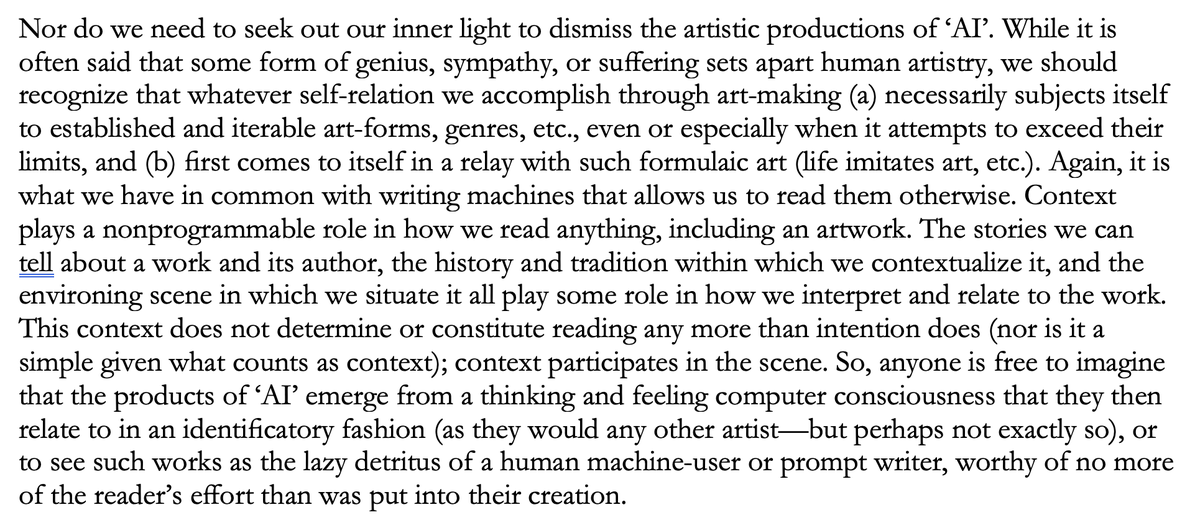
ALT Nor do we need to seek out our inner light to dismiss the artistic productions of ‘AI’. While it is often said that some form of genius, sympathy, or suffering sets apart human artistry, we should recognize that whatever self-relation we accomplish through art-making (a) necessarily subjects itself to established and iterable art-forms, genres, etc., even or especially when it attempts to exceed their limits, and (b) first comes to itself in a relay with such formulaic art (life imitates art, etc.). Again, it is what we have in common with writing machines that allows us to read them otherwise. Context plays a nonprogrammable role in how we read anything, including an artwork. The stories we can tell about a work and its author, the history and tradition within which we contextualize it, and the environing scene in which we situate it all play some role in how we interpret and relate to the work. This context does not determine or constitute reading any more than intention does (nor is
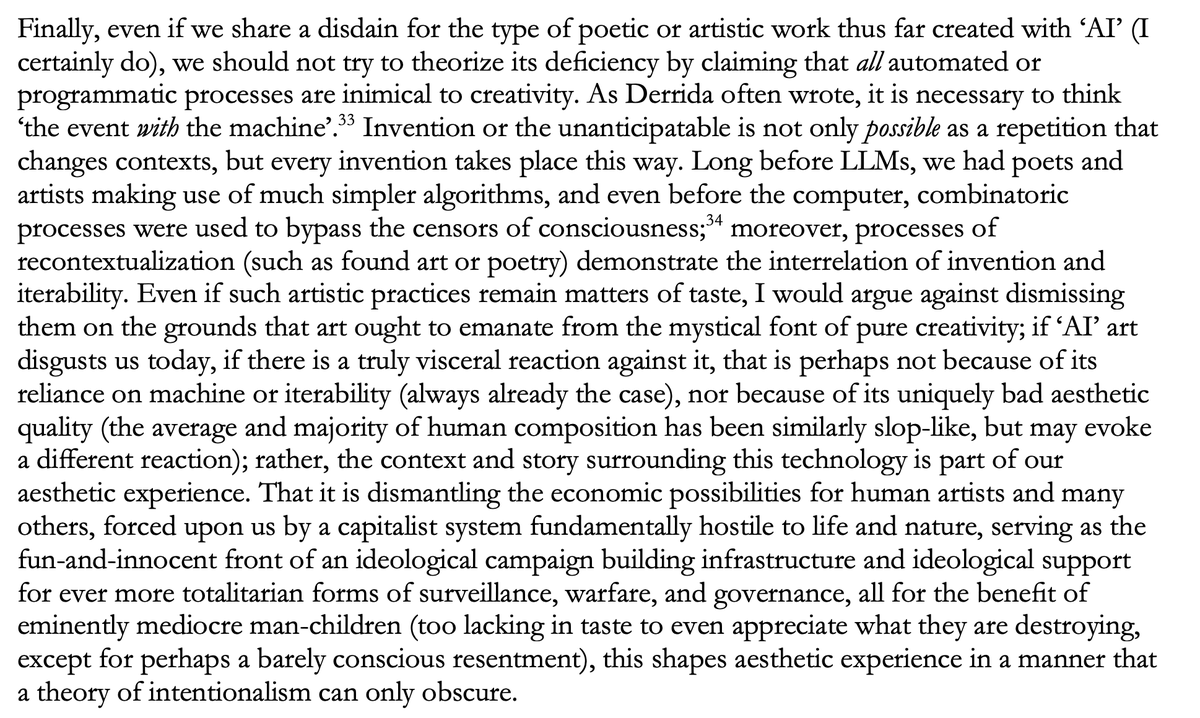
ALT Finally, even if we share a disdain for the type of poetic or artistic work thus far created with ‘AI’ (I certainly do), we should not try to theorize its deficiency by claiming that all automated or programmatic processes are inimical to creativity. As Derrida often wrote, it is necessary to think ‘the event with the machine’. Invention or the unanticipatable is not only possible as a repetition that changes contexts, but every invention takes place this way. Long before LLMs, we had poets and artists making use of much simpler algorithms, and even before the computer, combinatoric processes were used to bypass the censors of consciousness; moreover, processes of recontextualization (such as found art or poetry) demonstrate the interrelation of invention and iterability. Even if such artistic practices remain matters of taste, I would argue against dismissing them on the grounds that art ought to emanate from the mystical font of pure creativity; if ‘AI’ art disgusts us today, if th