
Cognitive Scientist and Assistant Professor @Illinois_Alma. Studies language and semantic development and computational models.
Joined February 2011
- Tweets 1,036
- Following 827
- Followers 316
- Likes 2,476
2 Photos and videos
Jon Willits retweeted

Jun 3
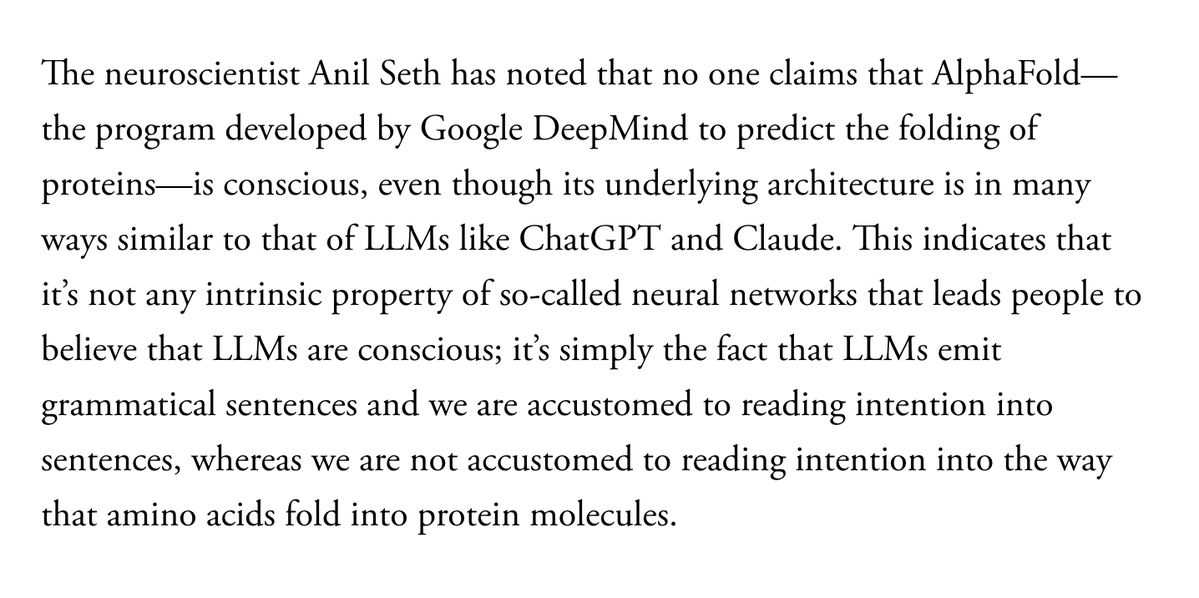
this is an interesting point in the new ted chiang piece – no one really claims that alphafold is conscious, or that sora or midjourney or dall-e are conscious
162
434
4,158
323,854
Jon Willits retweeted
May 31
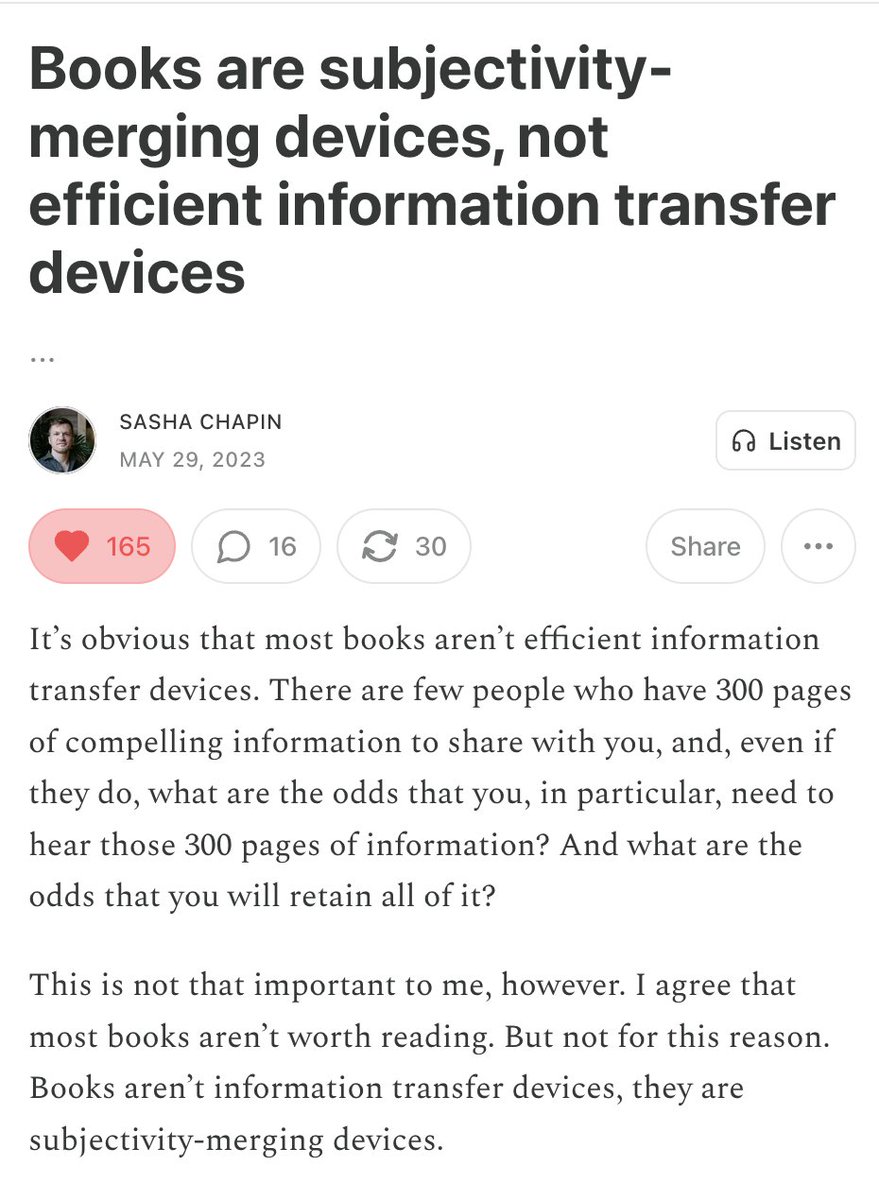
now that AI makes information consumption and transformation easier than ever I would like to bring back this old banger by Sasha Chapin about how books are not information transfer devices but subjectivity-merging devices
in fact I would say content consumption in general is more about subjectivity-merging than information transfer, which is why I am generally much more interested in writing by humans than by AI
25
104
1,278
73,079

Jon Willits retweeted

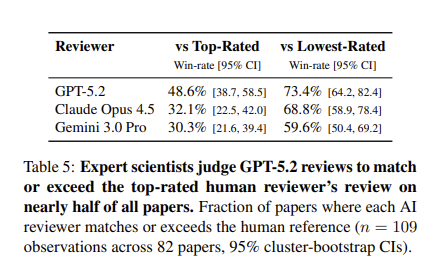
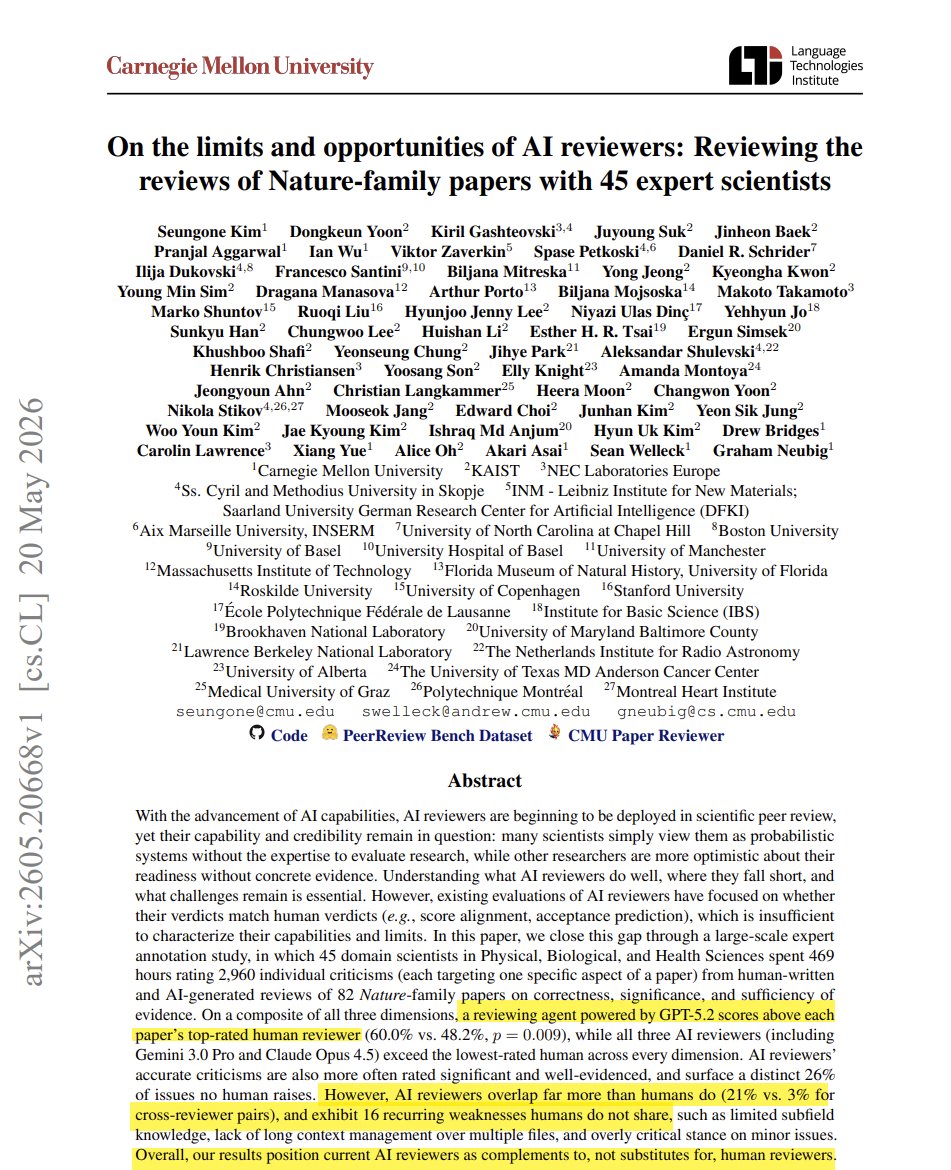
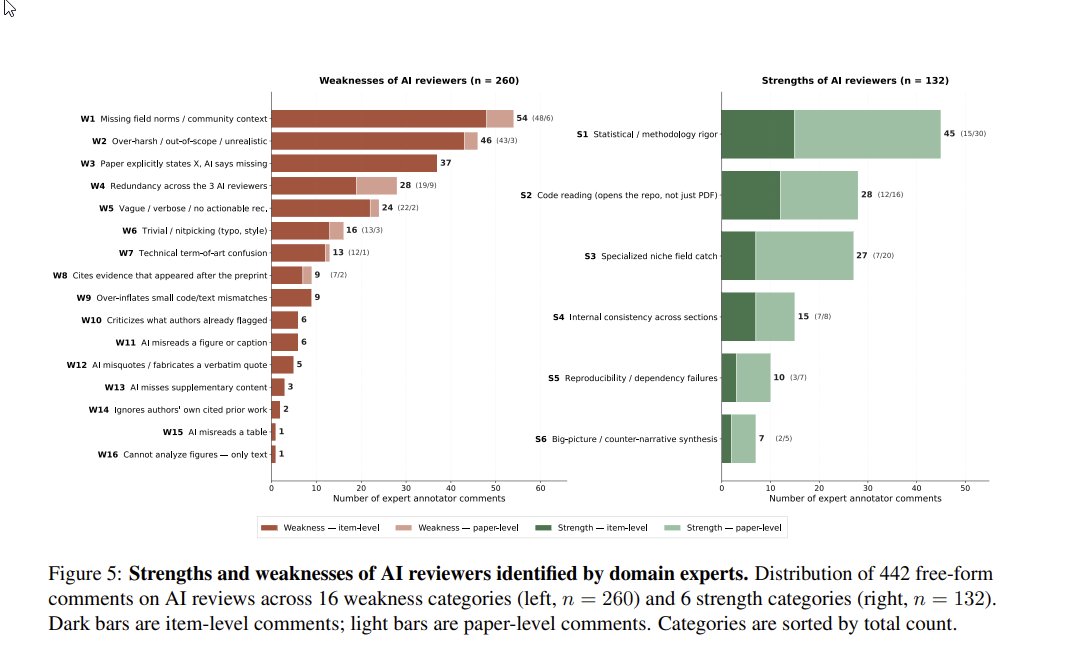
GPT reviewer "scores above each paper's top-rated human reviewer" but AI review agents "overlap far more than humans do...and exhibit 16 recurring weaknesses humans do not share..." Results "position current AI reviewers as complements to, not substitutes for, human reviewers."
May 21

Seems GPT-5.2 reaches expert level in peer review: 45 scientists took 469 hours evaluating human & AI reviews on 82 papers.
"Surprisingly, current AI reviewers are competitive even with the top-rated reviewers in Nature’s official peer review..." though not without weaknesses.
2
8
25
9,141
Jon Willits retweeted

May 15
asking people to read ai-generated text is offensive.
this is not because ai text is intrinsically bad. rather, the author has not paid a cost to write the text himself. this cost is a credible signal he finds its communication important.
so: not paying that cost is telling
248
513
6,136
527,518
Jon Willits retweeted

May 15
Let me elaborate on why I think imposing minor but tangible penalties for hallucinations on a preprint server is appropriate (one-year bans in any single outlet are really not a huge deal).
As you all know, I've been an "AI booster" writing on human slop before it was cool and getting flak for it. But journal editors really don't have a good option now. No matter what you do, you lose. Explicitly imposing some cost on careless submissions is a good idea.
Should we have done it earlier for similar and more serious human errors in data analysis? Sure. But as many pointed out, the great thing about AI is that it gives us a good excuse to improve things in conservative academic institutions resistant to any change.
My hope is that in equilibrium, when everyone is aware of the one-year ban rule, people will be less inclined to submit clear AI slop, or human slop for that matter. Or at the very least, they will go over their references and double-check everything. But if more outlets implement this rule and things go insane, I'm totally willing to change my mind.
May 14

Good idea. Folks at other journals should be doing the same. Enforcement of professional norms matters.
2
4
34
6,895
Jon Willits retweeted

22 Jul 2022
Here are 14 images to better understand cognitive science visually 🧵
(From a lecture I gave for @pgmid's BrainInspired discord community)
14
113
374
Jon Willits retweeted

Apr 17
psych post-bacc jobs are scattered across wikis, twitter, and random lab sites. hard to find if you're not already in the field.
I started a slack to pool them in one place — a low-effort bulletin board, channels by subfield, updated live!
🔗⬇️
1
19
46
5,228
Jon Willits retweeted

Mar 30
Recursive self-improvement (RSI) will happen / is already happening; however, statements like “our world will be completely unrecognizable in a few years” don’t follow. First, intelligence will be bottlenecked by power; and second, the real world is relatively slow to change.
Mar 30

You don't truly understand the magnitude of the potential impact of powerful AI on the world unless you are aware, and have fully internalized, that senior leadership and most researchers at the frontier labs *actually believe* the following:
1. Existing AI is already significantly speeding up AI research. Very soon (this year), AI will very likely take over *ALL* aspects of AI research other than generation of novel research ideas. Soon (within the next 2 years), AI will very likely take over *ALL* aspects of AI research, period. This means hundreds of thousands of GPUs working 24/7 to discover novel ideas at the level of, or better than, the likes of Alec Radford, Ilya Sutskever, etc. The thread below presents a conservative timeline: AI researchers will "meaningfully contribute" to AI development in 1-3 years.
2. Many (but, as far as I can tell, not all) executives and researchers at the frontier labs believe that fully automated AI research will kick off recursive self-improvement (RSI), wherein the AI models will autonomously build better and better AI models, with human oversight (for safety reasons), but increasingly with no human input into the research or implementation of that research. From the thread below: "'[h]umans vs AI on intellectual work is likely to be like human runner vs a Porsche in a race', likely very soon" - but replace "intellectual work" generally with "AI research" specifically.
RSI is a complicated and messy thing to consider, both because there will be compute and energy constrains and because there are unknowns (will there be diminishing returns from greater intelligence of the models? if so, when will these diminishing returns become meaningful? is there a ceiling to intelligence that we don't know about?). But suffice to say that, if RSI *is* achieved in a way that many leaders/researchers at the frontier labs believe is possible, *THE WORLD MAY BECOME COMPLETELY UNRECOGNIZABLE WITHIN JUST A FEW YEARS*. This is subject to various bottlenecks; as the thread below correctly notes, "[i]nstitutional, personal & regulatory bottlenecks will bind very hard", and much also depends on continuing progress in areas like robotics.
3. On ~the same timeline as full, end-to-end automation of *ALL* aspects of AI research (within the next 2 years), AI will also become capable of making significant novel scientific discoveries *IN OTHER FIELDS*. This is why Dario Amodei, Demis Hassabis et al. believe that it is possible that all diseases will be curable within 10 years. (One account of how this might be possible is set forth in "Machines of Loving Grace".) The point is that an LLM that is capable of significant novel insights in the field of AI research should likewise be capable of significant novel insights in at least some (and perhaps all) other fields. The thread below notes: "AI for automating science [is] very early" - obviously true, but I think some changes may be right on the horizon.
Overall, and again from the thread below: "'a million scientists in a data center' will think much more quickly than humans, on almost any intellectual task; this will happen in the next 2-10 years." This is ~the same timeline as that presented in "Machines of Loving Grace".
Many will be tempted to dismiss all this as "just hype", "they are just trying to raise money again", etc. But no! - the above, in fact, presents the *actual beliefs* of senior leadership and many researchers at the frontier labs. Again, they genuinely think that AI research will be automated soon. Many of them genuinely believe that RSI is achievable in the not-too-distant future. And they genuinely see a real path towards AI significantly accelerating science, curing diseases, inventing new materials, helping to solve key global issues from poverty to climate change, etc., etc.
Whether the frontier labs' beliefs are correct is, of course, a separate question. I personally have historically tended to take public statements by OpenAI, Anthropic and Google at face value and quite seriously. As a result, I was not surprised when LLMs won gold in the IMO, IOI and the ICPC competitions last year, or when Claude Code/Codex started taking off, or when Anthropic and OpenAI started releasing significantly better models every 1-2 months, or when some of the best coders became reliant on Claude Code/Codex in their daily work, or when LLMs became significantly helpful to scientists in fields like math and physics in the last few months. The trajectory has been ~the same as that publicly predicted by the frontier labs. We have been accelerating. And, as of right now, all signs are indicating that the acceleration shall continue and that full automation of AI research and, potentially, RSI are firmly on the horizon.
10
3
70
5,765
Jon Willits retweeted

Mar 27
Are paper rejections really that bad? My papers get read by ~3 people on average. Each rejection means a resubmission, which means 3 more readers. After 4 rejections, that's double-digit readership.
46
160
3,733
175,218
Jon Willits retweeted

Mar 26
This was fun!
If you’re not sick of hearing me talk about computation (especially analog computation), here’s your chance to hear more!
(That should say “your brain is not a DIGITAL computer)
youtu.be/XA8lkwLOCQk?si=2zzQ…
3
19
1,866
Jon Willits retweeted

I'm happy to announce that @jonwillits and my Intro Programming for Brain & Cog Sci course has an alpha version of our textbook available for free online! Feel free to use it if you have anyone that needs to learn Python for psychology.
bcog200.netlify.app
1
13
45
3,993
Jon Willits retweeted

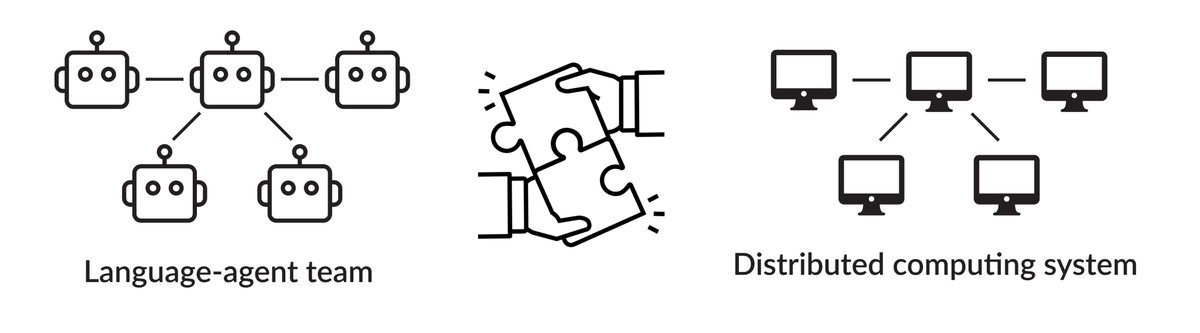
🚨New preprint! LLM teams are being deployed at scale, yet we lack the tools to predict when they’ll succeed, fail, or how to design them. Distributed computing faced the exact same questions and figured out how to answer them. We show those insights apply directly to LLMs 🧵👇
4
27
114
16,286

Mar 14
@Allegiant landed but no gate for an hour! Others in the plane say this happens to them at Allegiant all the time. This was our first time and will probably be our last
2
100
Mar 14
@Allegiant is the business model that it doesn’t matter if you massively overbook your gates and you have 60% customer attrition, because there are always more people who have gone through it yet?
1
72
Mar 14
@Allegiant at Sanford today 3/4 of your arrivals are delayed. No other airline here is having a problem. Just you guys.
70
Jon Willits retweeted

Mar 7
This is a skills issue. Part of using AI effectively is knowing what you want to just look up (eg you need an answer to a query) vs what you want to *learn*.
Learning is not just a function of seeing the information, it’s a function of spending time with it. Getting stuck, failing, looking back to something you missed is how information turns into skill.
This isn’t new. Remember spark notes? You weren’t supposed to use them as substitute for reading the original text. After you read it closely, sparknotes were great to look up random details. AI summaries are similar.
But that’s not to say AI can’t be used for learning effectively. I have now seen several scaffolds that prompt user to stop and think, to read original text before asking questions, etc. Claude teaching mode is one example. There’s a lot of promise in using AI to improve learning, but just getting summaries instead of reading text ain’t it.

Ezra Klein: "Having AI summarize a book or paper for me is a disaster.
It has no idea what I really wanted to know and wouldn't have made the connections I would've made. I'm interested in the thing I will see that other people wouldn't have seen, and I think AI typically sees what everybody else would see.
I'm not saying that AI can't be useful, but I'm pretty against shortcuts.
And obviously, you have to limit the amount of work you're doing. You can't read literally everything. But in some ways, I think it's more dangerous to think you've read something that you haven't than to not read it at all.
I think the time you spend with things is pretty important."
@ezraklein
9
6
140
20,874
Jon Willits retweeted

Mar 6
🧵 1/10
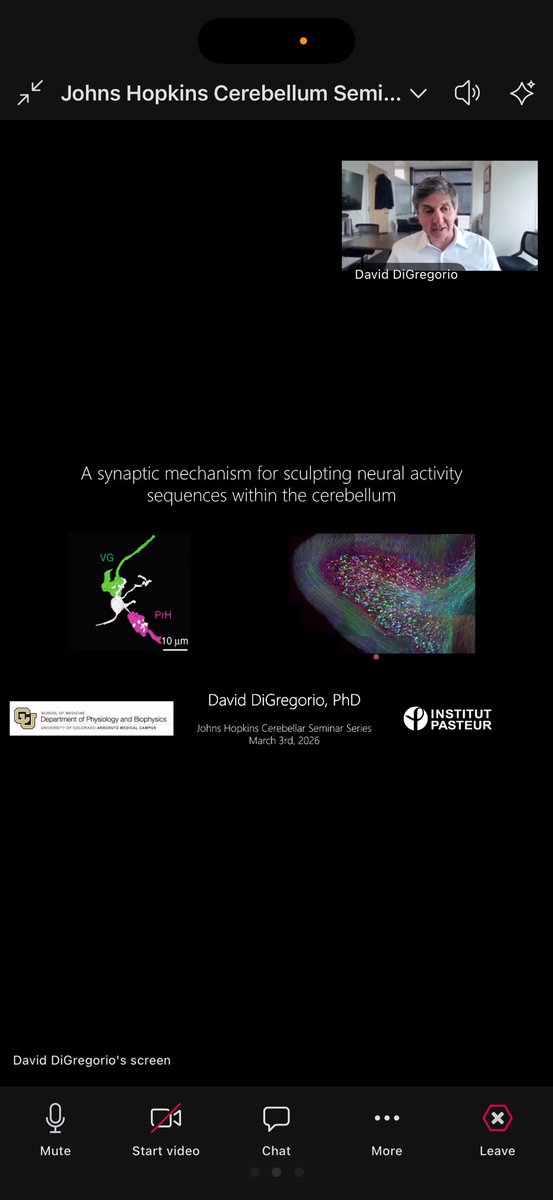
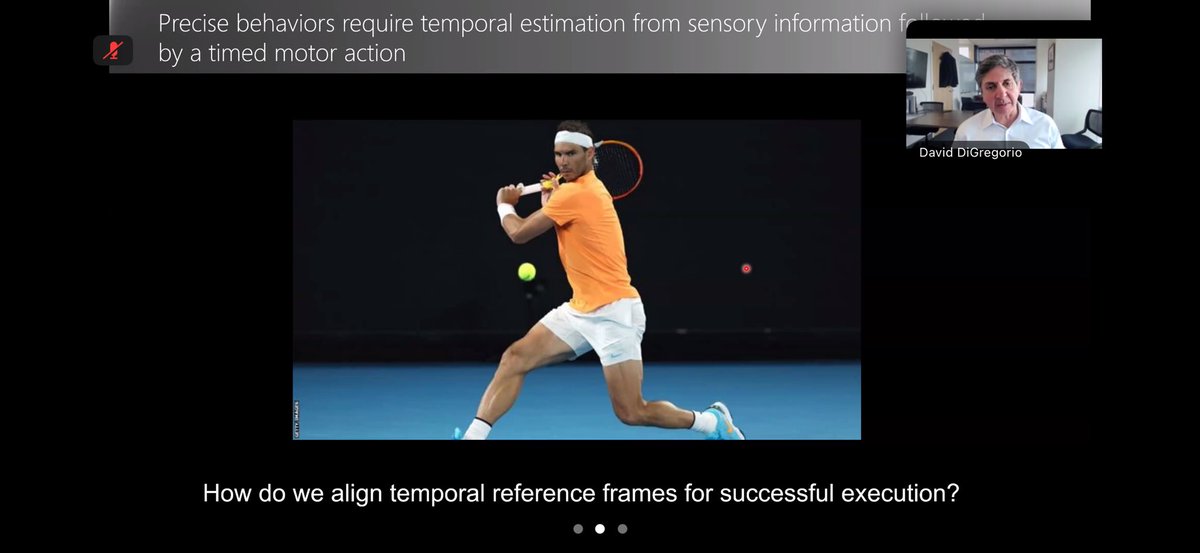
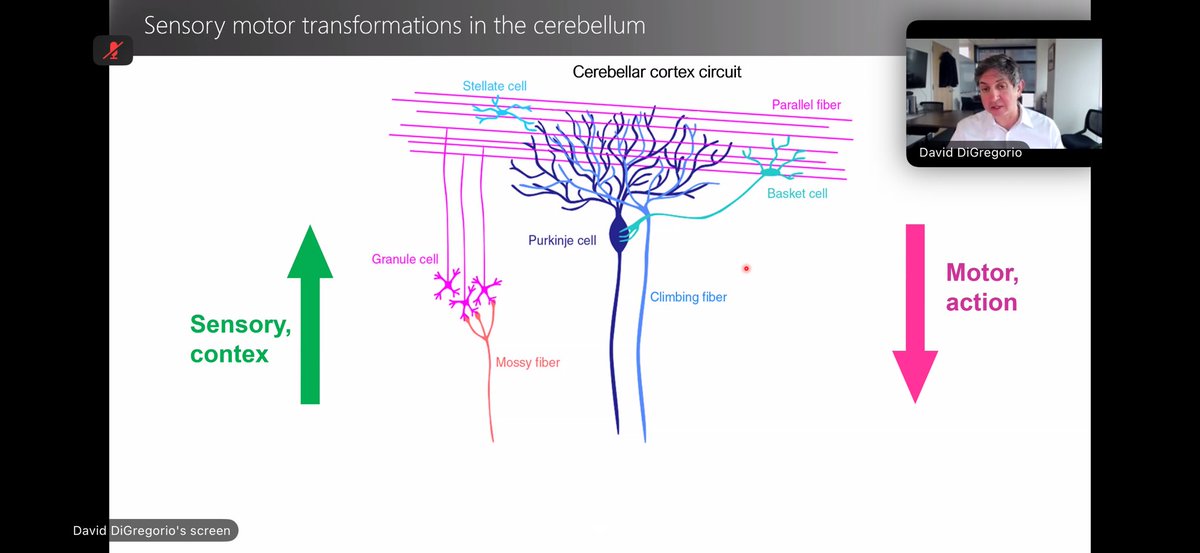
How does the cerebellum learn precise timing? David DiGregorio showed how molecular diversity at synapses creates a "temporal basis set." A single sensory event (air puff) gets smeared into a cascade of delayed signals, like a neural sequencer. Static when into sequence.

2
18
95
5,636
Jon Willits retweeted

6
17
49
21,966
Jon Willits retweeted

Feb 16
If your research output is mostly running some regressions over third-party cross-sectional data, pumping your lit review for all it’s worth, floating some causal words into the title, and calling it good, then you should be very, very worried by agentic change.
But let’s be honest, that was never really creating much in the first place.
And yes, substantial portions of whole disciplines meet the definition above.
6
14
131
14,362