Technology Executive & Board Member. President & CPO, Cisco. Proud dad. Love design. Views are mostly my own, but sometimes not entirely my own ;-)
Joined October 2008
- Tweets 3,621
- Following 1,942
- Followers 15,528
- Likes 6,991
168 Photos and videos










Pinned Tweet

May 24
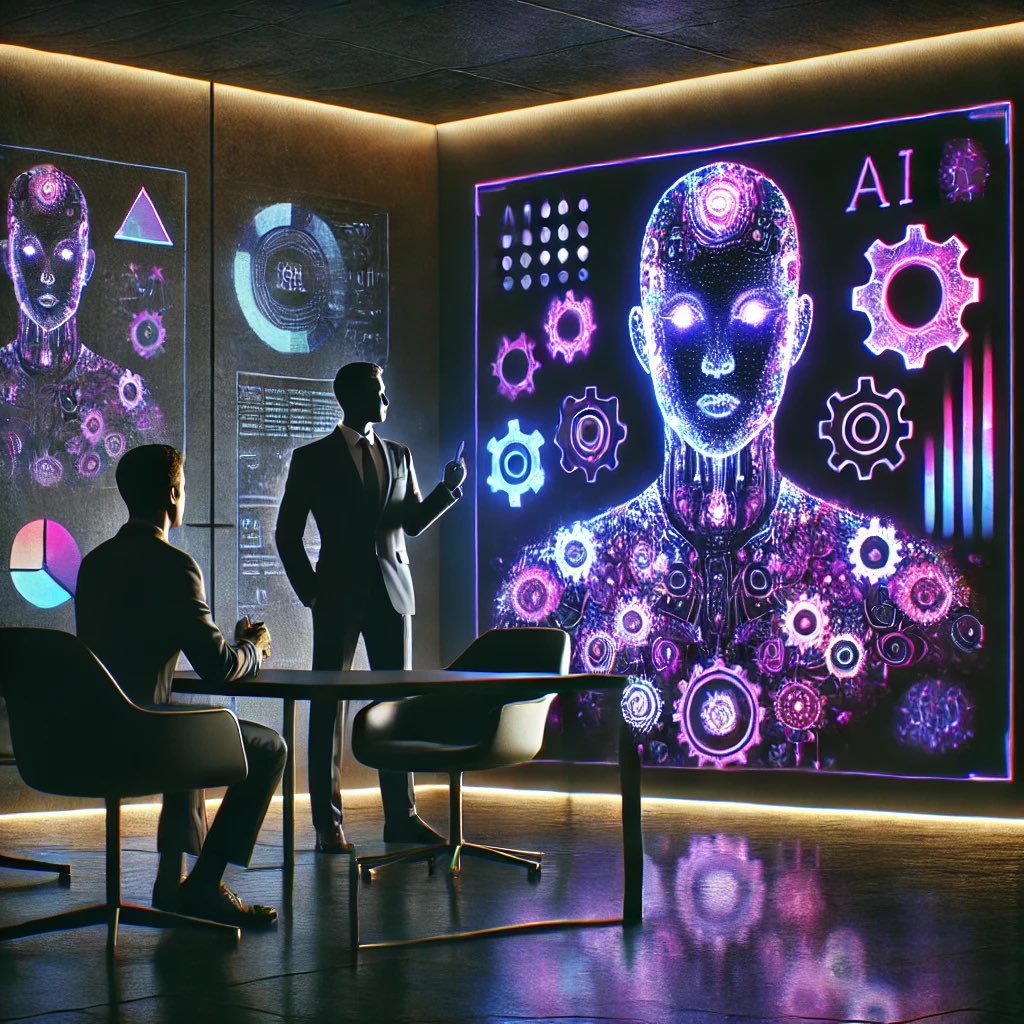
There is such a profound shift occurring in the way that Agents alter our infrastructure requirements.
We are entering a networking supercycle. It’s not because humans are consuming more content. It’s because machines are beginning to think, act, and transact continuously.
Cisco's latest research on AI traffic patterns points to something much bigger than incremental bandwidth growth. Enterprise WAN traffic without agentic AI was projected to grow roughly 2.5x over the next
decade. With agentic AI, that projection jumps to ~9x.
And here’s the craziest part! After following this data closely, I believe even those numbers may prove to be wildly conservative. This is the first time when we have published a study like this where I feel that the projections might be off significantly and what we might think takes a decade happens in 3 years.
Why?
Because most people are still modeling AI like software. It is not. AI behaves more like a new species of digital labor. A SaaS app waits for humans. Agents do not. Agents continuously reason, retrieve, coordinate, negotiate, execute, and loop. At software
speed. Without pause. 7x24. They never get sick. Don’t need a vacation. Dont get tired. Don’t need sleep.
That creates a fundamentally different traffic architecture. The industry spent decades optimizing networks for bursty downloads, video streaming, and
human-paced interactions, almost all of it flowing downstream to a person on the other end.
AI traffic inverts that. A single agentic task can generate 450% more traffic than a human doing the same work.
Roughly 70% of that is inference. And nearly 10% of AI flows now carry more upstream than downstream data, versus 0.5% for typical web traffic, because context continuously moves back into models. Network traffic is not just increasing in bandwidth. It is fundamentally getting reshaped.
This last point matters most. The internet was built as a distribution system for content. AI is turning it into an active system for cognition. The path between agents and models is becoming the spinal cord of intelligence itself. When that path degrades, the agent degrades.
Networking stops being a passive transport layer and
becomes part of the intelligence stack. That changes everything about how we think about resiliency, observability, security, and capacity at the edge. We may be grossly underestimating what is coming. The future will not simply have more users online. It will have trillions of digital coworkers operating continuously on behalf of humans, enterprises, applications, and eventually physical systems.
Humans click.
Agents swarm.
That difference is what creates a supercycle. This supercycle of inference infrastructure will not just be compute bound, but also memory and network bound.
Take a look at the report here: cisco.com/c/dam/en/us/soluti…
15
26
131
52,163
Jun 11
Congratulations to Prime Minister @narendramodi on this anniversary and becoming India’s longest sitting PM in history. His administration’s focus on digital inclusion and technological advancement has shaped a more connected and resilient future for India and the world.
It’s remarkable how his administration’s focus on digital infrastructure has driven India’s economic growth. By fostering an environment that prioritizes innovation, entrepreneurship, and ease of doing business, the country is scaling its global impact and under the Prime Minister’s leadership India has become the world’s fastest growing major economy. Thesynergy between a robust digital backbone and a thriving, dynamic economy is creating incredible opportunities for the global ecosystem.
It is inspiring to see the tangible impact of these policies on the global stage. I look forward to working with the Prime Minister on this evolution of India’s tech-driven economic landscape and the growth that lies ahead. @Cisco is honored to be a technology partner of India during the AI era.
1
7
27
1,383
May 26
There is also another outcome that is very likely. Every company gets extremely focused on token use efficiency or Tokenomics if that becomes a strategic moat for companies, Jevon’s Paradox truly gets further cemented and people use more AI to gain better returns and their token costs go down.
The thing that as an industry that we have to do is there must be a uniformity across companies in a state of balance between tokens used and outcomes generated that create more economic value than the spending tokens. This is where the dissonance lies right now.
So a few things must happen:
1. Improving outcome per token used is a key metric. This has to be measured in economic terms btw. The judgment of knowing where to expend tokens to create outsized outcomes really matters in a company. Don’t spend tokens on scheduling if you can spend tokens on better drug discovery for a pharma company for example.
2. Cost per token must go down so that the compounding of usage doesn’t make the lowered cost still be prohibitive for companies to use. We are here today. Cost per token has gone down let’s say 1000x but the appetite for tokens especially with agents is trending up 10,000x or 100,000x. And to the previous point, the outcome is not commensurate to the token expenditure. So the absolute spend is unaffordable if there is a lag between outcome and token use.
3. A company’s ability to get super efficient in token use will create a structural moat that compounds.
May 26

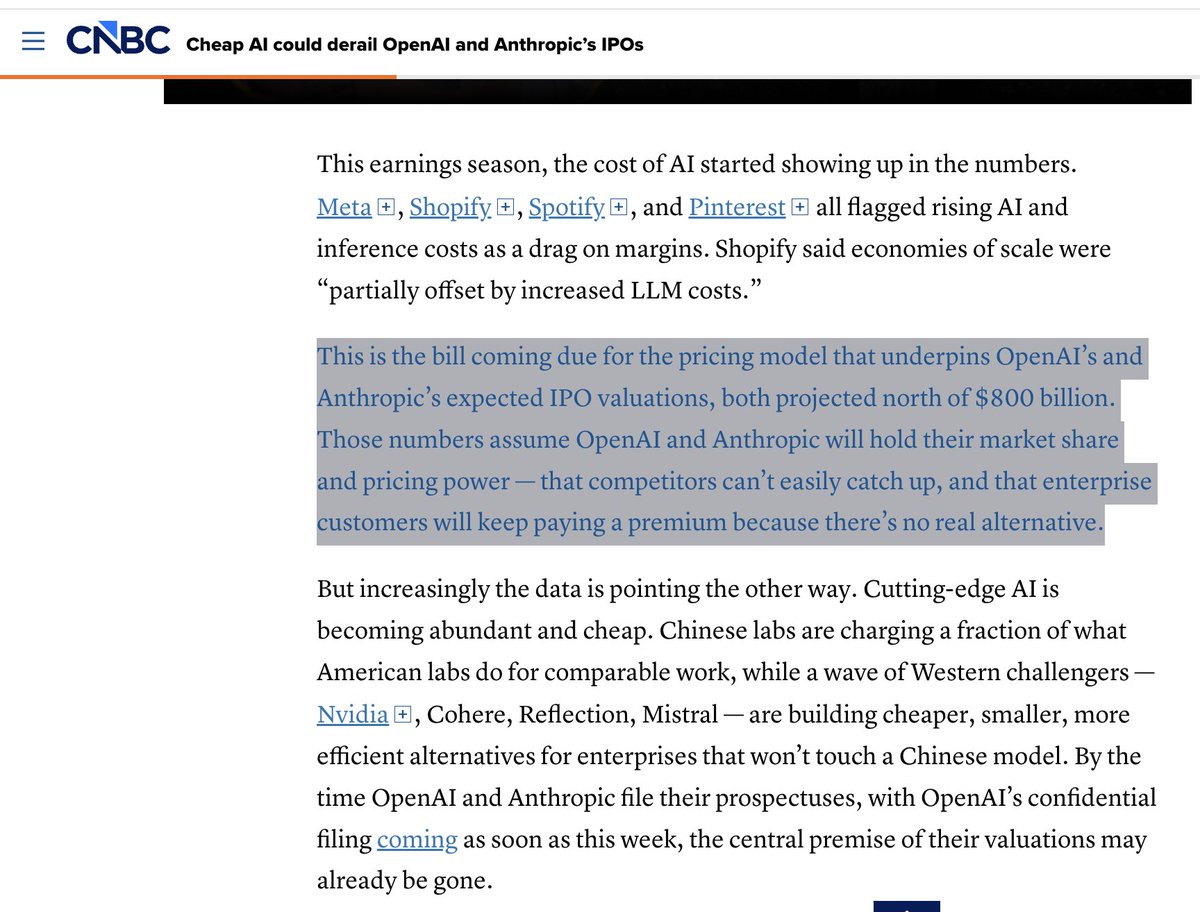
Part 1 is companies realizing they're spending too much on AI
Part 2 is companies switching to cheaper AI because there are "good enough" models to do the job.
That may not bode well for OpenAI and Anthropic valuations that assume they can hold pricing power
2
2
20
1,953
May 8
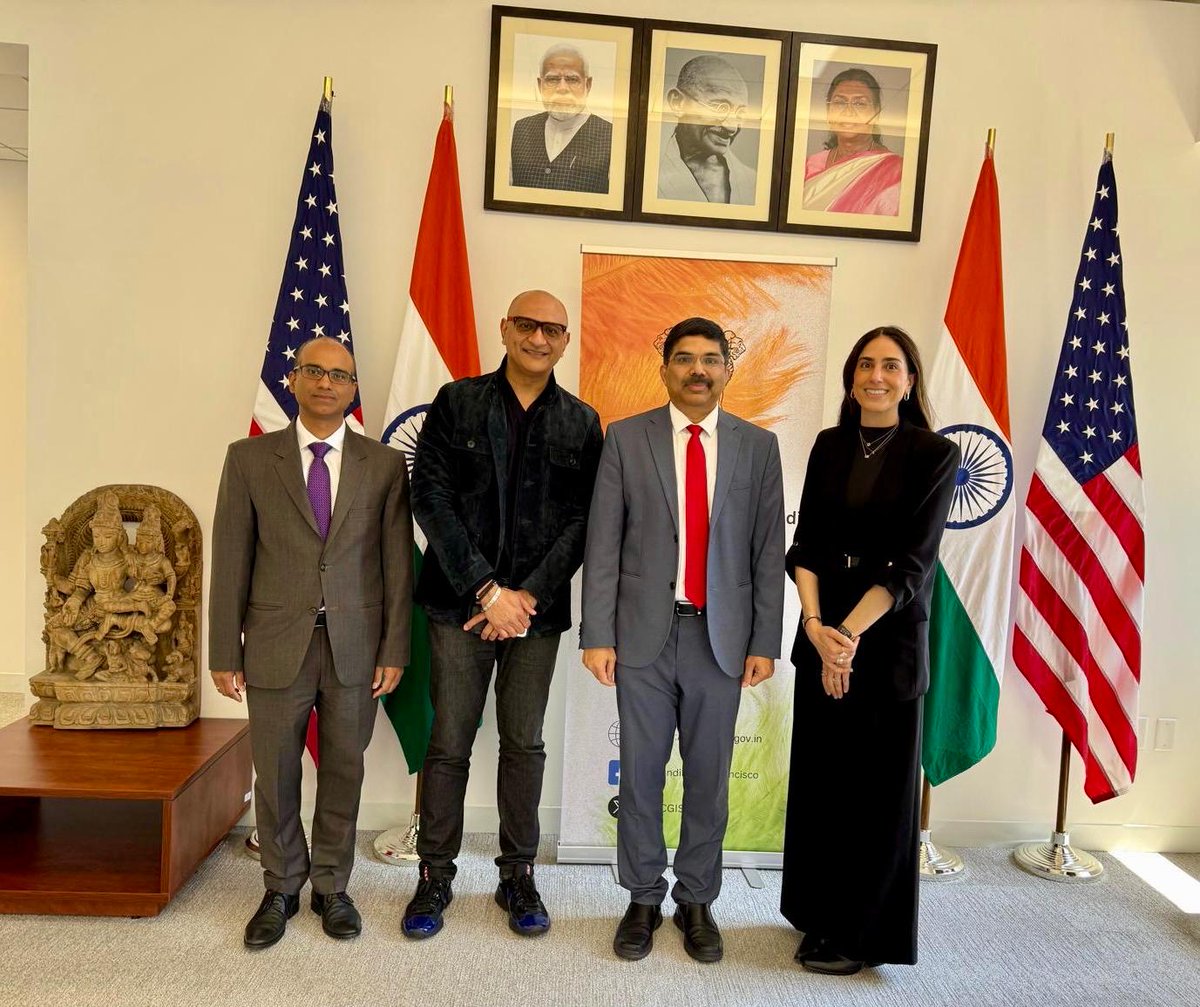
Was truly a pleasure to meet you and your team Consul General @srikar_koppula. Thanks for hosting us. Grateful for the partnership between India/@CGISFO and @Cisco.

On 6 May 2026, Consul General @srikar_koppula met Jeetu Patel (@jpatel41), President and Chief Product Officer, @Cisco, at the Consulate premises. Discussions covered Cisco’s growing operations in India as well as potential collaboration with Indian universities in skill development and training.
Underlining on the new trends in the #Cybersecurity space especially in the age of #ArtificialIntelligence, they also discussed about the new products in Cybersecurity and network space, and solutions for critical infrastructure.
@MEAIndia @IndianEmbassyUS @GoI_MeitY

4
1
18
1,540
Apr 28
There are a few counter-intuitive perspectives that are emerging with very very good arguments that frankly are truly compelling. The below from @levie makes a ton of sense.
The jobs may not go away, but the focus might end up being on perfecting the last mile of work. And the definition of slop might actually change over time where 99% is simply not good enough. It’s almost like the uptime metric because every additional 9 matters so much more and is infinitely harder to achieve and requires much more resource.
So two ways to think of the future might be that things will get much cheaper (fewer people) due to AI or the other way to think of it is things will get a whole helluva lot better due to AI for the same cost, but the minimum bar of acceptability of what good is will be raised substantially.
The thing that is interesting is that the AI fluency of the people doing that last mile of work will really matter. When there is a 10% differential in people doing the last mile of work who are AI fluent versus not, you can pick one or the other and the marginal difference might not be material to care about someone’s fluency in AI. But when the differential between an AI fluent person and a non-AI fluent person is 50x or 100x, the gap is unjustifiable to go with a non-AI fluent person.
So what we all must do is raise the collective fluency of people using AI literally at the speed of AI so that gap doesn’t become 100x. That will get the aggregate population to benefit and not have the stark difference due to the AI divide.
The future is far more controllable by every person than they think it is.
So what’s the take away? Invest obsessively in your own AI fluency and dexterity and make it compound daily. It will really matter in ways that we all haven’t even entirely been able to imagine. Owning our own learning with a sense of urgency is more important now than ever before. Curiosity does become the force multiplier. Learning to learn is the skill to learn. Measuring your own personal rate of growth is THE metric to track.

1
1
14
1,848
Apr 23
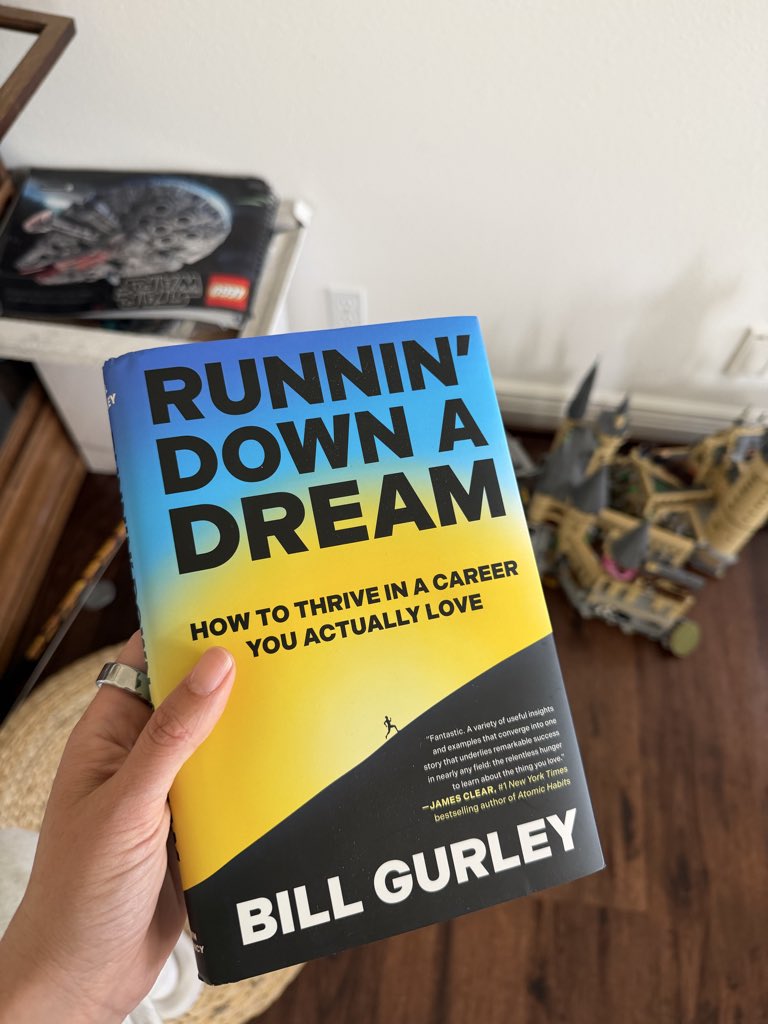
Love @bgurley. Will order my copy. Been meaning to do it!
Apr 23
Finally got to @bgurley’s Runnin Down a Dream between two 17-hour flights to Singapore this week. Turned out to be the perfect time to read it… Singapore was where I took my own leap into the unknown and started my career in journalism.
He captures beautifully what it means to hustle and hone something you love. Well worth your time and as relevant today as ever

2
15
1,381
Apr 17
Great chatting with you today @dee_bosa. It’s like riding a bicycle. You have to ride it enough to get good at it. This was our biggest learning when we tried to be over-restrictive in token-allocation before people had an instinct for it. The moment we change that mental model, great ideas started emerging from the ground up. I give a lot of credit to @kevinweil for opening my eyes to this.
Apr 17
Something I'm hearing more often: AI wastage is necessary, at least for a while. Cisco's @jpatel41 says you gotta let people burn through tokens to build the instinct.
Now has its first product with zero lines of human code and expects 70% of Cisco's products will be 100% AI-written by end of next year
3
1
27
2,391
Apr 16
Looking forward to it @dee_bosa. Thanks for the invite.
Apr 16
LIVE in 30 mins with @jpatel41 on Opus 4.7 and all the latest moves in AI, then @jrichlive on the single biggest day of earnings season ahead (Meta, Msft, Googl, Amazon all on April 29)

7
950
Mar 27
That’s pretty deep
Mar 27

nobody can learn for you, not even your agents
2
15
2,570
Mar 23
If there is one thing that has become superbly apparent over the last 90 days, it’s that the speed of movement of AI is almost disorienting and the bottleneck has been removed from code writing. Yes, there might be other bottlenecks like code review etc today in software development, but these I believe will be short lived.
So as companies think about strategic differentiators, what will they be? Because if you can write code in 3 days, and let’s say you are twice as smart as your competition, the assumption would be that worst case in 6 days your competition neutralizes things. So how does a company create sustained differentiation. I think it will be three things as it stands right now, and I reserve to completely change my mind as time progresses. But these seem pretty durable moats as of now.
1. Cultural Moat: There has to be a cultural reset. You have to move fast, but for a durable length of time where you create a habit of being early to market. This notion of speed for long distances is not the juxtaposition between a sprint and a marathon. But it becomes a speedathon. If you do this as a company, in a month the moat might not even be noticeable m. But in a year, two years, three years, the moat gets to be remarkable. And it isn’t done by forcing the customer with things like data locks. It is done by pure meritocracy around innovation at speed for sustained periods of time. This power of compounding can’t be overstated. So my advice to anyone looking to create a moat is to just keep innovating by creating customer delight even if what you do is easily replicated initially. Because over time, the sheer volume advantage won’t make it replicable. Relevance is created by executing at speed for long distances where you are early in-market as a matter of habit.
2. Trust: We are in an era where it isn’t just our ability to delegate work, but safely and securely delegate work in order to build a trusted outcome. Trust is THE bottleneck for agentic phase of AI. The difference between agent delegation and trusted agent delegation could be the difference between bankruptcy and market leadership.
3. Tokenomics: While the cost of tokens drops ~1000x for inference every 12 to 18 months, the token consumption might go up 10,000x. So the increase in token consumption will need to be offset either organically by efficiencies in other areas or faster growth in profitable revenues. This requires a deep understanding of tokenomics or token economics. Companies that excel at generating the highest value tokens at the fastest velocity and getting it massively distributed will have a disproportionate advantage.
4. Judgement: None of this works if good old fashioned judgement is not applied to what we build. There will be a lot of slop that floods the market. So keep in mind that instinct and judgement will matter more than it has ever before. Because in a world of instant code, the difference between code that solves the important problems versus unimportant problems will be the difference maker.
5. Human Talent: Lastly, there is a lot of conversation around which jobs will be lost and which jobs will grow. This is going to be a very simple equation. Only people with extreme AI fluency and adaptability will be scarce. The rest will struggle for relevance. This contrast between those with AI dexterity versus ones that don’t have AI dexterity will be very stark. Much more severe than what I may have even imagined just three months ago. Also, If you are a human, you will be a manger. A manager of agents. Your job is to create a state where the agents are constantly working for you even when you are not, doing so economically and constantly creating outcomes of value.
So it might feel like software is getting commoditized so there will be no moat. But I feel that these moats will be meaningfully larger in the next era because this is a test of competence, speed, attitude, economics and stamina. These aspects will really matter!
4
3
42
3,600
Mar 23
We are in a really interesting juncture of time where we will have almost infinite capacity that could be added to our workforce with agents that can allow us to solve problems that we didn’t have the capacity to even imagine solving just a few years ago.
But this notion of trusted delegation of work to agents is the issue most companies will have to grapple with, and in a window of time that will be so compressed that it will feel very overwhelming and disorienting.
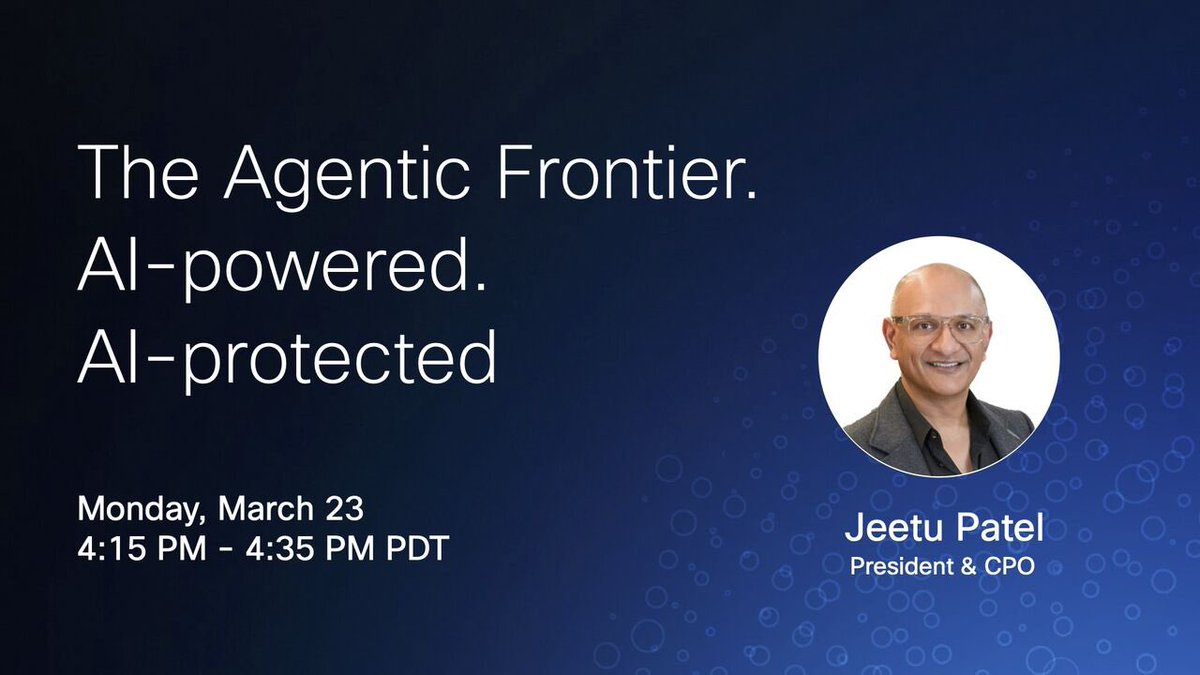
The security community has a more important now than ever before in history and will have to rethink the trust architecture in the agentic era and do it in record time. At RSAC Conference, we at Cisco are excited to talk about what will be needed from the community of security practitioners to ensure safety and security for agents in this next phase of AI. I will be discussing this during my keynote later today.
Also see the link of our blog below where we have meaningfully deepened our commitment to Opensource to ensure that the world is a safer place because security is a team sport and the adversaries are going to have access to agents just like the rest of us.
So we must band together and share innovation to keep agents operating on our behalf. Our defenses must be not just delivered at agent speed but at agent scale.
Hope to join many of you at the keynote.
3
2
15
1,232
Mar 18
The ability to project out just 3-6 months longer than other companies could become a massive superpower for any company.
The crazy part is that this doesn’t even require you to be a visionary. It just requires recognizing that there is massive information asymmetry and actively attempt to tap into that information asymmetry.
The uneven distribution of the trends that have already manifested but not yet obvious to everyone could become a material strategic execution advantage for any company.
But it requires constantly staying current on all trends regarding AI which can be exhausting, but more necessary now than ever before.
Last thing I’ll say is that it is so tempting to draw historical analogies of the current environment. But the thing that is counterintuitive is that with AI there are literally “no priors”.
2
3
24
1,523
Mar 17
Thanks for the kind words @rohanvarma. The partnership between @Cisco and @OpenAI has been nothing short of fabulous. Especially over the past 75 days. Our team is pretty stoked with the progress being made with the use of Codex.
Let’s keep pushing on both sides. Appreciate you leaning in. The goal is to have 6 products 100% written with AI by end of 2026 and 70% of our products 100% written with AI by end of 2027. @kevinweil thinks I am sandbagging. I hope to prove him right ;-).
Mar 17

Had a call with Cisco leadership today to check in on their Codex deployment.
They’re leveraging AI coding and codex more aggressively than most startups and frontier tech companies I talk to.
Skills for everything, agent swarms to execute bigger projects, automated code review, deep system integrations, and more 👀
They’ve quickly hit new bottlenecks that we’re jumping in to help them solve with more codex.
If your public company exec team isn’t pushing the org to cut project timelines by 95%, maximally leverage coding agents, and reimagine the SDLC, you’re ngmi.
Shoutout to Jeetu Patel - bullish on Cisco.
4
6
110
35,107
Feb 26
Thanks for having me on the pod @lennysan. You ask some of the most thoughtful questions. It was such a pleasure to chat with you.
Feb 26

Jeetu Patel (@jpatel41) leads 30,000 people as President & CPO at @Cisco—a $300B giant at the heart of the biggest infrastructure buildout in history—making him one of the most consequential and least talked-about leaders in tech right now.
In our in-depth conversation, we discuss:
🔸 Why large companies don’t fail at innovating—they fail at going all-in
🔸 The easiest way to spot a megatrend vs. a hype cycle
🔸 His communication framework for preventing “packet loss” across an organization
🔸 His “right to win” strategy framework
🔸 Much more
Listen now 👇
youtu.be/ylNKlBlkFas
5
24
4,944
Feb 23
Thanks for having me on the show @PTI_News and Vijay Joshi.
Feb 23

FULL VIDEO | PTI Exclusive: Jeetu Patel (@jpatel41) President of Cisco, says, "AI’s future depends on infrastructure, trust and global access; The level of oversight required for AI agents will be significantly higher"
WATCH: youtu.be/gTBP-qCh-FQ
In an exclusive interview with PTI CEO & Editor-in-Chief Vijay Joshi, Jeetu Patel made the remarks on the sidelines of the ongoing India AI Impact Summit 2026.
#PTIExclusive #PTIAtAIImpactSummit #IndiaAIImpactSummit2026 #AIImpactSummit2026
13
3,375
Feb 23
To my Product team at @Cisco. Just because you can build it instantly doesn’t mean it is worth shipping. Create a new mental model. Here’s my advice…
Be intellectually honest with yourself and if you don’t possess these things, figure out a way to learn them, FAST in order to stay relevant. The rules of the game have changed faster than anyone thought. Don’t fight it. Adjust to the new reality. Keep learning. Stay hungry. Be continually curious. You can change the world now more than anytime in the past. Your future self needs to define success very differently.
Internalize this…in the new world more than ever before, the next gen engineer will define success very differently. It looks something like this.
- Success requires judgement
- Success requires instinct
- Success requires clarity in your mind on the most important problem you want to solve
- Success requires good taste
- Success requires obsession on outcomes
- Success requires understanding unit economics. Be cost-aware like an operator.
- Success requires extreme emphasis on safety
- Success requires that you are a terrific manager of digital agents
- Success requires that you move really fast
- Success requires that you adopt an entirely new mental model
- Success requires constantly learning and unlearning
Ponder what it will take to succeed. It will be counterintuitive. It’ll be unsettling. It will take sacrifice. It will be ridiculously hard. It’ll be scary. Yet it’ll be exciting. It’ll allow you to imagine a very different caliber of ambition.
At Cisco, we have shipped our first product at this point fully written by AI. Kudos to the AI Defense team. 100% of the code in AI Defense is written by AI. By the end of 2026, we have a conservative estimate of at least half a dozen products written completely by AI. By end of 2027, we will shoot to have 70% of our products written 100% with AI. And these products must be superior in dimensions of quality, performance, simplicity, usability, adoption, and delivering real business outcomes for our customers. I hope you make these goals look ridiculously conservative with the work you make AI agents do for you.
It’s time to up-level ourselves. Modern development practices have flipped. I am proud of all of you who are teaching yourself to rethink how you work. Reimagine how you code. Your teams augmented by digital coworkers are going to look very different. You will have many more teammates who will work round the clock. I’m excited for what lies ahead in our innovation journey. Your innovation journey.
Move fast. Deliver something magical. Obsess about safety.
Let’s build a great freaking company and don’t let your imagination be your constraint.
8
26
140
22,896
Feb 23
This is a great Markdown file for every developer’s AI coding environment.
3
1
14
5,208
Feb 21
The absence of irrationality in our ambition might end up becoming our biggest limiter in the next wave of human evolution in the AI era.
1
2
13
1,081