Data Analyst, maker of algorithms, chess, family man, Brandolini’s law, 🇺🇸, Слава Україні! 🇺🇦
Joined January 2010
- Tweets 32,957
- Following 72
- Followers 775
- Likes 33,190
557 Photos and videos



Pinned Tweet

27 Oct 2024
"Once you give a charlatan power over you, you almost never get it back." - Carl Sagan
7
18
103
7,521
Only a mindless fool would make this deal after starting a war that began with a pledge to 'change the regime' and telling Iran's people that 'help was on the way'. This is rolling over before the entire world.
16h

🚨🚨🇮🇷🇺🇸 BREAKING | If this is confirmed, we can say that the US has lost the war with Iran.
The Iranian news agency Mehr, citing the Iranian Ministry of Foreign Affairs, has published all 14 clauses of the Memorandum of Understanding (MoU) signed with the US:
1. Permanent and immediate cessation of war on all fronts, including Lebanon.
2. The US commitment to non-interference in Iran's internal affairs and respect for the sovereignty of the Islamic Republic of Iran.
3. Complete lifting of the naval blockade within 30 days.
4. The US commitment to withdraw its forces from around Iran.
5. Reopening of the Strait of Hormuz within 30 days under Iranian arrangements.
6. Suspension of sanctions on the sale of oil, petrochemical products, and derivatives, and full access of Iran to its financial resources.
7. The necessity for the US and its allies to present reconstruction plans for Iran amounting to at least 300 billion dollars.
8. 60 days of negotiations to reach a final agreement based on nuclear issues and the complete lifting of primary, secondary, US sanctions, and UN Security Council and IAEA Board of Governors resolutions.
9. Reiteration of Iran's commitment under the NPT treaty not to produce nuclear weapons.
10. During the negotiation period, the US has committed not to add forces in the region and not to impose new sanctions.
11. Release of 24 billion dollars of Iran's blocked funds during the 60-day final negotiation period. Half of this amount must be made available to Iran before the start of negotiations.
12. Formation of a supervisory mechanism to implement the agreement.
13. The final agreement will be approved by a UN Security Council resolution.
14. Final negotiations will not begin before the release of half of Iran's blocked funds, suspension of Iran's oil sanctions, and lifting of the naval blockade, and the final agreement will only cover the fate of enriched materials and enrichment, lifting of sanctions, and Iran's economic reconstruction plan. Discussions about Iran's missile program and support for resistance groups are definitively removed from the agenda.
As a reminder, the official signing of the memorandum is scheduled for June 19 in Geneva.
See the latest updates with us: @visionergeo
18
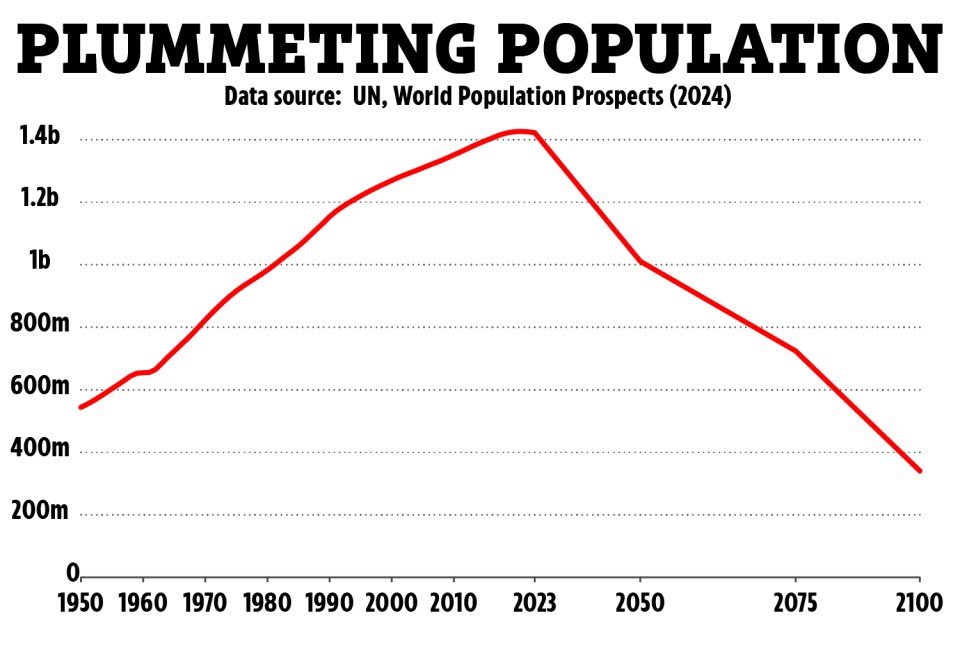
China built too well in its efforts to cut their birth rate over the last half century.
Jun 8

🧵 China’s population collapse is now mathematically irreversible.
There simply aren’t enough women left of childbearing age.
Even if the fertility rate magically returned to replacement level (2.1 children per woman) tomorrow, the country would still lose more than 40% of its population by 2100.
It won't. The real number is 75%. There's nothing like it in history. 🧵
23
John Prowell retweeted

The Pakistan PM announced that a peace deal between the USA and Iran has been reached‼️
Freaking finally! We need oil prices to go down to bury Russia's war economy!

Following intensive talks, we are pleased to announce that the Peace Deal between the United States of America and Islamic Republic of Iran has been REACHED. Both sides have declared the immediate and permanent termination of military operations on all fronts, including in Lebanon.
The official signing ceremony will be on Friday, 19 June in Switzerland.
We would like to thank the United States of America and the Islamic Republic of Iran for their commitment to finding a diplomatic solution to the conflict. We would also like to extend our sincere appreciation to our brothers in this mediation effort, the great leadership of State of Qatar, for their support in reaching this agreement. I would also especially thank the visionary leadership of Kingdom of Saudi Arabia and Republic of Türkiye for their immense contributions in this regard.
With the agreement now in place, mediators will facilitate a series of meetings this week. These pre-implementation discussions will lay the foundation for the technical talks and the official signing ceremony.
@realDonaldTrump
@JDVance
@SecRubio
@SteveWitkoff
@SEPeaceMissions
@drpezeshkian
@mb_ghalibaf
@araghchi
19
32
276
9,713
John Prowell retweeted

Jun 14
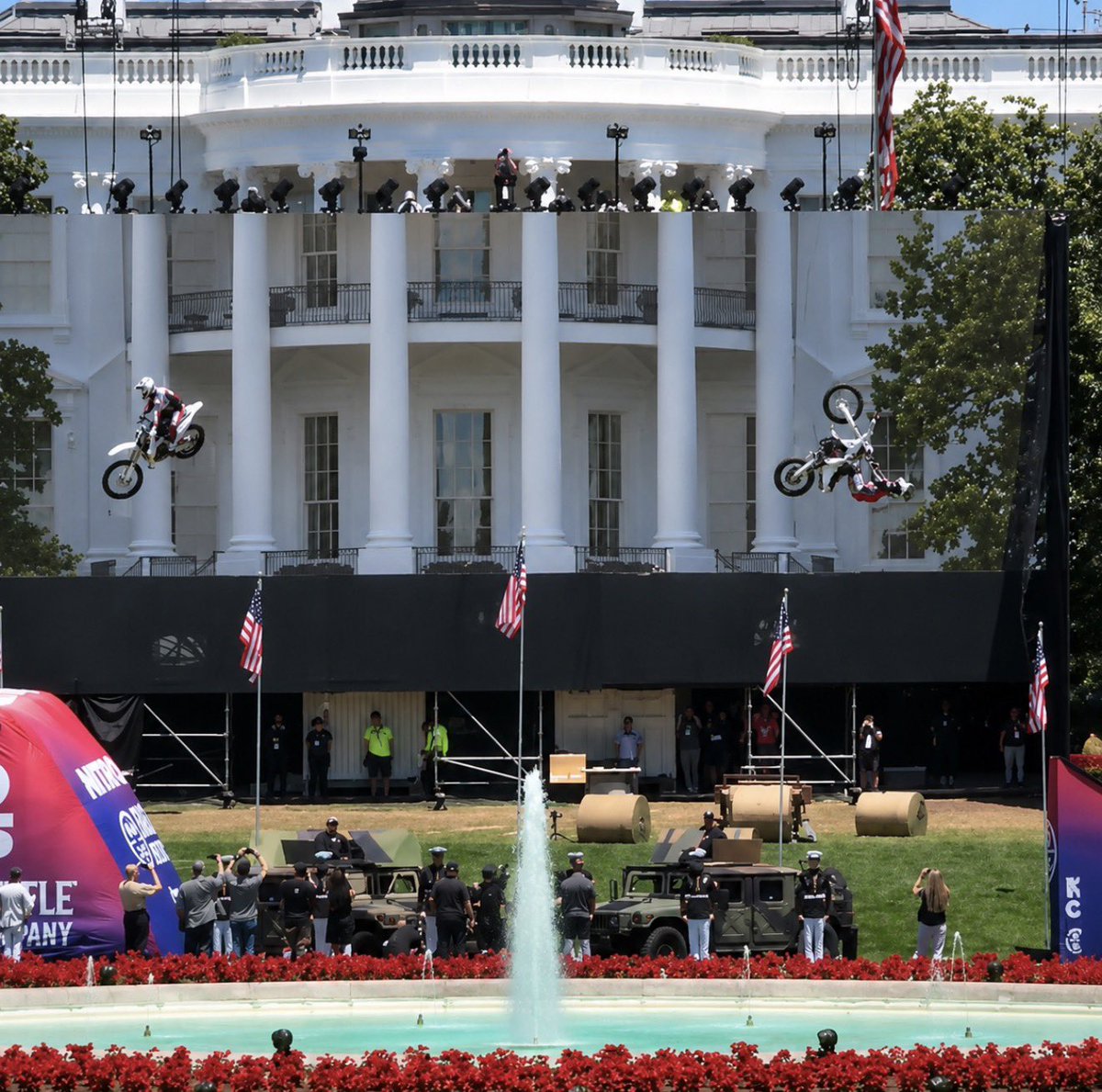
“When a clown moves into a palace, he doesn’t become a king. The palace becomes a circus.”
15
163
714
5,005
John Prowell retweeted

Jun 14
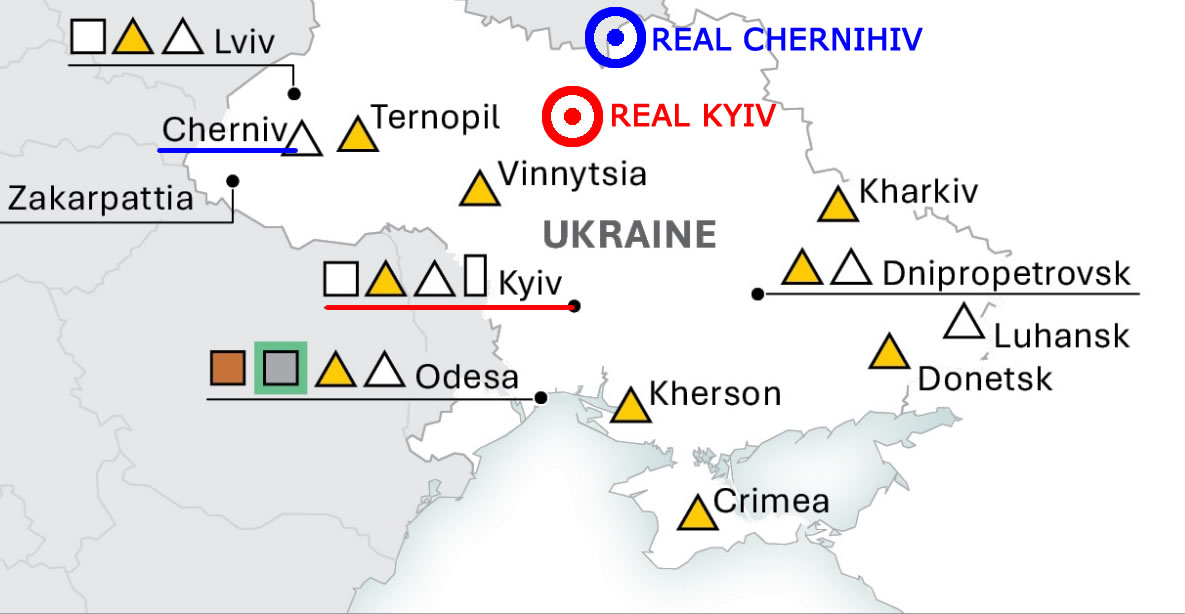
The fake map of Ukraine posted and then deleted by Director of National Intelligence (DNI) Tulsi Gabbard misplaced Kyiv by 350km - distance between London and Paris.
Chernihiv misnamed "Cherniv" and misplaced by 620km. Distance between Lviv and Vienna is only 585km. The ODNI map of Ukraine is so busted location of the real Chernihiv ends up in Belarus.
According to Gabbard, the US is running biolabs in partnership with Russia in occupied Crimea, Luhansk, and Donetsk regions.
You can still find this garbage on the official DNI website.
dni.gov/files/BIOLAB_Slides.…
11
117
510
15,934
Jun 14
This was fun to watch. Frozen Planck 'stars' instead of infinite singularities and white/black hole superposition after evaporation. youtube.com/watch?v=Wu8xNx4n…
16
Jun 12
Who’s more motivated to make a deal, Iran or the US? Hint - it’s the one with more to lose if oil prices skyrocket. cnn.com/2026/06/12/business/…
32
Jun 12
The timing could not be better for Ukraine to deprive Russia of fuel. Unwittingly, the closure of Hormuz by Iran plays into Ukraines hands in preventing Moscow from getting enough foreign donations to power their war machine.
Jun 11

🇷🇺 Idzie w rosji na grubo: "W związku z nieustannymi atakami terrorystycznym reżimu kijowskiego na nasze regiony, MSZ zwraca się do szeregu przyjaznych krajów z prośbą o dostarczenie paliwa na potrzeby państwowe. Mam nadzieję, że wyciągną pomocną dłoń, którą my zawsze wyciągaliśmy jako pierwsi" - Zacharowa.
42
John Prowell retweeted

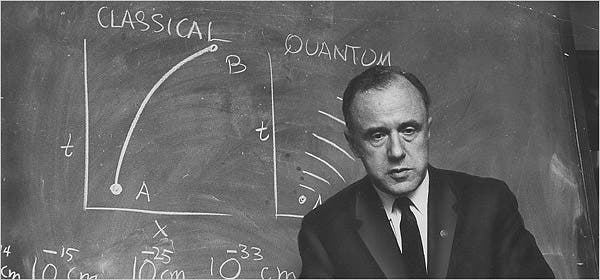
In 1979, an aging physicist asked a question so strange that quantum mechanics seemed afraid to answer.
What if the past is not fully fixed until the present asks the right question?
He was not a mystic, a poet, or a philosopher smuggling spirituality into physics.
He was a giant of 20th-century physics.
His name was John Archibald Wheeler.
The story of how he pushed quantum theory to its deepest edge is a masterclass in why reality is not always as solid, passive, and finished as common sense wants it to be.
By the mid-20th century, physicists accepted that particles act strangely. A photon could act like a wave of possibilities, spreading through more than one path at once. But once you measured it, the mystery collapsed into something definite.
A measurement turned possibility into fact.
That was disturbing enough.
But Wheeler asked a more dangerous question: what if the choice of measurement happens after the photon has already entered the experiment?
This was the delayed-choice experiment.
If the apparatus is arranged one way, the photon behaves like a wave. If it is arranged another way, it behaves like a particle. Wheeler said the choice could be delayed until the photon was already inside.
So what was the photon before the measurement?
Was it secretly a wave?
Was it secretly a particle?
Or was the question itself wrong?
Wheeler’s answer was uncomfortable.
The photon did not carry a neat classical history with it. There was no hidden movie of what really happened waiting behind the curtain. The event became definite only when the experiment forced nature to give an answer.
Then Wheeler made the idea cosmic.
Imagine light from a distant quasar traveling billions of years across space. A massive galaxy sits between the quasar and Earth, bending the light around it. The photon now has two possible routes to reach us.
An astronomer today can choose how to measure that light.
One setup can reveal which path the photon took.
Another setup can erase the path information and reveal interference.
The cheap version says: the observer changes the past.
But Wheeler’s deeper point was stranger.
Before measurement, the photon may not have had the kind of past our common sense demands. The universe was not a finished story waiting to be read. At the quantum level, the question we ask helps decide what kind of fact can appear.
This is why Wheeler called it a participatory universe.
Not because human consciousness magically creates reality.
But because observation is not passive.
Every measurement is a physical interaction. Every experiment is a question asked of nature. Quantum mechanics does not always allow reality to possess all the answers before the question is asked.
That idea made many physicists uncomfortable.
Science was built on the dream of a fully objective world: a universe existing out there, complete in every detail, while humans merely stood outside and inspected it.
Wheeler was saying the separation was not so clean.
Later, quantum optics labs tested versions of Wheeler’s delayed-choice experiment. They did not prove that minds control matter or that consciousness rewrites history.
They proved something more disciplined and more disturbing.
Quantum reality cannot always be forced into the simple classical story we want to tell about it.
The lesson Wheeler left behind is a philosophical blueprint:
The people who wait for a finished reality are excellent at describing what already exists. But they are helpless when the future is still undefined.
Most of us approach life like classical physicists. We want the path to be fixed before we move. We want the result to be guaranteed before we act.
But sometimes, the problem is not that reality is hiding the answer from you.
The problem is that you have not built the experiment yet.
17
58
227
9,630
Jun 12
Thinking about these words this evening, as I have since he first wrote them 11 years ago.
23 Feb 2015

A life is like a garden. Perfect moments can be had, but not preserved, except in memory. LLAP
1
28
John Prowell retweeted

Jun 11
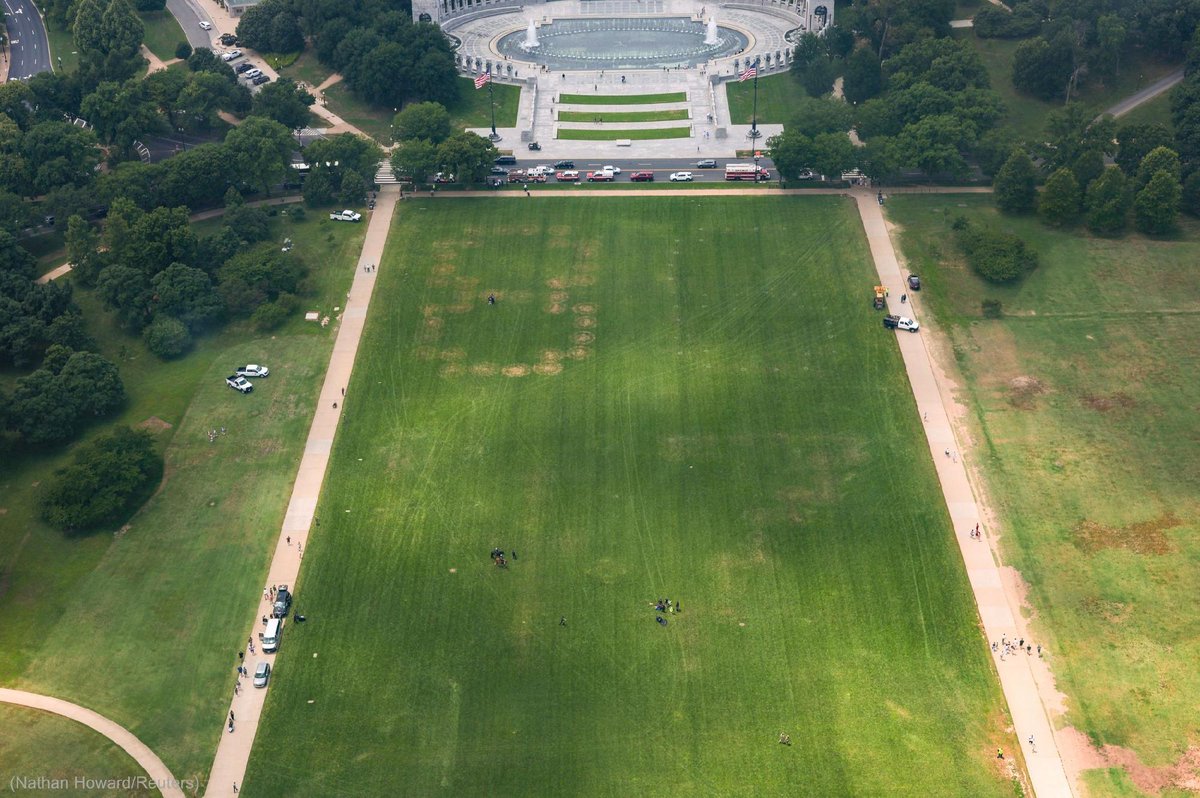
They just created a million James Comeys

Breaking news: U.S. Park Police, the D.C. fire department and members of the National Guard were seen responding to what appeared to be an anti-Trump message “86 47″ etched into the grass on the National Mall. wapo.st/3SgFcbh
41
141
1,338
108,767
Jun 11
Even Israel trusts Iran’s words more than the US President
Jun 11

🔴 ‘We are surprised by President Trump’s announcement, we need to wait and see what the Iranians publish to determine if its accurate,’ two Israeli officials tell i24NEWS @GuyAz
18
Jun 11
Revolting, disgusting and flat out murder by the Trump admin.
Jun 10

One top military officer provided a plausible explanation, behind closed doors on Capitol Hill, The Intercept has learned. In the briefing, a high-ranking officer on the Pentagon’s Joint Staff stated that some of the people killed by the U.S. military may have been the victims of human trafficking.

2
21
Jun 11
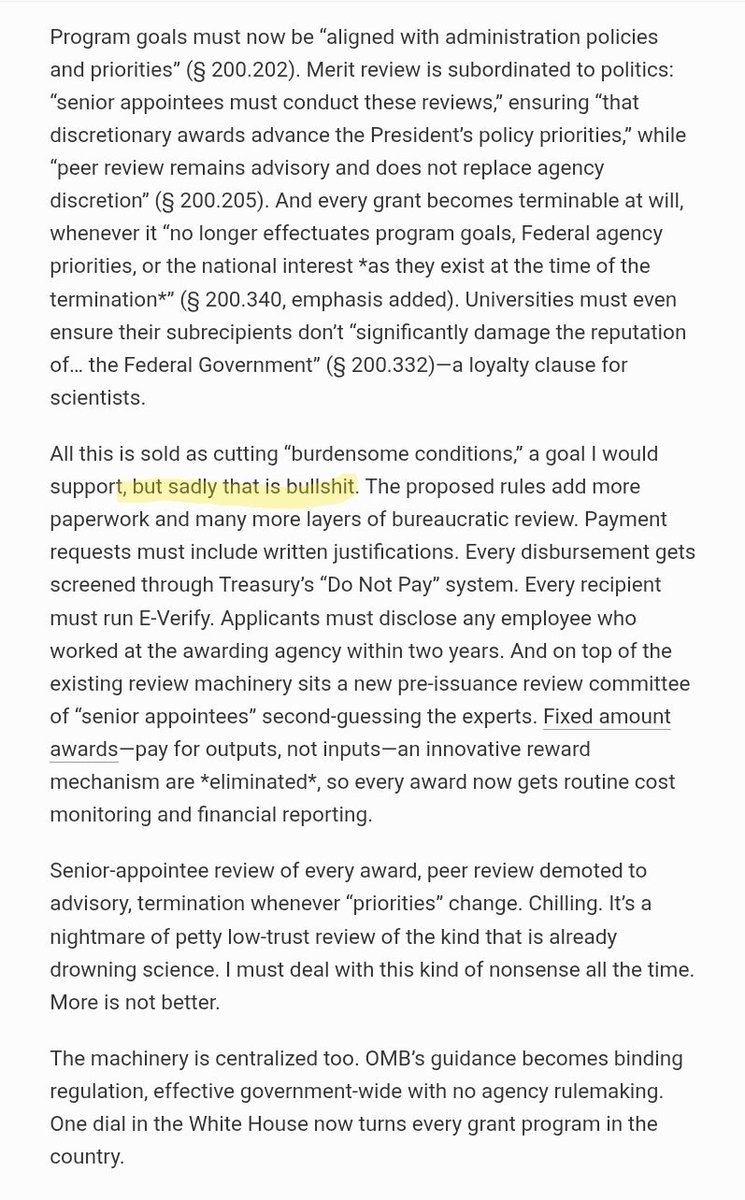
This is extraordinarily bad. Whoever comes after Trump will need to kill this on day one of the next admin.
Jun 11

"The Nationalization of American Science" marginalrevolution.com/margi…
"The system has flaws—conformity, gerontocracy, waste—but it had one great virtue, the system was decentralized and not under state control. This rule proposes to bring science funding under top-down, state control."
18
Jun 10
It would be a groundbreaking physics victory for China if the JUNO lab solves the neutrino mass hierarchy first.
Jun 10

Deep underground in China, flashes from antineutrinos are already tracing some of the sharpest neutrino flavor shifts measured so far. @nature phys.org/news/2026-06-underg…
1
22
Jun 9
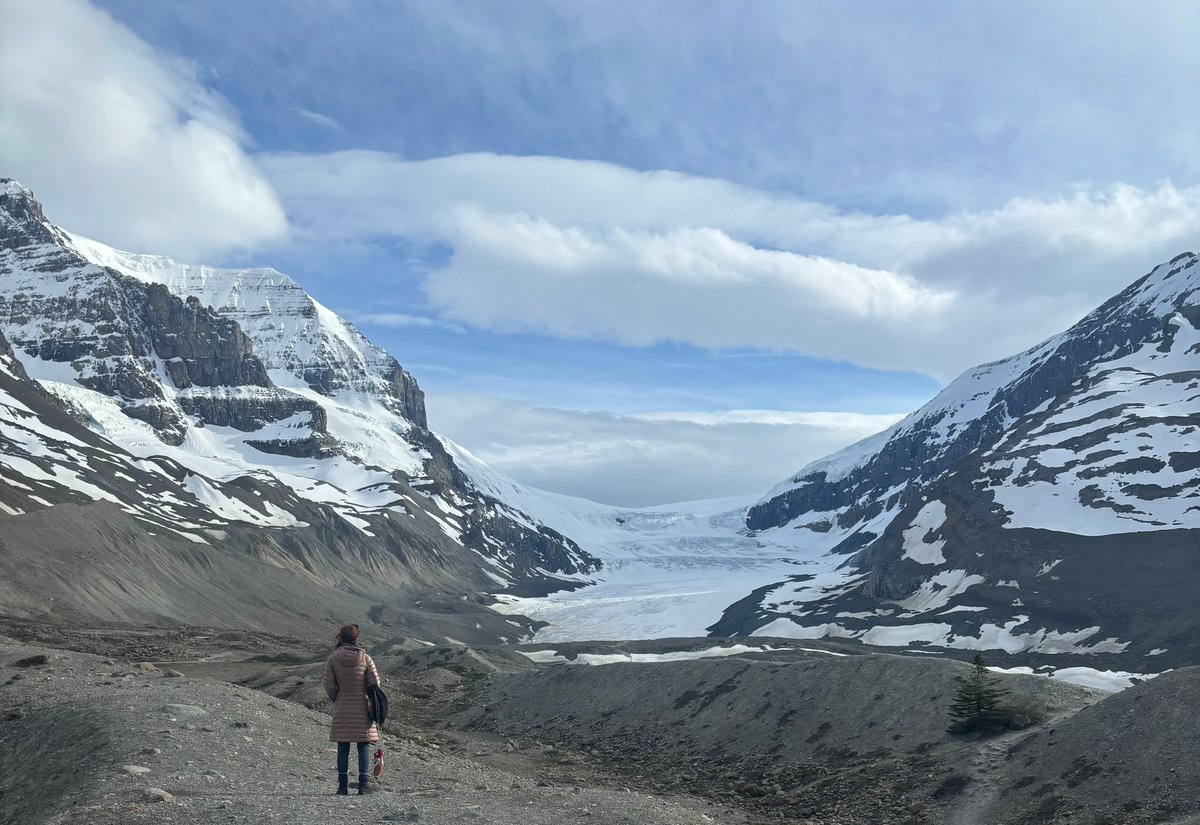
From about 1 km distance, the ice field of Athabasca glacier at Banff National Park. My better half is the tiny person at the bottom.
1
43

There's always a Tweet.
1 Sep 2020

People are tired of watching the highly political @NBA. Basketball ratings are WAY down, and they won’t be coming back. I hope football and baseball are watching and learning because the same thing will be happening to them. Stand tall for our Country and our Flag!!!
1
1
3
196
Jun 8
It’s like a meaningless mantra every Sunday just before oil futures open trading.
Jun 7

TRUMP ON IRAN: CLOSE TO A DEAL
1
67
John Prowell retweeted

Guy who has called every displeasing election fraudulent --
from Ted Cruz beating him in the 2016 Iowa caucus
to the Virginia redistrict election --
calls a displeasing election fraudulent. Again.
..........
I just don't know why anyone takes it seriously.
Jun 7

WOW -- Trump crashes out and cuts his interview with Welker short as she presses him on his lack of evidence for claiming elections are rigged
"You're either crooked or you're stupid. Let's call it quits. Because I've had enough. Thank you darling," he tells her."
"I traveled all the way to Wisconsin for this interview," she pleads.
115
274
1,685
135,611
John Prowell retweeted
Jun 7
If Shakespeare was right when he wrote ‘the past is prologue’, it’s likely no longer true that the US has the hegemony it used to. It’s been whittled away over successive decades starting with Korea, then Vietnam, Afghanistan and now to Iran. We aren’t the force we used to be.
1
1
2
81