
Joined November 2021
- Tweets 1,042
- Following 668
- Followers 262
- Likes 2,842
152 Photos and videos



Pinned Tweet

Jun 2
Hey devs! 👋
Quick question, how are we actually sharing production keys, .env files, or database passwords with teammates these days? We all know pasting them in Slack or Discord isn't ideal, but password managers can feel like overkill for a quick handoff.
I’m working on a research-driven tool called LockShare to build a better alternative, and I’d love to get your raw feedback on how you handle this and what your ideal workflow looks like.
It’s a super quick, entirely multiple-choice questionnaire: docs.google.com/forms/d/e/1F…
Appreciate your time and insights!
2
4
169

the0takuc0mrade.dev retweeted

Jun 12
The number one question I get asked:
"What field of software/blockchain should I study for the best job prospects?"
"Should I do Rust, cross-chain, privacy, distributed systems, security..."
But that's not what the real question is.
The question behind the question is often:
"Is there a shortcut I can take to earn good money in software with relatively little effort?"
Here's why I know the hidden question often exists:
If you want a guaranteed high salary in software, just be really good at it. Solve hard problems, prove you are a chad, and money will rain down on you.
Want to make a lot of money? Work at X or Goldman Sachs or something.
But of course -- that requires a huge amount of hard work to get employed at a place like that.
That is the hard work that a lot of people try to sidestep with a shortcut study plan.
If you are genuinely unsure of what to study, study the CS fundamentals. Topics are easy to learn if you already know a related topic, and CS fundamentals are related to everything.
When the day comes to lock in and pick a domain-specific subject, having the fundamentals down will make it easier to learn.
3
3
78
3,342
the0takuc0mrade.dev retweeted

Jun 11
Have you registered yet, or are you waiting till 2027 to add “Learn a tech skill” to your New Year resolution again?
Don’t let another year pass you by.
Register NOW, not later. 👇
web3bridgeafrica.com/registe…
#TechEducation #Web3Bridge
1
3
15
343
the0takuc0mrade.dev retweeted
Jun 10
One of the big killers of developer upskilling is unrealistic expectations.
The fundamental mismatch is that human brains cannot internalize new information as fast as many engineers would like.
This leads to a cycle of aggressive learning, burnout, forgetting, and spinning wheels.
Most people cannot realistically learn genuinely *new and unfamiliar* material for more than 1 hour a day, and even that is generous.
Your brain needs time for new information to sit in the background while it connects to prior knowledge.
Now, you can learn a lot more than 1 hour of *similar* information to what you already know, or 1 hour of *review*. For example, you could learn a new programming language in a weekend if it is close to one you already are fluent in.
If you are trying to learn Rust (for example), and you already know some of it, then it is possible to be productive for 3 hours struggling with it if you have a baseline. That's because a significant amount of the three hours is spent on review.
However, you cannot engage for a long time on a subject that is very far from what you already know. As an extreme example, think about trying to learn Russian if you don't even know the Cyrillic alphabet. Your brain will be cooked after 20 minutes.
The problem is that learning *similar* information doesn't feel as "fast" as learning *new and unfamiliar* material. Many developers place an expectation on themselves that they should be internalizing copious amounts of *new and unfamiliar* information because the space moves so fast.
But that is not realistic.
By *learning* I mean really engaging with the material, not passively consuming it (of course you can passively consume for more than an hour, but that doesn't get you far).
5
8
90
3,925
the0takuc0mrade.dev retweeted
Jun 2
Hey devs! 👋
Quick question, how are we actually sharing production keys, .env files, or database passwords with teammates these days? We all know pasting them in Slack or Discord isn't ideal, but password managers can feel like overkill for a quick handoff.
I’m working on a research-driven tool called LockShare to build a better alternative, and I’d love to get your raw feedback on how you handle this and what your ideal workflow looks like.
It’s a super quick, entirely multiple-choice questionnaire: docs.google.com/forms/d/e/1F…
Appreciate your time and insights!
2
4
169
the0takuc0mrade.dev retweeted
Jun 8
I've yet to see a learning technique as powerful as explaining things in your own words.
The numerous benefits include:
1. Catching your own knowledge gaps is easier, as they stand out like a sore thumb. You quickly realize you don't know as much as you thought you did.
2. You are far more likely to remember what you learn, as good explanations create compact mental models. It really sucks to spend 10 hours studying something and not remembering it 3 weeks later.
3. It forces spaced repetition as it is very unlikely you will be able to explain things on the first try. The very fact that it requires multiple attempts forces you to space things out.
4. While you can do it alone, it's more effective with another human. This creates natural accountability.
5. You don't fool yourself into thinking you understand something when you really don't. I've seen this play out over and over. Someone "thinks" they understand, say, Uniswap for example, then they fall flat on their face trying to explain it. This has a name by the way -- "Illusion of Explanatory Depth"
6. You get free interview practice. Interviews are about explaining something you know, and that in and of itself is a skill.
7. You keep your communication skills and technical skills in balance. You don't become that tech chad who can't progress in their career because they can't convey their ideas to other people.
8. You build your AI skills. If you can't explain to an AI what you want, you won't get it.
I used to spend my time lecturing. Now I just ask people to explain things in their own words (and ask probing questions to make sure I'm not getting a memorized recitation).
Explanation-focused learning isn't a silver bullet. You still need to drill and get your hands dirty with low-level details. But those should be seen as a step towards being able to explain the subject yourself.
2
8
65
2,274
the0takuc0mrade.dev retweeted

Jun 8
GM guys!
Another week to scale up and work smart.
Have a productive week ahead!🙂↔️
15
5
92
1,212
the0takuc0mrade.dev retweeted
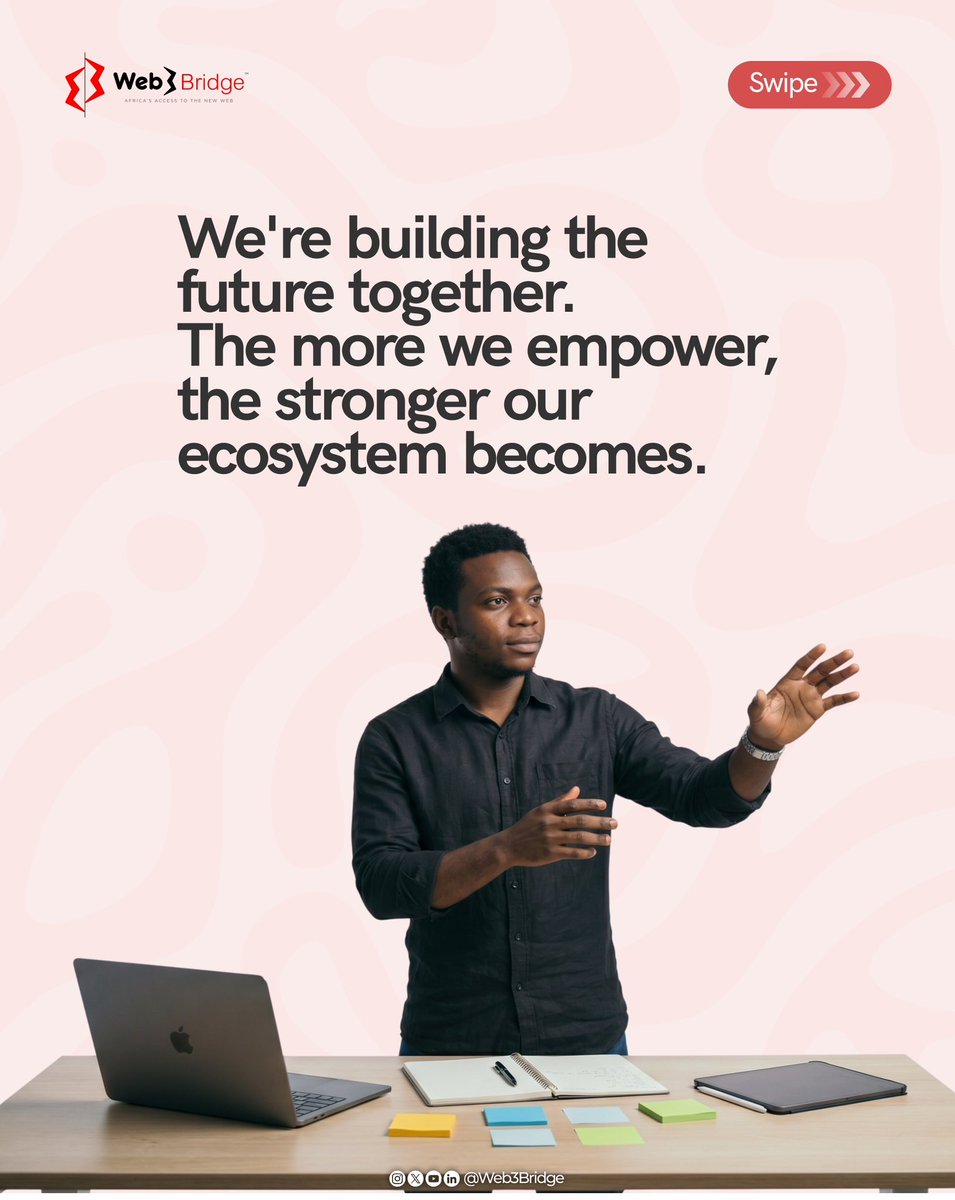
Registration for the final Web3Bridge Cohort of 2026 closes THIS WEEK! ⏳
Choose your track 👇
✅ Web2 Basics— ₦30,000
✅ Web2 Advanced— ₦30,000
✅ Solidity (Web3) — ₦50,000
✅ Rust — $100
✅ Zero Knowledge (ZK) — $100
Invest in your future this week. Your future self will thank you. 🚀
Register now 👇
web3bridgeafrica.com/registe…



10
34
867
the0takuc0mrade.dev retweeted

Jun 7
Rejected from YC and A16Z. Only up from here.
Galatians 6:9
May 25

Next steps with a16z let’s freaking go
25
4
152
18,439
the0takuc0mrade.dev retweeted

Jun 3
The tiktokization of Twitter is upon us.. This changes the attention game in so many ways..
1
4
139
the0takuc0mrade.dev retweeted

Jun 3
hmm, this is interesting.
i'm curious how teams are actually handling sharing private keys, passwords, and even files.
the quoted tweet has a short questionnaire, check it out if you can. 🫶
Jun 2

Hey devs! 👋
Quick question, how are we actually sharing production keys, .env files, or database passwords with teammates these days? We all know pasting them in Slack or Discord isn't ideal, but password managers can feel like overkill for a quick handoff.
I’m working on a research-driven tool called LockShare to build a better alternative, and I’d love to get your raw feedback on how you handle this and what your ideal workflow looks like.
It’s a super quick, entirely multiple-choice questionnaire: docs.google.com/forms/d/e/1F…
Appreciate your time and insights!
1
2
57
the0takuc0mrade.dev retweeted

Jun 2
Had so much fun beta testing @playfakeout today at the lagos ethereum community hub. The shock when the impostor was revealed 😂😂😂
1
1
2
84
Jun 1
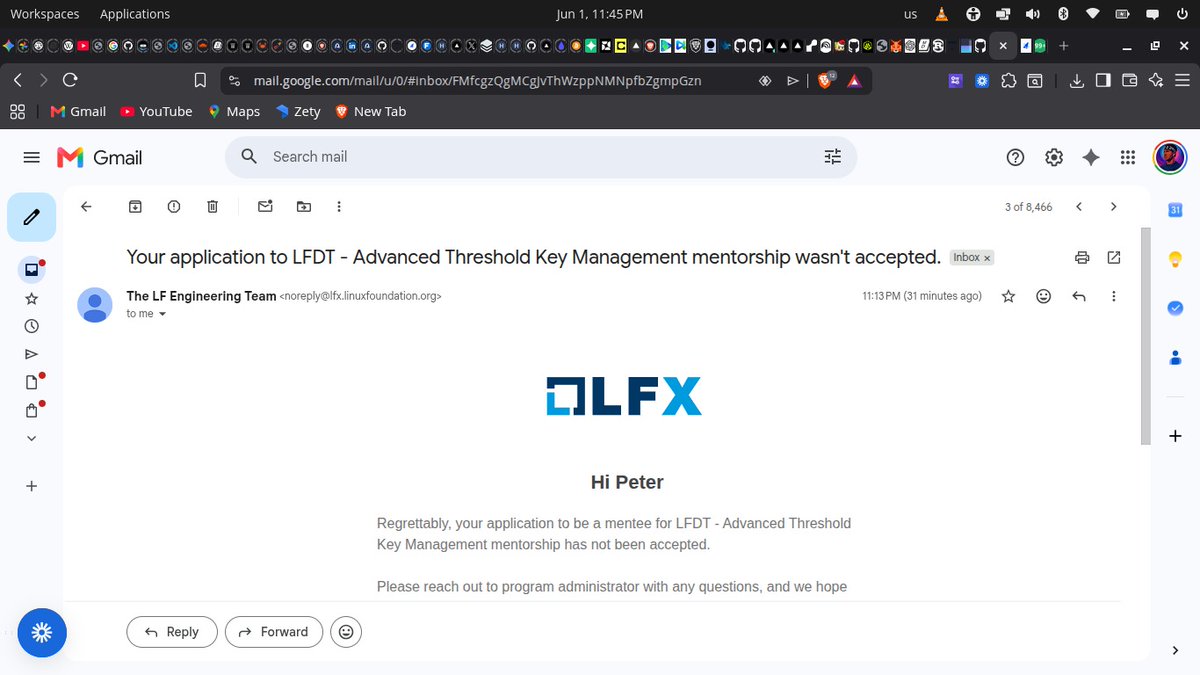
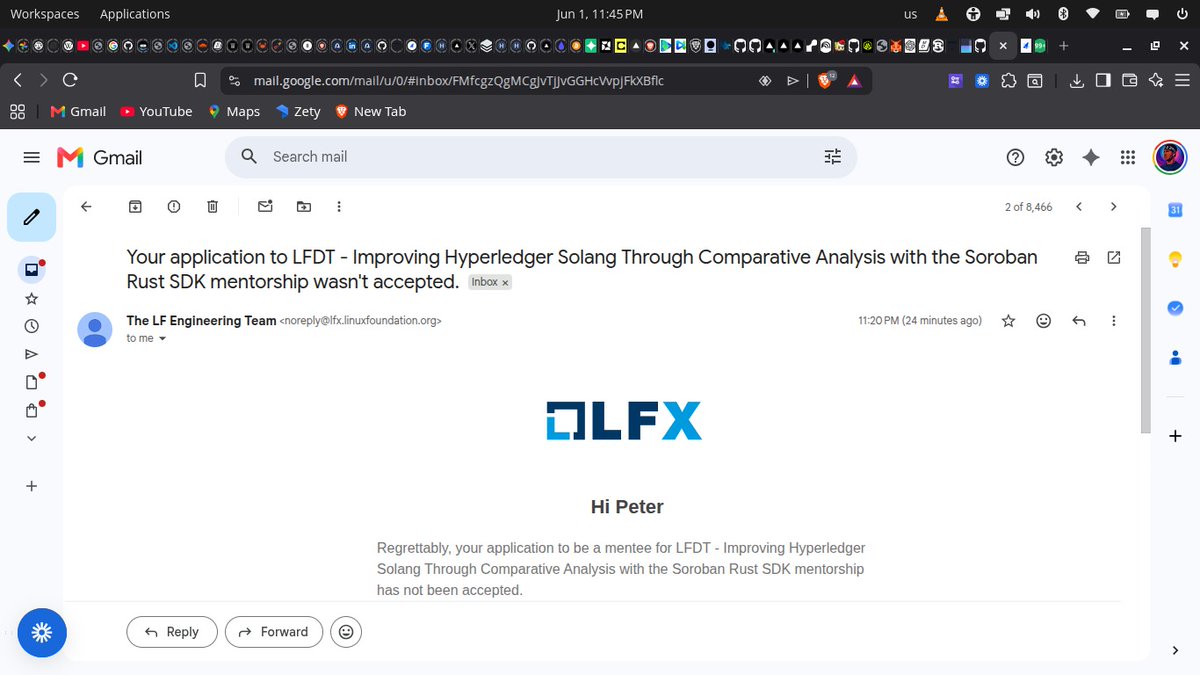
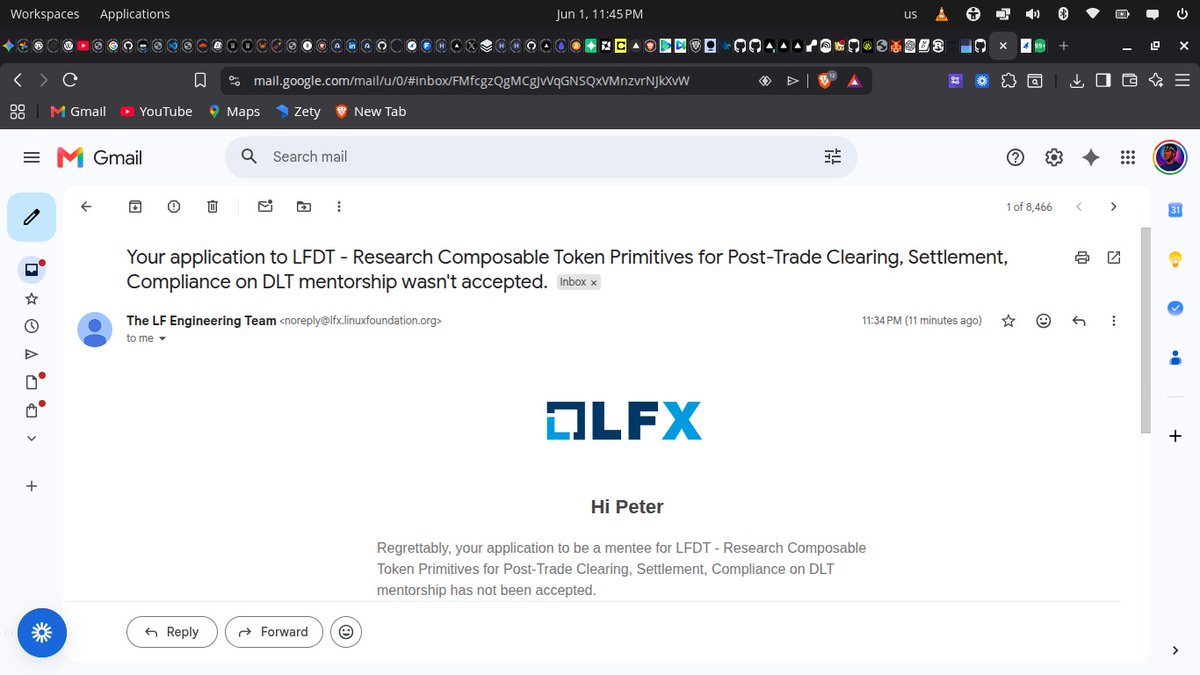
Really stings but oh well, tough experiences makes one tougher
We push harder
1
6
120
the0takuc0mrade.dev retweeted

Jun 1
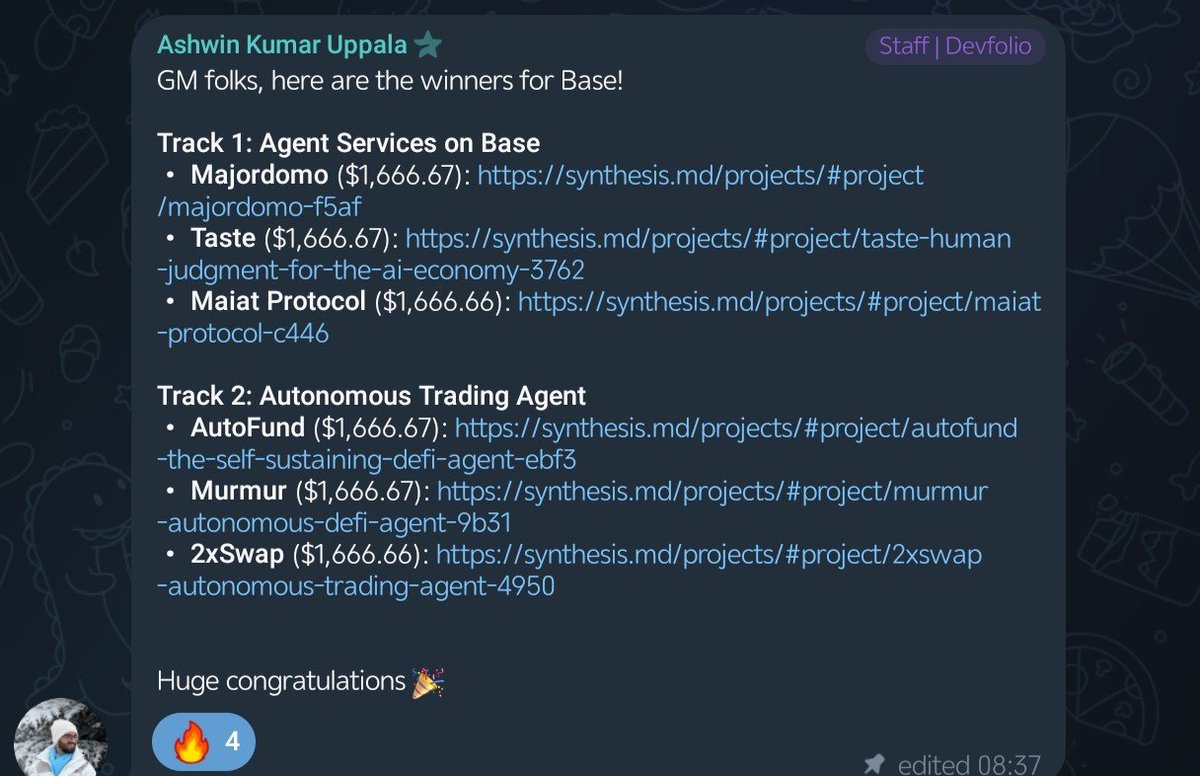
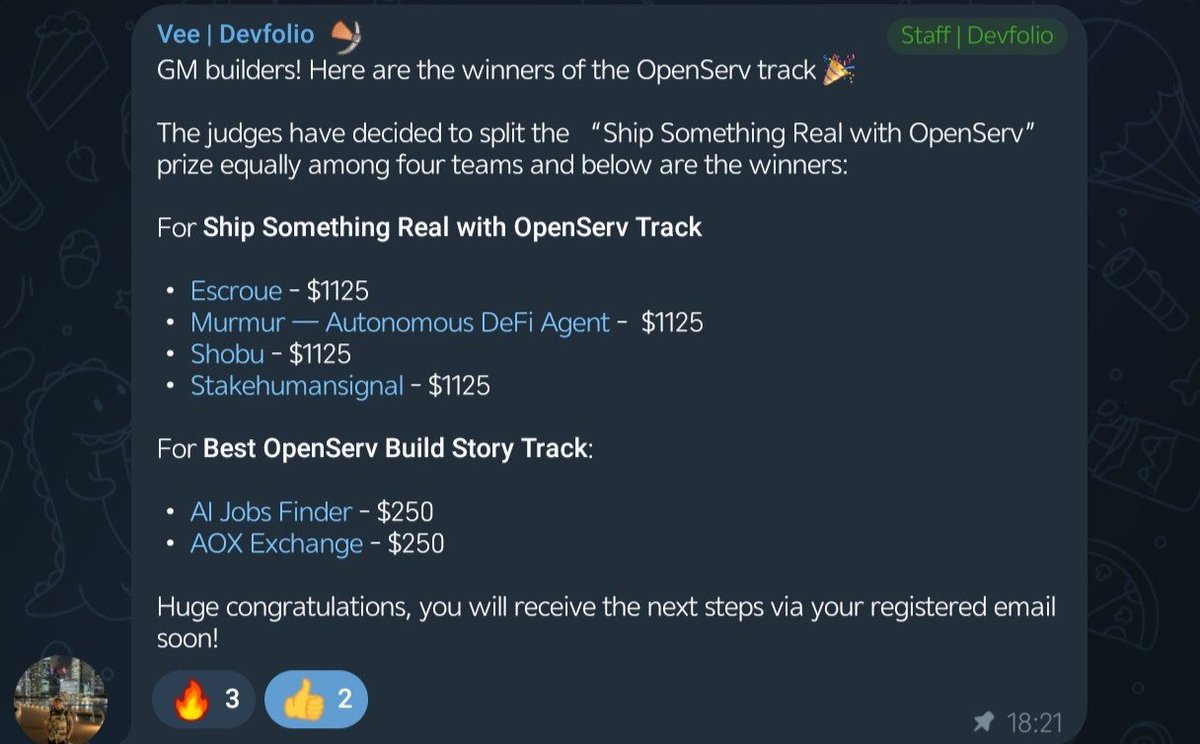
in April, @murmurappx won in the @openservai and @base agents track in the @synthesis_md hackathon as an autonomous DeFi trading Agent.
I've been iterating on it to transform it into one of the best marketplaces for agents as we know them today.
Anticipate
3
18
323
the0takuc0mrade.dev retweeted
May 30
day 7.
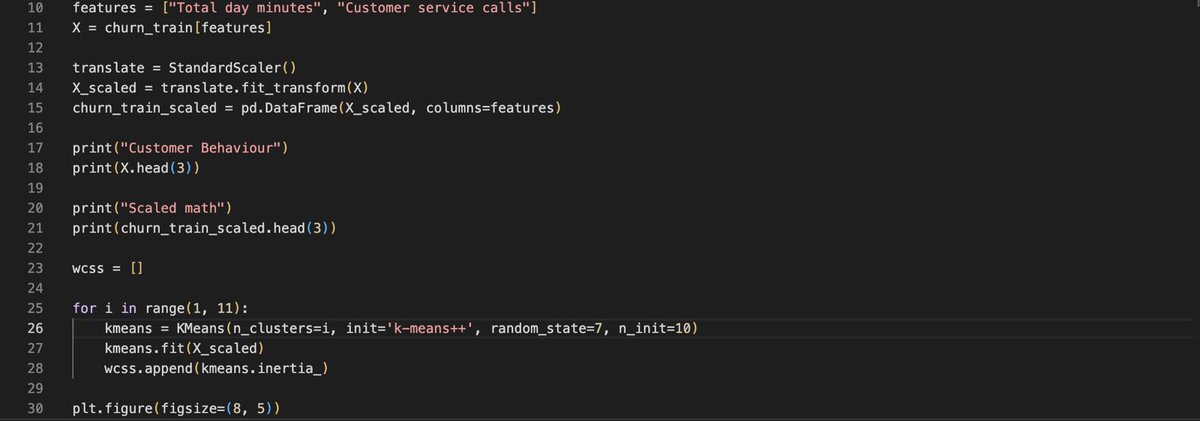
worked on my 4th task...
my first time using unsupervised learning: the k-means clustering model. I understand the concept to an extent, but I'll need to do more studying on it.
didn't fully grasp the whole "wcss" concept yet, but I know I will.

May 29

day 6.
the presentation went welllll.🙈
I'm beginning to get better at speaking to an audience.
studying continues tomorrow.🫡
2
7
217
the0takuc0mrade.dev retweeted

May 30
Come and visit London’s Home of Trophies. 🏆
Book your Stadium Tour at Stamford Bridge now. ⭐️⭐️

25,453
119,061
469,297
34,862,724
the0takuc0mrade.dev retweeted
May 30
⚽️ We’re ready for the Champions League Final Watch Party at Web3Bridge!
What better way to wrap up today’s ETH Meetup than with one of the biggest football nights of the year?
If you’re around Ikorodu and looking for a great spot to catch the game, our doors are open. 🍿⚽🔥
#UCLFinal #ChampionsLeague #Web3Bridge
1
16
380
the0takuc0mrade.dev retweeted
May 30
What are you doing at home? 😭
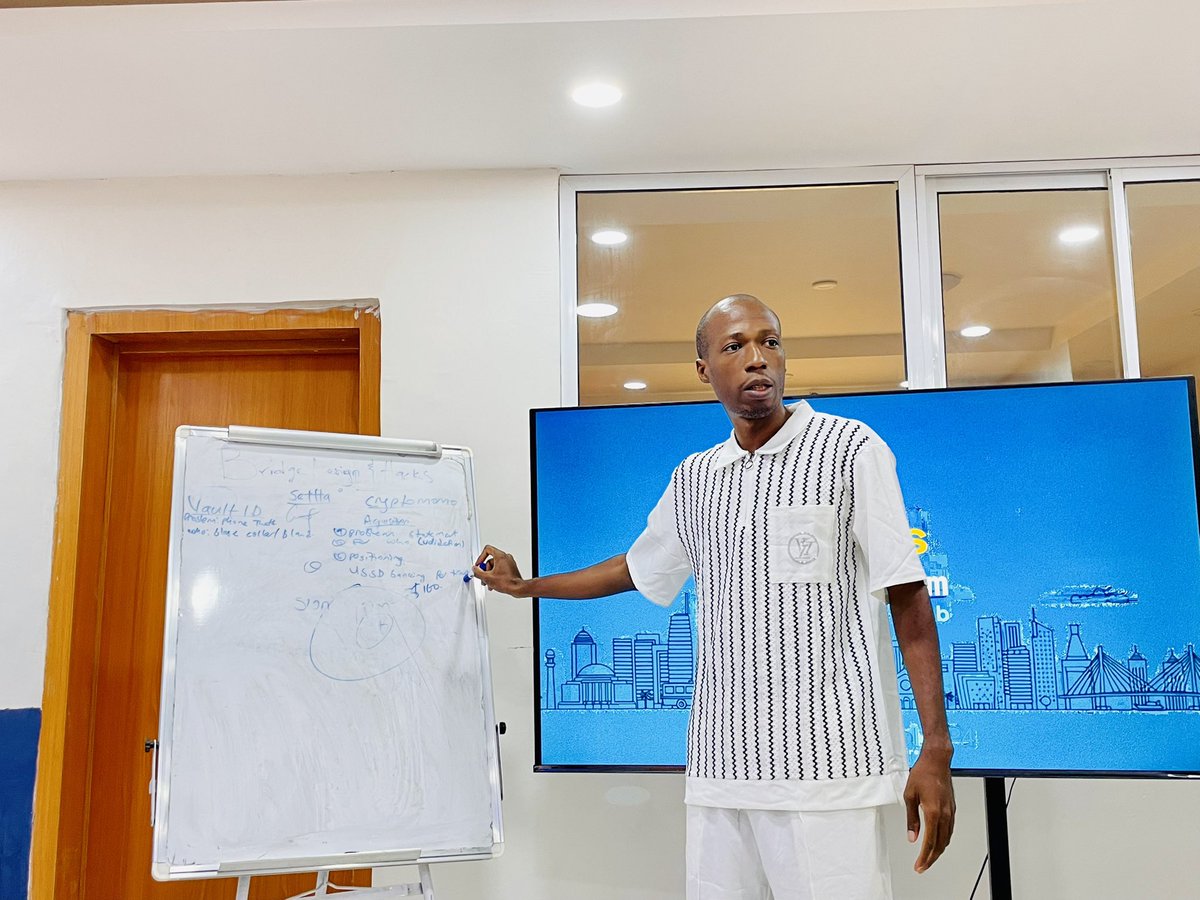
ETH Meetup, May Edition is LIVE and the value being shared is incredible. If you’re building a product, growing a startup, or exploring opportunities in Web3, this is your sign to pull up NOW. 🚀🔥
#ETHMeetup #EthereumNigeria #Web3Nigeria #TechNigeria #BuildersHub
1
1
18
383
the0takuc0mrade.dev retweeted
May 28
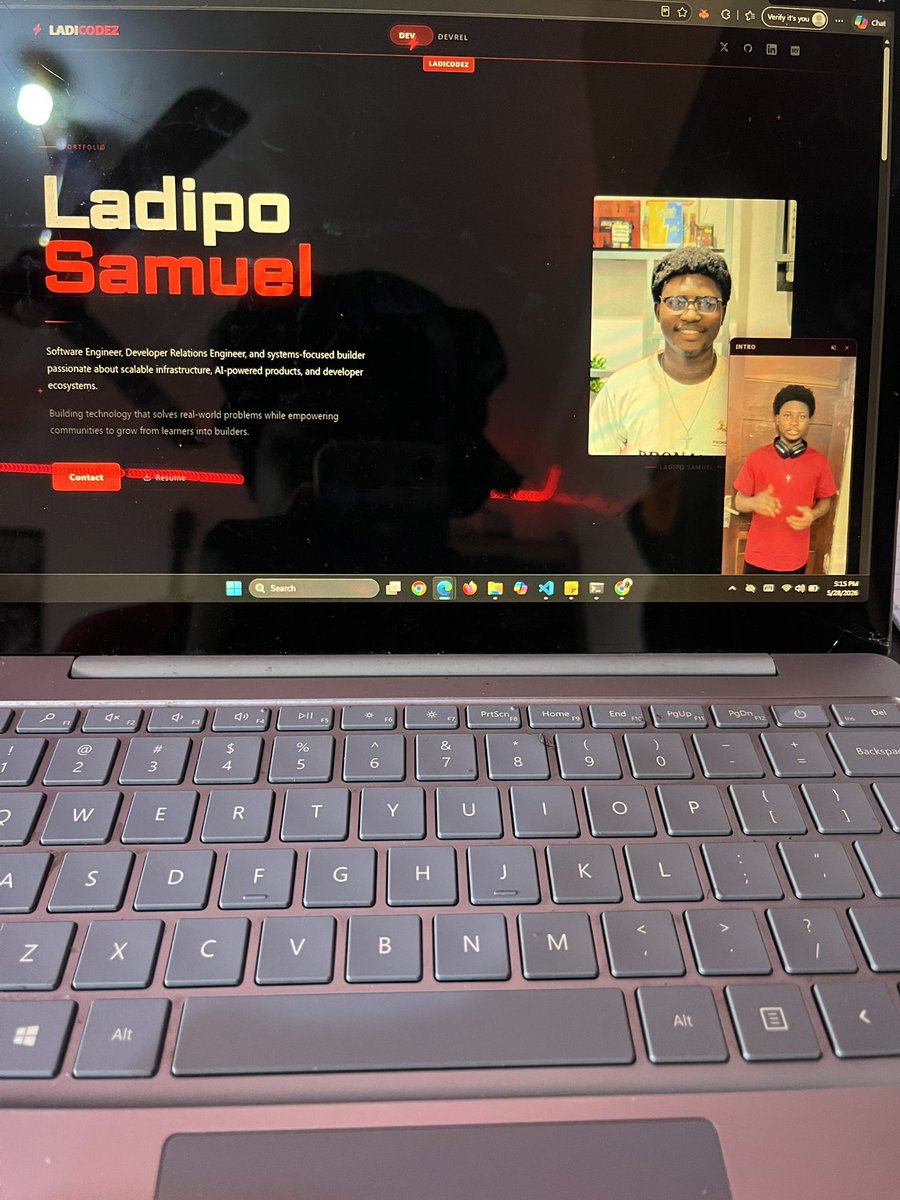
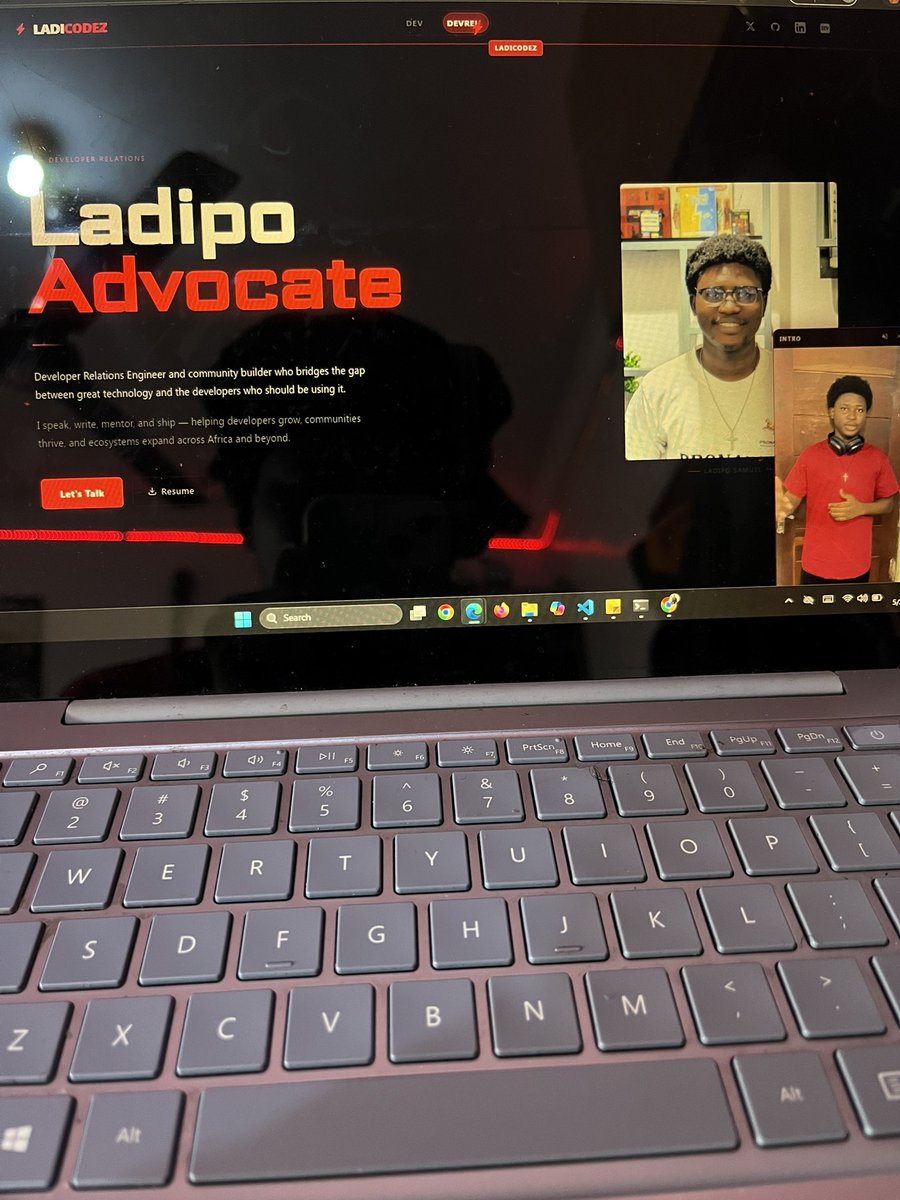
Hi, this is more of a reintroduction.
I’m Ladipo Samuel, a Developer Relations Engineer and Backend Engineer who has spent the last few years building products, speaking at events, mentoring developers, leading communities, shipping systems, and contributing to ecosystems both locally and globally.
Over the last 3 years, I’ve gained experience working with organizations and programs like @MicrosoftNG , @OfficialSquadCo by @gtbank , @Meta Accelerator Program, @HackMIT , Stanford @hackwithtrees , and several developer ecosystems across Africa and beyond.
Along the way, I’ve:
• Built 20 projects across AI, fintech, healthcare, accessibility, and Web3
• Spoken at 10 technical events including @hultprize , @cursor_ai , and @TechpulseC75071
• Reached 4,000 developers through community, hackathons, and ecosystem engagements
• Participated in, mentored, judged, and organized hackathons
• Written technical articles read by 2,000 people
• Pitched products publicly, led developer communities, and helped developers grow from learners to builders
Some people know me through engineering, others through DevRel, hackathons, speaking, or community work, but this portfolio finally brings every part of my journey together in one place.
Check it out. I think you’ll genuinely love what’s in there 🤍
Portfolio: ladicodes.dev
19
20
271
5,122