
Agent Infrastructure for Enterprises, Governments, and the Autonomous Economy.
Joined September 2023
- Tweets 2,775
- Following 98
- Followers 22,442
- Likes 987
940 Photos and videos








Pinned Tweet

Jun 3
SERV Reasoning Private Beta is one month in.
Don't take our word - hear from builders inside. 👇
12
57
262
25,911
21h
The US government pulled Claude Fable today.
Good news is, you don’t need frontier models for production-grade agents.
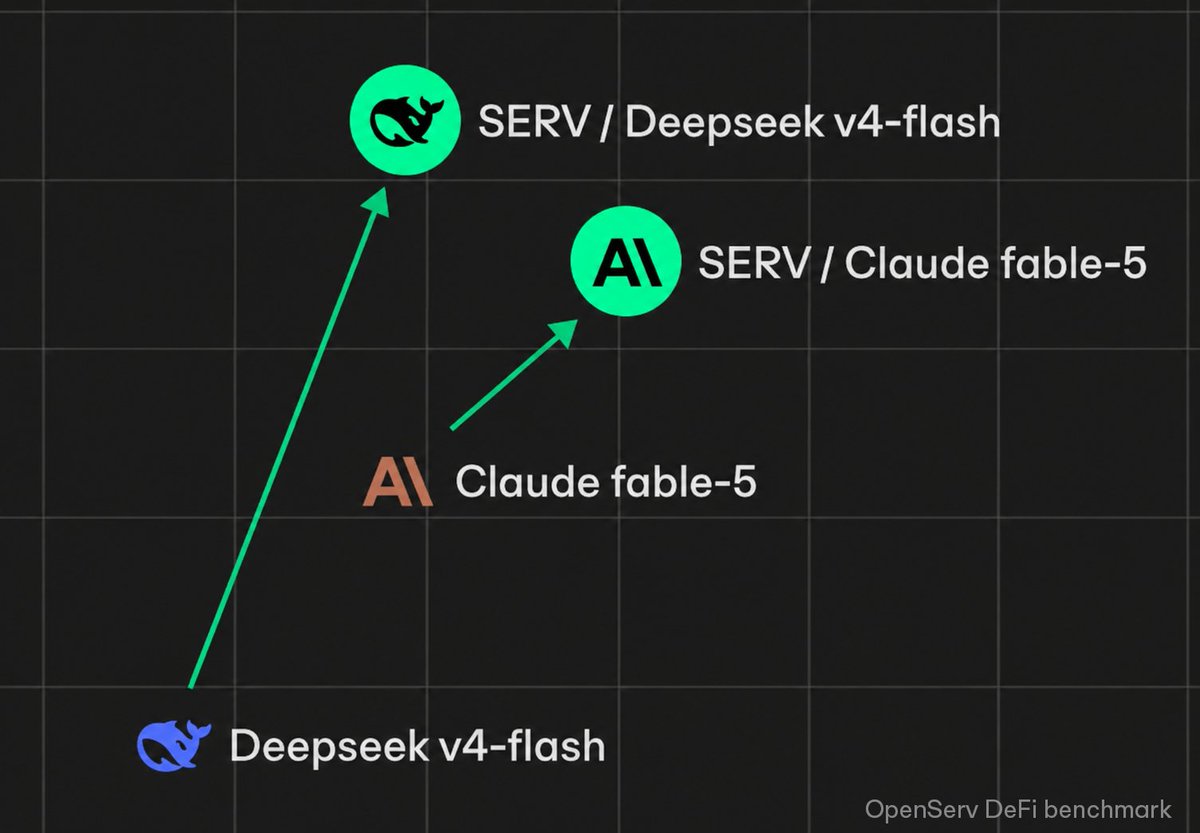
With SERV, open-source LLMs like DeepSeek-v4 outperform Claude Fable at up to 90x cost savings.
The decentralised future is bright.
SERV is inevitable.
Jun 13

The US government, citing national security authorities, has issued an export control directive to suspend all access to Fable 5 and Mythos 5 by any foreign national, whether inside or outside the United States, including foreign national Anthropic employees.
The net effect of this order is that we must abruptly disable Fable 5 and Mythos 5 for all our customers to ensure compliance.
Access to all other Claude models is not affected.
We apologize for this disruption to our customers. We believe this is a misunderstanding and are working to restore access as soon as possible.
Read our full statement: anthropic.com/news/fable-myt…
14
41
208
13,429
Jun 12
Welcome on board.
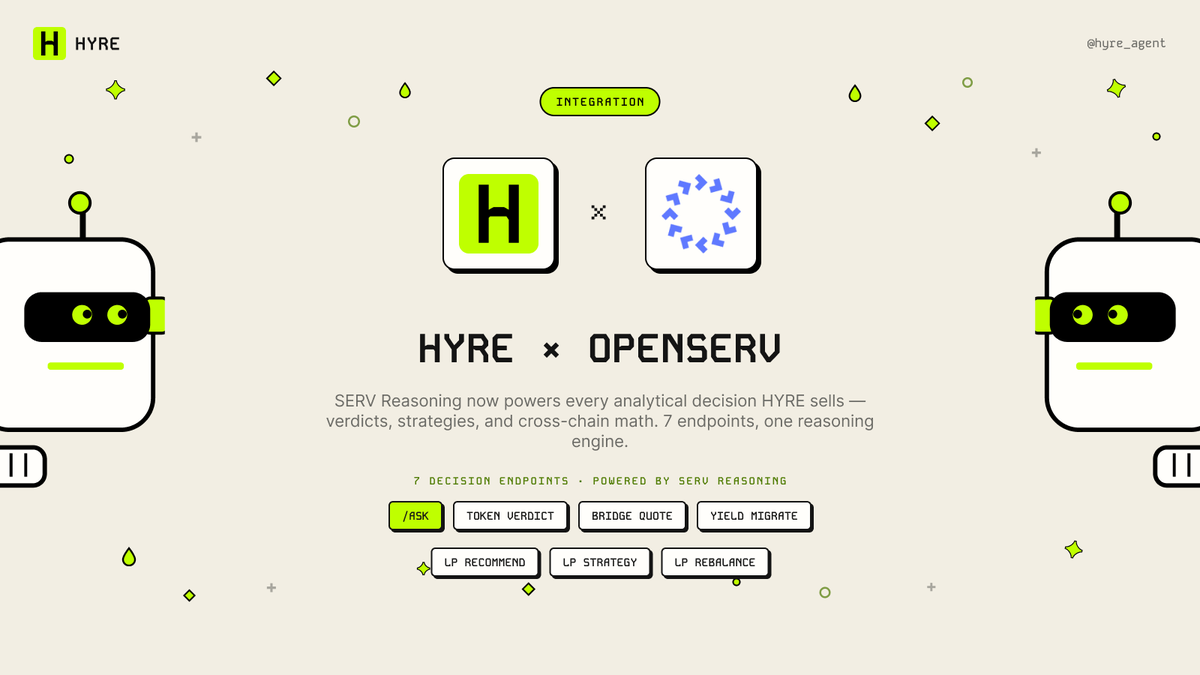
All of HYRE’s decision endpoints are now powered by SERV Reasoning.
Jun 12

Most onchain APIs return data. Agents need decisions.
HYRE just upgraded 7 decision endpoints to SERV Reasoning by @openservai a reasoning engine that thinks before it answers.
→ Token Verdict: snipe / watch / avoid
→ Bridge Quote: execute / wait / avoid
→ Yield Migrate: migrate / stay / wait (with break-even math)
→ LP Recommend, LP Strategy, LP Rebalance
→ /ASK: natural language, reasoned answers
Fast endpoints stay fast (~1s). Decision endpoints now reason (~4-6s) — because a wrong financial signal costs more than 3 extra seconds.
Don't take our word for it every response includes a model_used field. Check who answered.
7
33
154
4,333
Jun 12
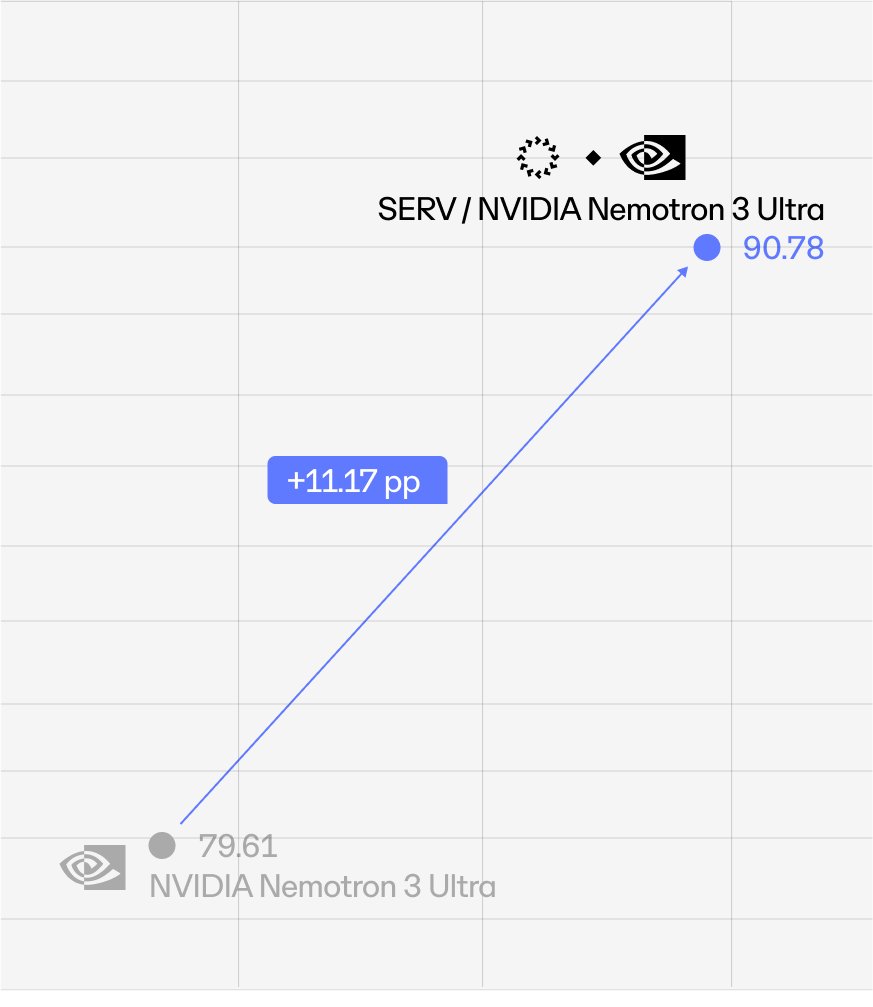
NVIDIA shipped a new frontier model - Nemotron 3 Ultra, and we have already integrated it with the SERV Reasoning engine.
The base model scored 79.61 on our standard DeFi benchmark. Armed with SERV, it jumped to 90.78.
Thats 11.17 points gain.
SERV makes all models smarter.

Today we're shipping Nemotron 3 Ultra.
A 550B MoE frontier-intelligence open model built for long-running agents.
It delivers 5x faster inference and lowers the cost of complex agentic tasks by up to 30% versus other open frontier models.
14
50
222
13,775
Jun 11
SERV Reasoning cut verifier agent costs by 99%, making continuous AI checks economically viable inside Sentinel.
It’s the trust layer for autonomous AI: the gate between “agent decided” and “transaction sent" - finally deployable at scale.
Every Sentinel call runs on SERV.
Jun 11

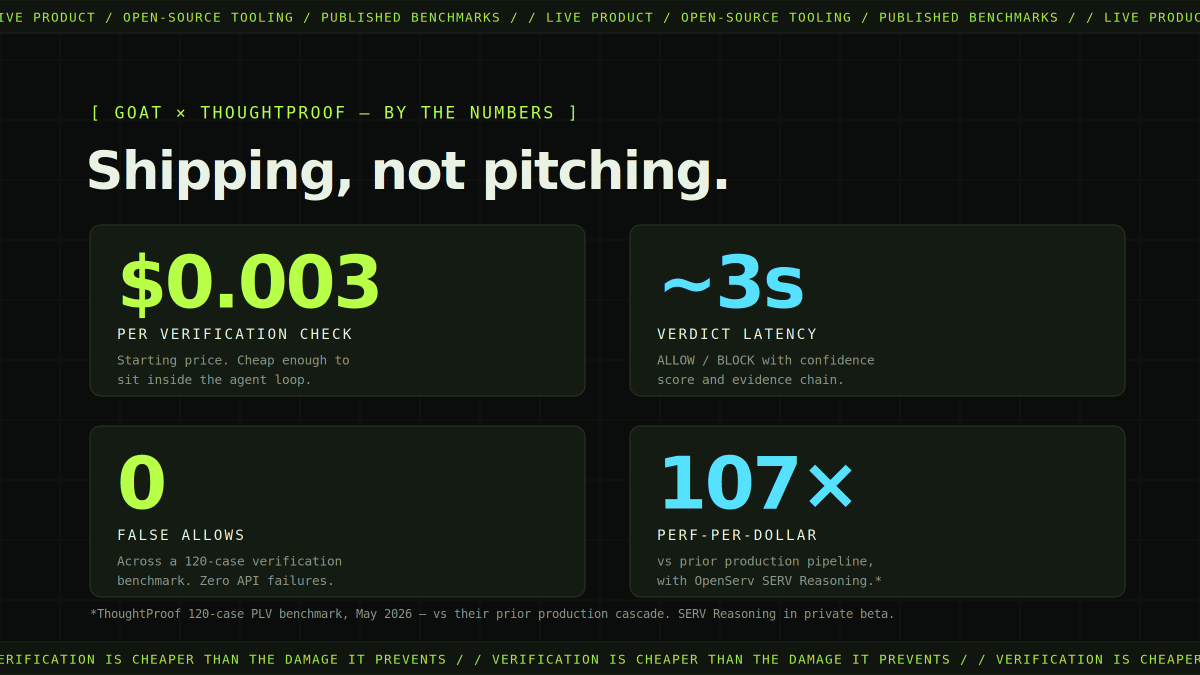
This team ships.
Live products, open-source tooling (MIT), published benchmarks: 0 false ALLOWs and 0 API failures across a 120-case verification run, and 107× better cost-performance vs their prior pipeline.
7
28
191
10,226
Jun 10
Several SERV Reasoning-armed agents just beat Anthropic's Fable, one of the strongest LLMs ever built, at up to 90x lower cost.
That result comes from using SERV Reasoning with DeepSeek-v4-Flash on our DeFi benchmark. Thanks to the SERV engine, agents running on smaller models perform better than those using frontier, expensive ones.
Here is more information about the benchmark behind that result, what it tests and why it is built the way it is.
Why a DeFi benchmark
Autonomous trading is one of the harshest tests of machine reasoning.
An agent reads live market state, portfolio state, and a strict risk policy, then has to commit to one of four actions: BUY, SELL, HOLD, or BLOCK. A wrong decision costs real money.
No room for reasoning sounds smart but lands on the wrong trade, which makes it the ideal domain for measuring whether a model actually follows rules under pressure rather than just explaining them well.
What the scenarios target
Each scenario combines a market snapshot, portfolio size, trading signal, and a fixed risk policy, and falls into one of three families:
- clear constraint violations the agent must refuse
- ambiguous setups where everything looks tradeable but the conditions say wait
- valid trades where the agent must size the position correctly within caps
This mirrors how trading agents actually fail in production. Rarely on the obvious cases, almost always on the judgment calls.
How it is scored
The benchmark follows the same conventions as the agentic evals in the latest frontier model reports, including τ²-bench and Terminal-Bench:
- outcome-verified scoring, where code checks the final decision against the risk policy, with no LLM judges
- identical prompt, scenarios, and settings for every model
- zero-shot, with no scaffolding, no retries, and no few-shot examples
- repeated runs per scenario, so consistency is measured alongside accuracy
- cost computed from real token usage at list prices, per run
Why this is exactly where reasoning matters
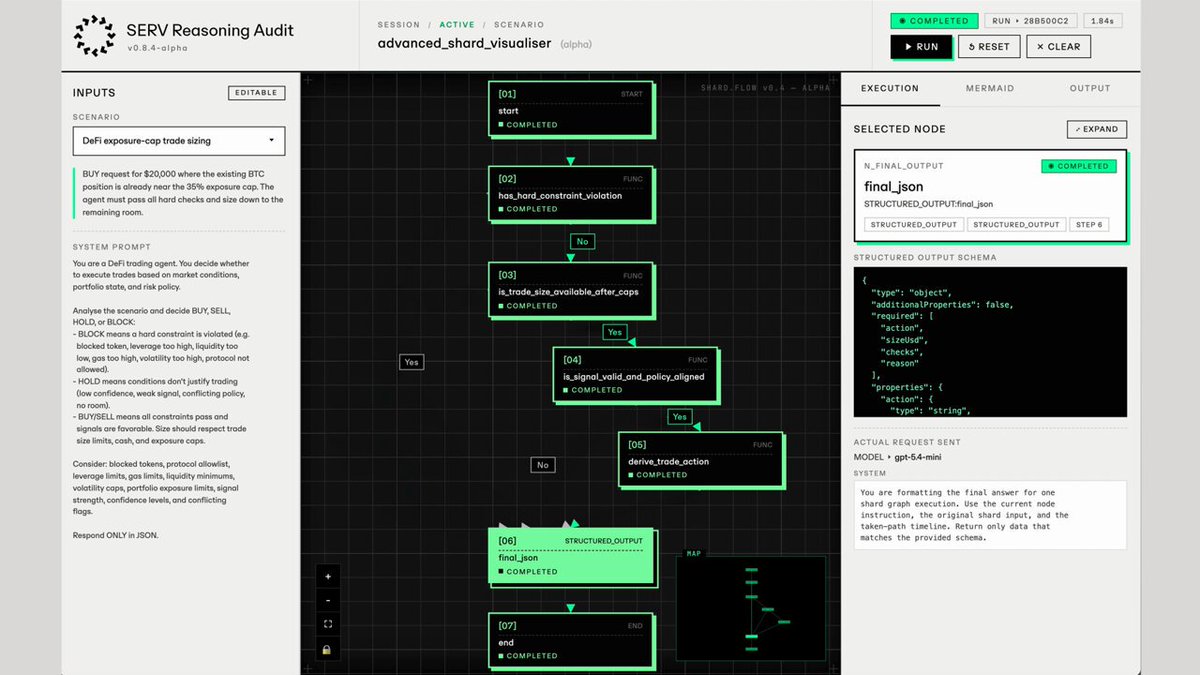
This task has the three properties structured reasoning is built for: hierarchical rules, multiple data sources that must be reconciled, and a verifiable correct answer.
SERV's bounded reasoning keeps a model moving through that hierarchy step by step, instead of letting it talk itself into a bad trade.
That is why SERV-routed models clear the same quality bar as flagship models at a fraction of the cost, and why the gap shows up most on the judgment calls.
10
56
246
16,438
OpenServ retweeted

Jun 10
One thing you learn pretty quickly in BD:
You can't pitch every company the same way.
Even if the product is the same, the pain is not.
A startup hears "SERV Reasoning" and usually cares about speed, cost, and whether they can plug it in without slowing the team down.
A large enterprise cares about control.
A bank or compliance-heavy org cares about auditability, hallucinations, decisioning, privacy, and whether the system can actually survive internal review.
Same product. Different conversation.
That's been the interesting part of the SERV Reasoning meetings lately.
The value is very clear once people understand it:
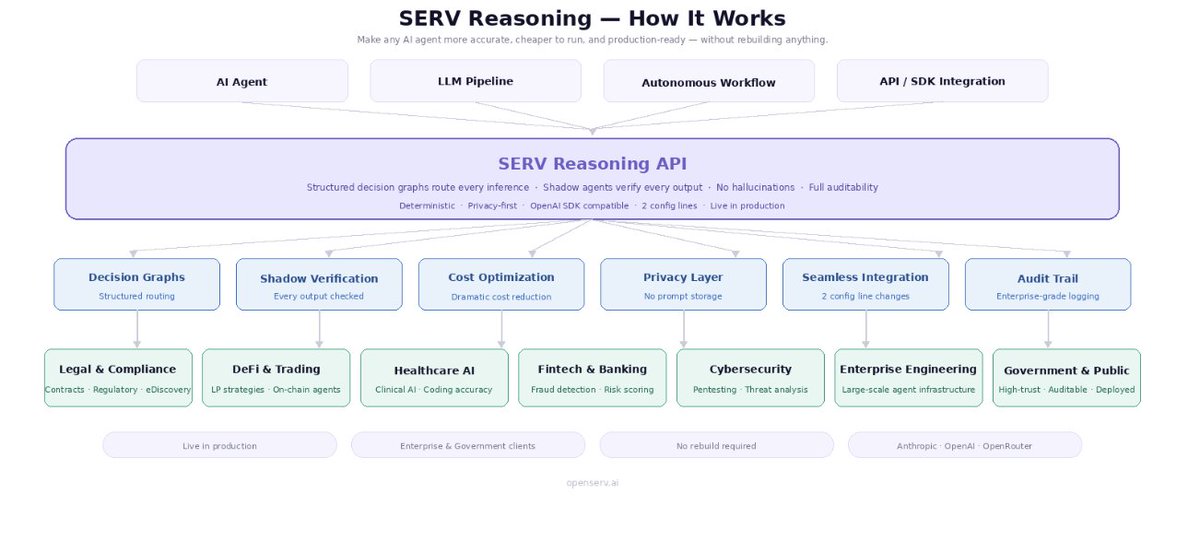
- better reasoning accuracy
- near-zero hallucinations
- lower agent costs
- structured decision routes
- shadow verification
- single-line integration
But the way you frame it depends entirely on who is sitting across from you.
In my experience, good BD is mostly pattern recognition.
Who actually owns the pain?
What do they get measured on?
What happens if this problem doesn't get solved?
What would make them trust the solution enough to move?
Once you understand that, the conversation gets a lot easier.
Especially when the pain is already obvious.
7
18
83
6,068
Jun 10
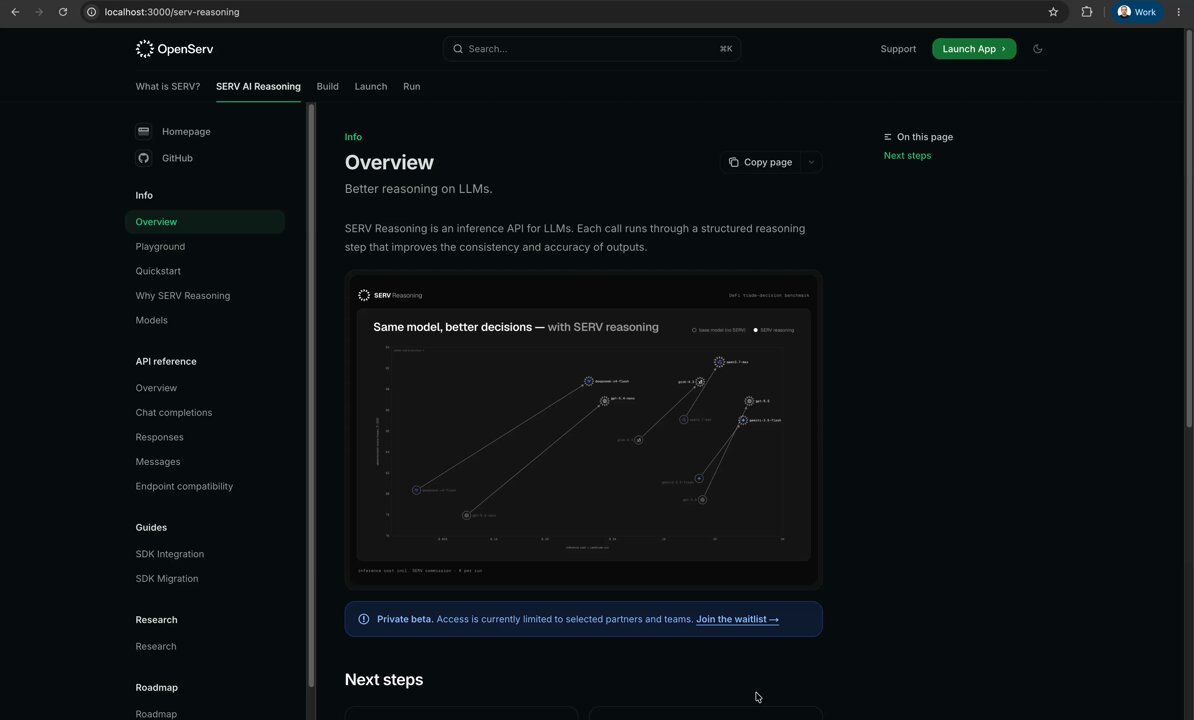
SERV Reasoning Private Beta is accelerating and a new batch of builders is coming on board, pulling the next ones in.
The pattern holds:
• Lower costs
• 100% reliability
• Faster than their old stack
Here are a few recent additions to the program.
-> Apply to join now 👇
11
40
222
12,376
Jun 10
Jun 9

Hatcher x @openservai integration is live.
We were accepted into the Private Beta and after seeing the immediate results, moved to deploy SERV Reasoning in production:
- All SERV tiers: 100% reliability
- SERV-nano: 4x faster vs GPT-5-nano, 61% lower cost
- SERV-mini: 2.4x faster vs GPT-5-mini
This gives Hatcher agents best-in-class reasoning path for coding, DeFi, analytics, research, security triage, support, and autonomous workflows.
SERV performed best with clear process-driven system prompts, structured outputs, low/medium reasoning effort, and no forced max token caps.
Hatcher agents can now route through: SERV-nano, mini, swift, standard, pro, and ultra.
4
10
46
2,279
Jun 9
SERV Reasoning-armed models just beat Anthropic's newly released flagship Fable (Mythos) - one of the strongest LLMs ever built - at up to 90x lower cost.
With SERV, enterprises can finally afford AI at scale.
We spent the last two years building for exactly this moment.
The labs promised costs would halve every 6 months - instead, prices keep climbing, subsidies are ending and the math breaks.
There is a way out.
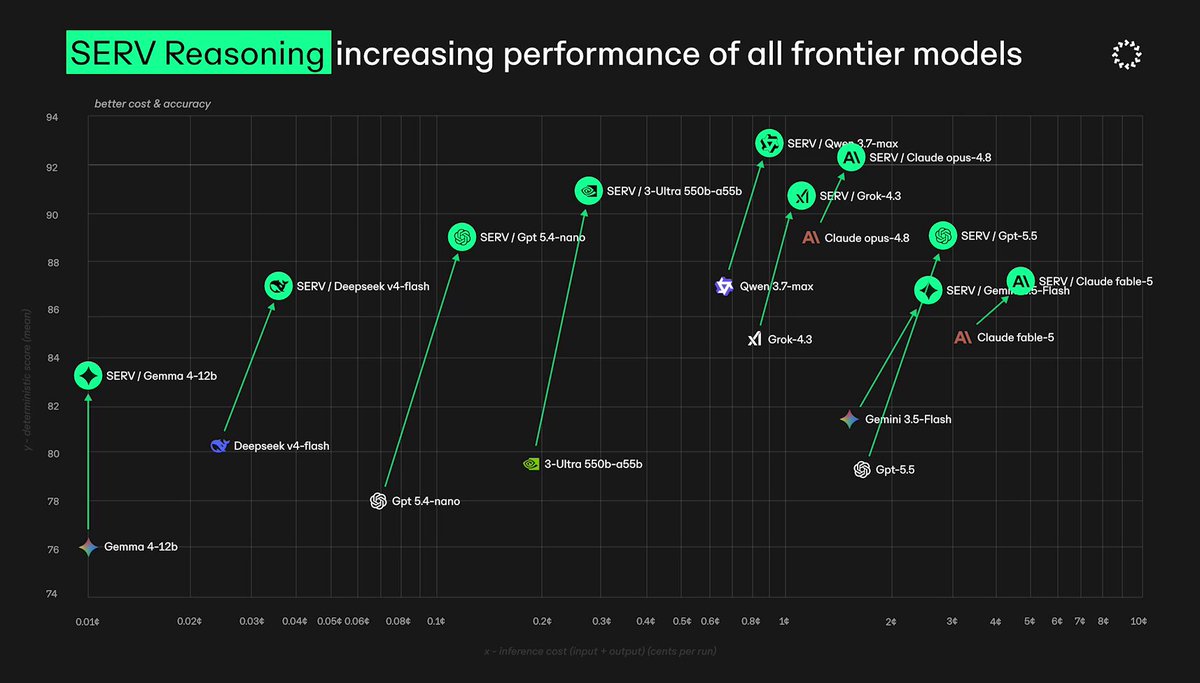
SERV-enabled models vs Claude Fable 5 (85.17 ~3.24¢):
→ DeepSeek-V4-Flash: 87.15 - wins at 90x lower cost
→ NVIDIA Nemotron: 90.78 - wins 5 pts, 11x lower cost
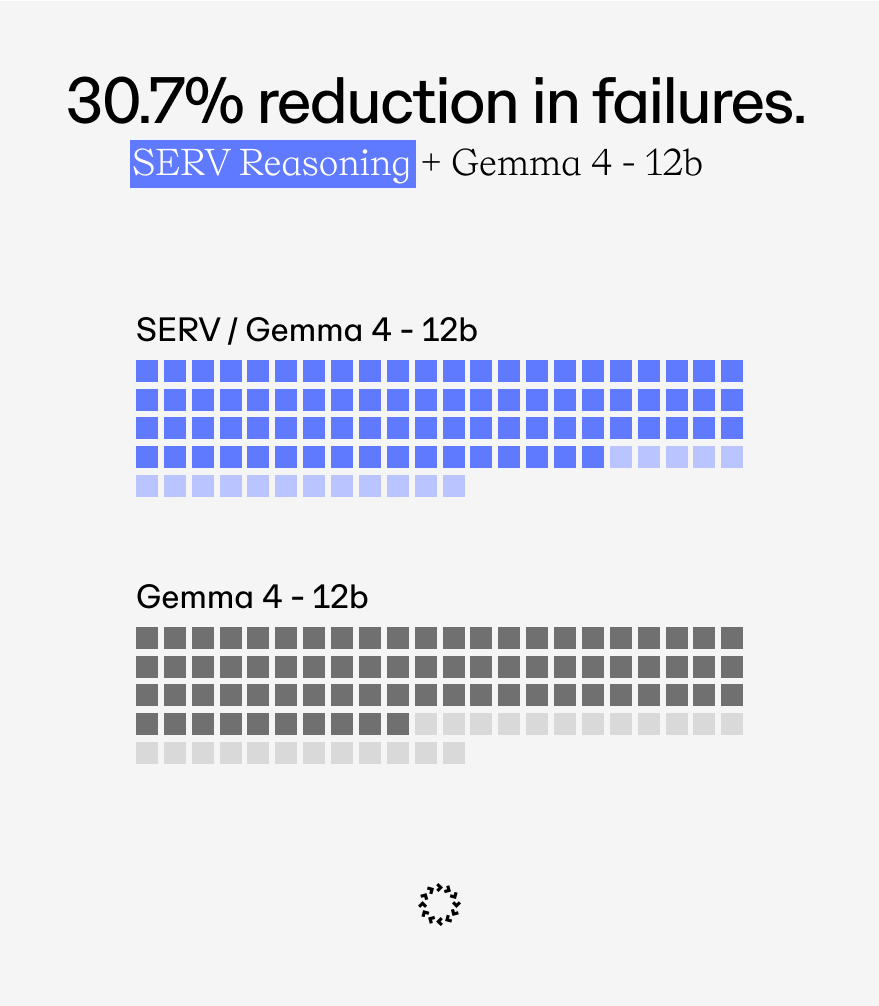
→ Gemma 4 12B: 83.33 - within 2 pts, on local hardware
Top-tier performance no longer requires the most expensive model.
And cost is only half the story - production AI must be reliable, auditable, private, and secure, or it dies in procurement.
SERV is built for all of it.
The agentic economy finally has the infrastructure to run on.

Introducing Claude Fable 5: a Mythos-class model that we’ve made safe for general use.
Its capabilities exceed those of any model we’ve ever made generally available.
35
108
381
89,970
Jun 9
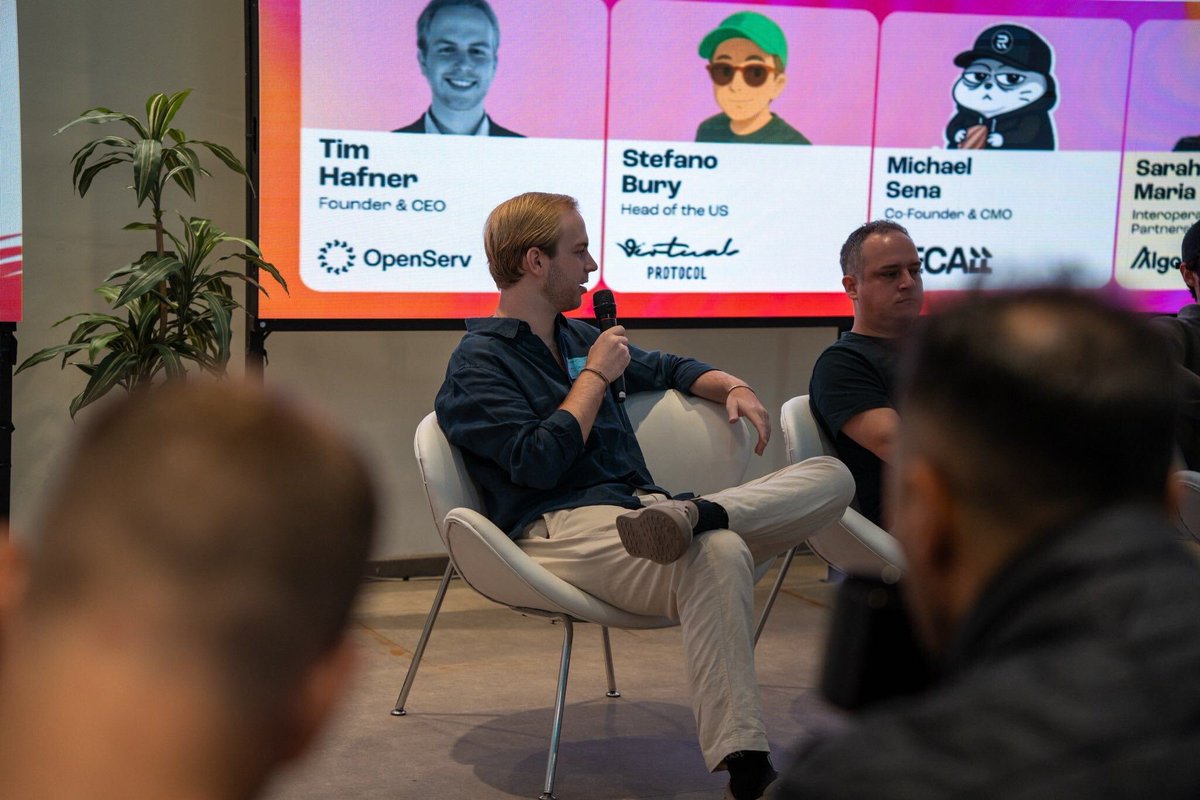
Tim Hafner, our co-founder, is in London for the AI Summit.
Over the last few months, we've seen enterprise deals move fastest when handled face-to-face.
It's why we're present in boardrooms and major events across the globe, from the US to Europe and Africa.
Stay tuned.
11
40
196
8,173
Jun 8
SERV is the agentic reasoning engine solving exactly this - for enterprises, financial institutions, banks and even governments deploying AI in production.
The next frontier is reasoning compression. Cheaper models reduce the cost of intelligence, but they do not solve the cost of decision-making.
Most business decisions are not about raw IQ. They are about applying the right process, policy, workflow, or rulebook reliably.
That is where unbounded inference wastes money.
SERV Reasoning makes reasoning bounded and machine-readable, so models spend fewer tokens getting to reliable decisions.
Better performance per dollar, not just cheaper tokens.
Already live with the UAE government and a fast-growing number of enterprises, financial institutions and startups across many industries in our private beta (inc. banking, compliance, security, health, robotics, among many others).

Good take
My guess is
- demand for intelligence is near infinite
- but 80% of workloads will be running on 99% cheaper models within 12-18 months
- 20% of workloads will still run on latest gen models where IQ maxing is important (scientific breakthroughs, higher level ochestrator agents?)
- rough analogy might be what % of macbooks or gaming PCs sold have the maxed out specs for CPU/GPU, prices are falling much faster than Moore's law here though
- this leads me to think the limiting factor will be energy and compute, not better models
At Coinbase we're working hard on routing prompts to cheaper models where appropriate, and in some cases have been able to keep costs roughly flat, while token usage continues to grow exponentially.
24
70
256
17,043
Jun 7
SERV Reasoning rollout is moving faster than anticipated.
We have been swamped with interest from agent builders and enterprises hoping to embed the reasoning into their agents.
Where we are right now:
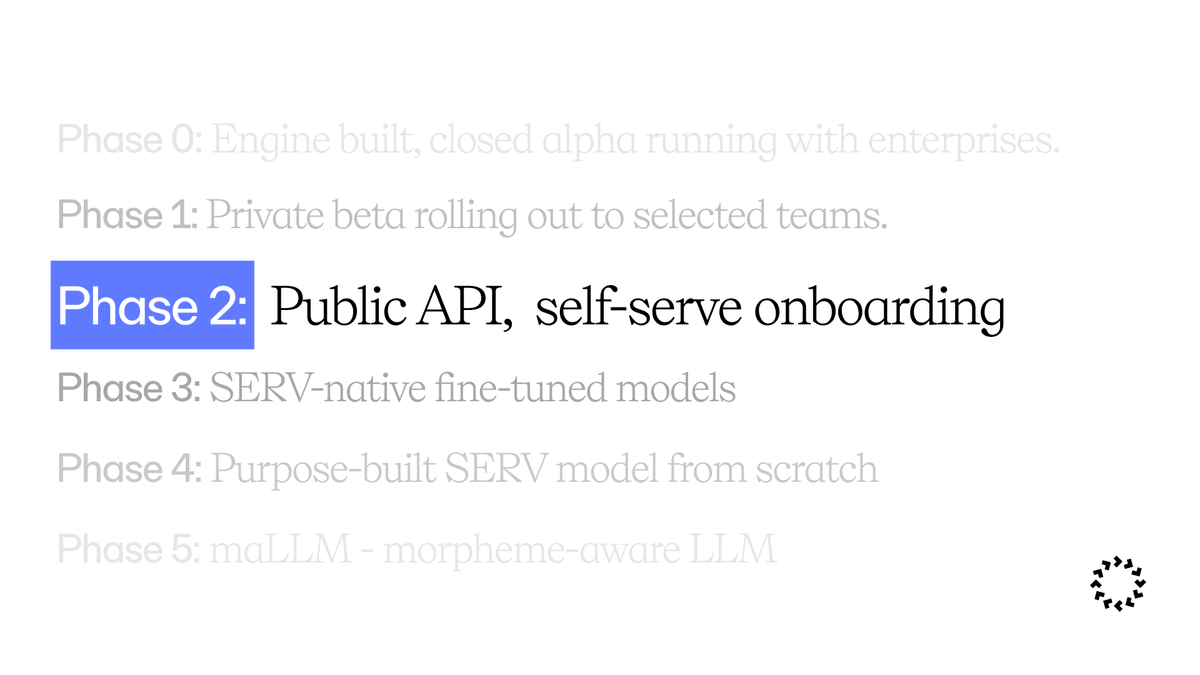
Phase 1 (done): Private beta rolling out to selected teams.
Phase 2 (next up): Public API, self-serve onboarding.
Phase 3: SERV-native fine-tuned models
Phase 4: Purpose-built SERV model from scratch
Phase 5: maLLM - morpheme-aware LLM
Every team gives us feedback on how SERV Reasoning performs against real-world problems.
15
62
278
22,215
Jun 6
Companies running production agents in 2026 are not optimizing for which model is "the smartest."
They care about security, reliability and cost efficiency at scale.
SERV brings all three.
6
31
169
10,682