
Joined January 2010
- Tweets 2,967
- Following 453
- Followers 4,712
- Likes 3,279
442 Photos and videos



Jun 12
cms.megaphone.fm/channel/NTE…
2min 45s
Jun 12

If you can find his interview with @SENGiddyUp - Lloyd explains. What Walt said pretty accurate
4
2,842
marc lambourne retweeted

May 22
The most OVERRATED things in Racing... according to @thaylock 👀👎
Has he missed any? 👇
@Matt__Welsh_ @TrentC_Racing
@SEN_track
20
5
64
26,647
Apr 8
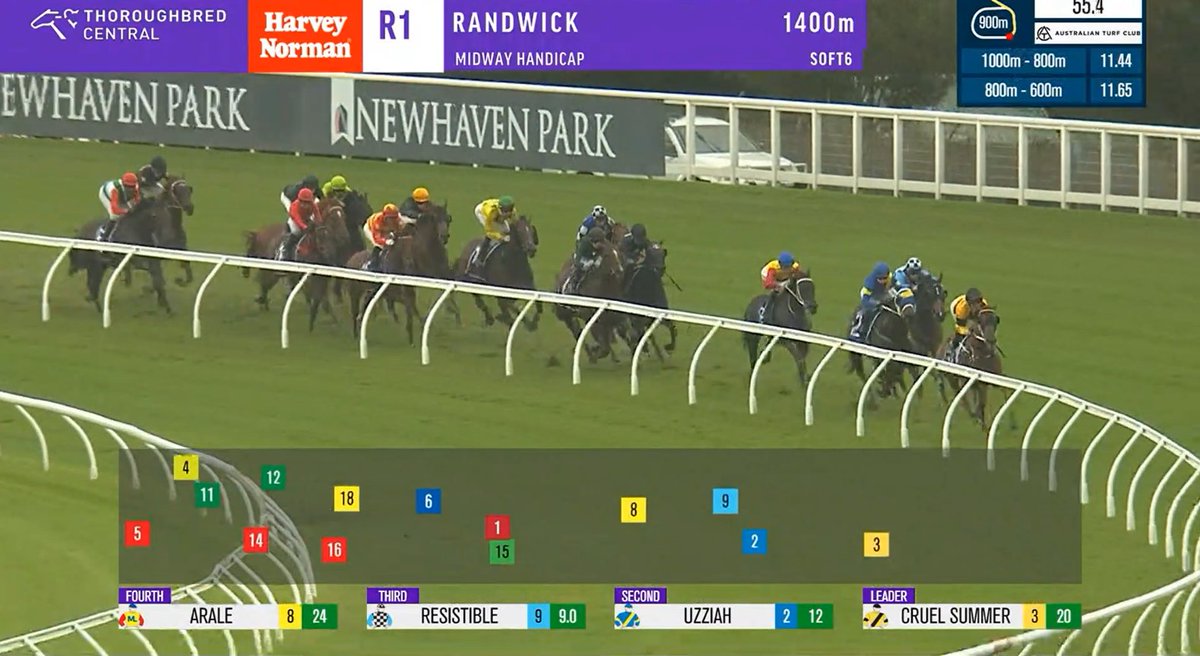
What's with the "INSIDE CONVEYOR BELT" at the Sydney Metro Midweeks?
Wyong 18 March
Kenso 25 March
Rosehill 6 April
Hawkesbury 8 April
Rails-in-Run is GOLD
@aus_turf_club
@chaplin_nigel
5
13
3,147
marc lambourne retweeted

Mar 24
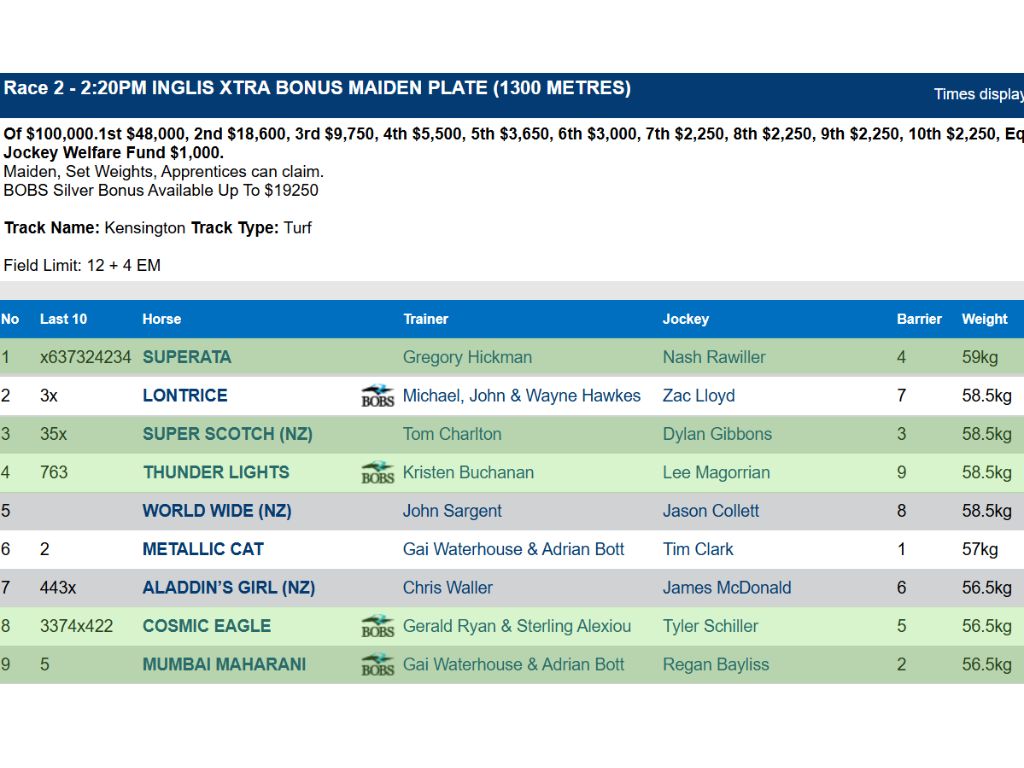
There are 5 eligible runners for the #InglisXtraBonus at Kensington tomorrow @aus_turf_club. Which eligible runner will cross the line first and take home $100k in bonus prizemoney?
2
1
1,531
marc lambourne retweeted

There is something deeply revealing about how an organisation reacts when a court tells it “you do not have that power.”
This week the Supreme Court of New South Wales, through Justice Francois Kunc, did exactly that to Racing NSW in its dispute with the Australian Turf Club.
The ruling was not radical.
It was not ideological.
It was not anti racing.
It simply stated that the legislation governing Racing NSW allows it to act in matters relating to the racing of galloping horses. That is it. That is the boundary.
What followed from Racing NSW, however, sounded less like the response of a regulator in a democracy and more like the reaction of a central authority that has just discovered someone has questioned its supremacy.
Suddenly the industry is in a “precarious position.”
Funding is supposedly at risk.
Fifty thousand livelihoods are apparently hanging in the balance.
All because a court reminded the regulator that it must operate within the law.
Let us be very clear.
This is Australia.
It is not North Korea.
Regulators in this country do not get to invent powers because they think their intentions are noble. They do not get to march into independent organisations and install administrators simply because they have decided they do not like the governance structure or the personalities in the room.
That is not regulation.
That is control.
And the reaction from Racing NSW makes it painfully obvious that control is the real issue here.
For years the organisation has behaved as if it sits above the system it was created to administer. The assumption appears to have been that if Racing NSW believes something should happen, then the law will somehow bend to accommodate that belief.
The court has now politely explained that the law does not work that way.
Yet instead of acknowledging the limits of its authority, Racing NSW has responded with a familiar bureaucratic tactic. Inflate the consequences. Declare existential risk. Suggest the entire industry might somehow unravel if the regulator cannot continue exercising powers the legislation never actually granted it.
It is the administrative equivalent of stamping your foot and announcing that the sky will fall unless you get your way.
Even more absurd is the contradiction buried in Racing NSW’s own statement. In the same breath that it warns of catastrophic funding risks, it proudly notes that race clubs across New South Wales are in the strongest financial position they have ever been in, with assets and cash doubling over the past decade.
So which is it.
Is the system thriving or on the brink of collapse because a court enforced the law.
Because it cannot logically be both.
The reality is that nothing about this judgement threatens racing. Horses will still run. Wagering will still occur. Prize money will still be distributed. Race clubs will still operate.
The only thing under threat is a culture that appears to have convinced itself that legal boundaries are optional.
And that is where the North Korea comparison starts to feel less like satire and more like uncomfortable accuracy.
In functioning democracies regulators operate within legislation and answer to the courts when they step outside it.
They do not behave as if the court system is merely an inconvenience standing in the way of administrative ambition.
Racing NSW may choose to appeal the ruling. That is its right.
But the tone of its response suggests an organisation that has grown so accustomed to unchecked authority that the mere suggestion of limits feels like an existential attack.
It is not.
It is simply the legal system reminding a regulator of something very basic.
This is Australia.
And in Australia no regulator gets to behave like a supreme authority simply because it believes the industry would be better off if it did.
6
9
39
4,912
marc lambourne retweeted
Independent Public Statement
As the Supreme Court of New South Wales prepares to deliver judgment at 9.45am on Wednesday in the proceedings between the Australian Turf Club and Racing NSW, I place my position on the public record with unequivocal clarity, unflinching resolve, and uncompromising legal force.
I express my unreserved and unequivocal support for the Australian Turf Club, its Board of Directors, a hybrid board of appointed and elected members, and the rigorous, principled reporting of Vicky Leonard in The Thoroughbred Report. Her article accurately identifies the legal, governance, and statutory questions at stake and provides an indispensable framework for public understanding of this dispute.
This litigation is not a mere administrative matter. It is a test of statutory construction, the lawful limits of regulatory authority, and the preservation of governance integrity in member governed organisations. The question before the Court is precise and critical: may a regulator, under the guise of statutory power, assume control of a member governed entity absent express legislative authorisation? The answer is emphatically negative.
The Australian Turf Club is a legally independent entity. It is not a subsidiary, it is not a puppet, and it is not subject to operational domination by a regulator. Its Board is entrusted by law and constitution with full responsibility for racing operations, commercial strategy, assets, and corporate governance.
The assertion by Racing NSW that it may exercise such comprehensive authority is legally unsustainable. It constitutes an impermissible encroachment upon corporate governance, an attempted subversion of member rights, and a challenge to the rule of law. Acceptance of such an argument would erode the autonomy of every member governed club in New South Wales, substituting regulator discretion for constitutionally mandated accountability. Such a course is not oversight; it is unlawful usurpation.
The ATC Board’s decision to seek judicial determination was both necessary and entirely appropriate. When statutory powers are invoked in a manner that threatens to displace a boards lawful authority, the Court is the sole arbiter of their legality and scope. Any failure to adjudicate these questions would fundamentally undermine governance, destabilise the racing industry, and compromise the rule of law.
The Court is called upon to delineate boundaries that Racing NSW has brazenly sought to erase. Boundaries that protect elected and appointed directors from unlawful interference. Boundaries that preserve member governance and ensure accountability to members, not to a regulator wielding unchecked and expansive discretion.
Let the record show: regulatory power is not absolute. Governance rights are not negotiable. The ATC Boards defence of both, accurately and meticulously reported by Vicky Leonard, exemplifies leadership, legal courage, and fidelity to statutory and constitutional principle. It demands recognition from all participants in the industry.
On Wednesday morning, the Court will deliver judgment. Regardless of the outcome, the ATC Board will have fulfilled its highest duty. It will have stood resolutely against unlawful overreach. It will have demanded statutory powers be exercised strictly within the limits prescribed by Parliament. It will have defended the sovereignty of member governance with unwavering resolve.
The law is unequivocal. The Board is correct. The ATC Board has acted not merely in defence of its own mandate, but in defence of principle, in defence of law, and in defence of every member governed club in New South Wales. The principles at stake are foundational. They are the pillars upon which the integrity of racing in this State rests. Let there be no misunderstanding: the ATC Board will not yield.
2
7
24
4,357
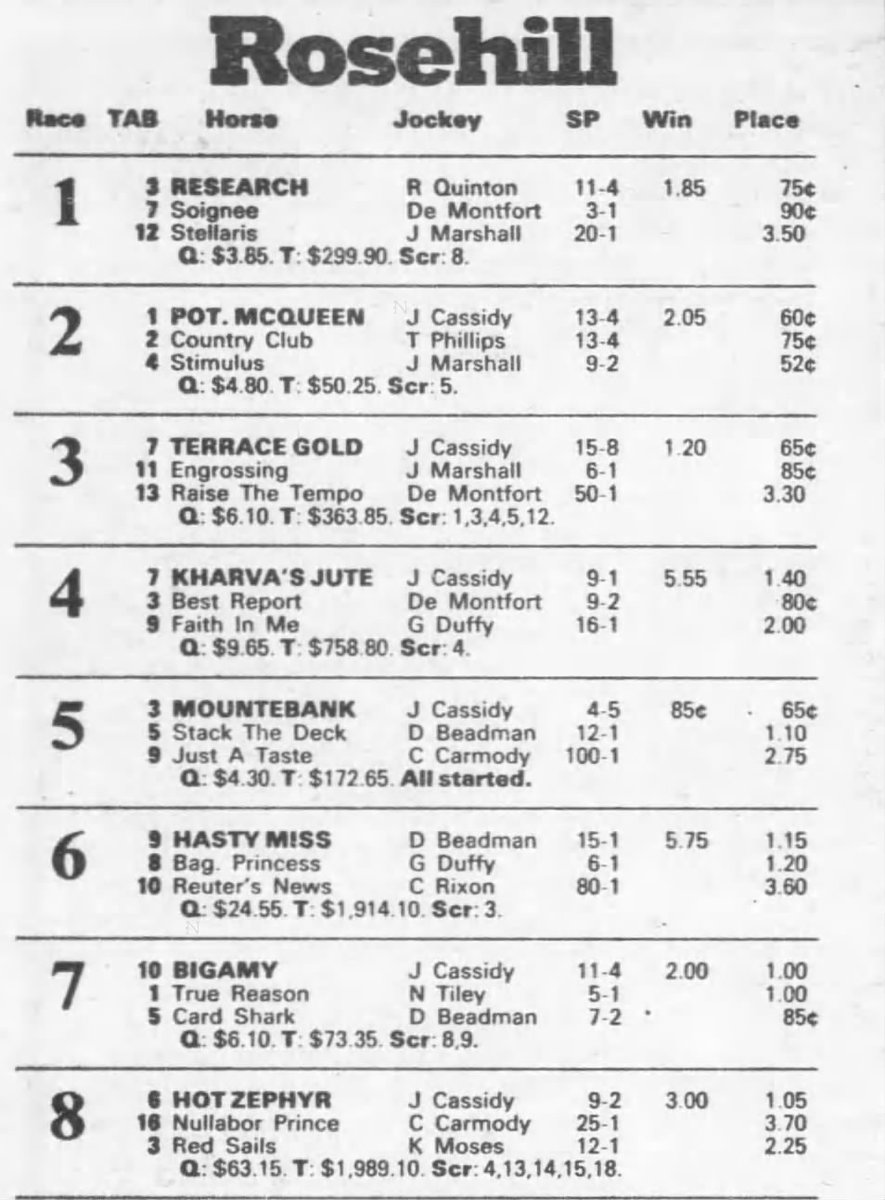
marc lambourne retweeted


2
3
976
Jan 8
Not sure how I've dodged Dan for so long but I'm grateful now to be on board
Australia v England Fifth Test, Day Four Report Card, by @LiebCricket open.substack.com/pub/danlie…
3
639
marc lambourne retweeted

25 Nov 2025
HEADS UP Wyong Punters Nov 26
Race 1 1625m
Race 7 2125m
Somebody tell @RacingAust
@PaulD01 @WyongRaceClub
1
3
5
2,681
marc lambourne retweeted
10 Nov 2025
There are 7 eligible runners for the #InglisXtraBonus @aus_turf_club tomorrow.
Which eligible runner will be first past the post and claim $100k in bonus prizemoney for connections?
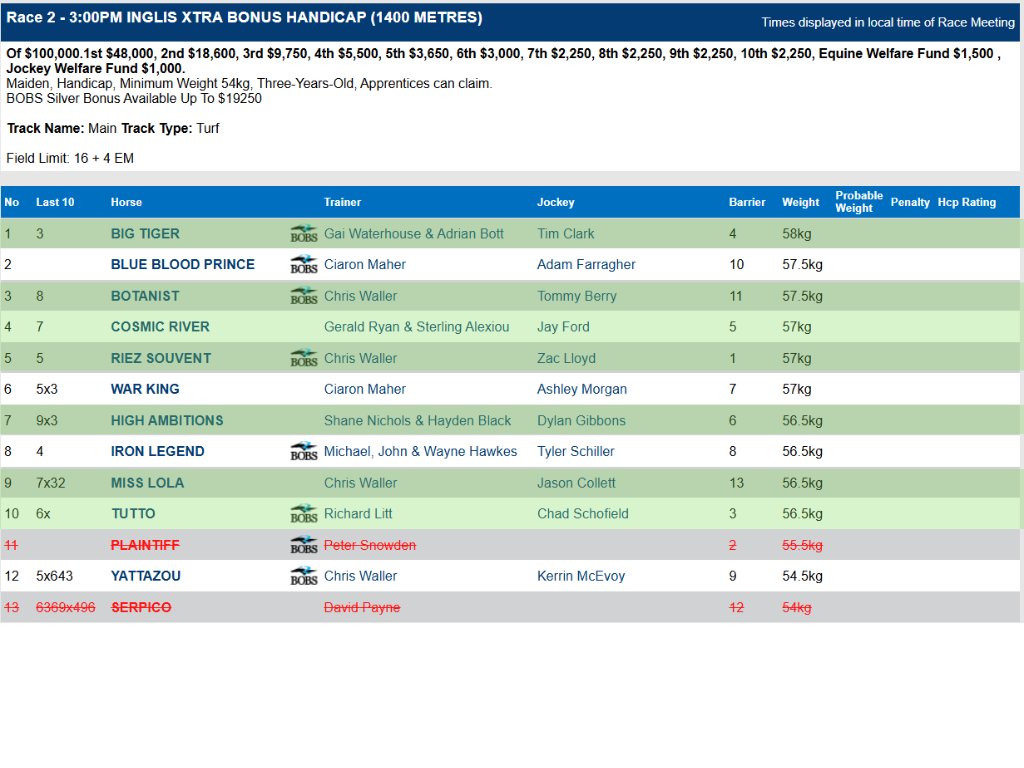
1
2
2
1,423
marc lambourne retweeted
13 Oct 2025
There are 5 eligible runners for the #InglisXtraBonus at Warwick Farm @aus_turf_club this Wednesday. Which eligible runner will be first past the post and claim $100k in bonus prizemoney for connections?
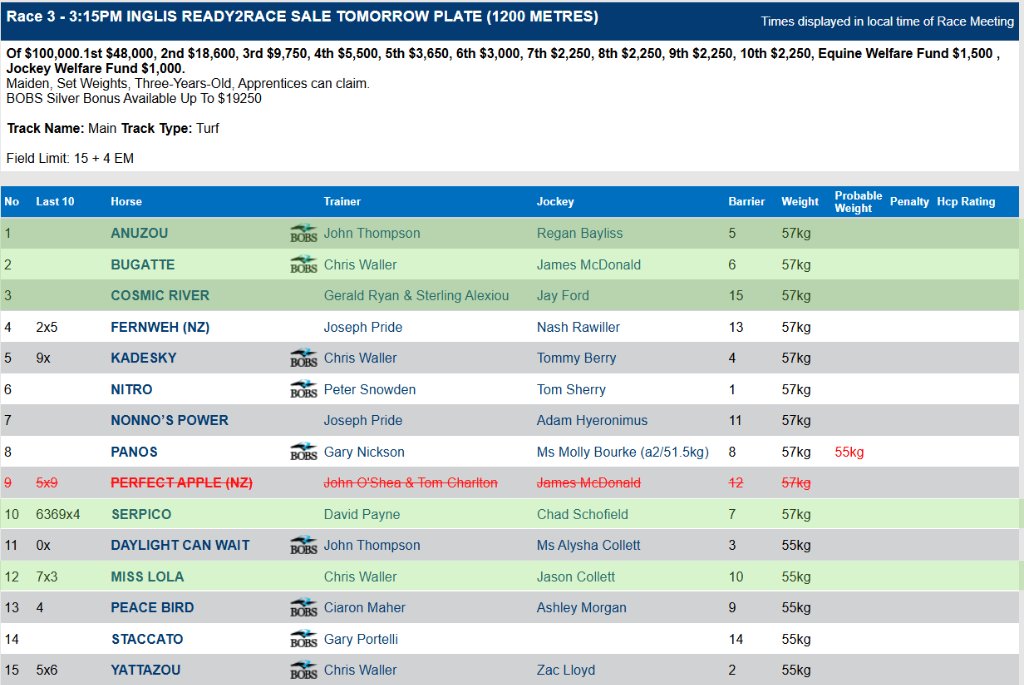
1
1
1
1,848
marc lambourne retweeted
9 Oct 2025
Years of mounting yard experience and passion direct to you! 📲
Get alerted evey time @RantRacing BACKS or LAYS off a horse's parade!
🔗: betfair.com.au/hub/racing-ra…
𝗜𝗠𝗔𝗚𝗜𝗡𝗘 𝗪𝗛𝗔𝗧 𝗬𝗢𝗨 𝗖𝗢𝗨𝗟𝗗 𝗕𝗘 𝗕𝗨𝗬𝗜𝗡𝗚 𝗜𝗡𝗦𝗧𝗘𝗔𝗗. 𝗦𝗲𝘁 𝗮 𝗱𝗲𝗽𝗼𝘀𝗶𝘁 𝗹𝗶𝗺𝗶𝘁.
16 Oct 2024

✍🏻 "He goes, 'He can't win, he can't win...'"
Glenn Pollett from @RantRacing explains how he first learnt to analyse horses from the Mounting Yard.
3
7
2,867
marc lambourne retweeted
8 Oct 2025
There are 3 eligible runners for the #InglisXtraBonus at Cranbourne this Friday night. Which eligible runner will break their maiden and take home $100k in additional prizemoney for connections? @SthsideRacing
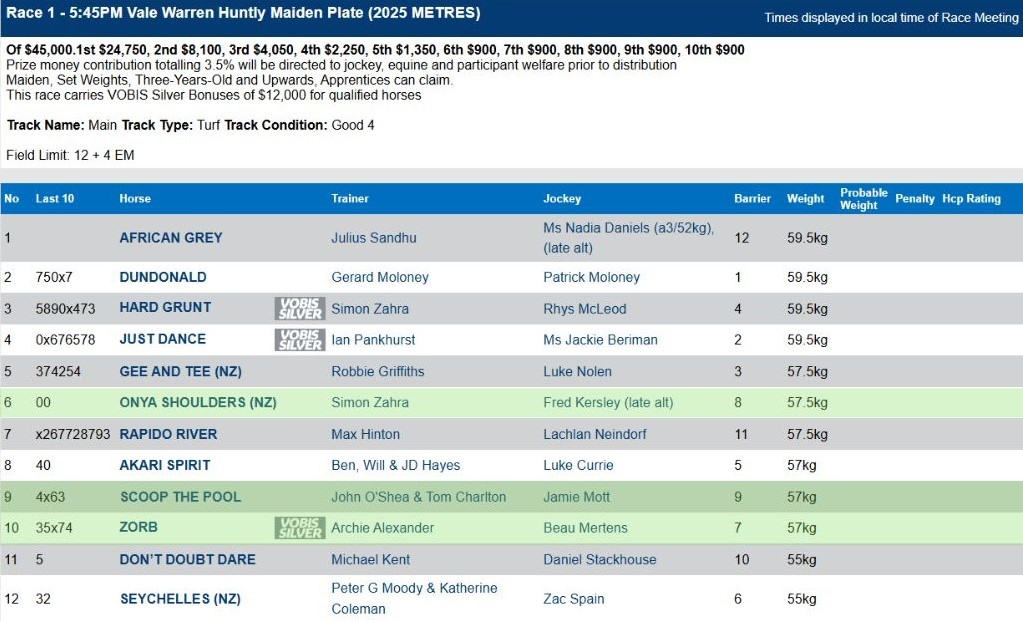
3
5
2,312
marc lambourne retweeted
9 Oct 2025
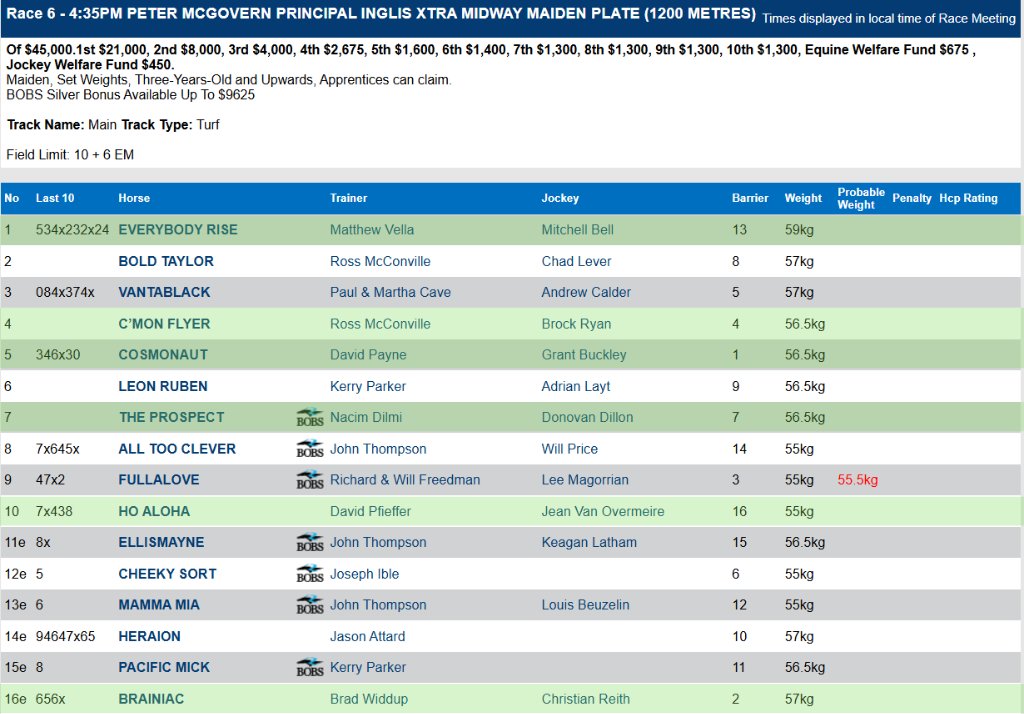
There are 6 eligible runners for the #InglisXtraBonus @kemblaraces this Saturday. If an eligible runner crosses the line first, connections will take home $100k in bonus prizemoney!
3
3
1,352
25 Sep 2025
Dear @inglis_sales
The Country boosted Maiden @goulburnraces today carries the $100k bonus.
Would you kindly post which runners are eligible for the bonus?
3
8
2,633
marc lambourne retweeted

23 Sep 2025
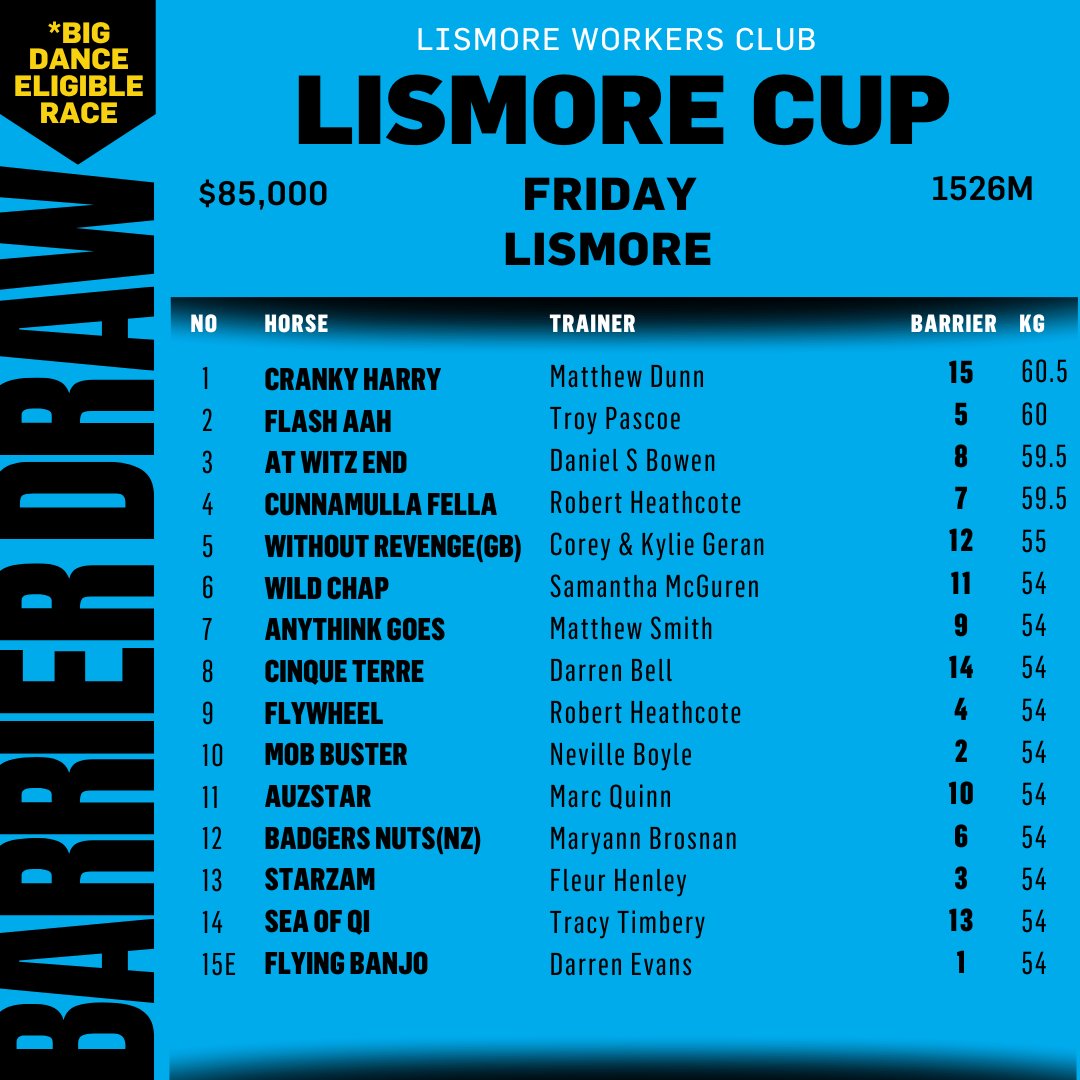
Murwillumbah Cup winner Cranky Harry heads the field for Friday's Lismore Cup, another Big Dance 💃 eligible race. Here's the barrier draw, it's race 7 at 4.19pm 👇
5
5
2,365
9 Sep 2025
Canterbury Race 3 today
No indication anywhere but here that this event carries a $100,000 winners bonus to @inglis_sales eligible graduates.
#Intent
@RobWaterhouse
5
2
21
11,983
marc lambourne retweeted
16 Jul 2025
Our heartfelt condolences to @RantRacing following the passing of Gordo.
Despite this difficult time, the team are eager to continue doing what they love & will be providing Late Mail starting today.
We appreciate their passion & commitment. ❤️betfair.com.au/hub/racing-ra…
1
4
30
3,755