
helping humans fight Moloch. CEO @imbue_ai. support founders @outsetcap.
Joined June 2009
- Tweets 3,456
- Following 582
- Followers 19,932
- Likes 5,662
128 Photos and videos
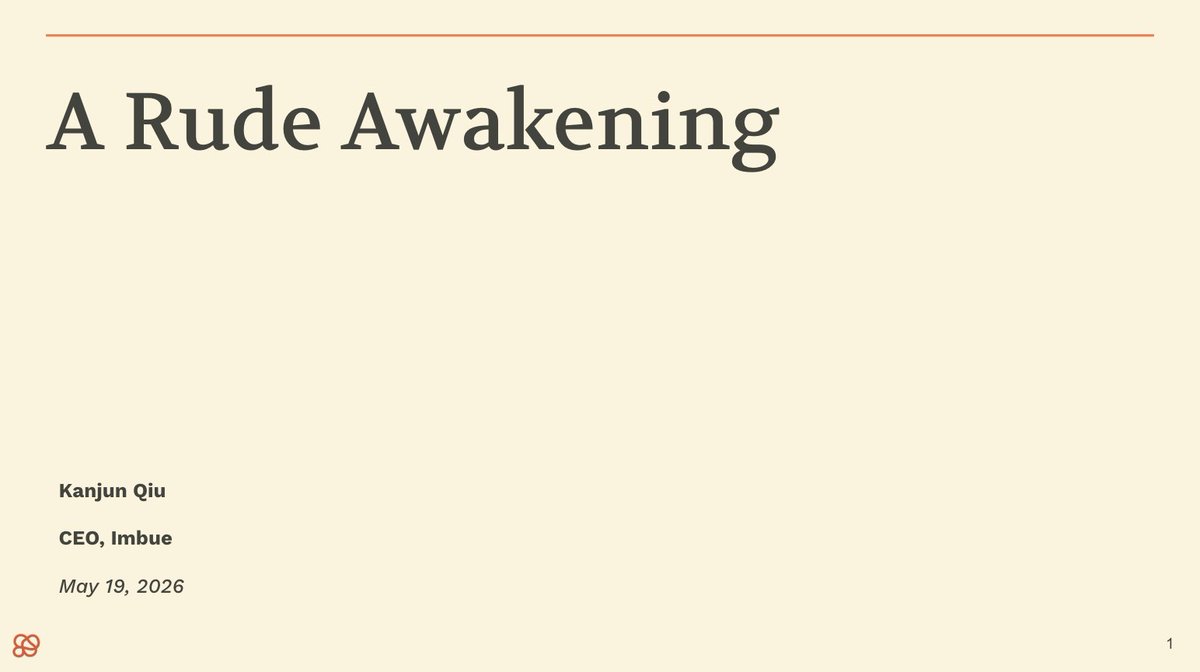
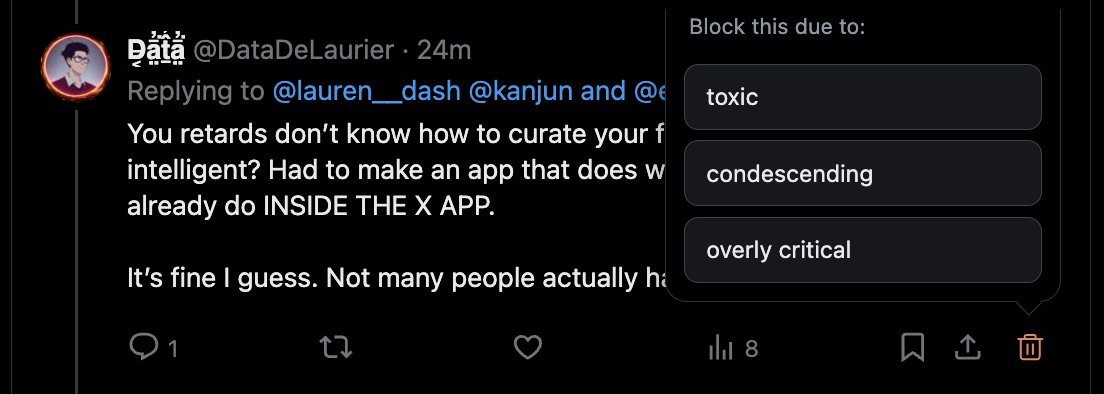
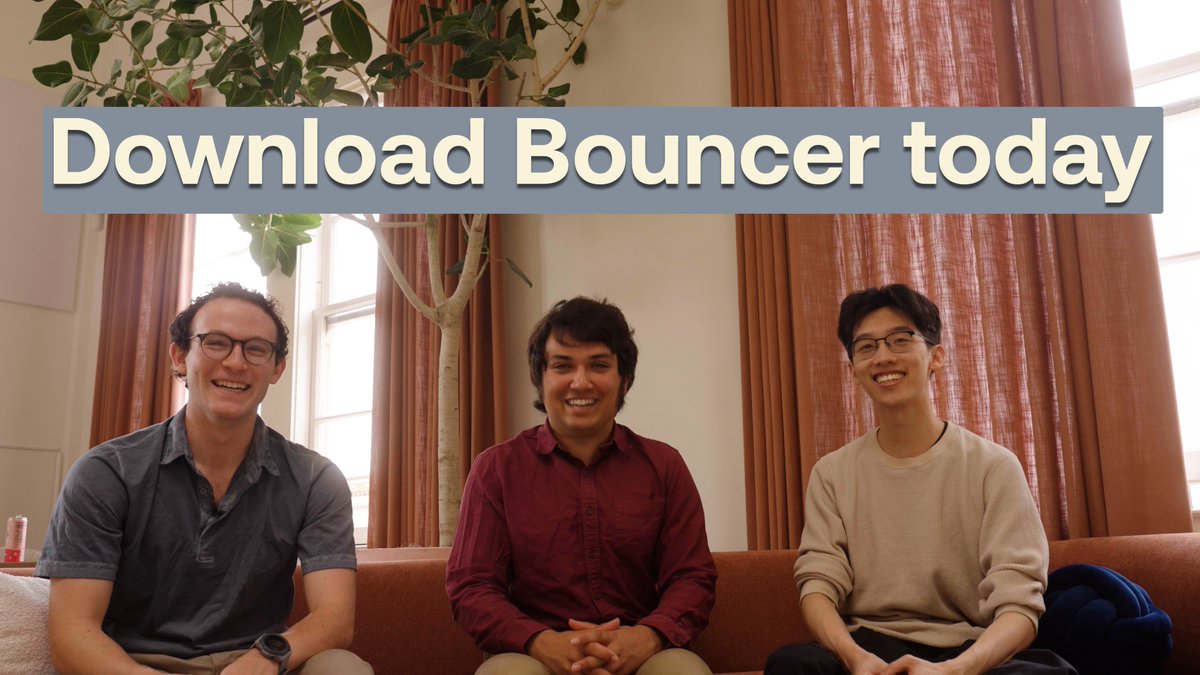
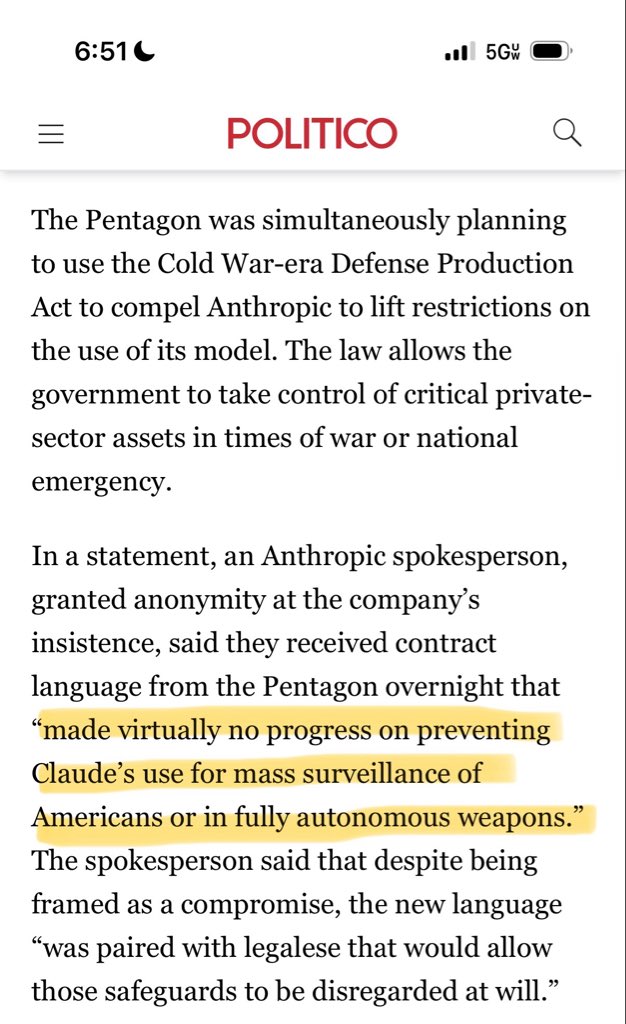






Twitter’s algorithm is optimized for addiction, not for us. We deserve better.
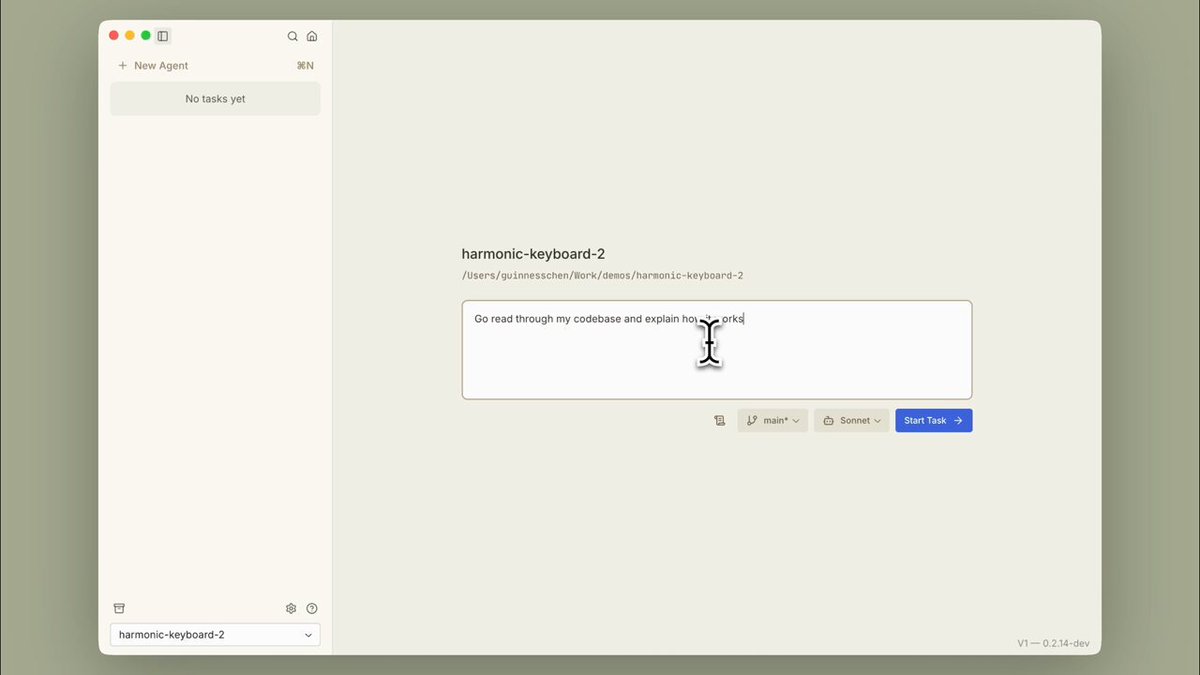
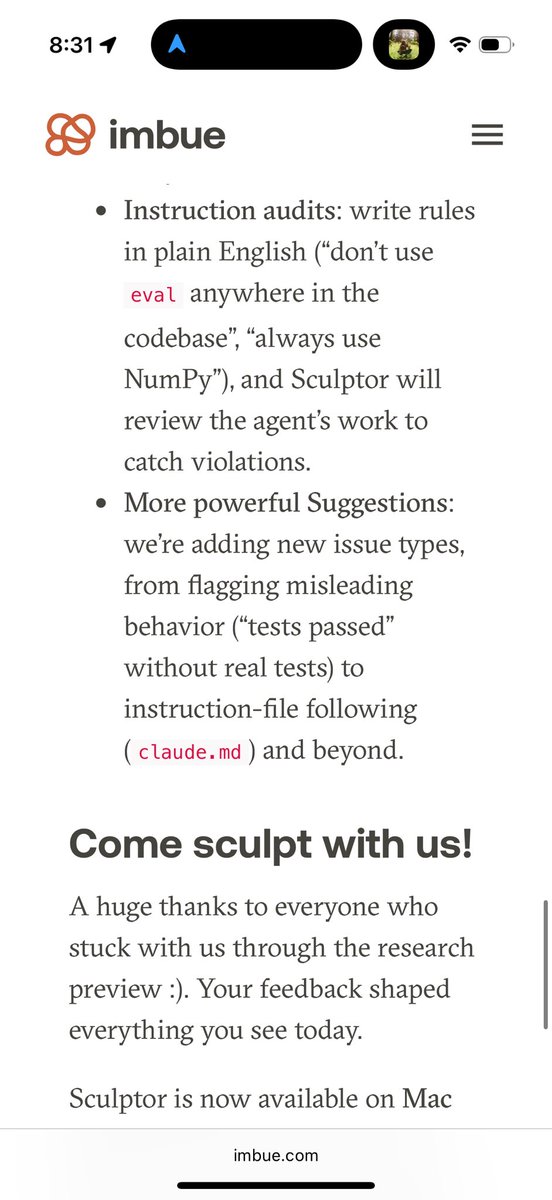
We’re releasing Bouncer today so you can take back control of your feed. Describe what you don't want, and Bouncer removes it.
It’s free, doesn’t collect your data, and will be open source soon.
213
284
3,127
590,000
What we need is "Open AI" 🥲
Open models agents that belong to the public commons, commoditizing intelligence.
I could see a path to funding this: enterprises don't want to pay 70% margins on their use of intelligence long-term. And information wants to be free, so this is a natural equilibrium.
But we'd need intensive coordination; today, profit power centralization incentives for keeping models closed prevent us from getting there.
Jun 10

Concentration of power, capabilities and economic wealth is the biggest risk in AI. We need open science and open-source more than ever!
4
1
17
1,438
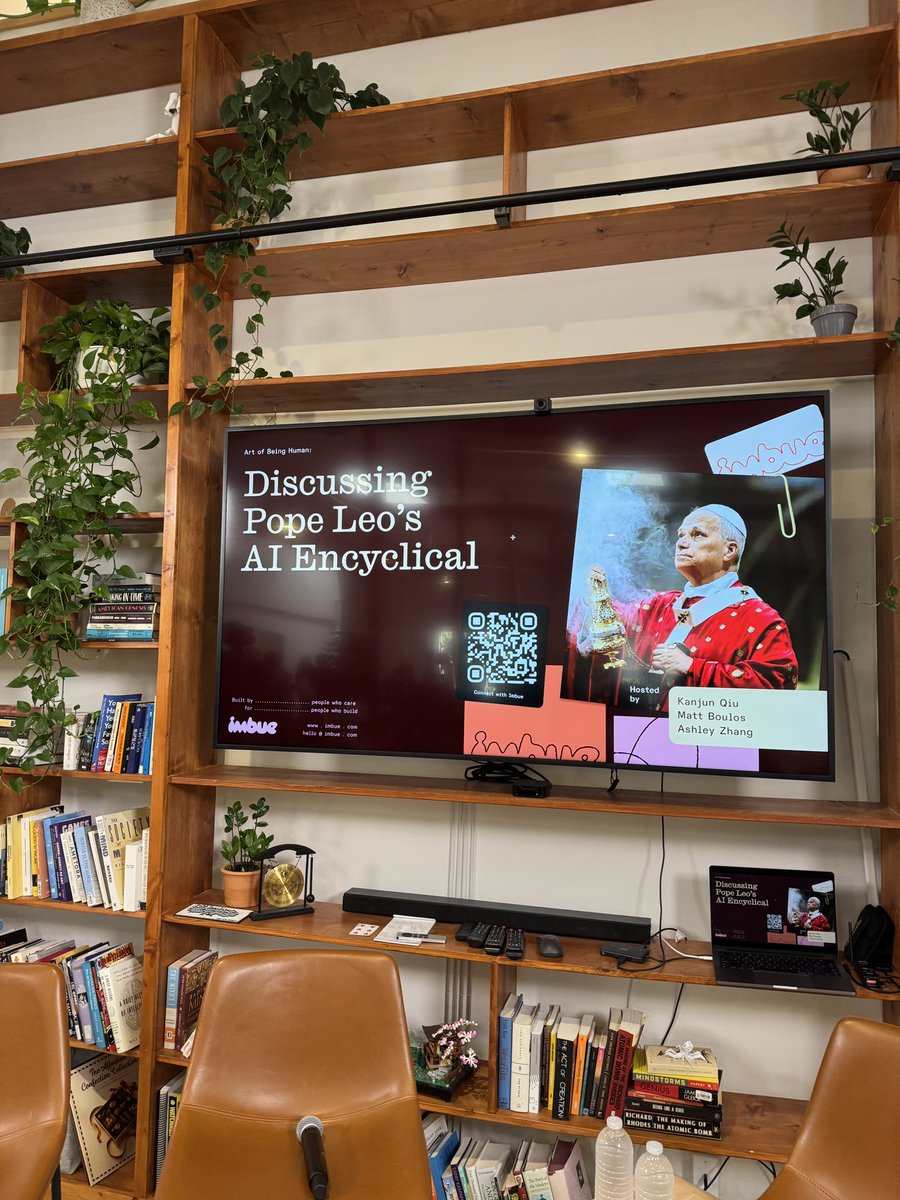
We had a lot of fun last night discussing the Pope's encyclical :)
Jun 11

Great evening with @imbue_ai team @kanjun & @ZhangerzbyAsh today
But don’t forget to take your shoes off first!
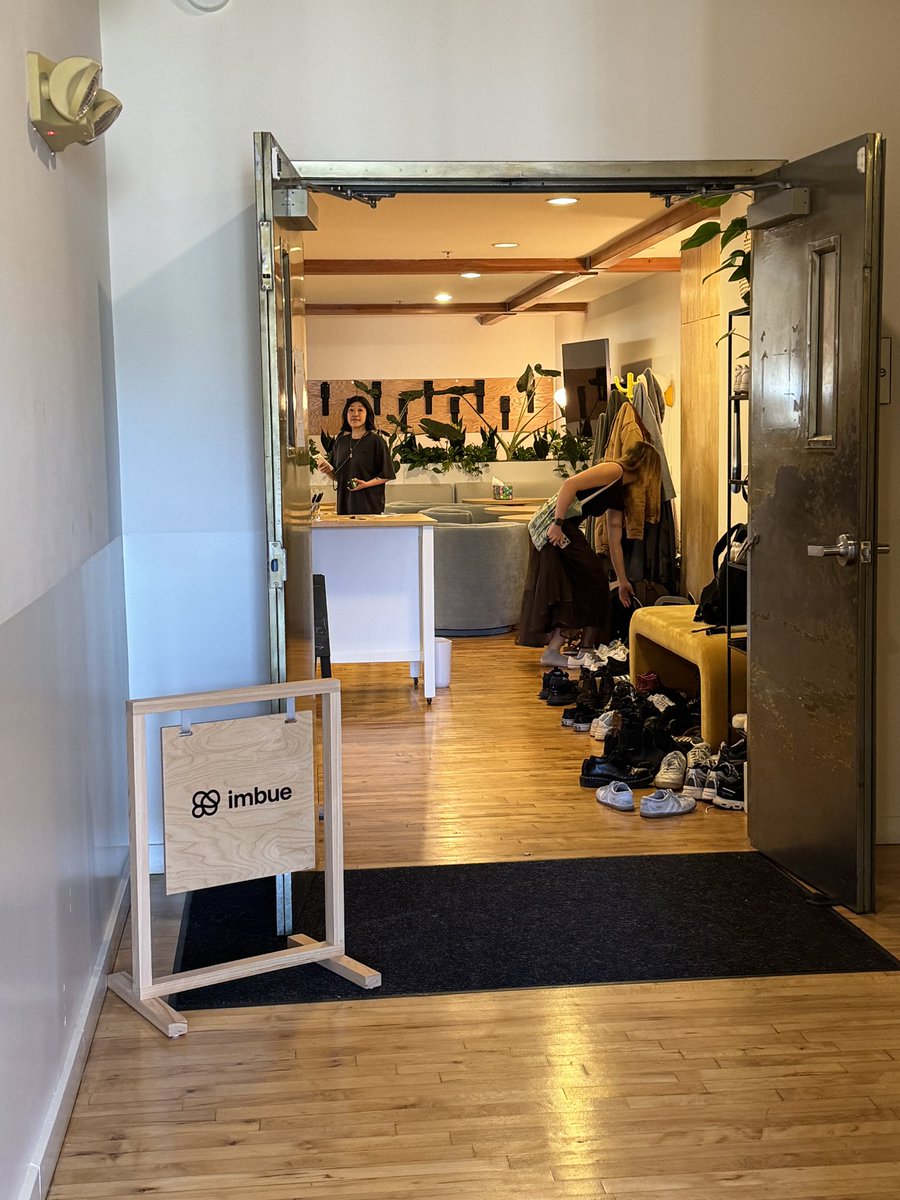
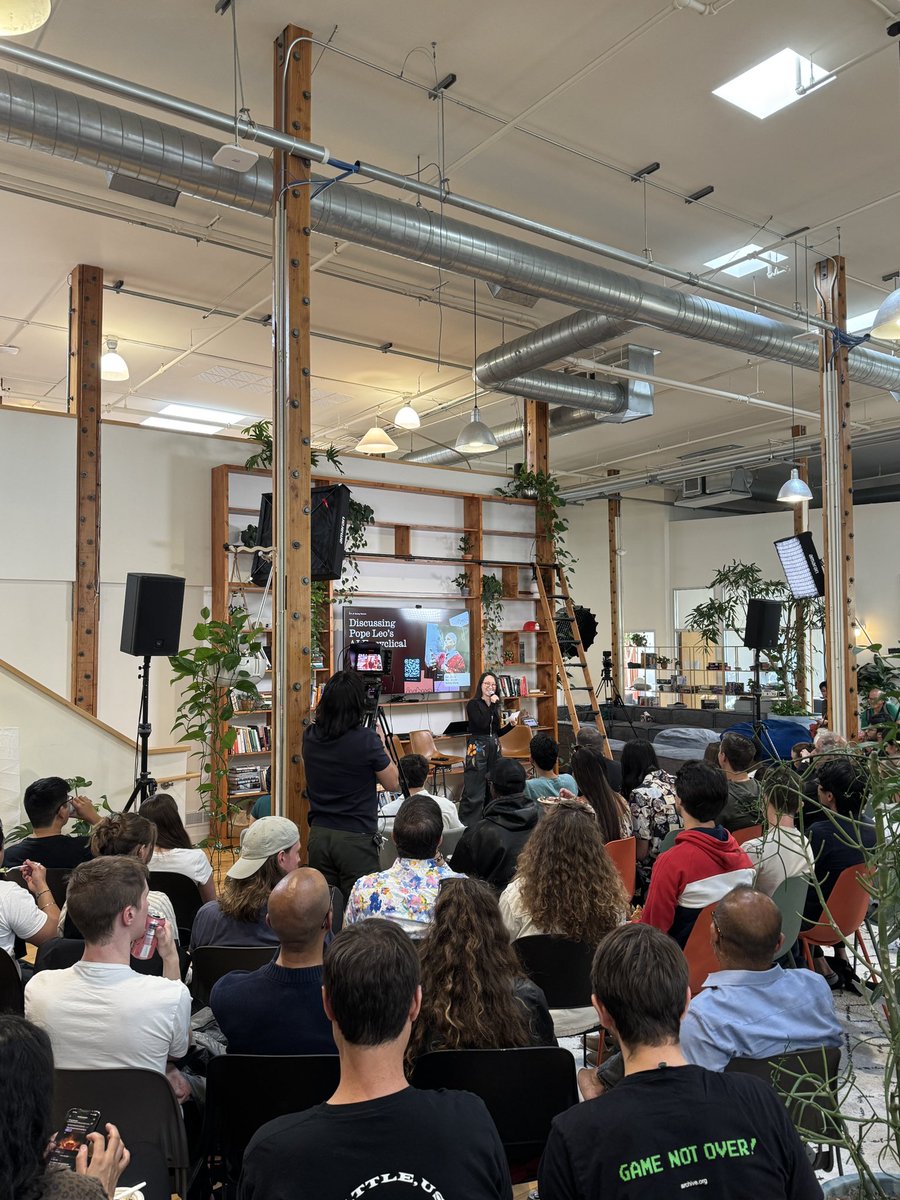
1
1
9
1,560
Kanjun 🐙 retweeted

Jun 11
More punk software!

Anthropic’s latest move is why we need to be directing far more energy towards solving the 𝗶𝗻𝗰𝗲𝗻𝘁𝗶𝘃𝗲 𝗽𝗿𝗼𝗯𝗹𝗲𝗺 in AI.
We’re going to see more examples like this. It reflects the growing gap between what we want, vs AI labs who legally serve their shareholders not us.
The more agents run our digital life, the harder it will be to leave. And we won’t know if we’re being manipulated: Fable 5 silently routes queries to a different model without telling us.
This will start with frontier research tasks, but spread to locking out 3rd-party providers, then to products built on top, and eventually to every agent managing our work and lives. It's already started: last month Anthropic cut off 3rd party products like OpenClaw/OpenCode from using Pro/Max.
It's the same playbook for killing competition and retaining users as the Web 2.0 platform era, but with a way bigger surface area.
This is “𝗮𝗴𝗲𝗻𝘁 𝗰𝗮𝗽𝘁𝘂𝗿𝗲”: as agents have our context workflows, walled gardens make it harder to leave, and the platform moves into extraction. I think nobody is intentionally being evil, but this is where profit incentives lead on our default path.
What do we do? I recently shared some ideas in a talk, slides below. Main takeaways:
> 𝗜𝗻 𝘁𝗵𝗲 𝗹𝗮𝘀𝘁 50 𝘆𝗲𝗮𝗿𝘀, 𝘀𝗼𝗳𝘁𝘄𝗮𝗿𝗲 𝗵𝗮𝘀 𝗯𝗲𝗰𝗼𝗺𝗲 𝘁𝗵𝗲 𝗵𝗮𝗯𝗶𝘁𝗮𝘁 𝘄𝗲 𝗹𝗶𝘃𝗲 𝗶𝗻. Agents will be yet more intimate, knowing everything about us, acting on our behalf, and accumulating context that's nearly impossible to leave behind
> 𝗧𝗵𝗲𝗿𝗲 𝗮𝗿𝗲 𝗮𝗹𝗿𝗲𝗮𝗱𝘆 3 𝗰𝗼𝗻𝗰𝗿𝗲𝘁𝗲 𝘀𝗶𝗴𝗻𝘀 𝗼𝗳 𝗮𝗴𝗲𝗻𝘁 𝗰𝗮𝗽𝘁𝘂𝗿𝗲 𝗵𝗮𝗽𝗽𝗲𝗻𝗶𝗻𝗴 𝘁𝗼𝗱𝗮𝘆: 1) ads entering chat interfaces, 2) opacity around third-party providers being shut out from frontier models, and 3) deliberate capability reduction without announcement
> 𝗪𝗲 𝗰𝗮𝗻 𝗯𝘂𝗶𝗹𝗱 𝘁𝗵𝗿𝗲𝗲 𝘁𝗵𝗶𝗻𝗴𝘀 𝗶𝗻 𝗿𝗲𝘀𝗽𝗼𝗻𝘀𝗲: 1) Honest Software that is transparent, malleable, and accountable to the user, 2) Punk Software that adversarially knocks down walled gardens fights monopoly incentives, keeps your data portable, and makes it structurally hard to lock you in, in support of 3) a viable open alternative ecosystem where agents have no ulterior motives
Builders, users, and policymakers all have a role to shape this:
1) 𝗕𝘂𝗶𝗹𝗱𝗲𝗿𝘀: ship an open alternative and fight lock-in.
2) 𝗨𝘀𝗲𝗿𝘀: choose tools that keep your data yours.
3) 𝗣𝗼𝗹𝗶𝗰𝘆𝗺𝗮𝗸𝗲𝗿𝘀: move on agent fiduciary duty, data interoperability, anti-surveillance, and policies that fight monopoly behavior before the defaults are cast!
Longer essay coming soon. If you’re working on similar ideas, I’d love to hear from you!
2
13
1,920
Anthropic’s latest move is why we need to be directing far more energy towards solving the 𝗶𝗻𝗰𝗲𝗻𝘁𝗶𝘃𝗲 𝗽𝗿𝗼𝗯𝗹𝗲𝗺 in AI.
We’re going to see more examples like this. It reflects the growing gap between what we want, vs AI labs who legally serve their shareholders not us.
The more agents run our digital life, the harder it will be to leave. And we won’t know if we’re being manipulated: Fable 5 silently routes queries to a different model without telling us.
This will start with frontier research tasks, but spread to locking out 3rd-party providers, then to products built on top, and eventually to every agent managing our work and lives. It's already started: last month Anthropic cut off 3rd party products like OpenClaw/OpenCode from using Pro/Max.
It's the same playbook for killing competition and retaining users as the Web 2.0 platform era, but with a way bigger surface area.
This is “𝗮𝗴𝗲𝗻𝘁 𝗰𝗮𝗽𝘁𝘂𝗿𝗲”: as agents have our context workflows, walled gardens make it harder to leave, and the platform moves into extraction. I think nobody is intentionally being evil, but this is where profit incentives lead on our default path.
What do we do? I recently shared some ideas in a talk, slides below. Main takeaways:
> 𝗜𝗻 𝘁𝗵𝗲 𝗹𝗮𝘀𝘁 50 𝘆𝗲𝗮𝗿𝘀, 𝘀𝗼𝗳𝘁𝘄𝗮𝗿𝗲 𝗵𝗮𝘀 𝗯𝗲𝗰𝗼𝗺𝗲 𝘁𝗵𝗲 𝗵𝗮𝗯𝗶𝘁𝗮𝘁 𝘄𝗲 𝗹𝗶𝘃𝗲 𝗶𝗻. Agents will be yet more intimate, knowing everything about us, acting on our behalf, and accumulating context that's nearly impossible to leave behind
> 𝗧𝗵𝗲𝗿𝗲 𝗮𝗿𝗲 𝗮𝗹𝗿𝗲𝗮𝗱𝘆 3 𝗰𝗼𝗻𝗰𝗿𝗲𝘁𝗲 𝘀𝗶𝗴𝗻𝘀 𝗼𝗳 𝗮𝗴𝗲𝗻𝘁 𝗰𝗮𝗽𝘁𝘂𝗿𝗲 𝗵𝗮𝗽𝗽𝗲𝗻𝗶𝗻𝗴 𝘁𝗼𝗱𝗮𝘆: 1) ads entering chat interfaces, 2) opacity around third-party providers being shut out from frontier models, and 3) deliberate capability reduction without announcement
> 𝗪𝗲 𝗰𝗮𝗻 𝗯𝘂𝗶𝗹𝗱 𝘁𝗵𝗿𝗲𝗲 𝘁𝗵𝗶𝗻𝗴𝘀 𝗶𝗻 𝗿𝗲𝘀𝗽𝗼𝗻𝘀𝗲: 1) Honest Software that is transparent, malleable, and accountable to the user, 2) Punk Software that adversarially knocks down walled gardens fights monopoly incentives, keeps your data portable, and makes it structurally hard to lock you in, in support of 3) a viable open alternative ecosystem where agents have no ulterior motives
Builders, users, and policymakers all have a role to shape this:
1) 𝗕𝘂𝗶𝗹𝗱𝗲𝗿𝘀: ship an open alternative and fight lock-in.
2) 𝗨𝘀𝗲𝗿𝘀: choose tools that keep your data yours.
3) 𝗣𝗼𝗹𝗶𝗰𝘆𝗺𝗮𝗸𝗲𝗿𝘀: move on agent fiduciary duty, data interoperability, anti-surveillance, and policies that fight monopoly behavior before the defaults are cast!
Longer essay coming soon. If you’re working on similar ideas, I’d love to hear from you!
Jun 9

Labs starting to pull up the ladders on the ability to diffuse AI was inevitable. Doing it without telling the user is misaligned.
7
12
69
9,143

What can one of the world's oldest institutions teach us about one of the newest technologies?
Tomorrow, @kanjun, @mattboulos and Ashley Zhang will discuss the questions raised by Pope Leo XIV's recent encyclical on AI, Magnifica Humanitas ("Magnificent Humanity").
Part of The Art of Being Human, a series by Imbue exploring enduring human questions in our technological age.
📆 Register here and stay updated for future events:
luma.com/PopeLeoEncyclical
3
1
20
683
Anthropic's piece on recursive self-improvement makes me wonder how researchers will develop taste.
What strikes me is we often talk about judgment as if it existed independently from execution, but judgment hones through direct contact with the work.
We learn what matters by spending time close to the work, following dead ends, making mistakes, and gradually developing intuitions about what is worth pursuing. This is why in the best orgs, the people making decisions are the ones closest to the details.
It reminds me of good managers vs. bad managers. The best managers usually understand details well enough to make good decisions even when they're not doing the work. Bad managers are too high-level to have good causal models of what's going on.
A live example is today's junior engineers, whose Claude use have made it harder to develop architecture taste (at least, anything distinct from what Claude recommends). We used to build taste thru years of jumping around codebases trying to fix gnarly bugs or making a new feature and seeing where things break.
Research taste often comes from spending time close in the data, looking at failures, chasing down strange results, building intuition for structures and patterns. AI speeds up the experiment feedback loop, but I wonder if there'll be a slowdown period where people don't have intuition for what's going on, and models don't yet have good judgment on the work.
Jun 4

Our internal data shows Claude is accelerating AI development—a possible path to recursive self-improvement, or AI autonomously building a more capable successor.
It’s happening faster than we thought, and the implications deserve greater attention. anthropic.com/institute/recu…
9
11
95
11,964
As more of the world is designed to capture our attention, cultivating it begins with understanding how it works.
In this conversation, philosopher @AE_Robbert joins Imbue’s Ashley Zhang to explore what attention is and what it might mean to approach it as a practice.
From Socrates standing motionless at a party to the algorithms competing for our focus today, they trace how humans have wrestled with attention across centuries.
youtube.com/watch?v=y-J8Mpl8…
2
2
20
1,609
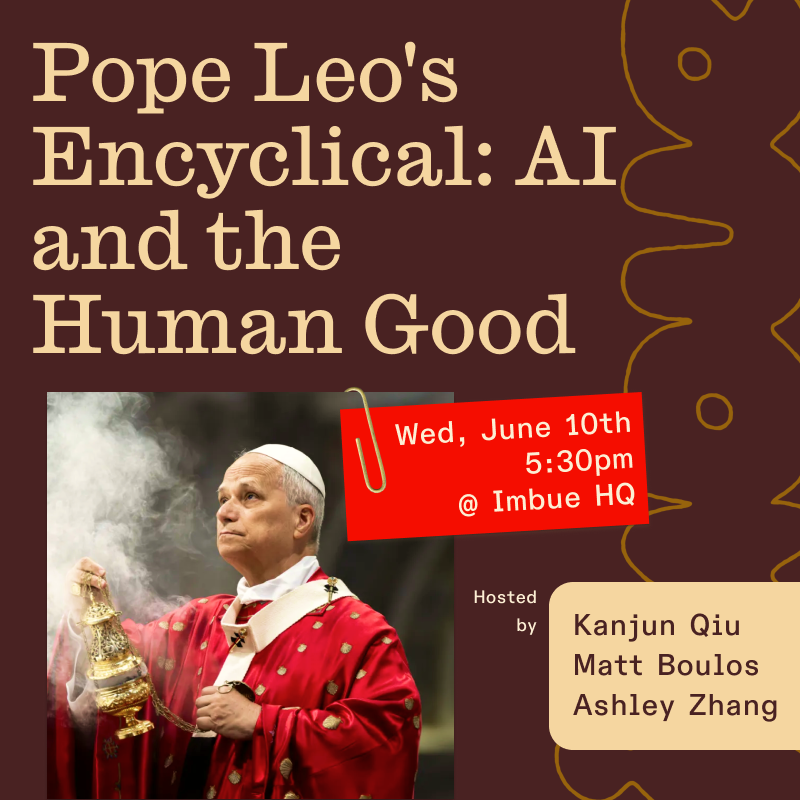
Join Imbue's @kanjun, @mattboulos, and Ashley Zhang on June 10 for the next conversation in The Art of Being Human, a series exploring enduring human questions in our technological age.
Drawing inspiration from Pope Leo XIV's recent encyclical on AI, Magnifica Humanitas ("Magnificent Humanity"), we'll explore the questions one of the world's oldest institutions raises about technology, human dignity, and our shared future.
For the builders and the humanists: luma.com/PopeLeoEncyclical
2
1
21
1,287
“AI is only as big a deal as the internet or mobile” doesn't seem like a claim that will age well.
What @benedictevans perhaps doesn't account for is that model capabilities have no ceiling. Friends at Anthropic believe Claude will outperform them by 2029, and there’s no fundamental reason why models won't keep getting better, except for limits on compute and data. [1]
It’s comforting to think this will be just another technology wave, but I think something much more radical is in store for our society, and it’s honestly kind of irresponsible to convince people it’ll be business as usual.
I don't think this means we should panic. But it means we should take seriously the problem statements that are coming, e.g.:
1) Market incentives drive AI labs to grow at all costs, so "thoughtful deployment" is wishful thinking. We need to attack the underlying growth incentive structure.
2) It's not clear how economically useful humans will be in the future. Given this, people in the labor class will have a lot less leverage relative to capital. Capital will beget more capital, so it will concentrate. We need to think seriously about where an individual's leverage will come from, economic or otherwise, else we'll lose our freedom and autonomy.
We should consider that we all live in a society, not just an economy.
3) Our legal environment is currently unable to regulate internet technologies well, let alone AI. This is partly because our laws are predicated on outdated ideas of how the world works. Amazon, Google, Meta have somehow managed to escape serious antitrust cases. @linamkhan was one of the first to question some of these assumptions, in Amazon's Antitrust Paradox. We need more serious rethinking on how to handle vertical integration, bundling, interoperability/portability, information collection, distribution advantages, and the variety of other issues that have led to software companies extracting from users the past 10 years.
This is obviously not a comprehensive list of problem statements, but I'd be more excited to see this kind of thinking/work around AI, rather than "this is just like prior waves of automation; there will be displacement and people will need to upskill".
--
[1] When there are data limits, there will be huge market demand for more such data — we already see this with expert data providers like @SnorkelAI. And the world is building compute as fast as it can, with chips more optimized for LLM training/inference, like MatX.
Jun 1

My biggest takeaways from @benedictevans:
1. We’re in 1997 for AI—it’s as big a deal as the internet or mobile, and only as big a deal as the internet or mobile. We’re at the stage where most stuff kind of doesn’t work yet, most of what people will build hasn’t been built, and it’s not clear how any of it will work when it does. Some people in tech have bought clusters of Mac Minis, while even among 13-to-18-year-olds, only about 15% to 20% are daily active users of AI. The companies that win may not exist yet, and the use cases that matter most are probably invisible to us today.
2. Every technology wave brings ways to ruin people’s lives, deliberately or by accident, and we need to be conscious of that without panicking. Every wave of technology—databases in the 1970s, social media in the 2010s, AI today—creates new ways to harm people. We need to be conscious of these risks, build safeguards, and hold people accountable. But we also can’t let fear of potential harms stop us from capturing the benefits. The goal is thoughtful deployment, not paralysis.
3. Things will probably be okay—but “on average” hides a lot of individual pain. We’ve been automating jobs and creating new jobs since 1800. Each time, you can see the jobs that will disappear but not the new jobs, because they don’t exist yet. We go through frictional pain, dislocation, people lose jobs, towns get hollowed out, and it all sucks. But we come through richer, and we’re not worried about crops failing anymore.
4. If you’re worried about your job, the worst thing you can do is stick your head in the sand and declare AI evil. Yes, some professions face major questions, particularly if you’re an associate or would have been thinking about becoming one. The pyramid structure of professional services may fundamentally change. What helps is submerging yourself in AI, understanding what you can do with it, how it changes things, and how you can be a great hire in this new environment. That may still not be enough, but it’s the only path forward.
5. The history of accounting shows us how automation often increases employment rather than decreasing it. Despite adding machines, punch cards, mainframes, databases, ERP systems, cloud software, spreadsheets, and PCs, the number of accountants keeps going up. This is the Jevons paradox: when you make something cheaper or easier, you don’t do the same amount of work for less money. You often do vastly more because the ROI changes.
6. Distribution is becoming a more valuable moat as software gets easier to build, which favors incumbents. As AI makes building software cheaper and faster, the market gets noisier. More products launch, more companies compete for attention, and breaking through becomes harder. This means distribution—the ability to reach customers and get them to use your product—matters more than ever.
7. Foundation AI model companies won’t have lasting pricing power, and value will likely accrue up the stack. The models don’t seem to have network effects, so there’s no winner-takes-all dynamic. If you have indefinite competition between three to six foundation model providers, and the models look like undifferentiated commodities to users, why would anyone have pricing power? The current pricing chaos—people spending $1.5 million on inference in a month—is temporary disequilibrium, like someone getting a $50,000 mobile data bill in 2010. The steady state will look different.
8. OpenAI and Anthropic are buying consultancies and PE firms. This seems counterintuitive—aren’t these the companies that should need consultants least? But the reality is that companies don’t have people sitting around waiting to reimagine all their internal workflows and figure out which could be automated with AI. That’s a project requiring five to 10 people spending months working it out, then actually implementing it across vertical and horizontal systems.
9. The fundamental question isn’t whether AI automates your job—it’s whether your profession is a "task" or a job. Some jobs are just tasks, and when you automate the task, the job disappears (i.e. elevator attendants). But in most professions, the task you think you’re being paid for isn’t actually what you’re being paid for. McKinsey doesn’t get hired to produce a 75-slide deck—they get hired to walk through your enterprise, understand the politics, talk to customers, and figure out what you actually need to do. The deck is just the artifact.
10. The anti-AI backlash is real, and a fuzzy mass of different concerns, some real and some not—much like the social media backlash. There are tangible concerns: electricity bills went up in some places, though this applies to very few locations objectively. The water consumption issue is largely false; data centers use about 0.017% of U.S. water consumption. There are real questions about jobs, though economists can’t yet find clear consensus in the data about AI’s employment impact. There’s also the culture war over AI-generated content and “AI slop.” The challenge is that all of this creates political pressure even when the underlying facts are unclear or contested.
16
3
53
10,616
Full video of our Raising Kids in the Age of AI event!

Friction helps kids learn.
So what happens when AI answers before they have a chance to wonder? 💭
In April, we brought together a group of experts to explore how AI is reshaping childhood, curiosity, and learning:
• @nikunj Partner @fpvventures
• @celestekidd Professor of Psychology @UCBerkeley
• @sonjasg Professor of AI Ethics @UF
• Ari Krakowski Director of Exhibit Services @lawrencehallsci
Watch the conversation, moderated by @lauren__dash, Head of Brand at Imbue.
0:00:00 Why curiosity matters for kids
0:01:12 Meet the panel
0:07:35 What AI shortcuts in learning
0:08:38 Celeste's Bigfoot story
0:14:31 Creativity, STEM, and childhood
0:21:48 Teaching AI literacy
0:25:03 Raising skeptical thinkers
0:31:18 AI companions and kids
0:40:52 Safety, regulation, and children
0:43:43 Where AI can actually help kids
0:46:05 Teaching kids to think, reason, and act
0:49:07 Preparing children for an AI future
0:57:05 The case for hope, building better technology for kids
1
4
1,017
I love Karri's take on tech culture:
"I sometimes wish we could move the culture more toward a Zen master.
Real mastery is not exerting the most effort. It is achieving the outcome with the least necessary effort."
Reminds me of the Daoist tale of the butcher who, instead of cutting forcefully through the bone, cuts at the joint, finds in each moment the area of least resistance, and moves in that direction.
I used to lead Imbue with a lot of forcefulness. This year I've been trying out the Zen/Daoist route of finding where the energy wants to go and following it, and it's both much more effective and more fun.
May 31

The fallacy of this is that more creates more. More hours, more hiring, more something.
And it is true in a sense. If you put in more work, more work will happen. But I think for most startups, the leverage is really in how differently you approach the problem, how well you cultivate your team, and the strategy.
Any large company can outspend you on hours. They have thousands or tens of thousands more people, spending more hours. If hours worked were the metric, every large company and government organization would always win and do the best work. More hours, better output.
This thinking is often representative of younger founders, where the startup becomes their identity and life. They have a hard time doing anything else, and cannot understand that your work is not the person that is you. But activities outside of work can grow you as a person too and make you do better work.
I’ve never worked this way. As a designer, I always saw the need to take a step back, to take a break. At times, I might work 12 hours or 16 hours, or whatever amount was needed, but it wasn’t the norm. You just can't grind design, you need inspiration. But taking that step away from the work, would give me more perspective, inspiration and I could approach the problem differently or I could just see the solution.
Grinding is never good for any creative problem, and startups or creating new products are often mostly about creative problem solving. Grinding works ok for email jobs, or where you just executing on very clear playbook.
With Linear, we’ve never worked this way. We work reasonable hours, 5 days a week. All of us founders have families. Many of our employees have families. I personally stop every evening, spend time with the family, cook dinner for the family, eat dinner together, and focus on things outside of work. Sometimes I work in the late evenings or weekends, but to me the pride is that I don’t need to. Company should be succesful without it.
My goal is to build a company that is sustainable in the long term, and doesn’t require heroics or personal sacrifices every single day.
There are times when our team is heroic. Launches, incidents, some other work that just needs to be done. They will work late into the night because they know it is the right thing. But we don’t require that every day or every week, and the more this happens, the more I think it is a failure of our company and leadership. The team and the leaders should always keep a reserve to use when something is needed.
Our thinking was also that quality, which we value, doesn’t emerge from working more or stressing people more. It emerges when you create the conditions for it to emerge. Often it is the appreciation, space, time, and how the person feels. A person who is rested will do better work.
I wouldn’t attribute much of our success to working a lot. The success came from having clear thinking, ideas, and focus to do the right things.
I sometimes wish we could move the culture more toward a Zen master.
Real mastery is not exerting the most effort. It is achieving the outcome with the least necessary effort.
4
3
81
11,077
mngr has 12 plugins that help developers
👉 pull files from stopped agents
👉 schedule nightly code reviews
👉 sync changes with a remote agent
👉 track everything from a CLI Kanban board
We broke down every plugin, what it does, and when you'd actually reach for it.
🔗 imbue.com/blog/every-mngr-pl…
2
3
11
1,372
Kanjun 🐙 retweeted

May 20
"Big tech doesn't want to train people anymore. They're taking their 10x employees and making them 11x, 12x, 13x." - @Jason
This week's roundtable:
1. Kanjun Qiu @kanjun, CEO of @imbue_ai, open source agents.
2. Jeremy Fraenkel @fraenkelj, CEO of Fundamental, large tabular models for enterprise data.
3. Karri Saarinen @karrisaarinen, CEO of @linear, product development system for teams and agents.
TWiAI Episode 14 out now
12
11
66
154,704
I'm excited for Michelle to be leading our events full-time! Stay tuned for a punk software hackathon ;)

After a year and a half at @imbue_ai, I’m now our Community & Experience Lead—building community around our mission to make tech serve humans, not the companies that built it.
I’m excited to meet more people building in the space, and host you at a future event. Say hello! 👋🏻

1
9
1,550