- Tweets 126,872
- Following 5,356
- Followers 3,477
- Likes 350,340






























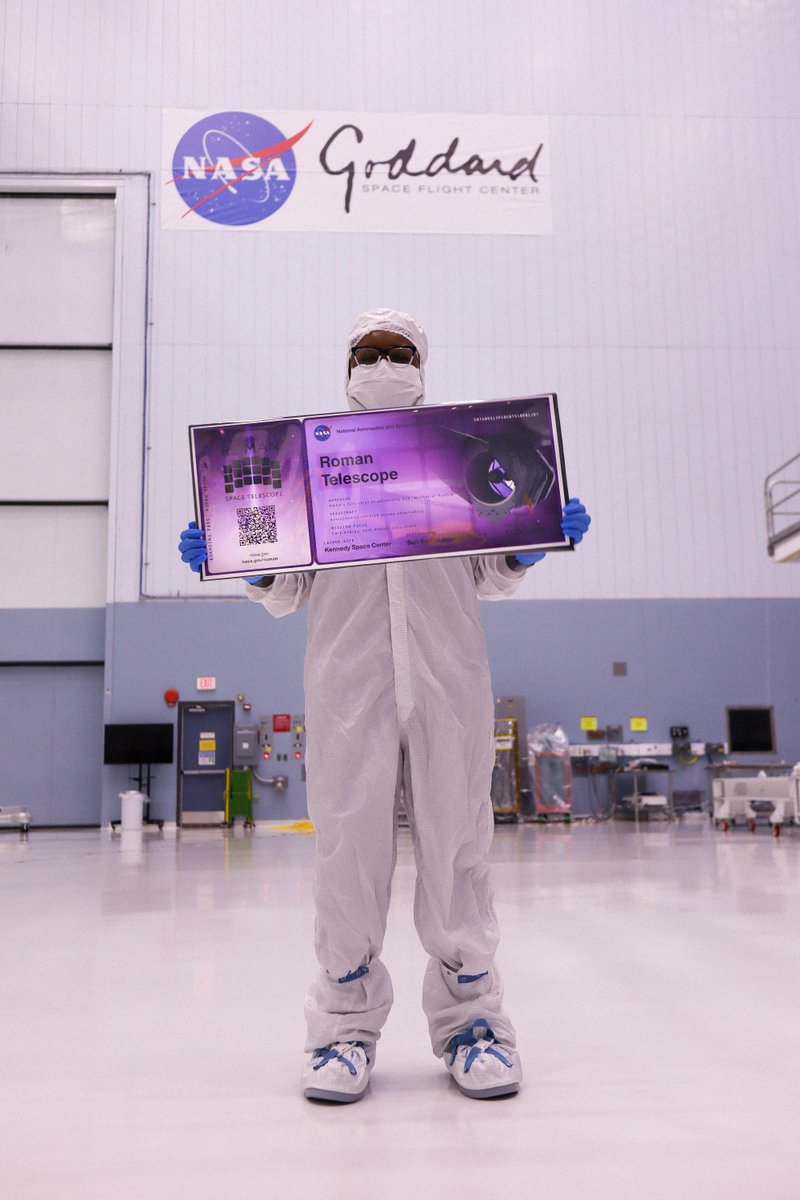
ALT A person holds a large, purple "boarding pass" for NASA's Nancy Grace Roman Space Telescope in Goddard's large cleanroom wearing a full white cleanroom suit. The boarding pass has the detector logo for Roman, an artist concept image of Roman, as well as a QR code, the telescope, and the NASA logo. "Roman Telescope" is written where the name would go.

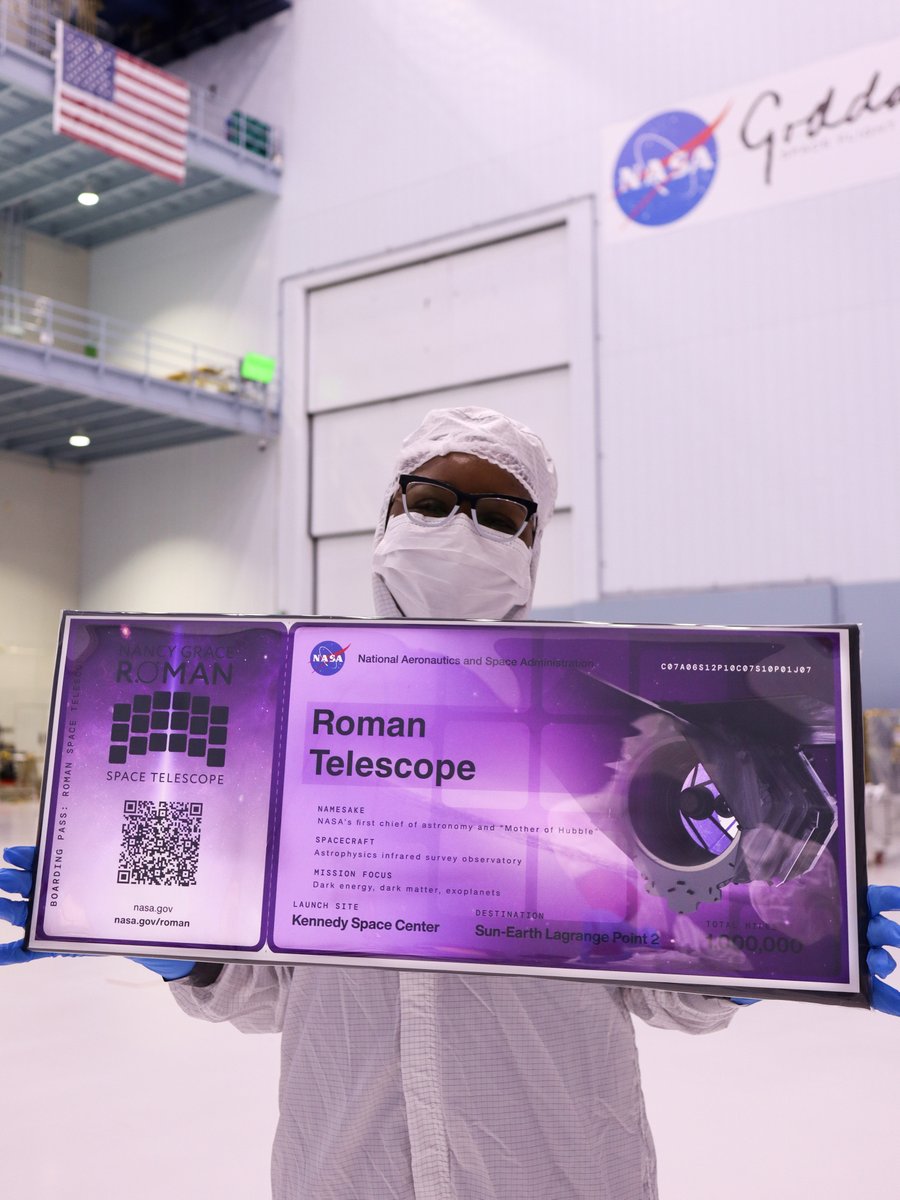
ALT A person in a head-to-toe white clean room suit holds a large purple "boarding pass" for NASA's Nancy Grace Roman Space Telescope in Goddard's large cleanroom. The boarding pass includes an image of the 18 detectors, an artist concept image of the telescope, a QR code, and the NASA logo. "Roman Telescope" is written where the name would go.
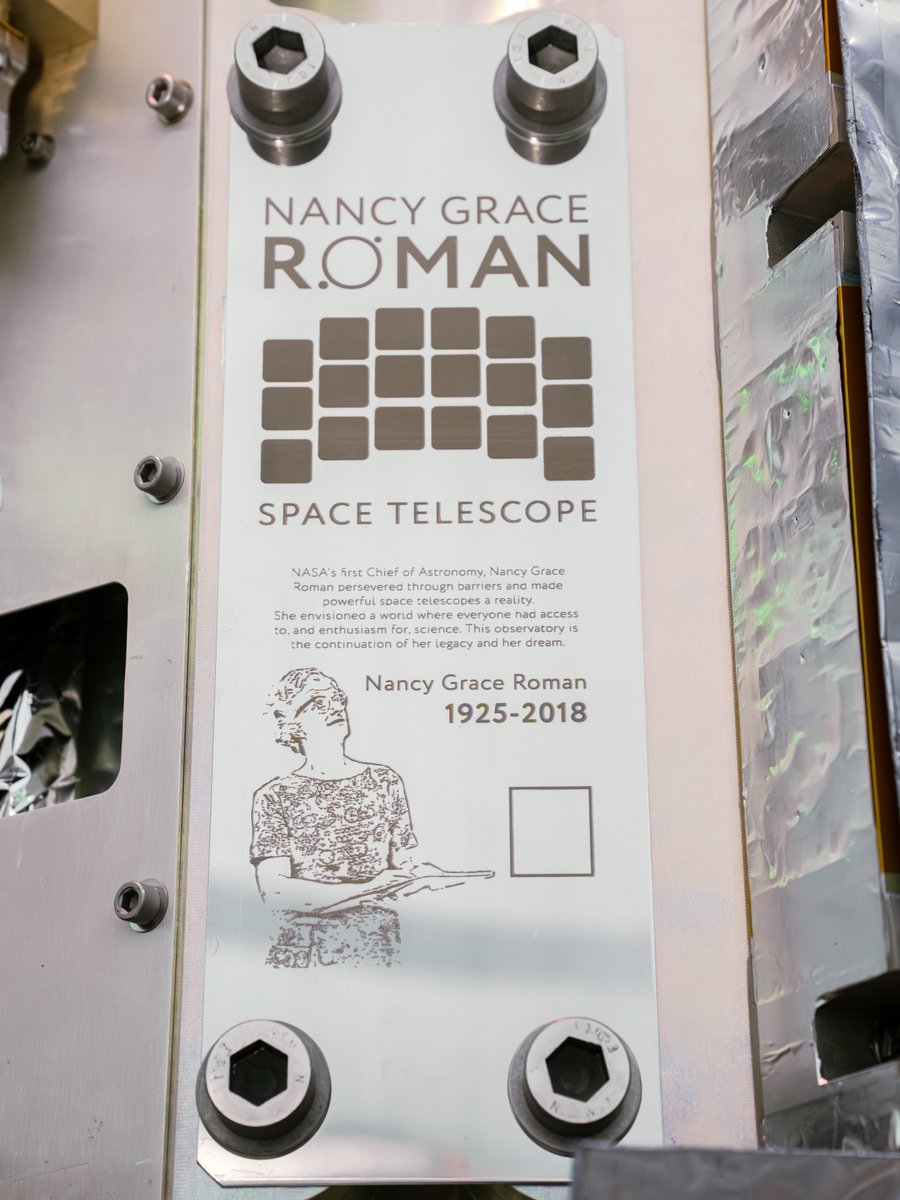
ALT The plate attached to the Roman telescope, where a memory card containing names will be attached. It's a tall, thin, rectangular silver plate. At the top of the plate is the stylized Nancy Grace Roman name logo. Below is the silhouette of Roman's 18-square detectors in their iconic arch shape. Text below that reads "NASA's first chief astronomer, Nancy Grace Roman, persevered through barriers and made powerful space telescopes a reality. She envisioned a world where everyone had access to, and enthusiasm for, science. This observatory is the continuation of her legacy and dream." Below the text is an illustration of Dr. Roman looking up, next to her name and the years 1925-2018. Below the years is a small box where the memory card will be affixed. The plate is held down with two large bolts at the top and bottom.
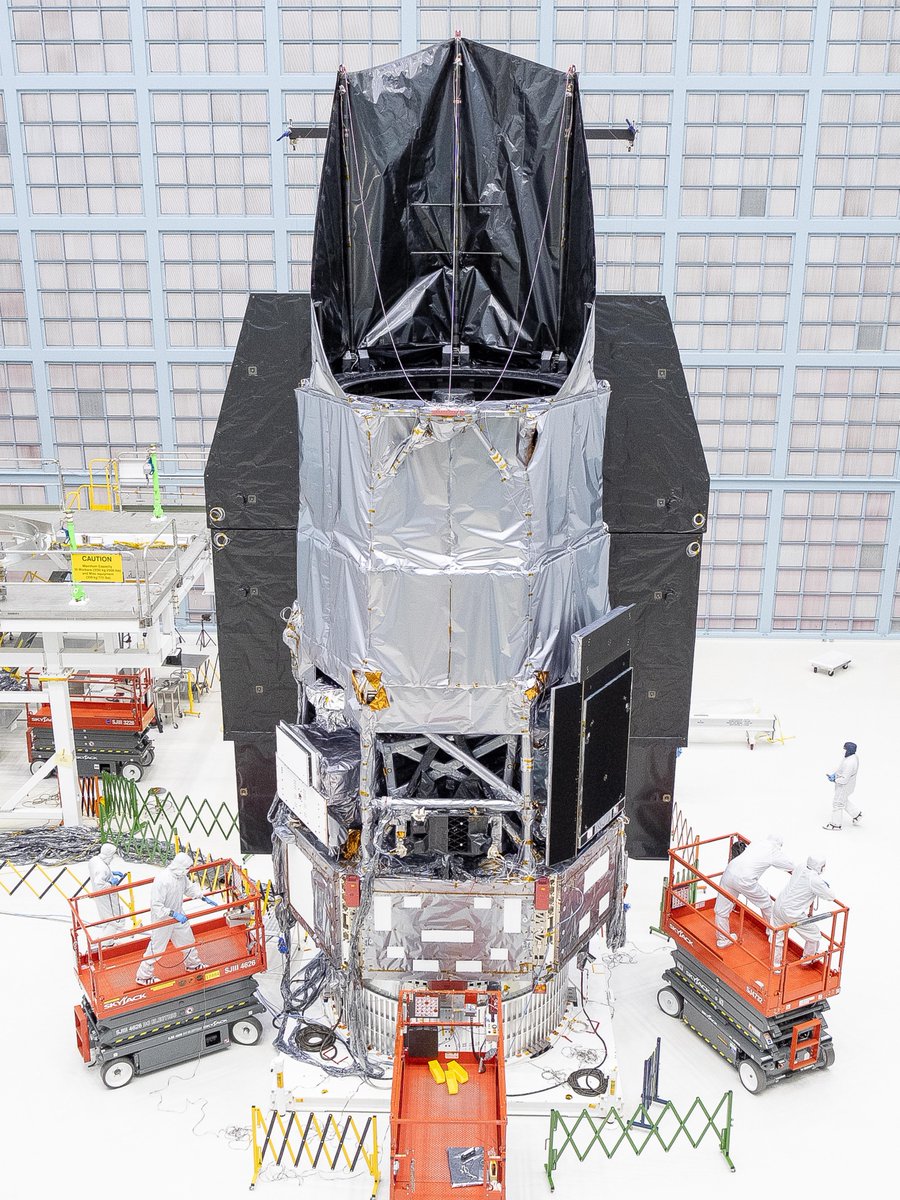
ALT The fully assembled Roman telescope in the clean room, standing upright. It's a silver cylinder with solar panels peeking out from behind both sides like wings. The hood is deployed, like a black sun visor on a baseball cap. Orange lifts and people in white cleanroom suits surrounded the telescope, highlighting how large it is. The unfolded lifts only reach about one-quarter of the way up the telescope's body. Instrumentation and cables are visible in a section about one-third of the way up the body. Thousands of tiny squares on the wall behind the telescope are air filters for the clean room.