
Executive coach and author of "Great Leaders Take Risks." I help startup founders and execs become great leaders by facing their fears and embracing risk.
Joined December 2006
- Tweets 1,350
- Following 381
- Followers 2,207
- Likes 1,437
14 Photos and videos



Pinned Tweet

19 May 2024
Today's the big day! So grateful to @lennysan for letting me share my passion project with his audience. If you're just hearing about Ask for What You Want for the first time, this interview is a great place to start. How are you folks applying AFWYW in your life?
19 May 2024

If you're feeling stuck, today's episode is for you.
After a decade in the tech industry (including being the first PM at @SlackHQ), Kenneth Berger (@kberger) transitioned into coaching on a mission to help startup leaders change the world by learning to ask for what they want, live with integrity, avoid burnout, and build genuine relationships even with the people they find most challenging.
In our conversation, we dig into:
🔸 Why asking for what you want is so powerful
🔸 Three steps to effectively ask for what you want
🔸 The “dream behind the complaint” technique for uncovering what you want
🔸 Why hearing “no” is a normal part of the process
🔸 Kenneth’s experience of being fired three times from Slack
🔸 Why discipline is overrated
🔸 Much more
Listen now 👇
- YouTube: youtu.be/KSCjl_VIdak
- Spotify: open.spotify.com/episode/0N0…
- Apple: podcasts.apple.com/us/podcas…
Some key takeaways:
1. Signs you may not be asking for what you want include feeling stuck, having frequent interpersonal conflicts, or a pervasive sense that the stakes are extremely high.
2. There are three key steps to asking for what you want:
a. Step 1: Articulate what you want: Get clear on your desires, dreams, and goals. If you struggle with this, look at your complaints—they point to an implied better future you envision.
b. Step 2: Ask for what you want intentionally: Don’t expect others to read your mind. Ask clearly and directly while being open to their response. Come from a place of humility rather than entitlement.
c. Step 3: Accept the response: Reframe a no as valuable information rather than failure. It’s not a final destination but an invitation to get curious, iterate, and try again.
3. Learn to respect a no. This means not under-accepting or over-accepting it. Under-accepting a no is when you treat it as invalid and refuse to learn what you can from the experience. Over-accepting a no is when you treat it as too valid, to the point where you assume you’ll only ever hear no’s again in the future and therefore should stop asking for things you want. When you hear a no, learn from the experience and push forward with the understanding that you won’t always get what you want, and that’s OK.
4. Practice the “dream behind the complaint” technique: When you catch yourself complaining, use it as an opportunity to uncover what you truly desire. Every complaint implies a vision of a better scenario. After identifying the dream behind the complaint, assess its inspiring nature. Is it compelling enough to motivate you? If not, dig deeper to uncover a dream that truly excites and motivates you.
5. Even if you’re not a founder or in a position of traditional power, you still have influence. Whether you’re a product manager, individual contributor, or part of a team, your opinions and perspectives matter more than you might realize. Don’t underestimate the impact of voicing your concerns or suggestions. Even if you’re not the decision maker, sharing your perspective can lead to meaningful discussions and potentially influence the outcome. Be willing to express disagreement respectfully and offer alternatives or solutions.
4
22
1,962
1 May 2025
Trust that you can always handle the consequences, whether you make the "right" decision or not.
30 Apr 2025

Always trust yourself to make the right decision. You will.
1
272
Kenneth Berger retweeted

27 Aug 2024
“You don’t act like an executive… you act like an employee.”
Nobody ever says this, but they should. Breaking through to the most senior roles requires more than just being great at your job.
In the first stage of your career, you’re learning mostly hard skills: advanced analytics, presentation building, UX and UI design, developing larger features with more architectural complexity, or writing bigger and better PRDs. You can objectively learn a set of skills, prove competency through work output, and get promoted fast.
Soon, learning new “hard skills” doesn’t move the needle. A shift happens once you become a middle manager and to grow you need to learn softer skills such as executive presence, storytelling, negotiation, and how to have an ownership mindset.
To learn these skills, you need both psychological and functional learning.
Psychologically: you have to build confidence, manage your ego, create emotional regulation, and change your mindset from employee to owner.
Functionally: you have to learn to present to larger groups, deliver feedback to your team, and negotiate with peers.
Over the last 15 years as a founder/CEO, I’ve made a concerted effort to grow myself both psychologically and functionally. I’ve had extensive executive coaching, attended countless management training programs, joined CEO support groups, watched hundreds of hours of YouTube videos and taken online courses.
I’m not alone: most executives I know have invested heavily in their own self-development. It takes a number of different learning strategies to grow.
Today, we’re launching “The Exec Track” on Maven to add some amazing options for your career and personal growth.
Explore the collection of courses to become a stronger leader: bit.ly/exec-track
Some highlights from the new collection:
- Executive Communication & Influence for Senior ICs and Managers with @wes_kao
- Forging Titans: Achieve Outlier Performance as a Leader with @drgurner
- Mastering Networking & Relationship-Building in Tech with @WhitnieLow
Scale Yourself: Cultivate Calm & Avoid Burnout at Work with @jonnym1ller
- Build Your Personal Brand to Catalyze Your Career with @AlisaCohn
15
20
223
51,986
27 Aug 2024
My master class on How to Ask for What You Want is finally here! Will you help me spread the word? We all struggle to take a stand for what we want effectively sometimes, and I’m so excited to share all my tools to make it easier. I’d be so grateful for your help, this means the world to me! We can’t control whether we get what we want, but we can control whether we ask for it.
maven.com/ask-for-what-you-w…
1
4
151
2 Aug 2024
🚨Attention, people pleasers and control freaks! I’m building a course just for you. 🚨
Are you feeling stuck, not sure what you want or how to get it? Are your work relationships frustrating and communication efforts fruitless? Are you trying the same things over and over with no change in outcome?
I’ve been there, it can be hard to stay hopeful. But there’s always another way. People pleasers can find the courage to ask for what they want again and again—even when it feels too risky. Control freaks can find the humility to accept feedback and change course—even when the feedback stings. The solutions are straightforward, they just tend to be so scary or frustrating we can barely contemplate them. That’s why I created ✨Ask for What You Want ✨.
Ask For What You Want is a personal development framework that equips you with the communication tools to make effective asks, the relationship tools to learn from the responses, and the emotional regulation tools to work through the challenging feelings that arise along the way. It's iterative development for life and the emotional rollercoaster that comes with it! Whether you struggle to ask for what you want at all, or get feedback you share your desires a bit TOO directly, AFWYW is for you. Want to learn how it works directly from me? I'm building a live, cohort-based course to help you put these ideas into action. You’ll walk away with:
🌟 Inspiring and actionable dreams ready to share with others, and immediate next steps to pursue them
🛠️ A toolbox of proven techniques to improve the effectiveness of your asks in the real world
🤝 More genuine relationships built on honoring the importance of what each of you want
😱 Emotional regulation skills to practice pursuing your dreams through fear and frustration
After 10 years as a founder and operator, and 7 years coaching startup leaders, AFWYW is my magnum opus. It's a distillation of all those years of training and experience into straightforward tools anyone can use to get unstuck and inspired. I can only coach so many people at a time, so I've been looking for a way to teach the power of AFWYW in a way that scales. Will you help me make it great by sharing what you want? Fill out this survey to get on the waitlist and be the first to hear when enrollments open.
maven.com/forms/340500
1
3
2,716
Kenneth Berger retweeted

21 May 2024
Parker Palmer on living the undivided life:
“I can't imagine any sadder way to die than with a feeling that I never showed up in this world as my true self.
But I can’t imagine any more satisfying way to go out and to be able to say, ‘To the best of my ability in the work I did, in the relationships I held, in the associations I had, and in the activities I engaged in, I was there as who I am. I was there with my best gifts, I was there with a sense of possibility. I was there with my own struggle and my own suffering. I was there honestly and truly and real in the three dimensions.’”
1
1
20
2,177
Kenneth Berger retweeted

20 May 2024
I had @kberger as a coach in a very difficult moment in my professional life. I took me some time to realize the depth of some of his lessons.
You have them all in this wonderful episode of @lennysan
19 May 2024
If you're feeling stuck, today's episode is for you.
After a decade in the tech industry (including being the first PM at @SlackHQ), Kenneth Berger (@kberger) transitioned into coaching on a mission to help startup leaders change the world by learning to ask for what they want, live with integrity, avoid burnout, and build genuine relationships even with the people they find most challenging.
In our conversation, we dig into:
🔸 Why asking for what you want is so powerful
🔸 Three steps to effectively ask for what you want
🔸 The “dream behind the complaint” technique for uncovering what you want
🔸 Why hearing “no” is a normal part of the process
🔸 Kenneth’s experience of being fired three times from Slack
🔸 Why discipline is overrated
🔸 Much more
Listen now 👇
- YouTube: youtu.be/KSCjl_VIdak
- Spotify: open.spotify.com/episode/0N0…
- Apple: podcasts.apple.com/us/podcas…
Some key takeaways:
1. Signs you may not be asking for what you want include feeling stuck, having frequent interpersonal conflicts, or a pervasive sense that the stakes are extremely high.
2. There are three key steps to asking for what you want:
a. Step 1: Articulate what you want: Get clear on your desires, dreams, and goals. If you struggle with this, look at your complaints—they point to an implied better future you envision.
b. Step 2: Ask for what you want intentionally: Don’t expect others to read your mind. Ask clearly and directly while being open to their response. Come from a place of humility rather than entitlement.
c. Step 3: Accept the response: Reframe a no as valuable information rather than failure. It’s not a final destination but an invitation to get curious, iterate, and try again.
3. Learn to respect a no. This means not under-accepting or over-accepting it. Under-accepting a no is when you treat it as invalid and refuse to learn what you can from the experience. Over-accepting a no is when you treat it as too valid, to the point where you assume you’ll only ever hear no’s again in the future and therefore should stop asking for things you want. When you hear a no, learn from the experience and push forward with the understanding that you won’t always get what you want, and that’s OK.
4. Practice the “dream behind the complaint” technique: When you catch yourself complaining, use it as an opportunity to uncover what you truly desire. Every complaint implies a vision of a better scenario. After identifying the dream behind the complaint, assess its inspiring nature. Is it compelling enough to motivate you? If not, dig deeper to uncover a dream that truly excites and motivates you.
5. Even if you’re not a founder or in a position of traditional power, you still have influence. Whether you’re a product manager, individual contributor, or part of a team, your opinions and perspectives matter more than you might realize. Don’t underestimate the impact of voicing your concerns or suggestions. Even if you’re not the decision maker, sharing your perspective can lead to meaningful discussions and potentially influence the outcome. Be willing to express disagreement respectfully and offer alternatives or solutions.
1
2
8
7,368
23 Mar 2023
If you ever have trouble understanding your CEO's actions, imagine how they might act if they were terrified.
linkedin.com/posts/kberger_m…
1
2
445
Kenneth Berger retweeted
14 Oct 2022
Timeless wisdom from @jerrycolonna:
“The Buddha taught that there were 84,000 doorways to the dharma. Don’t worry about picking the “right one.” The wish to know the path wholly and clearly before taking a step is, in fact, a reaction to fear. The brave heart takes a step.”
3
5
44
Kenneth Berger retweeted

29 Sep 2022
when a product manager tries her hand at therapy

13
36
504
3 Aug 2022
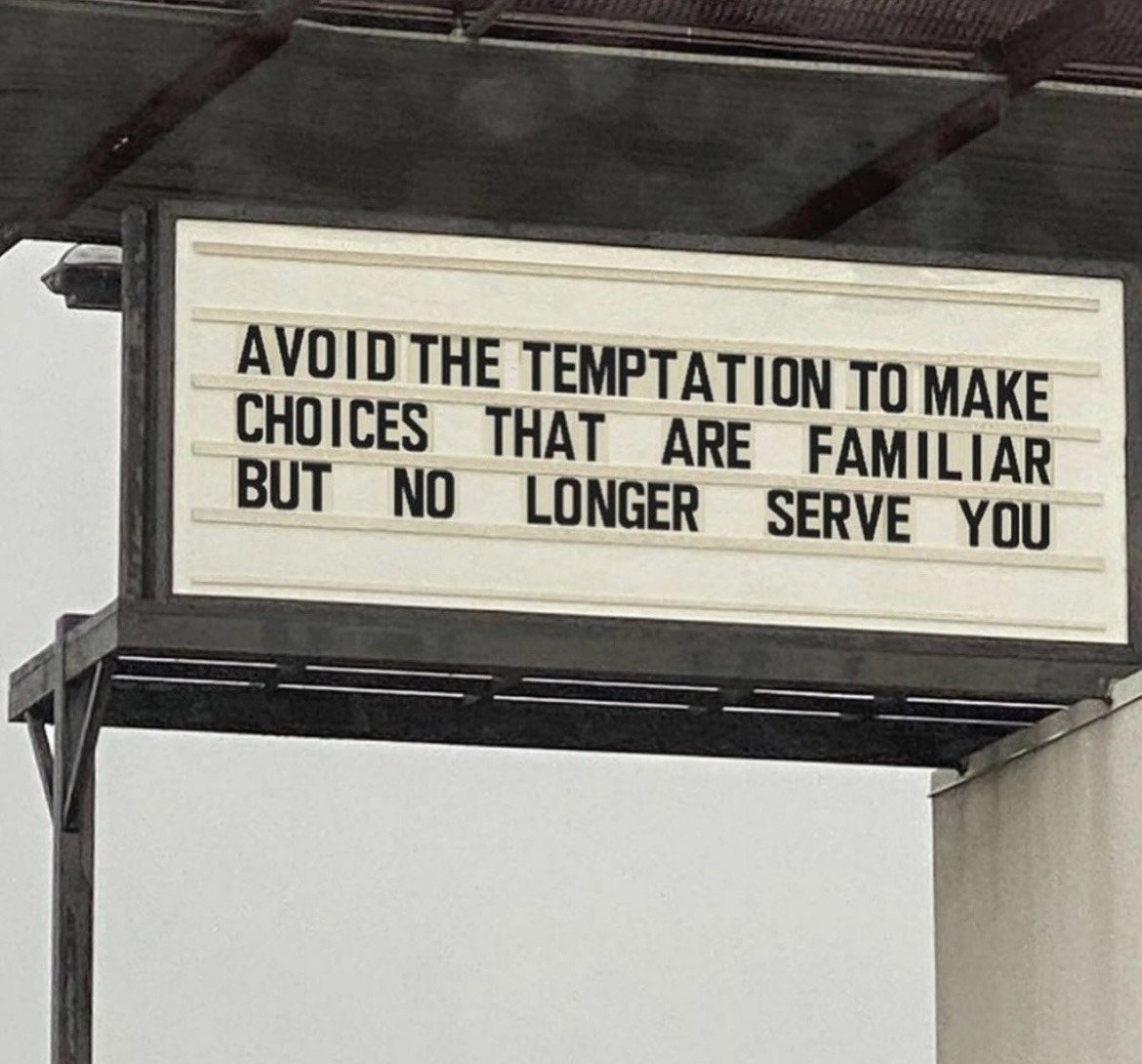
It can be so tempting to get a fresh start. To quit that stressful job or fire that problem employee. And sometimes it's the right move. But when we look outside and blame rather than look inside and take responsibility, often even a fresh start ends up feeling awfully familiar.
2
1
8
3 Aug 2022
Every job is stressful if you can't set boundaries! Every employee is a problem if you can't give skillful feedback! Turns out there's a lot of wisdom in repairing what we have instead of starting fresh, in doing the "slow, hard, good work of staying put." comment.org/repair-and-remai…
1
4
Kenneth Berger retweeted

21 Apr 2022
"If you hate a person, you hate something in him that is part of yourself." Hermann Hesse
12
116
824
Kenneth Berger retweeted

22 Sep 2021
Trust doesn't develop from always doing the right thing.
Trust comes from taking responsibility when we do the wrong thing.
55
1,901
7,750
22 Sep 2021
What a damning case for the danger of Peter Thiel's "grow-at-all-costs, consequences-be-damned" amoral leadership! But if Elon Musk's naive optimism and blindness to tech's unintended consequences is the counterpoint, I'm not sure that sounds much better. nymag.com/intelligencer/arti…
1
5
22 Sep 2021
Intentional or not, their negative impacts are real. I dream of a brand of truly humane tech leaders, who believe technology can change the world AND are willing to ensure that change is positive. I'm sure they're out there, I just wish they were as famous as Thiel and Musk.
4

Kenneth Berger retweeted

19 Jul 2021
"The depression and anxiety of today is the mirror response to the pressure on happiness." @EstherPerel gq.mn/mN1NFIu
2
25
112
Kenneth Berger retweeted

26 Jul 2021
Along with renewed restrictions, it’s clear that gentle persuasion did not achieve the vax rate we need to defeat Covid. Yes, the politics are hard, but dying is worse, as is re-tanking the economy. It’s time for vaccine mandates – nothing else gets us where we need to go.(20/20)
128
442
2,331
13 Jul 2021
I baked a cake last week! And suddenly realized I hadn't trusted myself around desserts for YEARS, and thus deprived myself of years of ordinary daily pleasures. Every cookie had been a cheat, a transgression, a rule broken. Well no more! I…let myself eat cake.
2
10
13 Jul 2021
What aren't you trusting yourself with? Maybe it's time to have another look.
3