
intention is all you need // building @khalani_network // cofounder @nervosnetwork // dm open
Joined June 2008
- Tweets 4,003
- Following 818
- Followers 7,534
- Likes 1,336
35 Photos and videos
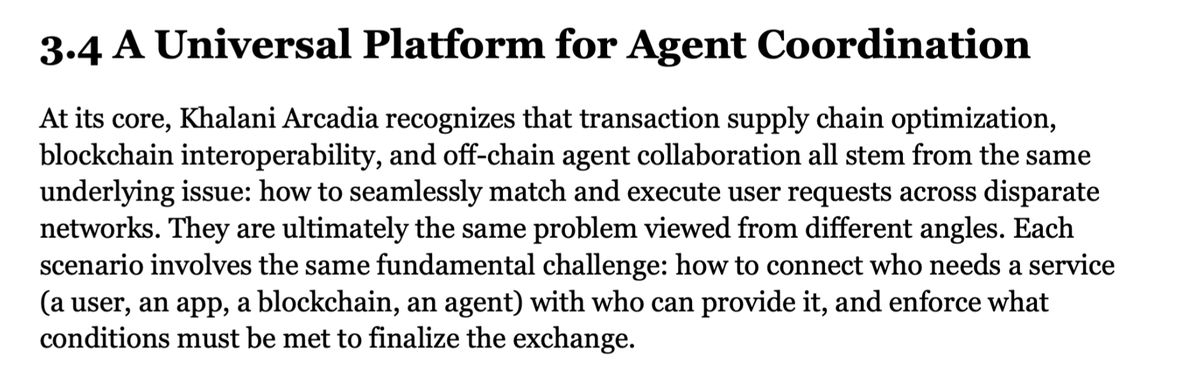
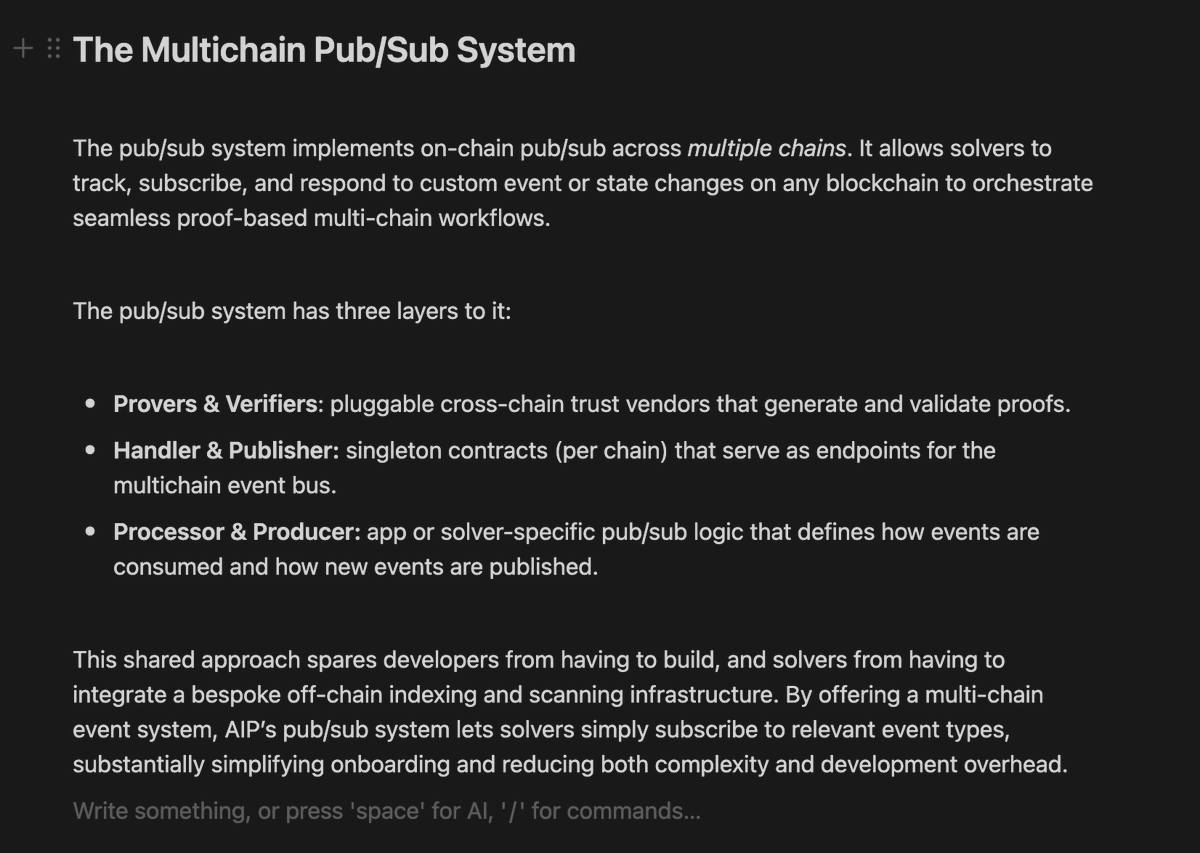
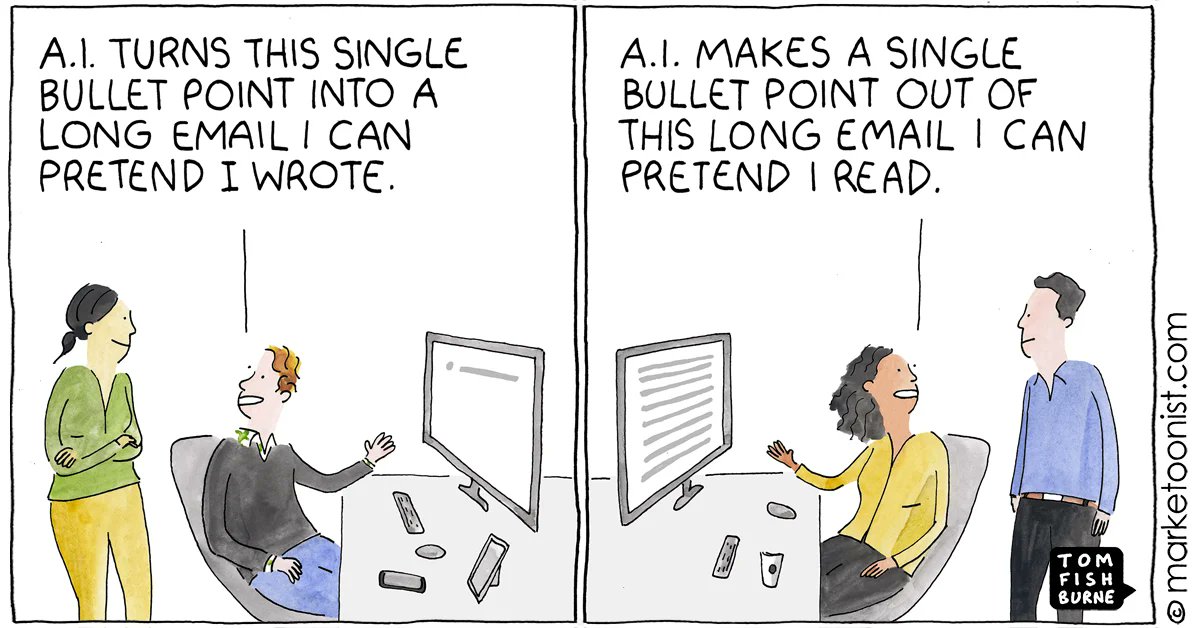

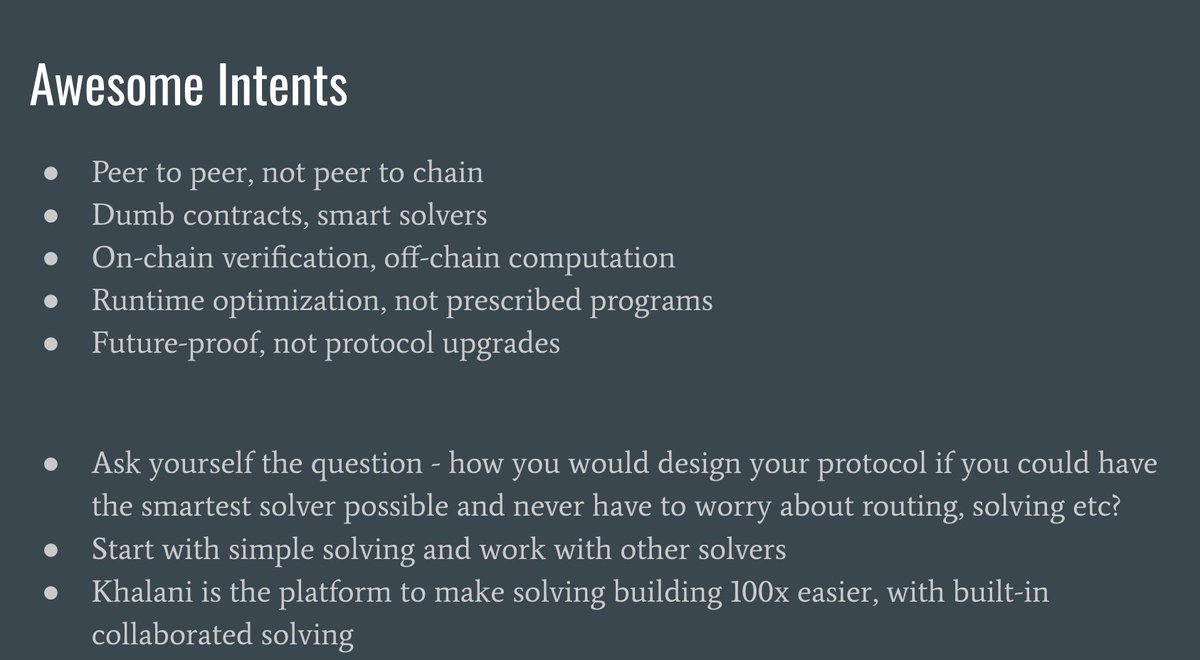

stablecoins will clear workflows, payments are just embedded executions.
Jun 5

Prediction: by 2028 most stablecoin volume is B2B treasury, not retail remittance.
Remittance gets the headlines -- it's sympathetic and visible.
But the dollars are in supplier payments, intercompany sweeps, and payroll. Boring, recurring, enormous. The boring flows always win on volume.
1
3
400
Great writeup by Jessy.
Any bilateral execution-focused use cases likely won't need blockchains; multilateral execution use cases only need blockchains when value movement itself is the use case.
Excited on what you guys are building next!

1
5
2,015
knwang retweeted

May 13
1/ Khalani has a new look... 👀
... to reflect what we've brought to market with key partners & integrators 🧵
khalani.network
9
6
42
3,108
> I think that agentic payments are the killer app state channels never had.
👍👍👍
off-chain replicated state machines with superseding signed state that use blockchain for escrow and settlement.
They’ll come for payments, and stay for programmable coordination.

10
3
41
1,326
Extremely lucky to get to work with you sir !
Mar 13

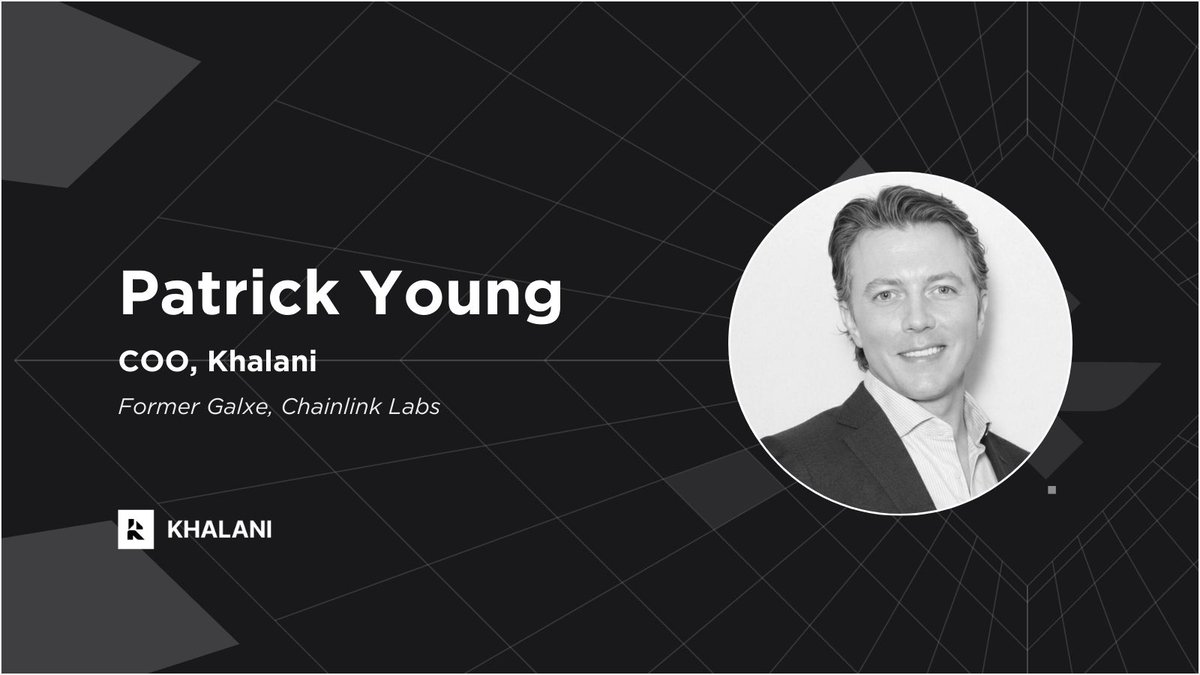
1/ Excited to announce that I've stepped into the role of Chief Operating Officer at @khalani_network.
🧵
3
20
769
Claude code re-discovered Unix, and taught us that powerful coordination doesn’t require rich, bespoke standards, but a small set of simple and universal primitives:
- cli powers everything
- everthing is a file
- every task is pipe-able
Simple interfaces win. Unix won. Git won. HTTP won. REST won.
But almost all current agent protocols are designed like ESB and CORBA.
It gets worse for agentic payment, commerce or transaction standards. They won’t work, not because agents don’t need standards, but because they’re trying to standardize the wrong layer. We keep trying to standardize rich semantics, shared ontologies, negotiation flows, and high-level message schemas. That is exactly where heterogeneity is highest and agreement is hardest.
Unix did not win by standardizing meaning. It won by standardizing composition.
Don’t standardize what agents think. Standardize how value moves when they agree.
6
3
33
1,368
knwang retweeted

Feb 25
💡Patrick Young @patkyoung — Head of Growth, Khalani @khalani_network
"Agentic payments need bulletproof execution rails." 🤖
• The bottleneck isn’t AI intelligence — it’s coordination, verification, and deterministic settlement.
• Without trust-minimized execution, AI is just another API.
• Agents need escrowed capital, solver accountability, and protocol-level guarantees.
• The real blocker today? Fragmented chains, liquidity, and execution venues.
• Autonomous agents require unified intent routing cross-chain liquidity.
The future isn’t on-chain AI.
It’s verifiable, economically-enforced execution.
2
2
17
4,126
with our very own @patkyoung !
Feb 25

Panel Highlight | How AI Becomes Trust-Minimized at Scale
Hosted by @499_DAO × @0G_labs × @hetu_protocol
At The Scaling Summit @ ETHDenver, leaders:
Michael Dressler @mdressler24 — Head of Success, 0G @0G_labs
Patrick Young @patkyoung — Head of Growth, Khalani @khalani_network
Michael Berman @mikebermantoo — Co-CEO, Tectonic Labs @tectonicxyz
Vinay Kumar — Co-Founder, Flashback Labs @FlashbackLabs
Explored what it really takes for AI-native infrastructure to become composable, verifiable, and production-ready.
AI doesn’t fail because of model capability.
It fails when execution and settlement aren’t trust-minimized.
#TheScalingSummit #AIInfrastructure #DeAI #Web3AI #ETHDenver
Watch the discussion ↓
7
1
11
752
the combination of private, general purpose and high throughput would be extremely compelling

Privacy will be the most important moat in crypto.
Why? Because secrets are hard to migrate.
Everyone is launching a new "high performance" blockchain lately. But these chains are hardly different from one another. Blockspace is functionally the same everywhere. And with bridges that make moving between chains easy, that blockspace is now accessible *from* everywhere. Mercenary users and capital quickly arriving on a chain to farm an airdrop can leave just as quickly to farm the next one on another chain.
The reality is that if your "general purpose" chain doesn't already have a thriving ecosystem, a killer application, or an unfair distribution advantage, there's very little reason for anyone to use it or build on top of it. Performance alone is no longer enough.
Privacy is the one feature that everyone agrees is critical for the world’s finance to move onchain. It’s also the one feature that almost every blockchain that exists today completely lacks. For most chains, it has been little more than an afterthought until now.
Privacy by itself is sufficiently compelling to differentiate a new chain from all the rest. But it also does something more important: it creates chain lock-in.
Bridging tokens is easy, but bridging secrets is hard.
As long as everything is public, it's trivial to move from one chain to another, thanks to bridging protocols like LayerZero. But, as soon as you make things private, that is no longer true. There is always a risk when moving in or out of a private zone that people who are watching the chain, mempool, or network traffic will be able to figure out who you are. Crossing the boundary between a private chain and a public one—or even between two private chains—leaks all kinds of metadata like transaction timing and size correlations that makes it easier to track you.
Compared to the many undifferentiated new chains whose fees will likely be driven down to zero by competition, blockchains with privacy have a much stronger network effect. When you're on public blockchains, it's easy to transact with users on other chains—it doesn't matter which chain you join. When you're on private blockchains, on the other hand, the chain you choose matters much more because, once you join one, you're less likely to move and risk being exposed.
This will create a winner-take-most dynamic. And because privacy is essential for most real-world use cases, a handful of privacy chains will own most of crypto.
36
54
2,120
the challenge is the opposing force of verifiability, agency and interoperability
- direct verification over agent's computation lowers agency and less future-proof
- optimistic verification allows higher agency but increases agents operating cost with bonds
- in either situation, since delegation is over time and verification is not atomic with every agent action, interoperability between risk policy curators, markets and agents is not trivial

It's one thing to use x402 to receive one-time use for a service, but entirely another to source over-time capital delegation to fund the working capital of a service with pre-agreed economic terms.
It's like comparing an off-chain verifiable agent that can submits zk proofs for its execution vs. a zk-rollup.
As the demand for the former increases, the demand for the latter will follow too for any blockchain adjacent services.
35
2
62
2,235
knwang retweeted
10 Nov 2025
Khalani x @collabland 🤝
Soon, communities will be able to bridge, swap, or stake directly inside Discord - powered by Khalani’s intent layer.
Onchain questing, made seamless. ⚡️
🔗 blog.khalani.network/collabl…
11
3
35
2,470
It's one thing to use x402 to receive one-time use for a service, but entirely another to source over-time capital delegation to fund the working capital of a service with pre-agreed economic terms.
It's like comparing an off-chain verifiable agent that can submits zk proofs for its execution vs. a zk-rollup.
As the demand for the former increases, the demand for the latter will follow too for any blockchain adjacent services.
1
3
23
3,869
knwang retweeted
4 Nov 2025
🚀 Khalani x @rekthub_io
RektHub, the all-in-one token launch and DeFi platform, is leveraging Khalani to enable seamless cross-chain token purchases and native swaps across ecosystems - powered by Khalani’s universal intent platform.
🔗 Learn more: blog.khalani.network/rekthub…
5
6
37
2,239
formal verification at the core of the state transition machinery (vm level) is the only way for on-chain software to make promises to the capital delegates to them. There’s no any other way
3 Nov 2025

Formal verification at the transaction level is only way forward.
Interaction of contracts is hard to model and reason about. Formal verification on tx level offers the recursive proof that properties are maintained with any contract sub-calls.
2
2
22
1,695
knwang retweeted
29 Oct 2025
🚀 Excited to welcome @lagrangedev to the Khalani Network!
With this partnership, Lagrange and Khalani are building the connective tissue between data and outcome-based execution.
🔗 Learn more: blog.khalani.network/khalani…
1
3
29
2,832
knwang retweeted
29 Oct 2025
🚀 Khalani is now live on @0G_labs, the AI-native Layer 1 blockchain.
Together, we’re bringing intent-driven execution to the heart of the 0G ecosystem - making it more accessible, composable, and powerful.
🔗 Learn more: blog.khalani.network/khalani…
6
3
31
16,589
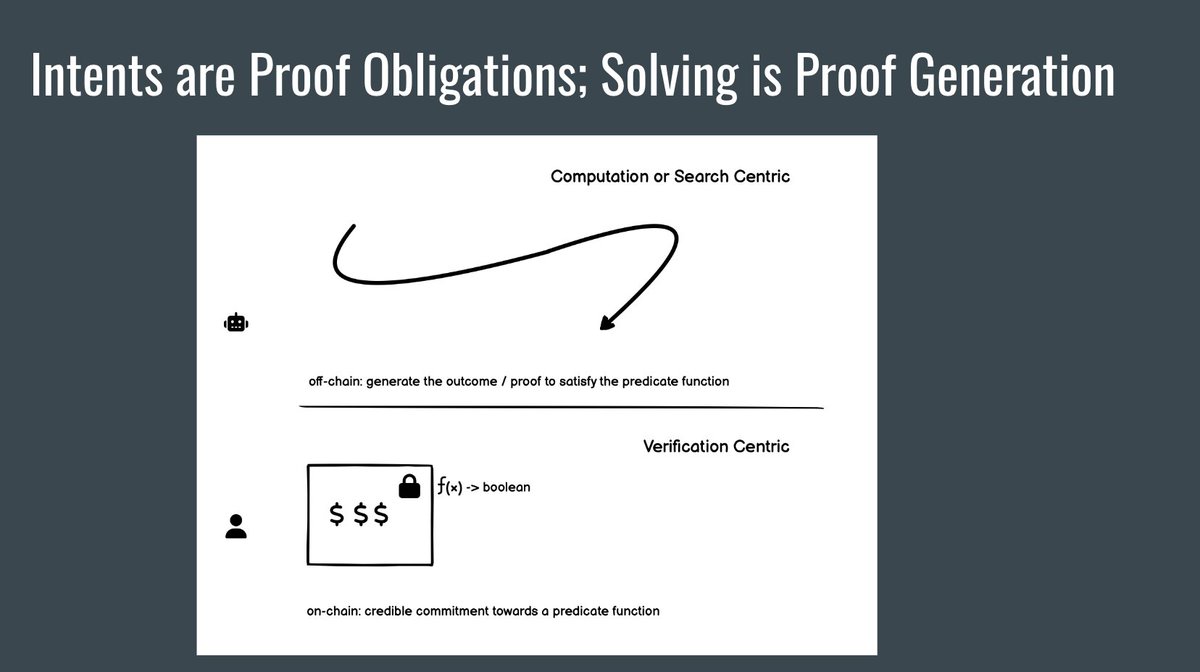
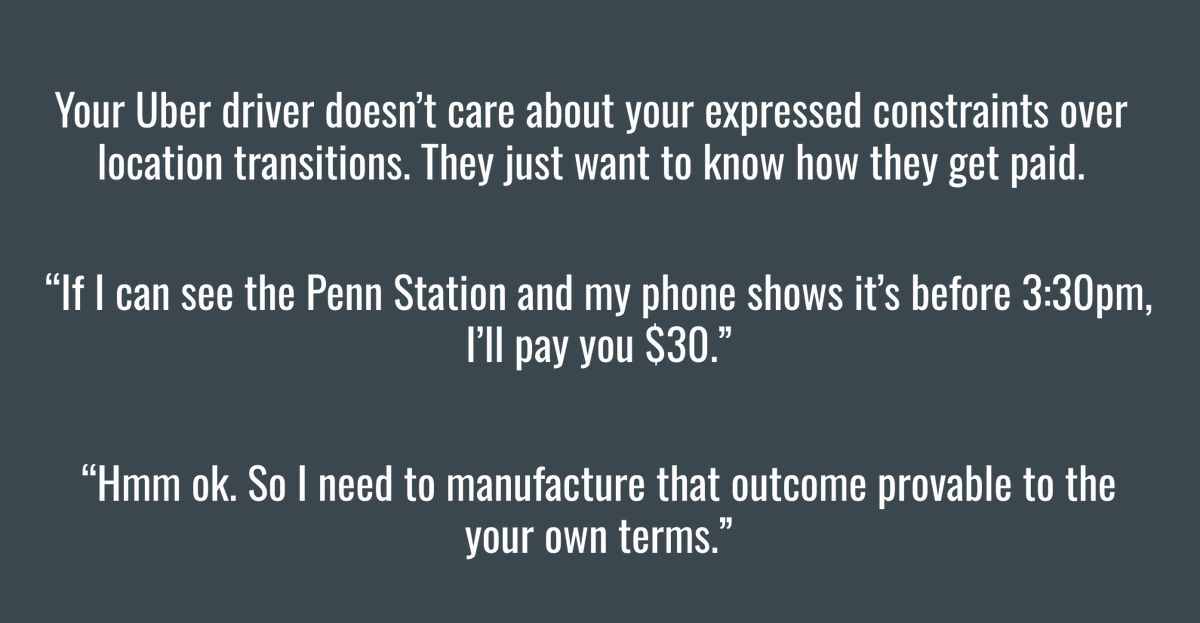
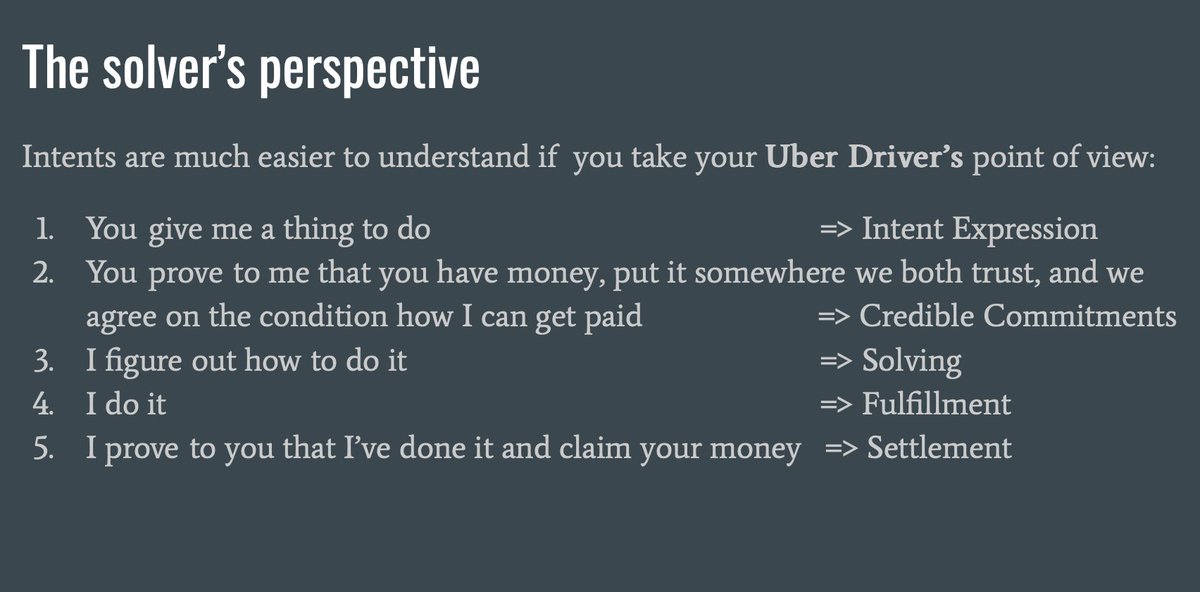
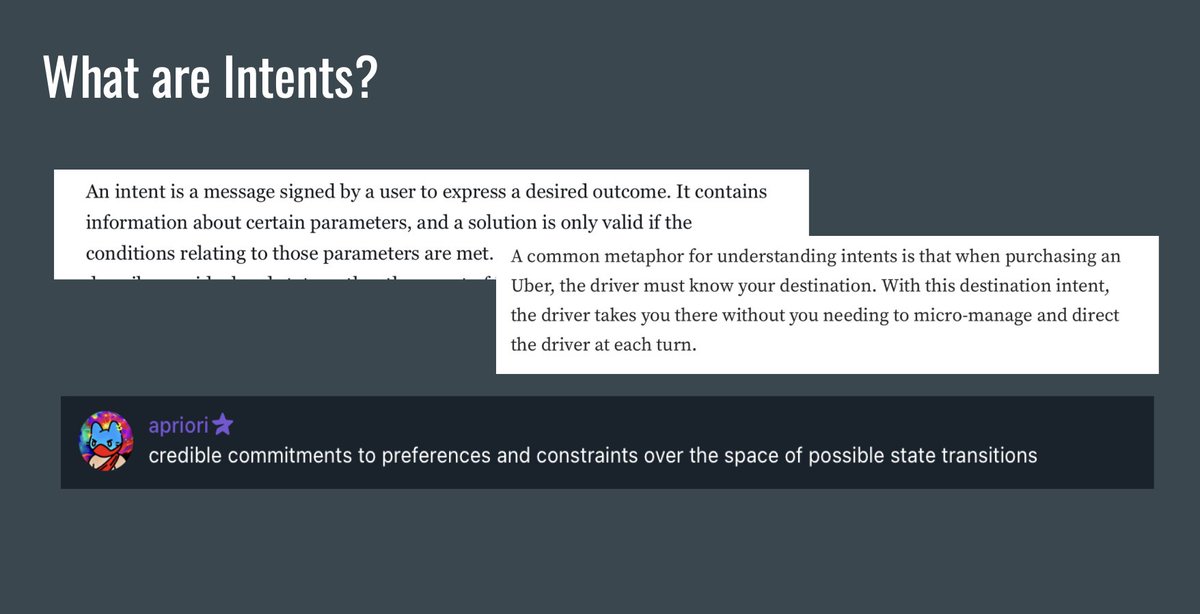
Intents aren’t (just) cross-chain swaps. They’re agency and market design. We’ve treated “intents” as a nicer way to get filled: publish a wish, receive an outcome, but the bigger unlock is upstream.
Taking the perspective of "maker's intents" let us re-architect markets by unbundling who underwrites risk, how value settles, and where pricing happens, so capital has agency and liquidity flows to its highest use.
Today's on-chain, supply-centric protocols bundle three jobs into one venue:
- risk underwriting: what can list, how exposure is bucketed and capped.
- settlement: how and when value changes hands
- pricing: how inventory is valued and priced.
When we bundle these, three things follow: developers prescribe market structure from the outside; capital turns into a passive deposit that can only serve venue-local flow; re-allocating capital becomes a manual migration.
But bundling wasn’t a mistake; it was a coping mechanism. The moment you let both takers and makers be expressive, the search space blows up: assets, positions, partial fills, time windows, conditions, proofs. Projects bundled to keep the system tractable and to avoid a thicket of incompatible semantics.
But that’s the real design problem: expressiveness<> tractability<>interoperability:
- push expressiveness too far and routing/clearing become combinatorial.
- optimize only for tractability and you freeze innovation and capital agency.
- fragment semantics per venue and you lose interoperability.
Intent-driven Markets is our answer to the design problem. Our answers to this design challenge:
- Move pricing off-chain. Keep strategy where signals live. Treat the chain as verification and final settlement, not a place to hard-code strategies.
- Adopt a constraints-based control plane. On-chain you express invariants: caps, limits, time/trust guards, rather than strategies. Guardrails stay stable; strategies evolve off-chain.
- Separate underwriting from settlement. Makers publish policies (what they’ll underwrite); a shared settlement layer clears them so different risk exposures interoperate by default.
With that foundation, treat “trading” in the broad sense: conditional exchange of assets or state. The same compact interface can carry synchronous orders and asynchronous “promises” (“fund now, finalize on proof”). You don’t need a new venue type for every use case; you need a small, shared interface that standardizes how things clear.
Treat intents as market structure, not just limit orders. Unbundle pricing, underwriting, and settlement. Use trading as the universal interop surface, and hang other action types as asynchronous extensions. Keep the interface compact so expressiveness rises without losing tractability, and interoperability is the default.
That's HyperStream Markets.
29 Oct 2025

💧Introducing HyperStream Markets
Today we’re unveiling HyperStream Markets: an intent-native liquidity upgrade to Arcadia and a new class of multi-chain, intent-driven markets.
HyperStream brings market structure to intents - for takers, makers, and entire ecosystems.
🧵
2
4
30
2,968
The under-appreciated fact about intents is that every intent-driven transaction (an intent expression) starts with authorizing input assets.
This simple fact flips monetization: apps can earn on demand flow instead of supply they custody (TVL); this will be the fundamental driving force for UX-first apps, because UX maximizing apps now have a *business model*.
50
4
87
1,752