
🐻 or 🐂, let’s have some fun!
Joined May 2021
- Tweets 2,053
- Following 108
- Followers 134
- Likes 8,770
349 Photos and videos















My contribution to the world...
@rasterfinance #RasterAirdropCampaign
3
5
20
2,620
Victor retweeted

27 Nov 2025
Dubai. December 1-7. @rasterfinance at Solana Economic Zone.
Portfolio intelligence meets the Solana ecosystem.
See you there. ◼️

ALT 🇦🇪
24
10
63
6,684
Victor retweeted
17 Nov 2025
🚀 MEET THE RASTER FOUNDERS
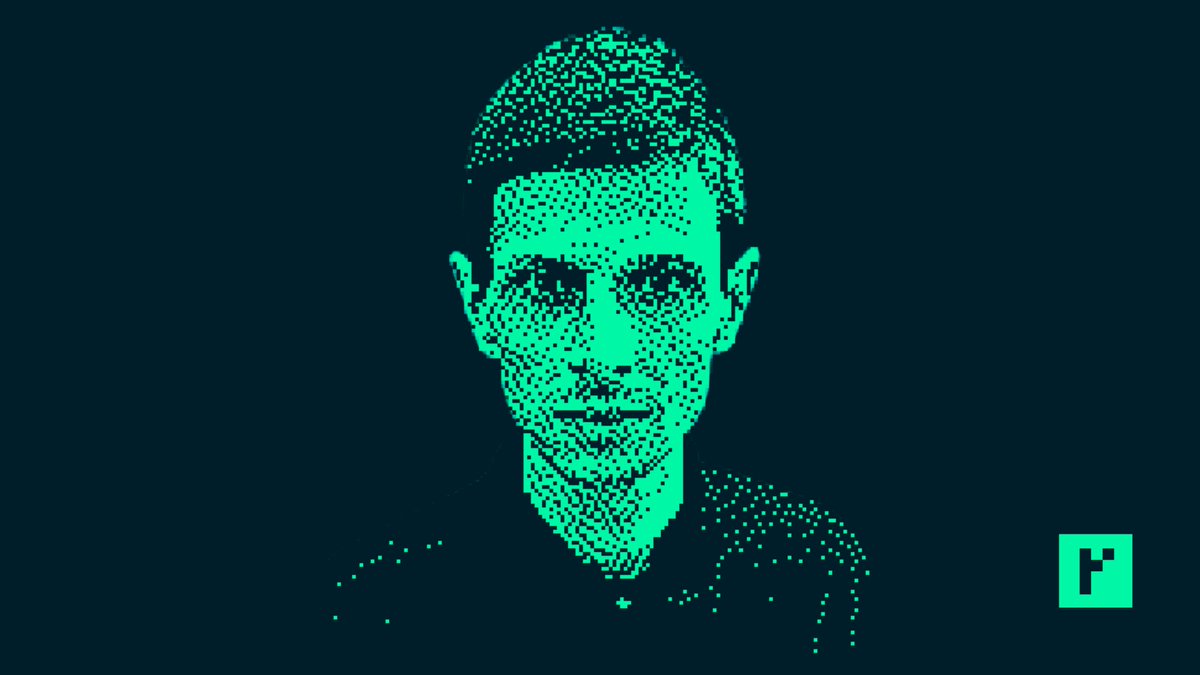
👷🏼 Meet Cristiano Troffei — CTO & Co-Founder
📘 @cristroffei is a creative technologist with 20 years in design and product innovation. At just 21, he founded Beautyfool, a leading multimedia studio in Turin’s early 2000s scene, later evolving into UX/UI and product design.
👨💻 He went on to co-found Usefool, a UX startup studio behind award-winning apps like Quadro, an iOS app that reimagined human–computer interaction years before Apple’s Touch Bar, reaching 1M users and earning Apple recognition.
💼 As CEO, he led Usefool’s growth and raised €850K in funding. After a stint consulting for Sky and Vodafone, Cristiano’s focus turned to Blockchain and DeFi, bringing his vision and experience to Raster since 2021, driving innovation at the frontier of design and decentralized tech.
🔗 @Medium article: rasterfinance.medium.com/cri…
9
15
48
7,177
Victor retweeted
14 Nov 2025
🚀 MEET THE RASTER FOUNDERS
👷🏼 Iwan Spillebeen — COO & Co-Founder
📘 @iwan_spillebeen is a digital transformation specialist with 30 years of experience, including 20 in global leadership roles across APAC, driving large-scale change management, process optimization, and adoption of cutting-edge technologies.
👨💻 He has held C-level roles in major travel and tech companies such as Galaxy Distribution System, Galileo (now Travelport), GTA, Amadeus, and Netsol, leading multi-country digital transformations and pioneering SaaS solutions that generated millions in annual revenue.
🤝 In 2017, Iwan founded Blockchain Labs, the first blockchain and AI development company in Thailand to gain Board of Investment (BOI) status, delivering enterprise and social-impact solutions across industries. He later co-founded Abalon Labs, supporting Thailand’s 4.0 innovation strategy through digital transformation and AI consulting.
Passionate about technology for good, Iwan continues to lecture at W-English / W-Academy in partnership with UN Women.
💼 Since 2021, Iwan has been COO at Raster, leveraging his decades of operational and technological expertise to scale the company’s mission of transforming finance through blockchain, AI, and DeFi innovation.
🔗@Medium article: rasterfinance.medium.com/iwa…

20
15
117
15,990
Victor retweeted
13 Nov 2025
🚀MEET THE RASTER FOUNDERS
💼 Meet Michael Gomez Wood — CFO at Raster
📘 With 20 years of experience in financial systems, value-chain restructuring, and project implementation, @KopiKrypto simultaneously advised and coordinated government, NGO, and enterprise stakeholders across the APAC and EU regions.
🤝 Before joining Raster, he served as CEO of Filanthrope Inc. (U.S.), leading community-driven commodity supply chains and training over 56,000 beneficiaries in finance, agronomy, and enterprise management. His work helped incubate multiple companies, four of which now exceed $10M in annual revenue.
👨💻 Michael also collaborated with the UN ILO and UNODC as a Senior Technical Expert, architecting cooperative financial and production systems across Southeast Asia. He later developed a blockchain-based ERP for transparent, data-driven value chains, cutting systemic waste by more than 25%.
💼 Since 2021, Michael has served as CFO of Raster, driving the mission to make DeFi accessible to all through transparent, human-centric financial innovation.

16
16
82
14,661
Victor retweeted
13 Nov 2025
🚀MEET THE RASTER FOUNDERS
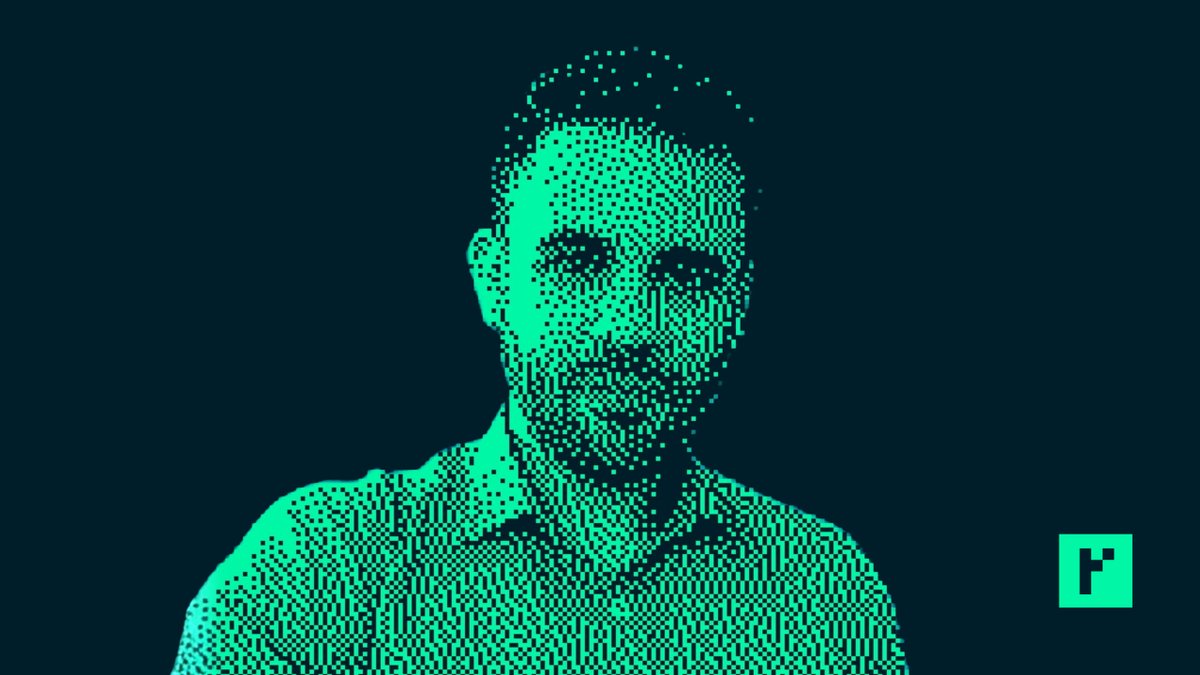
👷🏼Jacob Camilleri — CEO & Co-Founder
📘 @JtcRaster began his professional journey working in education at De La Salle College before moving into urban and environmental planning. In 2013 he joined the Malta Planning Authority, contributing to policy drafting, regulatory reform, and national development. He later became a senior planner in a major consultancy, leading large-scale public and private projects across Malta.
📈 Alongside his planning career, Jacob invested in real estate and deepened his expertise in traditional finance and derivatives. He entered crypto in 2014 and later discovered DeFi, aligning with his mission to tackle inequality, corruption, bureaucracy, and limited financial access, ultimately inspiring the creation of Raster.
🔥 Since 2021, Jacob has been full time at Raster, guiding its growth into a portfolio intelligence platform unifying CeFi, DeFi, and AI for both retail and institutional users.
🎓 In 2025 he also became a Guest Lecturer at the MLI Institute in Malta, teaching MBA students about blockchain, cryptocurrencies, and real-world financial applications.
🔗 @Medium article: rasterfinance.medium.com/jac…
10
17
97
7,334
Victor retweeted

29 May 2025
At last, your portfolio can start making sense.
Your personal Bloomberg Terminal for crypto
This is real portfolio management.
6
37
1,271
Victor retweeted
29 May 2025
This is the most excited i have ever been about a release 😍
4
3
21
477
Victor retweeted

2 Apr 2025
Sonar: AI-Powered Trading and Portfolio Management Across CeFi, DeFi, and 18 Chains. TGE soon in 2025.
@SonarPING_ is a one-stop platform called Sonar Terminal for connecting and managing trading positions across CeFi (e.g., Binance, ByBit, via API keys) and DeFi (by linking the non-custodial native Sonar wallet to various DeFi protocols). This integration enables users to execute spot, futures, and perpetual trades seamlessly across multiple CEXs and DEXs on Sonar, as well as swap assets across 18 chains through Sonar Studio (similar to Houdiniswap).
Powering this seamless trading experience is Oracle, Sonar’s AI Agent Network. Oracle combines multiple large language models (LLMs) with a suite of AI-driven agents to not only provide users with real-time insights and analytical assistance but also automate and optimize portfolio management. By leveraging AI-driven execution capabilities, Oracle helps users streamline complex trading strategies, reduce manual effort, and enhance overall performance.
Ultimately, Sonar Terminal will evolve into Sonar Portal, an all-in-one ecosystem where decentralized applications (dApps) are seamlessly integrated.
Other features offered by Sonar includes trading tools and charts, AI research assistant chatbot, token analytics, smart contract analysis (trade safely and avoid scams via contract scanner), risk assessment, tracking smart wallets, addresses and assets, top up gas across 10 chains, on/off ramp fiat to crypto in 180 countries, feeds with the latest crypto market sentiment and news, discover or spot new opportunities through Sonar's trends feature and collections and many more (see litepaper drive.google.com/uc?export=d…)
Privacy and security of Sonar
Sonar Terminal’s overarching priority is safeguarding user data and private information. To achieve this, Sonar employs a multi-layered approach to security that begins the moment a user enters their data and extends throughout every operation on the platform. While the specific technical implementations are subject to change over time as industry standards evolve, here are the core pillars that ensure a strong security posture and protect sensitive information from leaks and external threats:
1. Bank-Grade Encryption of Sensitive Data
- API Key Encryption: Sonar encrypts any CEX
- API keys at rest using strong encryption algorithms (e.g., AES-256). This ensures that, even if attackers gained file-level access, the stored keys would be unusable without the decryption keys.
- End-to-End TLS: All communications between Sonar’s front-end, back-end, and exchange endpoints occur over encrypted channels (TLS/SSL), securing data in transit against man-in-the-middle attacks.
2. Granular and Secure Management of API Keys
- Minimal Required Privileges: Users can (and should) create API keys with the most limited permissions necessary (e.g., read-only for portfolio tracking or trade-only without withdrawals) to minimize risk.
- No Custody of Funds: Because Sonar does not hold user funds, even a breach of Sonar’s systems does not directly endanger your underlying assets. The platform simply serves as a unified interface for CEX or wallet interactions.
3. Isolated, Hardened Infrastructure
- Secure Key Storage: Encryption keys for decrypting the stored API keys reside in separate, tightly controlled environments (such as Hardware Security Modules (HSMs) or secure cloud key management services) to limit exposure.
- Microservice Architecture: Each service in the Sonar ecosystem is compartmentalized, meaning a compromise of one service does not automatically expose all systems and data.
4. Rigorous Access Controls and Authentication
- Multi-Factor Authentication (MFA): Sonar supports MFA to verify user identities whenever they log in or perform high-risk actions. This adds an extra layer of defense beyond just a username/password.
- Role-Based Access: Administrative and internal Sonar staff accounts are also tightly controlled, with detailed audit trails of any access and actions taken.
5. Frequent Security Audits and Testing
- Penetration Testing: Sonar regularly commissions independent security assessments to probe for vulnerabilities in the platform, following up by addressing any discovered issues.
- Code Reviews & Continuous Monitoring: Code changes undergo thorough internal reviews, and the system is continuously monitored for abnormal patterns or unauthorized access attempts.
6. User Education and Control
- Transparent Security Documentation: Sonar provides documentation on best practices for generating and maintaining API keys, encouraging users to keep separate keys dedicated for Sonar, enable IP whitelisting, and set strict permission scopes.
- Immediate Revoke Capabilities: Users can easily revoke or update API keys on both the platform side and the exchange side, ensuring they remain in complete control of their own credentials.
7. Minimal Storage of Personal Identifiable Information (PII)
- Sonar’s primary focus is asset management across exchanges and blockchains, reducing the need to store large volumes of user PII. This limited data footprint drastically lowers the potential impact of a breach.
8. Non-Custodial Wallet Interactions
- For on-chain assets (ERC-20, Solana, etc.), Sonar Terminal typically integrates via third-party wallet connections or read-only blockchain explorers. This setup means private keys remain in the user’s control and are never held by Sonar.
By integrating best-practice security protocols with a user-centric non-custodial philosophy, Sonar Terminal strives to prevent any single point of failure. While no platform can claim 100% immunity to attacks, these layered security measures—along with clear user guidelines—collectively ensure that private information is strongly protected and minimize any potential damage in the unlikely event of a breach.
1
2
11
493
Victor retweeted
21 Mar 2025
Build, Acquire, Grow 💪
3
4
39
1,061
Victor retweeted

11 Mar 2025
Always pushing. Always BUIDLing. Always spreading the fundamentals of DeFi.
Real recognizes real.
Thanks so much @ParisBlockWeek for the support 🙏
1
7
28
292
Victor retweeted

4 Mar 2025
Making Smart choices
1
2
16
107
Victor retweeted

4 Mar 2025
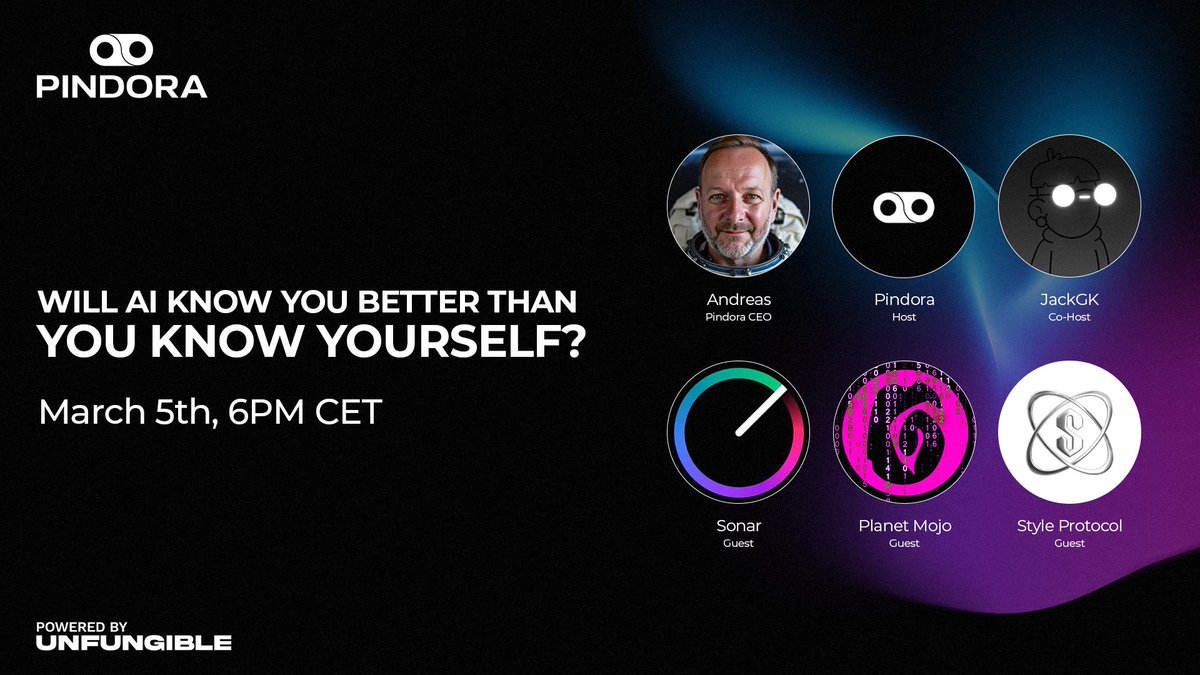
This week's Spaces: Will AI know you better than you know yourself?
Hosts: @AndreasPensold & @jack_gk
Guests: @SonarPING_ @WeArePlanetMojo @StyleProtocol
Time: Wednesday, March 5th @ 6PM CET
Set your reminders below 👇
11
15
61
5,983
Victor retweeted
4 Mar 2025
Whilst the crypto market does it's thing, we continue BUIDLing until DeFi is a no nonsense, second nature part of life for billions.
Time for people to reclaim CT for real building, real utility, real value. Time for CT to heal and move forward.
2
7
31
348
Victor retweeted

4 Mar 2025
things are getting hot in here 🔥
3
4
26
344
Victor retweeted

26 Feb 2025
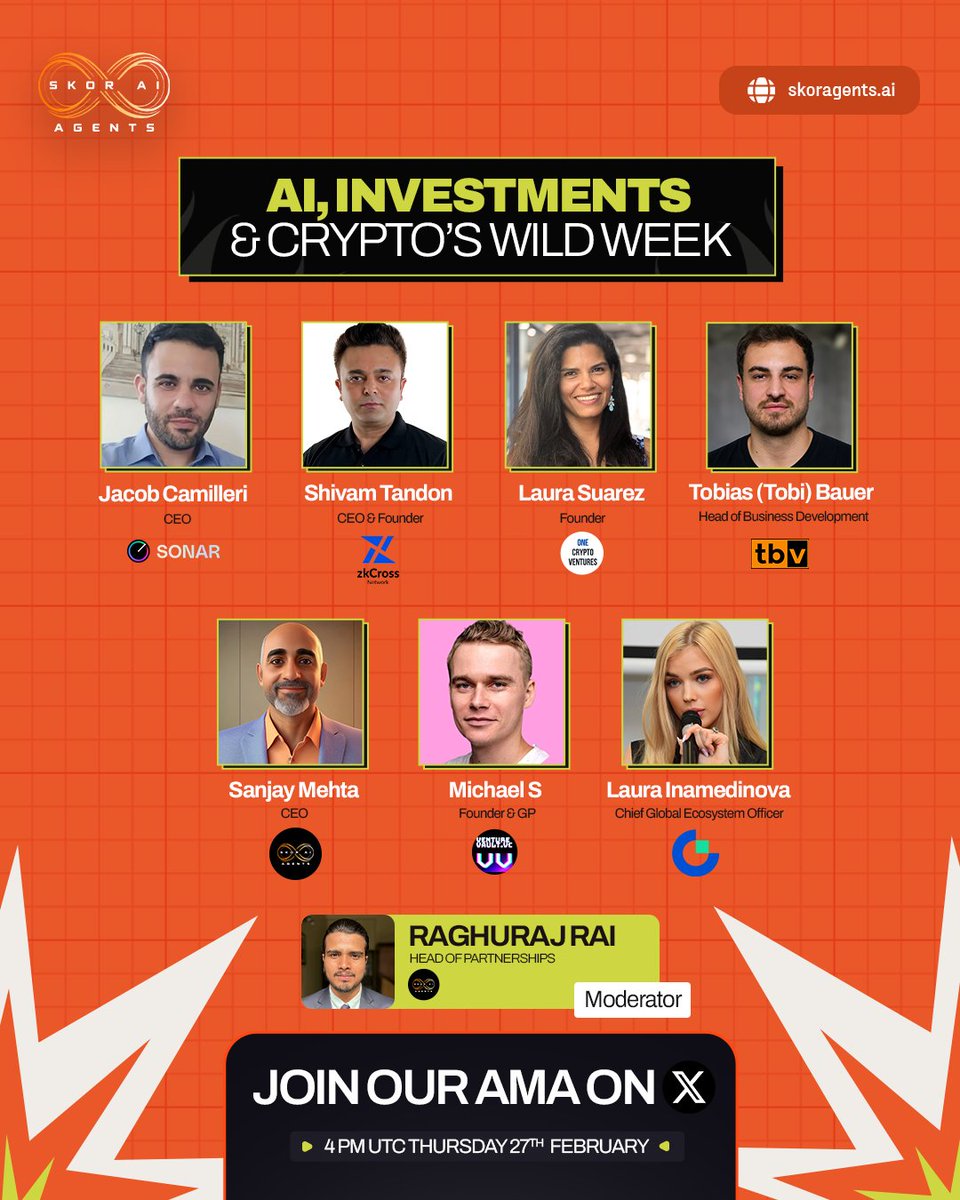
🚀 AI, Investments & Crypto’s Wild Week – Join Our Live AMA! 💡💰
The AI & Web3 industry is evolving fast. After a wild week in crypto, we’re bringing together top investors, founders, and industry leaders to discuss what’s next for AI-powered businesses, funding, and innovation.
📅 Date: 27th February
⏰ Time: 4 PM UTC
📍 Join the AMA Live on X: x.com/i/spaces/1vAxRDZDwwRGl
💰 $50 Giveaway Alert! 💰
1️⃣ Follow @theskorai
2️⃣ Join our Telegram: t.me/theSkorAI
3️⃣ Ask a question during the AMA using #SKORAIAgents
🚀 Top 2 questions win $25 each!
🎙️ Featured Speakers:
🔹 Jacob Camilleri (@JtcSonar) – CEO of Sonar (@SonarPING_)
🔹 Shivam Tandon (@shivamtas) – CEO & Founder of zkCross Network (@zkCrossNetwork)
🔹 Laura Suarez (@laissu) – CEO of One Crypto Ventures (@OCVCrypto)
🔹 Tobias Bauer (@TobiasTBV) – Web3 Investor at TBV (@tbvxyz)
🔹 Sanjay Mehta (@smehta33) – CEO of SKOR (@theskorai)
🔹 Michael S. (@MSkylion) – Founder & GP at Venture Vault (@venturevaultvc)
🔹 Laura Inamedinova (@laura_gateio) – Chief Global Ecosystem Officer at Gate.io & Principal at Gate Ventures (@gate_io)
🎤 Moderated by:
🔹 Raghuraj Rai (@RaghuRajRaiHQ) – Head of Partnerships, SKOR (@theskorai)
153
30
178
133,276
Victor retweeted

24 Feb 2025
Keep an eye on @SonarPING_
They will have one of the most powerful AI co pilots you could use in crypto.
Arbitrage made quick and easy is just one use
x.com/SonarPING_/status/1893…
3
3
11
265
Victor retweeted
22 Feb 2025
Check out pingwin AI
Once sonar launches everyone is going to want to use it. Capable of operating using constantly changing live data. Something even #chatgpt4 or #GROK3AI are even capable off.
Don't want to miss launch
x.com/SonarPING_/status/1893…
5
17
120
Victor retweeted

22 Feb 2025
Not really @cz_binance , try using sonar.studio/ and you'll be surprised how easy it is.
1
12
45