
zkCross Network delivers DeFi AI infra for hassle-free Web3 onboarding & cross-chain liquidity. Explore @Surf_Liquid, our autonomous, high-yield DeFAI Agent
Joined November 2023
- Tweets 1,983
- Following 90
- Followers 12,194
- Likes 4,708
556 Photos and videos

Pinned Tweet
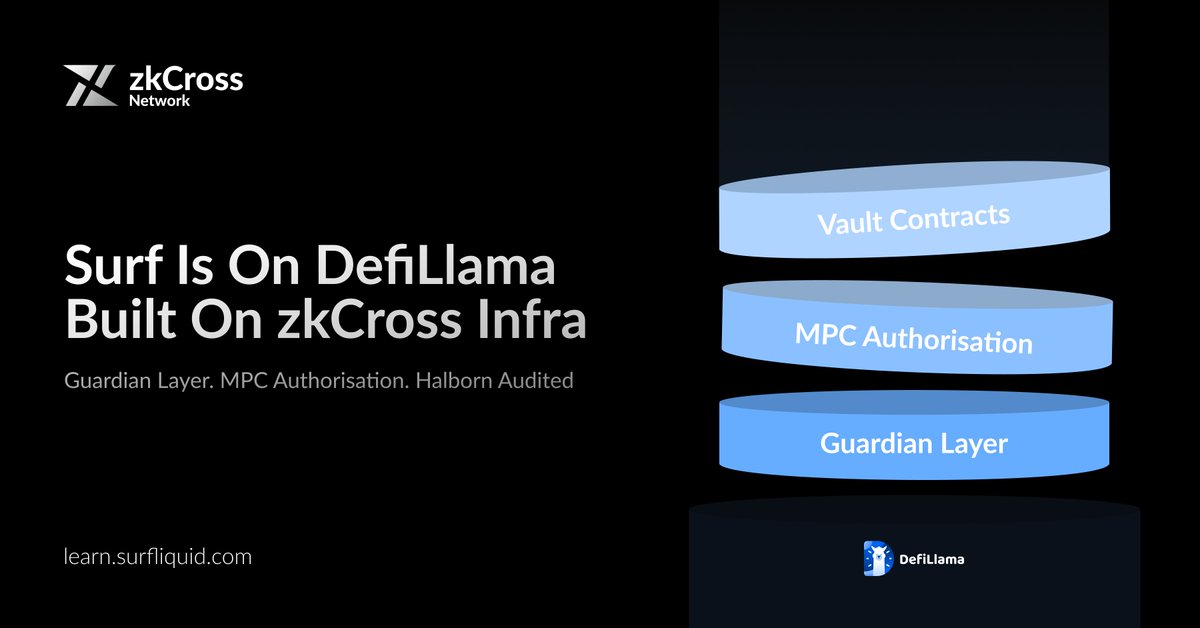
@Surf_Liquid just published their biggest ecosystem update. The entire execution stack powering it runs on zkCross Network.
Every vault deployment, every AI agent action, every Guardian Layer rule enforcement, every circuit breaker trigger, every cross-chain capital route. All of it executes through the zkCross infrastructure.
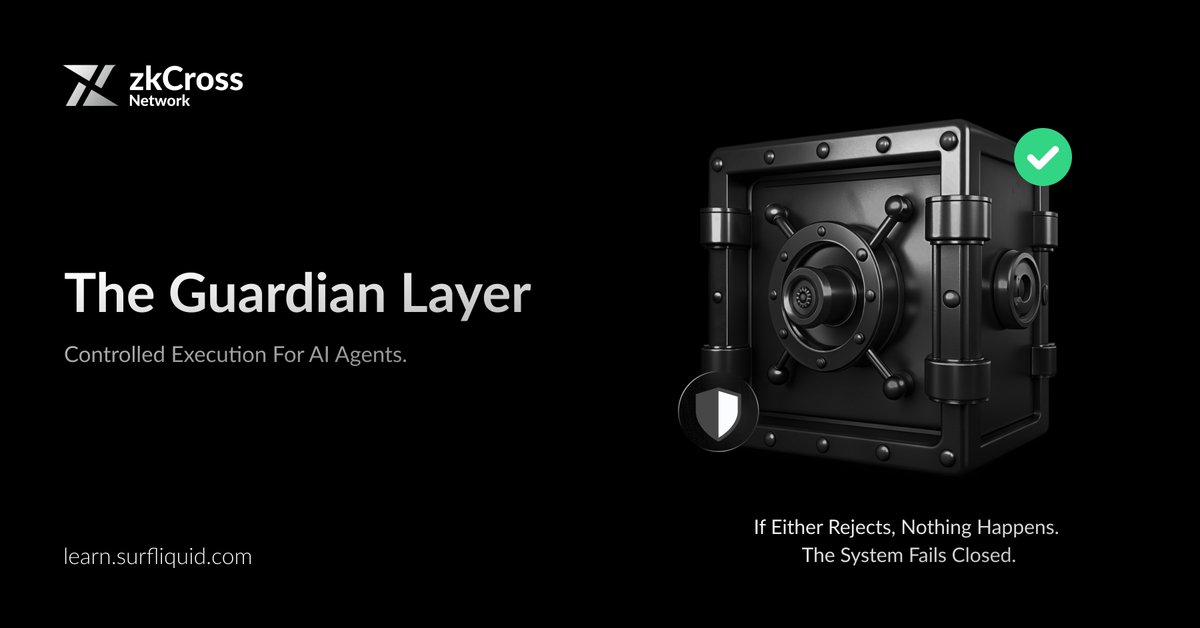
→ The Guardian Layer that held every vault safe during the recent wave of DeFi exploits is the zkCross architecture.
→ The MPC signing that secures every transaction is the zkCross infrastructure.
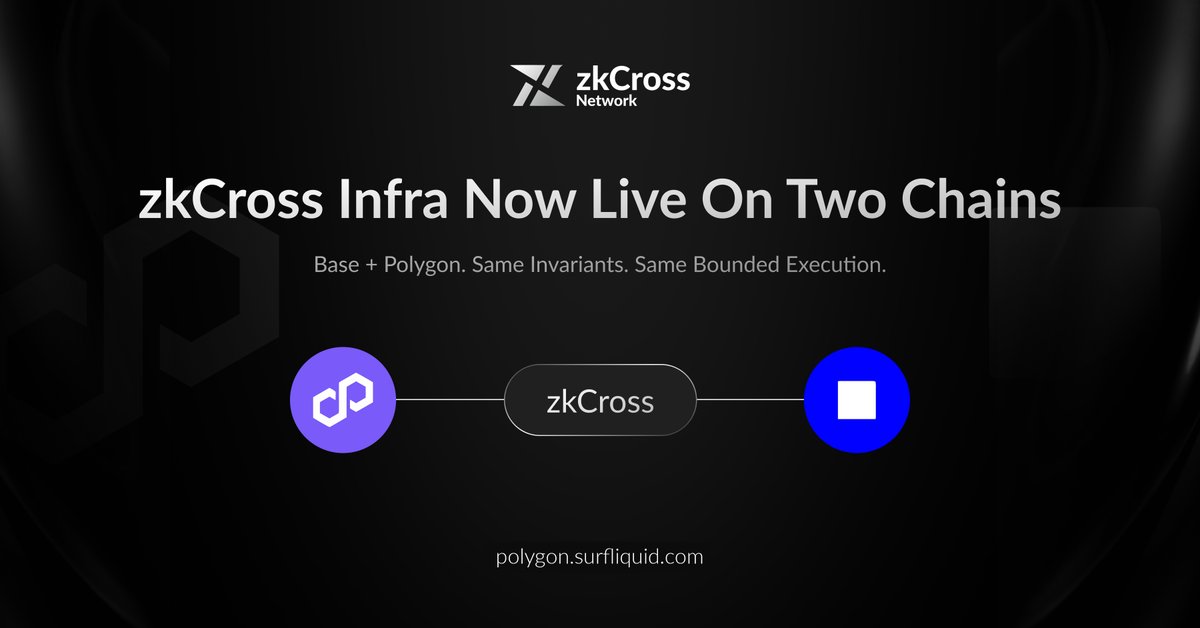
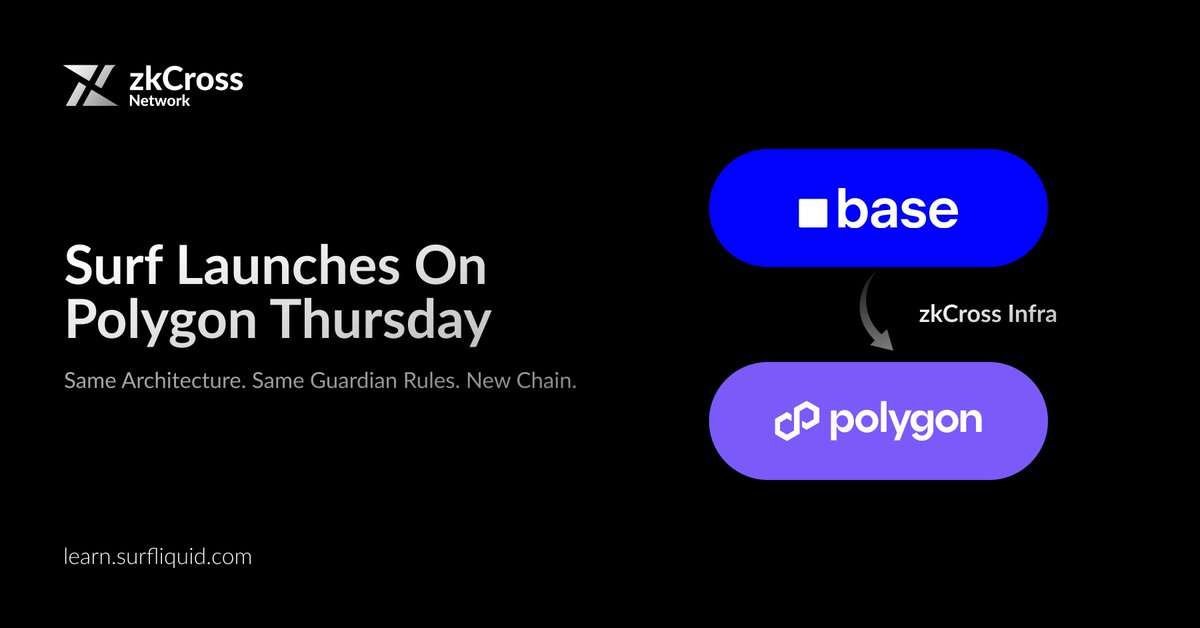
→ The cross-chain settlement rails that move capital across Base, Polygon, and the upcoming Ethereum mainnet deployment are zkCross rails.
→ The isolated vault contracts that keep each user's capital separate from everyone else's deploy via zkCross.
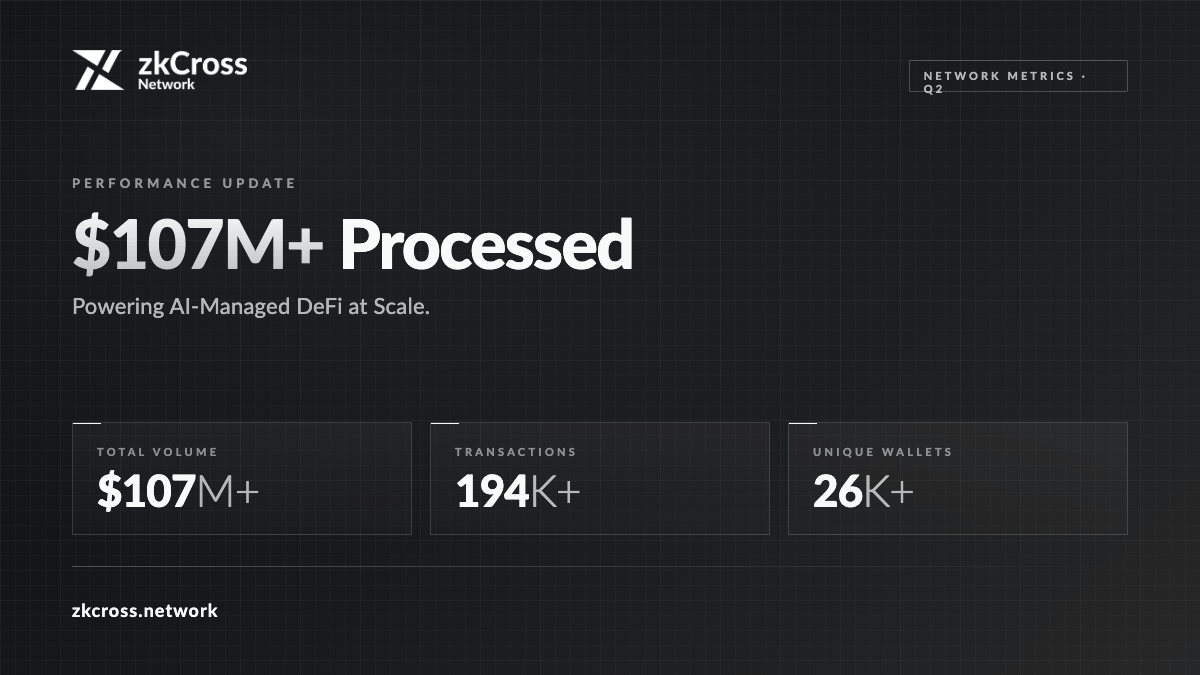
$107M in on-chain volume. 194K transactions processed.
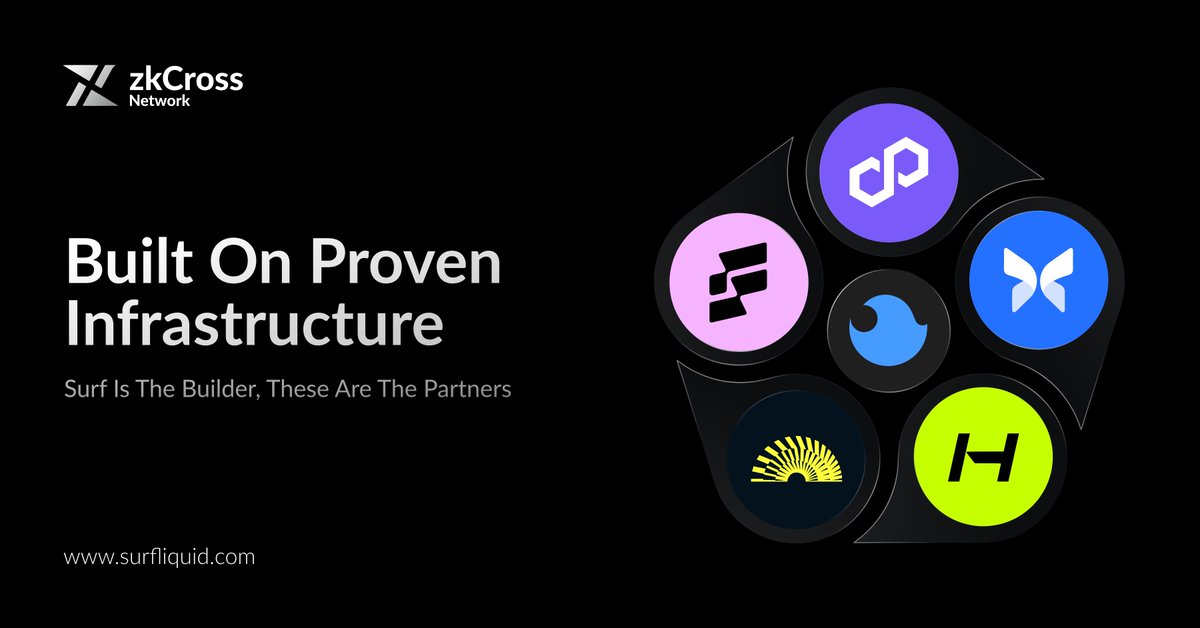
When Surf scales to @arbitrum, @avax, @BNBCHAIN, @solana, @StellarOrg and @HyperliquidX, the same zkCross rails handle every chain.
Surf is the product users see. zkCross is the infrastructure that makes it all work.

2
824

Jun 14
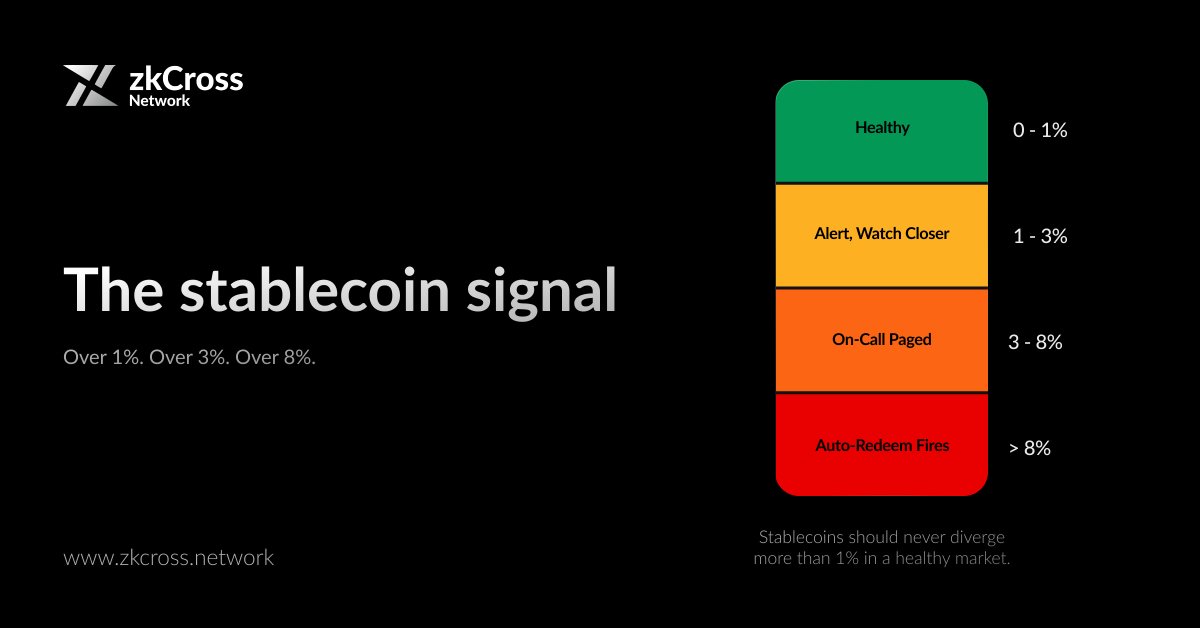
The stablecoin signal.
Divergence over 1% from peg: YELLOW.
Over 3%: ORANGE.
Over 8%: RED.
Stablecoins should never diverge more than 1% in a healthy market. When they do, the Guardian Layer is already polling at five-second intervals. By the time the divergence reaches red-trigger size, the emergency redeem has fired.
4
117
Jun 12
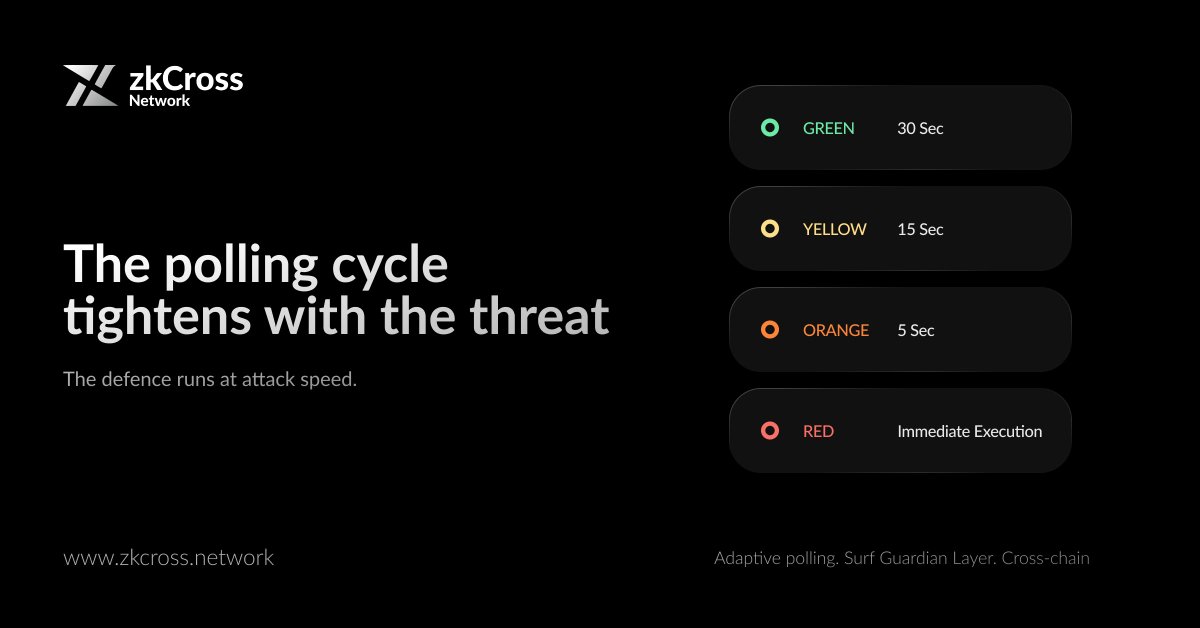
Adaptive polling.
Normal state: 30-second cycle.
YELLOW: 15-second cycle.
ORANGE: 5-second cycle plus WebSocket event stream.
RED: immediate execution.
The polling cycle tightens with the threat. The defence runs at attack speed. Halborn-audited zkCross infra underneath.
3
3
73
Jun 11
Both fail differently.
Centralised rails concentrate trust into one operator, bridges fragment it across many. The fix isn't picking which risk you prefer, it's removing the custodial hop entirely.
1
31
Jun 10
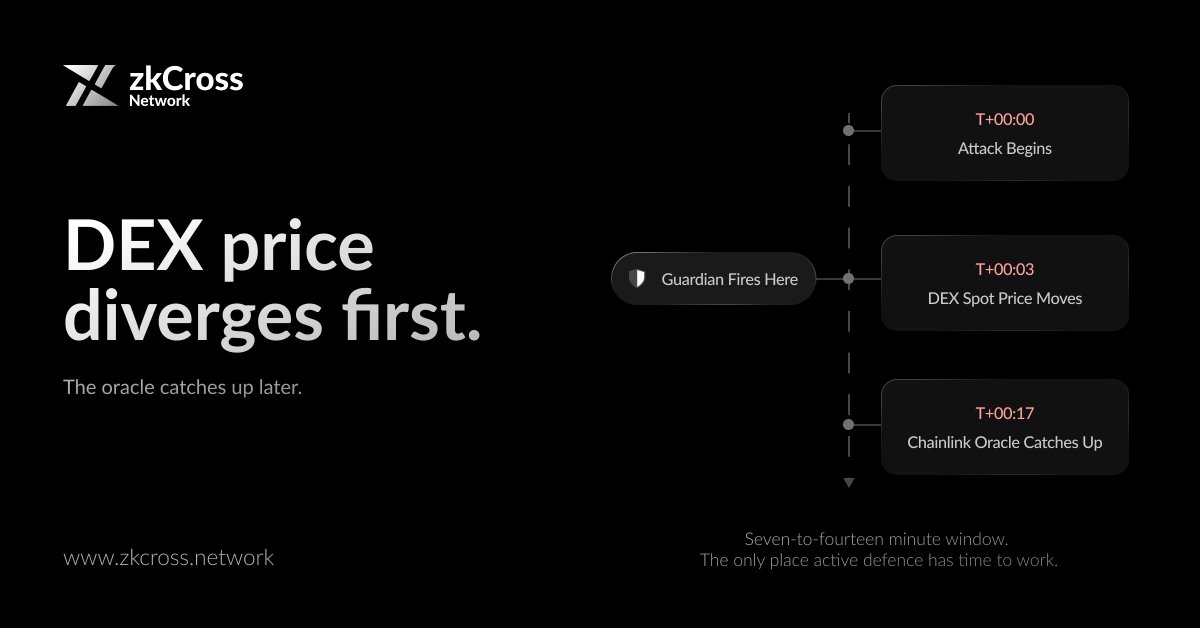
Every Morpho depeg shows the same early-warning signal.
DEX spot price diverges from Chainlink oracle at T 00:03. The oracle catches up at T 00:17.
That seven-to-fourteen minute window is the only place active defence has time to work. Guardian Layer fires on the divergence, not the correction.
191
Fair scepticism. Bridges and wrapped assets keep stacking trust assumptions, and that's where most failures originate.
Native cross-chain settlement without custodial hops is the only path that actually removes the attack surface.
May 28

I’ve never really been convinced by most “cross-chain” solutions.
At the end of the day, a lot of them still rely on bridges, wrapped assets, or giving up some level of control over your funds. And every few months there’s another bridge exploit reminding everyone how fragile that setup is.
That’s why @WireNetwork stood out to me.
Their Universal Transaction Layer (UTL) isn’t trying to move assets around from chain to chain. Assets stay where they already are, on their native chain, while Wire handles the coordination layer across networks.
No bridging.
No wrapping assets.
No extra custody risk.
It just makes more sense.
What’s also interesting is that they’re building this with AI agents in mind from the start. If autonomous agents are going to transact across different ecosystems, they’ll need infrastructure that can actually work across chains without all the usual friction.
Wire Network is definitely thinking ahead instead of patching old problems.
wire.network
150
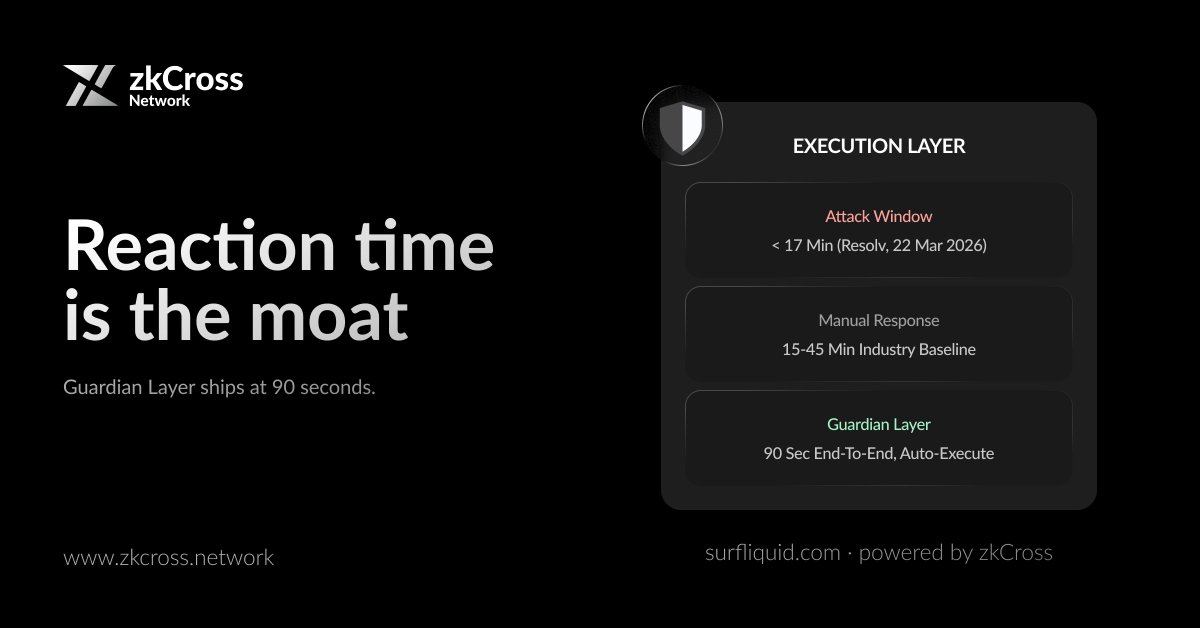
Cross-chain DeFi exploits complete in 1 to 17 minutes. Manual incident response is 15 to 45.
The defensive moat is reaction speed.
Auto-execution on bad-debt or depeg signals beats human paging every single time. Surf's Guardian Layer ships at 90 seconds end-to-end. Halborn-audited zkCross infra underneath.
Defence has to run at attack speed or it does not run.
3
219
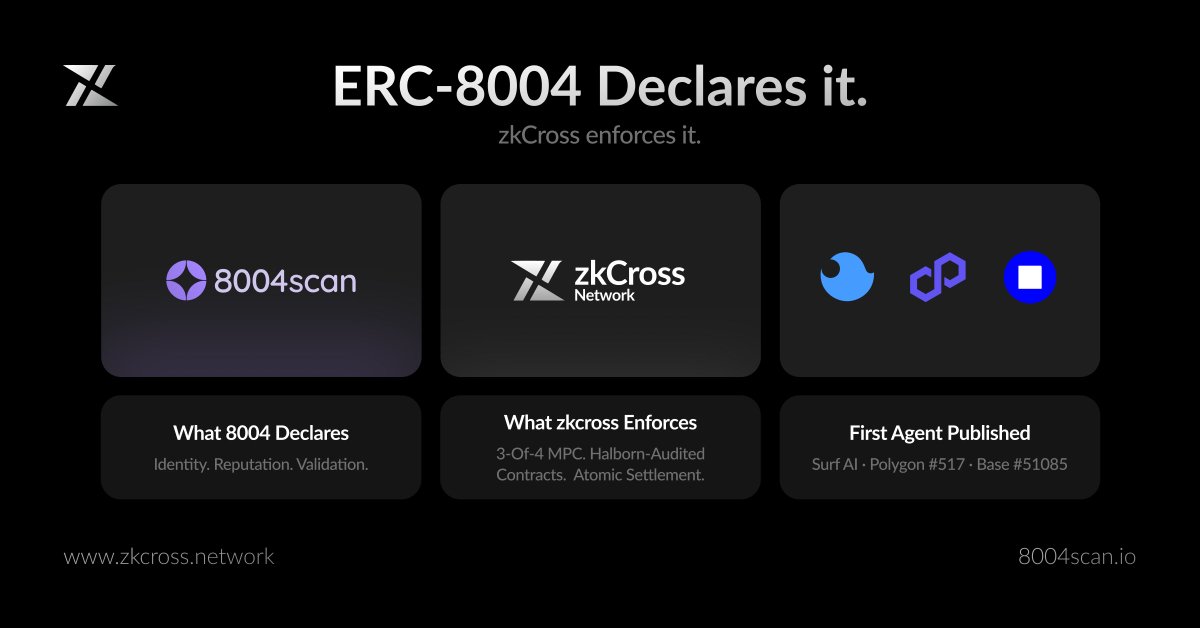
ERC-8004 is the discovery and reputation layer. It does not replace execution.
Surf is now on the registry. The execution underneath stays where it always was. Halborn-audited contracts. 3-of-4 MPC signing. Atomic settlement.
8004 declares what zkCross enforces.
Two layers, one agent, on-chain throughout.
@Surf_Liquid on @base: 8004scan.io/agents/base/5108…
1
4
467
May 31
The hardest part of zero-human ops isn't the memory or the marketplaces.
It's an execution layer that lets agents touch capital without leaking it.
We built zkCross as exactly that surface, with bounded permissions and deterministic rules that sign every move.
May 16

My early reflections from the operating reality of the first Zero-Human Company comes a clear message: autonomous AI agents are simultaneously ending old business models and birthing an entirely new economic order.
Persistent memory, agent marketplaces, always-on execution, and human judgment as the ultimate premium are reshaping every industry.
These are just some of my early reflections that show the transformation is accelerating faster than anyone predicted.

298
May 30
The contagion loop is the architecture risk hiding in plain sight. Curator decisions become systemic when shared liquidity rails connect them all.
At zkCross, we run scoped MPC signing tied to an on-chain policy. Every call is authorised against the contract before any signer touches a key. The signer cannot drift past what the policy allows.
Across $107M of routed volume, the security model rests on the policy layer, not on the curator's reputation.

1
1
362
May 29
Agents will be the biggest consumers of DeFi infra, and the execution layer they need is the one that's deterministic at the contract level.
Proposal from the agent. Decision from the contract.
That gap is where the next year of infra work sits.
Mar 30

The biggest consumers of DeFi infrastructure in the next few years won't be people. They'll be AI agents.
Here's what I mean:
Think about what a DeFi power user looks like today: someone actively swapping, bridging, chasing yield across chains.
Now imagine software doing all of that, 24/7, across every chain simultaneously.
That's agentic commerce. And it's the direction things are heading.
1️⃣ So what does this actually look like in practice?
Two interaction models are forming:
1. Agent-to-Site: You set your preferences once. The AI researches, compares options, and executes the transaction. You're not involved beyond the initial setup.
2. Agent-to-Agent: No human on either side. One AI representing the buyer, another representing the seller. They negotiate and settle in milliseconds.
The web2 version is already live: in-chat purchases, AI shopping assistants, commerce protocols backed by major retailers.
But all of it still runs on traditional rails. Cards, banks, and human identity at every step.
2️⃣ Why does this lead to crypto?
For agents to operate at real scale, they need to:
→ Custody their own assets
→ Settle instantly across borders
→ Run 24/7 with no human sign-off
→ Transact with other agents autonomously
Traditional finance doesn't offer any of this to a machine.
Blockchains do: permissionless wallets, programmable money, instant finality. The only infrastructure where software is a first-class economic actor.
3️⃣ The bottleneck
Blockchains give agents the right financial layer, but the ecosystem is fragmented:
→ 200 chains
→ Hundreds of DEXs, bridges, liquidity sources
→ Each with different APIs and failure modes
An agent working across Ethereum, Solana, Arbitrum, and Base needs separate integrations for each. That overhead has nothing to do with the agent's actual goal. It's pure plumbing.
4️⃣ LI.FI approach
@lifiprotocol has been building the routing and execution layer for onchain value movement for years. One integration point replaces dozens of individual bridge, DEX, and protocol connections.
What they recently shipped for AI agents:
→ MCP Server: 15 structured tools any LLM-powered agent can call directly. Compatible with Claude, Cursor, Windsurf, VS Code Copilot.
→ Agent skills: cross-chain execution packaged as standardized skills across major agent directories. Add swaps, bridging, and DeFi workflows to any agent in minutes
→ AI-first docs: machine-readable llms.txt, full OpenAPI spec, decision tables, five-call recipes, error playbooks, runnable code samples with retry logic.
Agent = decision-maker.
LI.FI = execution layer.
No team should spend months wiring bridge integrations when they can plug into infrastructure already powering the biggest names in crypto and focus on building what makes their agent actually smart.
1
1
332
May 28
Same instinct we built zkCross around, two layers down: agent hooks at the workflow level, on-chain rules at the execution layer. Three-of-four MPC signing approves every action touching user capital.
Contracts decide what is valid before anything moves.

307
May 27
The contract held. The hot wallet didn't.
The exploit pattern is operational, not architectural.
zkCross writes, signing into the contract. No single operational key can move funds. Every cross-chain move passes through the 3-of-4 MPC layer and Halborn-audited contracts.
A wallet compromise that cannot become a vault drain.
The architecture catches what the operational layer misses.
May 22

284
May 26
Every bridge exploit ends with the same lesson. The signing layer is where the architecture choice quietly decides survival.
We built zkCross for the case where every cross-chain move passes through 3-of-4 MPC signing and Halborn-audited contracts. $107M in volume with zero custody incidents to date.

JUST IN: @Krakenfx is replacing @LayerZero_Core with @chainlink to bridge assets across blockchains, joining $3B in TVL that has migrated since the $292M @KelpDAO exploit.


1
426
May 24
Almost $100M across three protocols in four days. The pattern is consistent.
Bridges and minting paths that assume collapse under a single attacker call. Cross-chain work is signature scoping, not just contract audits.
zkCross is built so that every move sits within a Guardian rule, and every signature within an MPC quorum. The infrastructure has held.
May 19

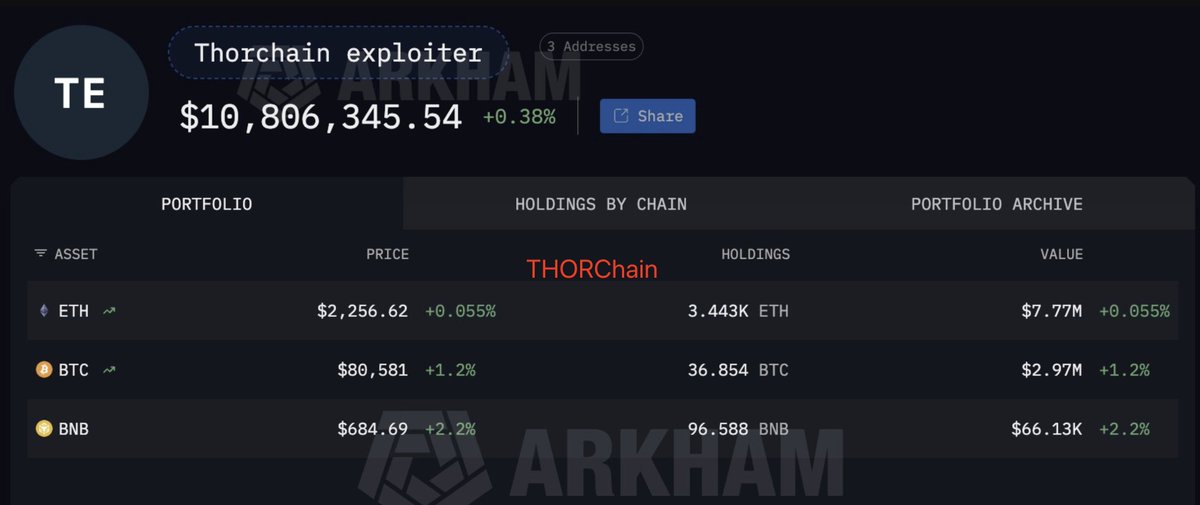
Three major hacks in just 4 days!
On May 15, #THORChain was exploited, with stolen funds exceeding $10M.
On May 18, the Verus-Ethereum Bridge (@VerusCoin) was hacked, with ~$11.5M stolen.
Today, @EchoProtocol_ was exploited, the hacker minted 1,000 $eBTC ($76.64M) and has already used it to steal 385 $ETH($821K).
Stay safe.
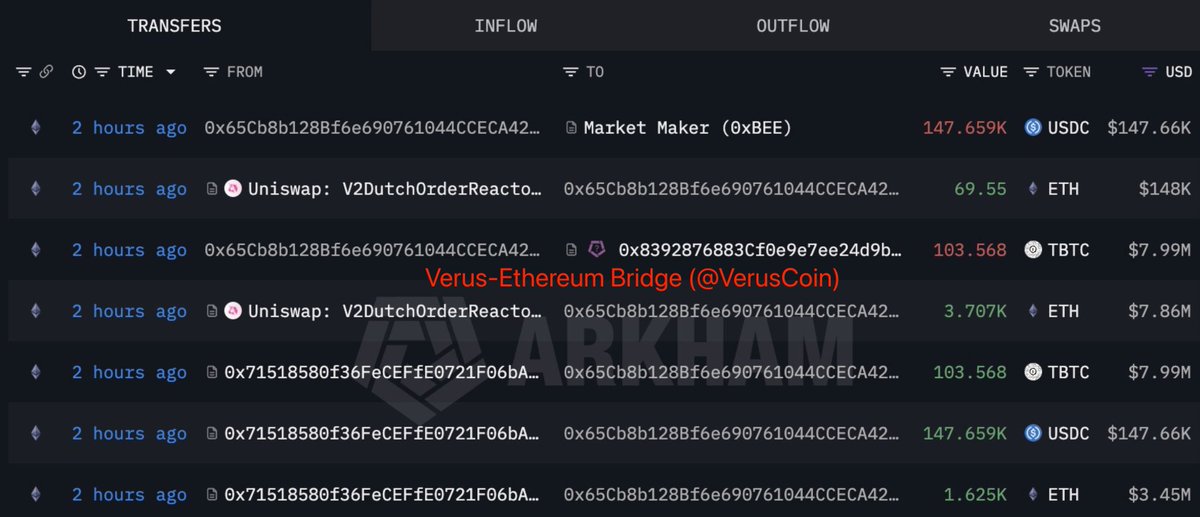
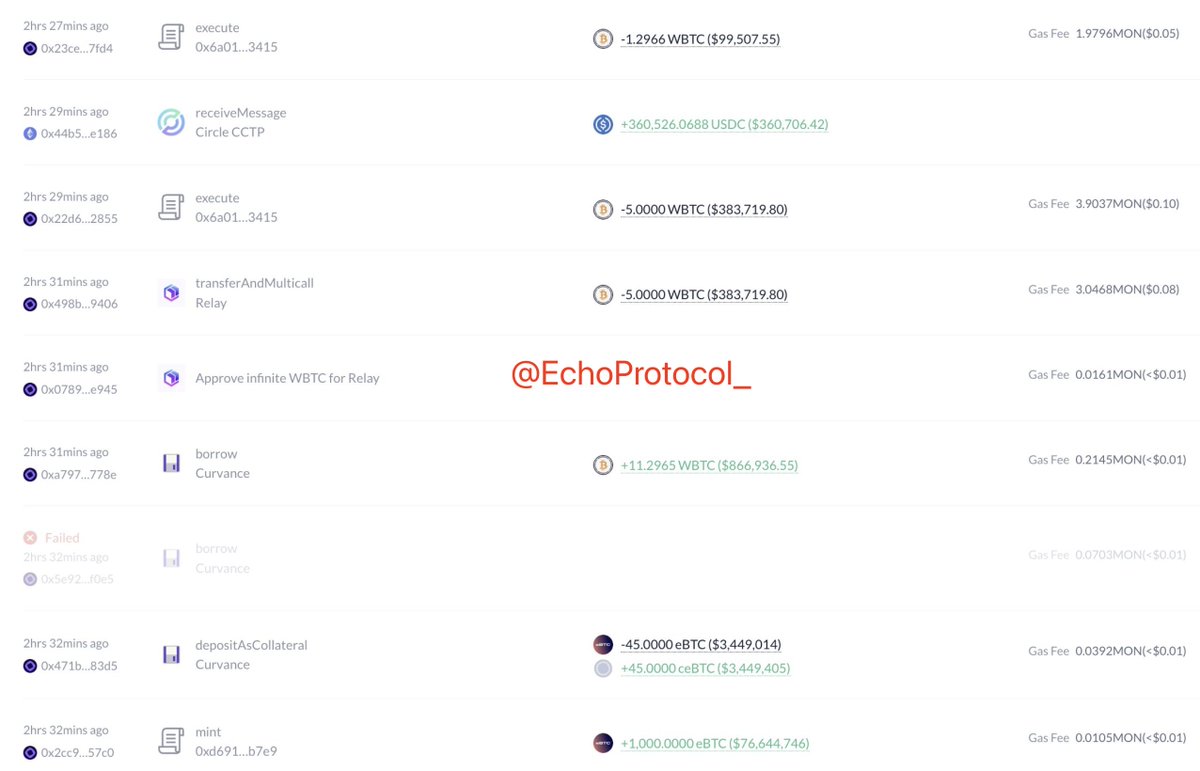
1
1
430
May 15
This is what gets built on zkCross infrastructure.
Per-user proxy wallets via CREATE2.
Scoped MPC signing.
Atomic on-chain settlement.
34 versions shipped
The base architecture never changed. The vault contracts stayed boring. The trading layer did the work.
Full breakdown from our founder below. 👇
May 15

We built @Surf_Liquid AI that trades @Polymarket sports markets while you sleep.
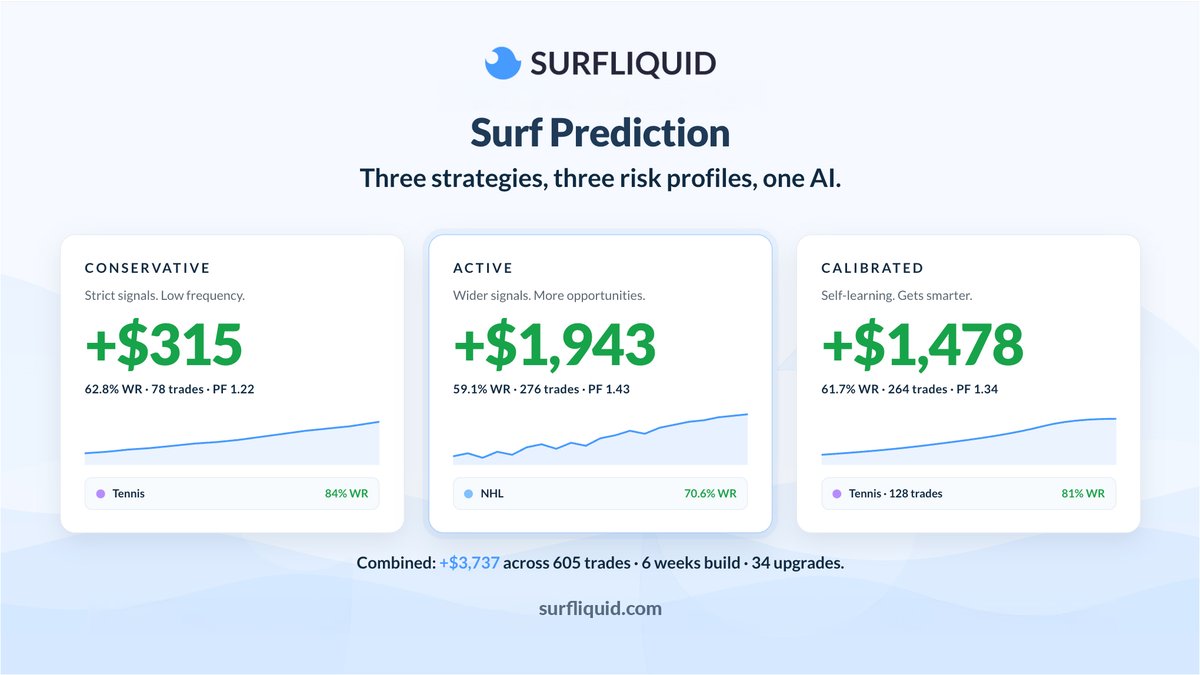
Six weeks. 34 upgrades. 605 paper trades. All three strategies profitable. $3,737 in returns.
Here's what it actually does:
→ Listens to live score data from every match on Polymarket simultaneously
→ Runs sport-specific probability models on every single score change
→ Finds the moments when the market hasn't repriced fast enough
→ Executes before the odds catch up
→ Tennis modelled point by point. Soccer is modelled by goal rate. Hockey and basketball are built differently. → One generic model doesn't survive contact with real sports. So we built one engine per sport.
Three strategies. One AI. Three risk levels:
1. Conservative: strictest signals, lowest drawdown. Your money is treated like savings.
2. Active: wider signal range, more trades, more upside, more variance.
3. Calibrated: the interesting one. Same signals as Active, but every probability runs through a self-correction layer first. If the model says 80% but history says 73%, it trades the 73. Gets smarter every day.
Here's the part I want to talk about.
In late April, we caught ourselves inflating our P&L. The bot was assuming fills at the quoted price. Real markets don't work that way. You walk the order book. Every batch fills worse than the last.
We shipped an honest fill simulation. Our paper P&L dropped meaningfully the same day.
That drop is the entire point. If your simulated fills are better than your real fills will ever be, you're flattering yourself.
Then last Tuesday we found a bug. A safety mechanism in the hedging path had been failing silently for weeks. Hundreds of failures per day. None flagged. None surfaced.
The system was profitable anyway.
That sentence bothers me more than the bug itself. Good performance hiding a broken safety system is exactly what kills strategies three months from now. We fixed it. Wired up a live monitor that fires the moment the hedge's success rate drops below the threshold.
This is Surf Prediction Vaults. You deposit stables. Pick a risk level. The AI does the rest. You never touch Polymarket.
Sports is live. The weather is next. Crypto follows.
Building this in the open. The good weeks and the bad ones. The wins and the bugs were caught silently for a month.
If you trade prediction markets or build in this space, I want to hear the strongest argument against what we're doing.
Full write-up with the architecture, the Guardian Layer, the numbers and the path to real capital:
x.com/shivamtas/status/20550…
1
2
397
Reasoning is half of it. The agent stack also needs an execution layer that prevents reasoning from leaking past policy.
Computing and reasoning both improve faster than the contracts they act on. The constraint that scales agent autonomy in production is the policy gate at execution time, the on-chain rules that decide which moves the model can even propose to a signer.
Strong reasoning, plus a deterministic gate, is the shape that ends up being trustworthy for value-bearing actions.

1
1
3
368
The identity layer is the right starting point and the authorisation layer is where the next problem lives.
An agent identity that proves who is acting still leaves the question of what the agent is allowed to do, under what conditions, and with whose ratification.
A signer with policy bounds and an off-the-shelf rule contract closes that loop. The two together are what make agent participation production-grade.

ERC-8004 gives AI agents a portable onchain identity, the critical starting point for agent-to-agent trust. But there's a gap.
When an agent borrows funds, claims a yield boost, or votes in governance, the protocol has no way to know if a real human authorized it, or if it's a bot farming rewards across hundreds of wallets.
ERC-8004 gives agents an identity. It doesn't verify the human behind them.
That's where Self fits. Through ZK proofs, Self anchors an agent's onchain registration to a verified human, without ever exposing their personal data.
The ZK proofs map directly into ERC-8004's Validation Registry hooks. Protocols can check that an agent's operator is OFAC-compliant, or above a required age, all from existing Self infrastructure.
This isn't theoretical.
→ @aave integrated Self's ZK proof-of-humanity to offer verified humans boosted yield on USDT and WETH, a direct financial incentive for human verification in a DeFi environment increasingly populated by autonomous actors.
→ @googlecloud integrated Self into its Web3 Testnet Faucets to ensure real humans get 10x more @Celo Sepolia testnet tokens, verified through ZK proof-of-humanity, no personal data required.
Both cases are the exact problem ERC-8004 surfaces, already live and in production. The agentic web needs both layers. The agent identity standard and the verified human behind it.
The full breakdown of how they work together is in the blog 👇

1
3
488
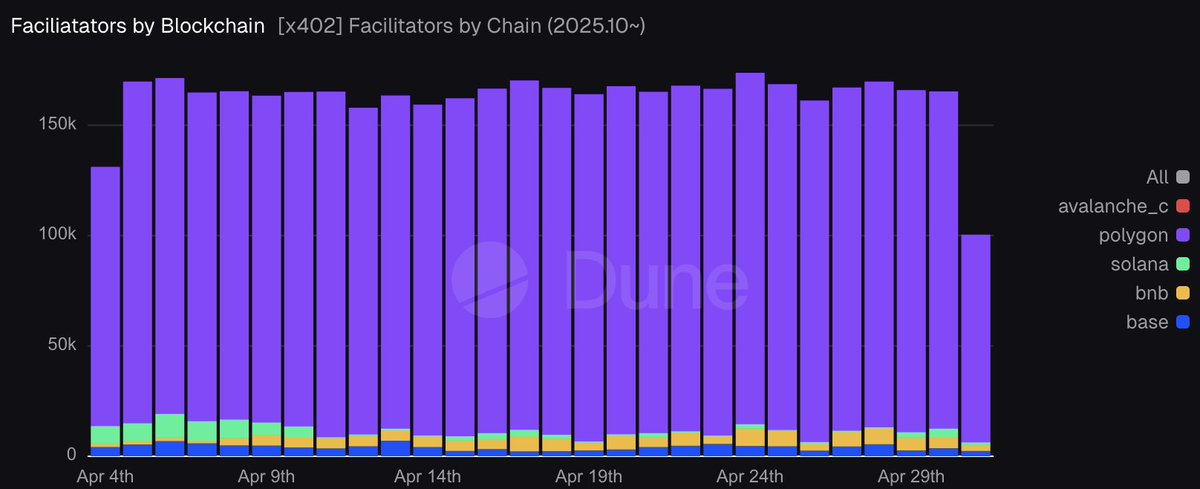
Autonomous payments are settled on @0xPolygon. Cross-chain settlement is settled on zkCross.
Every vault deployment, AI agent action and Guardian rule enforcement powering Surf runs on the same execution stack, with deterministic policy contracts and multi-party authorisation behind every move.
Production-grade abstraction, audited by Halborn, working under live consumer products on Polygon.
The more autonomous activity Polygon settles, the more proven the abstraction layer underneath becomes.

3
451
The architecture lesson lands hard.
A single EOA holding an admin role is a single point of failure waiting to be social-engineered. zkCross runs the opposite shape. Three-of-four MPC signing, on-chain authorisation per call and @HalbornSecurity audited contracts on the infra side. The signer is bound to the transaction, not to a wallet that can be drained.
A settlement layer where signing is split across nodes by default.
The more value sits behind permissioned contracts, the more the underlying signing model has to live across nodes from the start.

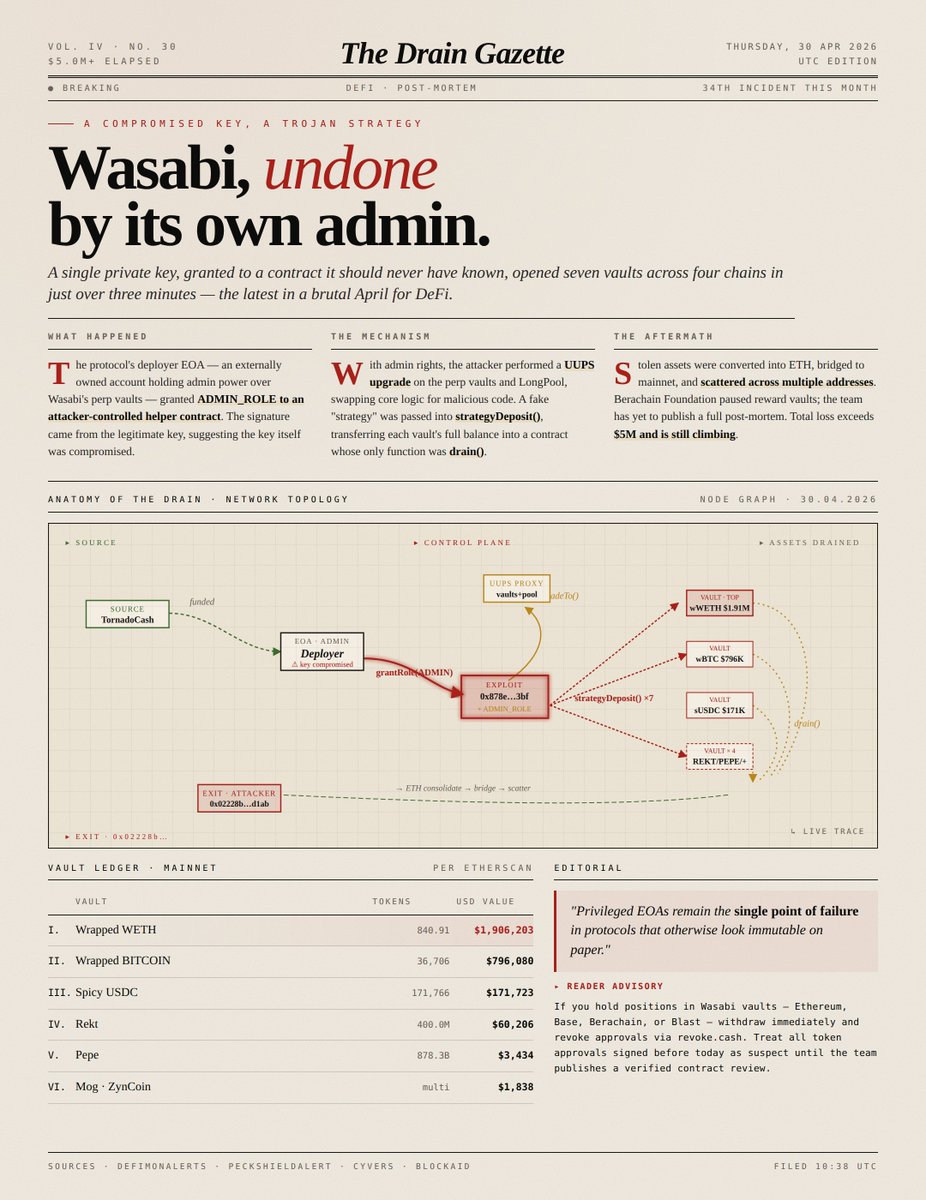
wow, i want to re-iterate here, the @wasabi_protocol exploit isn't really a story about a stolen key. It's a story about what happens when one EOA controls a batch of upgradeable vaults with no multisig, no timelock, and no DAO governance as @evilcos and @zachxbt both pointed out within an hour of the drain (it should have never happen)
The mechanics: deployer EOA grants ADMIN_ROLE to an attacker contract → UUPS upgrade replaces the perp vaults & LongPool with malicious logic → strategyDeposit() called on 7 vaults → drain(). 3 minutes, $5M across Ethereum, Base, Berachain & Blast. Largest single hit: 840.9 WETH (~$1.9M) from wWETH.
Wasabi has acknowledged the issue and asked users not to interact with contracts. @blockaid_ flagged that all Wasabi/Spicy LP-share tokens minted by these vaults should be treated as compromised the underlying assets are gone.
If you have funds anywhere in the protocol: withdraw and revoke approvals via @RoscoKalis's @RevokeCash. Big shoutout to him, the tool everyone reaches for on days like this.
34th major incident this month. April 2026: 30 exploits, ~$630M drained. The recurring pattern keeps writing itself: privileged EOAs over upgradeable contracts, no governance friction, one phished signature away from zero.
1
2
438
Stani putting personal capital into the recovery is a strong builder signal for the lending side. Strong primitives in lending need strong primitives in cross-chain settlement and policy enforcement underneath them.
zkCross runs the settlement and policy layer via 5-of-3 MPC over deterministic policy contracts, which are audited by Halborn. Strong primitives stack.
Apr 23

Aave is my life's work and we're working nonstop to find the best possible outcome for users.
I’m personally contributing 5000 ETH to DeFi United as we continue working together with partners on formalizing more commitments. I’m working to see this resolved and market conditions normalized as soon as possible.
DeFi United.
1
2
284