
Joined October 2022
- Tweets 94
- Following 25
- Followers 28
- Likes 149
13 Photos and videos








May 9
We need to see more apps like this popping up across all industries. 👏 Also open source!
#buildinpublic

Tired of manually posting everywhere when you go live? 😩
Learn how to completely automate your @Twitch and @KickStreaming announcements PLUS auto-create @discord Scheduled Events using Senchabot! Watch the live test 🎥👇
🌿Get Senchabot
#TwitchStreamer #KickStreaming #DiscordServer
4
44
May 1
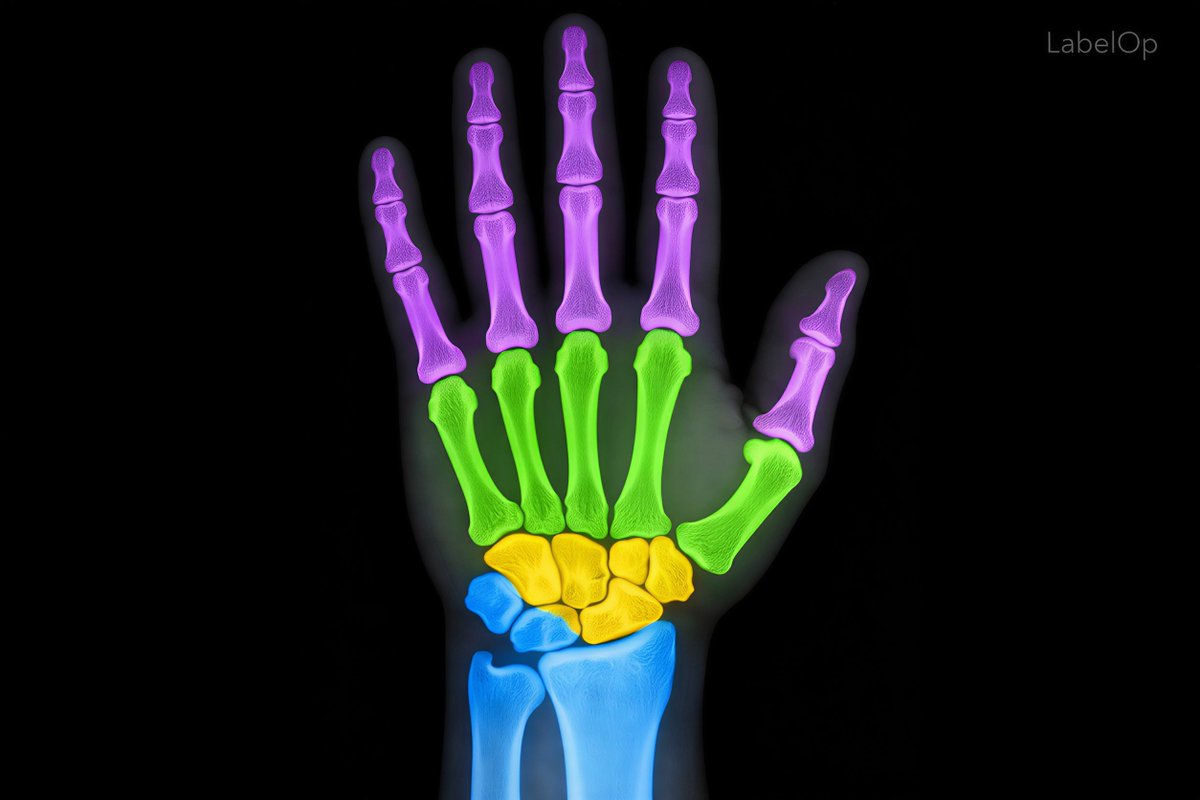
New LabelOp tool: Dataset Health Report
We just launched a free Dataset Health Report for computer vision teams.
Sometimes the question is not “is this dataset perfect?”
Does this annotation file already look risky before we spend time on training?
This tool gives a fast file-level QA read on one annotation export. Upload a COCO JSON, CVAT XML, JSONL, CSV, or TSV file, let the tool auto-detect the format, and get a quick report on the signals that actually matter.
That includes class balance, sparse labels, crowded images, parse skips, duplicate-like boxes, out-of-bounds geometry when dimensions are available, and a few other structural warnings that are easy to miss until much later.
It is especially useful right after export, and even more useful right after merging scattered files into one output.
The goal is not to replace project analytics or full review workflows. The goal is to catch obvious dataset risks earlier, while the file is still easy to inspect and fix.
If you want a quick sanity check before training, this is for you.
1
5
44
May 1
LabelOp: Annotation Merger
We just launched a free Annotation Merger for computer vision teams.
A lot of dataset workflows do not break because labeling failed. They break because the handoff is messy. One batch is in COCO, another is CVAT XML, another is JSONL or CSV, and the next step still expects one clean export.
That is exactly what this tool is for.
Upload your annotation files, let the tool auto-detect supported inputs, choose the output format you want, and get one cleaner merged export for QA, validation, import, or training.
Right now the mixed structured path supports COCO, CVAT XML, JSONL, CSV, and TSV in one run. YOLO, Pascal VOC XML, and LabelMe are still supported too, but those should stay in the same family per run.
The goal is simple: less file cleanup, fewer handoff mistakes, and a faster path from scattered annotations to something your next parser can actually use.
If you work with messy annotation exports, this should save you time.
1
5
49
Apr 29
News | The Dutch government just launched a soft launch of its open-source code platform code.overheid.nl. This platform aims to enable government organizations to collaboratively develop, share, and publish open-source software independently.
The platform is fully self-hosted, supporting digital sovereignty, and is currently using Forgejo, an open-source alternative to GitHub and GitLab. For now, it's a pilot, and not all government organizations can use it yet.
Here are a few key points:
* The platform is initiated by the Open Source Program Office at the Ministry of the Interior and Kingdom Relations.
* Developers are invited to contribute to the platform.
* The goal is to grow it into a shared Git platform for government bodies.
#opensourcesoftware
nldigitalgovernment.nl/news/…
1
4
65
Apr 24
Product update:
- Annotation workflows got a major upgrade: bulk delete and bulk relabel now work across selected images.
- Annotation import/export is much broader now: COCO, Pascal VOC, YOLO, LabelMe, CSV, TSV, CVAT XML, and JSONL.
- Version history is more useful: create snapshots, export snapshots, restore old versions, and delete snapshots directly from the UI.
- Restores are safer now: confirmation-based rollback flow with an automatic rollback snapshot created after restore.
- Team and project management UI was cleaned up: members, invitations, and version controls are more structured and easier to manage.
- GPU discovery got a solid upgrade: advanced filters, better grouped results, and a dedicated offer details modal.
- Training monitoring is more operational now: restart, stop, and kill-instance actions, plus better status polling and log handling.
- Training outputs are now easier to access: checkpoints and result files can be listed and downloaded from the dashboard.
- Infra work shipped too: client refactor, improved rate limiting, and Prisma index tuning around real query patterns.
- This push also added coverage with new tests around annotation clients, versioning, rate limiting, and GPU filtering.
6
66
Apr 23
News | OpenAI just released GPT-5.5, a major upgrade to their language model. This new model is not only more intelligent but also more efficient, requiring fewer tokens to complete tasks. GPT-5.5 excels at coding, research, and knowledge work, making it a powerful tool for developers, researchers, and businesses.
Here are some key takeaways:
* GPT-5.5 achieves state-of-the-art performance on several benchmarks, including Terminal-Bench 2.0 and GDPval.
* The model is more efficient, using fewer tokens to complete tasks, and matches GPT-5.4's latency in real-world serving.
* GPT-5.5 is available to Plus, Pro, Business, and Enterprise users in ChatGPT and Codex, with GPT-5.5 Pro rolling out to Pro, Business, and Enterprise users in ChatGPT.
* The model has significant implications for cybersecurity, with OpenAI deploying stricter classifiers for potential cyber risk and expanding access to accelerate cyber defense.

Introducing GPT-5.5
A new class of intelligence for real work and powering agents, built to understand complex goals, use tools, check its work, and carry more tasks through to completion. It marks a new way of getting computer work done.
Now available in ChatGPT and Codex.
4
87
LabelOp retweeted

Apr 19
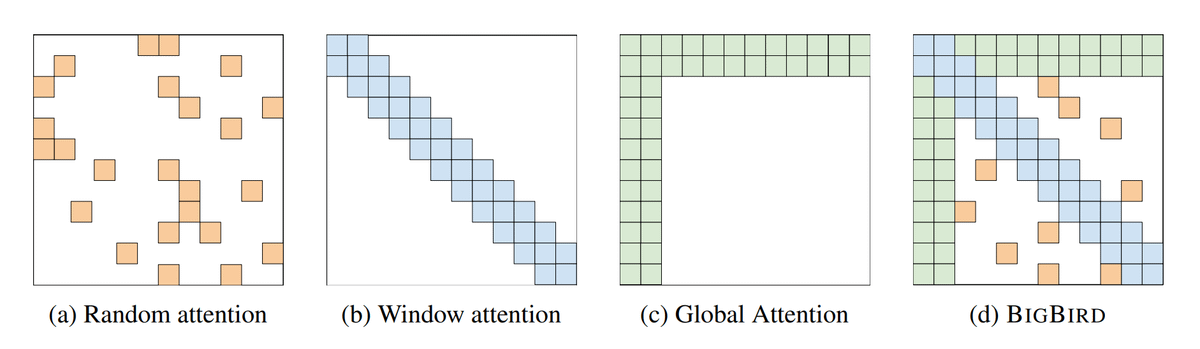
13 Attention mechanisms you should know
▪️ Self-attention
▪️ Cross-attention
▪️ Causal attention
▪️ Linear Attention
▪️ Softmax attention
▪️ Sliding Window (local attention)
▪️ Global attention
▪️ FlashAttention
▪️ Multi-Head Attention (MHA)
▪️ Multi-Query Attention (MQA)
▪️ Grouped-Query Attention (GQA)
▪️ Multi-Head Latent Attention (MLA)
▪️ Interleaved Head Attention (IHA)
Slim Attention, KArAt, XAttention, Mixture-of-Depths Attention (MoDA)
Save the list and explore more about them here: turingpost.com/p/attention-t…
12
293
1,950
139,817
Apr 19
Check out this demo that generates Excalidraw diagrams from text prompts in the browser.
It uses the TurboQuant algorithm to compress the KV cache, allowing for longer conversations to fit in GPU memory.
The demo requires Desktop Chrome 134 and around 3 GB RAM and it doesn't support Safari/iOS yet due to the need for WebGPU subgroups.
It shows a promising approach to generating visual diagrams from text prompts, which can be useful for a wide range of applications.
Overall, this demo is an interesting example of how AI can be used to generate visual content in the browser 📊
#Excalidraw #AI
teamchong.github.io/turboqua…
4
71

Never stop while you can. Keep developing. We especially need maintained products, particularly for more accessible products. Not abandoned projects that are finished in a weekend or abandoned halfway through a fork, lacking original progress!
Share it while you're developing it! Never stop and build in public. #BuildInPublic

1
3
190
Apr 18
We are pushing hard!
- Refined the annotation workspace with a cleaner, more focused UI
- Redesigned label creation so color picking feels faster, more compact, and less intrusive
- Improved counters, badges, and side panels to make everything easier to scan
- Simplified analytics and removed noisy copy across key screens
- Unified the product with a darker, more neutral visual language for a more polished feel
6
41
Apr 17
What's new in LabelOp!
- We simplified our plans down to just two: Starter and Professional.
- We removed the confusing beta / BYOK / enterprise tier sprawl from the product.
- Enterprise is now handled as a contact flow instead of pretending it is a self-serve plan.
- Landing page and pricing page are now aligned with the actual product limits.
- We removed user managed keys.
- We separated dataset image uploads from annotation imports.
- Image uploads are now capped at 2 MB per image.
- Annotation import files still have their own limits, separate from image upload limits.
- Starter is now more clearly scoped: 5000 images daily.
- Professional keeps higher operational limits for real production teams.
- Team/project limits are cleaner now and quota checks are easier for us to maintain going forward.
#indiehackers #buildinpublic
5
49
Apr 15
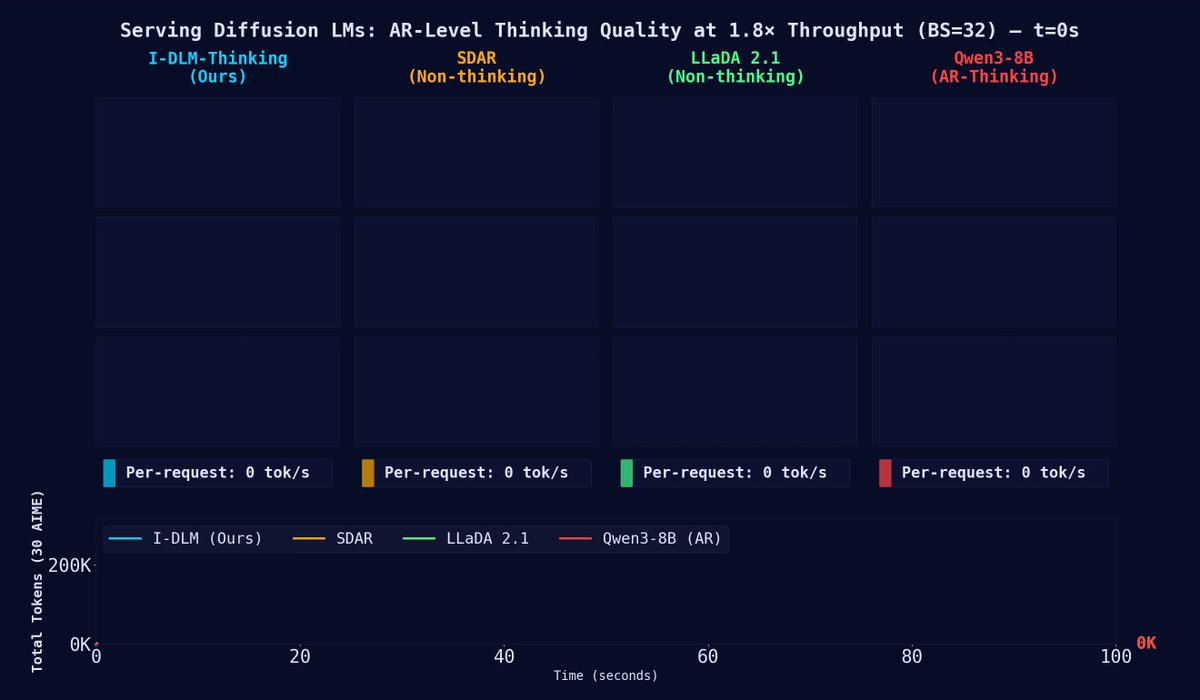
News | Introspective Diffusion Language Models (I-DLM) achieving same-scale quality as autoregressive (AR) models while offering 2.9-4.1x higher throughput.
I-DLM addresses this by introducing introspective strided decoding (ISD) enabling the model to verify previously generated tokens while advancing new ones in the same forward pass.
This approach leads to significant improvements, including bit-for-bit lossless acceleration with gated LoRA. Notably, I-DLM-8B outperforms LLaDA-2.1-mini (16B) by 26 on AIME-24 and 15 on LiveCodeBench-v6, with half the parameters.
I-DLM matters for builders because it provides a more efficient and scalable alternative to traditional AR models allowing for faster and more accurate language generation. #AIResearch
introspective-diffusion.gith…
4
52
Apr 12
What we did with the last update?
- Dashboard shell & sidebar: Navigation and layout tweaks so core sections feel easier to scan and switch between.
- Project overview & team: Project home and team views updated for clearer structure and quicker orientation.
- Annotation workspace: Canvas, toolbar, side panel, and image gallery refined so labeling feels smoother day-to-day.
- Batch & import flows: Bulk operations and related dialogs adjusted to reduce friction when working on many images.
- Notifications hub: Assignments and invitations screens cleaned up so open items are easier to track.
- GPU / trainings: Training list and live training monitor improved for clearer status at a glance.
- Marketing / landing: Hero, story sections, feature tabs, stats, FAQ, footer, and top nav refreshed for a clearer first impression.
- App-wide polish: Theme and spacing pass for more consistent light/dark appearance; link previews improved for sharing.
4
46
Apr 11
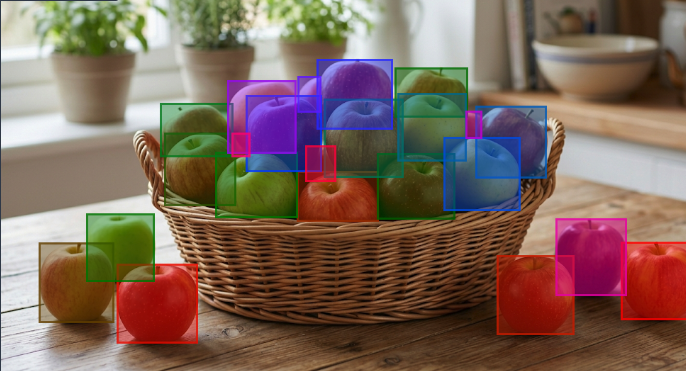
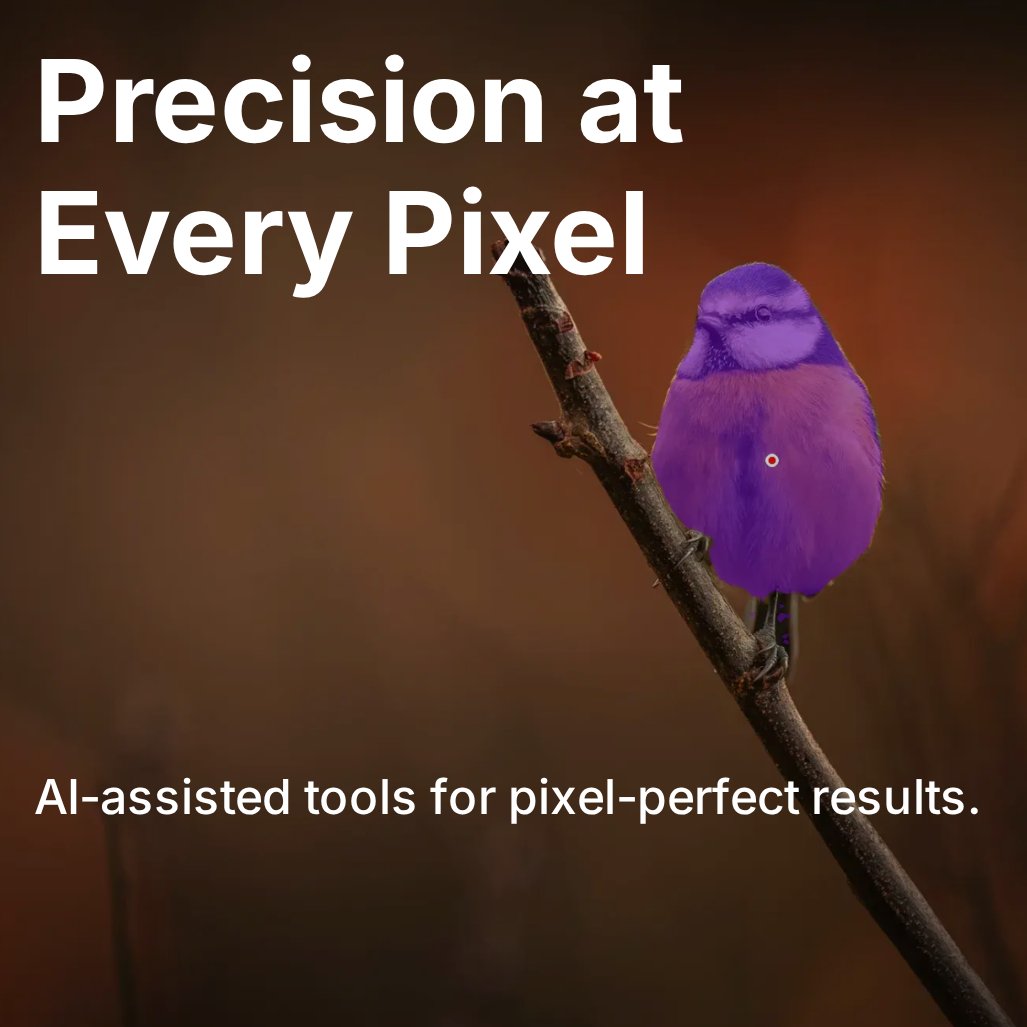
Labelop is a modern data annotation platform designed to streamline and enhance the process of creating high-quality training data for artificial intelligence and machine learning models, particularly in computer vision. We offer AI-assisted tools and collaborative workflows to facilitate efficient image annotation.
4
63
Apr 11
News | Cirrus Labs is joining OpenAI, marking a new chapter for the company. Founded in 2017, Cirrus Labs aimed to help engineers with innovative tooling and environments for cloud computing.
* Cirrus Labs will relicense its source-available tools under a more permissive license
* They will stop charging licensing fees for these tools
* Cirrus CI will shut down on June 1, 2026
* Existing customers will continue to be supported through their contract periods
#OpenAI
cirruslabs.org/
3
62
Apr 11
News | Anthropic's Mythos announcement sparked debate about AI's role in cybersecurity. The company claimed its model autonomously found thousands of zero-day vulnerabilities, but a recent test suggests smaller, cheaper models can also detect these issues. In fact, eight out of eight models tested were able to detect the FreeBSD NFS exploit, including one with only 3.6 billion active parameters costing $0.11 per million tokens.
* Small, cheap models can recover much of the same analysis as larger models like Mythos.
* The capability frontier in AI cybersecurity is "jagged," meaning it doesn't scale smoothly with model size.
* The moat in AI cybersecurity is the system, not the model, emphasizing the importance of security expertise and engineering.
* Exploitation reasoning is still a challenging task, but smaller models can propose alternative solutions to complex problems.
aisle.com/blog/ai-cybersecur…
3
45
Apr 11
Does the performance gain through these custom kernels remain consistent across different quantization levels?
Apr 11
The 70% VRAM reduction in Unsloth AI fundamentally changes the accessibility of fine-tuning Llama 4 and Qwen3 on consumer hardware. Integrating optimized Triton kernels allows for significant speedups without the typical memory overhead associated with standard SFT pipelines.
3
42