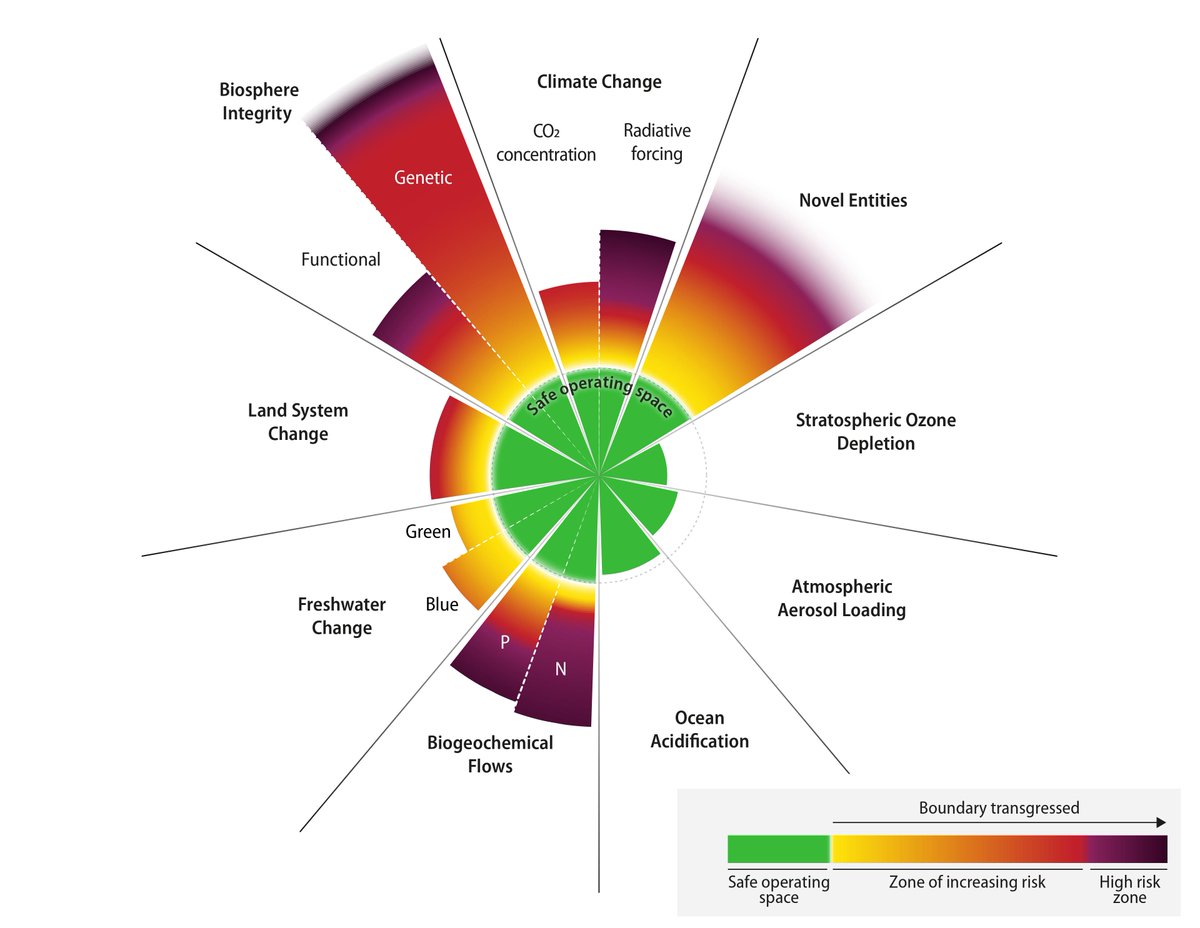
It is finally out! Our Nature Review paper on the 15 year journey of advancing Planetary Boundary science. Progress, impacts, uptake (in science, policy, cities, countries and business) and future challenges nature.com/articles/s43017-0…
And here is a link to an Open Access version of the Nature Review paper "Planetary Boundaries guide Humanity's future on Earth", if you have problems accessing it...
rdcu.be/dZzQ8
Human activities have radically altered the global freshwater cycle, exceeding the planetary boundary by the mid-20th century.
For nearly a century, our actions have disrupted Earth's freshwater system, diverging from pre-industrial stability.
Learn more buff.ly/4dW5Exo
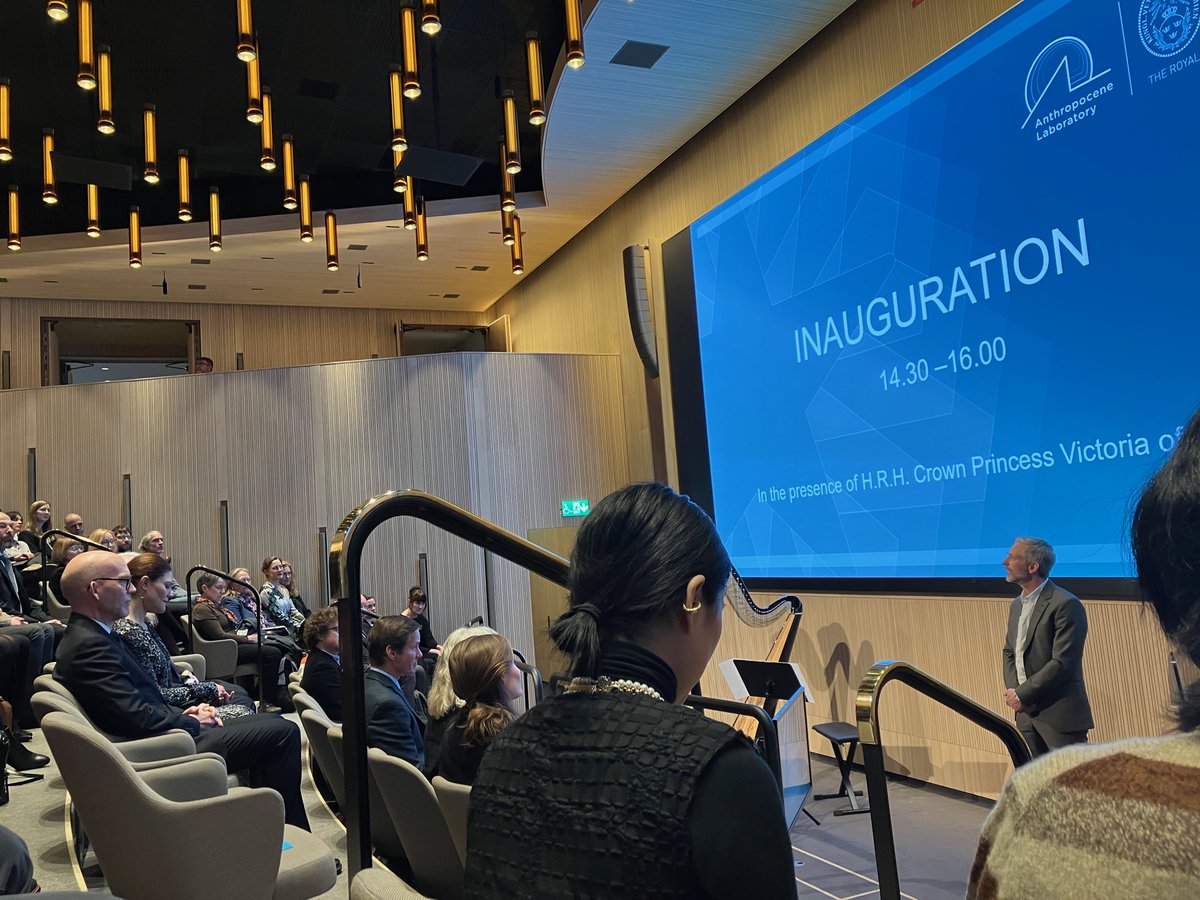
Congrats to the Anthropocene Laboratory on its inauguration!
The new research lab was formally opened at the @ScienceAcad_swe in the presence of HRH Crown Princess Victoria of Sweden.
We look forward to further explore human-nature interactions in the biosphere!
ALT Director of Anthropocene Laboratory, Henrik Österblom, is opening the inauguration in front of an audience in the Beijer Hall at the Royal Swedish Academy of Sciences.
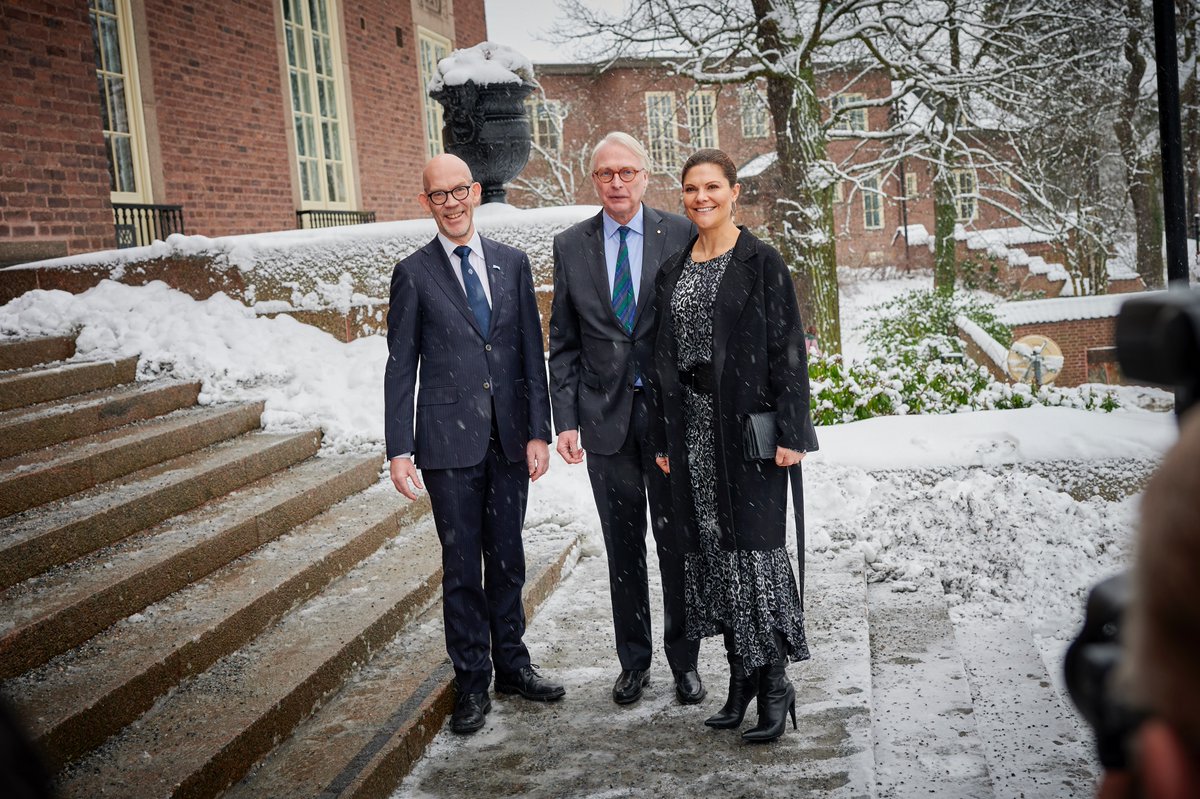
ALT From left to right: Hans Ellegren, Secretary General of the Royal Swedish Academy of Sciences; Carl Folke, chair of the Stockholm Resilience Centre board and director for the Beijer Institute, and; HRH Crown Princess Victoria of Sweden
We are looking for a dedicated postdoctoral fellow to join a project on forest-based climate change mitigation. Is this you?
Apply for the position by 17 March 2024: buff.ly/2RSIVId
We are raising our ambitions in the Planetary Boundaries science even further. We look for talent on Earth system modelling, tipping point science and Earth observations for PB monitoring. Consider joining a rapidly expanding and dynamic team! pik-potsdam.de/en/institute/…
📢Time to submit your abstract to #EGU2024!
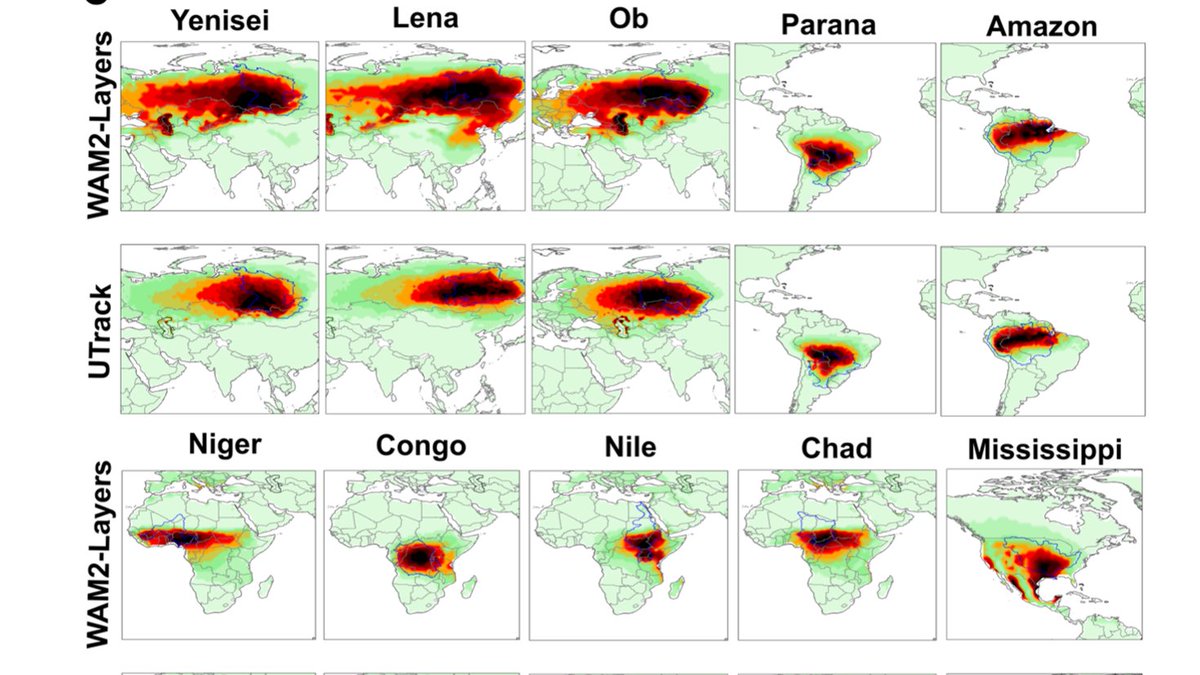
Please consider our session: "The atmospheric water cycle under change: feedbacks, land use, hydrological changes and implications"! 🌳☀️🌧️🌍🧑🌾
Deadline:🗓️10 Jan 13:00 CET. Welcome!
meetingorganizer.copernicus.…
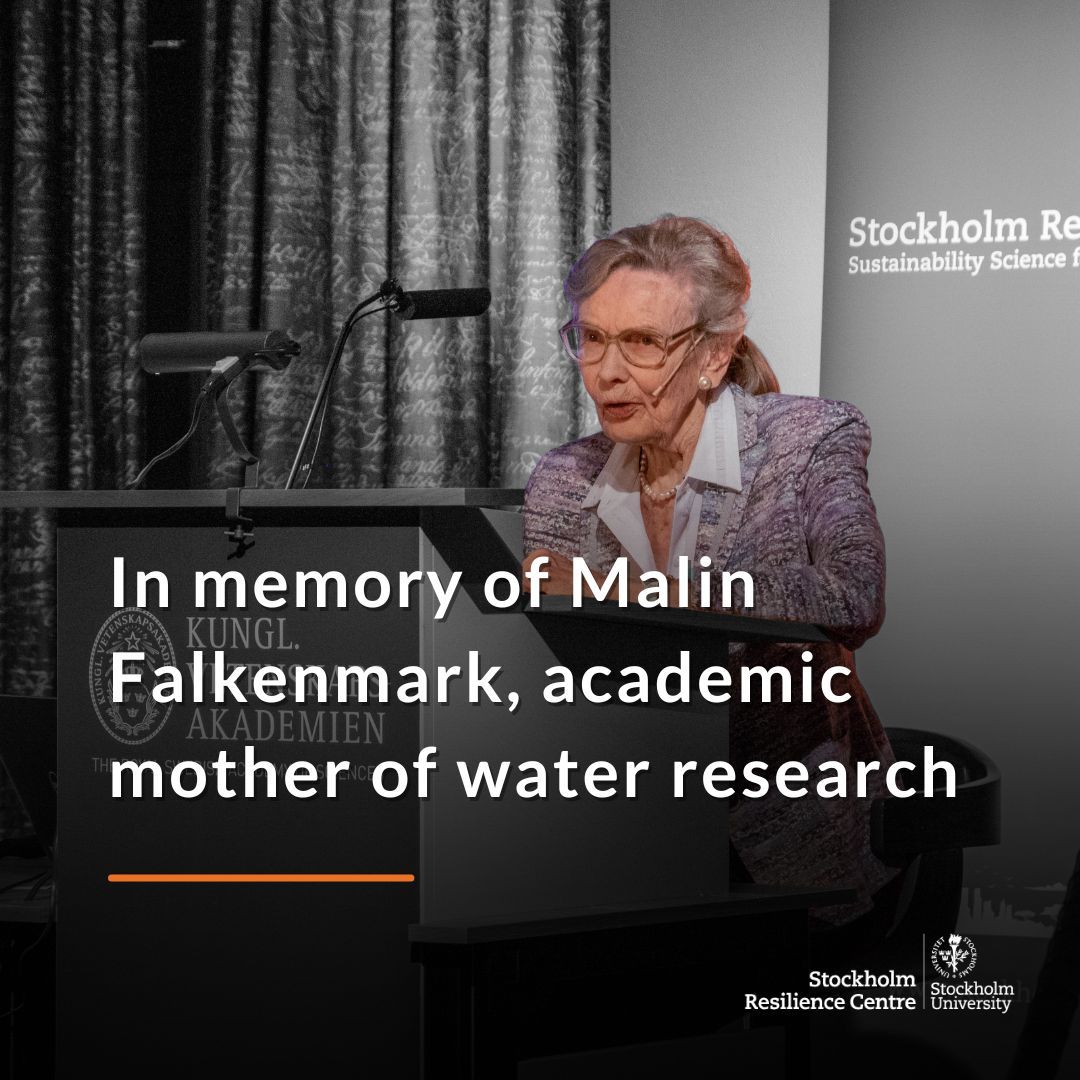
Malin, you meant so much to so many people around the world. You mean a tonne to me. The pain I feel in my chest refuses to go away. In life, they called you Madame Evergreen. You will always be. 💙😭
It is with deep sadness we have learned that water pioneer Malin Falkenmark has passed away.
Her work helped envision water as the ‘bloodstream of the biosphere’. At the Centre, she was an inspiring teacher and mentor for many.
Read her obituary here: buff.ly/480XgsE
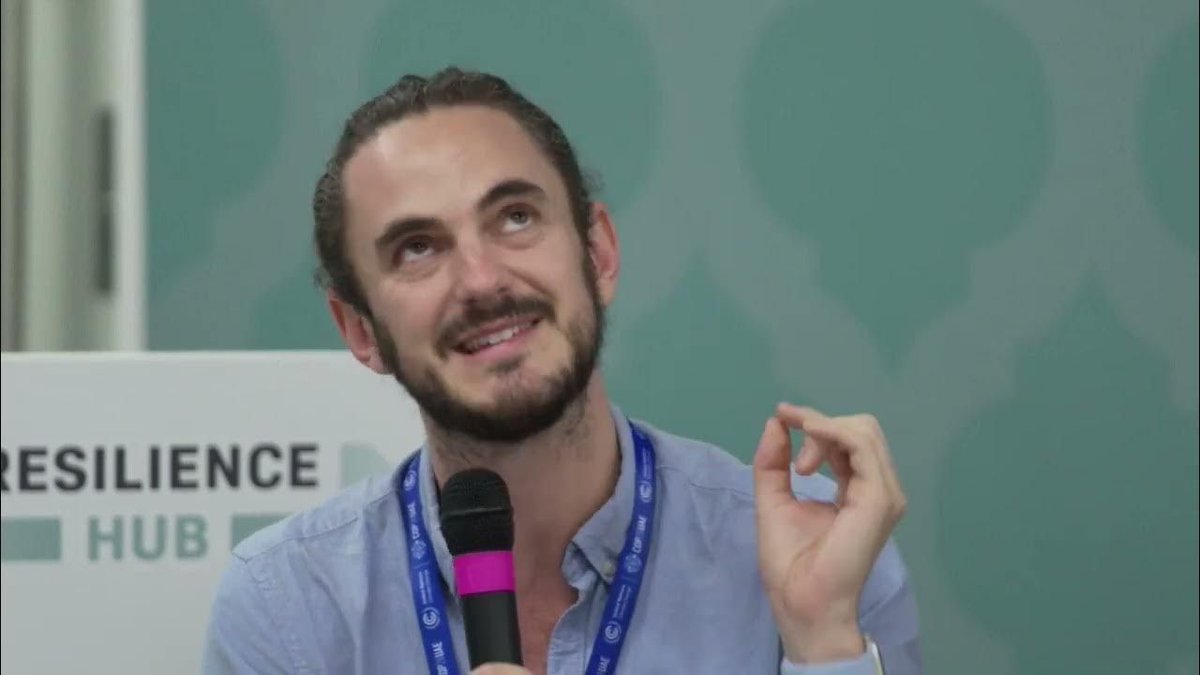
"Nature in its healthy state aids carbon sequestration, but there is a limit to how much stress it can handle" - @jrockstrom.
Check out our @copreshub panel session on climate and biosphere resilience, hosted by @lan_wang and @cibqueiroz: buff.ly/47RdvbT
It is easy to think that we exist in a time where there is no hope. But is this the only way to view the world?
Join us in a talk with lauded author @RebeccaSolnit and others, to learn of some real reasons to hold on hope.
📆 9 Nov
🕙 10.00-17.00 CEST
🔗 buff.ly/3Shcwx4
We finally have a scientific health check for the entire planet! 6 of 9 planetary boundaries currently transgressed. This does not mean irreversible collapse, but we are losing resilience. We are putting the stability of the entire earth system at risk.
All #PlanetaryBoundaries mapped out, six of nine crossed: For the first time, a team of scientists is able to provide a full picture of planetary resilience. Pressure in all those boundary processes is increasing, newly published research shows: pik-potsdam.de/en/news/lates…
ALT Six of nine planetary boundaries are currently transgressed. The length of the wedges symbolizes what the current state of the corresponding process is, in relation to the distance from the planetary boundary (end of the green area) and the Holocene baseline (origin of the diagram). The color symbolizes the risks associated with each. For example, a wedge may be very long because the current state is already very far from the planetary boundary and the Holocene. But it may still not be purple, because that is not yet associated with very high risks in this particular case. In other cases already a "small" overshoot (short wedge) results in a big risk: Then the color further inside already changes to purple.
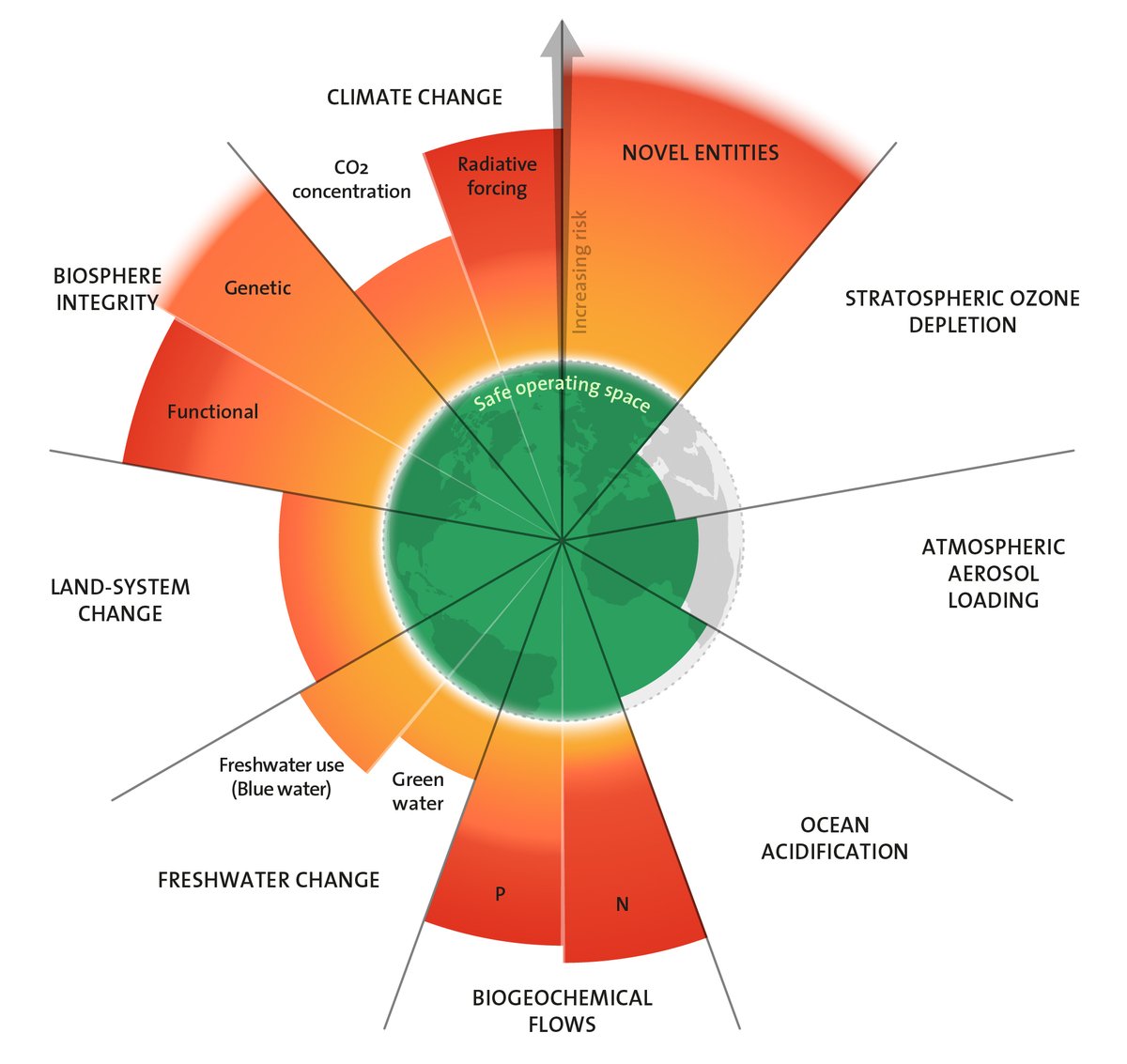
MAJOR UPDATE: All planetary boundaries are assessed, and six are crossed.
For the first time ever, scientists have quantified all nine planetary boundaries. Six of them are already transgressed and we are increasing pressure on the others.
Read more: buff.ly/45Ps1QG
A major milestone. Global science assessment of the Earth Commission gives us numbers for a Just World on a Safe Planet. Justice tightens the safe space. This science translates into targets for action on Climate, Nature, Water, Nutrients & Air Pollution
nature.com/articles/s41586-0…