
Senior fullstack web developer since 2007. Laravel. Self taught. Entrepreneur. Former Royal Marines Commando. INTJ. Atheist. Trier.
Joined February 2010
- Tweets 2,405
- Following 705
- Followers 373
- Likes 60,822
Photos and videos
Lee Overy retweeted

May 15
I strongly believe there are entire companies right now under heavy AI psychosis and its impossible to have rational conversations about it with them. I can't name any specific people because they include personal friends I deeply respect, but I worry about how this plays out.
I lived through the great MTBF vs MTTR (mean-time-between-failure vs. mean-time-to-recovery) reckoning of infrastructure during the transition to cloud and cloud automation. All those arguments are rearing their ugly heads again but now its... the whole software development industry (maybe the whole world, really).
It's frightening, because the psychosis folks operate under an almost absolute "MTTR is all you need" mentality: "its fine to ship bugs because the agents will fix them so quickly and at a scale humans can't do!" We learned in infrastructure that MTTR is great but you can't yeet resilient systems entirely.
The main issue is I don't even know how to bring this up to people I know personally, because bringing this topic up leads to immediately dismissals like "no no, it has full test coverage" or "bug reports are going down" or something, which just don't paint the whole picture.
We already learned this lesson once in infrastructure: you can automate yourself into a very resilient catastrophe machine. Systems can appear healthy by local metrics while globally becoming incomprehensible. Bug reports can go down while latent risk explodes. Test coverage can rise while semantic understanding falls. Changes happens so fast that nobody notices the underlying architecture decaying.
I worry.
512
1,901
15,325
1,586,603

This is cool 😎

🚨 BREAKING: Someone just built the exact tool Andrej Karpathy said someone should build.
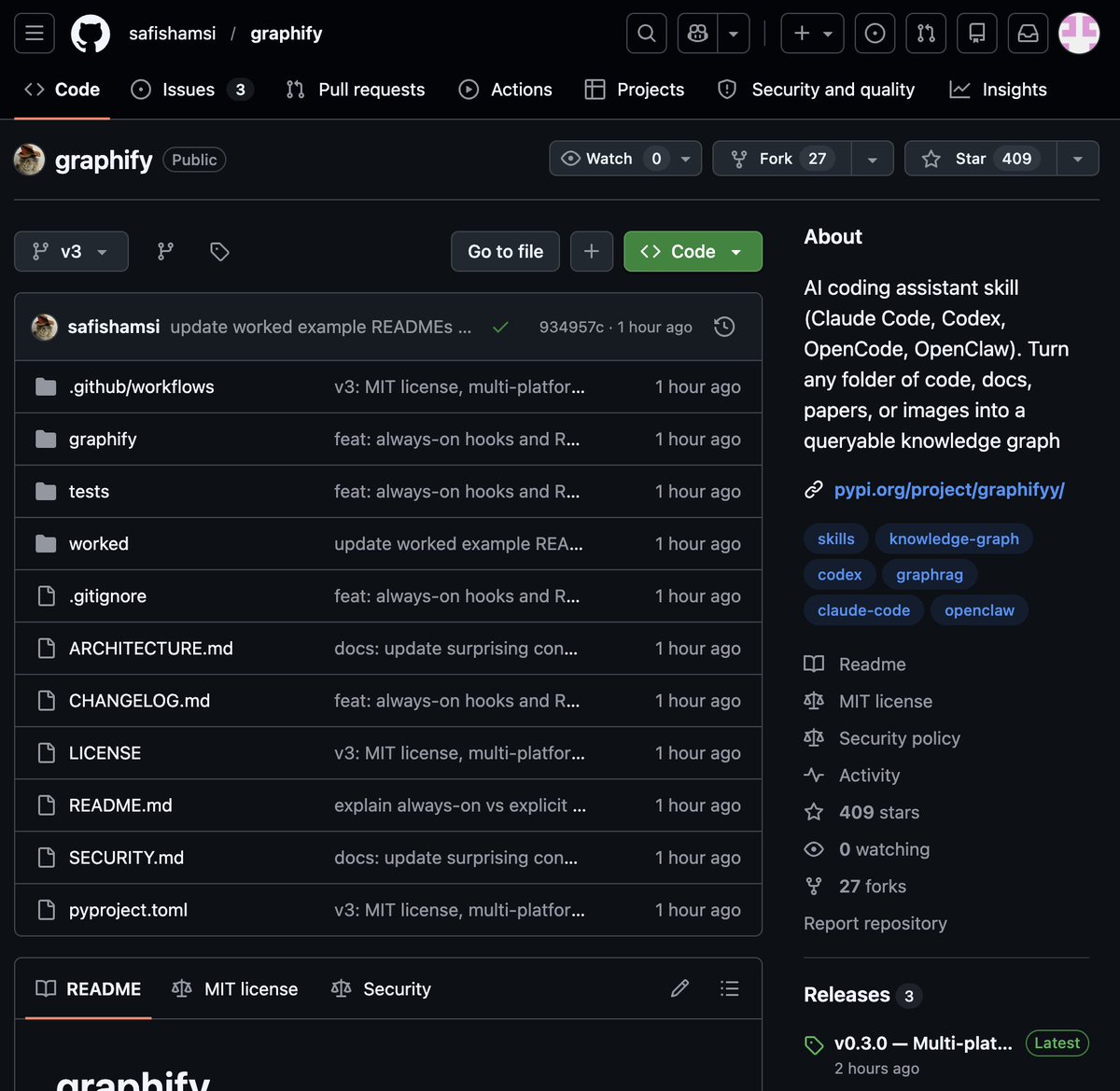
48 hours after Karpathy posted his LLM Knowledge Bases workflow, this showed up on GitHub.
It's called Graphify. One command. Any folder. Full knowledge graph.
Point it at any folder. Run /graphify inside Claude Code. Walk away.
Here is what comes out the other side:
-> A navigable knowledge graph of everything in that folder
-> An Obsidian vault with backlinked articles
-> A wiki that starts at index. md and maps every concept cluster
-> Plain English Q&A over your entire codebase or research folder
You can ask it things like:
"What calls this function?"
"What connects these two concepts?"
"What are the most important nodes in this project?"
No vector database. No setup. No config files.
The token efficiency number is what got me:
71.5x fewer tokens per query compared to reading raw files.
That is not a small improvement. That is a completely different paradigm for how AI agents reason over large codebases.
What it supports:
-> Code in 13 programming languages
-> PDFs
-> Images via Claude Vision
-> Markdown files
Install in one line:
pip install graphify && graphify install
Then type /graphify in Claude Code and point it at anything.
Karpathy asked. Someone delivered in 48 hours.
That is the pace of 2026.
Open Source. Free.
104
Lee Overy retweeted

Mar 26
I built a thing!
TLDR: a macOS distraction blocker that disables only after the timer runs out, or you pay a self-imposed fee.
I’ve been using it for the past couple of weeks to retrain my focus and it’s amazing to see how stupid my brain is.
Link below 👇
2
1
2
395
Lee Overy retweeted

Mar 11
Restore Britain is about to overtake the Conservative Party membership.
History in the making...
Join Restore Britain today.
restorebritain.org.uk/join_u…

612
4,664
27,673
426,056
Lee Overy retweeted

Feb 25
It is hard to communicate how much programming has changed due to AI in the last 2 months: not gradually and over time in the "progress as usual" way, but specifically this last December. There are a number of asterisks but imo coding agents basically didn’t work before December and basically work since - the models have significantly higher quality, long-term coherence and tenacity and they can power through large and long tasks, well past enough that it is extremely disruptive to the default programming workflow.
Just to give an example, over the weekend I was building a local video analysis dashboard for the cameras of my home so I wrote: “Here is the local IP and username/password of my DGX Spark. Log in, set up ssh keys, set up vLLM, download and bench Qwen3-VL, set up a server endpoint to inference videos, a basic web ui dashboard, test everything, set it up with systemd, record memory notes for yourself and write up a markdown report for me”. The agent went off for ~30 minutes, ran into multiple issues, researched solutions online, resolved them one by one, wrote the code, tested it, debugged it, set up the services, and came back with the report and it was just done. I didn’t touch anything. All of this could easily have been a weekend project just 3 months ago but today it’s something you kick off and forget about for 30 minutes.
As a result, programming is becoming unrecognizable. You’re not typing computer code into an editor like the way things were since computers were invented, that era is over. You're spinning up AI agents, giving them tasks *in English* and managing and reviewing their work in parallel. The biggest prize is in figuring out how you can keep ascending the layers of abstraction to set up long-running orchestrator Claws with all of the right tools, memory and instructions that productively manage multiple parallel Code instances for you. The leverage achievable via top tier "agentic engineering" feels very high right now.
It’s not perfect, it needs high-level direction, judgement, taste, oversight, iteration and hints and ideas. It works a lot better in some scenarios than others (e.g. especially for tasks that are well-specified and where you can verify/test functionality). The key is to build intuition to decompose the task just right to hand off the parts that work and help out around the edges. But imo, this is nowhere near "business as usual" time in software.
1,600
4,727
37,159
5,142,391
1
2
45
Lee Overy retweeted

Feb 20
The math on this project should mass-humble every AI lab on the planet.
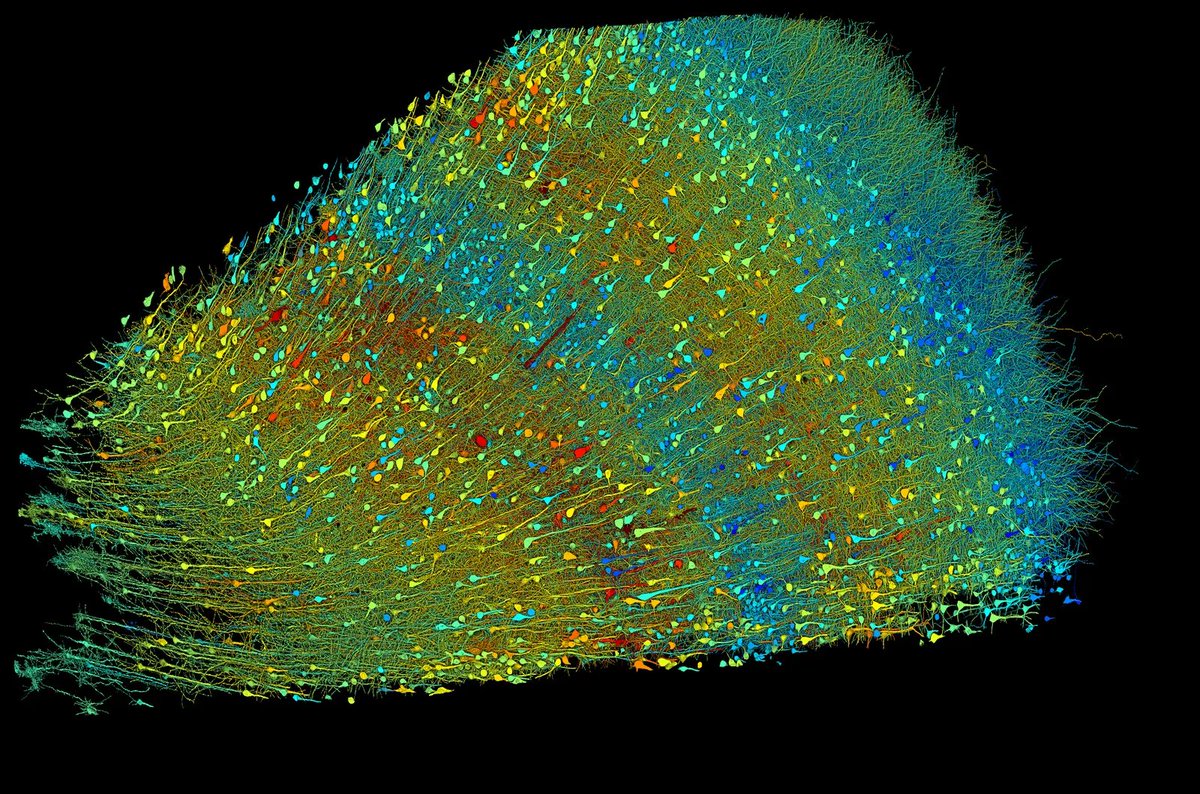
1 cubic millimeter. One-millionth of a human brain. Harvard and Google spent 10 years mapping it. The imaging alone took 326 days. They sliced the tissue into 5,000 wafers each 30 nanometers thick, ran them through a $6 million electron microscope, then needed Google’s ML models to stitch the 3D reconstruction because no human team could process the output.
The result: 57,000 cells, 150 million synapses, 230 millimeters of blood vessels, compressed into 1.4 petabytes of raw data. For context, 1.4 petabytes is roughly 1.4 million gigabytes. From a speck smaller than a grain of rice.
Now scale that. The full human brain is one million times larger. Mapping the whole thing at this resolution would produce approximately 1.4 zettabytes of data. That’s roughly equal to all the data generated on Earth in a single year. The storage alone would cost an estimated $50 billion and require a 140-acre data center, which would make it the largest on the planet.
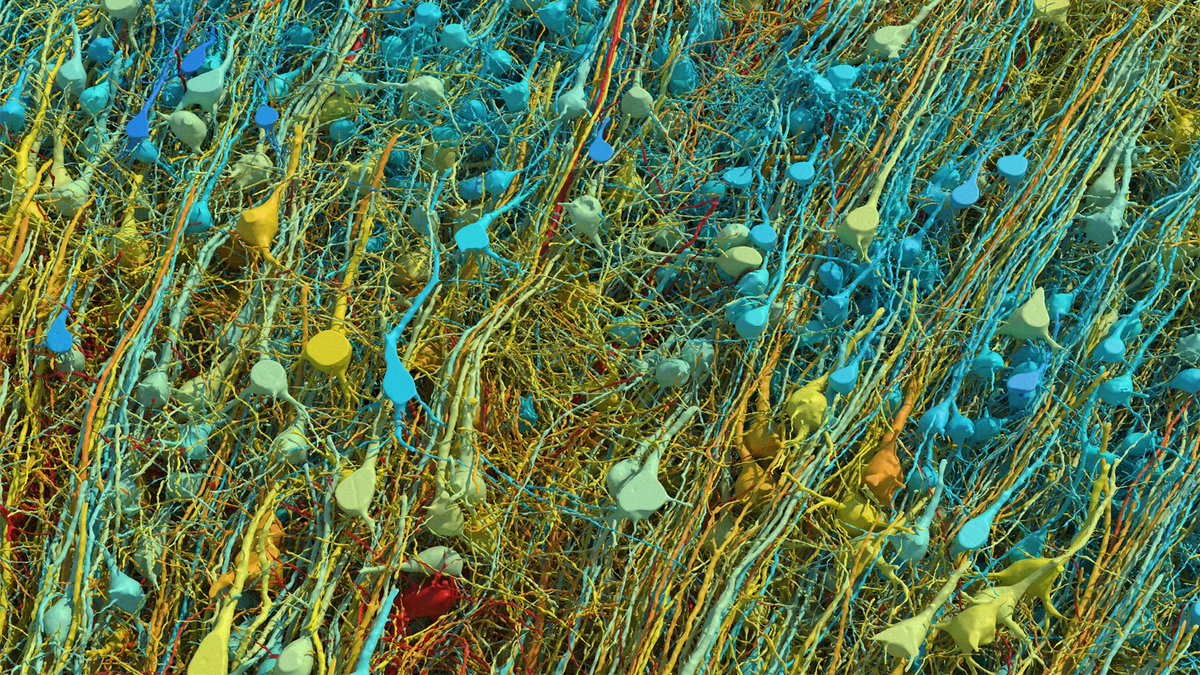
And they found things textbooks don’t contain. One neuron had over 5,000 connection points. Some axons had coiled themselves into tight whorls for completely unknown reasons. Pairs of cell clusters grew in mirror images of each other. Jeff Lichtman, the Harvard lead, said there’s “a chasm between what we already know and what we need to know.”
This is why the next step isn’t a human brain. It’s a mouse hippocampus, 10 cubic millimeters, over the next five years. Because even a mouse brain is 1,000x larger than what they just mapped, and the full mouse connectome is the proof of concept before anyone attempts the human one.
We’re building AI systems that loosely mimic neural networks while still unable to fully read the wiring diagram of a single cubic millimeter of the thing we’re trying to imitate. The original is 1.4 petabytes per millionth of its volume. Every AI model on Earth fits in a fraction of that.
The brain runs on 20 watts and fits in your skull. The data center required to merely describe one-millionth of it would span 140 acres.
Feb 17

🚨: Scientists mapped 1 mm³ of a human brain ─ less than a grain of rice ─ and a microscopic cosmos appeared.
1,159
11,911
63,695
4,617,970
Lee Overy retweeted
Feb 7
This is a dopamine loop, and it’s one of the most powerful ones humans have ever encountered.
Every time you prompt an AI and get a useful result back in seconds, your brain gets a hit. Variable-ratio reinforcement, same mechanism as slot machines, except the reward is real: actual output, actual progress, actual leverage on your ideas.
Traditional work follows a delayed-reward structure. You write code for 6 hours, maybe it compiles, maybe you get feedback in a week. The gap between effort and reward is wide enough that motivation decays constantly.
AI compresses that loop to seconds. Effort → reward → effort → reward. Your prefrontal cortex stays engaged because the next payoff is always one prompt away. This is why people describe it as “fun” when they’re actually working 14-hour days. The subjective experience of effort disappears when reward frequency is high enough.
The “harder than ever” part is real too. When your bottleneck shifts from execution to imagination, you run out of excuses to stop. There’s no “waiting on the build” or “blocked by review.” Every idea you have can be tested immediately, which means your brain never gets a natural stopping point.
People who thrive on this are selecting for a specific neurotype: high novelty-seeking, high conscientiousness, tolerance for rapid context-switching. That’s maybe 10-15% of the population.
The other 85% will experience the same tools as overwhelming, not energizing. And that split is going to define the next decade of who captures value from AI and who gets displaced by it.
Feb 6

Nearly every ambitious person I know who has dived into AI is working harder than ever, and longer hours than ever.
Fascinating dynamic tbh.
I have NEVER worked this hard, nor had this much fun with work.
202
477
4,529
566,018
I’ve been trying to understand why this all feels so natural to me - @karpathy nails it. The ultimate declarative code is natural language! All my career I’ve been trying to make my code read like sentences - now it literally is (for all intents) 🤔
Jan 26

💯 @ Spec-driven development
It's the limit of imperative -> declarative transition, basically being declarative entirely.
Relatedly my mind was recently blown by dbreunig.com/2026/01/08/a-so… , extreme and early but inspiring example.
1
60
Open sourced my Claude Code workflows.
Full lifecycle from idea exploration to TDD and review:
• Capture decisions before they’re lost
• Specs that filter hallucinations
• Plans with acceptance criteria
• Test-first implementation
github.com/leeovery/claude-t…
1
53

Over the last month or two, I've completely changed my software development workflow.
I'm now using:
• Visual Studio Code Copilot
• Claude Code on the terminal (Opus 4.5)
• Jules in the background (Gemini 3)
Before, most of my time went to writing code. I used to think "out loud" by writing my ideas over and over again in code.
That's not what I'm doing anymore.
Now, I'm spending most of the time writing and refining the specification of what I want to build.
For simple requests, I ask the model directly.
For more complex requests, I put together a complete specification with as many details as possible.
I also spend time reviewing the code the model writes for me. 80% of the time, it's just a quick glance to make sure things "feel" good. The other 20% of the time is looking very carefully at anything critical in the code.
I'm also making way more decisions than before. I feel I'm dealing with many more things, and I'm actually more involved in the final product than ever before.
From that point of view, AI is not making my job any easier. It's just changing it.
54
32
501
48,082
Lee Overy retweeted

Jan 12
I’ve been a developer for 10 years.
I’ve mastered languages. I’ve optimized databases. I’ve built systems that handle millions of requests.
But last week, a Junior dev outperformed me.
He didn’t know how to write a complex program. He couldn’t explain the difference between a proper monoloth and a microservice. He didn't even know how the code worked in some parts.
But he knew how to talk to the Agents.
He orchestrated three AI workers. One for the frontend. One for the backend logic. One for the unit tests.
In 4 hours, he pushed a feature that would have taken me 3 days.
I felt a cold shiver. "Is this it?" I thought. "Am I finally the legacy hardware?"
But then I looked at his PR. It was fast. It was functional. But it was… fragile.
It lacked architectural vision. It had security holes that only someone who has been "burned" would see. It was a house built on sand.
That’s when I realized the truth about 2026.
The "Senior" title isn't about how fast you type anymore. It's about how well you judge.
We are moving from being "builders" to being "architects." From "coders" to "composers."
If you’re a veteran feeling left behind by AI: Don’t compete on speed. Compete on wisdom.
The machine can write the notes. Only you can write the symphony.
483
644
5,673
377,259
Lee Overy retweeted

2 Dec 2025
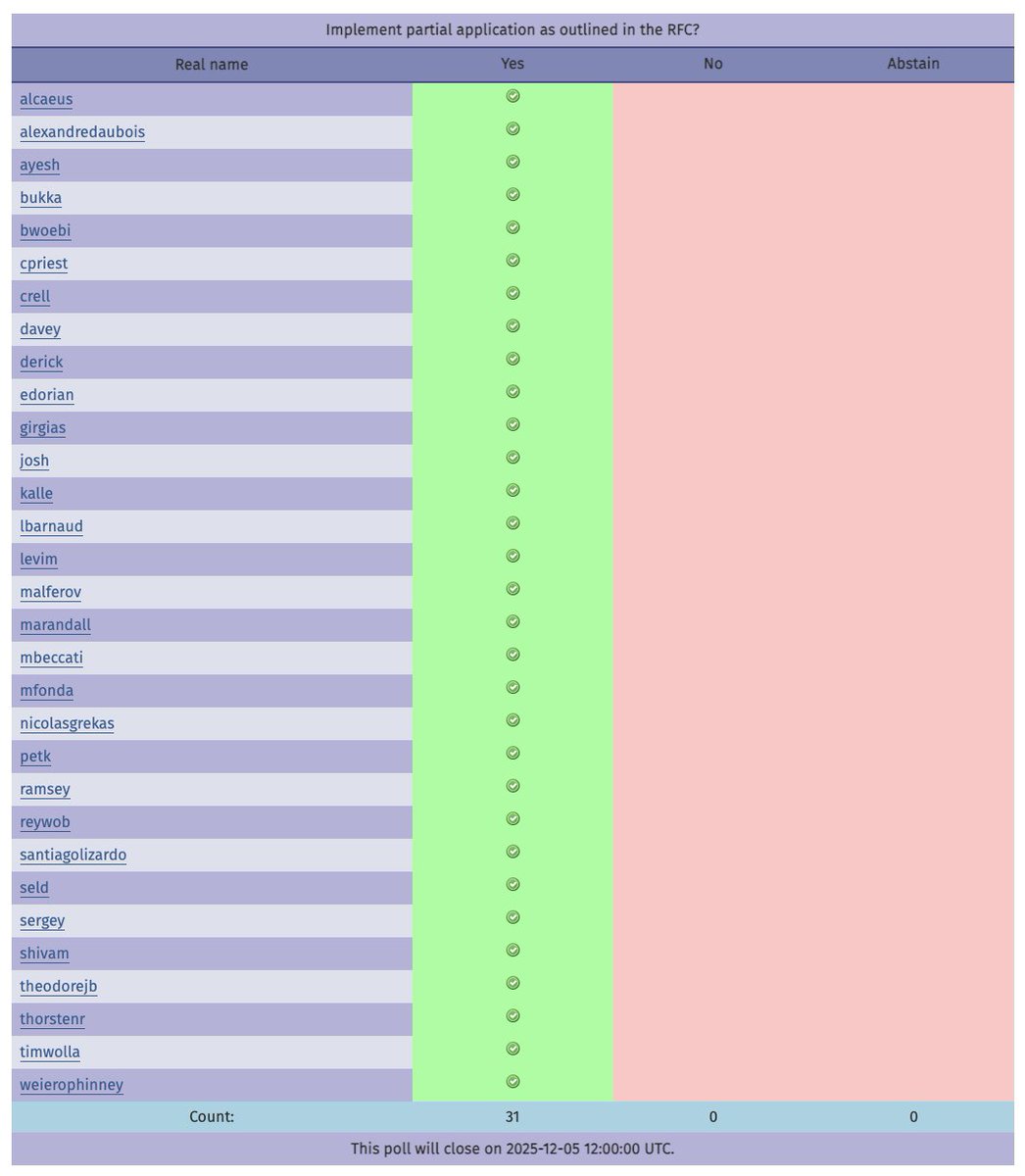
With 31 votes for it, looks like PHP 8.6 is going to get partial function application next year, and the pipe operator is going to get way better as a result!
wiki.php.net/rfc/partial_fun…
9
10
114
15,614

Lee Overy retweeted

26 Sep 2025
i recommend reading this
22 Sep 2025

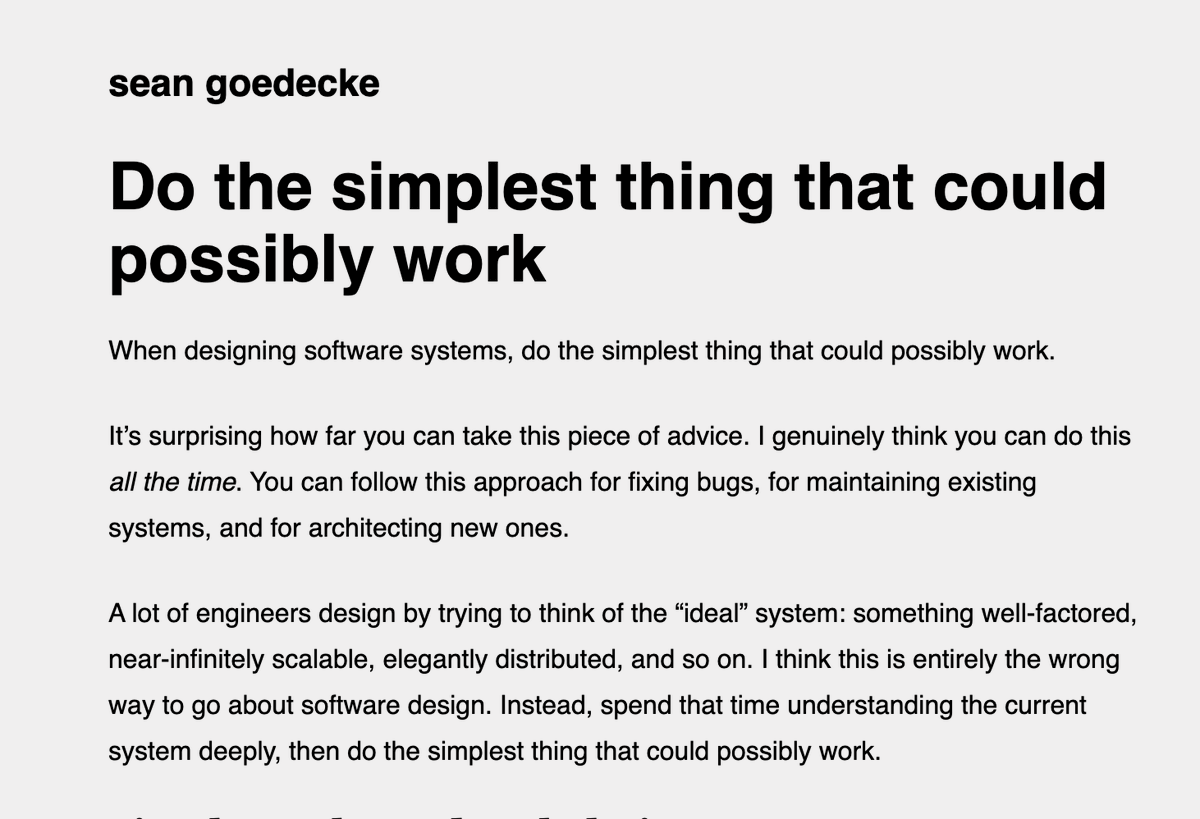
things are actually a lot easier than what idiotic imbecile nincompoops that worship complexity want you to believe it is. everyone wants you to think that their thing is complicated. but everything is simple. once you realize this, you realize that everything is easy
35
236
3,295
295,838

Lee Overy retweeted

29 Jan 2025
Into the ice...
The infamous ice breaking drill is a staple of the #RoyalMarines' Arctic deployment in Norway.
Plunging through a hole in the ice into freezing water may look extreme but it's a vital part of learning to deal with cold shock.
Read more: royalnavy.mod.uk/news/2025/j…




12
76
384
46,746