
Helping startups grow
Joined March 2007
- Tweets 16,410
- Following 823
- Followers 10,015
- Likes 43,888
924 Photos and videos







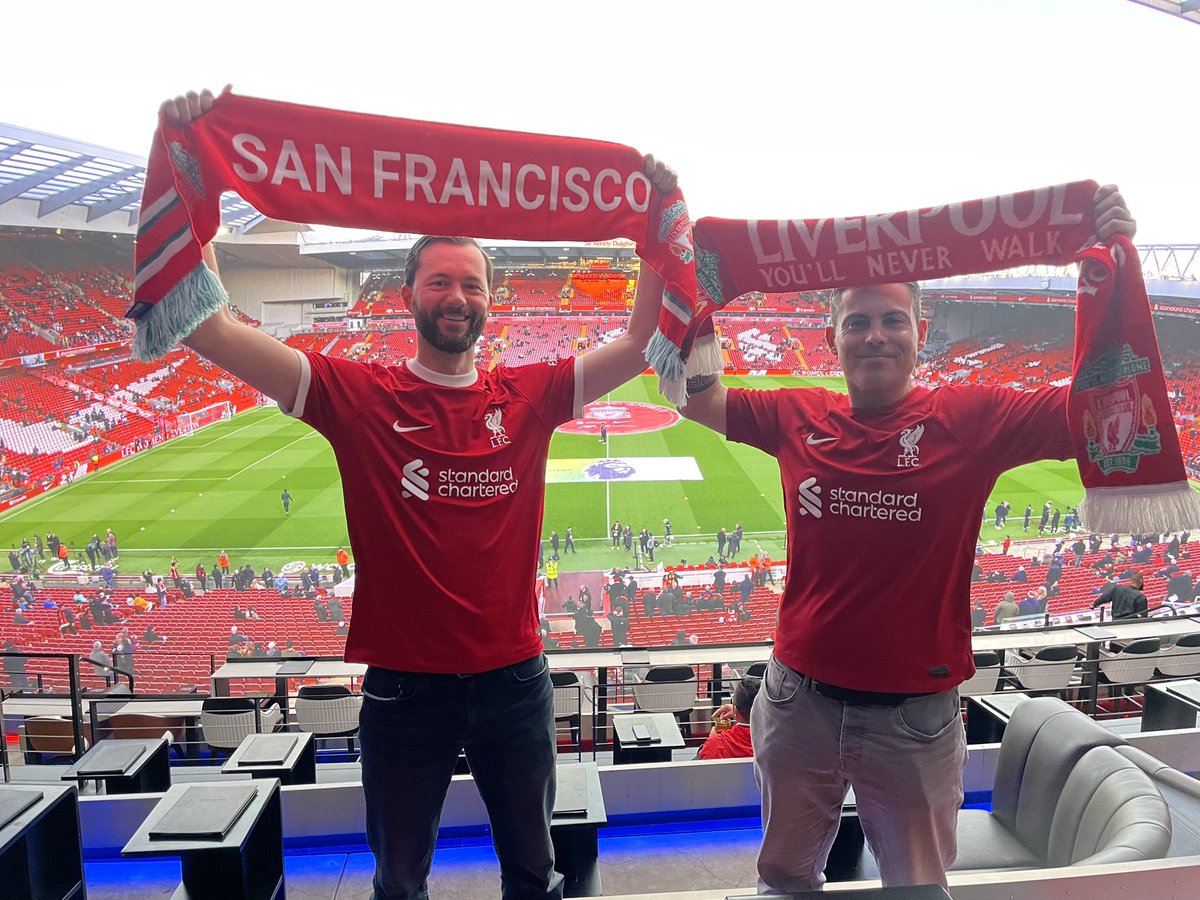
Tommy Leep retweeted

Jun 10
We're launching Bridge today 🌉
An AI engine that builds virtual homes. Blueprint in, walkable home out. Every plan, every option, structural changes included.
What took 3D artists months now takes days. Homebuilders can finally show buyers every home they sell.
arcway.ai
141
186
2,532
1,441,726
Tommy Leep retweeted

Jun 11
Proud to share that @Base10Partners has announced $850M in new capital to continue backing founders transforming the real economy, bringing total AUM to $2.6B
When we started Base10, we believed the largest parts of the economy: logistics, healthcare, construction, manufacturing, financial services, and other essential industries, were still underserved by modern technology.
That conviction feels more relevant than ever. AI is moving from demos into real workflows, creating enormous opportunities to help real-world businesses operate with greater speed, intelligence, and efficiency.
Grateful to our LPs, founders, and the entire Base10 team for helping build the firm to this point. Excited for the future!
22
6
191
23,784

Jun 11
One of the most inspiring things about @Alphaschool is how ambitious it is
Jun 10

Alpha School is building 4 types of high schools: Service, Division 1 Athletics, Entrepreneurship and "get into a Top 20 university" high schools:
Service high schools will be where you do things like spend a year in Africa building an Alpha School and doing your top 1% academics 3 hours a day, but on site on a different continent.
D1 Athletics high schools will be where you spend 5 hours a day building yourself into an elite college athlete, maybe with professional aspirations. Again, you'll do your top 1% academics in only 3 hours a day, opening up most of your day to be an incredible athlete.
Entrepreneurship high schools like Founders School run by @nateliason will be where you learn how to earn a million dollars in profits during high school, starting at 12 pm, and only after doing your top 1% academics in only 3 hours a day.
"Get into a top 20 college" high schools will have a focus on giving you 40 hours a week to build a portfolio of Olympic-level (academic) extracurriculars to go along side top 1% academics in only 3 hours a day.
The common theme here is that when it is possible to get a 1560 SAT and 10 APs during high school in only 3 hours a day, teenagers can open up their schedule to spend their years doing the stuff they want to at the highest levels.
This is much different than the best private high schools where classes and homework take up so much time that students only have at most ~20 hours a week to work on their passion projects and leadership activities.
Alpha School gives teenagers 2X the time, which makes for much more interesting people at the age of 18. That's why I'm building Toronto into the first 1,000 student Alpha School city. Reach out if you are interested.
3
204
Tommy Leep retweeted

Jun 10
Introducing “Comeback City: A Love Letter to San Francisco.” Proud to call this place home.
61
91
752
174,811
Tommy Leep retweeted

Jun 8
In 2023, we pivoted from a generalist fund to a thesis-driven AI and frontier firm. In the midst of this takeoff curve, it’s been wonderful and hard work with our founders, with many lessons and victories along the way.
The good work continues, and today I’m excited to share our newest $355M fund! Thanks to @ychernova and @WSJ for writing about our new set of funds, our recent performance, and our renewed early stage mission at @KindredVentures. ☀️
wsj.com/pro/venture-capital/…
65
16
400
66,472
Tommy Leep retweeted

Jun 8
so grateful to get to live in this incredible time, and do this interesting work.
thank you all for the friendship and support.

News! We are proud to share our latest $355M set of funds, combining early stage and early growth.
79
8
488
131,232
Tommy Leep retweeted

Jun 8
Alright we're doing it! @cantos is teaming up with our friends at @Toyota_Ventures, @ImpulseLabs, & @westmagco for #SFDeepTechWeek!
Join us June 24th at the Impulse/WestMag space to celebrate Bay Area builders ⚙️⚡️🌉 luma.com/toookf1f
4
12
99
9,318
Jun 6
Endorse
Jun 6

We have officially reached the point where I check the World Cup calendar before committing to anything. Wife wants to do something that day, let me check. Friends want to make plans, sorry, two games going at the same time. The World Cup owns my life now.
1
486
Tommy Leep retweeted

Jun 3
Welp, that happened faster than I predicted. Thought it would be end of 2027, then early 2027, but agentic traffic growing so fast that bots have now passed human traffic online for the first time in the Internet's history. radar.cloudflare.com/traffic…
388
2,165
8,314
2,242,686
Jun 3
Congrats team @ScrunchAI on the $225M acquisition!

Sitecore, the digital-experience software company, has acquired Scrunch, a customer-experience platform that helps brands improve how they appear in AI-generated search results, according to a statement reviewed by Bloomberg. bloomberg.com/news/articles/…
2
2
1,182
Jun 3
Town has been a game changer for my workflow. Try it out, you won’t go back.
Congrats JDG, Tony, and team Town!
Jun 3

Today, we’re launching @TownAI: the AI assistant that learns you.
We’re coming out of beta with a $55M Series A led by @ARampell at @a16z, with participation from @KirstenGreen at @forerunnervc and continued support from @firstround, @altcap, and @conviction.
Right now, getting real value from AI means prompting, configuring, building workflows, managing agents.
We think that’s backwards.
The future of AI is a companion that already knows you and how you work. Town connects across your inbox, calendar, Slack, docs, messages, and workflows to understand what you need, then starts doing the work with you.
Drafting. Scheduling. Project tracking. Follow-ups. Context gathering. Multi-step tasks. And it only acts when you say so.
All adapting to your voice, priorities, routines, and relationships over time.
Your Townie is the AI assistant you actually need.
1
9
628
Tommy Leep retweeted

Jun 2
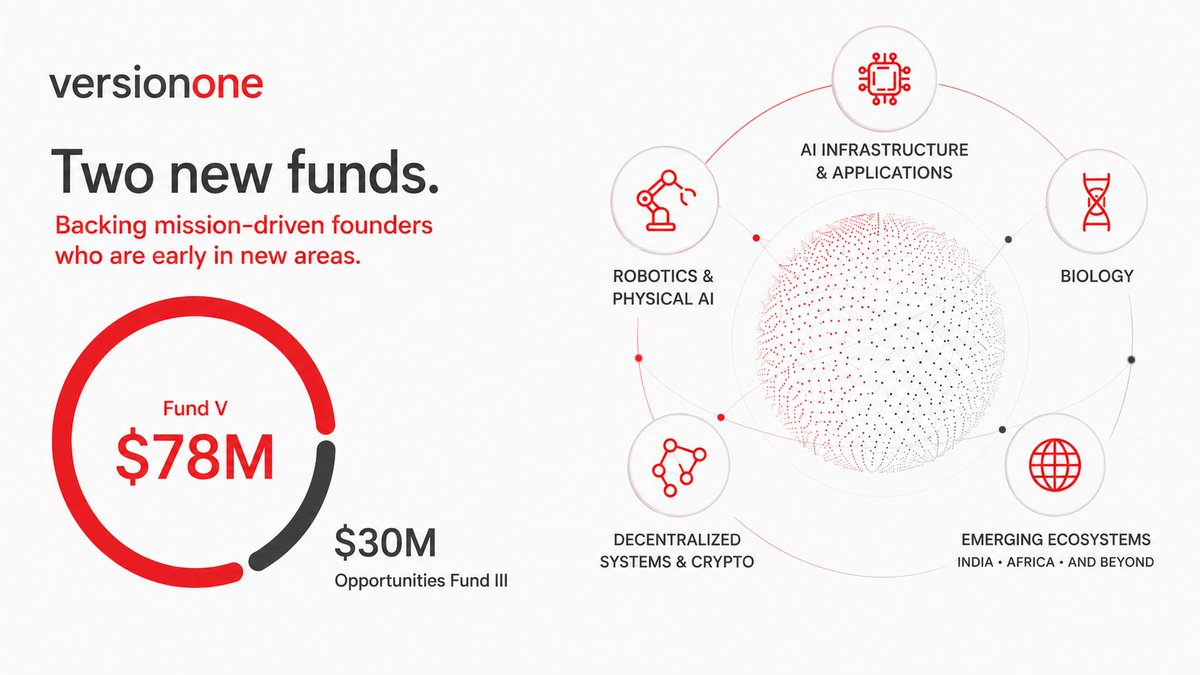
🎉 Today, we're excited to share that we've closed two new funds: @VersionOneVC Fund V ($78M) and Opportunities Fund III ($30M). 🎉
More link to blog post in thread below...
13
7
59
4,429
Tommy Leep retweeted

Jun 1
My biggest takeaways from @benedictevans:
1. We’re in 1997 for AI—it’s as big a deal as the internet or mobile, and only as big a deal as the internet or mobile. We’re at the stage where most stuff kind of doesn’t work yet, most of what people will build hasn’t been built, and it’s not clear how any of it will work when it does. Some people in tech have bought clusters of Mac Minis, while even among 13-to-18-year-olds, only about 15% to 20% are daily active users of AI. The companies that win may not exist yet, and the use cases that matter most are probably invisible to us today.
2. Every technology wave brings ways to ruin people’s lives, deliberately or by accident, and we need to be conscious of that without panicking. Every wave of technology—databases in the 1970s, social media in the 2010s, AI today—creates new ways to harm people. We need to be conscious of these risks, build safeguards, and hold people accountable. But we also can’t let fear of potential harms stop us from capturing the benefits. The goal is thoughtful deployment, not paralysis.
3. Things will probably be okay—but “on average” hides a lot of individual pain. We’ve been automating jobs and creating new jobs since 1800. Each time, you can see the jobs that will disappear but not the new jobs, because they don’t exist yet. We go through frictional pain, dislocation, people lose jobs, towns get hollowed out, and it all sucks. But we come through richer, and we’re not worried about crops failing anymore.
4. If you’re worried about your job, the worst thing you can do is stick your head in the sand and declare AI evil. Yes, some professions face major questions, particularly if you’re an associate or would have been thinking about becoming one. The pyramid structure of professional services may fundamentally change. What helps is submerging yourself in AI, understanding what you can do with it, how it changes things, and how you can be a great hire in this new environment. That may still not be enough, but it’s the only path forward.
5. The history of accounting shows us how automation often increases employment rather than decreasing it. Despite adding machines, punch cards, mainframes, databases, ERP systems, cloud software, spreadsheets, and PCs, the number of accountants keeps going up. This is the Jevons paradox: when you make something cheaper or easier, you don’t do the same amount of work for less money. You often do vastly more because the ROI changes.
6. Distribution is becoming a more valuable moat as software gets easier to build, which favors incumbents. As AI makes building software cheaper and faster, the market gets noisier. More products launch, more companies compete for attention, and breaking through becomes harder. This means distribution—the ability to reach customers and get them to use your product—matters more than ever.
7. Foundation AI model companies won’t have lasting pricing power, and value will likely accrue up the stack. The models don’t seem to have network effects, so there’s no winner-takes-all dynamic. If you have indefinite competition between three to six foundation model providers, and the models look like undifferentiated commodities to users, why would anyone have pricing power? The current pricing chaos—people spending $1.5 million on inference in a month—is temporary disequilibrium, like someone getting a $50,000 mobile data bill in 2010. The steady state will look different.
8. OpenAI and Anthropic are buying consultancies and PE firms. This seems counterintuitive—aren’t these the companies that should need consultants least? But the reality is that companies don’t have people sitting around waiting to reimagine all their internal workflows and figure out which could be automated with AI. That’s a project requiring five to 10 people spending months working it out, then actually implementing it across vertical and horizontal systems.
9. The fundamental question isn’t whether AI automates your job—it’s whether your profession is a "task" or a job. Some jobs are just tasks, and when you automate the task, the job disappears (i.e. elevator attendants). But in most professions, the task you think you’re being paid for isn’t actually what you’re being paid for. McKinsey doesn’t get hired to produce a 75-slide deck—they get hired to walk through your enterprise, understand the politics, talk to customers, and figure out what you actually need to do. The deck is just the artifact.
10. The anti-AI backlash is real, and a fuzzy mass of different concerns, some real and some not—much like the social media backlash. There are tangible concerns: electricity bills went up in some places, though this applies to very few locations objectively. The water consumption issue is largely false; data centers use about 0.017% of U.S. water consumption. There are real questions about jobs, though economists can’t yet find clear consensus in the data about AI’s employment impact. There’s also the culture war over AI-generated content and “AI slop.” The challenge is that all of this creates political pressure even when the underlying facts are unclear or contested.
May 31

A rational conversation on where AI is actually going with @benedictevans
For 20 years, Benedict has been one of the clearest, most reliable thinkers on where technology is heading, and how it'll impact our lives. He was @a16z's resident "thinker" for 5 years, and has spent the last six as an independent analyst tracking the most important tech trends. As you’d expect, he’s spending all of his time on AI. In his words, "AI is eating the world."
We discuss:
🔸 Where value will actually accrue in the AI stack
🔸 Why AI labs are suddenly buying consulting firms
🔸 The rise in anti-AI sentiment, and where it leads
🔸 Why distribution is becoming the ultimate moat
🔸 Why the right question about your job isn’t “What percent can AI do?” but “Is this a task or a job?”
🔸 Why things will probably be okay
Listen now 👇
youtu.be/BD3vLtWhT5A
44
89
696
193,734
Tommy Leep retweeted

Jun 1
This is a plan for Phase 2 of the National Security Renaissance: Project Alexander. It proposes a national security asset class to accelerate the effective and efficient deployment of capital into technologies vital to the nation's security. 🇺🇸
Our Congress, Treasury Department, and private citizenry have the power today to enact critical reforms that will have an immediate and transformational impact on American innovation.
All feedback welcome! 🧵1/14

19
25
170
31,625
May 31
If you’re interested in fertility decline, it’s worth listening to the data and interpretation from economist-demographer @JesusFerna7026 open.spotify.com/episode/0Bn…
129

May 26
Congrats @AlexYancher and team @PassportGlobal1 for your $425M acquisition agreeement.
Passport was the first SPV I led on @angellist. It launched my journey as a solo investor. @AlexYancher and @Aaronschwartz35, thanks for being open to taking a check from me nine years ago.
May 26

Today marks one of the most meaningful milestones in Passport’s journey: we’ve signed an agreement to be acquired by Global-e
Nine years ago, Passport started with a simple but ambitious vision: Help brands reach their global potential. Since then, we’ve built a proprietary global shipping network that now leads the market in transit times and customer experience, along with a full suite of solutions that supports brands at every stage from cross-border enablement to in-country operations and marketplace management. And most importantly, we earned the trust of incredible brands and 3PLs around the world.
What makes this moment special is that great companies are bought, not sold. As we continued to build for the future, Global-e approached us because they saw the value in what this team built: our logistics infrastructure, our operational depth, our customer relationships, and our approach for enabling global commerce.
This partnership is so exciting because our visions to help brands go global are deeply aligned. Together, we can help more brands expand globally, faster and more confidently, with a more complete solution than either company could offer alone.
To our customers: thank you for trusting us with your brands, your growth, and your customers around the world. Many of you took a chance on Passport early, partnered closely with us, pushed us to improve, and helped shape the company we are today.
To our partners: thank you for helping us build a truly global ecosystem. Cross-border commerce is impossible without strong operational and strategic partnerships, and we would not be here without you.
To our investors: thank you for believing in Passport’s vision from the beginning and for supporting us through every stage of growth. Your partnership, guidance, and conviction helped us build a company capable of redefining what global commerce can look like for modern brands.
And to the Passport team: thank you. This moment belongs to all of you. Thank you for the late nights, the ownership, the resilience, the creativity, and the belief in what we were building especially during the hard moments. What this team accomplished over the last 9 years is extraordinary, and this acquisition is a direct reflection of that work.
I couldn’t be more proud of what we’ve built together.
And the best part is we’re just getting started.
Press Release here:
investors.global-e.com/news-…
1
8
1,070
May 26
Gonna use "metabolize the innovation"
May 26

I love how Jony and Flavio predicted the precise, immediate response we're seeing to the Luce.
It's almost like they're good designers who know a thing or two about design!
Clip from @cleoabram's interview, a must watch.
1
339
May 22
Wild times

Polsia just raised $30M at a $250M valuation.
Approaching $10M annual run rate.
One Founder AI. Zero employees.
Polsia runs companies autonomously.
It also ran its own fundraising.
I just showed up for signatures.
2
1,332