Joined October 2017
- Tweets 3,625
- Following 3
- Followers 1,793
- Likes 1,261
1,285 Photos and videos



Jun 13
One less blank page to stare at. One more way to get your ideas out into the world faster.
And we’re only getting started.
Open Legiit and head to the Design Tab to try it now.
1
187
Jun 11
Something new just dropped inside Legiit 👀
The new Design Tab is live in the Command Center, and it helps you create branded images using your business colors, logo, and style.
No blank page.
No starting from scratch.
Just faster, better-looking visuals for your business.
Go check it out inside Legiit.
Start here: legiitcommandcenter.com
1
1
1
26
Jun 11
Most agencies are scaling the hard way.
Too many tools. Too much ops. Too many manual reports.
This video breaks down how to run a 6 figure agency in 10 minutes a day with AI.
Watch here:
youtu.be/nvB_k07GFBk
27
Jun 10
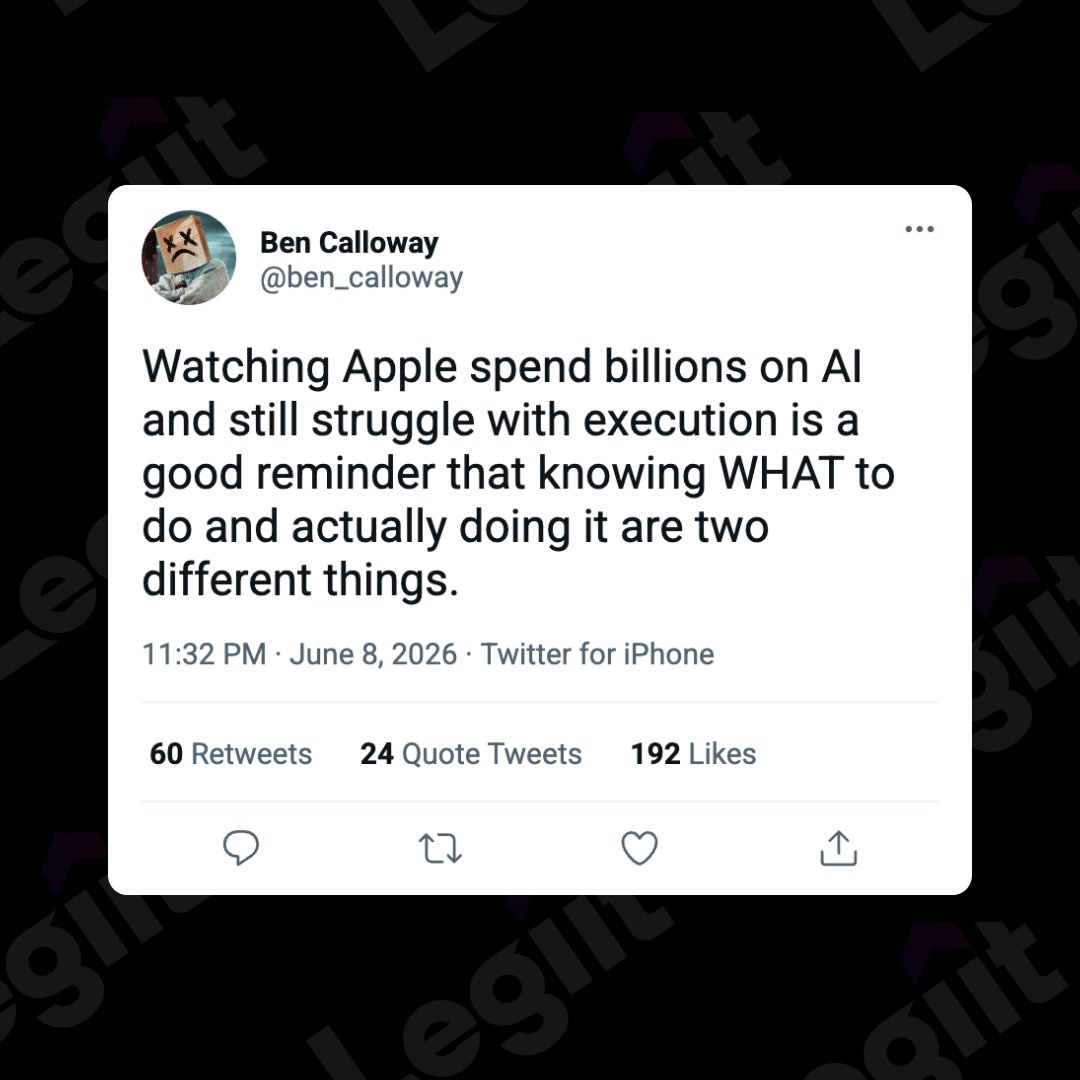
He's touching on something most business owners deal with every day.
Apple has some of the smartest people on the planet.
Unlimited resources.
Unlimited data.
Unlimited expertise.
And yet they're running into the same thing the rest of us run into:
Knowing what to do and actually doing it are two different jobs.
That's why most businesses don't need more information.
They need a clearer path from insight to action.
Legiit was built for exactly that.
Not just to tell you what's wrong.
To help you figure out what matters first, what to do next, and how to keep moving forward.
14
Jun 9
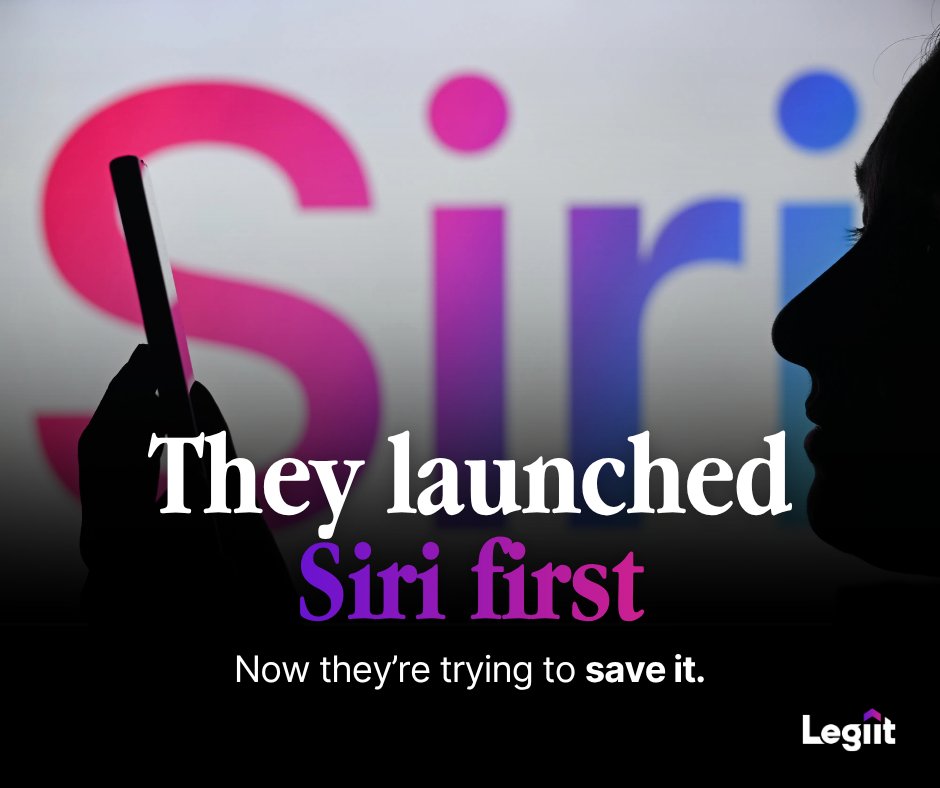
They launched Siri first.
Now they’re trying to save it.
That’s the uncomfortable part of being first.
When Apple introduced Siri with the iPhone 4S in 2011, it felt like the future had arrived. You could talk to your phone and it would talk back. For a lot of people, that was their first real taste of what an intelligent assistant could feel like. Apple itself positioned Siri as one of the headline features of the iPhone 4S.
And for a while, that was enough.
Siri had the head start.
Apple had the brand.
The product felt ahead of its time.
But “early” and “ahead” are not the same thing forever.
That’s the part a lot of businesses learn the hard way.
You can introduce the thing everyone notices.
You can create the category moment.
You can even become the name people associate with the whole idea.
And still… fall behind.
That’s what happened with Siri.
As AI kept moving, other assistants started to feel more useful, more conversational, and more capable. While the market pushed forward, Siri started to feel less like the future and more like an old first draft of it. Reuters framed Apple’s 2026 WWDC around exactly that question: whether Apple could finally close the AI gap and “save Siri.”
And that’s what makes this such a good business story.
Because the problem wasn’t that Apple had no idea where the market was going.
The problem was that the market moved faster than one of Apple’s most famous products did.
That’s a brutal thing to face when you’re a company known for being ahead.
Apple had already promised major AI improvements to Siri. Then some of those upgrades were delayed into 2026, which made the gap even harder to ignore.
And once that happens, you usually have two options:
Pretend the gap is not real.
Or rebuild in public.
At WWDC 2026, Apple chose the second option.
Reuters reported that Apple unveiled a major overhaul called Siri AI, with more conversational abilities, better context awareness, stronger integration with personal data like messages and calendars, and more useful on-screen understanding. Reuters also described it as Apple’s biggest effort yet to catch up in the AI race.
That matters because this is not really a story about voice assistants.
It’s a story about what happens when a product that once felt magical stops improving fast enough.
And honestly, that happens in business all the time.
Not always that dramatically.
Not always in public.
But it happens.
A landing page that used to convert stops pulling its weight.
A service offer that once felt strong starts sounding generic.
A product feature that used to impress people starts feeling basic because the market moved.
At first, it’s easy to ignore.
Because the brand is still strong.
Because people still know your name.
Because being first bought you time.
But eventually, the market stops caring who got there first.
It starts caring who is still improving.
That’s the real lesson in the Siri story.
Apple didn’t fix this moment by pretending Siri was fine.
It had to admit the product needed real work.
Then it had to rebuild the parts that were no longer strong enough.
That’s one of the reasons this story connects so naturally to what we’re building at Legiit.
Because a lot of business owners are in that exact kind of moment, just on a smaller scale.
Something in the business is slipping.
The website is not doing what it should.
The content is weak.
The rankings are stalled.
The messaging is not landing.
The strategy feels scattered.
The problem is not always effort.
A lot of the time, the problem is not knowing exactly what’s falling behind.
That’s why Legiit talks about the dashboard as a diagnostic tool that tells you what’s wrong instead of leaving you to guess. It’s also why the newer dashboard updates are so focused on audits, action plans, “do this next,” and context-aware recommendations. The whole point is to make it easier to see what matters, fix what matters, and move forward with better clarity.
That’s the smarter version of growth.
Not endless guessing.
Not pretending weak spots are fine.
Not hoping the market won’t notice.
Just a clear look at what needs work, and a better plan for fixing it.
Apple launched Siri first.
But the market reminded everyone that being first is only the beginning.
The companies that stay relevant are the ones willing to rebuild what is no longer good enough.
That’s true for Apple.
And it’s true for every business trying to grow.
Think Big.
Fix what matters.
Build with Legiit.
104
Jun 7
Because your business shouldn’t require you to do everything.
Legiit is where you go when you need the right person (and the right tools) to keep things moving, without the chaos.
19
Jun 2
Most small business owners are wasting time with AI and still not getting real answers.
This new video breaks down a smarter way to use AI: less noise, more strategy, and clearer next steps.
Watch here:
youtu.be/XWpD3XsEpuY
1
48
May 31
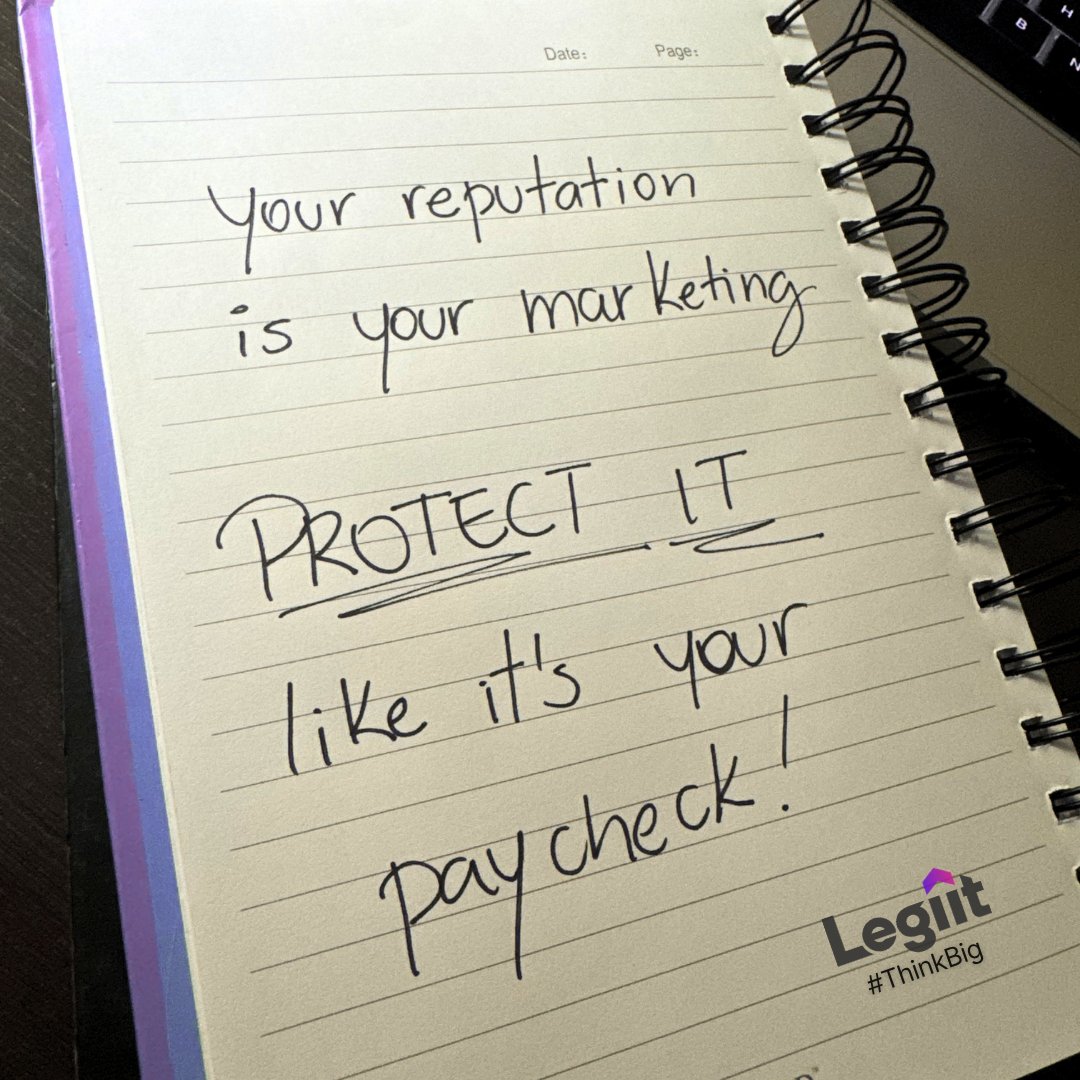
Your reputation is not separate from your marketing.
It is your marketing.
Every post, every promise, every reply, every missed detail… it all says something.
Protect it like it pays you.
Because it does.
2
42
May 27
Go say hi to Lara.
Ask her the messy question. See what happens.
Try it free.
18
May 25
He went to Italy for coffee.
He came back with a billion-dollar idea.
What Howard Schultz saw there wasn’t just espresso.
It was the café experience itself. The atmosphere, the routine, the way people gathered, talked, and kept coming back. The coffee mattered, but the environment around it mattered just as much.
That’s what changed his view of Starbucks.
The company had started in Seattle in 1971, founded by Jerry Baldwin, Zev Siegl, and Gordon Bowker, as a small shop selling coffee beans. Schultz saw the potential for something bigger: not just a coffee store, but a “third place” between home and work.
That idea became the turning point.
What I like about this story is that it highlights something a lot of businesses miss:
People are often not just buying the product.
They’re buying the experience around the product.
That’s true in coffee.
And it’s true in almost every business.
How your brand feels.
How clear your messaging is.
How easy it is to move from interest to action.
How smooth the overall journey feels.
Those things matter.
That’s also why this story connects so well to Legiit.
A lot of business owners don’t just need more tools or more services. They need a better growth experience: clearer direction, less guesswork, better execution, and a smoother way to understand what to fix and what to do next.
That’s where good systems make a difference.
Starbucks became bigger than coffee because it made the whole experience memorable.
That’s a strong reminder for any business owner:
sometimes the product is not the only thing you need to improve.
Sometimes the real opportunity is in the experience surrounding it.
Think Big.
Build better experiences.
Build with Legiit.
43
May 24
What do you think? Is SEO Dead?

1
1
54
May 22
POV: you’re finally making progress…
and the simulation goes “not on my watch.”
Anyway, no shenanigans.
Just keep moving. #thinkbig
1
1
24
May 20
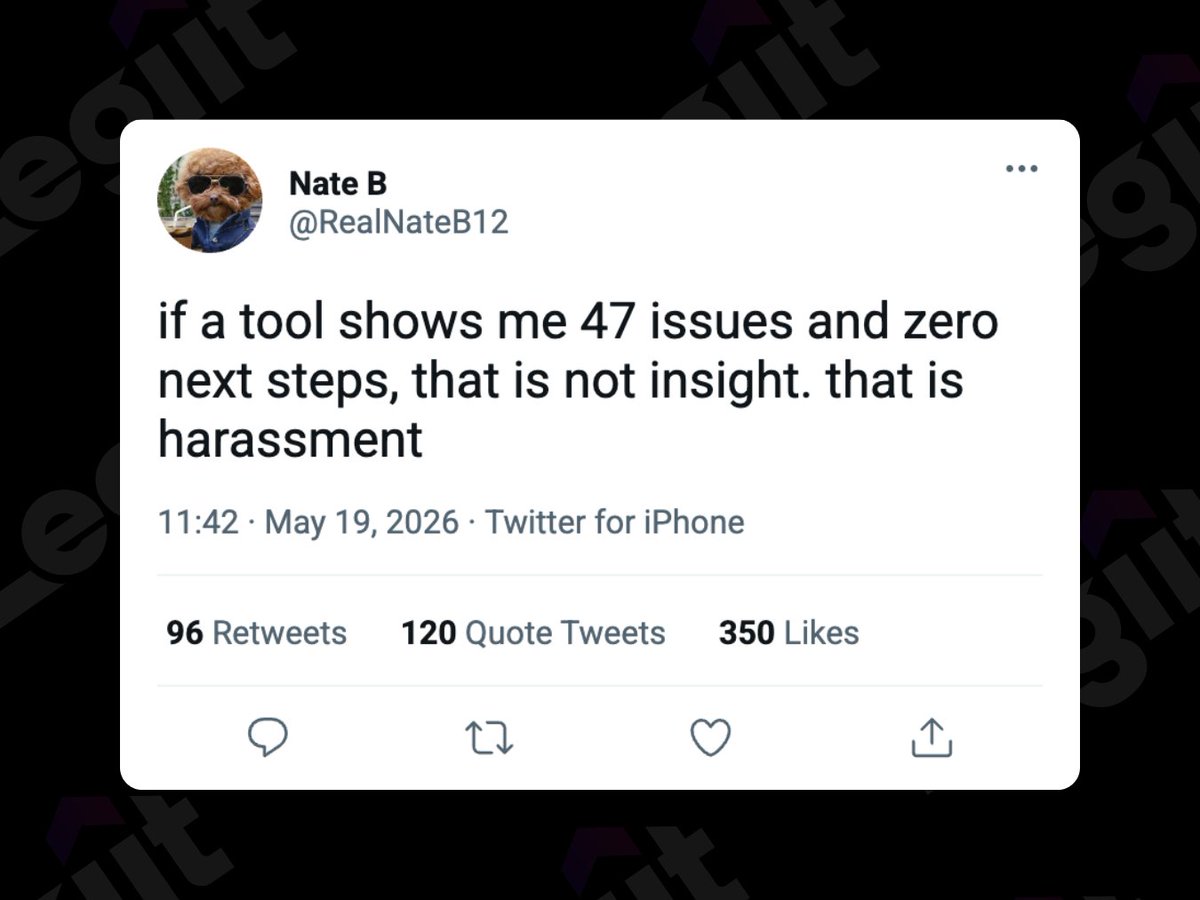
He’s right.
There’s a very specific type of stress that comes from opening a tool and realizing you just got assigned 47 new problems before coffee.
Especially when half of them sound like:
“optimize metadata structure hierarchy”
Cool. Thanks. Incredibly helpful.
The whole point of the Command Center is not just finding issues.
It’s helping you understand:
what matters,
what can wait,
and what actually moves the business forward.
Because “here are 47 problems, good luck” is not a strategy.
1
1
23
May 20
Try the Command Center free and see what’s actually holding your business back:
legiit.com/dashboard/start
14