
Joined June 2009
- Tweets 4,543
- Following 733
- Followers 6,681
- Likes 11,883
481 Photos and videos












leon retweeted

6 Apr 2024
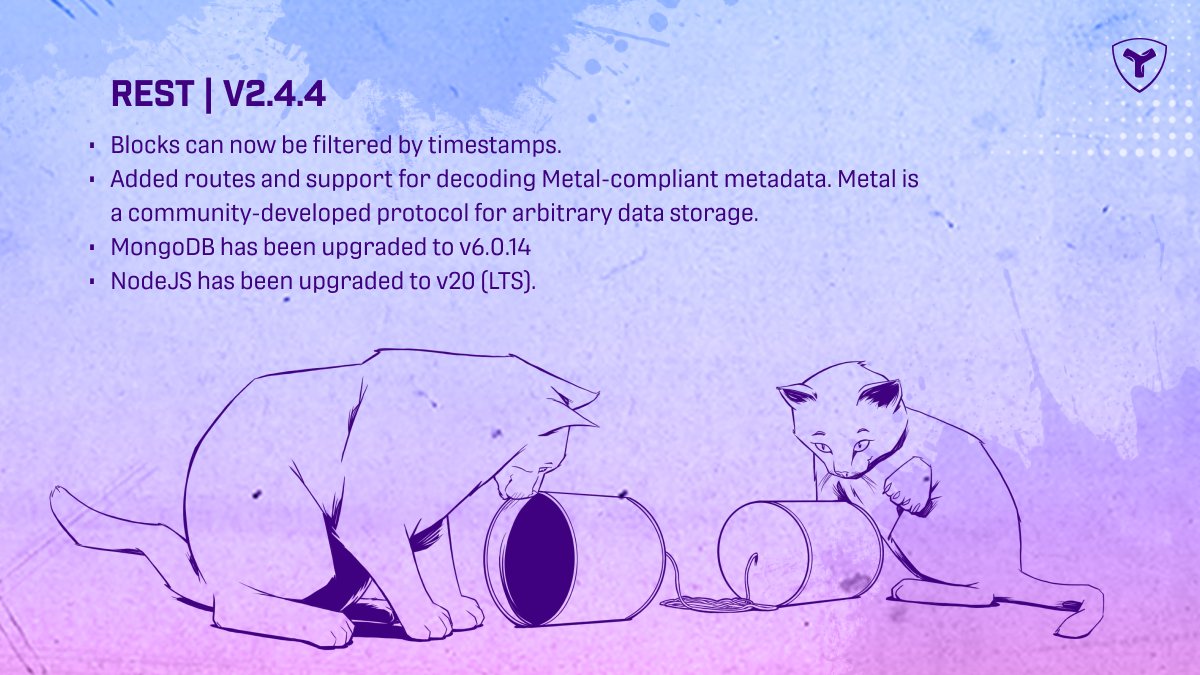
This update brings two community contributions to the core protocol: the ability to filter blocks by timestamp, and support for decoding Metal-compliant metadata.
A big round of applause to our iconic space lion @toshiya_ma for seeing this through.
6 Apr 2024

Rest has also been updated, and brings support for decoding METAL, a protocol for arbitrary data storage on the Symbol network. A special thanks to @toshiya_ma for the contribution!
Grab it here: github.com/symbol/symbol/rel…
1
34
107
10,737

25 Mar 2024
Been so busy with family and filling orders, I haven't even had time to tweet!
My daughter broke both her arms, then a nasty strain of influenza B moved in, and for every order I ship, two more come in.
Everyone's good now. It's a peaceful day w/ sun shining in the snowfall 🌤️🌨️
1
7
245
leon retweeted

24 Mar 2024
Hello, #Symbol node operators.
For 125 nodes the SSL certificate will expire next month. Please make sure to renew your node certificates!
You can check your node certificate valid date here symbol-tools.com/symbolTools… (SSL certificate column).
1
20
32
9,067
leon retweeted

20 Feb 2024
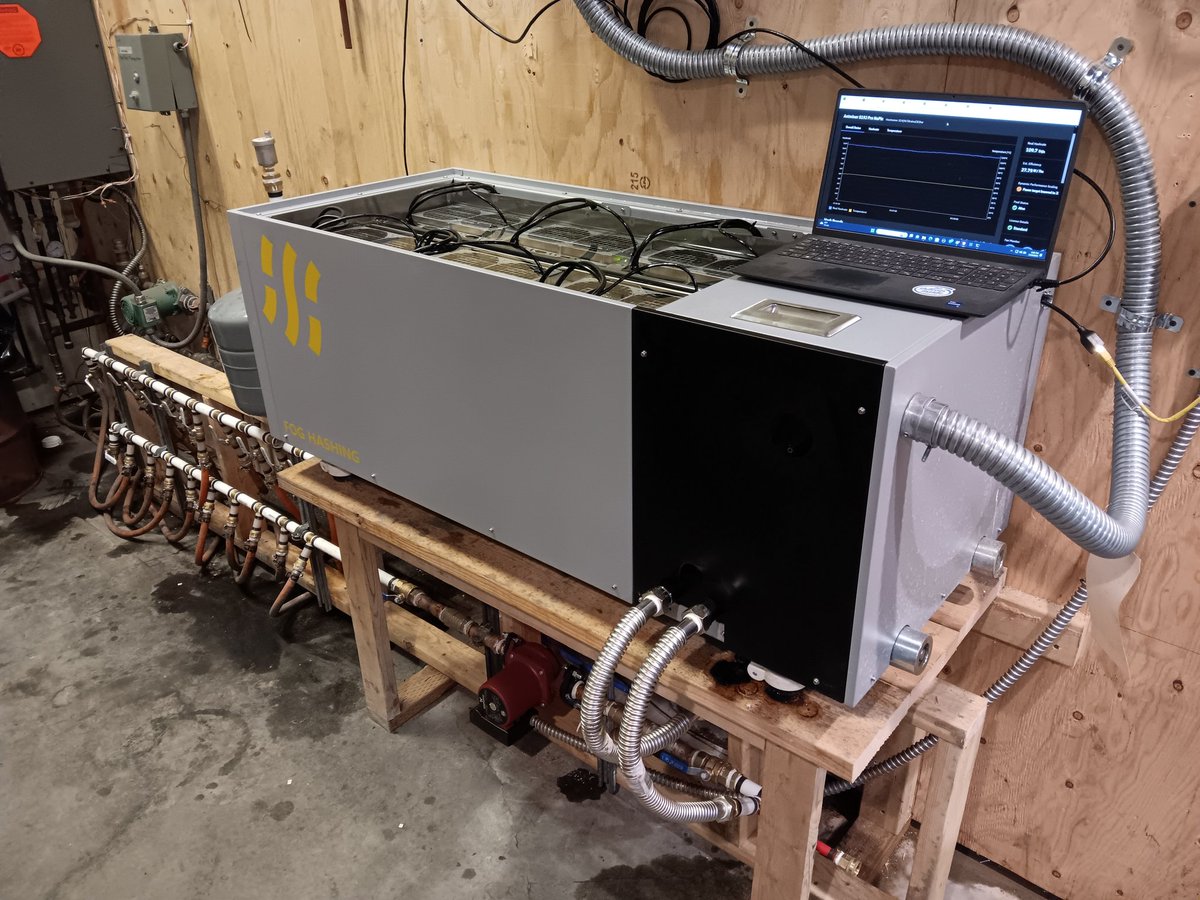
The local #Bitcoin #carwash is where I like to go. Check out this @FogHashing B6 running at 20kw (68k BTU) with some ASICs from @kaboomracks
Propane bill slayer 2.0
The manifold connects to a hydronic snow melt system. Previous propane expense of $25 per day is now $24 profit.
13
34
244
59,070
leon retweeted

4 Feb 2024
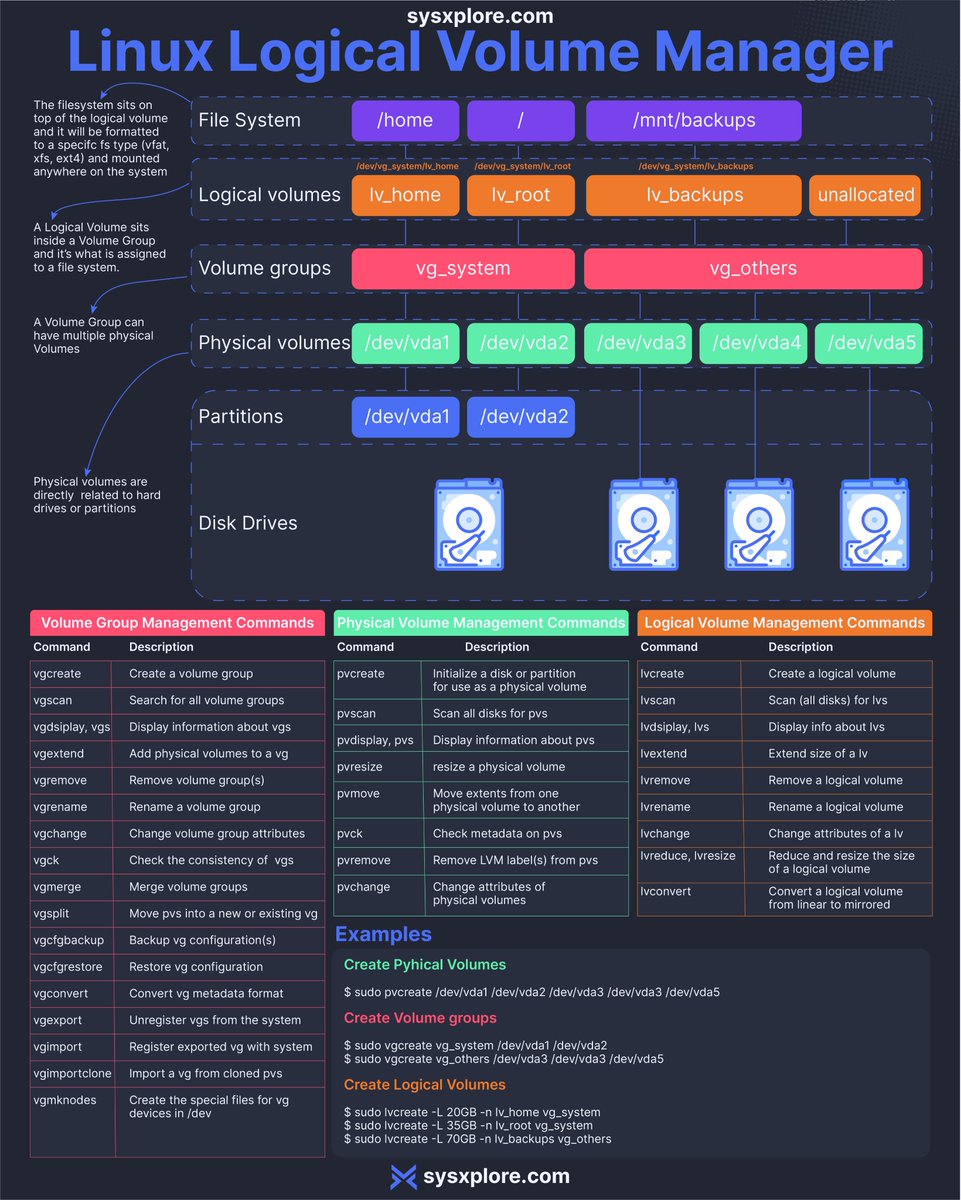
In Linux, Logical Volume Manager (LVM) is a storage management framework that provides a more flexible approach to managing disk storage than traditional partitioning. LVM works by creating an abstraction layer between physical storage devices and the file system, allowing you to create logical volumes that can span multiple physical disks.
With LVM, you can create volume groups from one or more physical disks, and then create logical volumes within these volume groups. Logical volumes behave like traditional disk partitions, but they have several advantages:
• Logical volumes can be resized dynamically while online, without the need to unmount filesystems or reboot the system. This flexibility allows you to adapt to changing storage needs without downtime.
• Logical volumes can be easily extended by adding more physical disks to the volume group. This scalability allows you to grow your storage without disrupting your existing data.
• LVM provides features like snapshots, which allow you to create point-in-time copies of logical volumes for backup or testing purposes.
To illustrate the importance of LVM, consider a scenario where you have a Linux server with two physical disks, and you want to create a logical volume for your web server's data. Initially, you create a logical volume that spans both disks, giving you more storage capacity than a single disk could provide. Later, as your web server's data grows, you can add a third disk to the volume group and extend the logical volume to include this new disk, increasing its size without any downtime.
8
118
548
28,077
3 Feb 2024
I put some replacement #Goldshell HS6 hashboards on ebay.
ebay.com/itm/204641784478
1
164
leon retweeted

2 Feb 2024
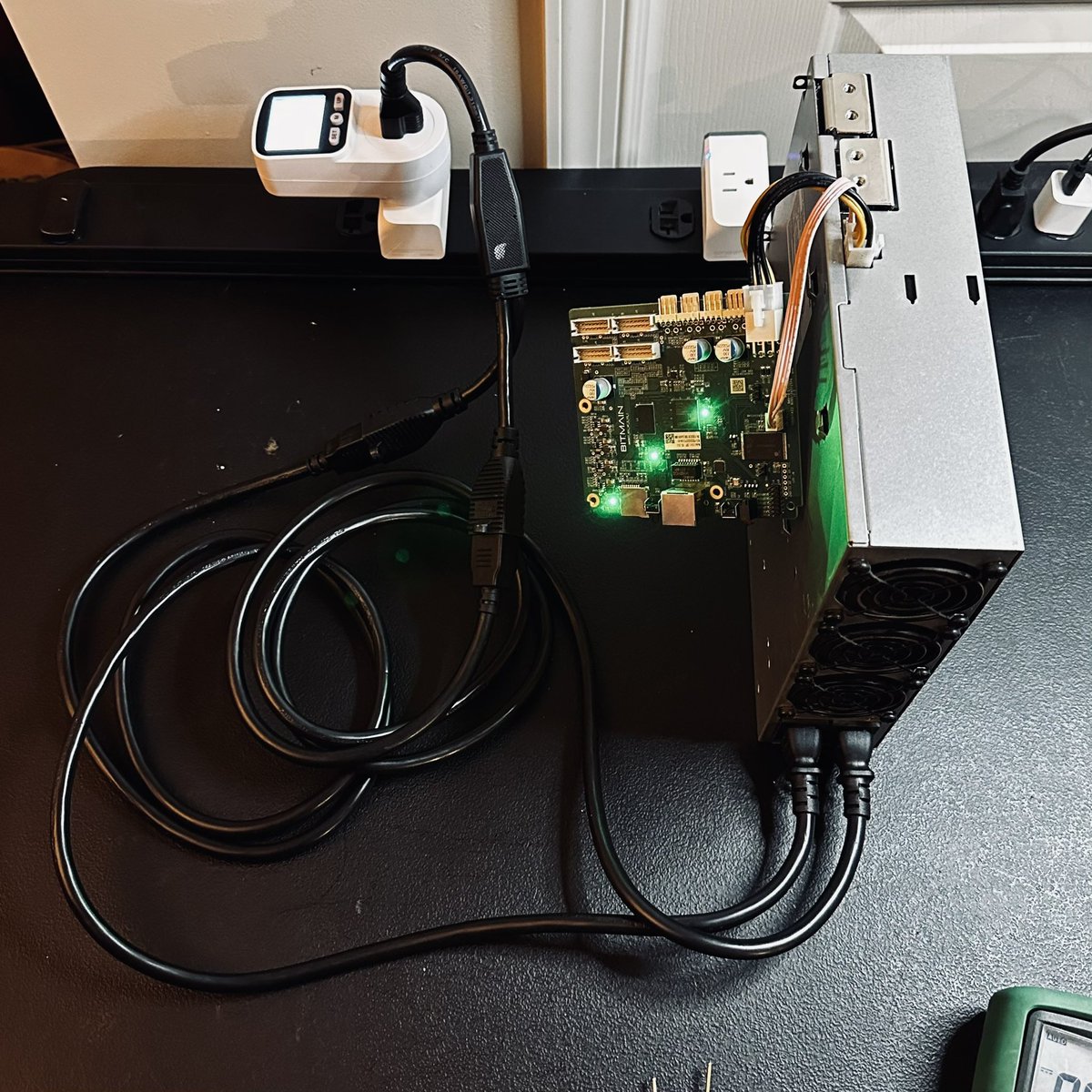
The APW12 Mod Guide is an easy follow.
@zbomstaz is relentless in development and jailbreaking the x19 series for 120v.
🔥🔥🔥🔥🔥🔥Get at it! Buidl cool shit.
cdn.shopify.com/s/files/1/07…
4
33
1,677
1 Feb 2024
The things you can achieve just by "thinking about" it.
#BTC
31 Jan 2024

I gained 150 followers overnight just because I said I was thinking about putting a small allocation into Bitcoin.
🤯🤯🤯
2
362
31 Jan 2024
Come ask me questions!
I reserved time to make sure I can give full answers.
I'm giving $10 in $SC to the top 3 questions or comments.
31 Jan 2024

AMA with @leondidit is live. Come to ask, discuss anything about SC Mining Experiences. $SC
1
2
348
31 Jan 2024
Save $100 on a new @goldshellminer $SC Miner with coupon codes:
LEONSCL for $100 off the SC Lite
LEONSC5P for $100 off the SC5 Pro
You can power these new #Siacoin miners with a standard 110v USA outlet.
goldshell.com/product/goldsh…
1
340

30 Jan 2024
January 31st | 10AM EST
Get the inside scoop from my #Siacoin mining farm.
We will discuss the current state of the market, compare hardware, and share a first hand perspective of what it is like mining $SC with @goldshellminer
$30 in $SC goes to the top 3 questions or comments.
1
1
4
656
30 Jan 2024
Goldshell is the leading manufacturer of ASICs for the blake2b-sia algorithm.
I have been mining with Goldshell products for years and bring a unique and experienced perspective.
If you're curious about #Siacoin mining, this AMA is for you!
2
308
leon retweeted

30 Jan 2024
Join us for an AMA with @leondidit about SC mining on 1/31 at 10:00 AM EST!
Hear LEON's real-life experiences with our SC miners, his thoughts on our latest models, and his insights on SC.
Get ready to learn, ask questions, and be a part of the discussion!
🔥Leon will give $10 worth of $SC to 3 people who ask good questions.
📌 Mark your calendars and join us for an informative chat about SC mining! #MiningTips #SCMining $SC #Siacoin

1
1
9
4,871