
@LibraryThing founder. Lead @TalpaSearch developer. Father, hacker, bibliophile, ex-classicist, Mainer, Catholic.
Joined May 2007
- Tweets 111,900
- Following 3,377
- Followers 14,435
- Likes 42,545
7,379 Photos and videos










Tim Spalding 🇺🇦 retweeted

I think the White House just found the golden ticket to wreck Anthropic.

JUST IN: Anthropic says a “huge percentage” of its own employees are now barred from accessing Fable 5 & Mythos 5 under U.S. restrictions.
1
2
19
1,739
Tim Spalding 🇺🇦 retweeted

i can think of no circumstance where an ai model that is a critical national security risk for foreigners somehow becomes safe for all americans to use.
Jun 13

The US government, citing national security authorities, has issued an export control directive to suspend all access to Fable 5 and Mythos 5 by any foreign national, whether inside or outside the United States, including foreign national Anthropic employees.
The net effect of this order is that we must abruptly disable Fable 5 and Mythos 5 for all our customers to ensure compliance.
Access to all other Claude models is not affected.
We apologize for this disruption to our customers. We believe this is a misunderstanding and are working to restore access as soon as possible.
Read our full statement: anthropic.com/news/fable-myt…
98
151
1,021
118,505
Lick Trump's nuts or he'll destroy your company.

Three months ago, @DeptofWar kicked @AnthropicAI out of our building—forever.
Every passing day proves why that was the right move. 🇺🇸
92
Tim Spalding 🇺🇦 retweeted

13 Mar 2022
Tulsi Gabbard is parroting false Russian propaganda. Her treasonous lies may well cost lives.
18,943
12,783
60,902
I’ve now seen that the Fable block is a conspiracy to hurt Anthropic’s IPO and a conspiracy to gin up excitement for Anthropic’s IPO. The truth is there is no deep meaning here; Trump is a chimpanzee who shits in his hand and throws it to prove his dominance.
1
67
So we’re just going to pretend Trump has “export control authority” to restrict foreigners on US soil from using or working on products because we’re afraid of him?
Jun 13
The US government, citing national security authorities, has issued an export control directive to suspend all access to Fable 5 and Mythos 5 by any foreign national, whether inside or outside the United States, including foreign national Anthropic employees.
The net effect of this order is that we must abruptly disable Fable 5 and Mythos 5 for all our customers to ensure compliance.
Access to all other Claude models is not affected.
We apologize for this disruption to our customers. We believe this is a misunderstanding and are working to restore access as soon as possible.
Read our full statement: anthropic.com/news/fable-myt…
1
108
Tim Spalding 🇺🇦 retweeted

Jun 13
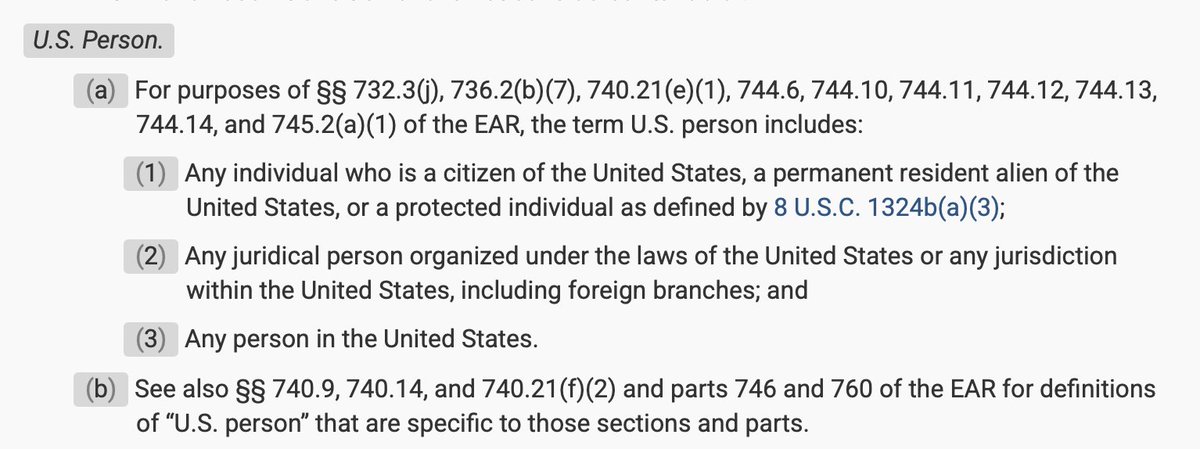
> any foreign national, whether inside or outside the United States
Wait what? Is there any precedent for an export control applying to immigrants in the US?
Jun 13
The US government, citing national security authorities, has issued an export control directive to suspend all access to Fable 5 and Mythos 5 by any foreign national, whether inside or outside the United States, including foreign national Anthropic employees.
The net effect of this order is that we must abruptly disable Fable 5 and Mythos 5 for all our customers to ensure compliance.
Access to all other Claude models is not affected.
We apologize for this disruption to our customers. We believe this is a misunderstanding and are working to restore access as soon as possible.
Read our full statement: anthropic.com/news/fable-myt…
104
16
798
131,316
Tim Spalding 🇺🇦 retweeted

Jun 12
John XII turned a Roman cathedral into a brothel, allegedly assaulted female pilgrims in St. Peter’s, and died in another man’s bed at 27.
Leo XIV said be compassionate to immigrants.
4
50
380
12,100

Jun 13
I call bs. (Also, it's ANY foreign access. I'm an American with an American account in Northern Ireland and I'm locked out.)
Jun 13
The US government, citing national security authorities, has issued an export control directive to suspend all access to Fable 5 and Mythos 5 by any foreign national, whether inside or outside the United States, including foreign national Anthropic employees.
The net effect of this order is that we must abruptly disable Fable 5 and Mythos 5 for all our customers to ensure compliance.
Access to all other Claude models is not affected.
We apologize for this disruption to our customers. We believe this is a misunderstanding and are working to restore access as soon as possible.
Read our full statement: anthropic.com/news/fable-myt…
1
155
Tim Spalding 🇺🇦 retweeted

Jun 12
Umm…
Ok, I know there are passages where the angels have >2 appendages. But I think those are usually wings, and I think the number is never 3.
Also, is America made of hands?


The United States of America belongs to our Lord Jesus Christ, the Son of God the Father! ✝️🇺🇸

3
1
8
969
Jun 12
Fight? It's a fight between Jean-Claude Van Damme and a soap bubble.

today we are fighting about Greek being much more fun
2
2
1,006
Jun 12
With respect, Britannica went down 16 years ago, when the last edition stopped being printed. Britannica.com is hosted on AWS EC2, so the website goes down every time Amazon goes down.

Unlike Meta, these bad boys never go down.

ALT Encyclopedia Britannica volumes on a shelf
2
175

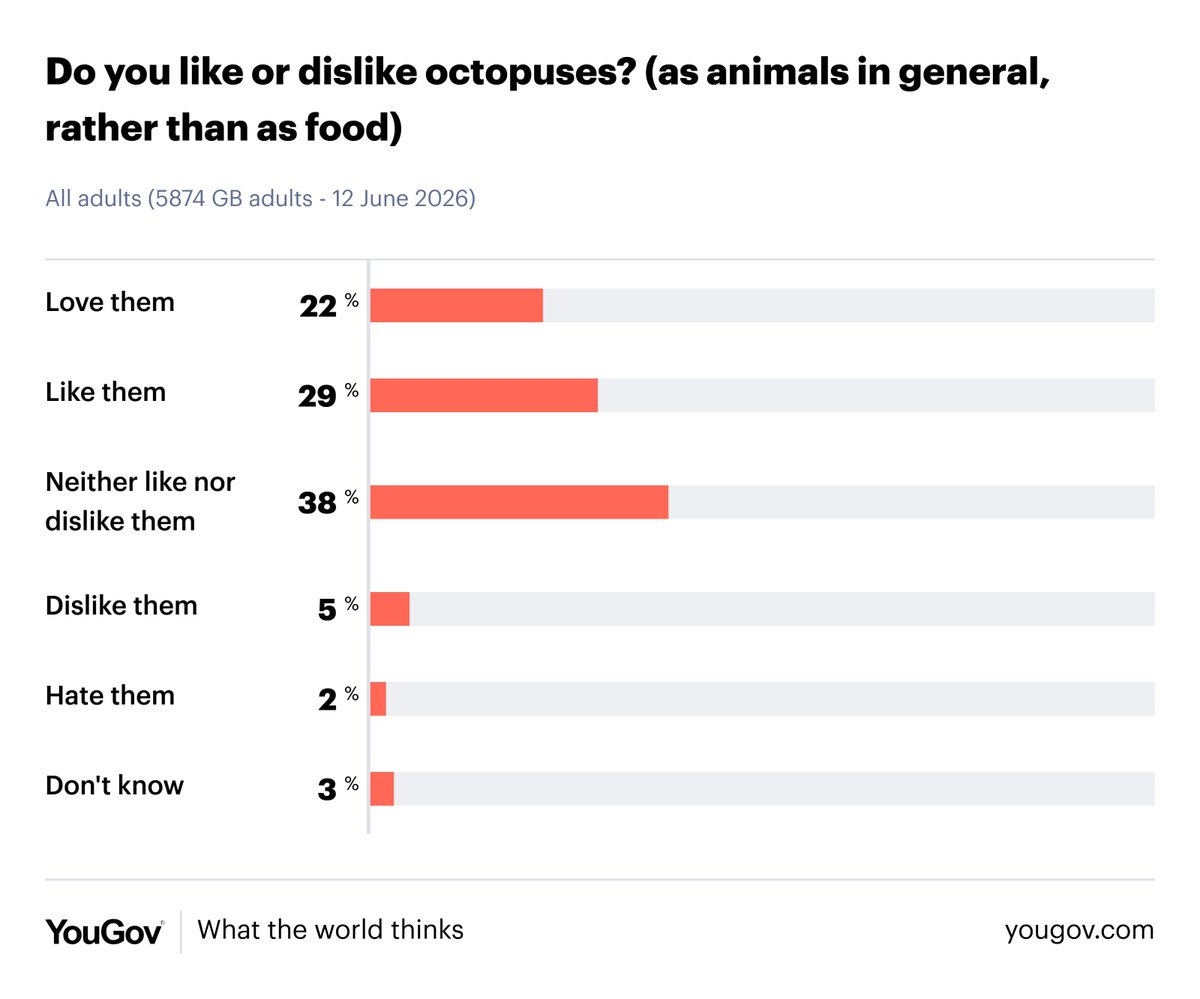
🐙🐙🐙With our new poll showing that 51% of Britons like octopuses, here's what the public think are acceptable plural terms for 'octopus'
Octopi: 57%
Octopuses: 37%
Octopus: 21%
Octopodes: 4%
(Respondents could choose multiple options)

With octopuses becoming an increasingly common sight in UK water due to climate change, our poll today finds that 51% of Britons say they like or love the eight-armed aquatic animals
Results link in replies
5
7
26
32,849
Tim Spalding 🇺🇦 retweeted

Jun 12
The water math on AI is the most misunderstood statistic in tech, so let's actually run it.
A ChatGPT query uses about 0.3 mL of water for cooling, per OpenAI's own disclosure. The harshest academic estimate, which also counts the water consumed by the power plants feeding the servers, lands at 10 to 25 mL. Call it half a tablespoon at the absolute worst case.
Now the comparisons. One hamburger takes roughly 2,500 liters of water to produce. That single burger equals somewhere between 100,000 and 8 million ChatGPT queries depending on whose estimate you trust. A pair of jeans cost 7,500 liters before it reached your closet. One toilet flush is 6 liters, or about 20,000 queries. US golf courses pour out around 1.5 billion gallons every day, dwarfing the direct cooling water of every data center in the country.
So why does the robot demanding a thousand glasses of water feel true? Because the totals sound enormous and nobody does the division. "Data centers consumed billions of gallons" is accurate and terrifying right up until you divide billions of gallons by trillions of queries and get a number smaller than the drop left in your glass when you think it's empty.
The legitimate water story is local. A big facility sited in a drought-stressed basin can strain that specific community, which is why Chile blocked one. That's a siting problem, solvable with policy and closed-loop cooling.
The cartoon will outlive the correction anyway. Per-unit math never beats a thirsty robot at the foot of the bed.


38
45
331
102,534
Jun 12
To put things in context, we could zero-out Musk and the next nine Americans (Zuck, Bezos, Page, Brin, Ellison, Huang, Buffet, and two Waltons), and it would cover 6% of the US debt. It would cover only 1/4 of the debt added by Trump alone.
Jun 12

Would you agree with confiscating all of Elon Musks trillion pounds in order to fix world hunger, provide the world with clean drinking water, and reforesting the Amazon?
1
134




Tim Spalding 🇺🇦 retweeted

I’ve been informed by folks on this site that The Hobbit and now Jane Austen are too difficult for teens. I can’t stress enough how condescending this is to teenagers. You’re taking away all the things that might bring them joy and leaving them with no pastimes but scrolling.
712
1,419
10,942
176,016
Tim Spalding 🇺🇦 retweeted

This is the flight set to take multiple people who proved to an immigration judge that they would be persecuted in their home countries and dump them in a war-torn nation that the United States warns its own citizens to avoid traveling to for any reason.
Stop the flight!
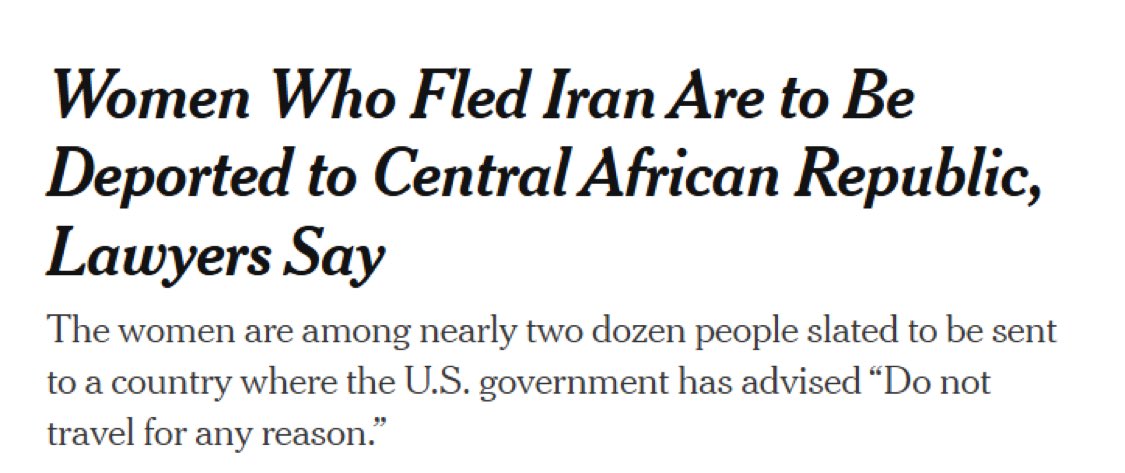

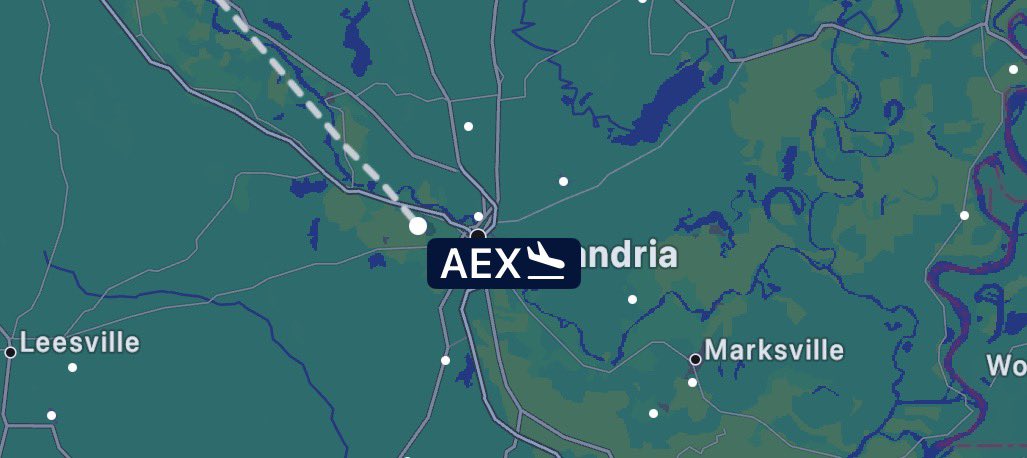
‼️An ICE Air flight (OAE2272) is scheduled to arrive in Alexandria, LA at 2:57pm local time to stage for a deportation(s). It’s highly likely that this is the flight carrying Iranian, Afghan & Syrian nationals to Central African Republic per @nytimes. Link below ⬇️
8
136
346
37,150