
INFJ/INFP . Dreamer . Level 46 . Gamer . Developer
Joined February 2013
- Tweets 12,845
- Following 1,661
- Followers 151
- Likes 78,504
464 Photos and videos















Pinned Tweet

24 Jun 2020
Reality is Relative
Truth is Absolute
Time does not exist
5
Keyur retweeted

Jun 11
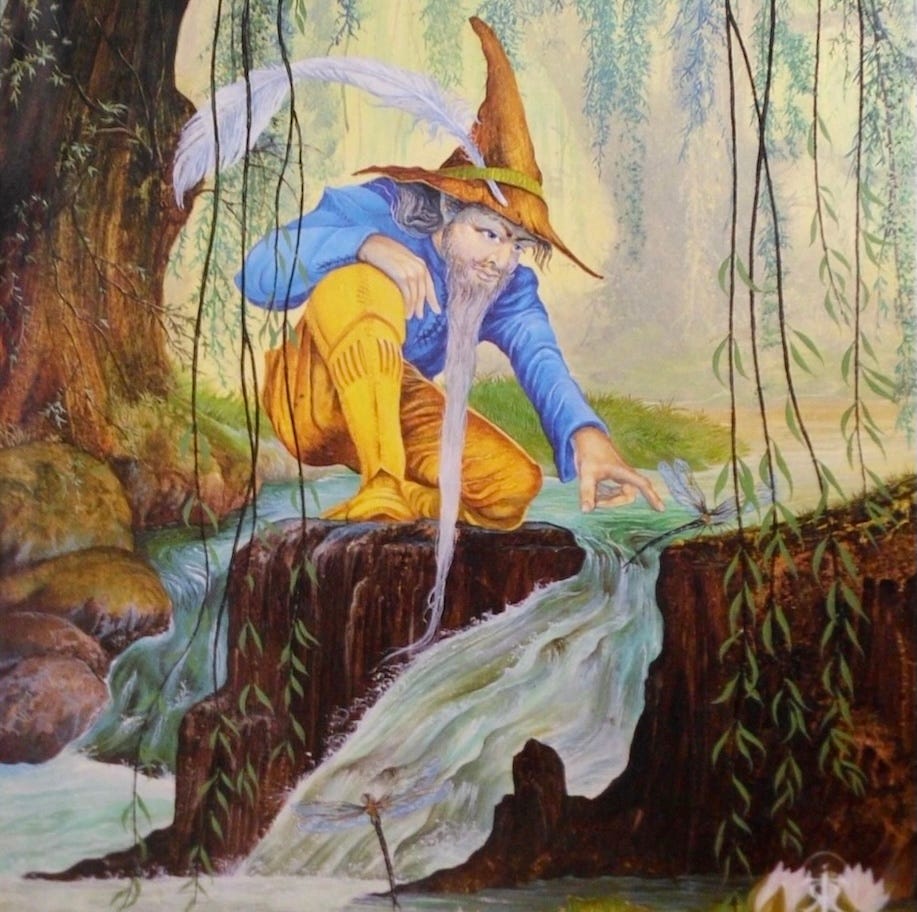
Tom Bombadil is the most mysterious character in The Lord of the Rings.
He's the oldest being in Middle-earth and completely immune to the Ring's power — but why?
Bombadil is the key to the underlying ethics of the entire story, and to resisting evil yourself...
Tom Bombadil is an enigmatic, merry hermit of the countryside, known as "oldest and fatherless" by the Elves. He is truly ancient, and claims he was "here before the river and the trees." He's so confounding that Peter Jackson left him out of the films entirely.
This is understandable, since he's unimportant to the development of the plot. Tolkien, however, saw fit to include him anyway, because Tom reveals a lot about the underlying ethics of Middle-earth, and how to shield yourself from evil.
The hobbits meet Bombadil early on in their quest, before they reach Bree and the Prancing Pony Inn. He rescues Merry and Pippin from Old Man Willow, and invites the hobbits to stay at his house in the Old Forest.
There, the hobbits realize something strange about him: the Ring has no power over Bombadil whatsoever.
When he wears it, he remains visible. He treats it as a plaything, making it disappear with a magic trick. Indeed, at the Council of Elrond, Gandalf rejects the idea of giving the Ring to Tom, for he would likely misplace it or forget about it entirely.
So just who is he, exactly?
When Frodo asks this very question to Tom's wife Goldberry, she simply responds "He is." It's a cryptic answer that echoes God's famous answer to Moses in the Book of Exodus: "I am who I am."
Thus, many theorize that Bombadil is God, some kind of angelic being, or even the spirit of the Music of the Ainur (due to the fact that he is constantly singing). But Tolkien's letters reveal something considerably more interesting…
In April 1954, Tolkien wrote:
"The story is cast in terms of a good side, and a bad side, beauty against ruthless ugliness, tyranny against kingship… but both sides in some degree, conservative or destructive, want a measure of control.But if you have, as it were, taken a 'vow of poverty', renounced control, and take your delight in things for themselves without reference to yourself… then the questions of the rights and wrongs of power and control might become utterly meaningless to you, and the means of power quite valueless…"
So, Bombadil is a representation of what it means to take pure delight in the world around you — to experience people and things simply as they are, without any thought for what they could be or how you could use them. And this is why the Ring has no power over him.
To Bombadil, the One Ring is simply a ring, and the possibilities of what can be achieved through its power are of no importance. He is able to resist its evil precisely because he is entirely content with the world around him.
At the end of the story, having accomplished what he set out to do in Middle-earth, Gandalf pays Tom a visit before returning to the Undying Lands:
"I am going to have a long talk with Bombadil: such a talk as I have not had in all my time."
If Bombadil is the epitome of simply enjoying life and being, Gandalf is the epitome of doing. He guides the hobbits, fights the Balrog, and runs up and down Middle-earth to help destroy the One Ring.
But now that he's finally liberated from doing, he immediately heads to Bombadil's. He does so with a sense of relief, as if he's at last able to access a purer and higher mode of being — a sort of innocence that cannot be fully experienced by those consumed by doing.
Of course, by this Tolkien doesn't disparage the value of action. The entirety of LOTR displays the importance of rising up against evil, even in the face of all odds. But with the inclusion of Bombadil, he does remind readers that fighting isn't all there is.
Bombadil reminds us that while it's important to strive and *do*, it is just as important to occasionally step back and *be*. Indeed, your ability to do so plays a crucial role in helping you resist the allure of evil…
Read the full piece here:
theculturist.io/welcome
The unsung hero of The Lord of the Rings...
221
1,272
7,366
417,594
Keyur retweeted

May 25
I’ve been reading the Vedas a lot recently, and what’s stood out is how it doubles as an encyclopedia as well as a religious text. Astronomy, medicine, mathematics, metallurgy, linguistics, are all woven through hymns and rituals as one body of knowledge. Simply calling it “religious” forces it into a Western category that didn’t have the apparatus to recognize what it actually was. It’s closer to a tradition of formalized epistemology in which metaphysics, observation, and language form one continuous inquiry, which as a result led Indian civilization to develop along a fundamentally different path because of it.
You can see the effect most clearly in the sciences. Around 600 BCE, the Vedic record describes a surgical procedure that matches modern rhinoplasty and is still foundational to reconstructive surgery today. Centuries before Western Europe stopped treating eclipses as supernatural, Indian scholars had calculated the circumference of the earth within 0.2% and explained eclipses as shadows. Centuries before Plato and Aristotle rejected atomism, the Vedic tradition already held that matter is composed of indivisible particles combining into binary and triatomic compounds, transformable by heat. The first formal rules for zero and negative arithmetic appear in the Vedas, along with infinite-series derivations of π, sine, and cosine centuries before Newton and Leibniz.
The interesting question is how did they get so much right, so early? My best guess is language.
The Vedic tradition is unique compared to other oral traditions as it demanded letter-perfect oral transmission across generations. Around 500 BCE, scholars composed a generative grammar of Sanskrit called Panini so rigorous it anticipates Backus-Naur form, the notation that defines programming languages today, by 2,500 years. Sanskrit is recursive, rule-based, and built to minimize ambiguity. It reads more like mathematics than English.
When you think in a language built like that, the precision of the language becomes the precision of your reasoning. The West didn’t formalize this until much later. Kant argued our categories of understanding shape what we can know, Wittgenstein wrote that the limits of language are the limits of one’s world, and Kripke showed that naming doesn’t just describe things, it constitutes what they mean and how we can reason about them. All three touch the same insight which is that thought is downstream of language.
The Vedic tradition operated on that insight thousands of years earlier. To the point that they built a whole language first and used it to think clearly about everything else after. I find that all really fascinating.
140
885
4,608
282,466
Keyur retweeted

May 11
Imagine a room in the University College of Science, Calcutta, circa 1920. It is a space of terrifying asceticism: a single wooden plank for a bed, a solitary change of Khadi clothes drying on a string, & a smell... a pungent, nose-stinging cocktail of nitric acid & ancient Sanskrit manuscripts.
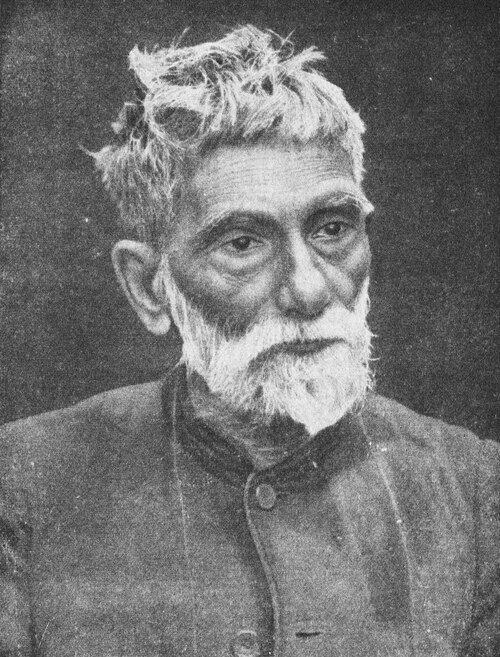
In the center of this austerity stands a man who looks like a sanyasi but thinks like an Emperor. He is currently scrubbing his own dhoti in a bucket. This man is the Chairman of a multi-million rupee chemical empire. He is the man who stole the fire of the Industrial Revolution from the British & hid it in a Bengali kitchen. He is Prafulla Chandra Ray, & he is about to prove that mercury has a soul.
Most textbooks mention he discovered Mercurous Nitrite in 1896. But here is the lesser known density behind that moment: At that time, the scientific world believed that nitrites of heavy metals were inherently unstable, they should not exist in a pure form. When Ray saw those yellow, needle-like crystals forming in his beaker, he was not just looking at a new chemical; he was looking at a Ghost. He had captured a Transient State of Matter.
When he sent his findings to London, the legendary chemist William Ramsay was stunned. A native in a poorly funded lab in Bengal had corrected the chemistry of the British Empire.
At the height of his fame, as the founder of Bengal Chemicals, Ray lived in a small room on the upper floor of University College of Science. He owned only 2 sets of clothes: a simple khadi dhoti & a coat. He washed them himself. He did not use a bed; he slept on a wooden plank.
Imagine the Chairman of a massive chemical corporation, standing over a bucket in the moonlight, scrubbing his own clothes, while his mind is calculating the molecular weight of a new alkaloid. He was a Capitalist by Day, and a Monk by Night.
Bengal Chemicals, India’s 1st pharmaceutical company was not started in a factory. It was started on a kitchen stove with his entire life savings. He would go to the local market, buy raw materials, & cook the chemicals in his house. He was competing against the massive British Imperial Chemical Industries. They laughed at him. They called his products Bazaar Medicine.
During the plague & the world wars, when British supplies were cut off, it was Ray’s Kitchen Chemicals that saved millions of Indian lives. He turned the Home Lab into a weapon of war.
He realized that for India to survive, it did not need 1 genius; it needed a Network. He mentored Satyendra Nath Bose (of Bose-Einstein Statistics) & Meghnad Saha. He gave away 90% of his salary to poor students.
He died in 1944, just yrs before Independence. He died in that same small room, surrounded by his students. He did not leave behind a palatial estate; he left behind a Formula for Self-Reliance. We remember the Industries, but we have forgotten the Man in the Dhoti who created them. We see Bengal Chemicals as a state-run entity, forgetting it was once a ghost project run by a man who lived on less than a rupee a day.
P.C. Ray was obsessed with Ancient Indian Chemistry (Rasaratna Samuccaya). He spent yrs reading Sanskrit manuscripts to prove that 1000s yrs before the West, Indian alchemists were already purifying mercury & creating Makaradhwaja.
He was the bridge b/w the ancient Rasa-Shastra & modern Quantum Chemistry. While the British looked at India & saw Dust, P.C. Ray looked at the dust & saw the Nitrites that would fuel a revolution. He was the only man who could hold a test tube in 1 hand & the soul of a nation in the other.
18
221
522
9,846


Keyur retweeted

May 8
誰もいないはずの深夜の神社で、なぜ出火したのか。
愛宕神社 松長昭権禰宜
「私どもは電気もスイッチも消してます。漏電はない」
「神社での焚き火も全くない」
1700年代に増改築された愛宕神社⛩️歴史ある遺物が燃やされている。
news.tv-asahi.co.jp/news_soc…
1,673
28,400
90,136
2,791,014

Keyur retweeted
May 2
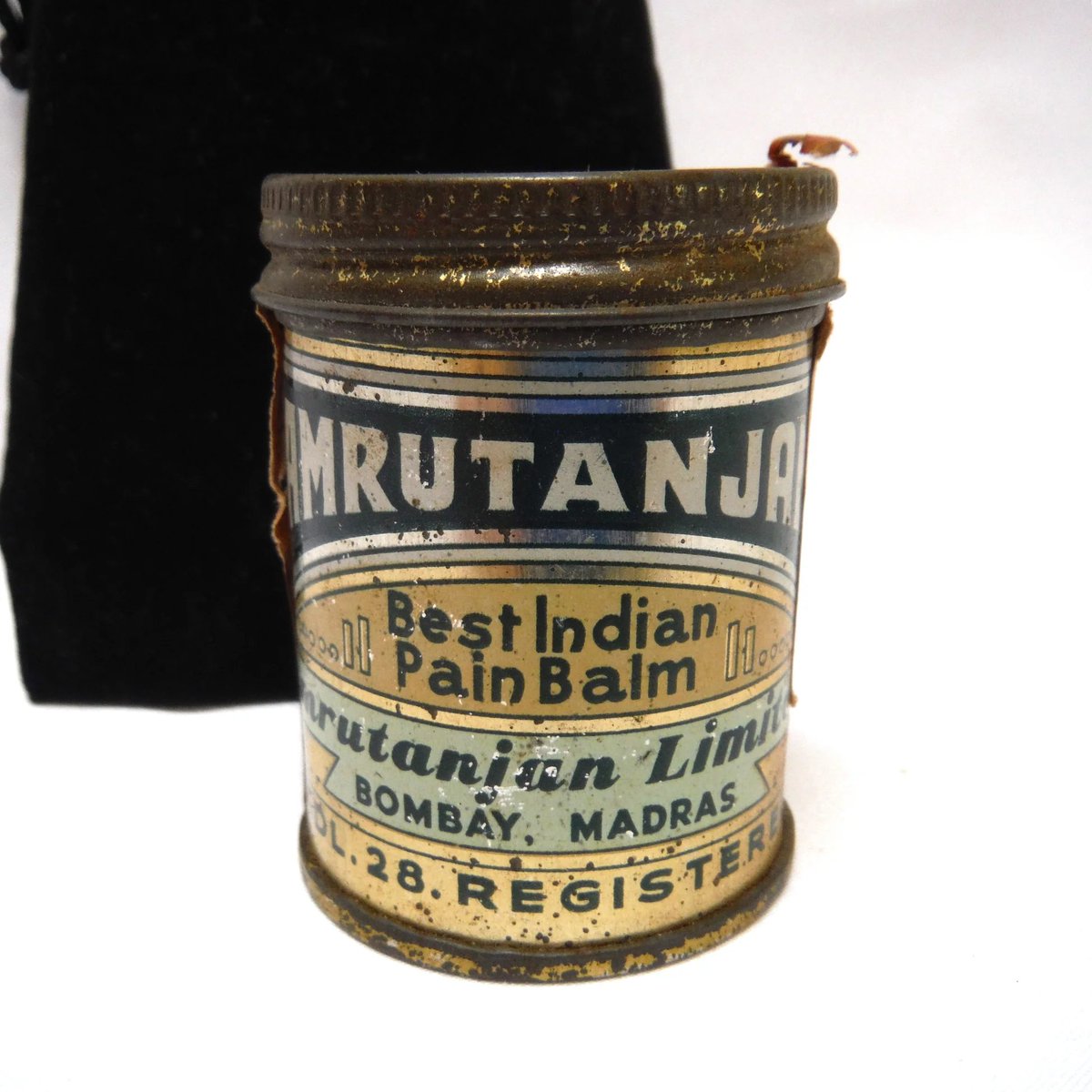
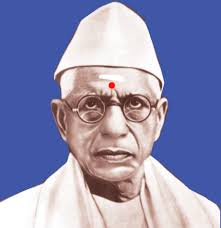
Before the world knew the power of Big Pharma, a journalist in a tiny lab in Bombay created a substance so potent it triggered a trade war with London. It was a yellow grease that did not just soothe headaches but funded a movement, bypassed British blockades, & became 1 of the few Indian products to make the Empire's own medicine look like scented water.
Unlike other brands started by chemists, Amrutanjan was founded by Kasinadhuni/Kasinathuni Nageswara Rao, a man who was primarily a journalist & a freedom fighter. In the late 1800s, the pain balm market in India was a British monopoly. If your head throbbed, you bought imported ointments. Rao saw this as a tax on pain. He retreated into a lab & perfected a formula that was significantly more potent than anything coming out of London.
The British tried to push their own balms like Vicks/early menthol rubs as sophisticated & odorless. They attempted to smear Amrutanjan as primitive because of its overpowering scent. Rao leaned into the scent. He realized that in a country where literacy was low, a brand could not just be a name, it had to be an experience.
He distributed free samples at music concerts (Sabhas) & religious festivals. By the time the British tried to patent the market for pain relief, the entire Indian public had already associated the smell of camphor & menthol with trust. The British balms felt alien & weak compared to the sensory explosion of the yellow tin.
The smell of Amrutanjan... that piercing, camphor-heavy aroma became the literal scent of the freedom struggle. If you walked into a room & it smelled of Amrutanjan, it was a silent signal: A patriot is present. It was a scent the British police could not arrest, yet it was everywhere.
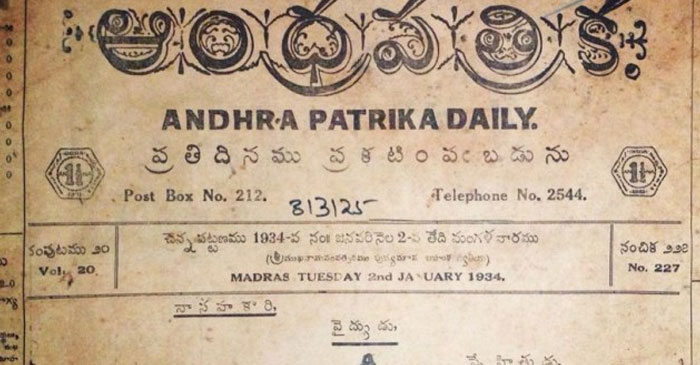
The British had a Patent Medicine Tax that made imported drugs expensive. However, by classifying Amrutanjan as an Ayurvedic Proprietary Medicine, Rao managed to navigate a complex legal gray area. He essentially used the British legal system against itself. By proving his ingredients were ancient yet his manufacturing was modern, he avoided the crippling taxes that applied to purely Western drugs, while maintaining a price point (initially 10 annas) that made British imports look like daylight robbery Rao fought back not just in the market, but in the press. He used the profits from the balm to fund Andhra Patrika, 1 of the most influential anti-British newspapers.
The British were literally paying for their own downfall. Every time a British officer’s wife bought a jar of Amrutanjan for a migraine (because it worked better than the London balms), she was inadvertently funding the printing of revolutionary literature that called for the end of the Raj.
By the 1930s, this Indian yellow grease was being exported to Indian diaspora & locals in South Africa & Ceylon. It became a global symbol of Eastern Wisdom defeating Western Chemistry. It was 1 of those few occasions, an Indian OTC (Over the Counter) product achieved cult status internationally w/o a single pound of British investment.
In fact, the yellow tin became so iconic that it did not need a label in the villages. The color & the smell were the brand. It was a biological Swadeshi. While others were fighting with words, Rao was fighting with molecular relief.

118
2,194
6,801
852,194
Keyur retweeted
Apr 26
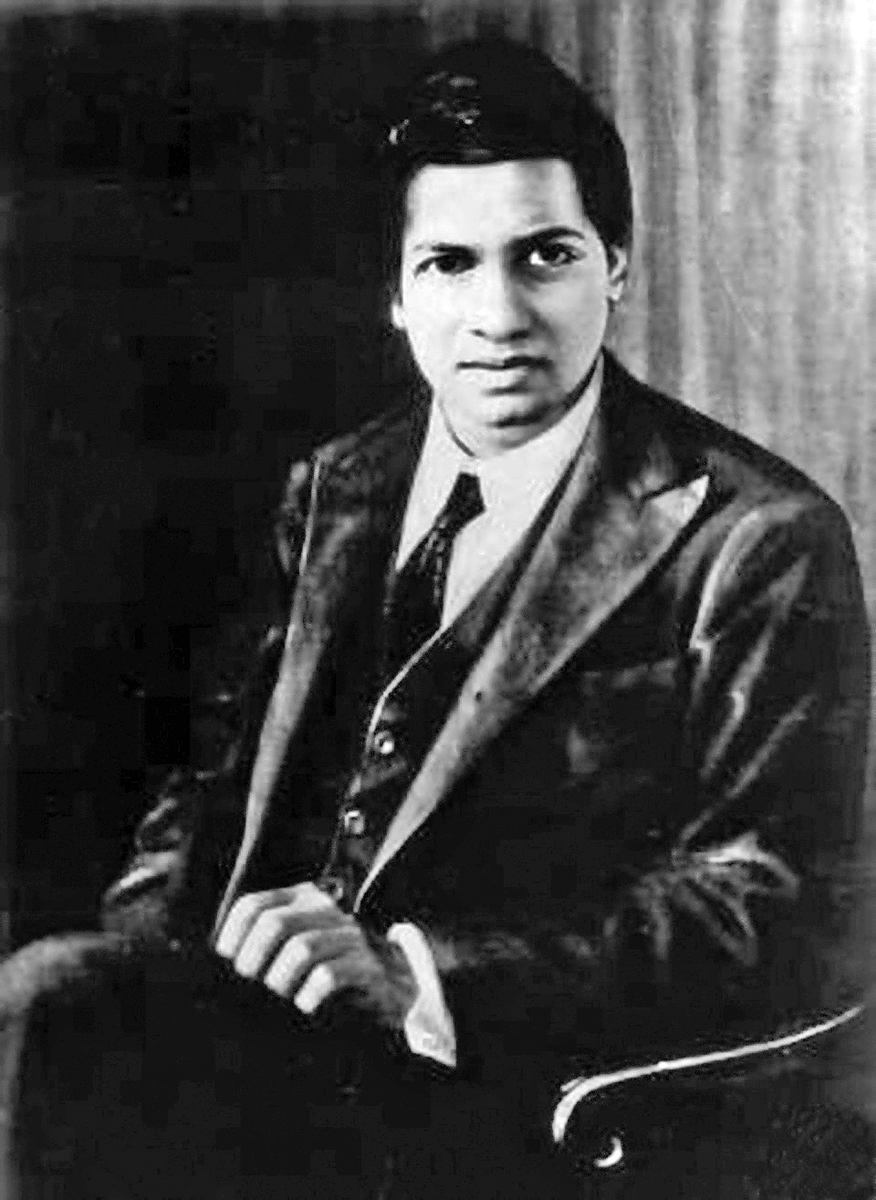
The Final Equation: April 26, 1920, The Ghost Who Forgot to Die.
It is April 1920. The heat in Madras is stifling, but inside a small house in Chetpet, a 32 yr old man is shivering. He is skeletal, his body ravaged by a mystery illness (likely hepatic amoebiasis), but his eyes are glowing with a terrifying, supernatural light.
He is scribbling. The floor is covered in scraps of paper. His docs tell him to rest. He ignores them. He is writing down Mock Theta Functions... eqns so advanced that no human mind would understand them for another 90 yrs.
On April 26, the pen finally falls. The man who saw the Goddess Namagiri write on his tongue closes his eyes. The world thinks the story is over. The world was wrong. 106 yrs ago today, a man died in a small house in Madras. But the universe has not stopped hearing him whisper.
Ramanujan’s death was a time delayed explosion. For 56 yrs, a disorganized pile of 138 pages sat in a Silo at Trinity College, forgotten. When George Andrews found it, he realized Ramanujan had solved problems in his final days that modern mathematicians had not even dared to ask yet.
In 2012, physicists realized that Ramanujan's deathbed scribbles written while he was literally coughing up blood are the exact formulas used to calculate the Entropy of Black Holes. He was mapping the edge of the universe from a straw mat in Madras.
He died in poverty, struggling for a small fellowship, while the British elite debated his eccentricity. Even today, we celebrate his name, but we do not realize he was a Quantum Physicist trapped in the body of a 1920s clerk.
His wife, Janaki Ammal, lived for decades in his shadow, a Ghost herself, guarding his papers w/o knowing that her husband’s ink would 1 day explain the birth of galaxies.
He just had a Silo in his soul where the Goddess spoke in numbers. Today, we mark his death anniversary, but Ramanujan did not die. He just moved into the eqns. He is the ghost in every signal, the logic in every star, the man who proved that the human mind is bigger than the universe itself.
29
487
1,156
24,392
Keyur retweeted
Apr 22
I am going to start the Physics Series as well & decided to name it after Bibha Chowdhuri. She was a woman who worked in the shadows of giants, doing the actual heavy lifting of data that led to 2 Nobel-level discoveries, yet she was almost erased from history because she was just a woman in a silo of men.
Born in 1913 in Calcutta, she came from a family of intellectuals. She was the only woman in her MSc. Physics class at Calcutta University in 1936. She joined the lab of Debendra Mohan Bose (D.M. Bose), the nephew of J.C. Bose. It was here, in a modest lab in Calcutta, that she began looking for the Ghost Particles of the universe.
Using simple photographic plates & the high altitudes of Darjeeling, Bibha & D.M. Bose discovered a new particle, the Meson (specifically the pi-meson/pion). Because of World War II, they could not get high-sensitivity photographic plates from Europe. They had to use inferior 1s, which made their data noisy.
A few years later, Cecil Powell used the exact same method with better plates in the Andes & won the Nobel Prize in 1950 for the discovery of the pi-meson. In his book, Powell acknowledged that the Bose-Chowdhuri method was the pioneer, but the world forgot the woman who did it 1st.
She later went to Manchester to work under Nobel laureate P.M.S. Blackett for her PhD, investigating Extensive Air Showers (cosmic rays hitting the atmosphere). She was the 1st to calculate the density of these showers at sea level. When she returned to India, she joined the newly formed TIFR (Tata Institute of Fundamental Research). Despite being 1 of the most qualified cosmic ray physicists in the world, she was often sidelined.
She never married. She lived for her lab. She was known to be a quiet, fierce researcher who did not care for Scientific Politics. While her male colleagues were showered with Padma awards & fellowships, Bibha Chowdhuri received almost zero national recognition during her lifetime. She died in 1991, still working on research papers in a small flat in Calcutta.
The world finally started to apologize to her in the 21st century: In 2019, the International Astronomical Union (IAU) named a star Bibha (Sextans constellation). She is now globally recognized as the "1st Indian Woman High-Energy Physicist."
She represents the Unrecognized Infra of Indian Science. She proved that you do not need a multi-billion dollar particle accelerator to discover the building blocks of the universe, you just need a photographic plate, a mountain, & unbreakable focus.
17
246
683
10,561
Keyur retweeted

Apr 20
x.com/JimFergusonUK/status/2…
🚨 BREAKING ALERT: MAJOR EARTHQUAKE HITS JAPAN — TSUNAMI WARNINGS ISSUED
A powerful 7.4 magnitude earthquake has struck northern Japan.
📍 Miyako / Tohoku region
Tsunami warnings now in place with waves up to 3 meters possible.
Sirens are sounding.
Evacuations underway.
Authorities are urging:
Move to higher ground immediately
Avoid all coastal areas
Prepare for aftershocks
This is a serious, developing situation.
Apr 20

🚨 BREAKING ALERT: 7.3 EARTHQUAKE STRIKES JAPAN — TSUNAMI WARNING ISSUED
A powerful 7.3 magnitude earthquake has hit off Japan’s east coast.
Epicentre: Sanriku region
Depth: ~10km
Intensity: 5 on Japan’s seismic scale
Authorities have issued:
Tsunami warnings for parts of northeast Japan
This is a serious event.
Coastal areas are now on alert as waves could follow.
People in affected regions are being urged to:
Move to higher ground
Follow official guidance immediately
Developing situation.

7
66
178
129,342
Apr 19
RT @JoeyMannarino: This is INSANE!!
This guy defended his girlfriend from a Somali who was trying to sexually assault her.
The Somali st…
20,810
Keyur retweeted

Apr 17
Shocking: Scientists discover sperm whales are “talking” like humans
New research suggests their click-based communication has a structure strikingly similar to human language, and scientists are now trying to decode and translate it.
155
348
2,597
112,409
Keyur retweeted
Apr 15
Carl Sagan famously noted: The only ancient religious tradition that has time scales consistent with modern scientific cosmology is the Hindu tradition.
21
579
1,840
25,586
Keyur retweeted

Apr 7
The West poured $50 billion into fast breeder nuclear reactors and abandoned every single one. India poured $900 million and just achieved criticality on the first commercially viable one outside Russia.
The US spent $15 billion. Gave up. Japan spent $12 billion. Their Monju prototype had one sodium fire in 1995 and never recovered. The UK spent $8 billion. Germany spent $6 billion. France, Italy, all walked away. Six of the richest nations on Earth concluded this technology was too hard and too expensive to pursue.
India started building in 2004 with an initial budget of $420 million. Twenty-two years, a dozen missed deadlines, and a cost doubling later, the Prototype Fast Breeder Reactor at Kalpakkam just sustained a controlled fission chain reaction. The reactor is now alive.
The reason India never quit is a constraint most people have never thought about. India has only 1-2% of the world's uranium reserves. For a country of 1.4 billion people trying to build energy independence, that's a death sentence if you're running conventional nuclear.
But India has 25% of the world's thorium. The single largest national reserve on Earth.
The problem: you can't just burn thorium the way you burn uranium. A physicist named Homi Bhabha designed a three-stage nuclear program in the 1950s specifically to solve this. Stage 1: burn natural uranium in heavy water reactors, collect plutonium as a byproduct. Stage 2: feed that plutonium into fast breeder reactors, where it breeds MORE plutonium AND converts thorium into fissile uranium-233. Stage 3: burn thorium directly at scale.
India just entered Stage 2. Seventy years after Bhabha drew it up on paper.
The math on the thorium endgame is wild. At current energy consumption rates, India's thorium reserves could power the country for over 700 years. Most nuclear nations are playing a uranium game with maybe 80-100 years of runway. India is playing a completely different game with a 7x longer fuel supply.
The West quit because uranium stayed cheap and sodium coolant is terrifying. It catches fire on contact with air. It explodes on contact with water. Russia's BN-600 had 27 sodium leaks and 14 sodium fires between 1980 and 1997. And Russia kept going anyway because Russia doesn't quit nuclear projects. India watched all of that and kept going too.
When you have 1% of the uranium but 25% of the thorium, the engineering difficulty stops being a reason to quit. It becomes the price of admission to a 700-year energy supply that nobody else can access.
Apr 6

Today, India takes a defining step in its civil nuclear journey, advancing the second stage of its nuclear programme.
The indigenously designed and built Prototype Fast Breeder Reactor at Kalpakkam has attained criticality.
This advanced reactor, capable of producing more fuel than it consumes, reflects the depth of our scientific capability and the strength of our engineering enterprise. It is a decisive step towards harnessing our vast thorium reserves in the third stage of the programme.
A proud moment for India. Congratulations to our scientists and engineers.
240
3,998
18,248
844,724
Keyur retweeted

Apr 6
Hasan Piker: "KiII the motherf*ckers. Let the streets soak in their red, capitalist bIood!"
Democrats are campaigning with him
1,449
5,464
25,315
1,926,417
Keyur retweeted

Apr 4
NEW: Musician Murphy Campbell says she isn’t making money on YouTube because an AI company is cloning her music and filing copyright claims against her own videos
“An entity called Timeless Sounds IR uploaded AI-generated versions of my songs to all major streaming platforms...
They used a distributor, which I just discovered, and that distributor’s name is Vydia. They used Vydia to upload all these AI-generated songs.
Vydia has since decided to make copyright claims on all of the videos that were used to feed that AI engine to sound like me.
So Vydia has come forward and made copyright claims on my YouTube page.
Because YouTube does not personally review these things, I am no longer making money on YouTube.
Vydia is making money on YouTube off of my own videos of me playing my own banjo in my own backyard with traditional folk songs, some for my own family, over AI-generated music.”
990
7,831
34,362
1,342,874
Keyur retweeted

🎹 Japanese-German pianist Alice Sara Ott played the most beautiful rendition of Debussy's Rêverie L. 68 at TeamLab in Tokyo.
17
149
683
24,760
Keyur retweeted
Mar 30
This is all about the System-on-Chip (SoC).
Starting April, every CCTV manufacturer must provide a Bill of Materials (BOM) that explicitly identifies the origin of the silicon. The govt is specifically hunting for HiSilicon (Huawei-owned) & Fullhan chipsets.
Even if an Indian brand assembles the camera, if the brain (SoC) is from these restricted Chinese entities, the STQC certification will be denied.
Why the ban? Because of Ghost Credentials. During the 2 yr transition window (2024-26), STQC labs discovered that many Chinese-origin cameras had hardcoded admin credentials buried in the Kernel level of the firmware.
These are not just weak passwords you can change. These are backdoors that allow a remote server in Hangzhou/Shenzhen to ping the camera & bypass local firewalls.

🚨 India is blocking the sale of internet-connected CCTV cameras from Chinese companies like Hikvision, Dahua, and TP-Link starting April 1, 2026.

18
269
1,411
83,786