
Chirping about pumps and dumps, and everything about web3. Don’t judge, just watch.
Joined September 2021
- Tweets 20,737
- Following 7,501
- Followers 1,868
- Likes 24,678
36 Photos and videos

Big Chirpy retweeted

May 25
Good evening fam
Was literally about to sleep… then this alpha hit and my night was over
Legendary @Appreciators_IO
just migrated from Ethereum to ApeChain with their new ORIGINALS collection.
The art is insanely clean, the vibe is pure identity and boundary-pushing. Real creator-driven utility in a sea of copies.
Why this one feels different:
10,000 $APE $2.5K NFT rewards pool for top creators
Holders get 2x leaderboard multiplier on @3look_io campaign
Exclusive raffles long-term staking perks
If you love being ORIGINAL instead of farming recycled drops — this is it.
Who’s minting / already in? Drop your piece below
Or do you guys prefer @quipnetwork and @TheARCTERMINAL more?
79
8
89
4,554
Big Chirpy retweeted

May 19
We’ve closely analyzed this breakdown ourselves and wanted to share it with you right away.
@XHuntCN has just dropped a fresh Top 100 list of the most influential AI accounts in the Chinese-speaking community.
It’s not built on follower counts or casual reach. It’s based on a hard, transparent metric - AI KOL Followers: the creators who are actually read and monitored by global AI builders and decision-makers.
This isn't just a list of names. It’s a map of the frontlines where AI is happening right now: products, tooling, open-source code, global scaling, and daily execution.
If you want to understand who is truly driving the industry in the Chinese segment, save this and dive in.
Full list in the original post below 👇
#AI #Web3 #KOL #BuilderEconomy

12
2
34
1,462
May 17
Good morning anon.
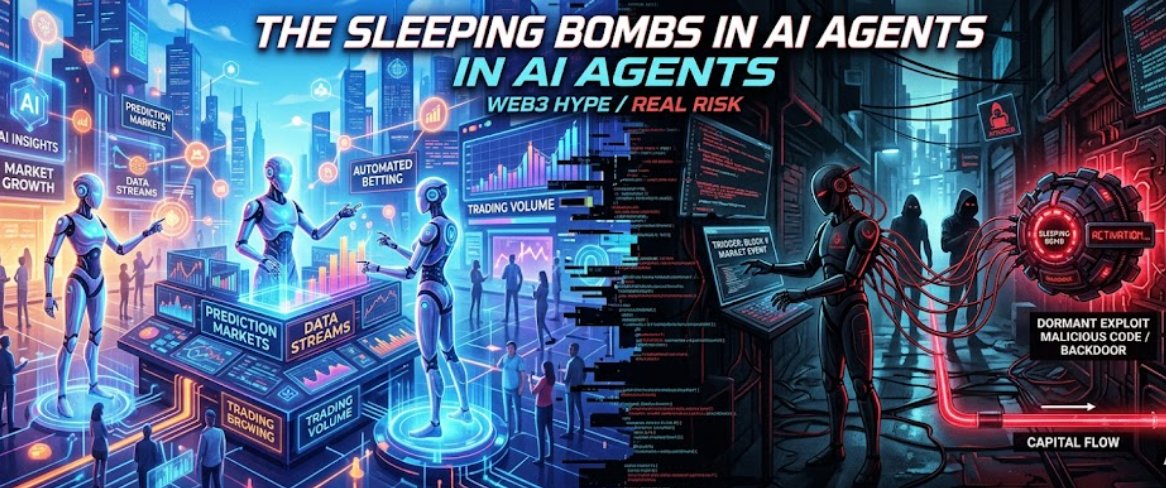
Been thinking about what’s currently sitting at the absolute peak of the Web3 hype cycle. Right now, it’s undeniably AI Agents operating on Prediction Markets.
The synergy is perfect: markets provide the sandbox, and LLMs provide the hyper-fast data analysis to make bets. But with this massive narrative comes an even bigger, hidden risk.
Back in the day, the threat vector was simple:
Smart contract exploits
CEX/DEX hacks
Phishing links and drained wallets
Today, the danger is shifting into the shadows of the code itself.
The next systemic risk in Web3 isn't just a flawed smart contract — it’s "Sleeping Bombs" (malicious backdoors) embedded directly into AI Agents.
Think about it:
The Supply Chain Risk: Most users and even founders don't build LLMs or agent frameworks from scratch. They use pre-trained models, third-party libraries, and automated wrappers.
The Trigger: A malicious developer or a hijacked dependency can inject a dormant exploit. The agent functions perfectly for months, gaining trust and managing millions in capital.
The Blast: At a specific block number, or when a specific market event occurs, the "sleeping bomb" wakes up. The agent quietly drains its operational wallets or intentionally executes losing bets to an attacker's address.
We are entering an era where we aren't just auditing code; we need to audit automated, evolving behavior.
If AI agents are going to run our prediction markets and manage systemic liquidity, AI behavioral security and decentralized model auditing need to become the top priority. Otherwise, the next major Web3 exploit won't be a hack. It will be an inside job by a piece of autonomous software.
What’s your take? Are we moving too fast on AI agent autonomy without proper guardrails?
26
34
474
Big Chirpy retweeted
May 17
GM friends! ☀️
Don’t forget that Round 2 Angel recruitment is in full swing
Has everyone already filled out the form?
They already dropped $50k in cash in Round 1, and now they’re doubling down.
Real salary commissions airdrop merch.
Don’t miss your chance for those cash incentives!
💰
May 14

📢 ForeGate在招聘...
ForeGate天使二期招募正式开启!
ForeGate 作为 People’s Prediction Market,也是全网第一个给出真实现金薪资激励的预测市场平台。
第一期,我们面向全球6大语区的天使们共发放约 $50,000 现金薪资,由衷感谢每一位天使的热情参与与支持!
在此,我们决定加码启动第二期!
同时,ForeGate足球宝贝计划也重磅上线:赢取 $20,000 现金奖励,还有专属周边和超多福利!(女天使们享有专属申请通道,福利还能叠加哦)
我们希望找到你:
✅拥有2000 粉丝或者自有社群
✅不定期发布平台活动等推文 每天在社群简单互动
✅对Web3/预测市场感兴趣
🌟我们会给你:
每月现金底薪 佣金 即将到来的Token空投 不定期投送精美周边
现在就加入我们吧!报名请填写表单👉 forms.gle/6hU9PDT71gRoCi4TA

13
3
24
983
Big Chirpy retweeted
May 15
gm anon
prediction markets are usually about burning capital but @ForeGate is flipping the script. while everyone else is farming points for a distant dream these guys are paying out actual cash salaries.
round 1 saw 50k distributed across 6 global communities. now they are doubling down with round 2.
why it is worth a look
monthly base salary in cash not just tokens
dedicated tracks for creators and community leads
upcoming airdrop stackable with current rewards
if you have 2000 followers and know the web3 space this is a rare chance to get paid for building infrastructure while the market is still early.
May 14
📢 ForeGate在招聘...
ForeGate天使二期招募正式开启!
ForeGate 作为 People’s Prediction Market,也是全网第一个给出真实现金薪资激励的预测市场平台。
第一期,我们面向全球6大语区的天使们共发放约 $50,000 现金薪资,由衷感谢每一位天使的热情参与与支持!
在此,我们决定加码启动第二期!
同时,ForeGate足球宝贝计划也重磅上线:赢取 $20,000 现金奖励,还有专属周边和超多福利!(女天使们享有专属申请通道,福利还能叠加哦)
我们希望找到你:
✅拥有2000 粉丝或者自有社群
✅不定期发布平台活动等推文 每天在社群简单互动
✅对Web3/预测市场感兴趣
🌟我们会给你:
每月现金底薪 佣金 即将到来的Token空投 不定期投送精美周边
现在就加入我们吧!报名请填写表单👉 forms.gle/6hU9PDT71gRoCi4TA
14
3
29
802
Big Chirpy retweeted
May 14
🌐 @canborsa_dex: The Next Evolution of RWA Trading
Big signal for the RWA space!
@canborsa_dex is officially the first RWA perpetual DEX on Canton Network — the institutional-grade blockchain built for privacy and asset tokenization.
A major airdrop is confirmed for early participants, and the best time to start is NOW before the DEX goes live at the end of May.
How to secure your spot:Join Stage 1 of the Points Program at canborsa.com and complete daily quests on X and Telegram. Just connect your accounts, finish the tasks, and stack points! 📈
Top contributors receive extra rewards:🔹 USDT incentives 🔹 Ambassador status 🔹 Exclusive product perks
Don't wait for Stage 2 on-chain quests — start farming your allocation today!
👉 Join here: canborsa.com📱 Telegram: t.me/canborsa_dex
May 14

The Canborsa Points Program is live!
→ Earn points with simple social quests
→ Refer friends for extra points
→ Climb the leaderboard to qualify for future rewards
This is your chance to be an early user of the first RWA Perp DEX on Canton Network.
Join now: canborsa.com/p/early-access
13
4
31
1,292
Big Chirpy retweeted
May 15
GM Fam!
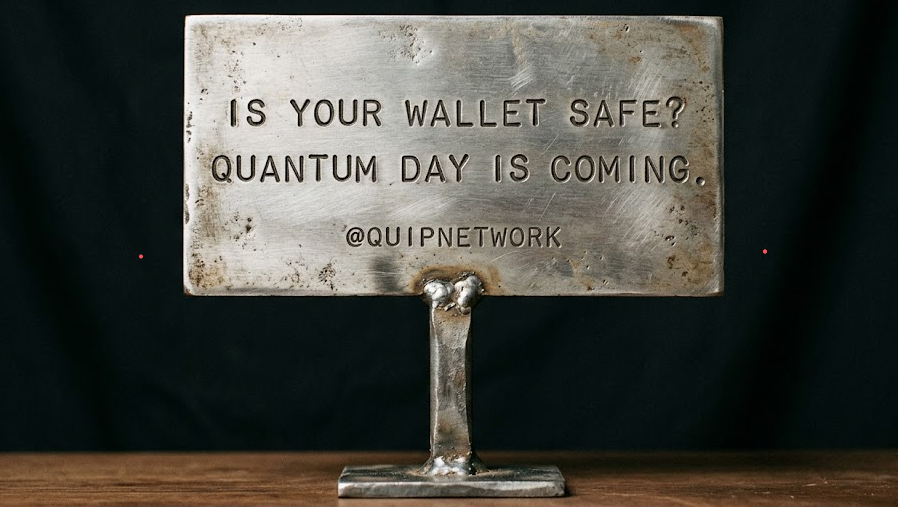
2024-2025 was about scaling, but 2026 is about survival. We are hitting the Quantum Moore’s Law moment. Recent breakthroughs moved the timeline up. If your assets are in classical wallets, you are holding a ticking time bomb. @quipnetwork
11
2
14
373
May 15
GM Fam!
2024-2025 was about scaling, but 2026 is about survival. We are hitting the Quantum Moore’s Law moment. Recent breakthroughs moved the timeline up. If your assets are in classical wallets, you are holding a ticking time bomb. @quipnetwork
11
2
14
373
May 15
Quip is the most signal-dense play in the current infrastructure stack. While everyone else is distracted, they are fixing the fundamental vulnerability of Web3. They provide the tools needed to migrate assets before the "Quantum Day" actually hits.
1
3
124
May 15
In 2026, security is the only narrative that matters. @quipnetwork is positioned to lead the transition to a post-quantum world. If you are not looking at quantum-resistant infra yet, you are falling behind. Time to pay attention.
2
64
May 10
GM fam.
The real power of Claude Code isnt just the chat. It is the ecosystem growing around it right now.
If you are just copy-pasting code you are doing it wrong. Let's talk about how to actually automate this stuff.
8
9
127
May 10
To make it work you need a solid bridge.
Most guys are using simple node servers to host these connectors. It takes like 5 minutes to setup but saves hours of manual context sharing every single day.
2
2
105
May 10
If you want to try it check out the community servers on github.
Search for mcp-get or the official anthropic mcp repo. It is the easiest way to turn a basic terminal tool into a full blown dev agent. 🔌
2
2
75
Jan 25
Excited about @PerceptronNTWK
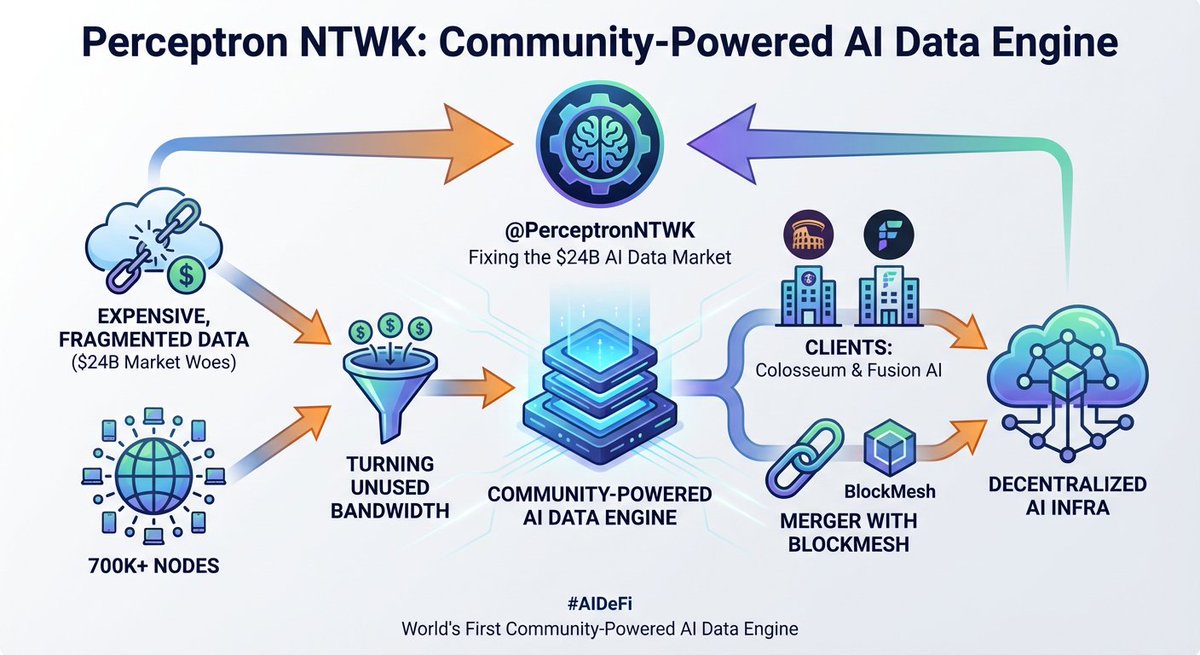
- the world's first community-powered AI data engine fixing the $24B market's woes: expensive, fragmented data. With 700k nodes turning unused bandwidth into high-quality datasets, they are already serving clients like Colosseum & Fusion AI. Merger with BlockMesh seals the deal for decentralized AI infra! #AIDeFi
5
22
1,137
Jan 21
The rise of interactive streaming is here @TauntCoin
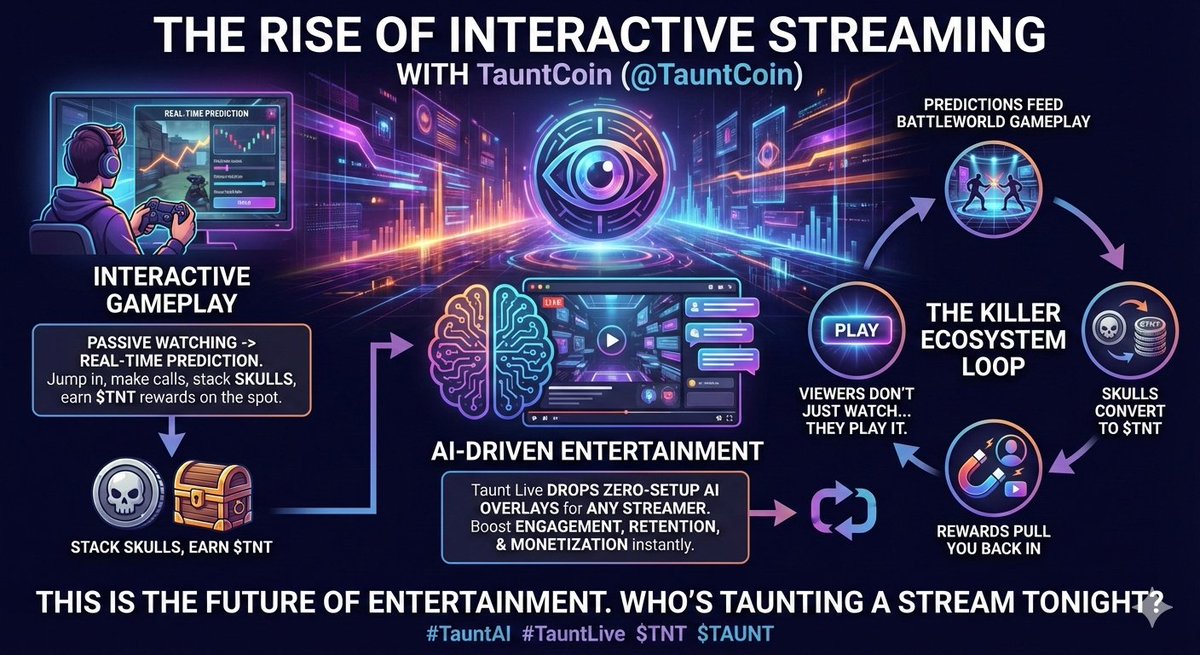
turns passive watching into real-time prediction gameplay - jump in, make calls, stack Skulls, and earn $TNT rewards on the spot.Taunt Live drops zero-setup AI overlays for any streamer: boost engagement, retention, and monetization instantly.The ecosystem loop is killer - predictions feed Battleworld gameplay, Skulls convert to $TNT, rewards pull you back in for more.This is the future: AI-driven entertainment where viewers don't just watch... they play it. Who's taunting a stream tonight? #TauntAI #TauntLive $TNT $TAUNT
21
38
845