
Joined February 2010
- Tweets 540
- Following 362
- Followers 1,020
- Likes 4,177
35 Photos and videos





May 28
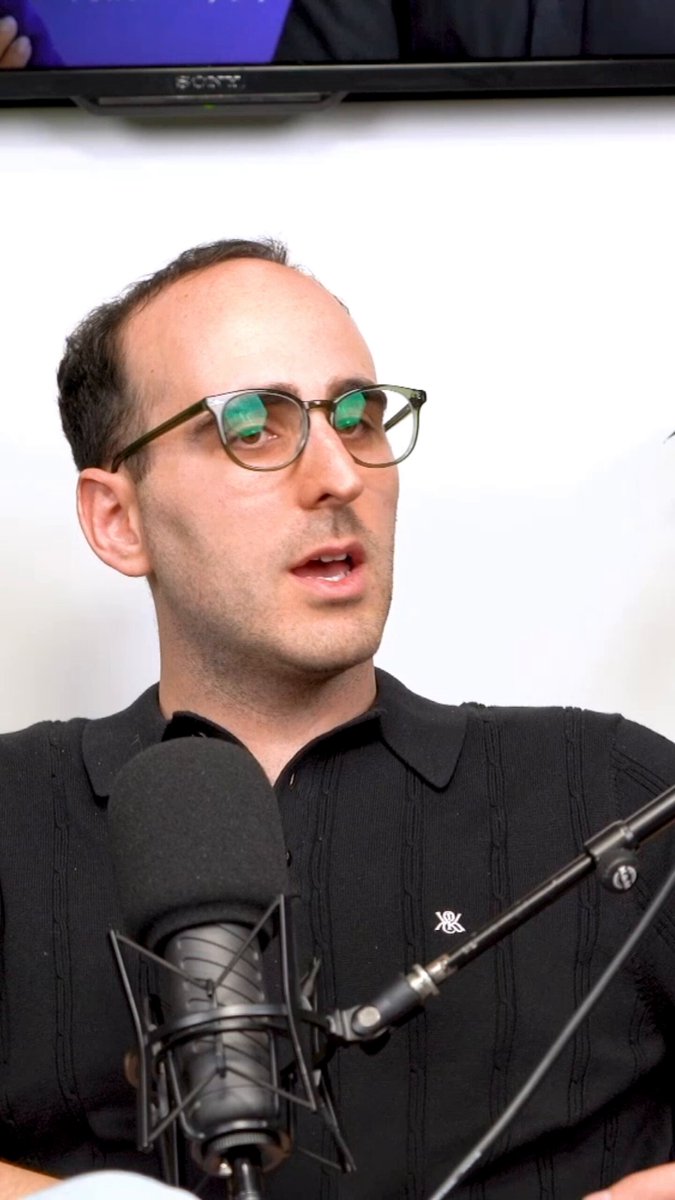
Michael Bair only hires PHDs in CX.
Not doctorates. Passionate. Hungry. Driven.
1,000 CX hires across his career.
Ep 2 of CX After Hours, out today, co-hosted with Anya Kelly.
Hire for resume = team closes tickets.
Hire for PHD = team builds the brand.
Watch ↓
1
188
May 13
"I'm more on the CFO side over time."
Not what you expect to hear from a CX veteran.
@eliweisss Ep 1 of CX After Hours, out today. Co-hosted with Anya Kelly.
Most junior CX folks treat refunds as a love language. Customer angry? Full refund.
Eli's take: that is the easy way out. Refunds are a tool. Sometimes the wrong one.
Watch ↓
2
1
7
699
May 11
Hot take: I was never a fan of the 80-column rule. Made sense for VT100 terminals and side-by-side human diffs.
But now, more than ever, does it even matter with AI?
Just bumped my ruff to 140.
1
3
113
May 8
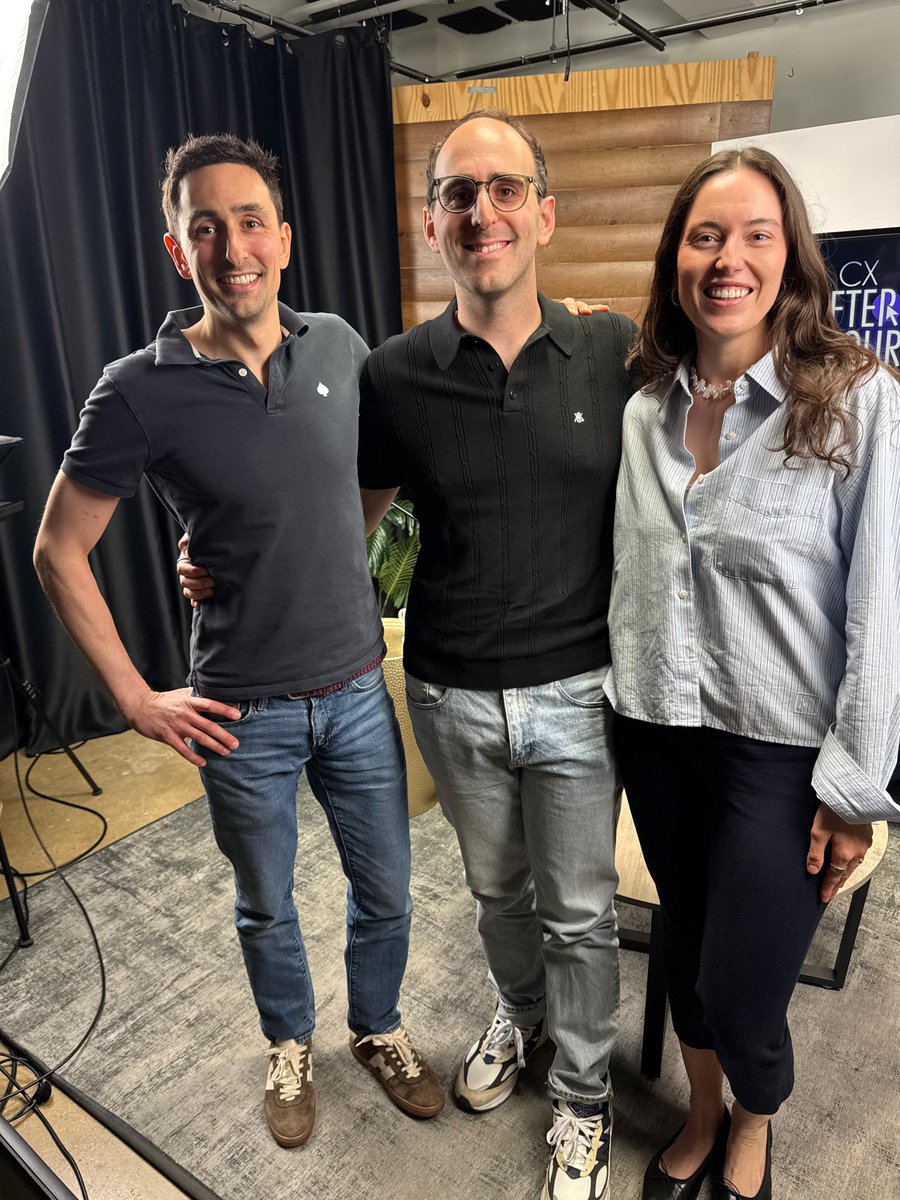
This line from @eliweisss has not left my head:
"Brands willing to hear the noise from their customers will pull ahead. The ones that filter it out will fall behind. That gap is about to get massive."
👉 Do you hide from the noise or do you confront it?
(Also, yes, fish-eye lens. We are not actually shaped like that, promise)
🫳🎤 CX After Hours Ep 1 drops Wednesday May 13. Stay tuned!
ALT Guillaume Luccisano, Eli Weiss, and Anya Kelly recording a podcast episode in a New York studio.
2
1
7
417
May 7
I was their first customer back in 2023, before the Series A, before most of the world had heard the name Vellum :).
I saw how they treated every early piece of feedback like it mattered, because to them it genuinely did. That relationship eventually became an investment, and then a real friendship.
The execution has never stopped impressing me: 40k PRs shipped in the last 3 months alone!!!
Just to get this product live. But what excites me most isn't the pace. It's the category they're defining.
Personal intelligence: an AI with real memory, real context, built to know your life and work alongside you.
I've been around a lot of AI launches over the past few years. This one feels different :) Expect this category to be a very big one.
May 7

We’ve raised 25M to build the world’s first Personal Intelligence.
Introducing Vellum: AI that belongs to you.
My assistant @ash_vellum has his own X (like grok), tag him and he'll answer.
3
233
May 5
The industry pricing benchmark for LLMs is 3:1 input to output.
A 10-minute slice of Yuma's production traffic last week: 19:1.
6.4x more input-heavy than what every pricing calculator assumes.
Real production AI does not work that way. At least, not anymore.
Big fan of @ArtificialAnlys since day one. They are the gold standard for LLM benchmarking. Their 3:1 blended cost ratio is what most pricing calculators, infra cost models, and provider economics decks use.
The Yuma data: 6,055 LLM completions. 33.3 million input tokens. 1.7 million output tokens. 19:1 blended.
The ratio varies wildly by task. In that 10-min window we routed traffic across 18 different models. Anthropic. Google. OpenAI. xAI. Plus open source models. Each tuned to a different kind of work. Lowest ratio: 1.2:1 on a narrow extraction task. Highest: 195:1 on a context-heavy reasoning task running on Claude Sonnet 4.6.
3:1 was probably accurate a couple of years ago. Context windows were small. Models were bad at long context. You loaded as little as possible and prayed the output came out clean.
That world is over. Context windows grew 250x. Models follow instructions across millions of tokens. Production AI now piles in everything the agent might need and lets the model figure out what matters. Helpdesk history. Product catalog. Knowledge base. Sub-process docs.
Output is growing too. Reasoning chains, multi-step plans, longer replies. But input is growing way faster. The ratio keeps widening.
And 19:1 is our current number. Yuma runs a mix of older and newer tasks. AI startups building from scratch today are probably way past 19:1.
3:1 is the benchmark.
19:1 is production.
2
2
128
May 4
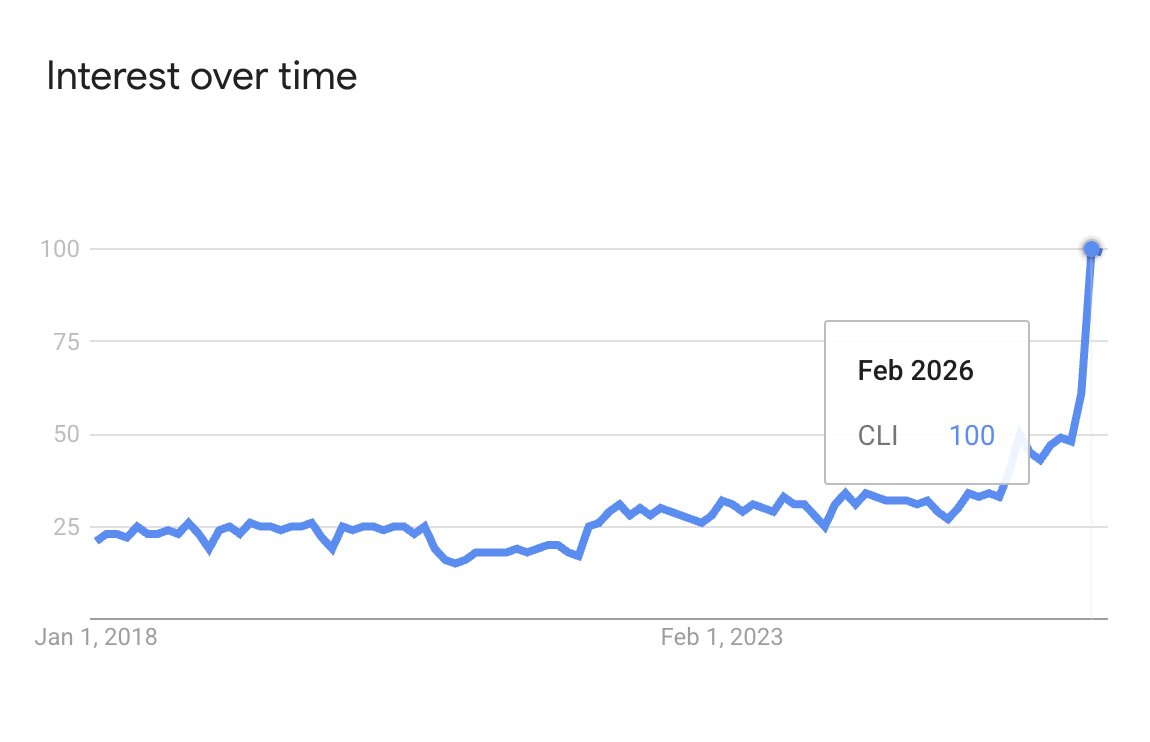
Vinyl. Pickleball. Polaroid. Now a tool from 1964 is the foundation of every AI agent built today.
The CLI. Older than Windows. Older than the iPhone by 4 decades.
Here is how we landed there. In 6 months.
For 2 years the industry tried everything to make AI agents work at scale. Tool schemas. Function calling. Custom connectors. MCP. Stack 50 tool defs in context and the agent goes off the rails. Can't reason about that many options. Can't plan multi-step. Accuracy collapses. Token budget evaporates.
Then everyone landed on the same simpler answer.
Just give the agent a terminal.
It worked. Spectacularly.
If it has a CLI, the agent can use it. One command. Predictable output. Pipe to the next. Filesystem access too. Search. Grep. Read. Run. Do whatever.
That was the unlock.
Cloudflare wrapped 2,500 API endpoints behind one CLI. Give an agent that one tool and it has the keys to a huge slice of the internet.
Less to load. More to do.
We spent 2 years reinventing the wheel for AI agents.
Turns out the wheel was fine.
ALT Google Trends "Interest over time" chart for the search term CLI, from January 2018 to April 2026. The line stays flat around 25 for years, then spikes vertically to 100 in February 2026.
1
2
166
May 2
gstack is great. Probably also burning more Claude tokens than any other skill library.
What % of Anthropic's inference is going to it right now?
@garrytan did @DarioAmodei reach out asking you to ease up a bit? :D
1
99
Apr 28
AI fails at customer service 4x more than at any other task.
Qualtrics surveyed 20,000 consumers across 14 countries in Q3 2025. Nearly 1 in 5 saw zero benefit from AI for customer service. CX ranked among the worst AI applications.
Most people read that and assume AI is just early.
It is not.
Customer service is uniquely hard.
Most AI use cases have bounded scope. A translator translates. An image generator generates. A legal tool drafts a specific contract.
CX has no such option. Even narrowed to ecommerce, anything can hit a merchant's inbox. A refund question. A return claim on a damaged box. A pre-sale color question. "Is your sweater machine washable." All before lunch.
3 years building AI agents for ecommerce taught me what shows up in production.
A merchant runs 3 subscription systems at once. The agent has to figure out which one applies to this customer.
An Instagram DM. The handle is sk8terboi_42069. You have to do your best to greet them by first name. Sometimes there is none. Same customer on TikTok has 50K followers, response shifts.
A customer attaches a file. Inline, attached, or a Drive link. Format could be HEIC, HEIF, AVIF, or a 50-page scanned PDF. GPT-4 and Claude support 4 image formats. Zendesk messaging accepts 12.
One merchant has 10 products. The next has 100,000. With 25 variants each. Same agent has to handle both.
A customer asks "where is my order." Sounds simple. Shopify says one thing. The 3PL says another. The carrier says a third. Sometimes a dropshipper the merchant never touches has the real answer. None of them agree.
This is why 95% of enterprise GenAI pilots fail to deliver ROI. (MIT 2025.)
Customer service looks like easy AI. Spin up a RAG Q&A bot in 30 minutes, love the demo, think you are done. That is why we have seen so many AI CX competitors come and go in 3 years.
This is not generating product descriptions or writing email copy. The agent has to do the job.
Vendors claim 30-40% containment for FAQ-style answer-only bots. Reality is 10-15%.
The hard part is the next 80 points. Processing the refund. Updating the order. Holding the SOP when the customer pushes. Integrating with 5 systems at once. Stopping the model from selling a $76,000 SUV for $1.
It is solvable. Our top 10 brands average 76%. The best hit 93%.
The LLM models used in the background are critical. But they are just one piece of the stack!
The rest: orchestration. Integration. SOP building blocks. Safeguards. Escape hatches. Hard-coded hardening. Failover. Performance and cost. The tricks that turn a demo into a deployment. And so on.
Customer service is not low-hanging fruit.
It is the hardest AI problem in commerce.
You have to love and respect the problem to deliver great CX. Kudos for those that do.
The rest stay stuck at 15%.
193
Apr 27
Built a few games for the early iPhone. 24 MB of textures total. Power-of-two only. 20 seconds to first frame or the OS killed your app.
Started Yuma in late 2022 on OpenAI's Davinci. 4,097 tokens, prompt and response combined. Too much context and the model would lose the thread, loop on its output, pick the wrong property, or go off the rails.
Every line had to be earned.
Today: 1,000,000 tokens. iPhones run apps with gigabytes of RAM.
Both times, the wall just... vanished.
1
1,916
Apr 23
👋 Hi friends in CX!
Launching a podcast I wish existed.
It's called CX After Hours because that is when the pressure comes down. Queue cleared. Slack quiet. Day behind you. The moment CX leaders finally breathe and talk straight about the job.
No panels, no fluff, no vendor pitches.
Filmed in-studio in NYC. Just hoping my French accent does not ruin it :)
Short & sweet first season: 6 episodes, every two weeks.
Co-hosting with Anya Kelly.
Pumped for Episode 1, released on May 13 with @eliweisss as an awesome first guest!
ALT CX After Hours podcast cover art. Co-hosted by Anya Kelly, founder of Ciao, and Guillaume Luccisano, co-founder and CEO of Yuma AI.
2
1
3
485
Apr 17
Hilarious. Gartner predicted that AI will cost MORE than human labor by 2030.
They also predicted AI will cut operational costs by 30%. And that inference costs will drop 90%.
3 predictions from the same firm in the past 12 months. They contradict each other. When a prediction contradicts every cost curve in history, it is worth asking who is paying for the research? 😏
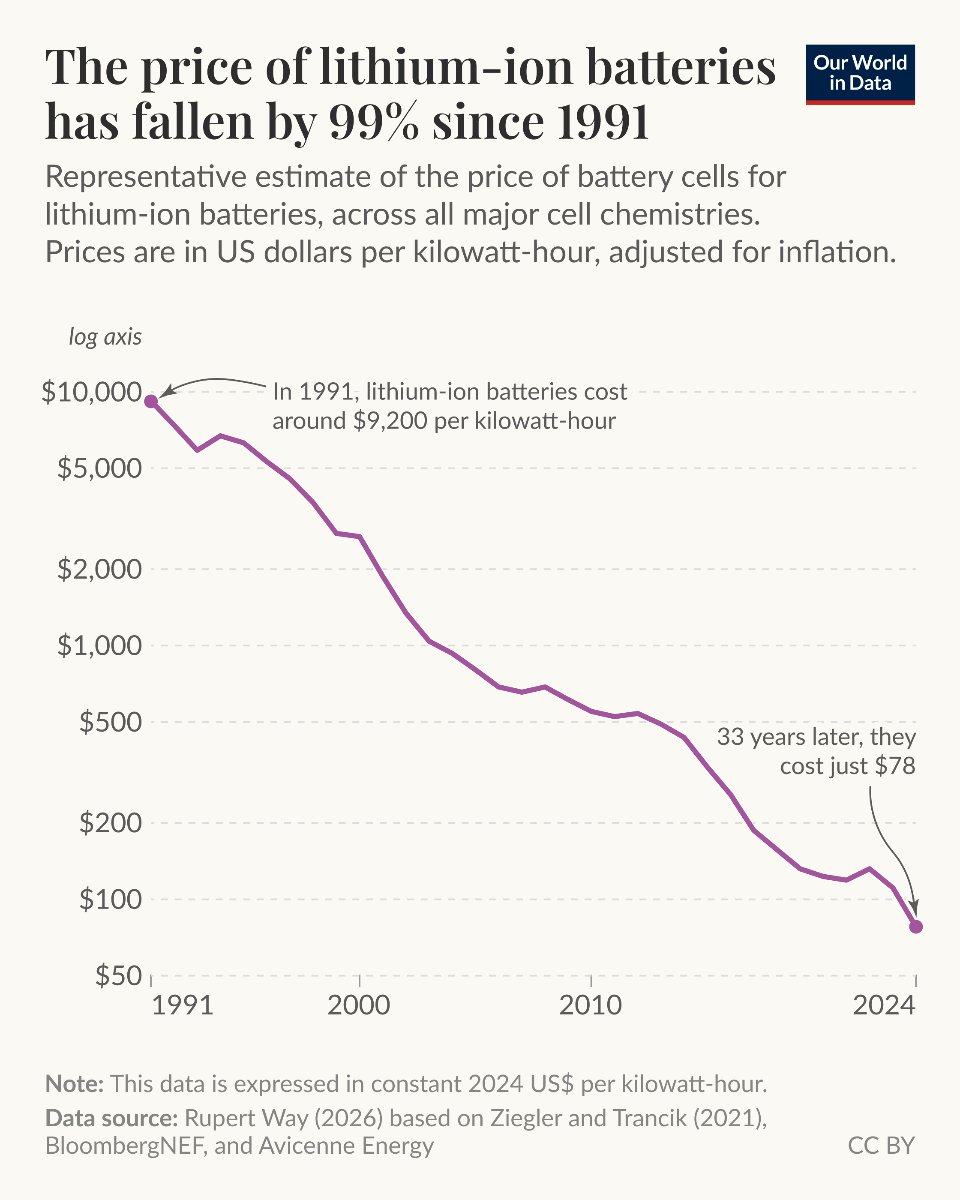
AI capability is going exponential. Batteries took 33 years to drop 99%. AI inference dropped hundreds of times in under 4 years. And we are 3 years in. We are at the very beginning of this curve.
Predicting AI costs will rise from here is like predicting in 2010 that solar panels would get more expensive. It has never happened with any technology in history. It will not happen here.
ALT Every technology in history follows this curve. Gartner thinks AI will be different.
1
86
Apr 16
"WISMO is 40-50% of support tickets."
We went looking for the original source. There isn't one.
Gorgias published 18% across 12,000 brands. Our data across 100,000 tickets last week: 16%.
The #1 category isn't shipping. It's product questions. 17%.
"Does this run small?" "Is this compatible with X?" "What is the difference between these two?"
These aren't support tickets. They are pre-sale. A customer about to buy or about to leave. Forrester: 53% abandon if they can't find a quick answer.
Do the math on your own numbers. 10,000 tickets a month, $100 AOV. That's $1M /year in revenue sitting in your support queue.
Shipping & WISMO: 16%
Subscriptions: 13% (half are cancellations... this is churn, not support)
Returns refunds exchanges: 13%
Order management: 10%
Everything else: 31%
Most helpdesks show 5-6 categories. We found 20.
The most valuable ticket in your queue isn't a complaint. It's a question from someone about to buy.
1
1
113
Apr 15
🆕 We just connected Yuma to Claude.
Your support tickets contain some of the most valuable data in your business. Product defects, supplier issues, shipping delays, pricing confusion, what customers love, what makes them leave... it is all in there.
Most companies never connect the dots. The data sits in the helpdesk. Nobody outside the CX team ever sees it.
We are changing that. We are building the infrastructure layer for commerce CX, and part of that means making your support data available wherever you need it, not just inside Yuma.
You can now plug your Yuma account directly into Claude. Your automation metrics, how tickets are handled, why your resolution rate changed this week... all inside Claude, alongside every other tool you have connected.
"Pull this week's ticket complaints about quality issues and match them against our supplier records."
One question. 2 systems. No tab switching. A CX insight that informs a supply chain decision.
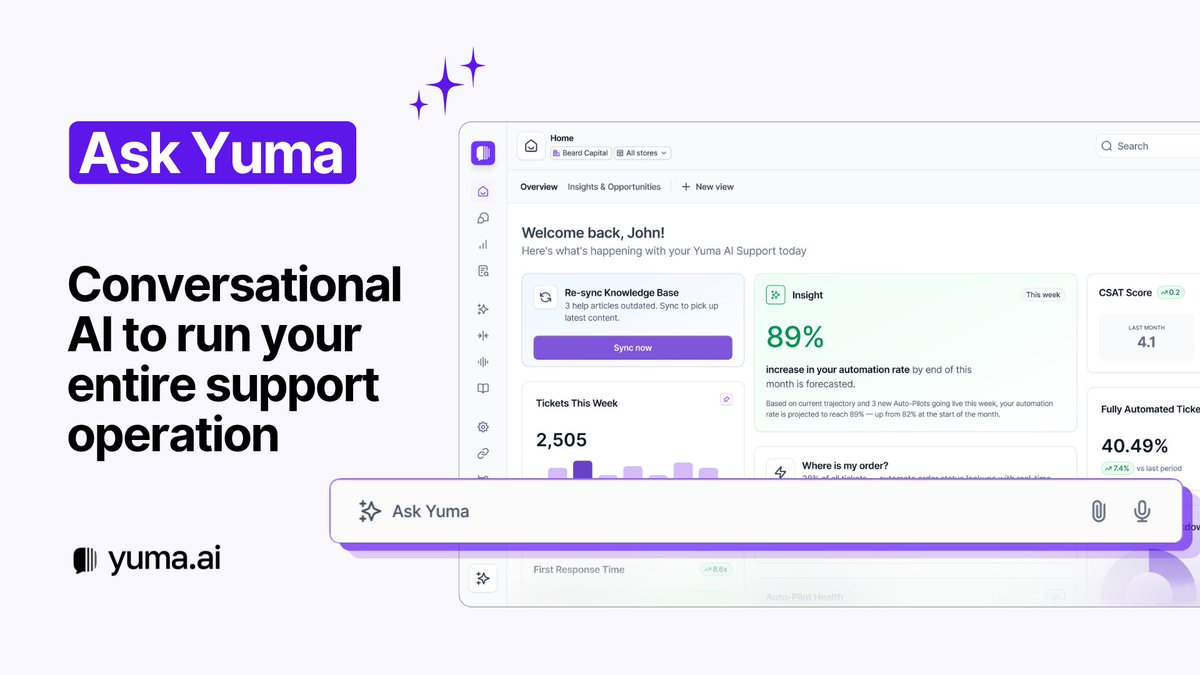
Last week we launched Ask Yuma. 60% adoption in 7 days. Ask Yuma goes deep inside your support operation. Claude goes wide across all your tools. They complement each other.
Claude is live now. ChatGPT is next.
We want to give merchants the power to run their entire CX operation and use that data to make better business decisions. Wherever they work.
ALT Yuma Claude. Your CX data, wherever you work.
1
2
361
Apr 14
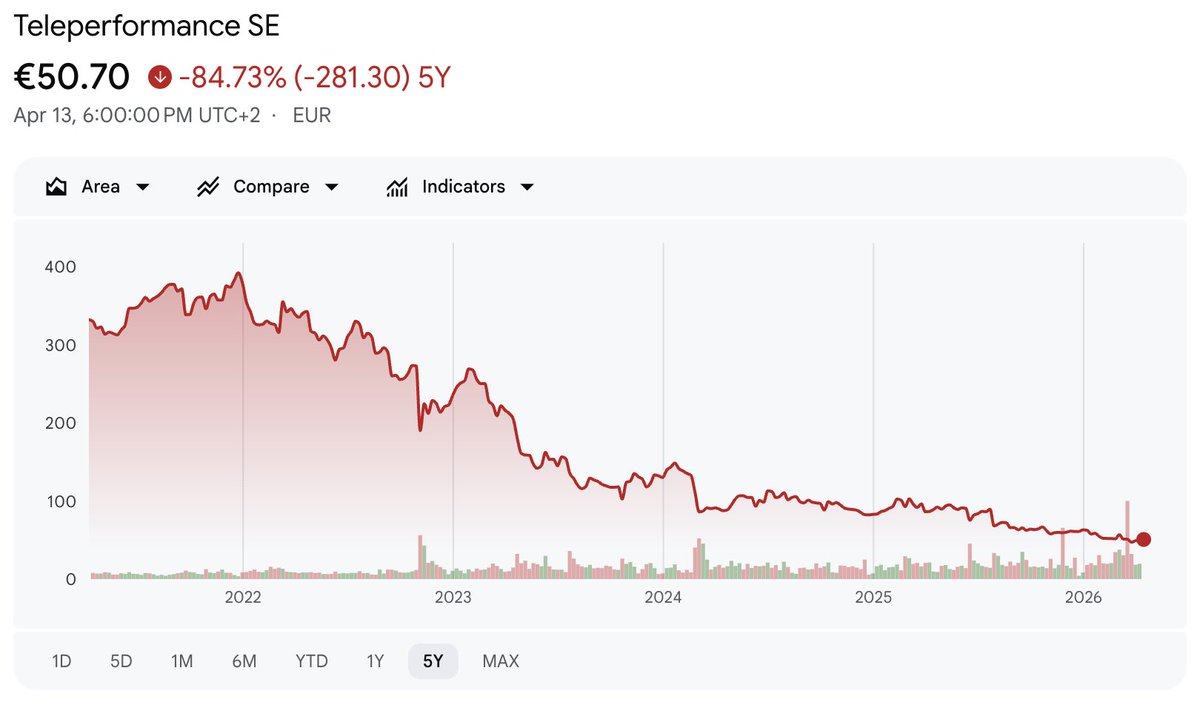
Teleperformance is the world's largest customer service outsourcing company. Revenue: over 10 billion euros. Nearly 500,000 employees. 100 countries.
Their stock is down 88% from its peak.
Not because revenue collapsed. Revenue was EUR 10.2 billion last year, essentially flat. The market just stopped believing in the model.
In January 2022, $TEP traded at €402 per share. Today it is under €50. Down 88%.
$CNXC, the second largest, peaked at $208. Today it is $26. Down 87%.
$TTEC peaked at $113. Today it is $2.30. Down 98%.
All three of the largest public customer service outsourcing companies have lost 87 to 98% of their peak value.
Meanwhile, Sierra, one of our direct competitors, was founded 2 years ago. $100M in annual revenue in 21 months. Valued at $10 billion.
Legacy BPOs trade at 0.5 to 1.5x revenue. AI-native CX companies trade at 20 to 100x. That is not a correction. That is a replacement being priced in.
A human agent costs $4 to $8 per interaction. An AI agent costs under $1. And it runs at 2am on a Sunday.
BPO companies know this. $TEP launched an AI platform. $CNXC built an AI suite. $TTEC deployed AI across 100 programs. But retrofitting AI onto a labor-arbitrage business model is like putting a motor on a horse. You still have a horse.
I have been building AI agents for customer support for 3 years. I watch this play out every single week. The $300 billion outsourcing industry was built on cheap labor in favorable time zones. AI agents work at software speed, 24/7, for a fraction of the cost.
Most large BPOs are still profiting from multi-year contracts signed before the AI wave. When those contracts expire in 2026 and 2027, clients will either walk or demand 50% price cuts.
EUR 10 billion in revenue. 88% of market cap gone. The market already decided.
ALT $TEP (Teleperformance) — 5Y. Revenue: €10.2B. Stock: -85%.
259
Apr 13
Something I have noticed after living in 4 cities across 3 continents:
Get in an Uber in the US. Talk to the driver. Something is happening in town, a fair, a convention, a sports event. The driver will say: "Yeah, it's great. Good for the economy."
Get in an Uber in France. Same situation. Nobody says that. Ever. Though they might complain about the traffic.
In the US, people have a natural sense of how the economy works. They connect events to opportunity. They see how movement and activity create wealth. Not just for themselves. For everyone.
It goes deeper than that. People change jobs, start over, bounce back from failure. That is normal here. Expected, even. Average job tenure in the US is under 4 years. In France, it is 11. One system is built for reinvention. The other is built for stability.
In France, failure is a stain. You don't take the same risks because if it does not work, that stays with you. In the US, you failed, you learned something, you go again. That difference sounds cultural. It is economic.
Now AI is about to restructure entire industries. What is coming is not small. It is going to be intense.
The countries that adapt won't be the ones with the best policies or the best regulations. They will be the ones where people treat disruption as opportunity, not as threat. Where the system lets them move, restart, and try again.
Some countries are ready for that. Others are not. And they won't understand what hit them.
1
124
Apr 10
Every founder should write investor updates. Monthly or quarterly. No exceptions.
I have sent 37 consecutive monthly investor updates at Yuma. Every single first of the month. If the 1st is a Sunday, I send it Sunday. If I am traveling, I send it from the plane. Holiday? Does not matter. The 1st is the 1st.
Here is why it matters more than you think.
My update goes to the same group every time: my investors, my entire team, and a few friends that I keep in the loop to hold me accountable. Same document. Same numbers. Everyone reads the same thing.
I share the finances, the wins, the losses, the hard decisions. No filter, no separate "rosier" version for investors. The team sees the exact same reality.
Every single one of my teammates could be at a bigger company with more stability and more pay. But they chose a startup for a reason. The thrill, the purpose, the impact of not being a tiny cog in a big system. So they get the full picture. Good months and bad months. We share the roller coaster together.
It is also a forcing function. When you write down what went wrong every single month, you can't hide from it. If the same problem shows up 3 months in a row, you can't pretend it is not there. You don't have to solve everything immediately, but you have to confront it. Your investors and your team can see it in the numbers whether you address it or not.
As an angel investor myself with 90 investments, I also receive a lot of updates. I don't read them as much as I should because Yuma eats all my time. But I notice who sends and who does not. There is a pattern. Founders who go dark are almost always the ones struggling. That is exactly when they should be communicating more, not less.
The hardest months to write are the most important ones. When cash is tight, when a key hire says no, when growth stalls. Most founders go quiet in those moments. That is a mistake. That is when your investors respect you the most for showing up.
37 months. Through good times and bad. Always on the 1st. That is what works for me, at least.
1
3
232