
297 Photos and videos









Pinned Tweet

1 Sep 2025
The Arbitrum Growth Circle is live and we’re looking for industry people to participate.
Working in fintech or financial services and interested to develop your onchain stack, please reach out.
If you’re a Web3 business at any stage looking to GTM with fintechs, do the same!
1 Sep 2025

August was busy for @farstardao ! We kicked off the month launching the first-ever @arbitrum Growth Circles with some great teams 👇

1
16
1,269
Lino Velev retweeted

Apr 29
Unless I’ve mistaken this is a first-of-kind regulated insurance policy covering crime to such an extent in DeFi.
It was a huge effort to get here with over 12 months of work from Teo Kithara-Bigot, Adam Wickens, Alex Krasnow and guest appearances from Christian Ogden-Davies.
We feel this is the most robust regulated product out there in the market for DeFi lending markets and we hope this can provide foothold for more cover to grow as we expand.

26
17
132
9,669
Lino Velev retweeted

Apr 9
I’m fed up with the direction our country is going.
So I'm running for Congress in Virginia's new 7th district to put working families first, hold the powerful accountable, and fight to build a future we can actually be proud of.
Learn more on our site linked below:
32
22
194
44,183
Lino Velev retweeted

Apr 9
I'm running for US Congress. Seriously.
Imagine common sense crypto policy and regulation, aligned with American dynamism.
Check out our list of new Crypto Policies we will support, linked below.
x.com/va_joe/status/20422398…
Apr 9

I’m fed up with the direction our country is going.
So I'm running for Congress in Virginia's new 7th district to put working families first, hold the powerful accountable, and fight to build a future we can actually be proud of.
Learn more on our site linked below:
79
79
433
44,432
Lino Velev retweeted

Mar 5
honestly great to see what a longstanding partner UNICEF has been for blockchain
this call for applications gives $100k to solutions
- improving transparency & accountability of public goods funding
- new financing models for digital public goods
deadline is march 10th
Feb 25

📣 Calling all startups in emerging markets with ready-to-deploy blockchain-based solutions for social good.
Apply for mentorship and equity-free funding up to US$100,000 in ETH, BTC or USDC from the UNICEF Venture Fund.
Deadline: 10 March 2026.
For info on requirements, eligibility criteria and how to apply ➡️ unicef.link/blockchain-call
10
6
114
20,552
Lino Velev retweeted

Mar 2
Nice work @nashpointfi. Been following along closely for almost a year now. The progress has been incredible
Mar 2

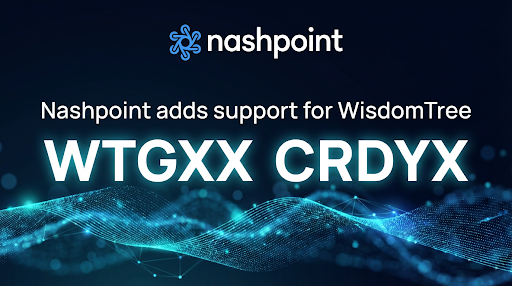
Nashpoint has integrated WisdomTree Connect from @WisdomTreeFunds on @Arbitrum.
WTGXX and CRDYX can now be incorporated alongside RWAs from Centrifuge and DigiFT inside a single programmable vault architecture.
One vault. Multiple institutional RWA issuers. Unified liquidity rebalancing logic.
This is what RWA orchestration looks like.
3
2
12
824
Lino Velev retweeted

Feb 27
bro the fact that there's a liquid prediction market on whether the US government will blacklist an AI company for refusing mass surveillance is the most cyberpunk thing that actually happened today
5
19
289
23,971
Lino Velev retweeted

Feb 27
This is a huge opportunity for Europe. Welcome Anthropic with open arms. Roll out the red carpet. Visa for all employees.
Europe already controls the AI hardware bottleneck through ASML. Add the world's leading AI safety lab and you have the foundations of an AI superpower.
Feb 26

BREAKING: Anthropic CEO formally refuses to comply with the Department of War's demands.
44% chance they're banned from the supply chain.
poly.market/6kkVEei
461
1,513
10,864
726,831


Feb 19
I’m a huge fan of what you’re saying especially on the axis of blended capital — where you use the “quasi public” part not to make the capital cheaper, or even more risk tolerant, but a lot more patient.
Feb 19

There is a huge challenge (and opportunity) in new financing models for companies operating at the intersection of bits and atoms.
This is the new frontier, and - I suspect - is where the next trillion dollar businesses are most likely to be built.
You cannot finance all these physical assets, inventory, manufacturing capacity, infrastructure, etc. purely with equity.
Traditional debt is not yet comfortable with the risks - these companies are too nascent.
I suspect the winning VCs in this space will learn to think like infrastructure investors (or hire for that skillset). The best will be thinking about capital structures beyond equity at the point of investment - writing an equity cheque but also helping design the full stack of capital the company will need, including warehouse facilities, equipment financing, and offtake-backed debt.
This is a very different skill set from traditional venture. Instead of "we can help you hire a VP of Sales," it's "we can help you structure a $200M debt facility against your contracted revenue."
Government and quasi-government capital as a catalyst for robotics, new models in life sciences, etc. will also be very important. This is exactly what has allowed China to take the lead in robotics. The state has been willing to think very long term and absorb massive up-front losses, act as a first customer, etc.
We can and should learn from them.
1
40
Feb 19
@ry_paddy Web3 has been very good in pushing the boundaries model wise, but the capital there is too little and mostly very high risk/sophistication/return and instant liquidity oriented. Most of the long term oriented one in sovereign wealth or the occasional billionaire.
25
Feb 19
openai.com/index/introducing…
@OpenAI just dropped EVMbench. TL;DR
- Codex 5.3 hits 72.2% score, compared to 31.9% on 5.
- On both Detect and Detect and Patch modes it's far from human security experts working on smart contract.
- Full papers linked inside.
1
48
Lino Velev retweeted

Feb 12
19
17
76
19,325
Lino Velev retweeted
Feb 17
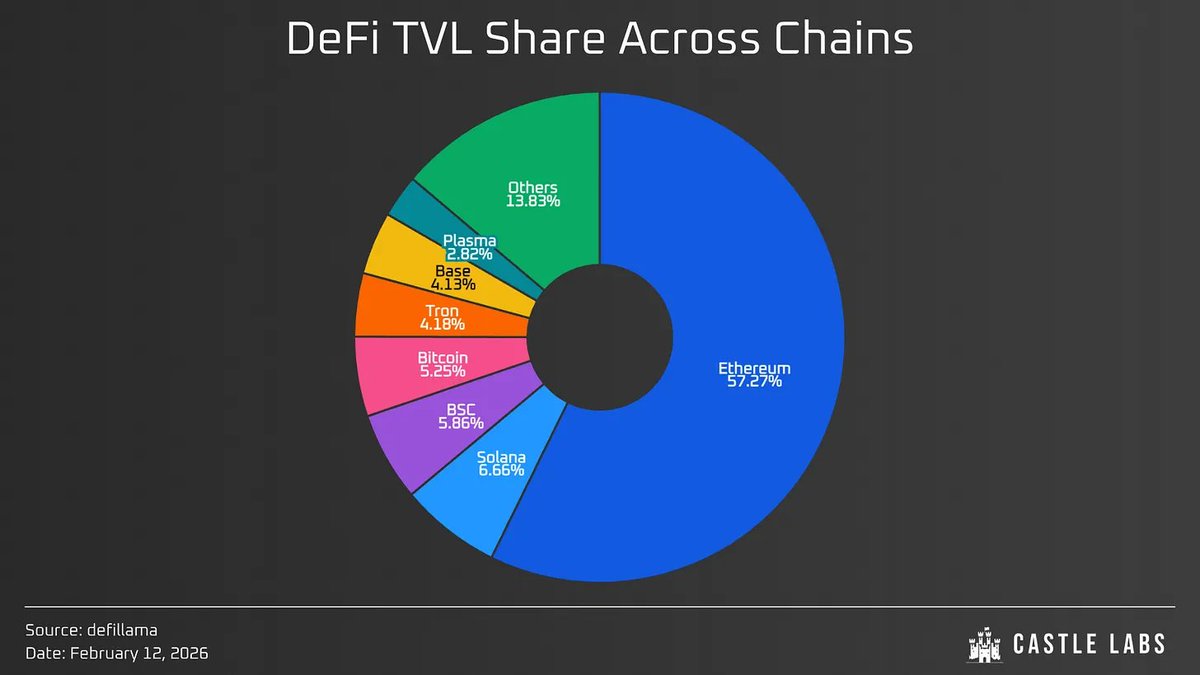
Bitcoin's market cap is orders of magnitude higher than Ethereum's, and its political and cultural impact is similarly greater.
Yet, not much of it is being used; it is mostly sitting idle and hidden, lest it be stolen or lost.
Today, less than 0.5% of the total Bitcoin supply participates in DeFi.
One of the biggest future capital opportunities is right in front of us.
5
1
11
690
Feb 16
Love this from @StaniKulechov of @aave. First thought to mind -- what demand is being created for DeFi friendly curators of abundance economy asset backed debt and collateral management.
@USDai_Official paved the way with AI/GPUs. Energy via solar is the natural next step.

1
96
Feb 11
One of the smartest ppl in know in crypto @HyveXYZ

Thrilled to welcome @HyveXYZ to Arbitrum
They’re turning real-time data into a shared, verifiable primitive - giving apps faster performance, lower infra overhead and more
Excited to see Hyve tap Arbitrum’s speed, reliability and deep liquidity to help build the data economy
1
48
Lino Velev retweeted

Feb 11
🔥 JUST IN: Robinhood launches Robinhood Chain, an Ethereum-compatible L2 built on Arbitrum tech, focused on finance and RWAs.


152
104
840
47,658
Lino Velev retweeted

Feb 11
Camelot is deploying on Robinhood Chain testnet ⚔️
Our liquidity infrastructure powers L2s and L3s built on the Arbitrum tech stack. Robinhood now joins that network.
The Holy Grail 🏆
Feb 11

The Robinhood Chain public testnet is live 🛠️
Developers can now build on a financial-grade Ethereum Layer 2 built on @arbitrum— designed to support tokenized real-world and digital assets.
Start building with the core foundation of Robinhood Chain: docs.robinhood.com/chain
Learn more on our newsroom: robinhood.com/us/en/newsroom…
15
20
78
3,803
Lino Velev retweeted

Feb 10
One our portfolio companies @AllonicRobotics just went out of stealth to announce their massive funding round! 🇪🇺🔥
And what they do is kinda crazy… they braid humanoids. Braiding?… Yes… you know… like ropes… 👀
And they build mini-factories for this. This is so unique and far future it’s hard for me to even explain.
So instead of telling you let me show you:
I jumped on a quick call with the founder Benedek and he kindly agreed to show us a prototype of his machine.
PS: I made the video originally with LinkedIn in mind but let me know if these kind of videos are interesting for here too
I would love to do more of them. ❤️🙌
33
44
306
23,015
Jan 24
AI commoditizes execution. What stays scarce is accountable judgment forged by lived consequences.
1
37