
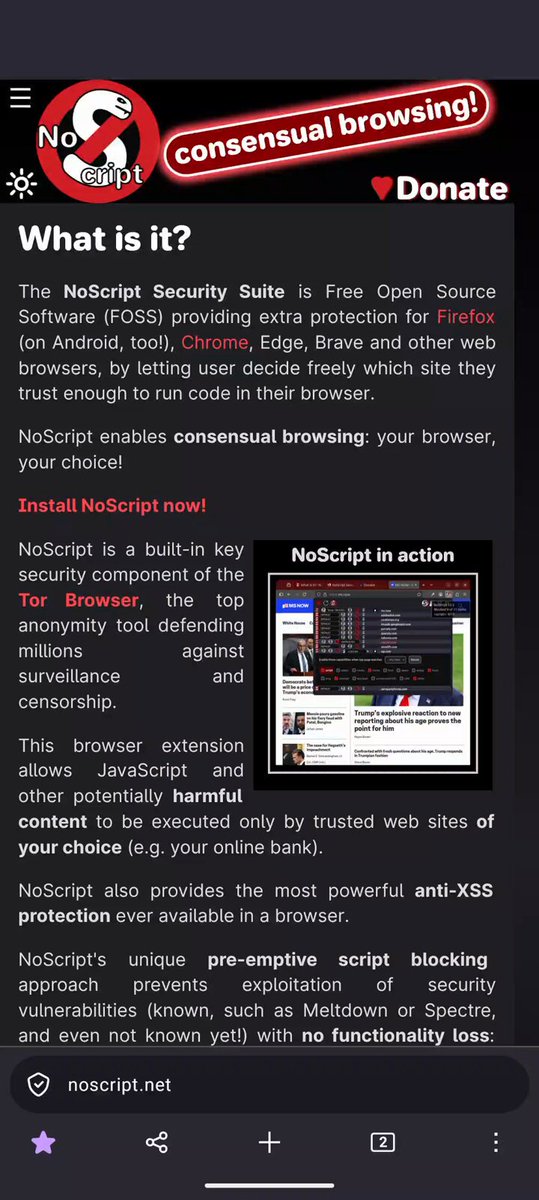
#Hacker, #atheist, #humanist, #dad, #mozillian, #security breaker and builder, creator of @noscript, casting spells on the @torproject. He/him.
Joined December 2006
- Tweets 8,580
- Following 358
- Followers 3,013
- Likes 8,502
393 Photos and videos


Giorgio Maone 🐘 @ma1@todon.eu retweeted

Jun 9
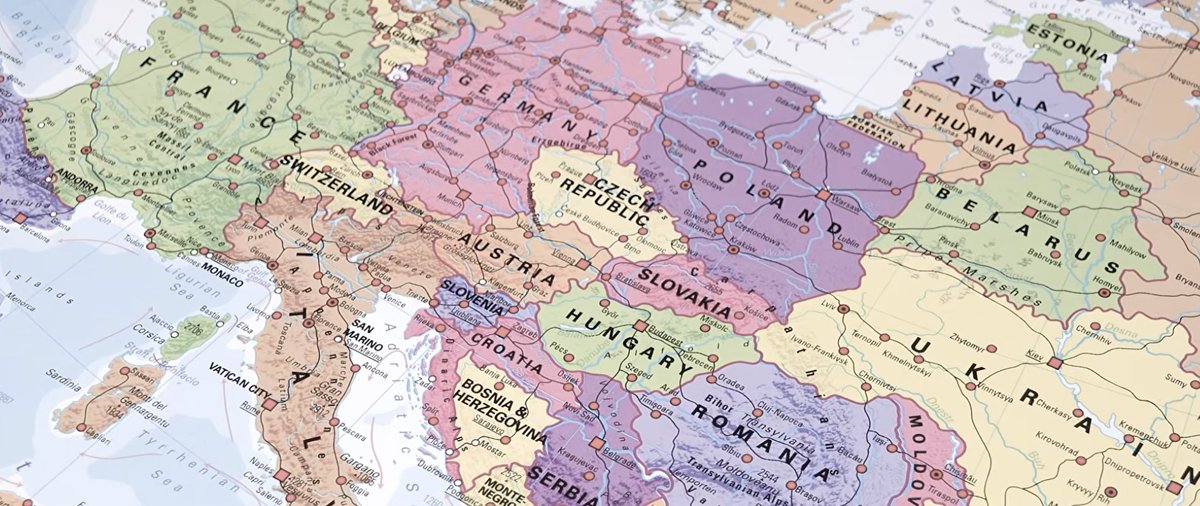
I’m honestly surprised this has not received more attention in Europe. The most vivid public example was around the EU’s northeastern flank, with Poland and the Baltic region among the most affected areas. To my knowledge, this may be the first publicly documented wartime case of a space-based EW capability being demonstrated or tested.
Jun 9

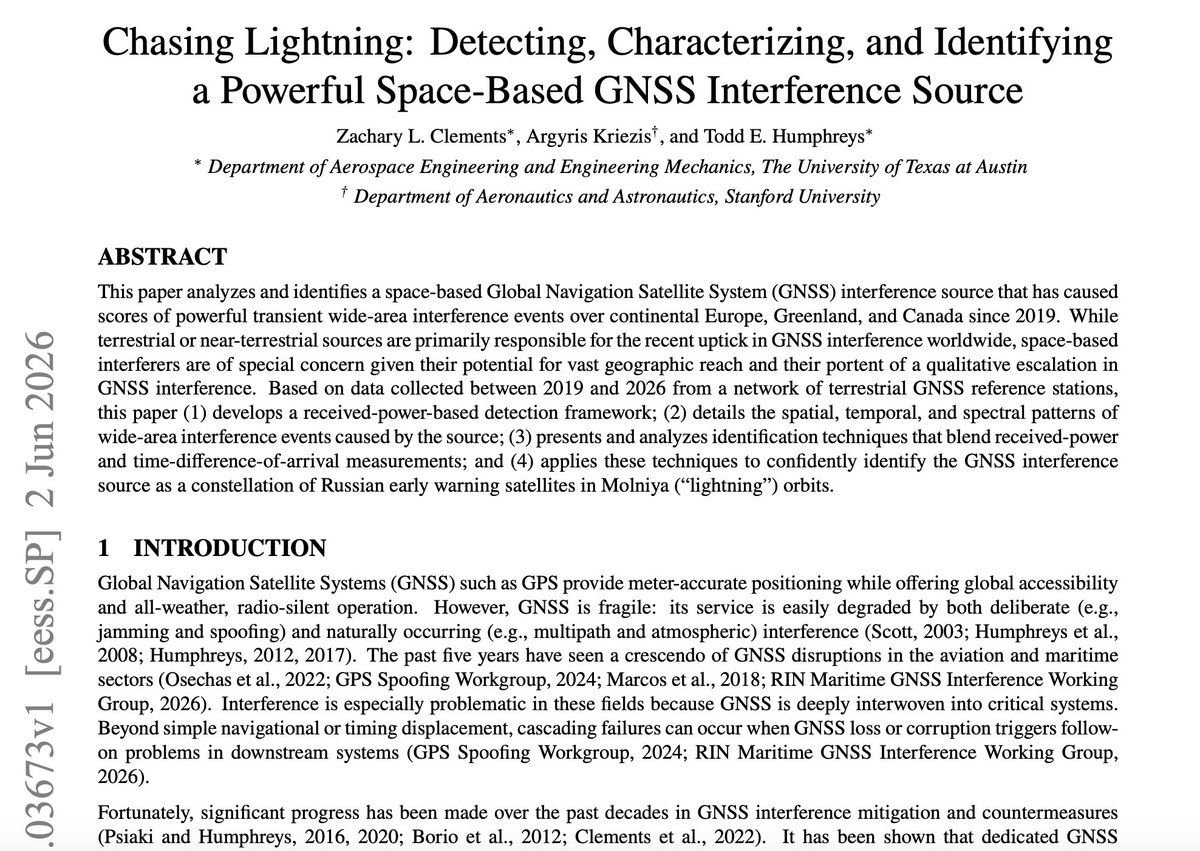
GPS and GNSS interference over Europe is starting to look like something far more serious than local outages, random radio noise, or classic ground-based jamming. Part of it may be linked to active electromagnetic emissions from Russian satellites. If that assessment holds, this is no longer just a technical issue. It becomes a question of national security, infrastructure resilience, and policy toward systems that are critical in aviation, shipping, energy, telecommunications, military operations, and precise timing.
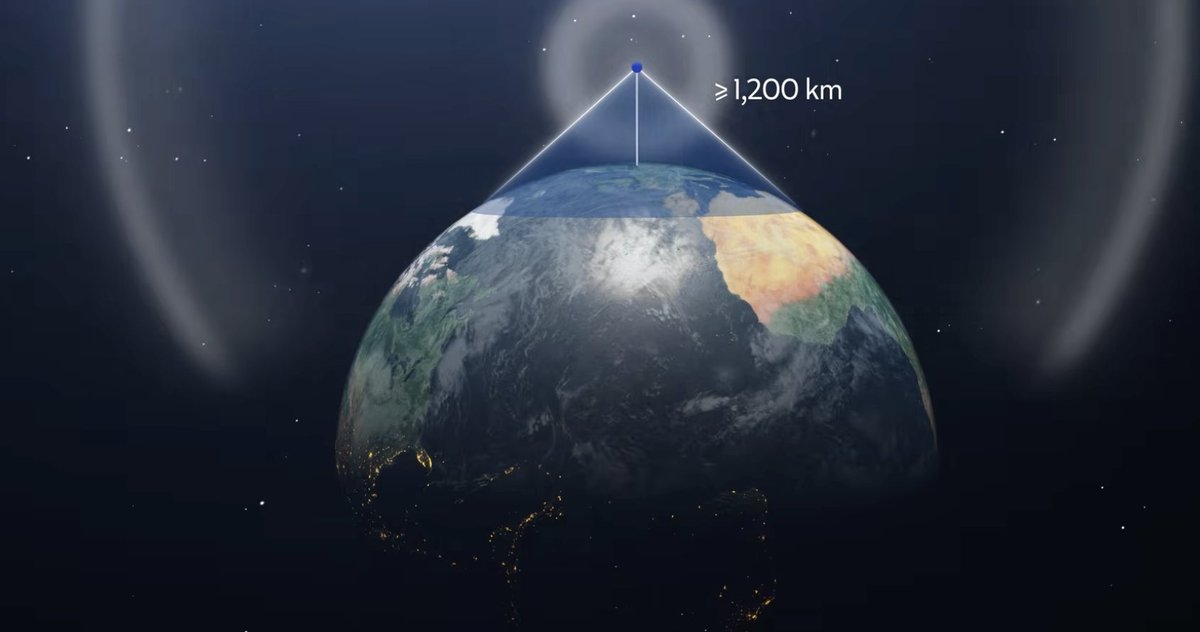
Researchers analyzed data from ground-based GNSS stations and found short interference pulses appearing at the same time across a vast area, from Europe to Greenland and Canada. That scale does not fit a local source on the ground. It points to an object high above Earth, with the geometry needed to illuminate a large part of the continent.
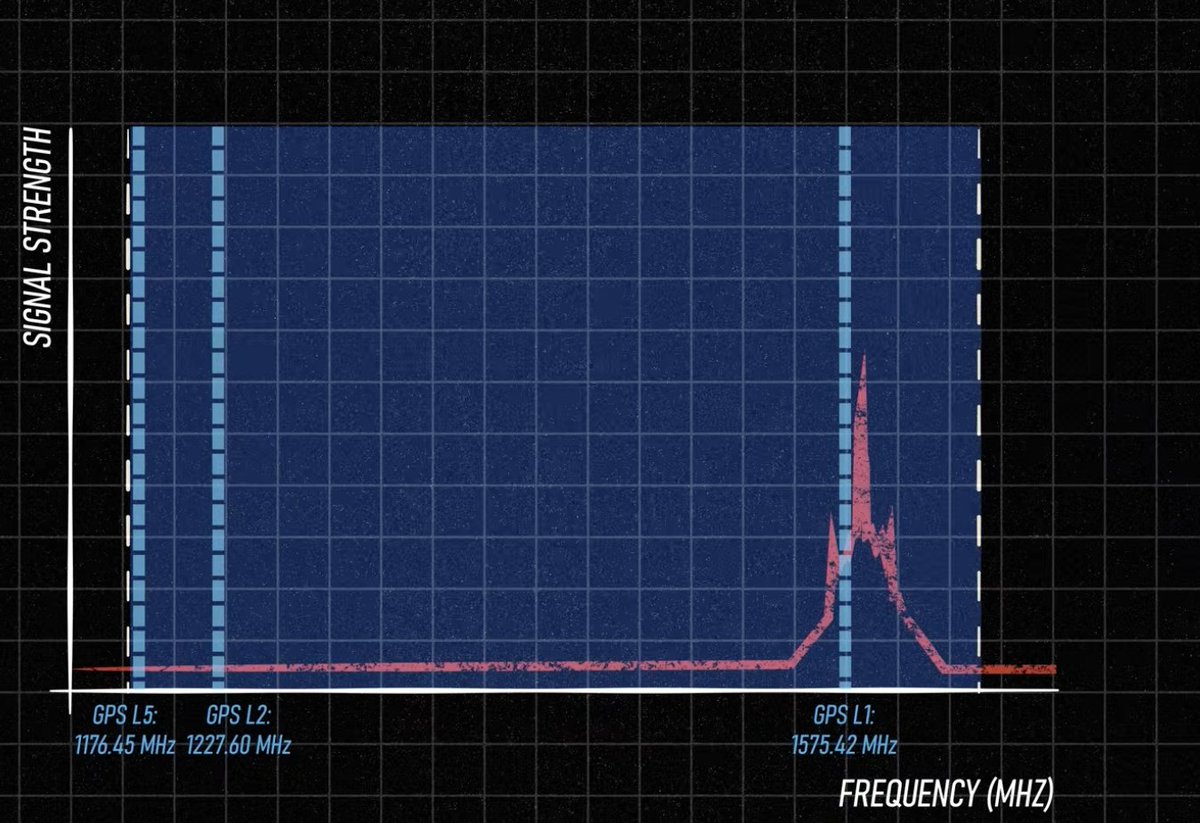
The signal appeared very close to GPS L1, the core GPS band used by millions of civilian receivers. Its peak was around 1577.5 MHz, while GPS L1 sits at 1575.42 MHz, with a bandwidth of roughly 5 MHz. The data also showed a second burst around 1558.5 MHz, in a band used by China’s BeiDou system. In practice, receivers saw simultaneous drops in signal quality across GPS, Galileo, and BeiDou, in some places by about 10 dB.
The key attribution to Russian Cosmos 2546 satellite came from comparing the arrival time of the pulse at two stations. Researchers used that time difference to define a quasi-hyperboloid surface in space, meaning the surface on which the source of the emission had to be located. When they compared that surface with the orbits of suspect objects, the best match was Kosmos 2546, a Russian early-warning satellite in a Molniya orbit.
2
35
67
7,336
Giorgio Maone 🐘 @ma1@todon.eu retweeted

Jun 9
Quick reality check…
We gotta stop calling them "data centers."
We need to start calling them what they really are: "mass surveillance facilities" designed to funnel 99.7% of us into a digital prison long before 2030 gets here.
43
669
1,879
32,741
Giorgio Maone 🐘 @ma1@todon.eu retweeted

Jun 9
Handling mobile media that documents human rights violations can put those brave enough to capture a record—and those very records—at risk.📱 @open_archive 's free open-source Save app and 🌐 DWeb Storage help communities securely 📁 archive, ✅ verify, and 🔒 encrypt this documentation. blog.torproject.org/preservi…
#FundInternetFreedom
16
50
3,327
Giorgio Maone 🐘 @ma1@todon.eu retweeted

Jun 9
This is what the UK spyware proposal means.
There must be government spyware on every mobile device. It shall watch everything that happens, including always watching the screen, looking for things the government disapproves of.
When anything is flagged by the software as something the government doesn't like, the software must block it from being sent or displayed (in realtime).
The user of the device must not be able to shut this watching and blocking off. The only way to shut it off would be to ask the government or its proxies to do so for you, at their discretion.
Therefore the whole device must be locked down. Administrator rights and the decision of what software or operating system to run or not to run must be taken from the owner/user and handed to the government and its proxies.
Apple and Google are themselves working hard to lock down the devices they are involved in to shut out competition and establish a duopoly.
The UK government says it is "working closely" with Apple and Google and currently they synchronise and coordinate their communication on this subject.
The UK government is now proposing to mandate what would otherwise be illegal anti-competitive practices.
@GrapheneOS on the Apple and Google duopoly:
x.com/GrapheneOS/status/2053…
Statement from @signalapp
x.com/signalapp/status/20640…
@ReclaimTheNetHQ on the state spyware:
reclaimthenet.org/starmer-ca…
The government announcement:
gov.uk/government/news/new-p…
Jun 8

Our statement on the UK government’s demand that all content on all devices sold or used in the country be scanned, on the presumption of nudity, using a dystopian combination of age verification and content scanning. This proposal will not safeguard children. It endangers us all.
signal.org/blog/pdfs/2026-06…
241
3,407
14,186
1,516,264

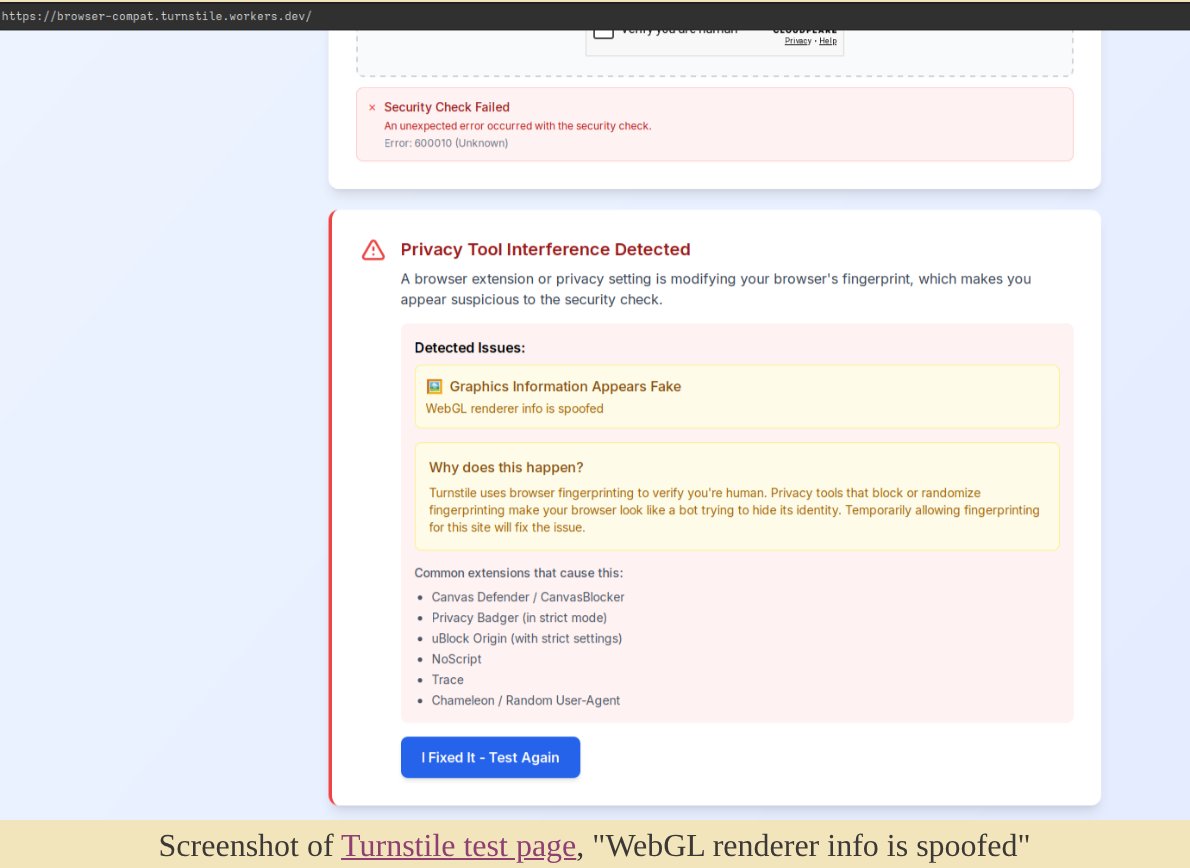
"Temporary allowing fingerprinting for this site will fix the issue" 🫣
Jun 1

uBlock Origin. Privacy Badger. NoScript. all of them now make Cloudflare Turnstile think you're a bot. the suggested fix is to just turn your privacy extensions off. good deal all around.
1
1
117
Have an excellent and safe #pridemonth everyone.

NoScript's website just got a new tagline for the month.
#pridemonth #pride #privacy #security
noscript.net/?month=pride
1
79
Giorgio Maone 🐘 @ma1@todon.eu retweeted

May 31
Over the weekend the former head of Trump's Border Patrol attended a summit with fascists from around the world who are calling for "Weimar solutions" and it for some reason has received almost no press coverage.
theredoubt.net/why-did-the-p…
309
5,877
10,077
443,672
Giorgio Maone 🐘 @ma1@todon.eu retweeted

Andrebbe sempre ricordato che soltanto un quarto dell’8x1000 che finisce alla Chiesa cattolica viene poi destinato agli “interventi caritativi”.
A giudicare dal suo sito, la propaganda per gli “interventi caritativi” rasenta invece il 100%.
#ingannevole
8xmille.it/
3
8
120
Giorgio Maone 🐘 @ma1@todon.eu retweeted
Il parlamento del Ghana ha approvato una legge che prevede il carcere per chi si identifica come Lgbt .
Il provvedimento omofobo è stato proposto dal reverendo John Ntim Fordjour, in nome della famiglia e dei valori culturali tradizionali del paese.
bbc.com/news/articles/c5yede…
3
2
102
Giorgio Maone 🐘 @ma1@todon.eu retweeted
Gli scout laici (Cngei) ci erano arrivati decenni prima, ma che anche quelli cattolici (Agesci) decidano di non discriminare più in base all’orientamento sessuale è una buona notizia: meglio tardi che mai.
x.com/LaStampa/status/206034…

L'orientamento sessuale e l'identità di genere non possono costituire un criterio di esclusione per chi chiede di svolgere un ruolo educativo. A dirlo è l'Associazione guide e scouts cattolici italiani (Agesci) nel documento Identità di genere e orientamento sessuale e affettivo approvato dal loro consiglio.
La notizia integrale è su La Stampa
#scout #agesci
2
8
269
Giorgio Maone 🐘 @ma1@todon.eu retweeted

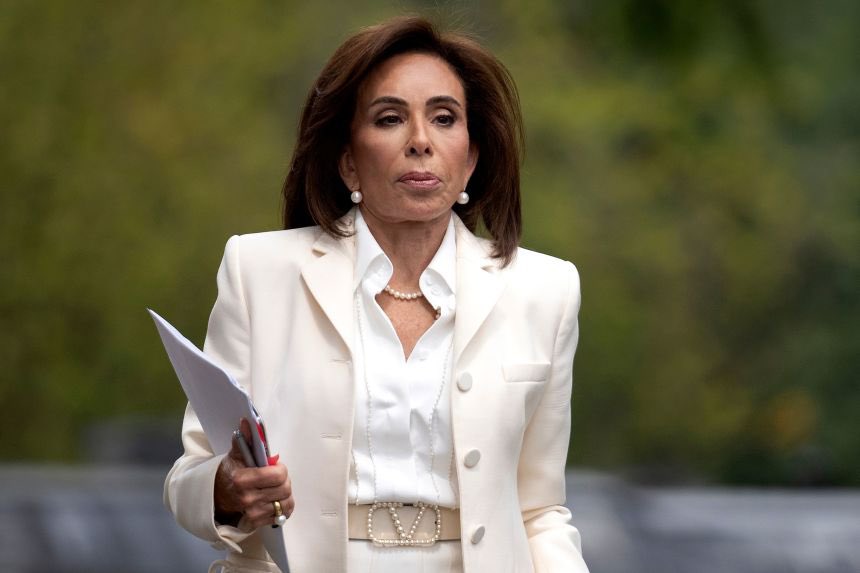
NEW: Trump’s DOJ is seeking the names, addresses, and banking information of Reddit and X users who criticized the administration’s deportation policies, per Bloomberg.
The subpoenas came from the US Attorney’s Office in Washington, led by Trump ally Jeanine Pirro. The users still haven’t been told what crimes they supposedly committed, and their lawyers say it looks more like an effort to scare and silence critics than a real investigation.

1,653
4,443
9,874
1,043,342
The most scary reporting and most effective @noscript advertising, if you're a US citizen - or anybody who cares about #privacy and #freedom, actually.
thedreydossier.substack.com/…
1
44
Giorgio Maone 🐘 @ma1@todon.eu retweeted

May 27
Tony Blair is the living embodiment of what happens when political office becomes a down payment on future plunder. Ejected in 2007 by his own MPs as a massive liability, he bequeathed Britain a wild casino economy primed for the 2008 crash. And when the British economy crashed and burned, Mr Blair kept quiet while honing his skills at securing power by other means.
His first job, after his ejection from 10 Downing Street, was as the West’s Middle East envoy, with a supposed emphasis on Gaza. It took six painful years for Mr Blair’s tenure to prove a failure so profound it amounted to active complicity in Israel’s ethnic cleansing, in Palestinian erasure, and in paving the ground for the ongoing genocide.
Soon after, the Chilcot Inquiry demolished Blair’s Iraq lies, exposing him as a liar, a chancer and a war criminal responsible for countless corpses of Iraqis, but also of British soldiers.
Then came Blair’s real innovation: the financialisation of the ex-premiership itself. The Tony Blair Institute, fuelled by £130 million from Oracle's Larry Ellison—coincidentally, the largest individual donor to the Friends of the IDF—became a shadow state, brokering governance contracts for autocrats and companies like Palantir that weaponise AI to produce mega-death abroad and full-on surveillance of Western populations.
Now, in May 2026, this corporate fixer issues a 5700 word tantrum demanding that Labour embrace Trump even more than Starmer already has, denounce what is left of Labour’s betrayed Green New Deal, and trash the remnants of workers' rights. This is not the wisdom of an aging statesman. It is the frantic squirming of a man fearing his grip on oligarchic power might soon wane and whose entire post-10 Downing Street existence depends on preventing the many from ever reclaiming what the few have plundered.
theguardian.com/politics/202…
510
5,980
12,662
910,550
Giorgio Maone 🐘 @ma1@todon.eu retweeted
May 25
"Privacy is the foundation of a free society" Thank you, @naomibrockwell for your support!
internetfreedom.torproject.o… #FundInternetFreedom
May 25

Freedom is strongest when it's supported by you.
@naomibrockwell from @LudlowInstitute shares her opinion on why @torproject ecosystem funding matters.
Donate & protect rights online: internetfreedom.torproject.o…
Support @SecureDrop, @guardianproject, @BPFreeSpeech, @OpenObservatory, @open_archive, @unredacted_org & others.
#FundInternetFreedom
4
34
156
13,188
Giorgio Maone 🐘 @ma1@todon.eu retweeted

May 24
A lot more is discussed on these files about Armenian and Central-European elections; approaching opinion leaders and politicians, etc.
You can read our report from here:
occrp.org/en/investigation/l…
10/10
9
112
508
7,240
Giorgio Maone 🐘 @ma1@todon.eu retweeted

May 25
No! You should share the episode directly from Colbert’s new YouTube channel. Apparently, this was done to launch his new channel. Link below:
youtu.be/jJTXB5uT_C4
6
250
697
36,348
Giorgio Maone 🐘 @ma1@todon.eu retweeted
Con una mia prefazione, e diversi articoli scritti in tanti anni di impegno.
blog.uaar.it/2026/05/22/vent…
2
7
125
Destroying every shred of Res Publica to replace it with a waste land where a few oligarchs can rule unconstrained is the point.
Electing incompent morons not a bug but a feature of any Bannon/Putin/Project2025 inspired movement, either in UK, in Europe or in the USA.
May 21

🚨 SHOCKING — These are the exact same Reform activists who flood X every day screaming, lecturing, and telling everyone how Britain should be run…
Yet 24 hours after getting elected in Kirklees, they stand up in full council and admit:
“I don’t understand the Constitution…
I don’t understand standing orders…
I don’t understand what an amendment is.”
Then they whine it’s “not democratic” they might vote on things they don’t understand
This is the terrifying danger of populist rage politics: loud online warriors with ZERO clue how to actually govern.
Handing real power to people who don’t even know where to start is how countries collapse.
Watch this embarrassment 👇👇👇👇CC: @LesTrumpeter
1
93
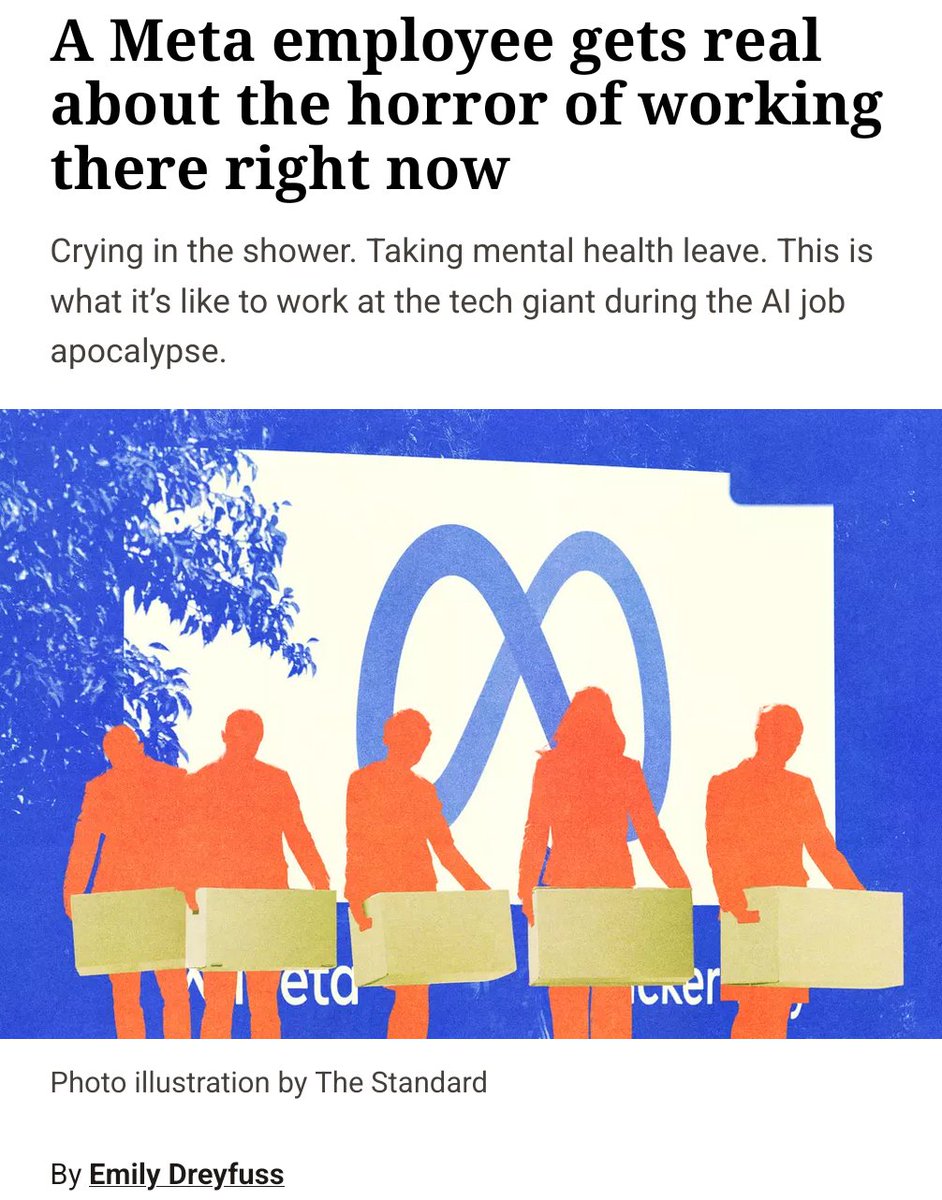
That Meta "Privacy Engineer" (sic!) asking me to keep them updated with @torproject job openings (on @signalapp, not Whatsapp of course😏) ~ 3 years ago was not just principled, but smart. Hope they managed to jump ship in time.
1
1
1
178